

Transnet ramps up locomotive coal service to Port of Richards Bay

Transnet says ramping up the number of locomotives available on its lines is one of the key measures it is implementing to decongest the Port of Richards Bay.
Delays related to truck deliveries at the port has led to increased and intense congestion leading into the Kwazulu-Natal port.
The company said the move to put more locomotives on the lines is part of measures to improve the performance of the North Corridor (NorthCor) which handles some 41% of Transnet Freight Rail (TFR) volumes.
“TFR is ramping up the coal service to the port by seven trains per week by mid-December 2023, bringing the total number of trains to 28 per week. This equates to volume of about 15 400 tons per week, and an annualised tempo of 739 200 tons per annum, which is equivalent to 452 road truck trips per week, and 21 747 road truck trips per annum.
“The first four locomotives will be deployed over the next few days. Between December 2023 and March 2024, TFR will bring in an additional seven trains, resulting in 35 trains per week to the port. This will support efforts underway to decongest the port,” Transnet said.
The NorthCor runs from coal mining town Lephalale in Limpopo to the port and has faced challenges including lack of availability and reliability, cable theft and vandalism.
The company explained that the current increase is “partly as a result of additional locomotive capacity which has been repaired and is being deployed to the corridor”.
“Improvements in cable theft incidents also mean that TFR is able to turn trains around faster, for a more efficient service. As part of efforts to improve the condition of the network and increase slot capacity, TFR is reinstalling some signalling equipment, with most expected to be functional by February 2024,” Transnet said.
The freight and logistics company assured that it will “continue to work with road carriers” and other stakeholders to reduce the congestion.
“In this regard, the company is working on a plan to implement a last-mile strategy, where road carriers will haul cargo to inland terminals and Transnet conducts a shuttle service into the Port.
“If successful, Transnet anticipates having the strategy operational by March 2024,” the company said.
Meanwhile, Cabinet has welcomed measures and plans put in place by Transnet to resolve the backlog at ports in Durban and Richard’s Bay.
Briefing the media on the Cabinet meeting that took place on Wednesday, Minister in the Presidency, Khumbudzo Ntshavheni, said Transnet is making intensive efforts to mobilise equipment, such as cranes, from all over the world to ensure a successful execution of its implementation plan.
“The progress made by Transnet in clearing most of the backlog at the Cape Town Container Terminal, with only one vessel at anchorage, is encouraging. Transnet remains committed to working with all role-players to address the challenges within the logistics sector,” the Minister said on Thursday.

SA makes progress in addressing anti-money laundering systems

South Africa has made progress in addressing the 20 technical compliance difficulties in its anti-money laundering system.
This is according to the National Treasury following the release of the Financial Action Task Force’s (FATF) technical compliance re-rating follow up report.
“On 27 October 2023, the FATF Plenary formally re-rated 18 of the 20 deficiencies, based on the progress made by the South African authorities in the two-year period following the 2021 mutual evaluation (MER). Of these, fifteen were upgraded to be no longer deficient, as 14 recommendations were now fully or largely compliant, and one recommendation was rated as not being applicable to South Africa.
“Following these re-ratings, South Africa is now deemed to be fully or largely compliant (or not deficient) in 35 of the 40 FATF Recommendations, including in five of the six core FATF Recommendations. This means that South Africa is left with five deficiencies in technical compliance (including three of the 18 which were upgraded from non-compliant to partially compliant), and two which remain as partially compliant since 2021,” the statement read.
National Treasury emphasised that the FATF follow up report does not “address the progress made by South Africa to improve the effectiveness deficiencies” that were identified in the mutually agreed upon Action Plan following South Africa’s grey listing by FATF earlier this year.
“Overcoming the effectiveness deficiencies is essential for South Africa to exit the FATF “grey list”.
This assessment is a distinct process from addressing technical compliance and is conducted under FATF’s International Co-operation Review Group Joint Group (ICRG JG) process.
“South Africa’s progress against its Action Plan is reviewed by the FATF Africa/Middle East Joint Group (FATF AME JG). The Joint Group meets every four months, where South Africa is expected to report on progress in addressing the 22 action items in the Action Plan,” National Treasury said.
The department thrashed out the steps that government has taken to implement the Action Plan.
These steps include the establishment of the Interdepartmental Committee on Anti-Money Laundering and Combating of Terrorism Financing (IDC-AML/CFT) that is chaired by the Director-General of National Treasury.
The IDC-AML/CFT includes government departments and agencies including the:
- South African Police Services’ Directorate for Priority Crime Investigation (the Hawks)
- National Prosecuting Authority
- Special Investigating Unit
- State Security Agency
- Financial Intelligence Centre
- South African Reserve Bank
- Financial Sector Conduct Authority
- Department of Justice and Constitutional Development
- Companies and Intellectual Property Commission
- South African Revenue Service
“Cabinet has been closely monitoring progress by the IDC-AML/CFT and government departments and agencies, as noted in the Cabinet statement of 18 October 2023.
“Through the IDC-AML/CFT, South Africa has reported on its progress against the Action Plan at two AME Joint Group meetings in May and September 2023, and is currently preparing to engage on a third report to the Joint Group. Completing the implementation of the Action Plan is essential for South Africa to exit the FATF grey list,” Treasury said.
On the action items set out by the FATF following South Africa’s grey listing, Treasury said FATF’s October Plenary statement noted that South Africa has recorded “positive progress”.
“However, addressing the remaining actions within the agreed timelines will require a significant effort from all the relevant South African authorities. In doing so, the South African authorities will also need to demonstrate that the improvements are sustainable, before South Africa will be deemed by FATF to have adequately addressed all the action items,” Treasury concluded.
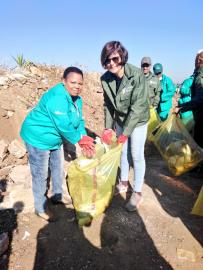
SA tackles plastic pollution
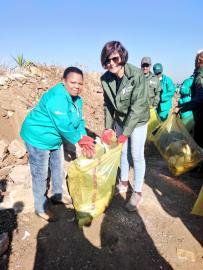
The Minister of Forestry, Fisheries and the Environment, Barbara Creecy, says government’s initiatives aimed at tackling plastic pollution are making progress.
South Africa has achieved this through a combination of voluntary approaches to the plastics industry, coupled with improved household and community waste disposal and the creation of Extended Producer Responsibility (EPR) schemes.
“The SA Plastic Pact has already identified unnecessary and problematic plastic products, and is committed to eliminating unnecessary and problematic plastics; ensuring that 100% of all plastic packaging is reusable, recyclable or compostable; ensuring that 70% of plastic packaging is effectively recycled, and using 30% average post-consumer recycled content in plastic packaging,” the Minister said on Thursday.
Addressing the South African Plastic CEO Engagement Breakfast in Cape Town, Creecy said in 2020, government adopted the National Waste Management Strategy.
The strategy prioritises the following pillars:
- Support and strengthen municipal waste management services to prevent plastic leaking into the environment;
- Increase waste diversion from landfill through various approaches, including EPR schemes, to collect, reuse and recycle plastic waste with the aim of promoting a circular economy in the plastic industry, and
- Promote public awareness and clean up campaigns to remove plastic waste from rivers, wetlands and beaches. Enforcing compliance is also an area of focus.
“In 2020, government also introduced the Extended Producer Responsibility Regulations, which called for EPR schemes for plastic packaging and electrical and electronic equipment amongst other prioritised products.
“This circular economy and EPR initiatives have resulted in the formation of five registered extended producer schemes that support plastic waste collection and recycling.
“Our EPR Regulations aim to influence product design to take environmental considerations into account and are currently being implemented for paper, packaging and some single use products, lighting, electrical and electronic products,” the Minister said.
These efforts have removed 368 600 tons of plastic waste from the environment. They have supported between 60 000 and 90 000 waste reclaimers, as well as create 7 500 formal jobs.
“In 2023, government put a restriction of a minimum of 50% recycled content as part of the product design measures for plastic carrier bags. The intention is that by 2027, plastic carrier bags and black refuse bags should be made from 100% recycled material.
“Because we share industry’s concerns regarding the contribution illegal dumping makes to the leaking of plastics into the environment, we recently launched the Municipal Cleaning and Greening programme.
“This partnership with provinces and municipalities targets clearing 7 251 illegal dump sites by creating more than 37 000 work opportunities under our public works programme,” Creecy said.
Through the Top 40 programme, government has prioritised 40 municipal landfills for improved compliance through a public-private partnership model currently championed by Infrastructure South Africa.
“Together with the Department of Cooperative Governance and Traditional Affairs (CoGTA) and National Treasury, we have revised the Municipal Infrastructure Grant Policy so municipalities can purchase yellow fleet to improve household collection and improve landfill management.
“Since the initiation of this programme, our department has processed applications for specialised waste management vehicles from over 100 municipalities across the country. In the last two years we have spent over one hundred and sixty-four million rand to buy 44 waste collection vehicles and 21 landfill management waste vehicles for 58 municipalities,” the Minister said.
By 30 September this year, 1 299 (or 19%) of the sites were cleared.
“I am confident that with the acceleration of the cleaning programme, 100% of the identified hotspots will be cleared by the middle of next year. The workers clean daily and educate their communities on how to dispose of waste in a responsible manner,” the Minister said.

Newlyn’s R4b investment set to be a significant contributor to economy

Newlyn Investments’ R4 billion pledge made at the fifth South African Investment Conference (SAIC) held in Johannesburg in April this year, is set to be a significant contributor to the national economy, as well as that of the Eastern Cape.
Newlyn Investment is 100% black-owned and a leading South African developer of strategically located and operationally efficient storage infrastructure in close proximity to both coastal and inland logistics hubs.
The company, through its affiliate Unitainer, pledged an investment of R4 billion for the development of a state-of-the-art manganese storage and handling facility at the Coega Special Economic Zone, in Ngqura, in the Eastern Cape.
The investment was announced as one of the pledges worth billions of rands that were made during SAIC this year.
The six-million ton per annum back of port manganese storage export facility has been designed in partnership with leading global materials handling technology suppliers to be operationally efficient and the world’s first near zero dust emission bulk mineral handling facility.
Newlyn’s Chief Executive Officer, Rajendra Balmakhun, said the investment further underscored the company’s long term belief and commitment in the South African economy, forged over the last 27 years since the company’s incorporation.
Furthermore, the investment is a response to government’s call for private sector participation in critical infrastructure delivery, which is key to economic activity, especially in the current economic climate.
Given the growth of the South African manganese industry, this new terminal has been designed as common user infrastructure to enable further access to the global export markets for both established and emerging manganese miners.
“This national interest project will be the world’s first near zero dust emission facility for the storage and handling of manganese ore from the time it arrives at the back of port location in Coega from the mines in the Northern Cape,” Balmakhun said.
“The operational efficiency achieved through rapid train unloading and rapid ship loading speeds will potentially unlock significant incremental rail capacity of some four million tons per annum on the manganese heavy haul rail line without further investment in rolling stock,” he said.
Additionally, Balmakhun said the project will serve to accelerate the long-awaited relocation of the manganese export terminal from Gqeberha to Ngqura, thereby significantly alleviating public health issues arising from open stockpiles of manganese in the city and enabling the redevelopment of the Gqeberha waterfront precinct.
With regards to job creation and skills development, Balmakhun said the independent socio- economic report on the project estimates that approximately 3 300 direct construction workers will be deployed during the peak of construction with a further 11 700 indirect and induced jobs created during the anticipated 30 month construction period.
At full operational levels, an estimated 200 full time and multiple spin-off jobs will be created by the facility.
In addition, Newlyn has negotiated a three-year post commissioning skills transfer and skills development commitment from its global technology partners to ensure there is local capacity building for operating and maintaining the facility.
The global original equipment manufacturers have also undertaken to manufacture the bulk of the facility’s equipment and machinery under license in South Africa.
“Newlyn prides itself on its speed of infrastructure delivery, deploying the best available technology, designing operationally efficient and environmentally compliant infrastructure and building communities.
“We are committed to building on our relationship with key stakeholders and our host community to ensure the company is a catalyst in the socio-economic development of the Coega SEZ, Ngqura and to the Eastern Cape region in particular.
“The project is poised to be a significant contributor to the national and Eastern Cape economy in the years to come,” Balmakhun said.
Newlyn’s 2023 investment pledge was the company’s second, following the pledge it made at the 2018 investment conference, during which the company pledged an investment of R2 billion in the redevelopment of the Bayhead Rail terminal near the Port of Durban.
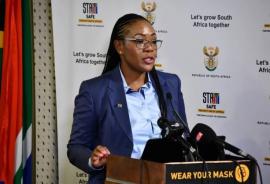
Delay in delivery of infrastructure projects affects service delivery
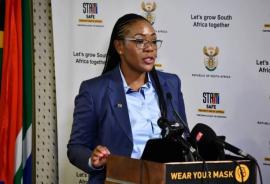
The Auditor-General of South Africa (AGSA) Tsakani Maluleke says all too often infrastructure delivery projects which have been delayed, are costing more than what was initially planned or are of poor quality.
In the 2022-23 financial year, the AGSA audited 137 infrastructure projects, focusing on critical infrastructure, including health facilities, schools, housing, roads and railways, water infrastructure, and government buildings such as police stations.
“Our audit work incorporated numerous site visits by our multi-disciplinary audit teams, who applied their expertise to inspect project progress and quality. We reported findings on 112 (82%) of the projects that we visited. There are also delays in newly built infrastructure,” Maluleke said.
She said when auditees, especially high-impact auditees, do not properly manage their performance, finances and infrastructure; it directly affects the delivery of key government programmes that are intended to improve the lives of South Africans and to alleviate hardships stemming from tough economic conditions and poverty.
“Wasted money and resources means reduced funding for service delivery programmes and, eventually, a greater burden on taxpayers,” the AG said.
She made these remarks in Parliament on Wednesday, while tabling the 2022-23 general report for national and provincial departments, their entities and legislatures.
Maintenance of government properties
Maluleke noted that many government properties are in a poor condition because of the sector’s reactive approach to maintenance.
“Most maintenance work is only done in response to emergency requests and little time or budget is spent on preventative maintenance,” the AG said.
The public works sector is responsible for maintaining government properties, including health facilities, police stations and buildings that accommodate departments.
She said government officials and the public continue to use properties that are in poor condition, which lowers the effectiveness of the working environment and puts the safety of officials and the public at risk.
“There are currently 2 394 unoccupied government properties, most of which have not been maintained and are in a bad state. Even though these properties are not used, costs such as property rates and taxes still need to be paid.
“When there are not enough fit-for-use properties available to departments, the Property Management Trading Entity needs to enter into lease agreements – which could have been avoided if properties had been properly maintained,” Maluleke said.
The AG further cautioned that such lease agreements are often costly to government because of high annual increases and higher-than-average market rates being paid.
She attributed the failures in delivering, maintaining and safeguarding infrastructure to four matters that need urgent attention:
- Inadequate coordination and collaboration, and deliverables not being synchronised in the ecosystem (e.g. between implementing agents and other departments).
- Failure to conduct proper needs assessments and feasibility studies; or conducting them but not using them as a base to implement the infrastructure projects.
- Lack of accountability – the terms of construction contracts are not used to hold contractors and professional service providers (consultants and implementing agents) accountable when they do not perform.
- Inadequate monitoring and enforcement by infrastructure-related regulatory bodies such as the Construction Industry Development Board and the National Home Builders Registration Council, particularly relating to repeat offenders that cause delayed projects across sectors.
Audit outcomes of service delivery auditees and key public entities
The AG said the 193 high-impact auditees generally have poorer audit outcomes than other auditees and struggle with performance, financial and infrastructure management.
These high-impact auditees comprise departments, public entities and state-owned entities that are collectively responsible for 85% (R2.64 trillion) of the expenditure budget.
They contribute to delivering health services, skills development and employment, infrastructure development, safety and security, water and sanitation, energy, and environmental and financial sustainability.
“Auditees from this group also account for 48% of all outstanding audits and 65% of all modified audit opinions; in other words, qualified, adverse and disclaimed opinions. In total, 139 of the 193 high-impact auditees were required to report on their performance in 2022-23,” she said.
Those excluded were the 50 technical and vocational education and training colleges, the Property Management Trading Entity, Water Trading Entity and Commission on Restitution of Land Rights, whose performance is reported in the performance reports of their parent departments.
“We raised material findings on the reported performance information of 127 (42%) of these auditees, as well as material findings on compliance with key legislation at 76% of the 178 auditees with completed audits.”
Call for improvement in service delivery
The AG has called for improved service delivery enabled by capable, cooperative, accountable and responsive institutions delivering on their mandates.
“At a time of economic hardship in which the public’s demands for service delivery and accountability are increasing, there is an expectation that national and provincial government will do everything in their power to get the most value from every rand spent and to manage every aspect of their finances with diligence and care.
“This is, however, not what we have seen at some departments and public entities during our audits. Improved service delivery and the responsible use of the limited funds available will only be possible when we have capable, cooperative, accountable and responsive institutions that deliver on their mandates.”
She urged all roleplayers in the accountability ecosystem, particularly those with direct control over service delivery, to work deliberately and with urgency towards achieving a culture of accountability, transparency, integrity and improved service delivery for all South Africans.

KZN Transport condemns rape of female security officers

The KwaZulu-Natal Department of Transport says it is appalled at the attack and rape of three female security officers by criminals targeting departmental offices in the eThekwini region.
The incident happened as the country observes the 16 Days of Activism for No Violence against Women and Children campaign.
According to reports, heavily armed criminals entered the Department of Transport offices in Merebank, south of Durban, on Monday at around 02:30am.
While three male security officers, who belong to the private security company contracted to the department were kept hostage, the three female officers, who were held at gunpoint in another room, were sexually assaulted and raped.
“The criminals also stole departmental work tools, which are used for road maintenance and other assets. The female staff have been taken in for medical examination and cases have been opened with the police,” the department said.
The department said an investigating team has also visited the department’s offices to initiate an investigation and are giving this case high priority.
After hearing the incident, Transport Community Safety and Liaison MEC, Sipho Hlomuka, immediately assigned the Head of Department, Siboniso Mbhele, to urgently visit the site and to engage with other staff members, who were still traumatised.
After meeting with the office management and staff, Mbhele said the department will look closely at the issue of improving security in the department’s offices and urged the police to move with speed in arresting the suspects.
Mbhele said the incident will affect staff morale and seriously impact on service delivery.
“The cruelty by these criminals against female security officers is unacceptable. Crime against women must be condemned by all of us, more so during such the critical campaign of no violence against women and children.
“We appeal to the police to activate a high-level investigating team and bring these heartless criminals to book. We are also addressing the security improvement in our premises to protect staff and our equipment,” Mbhele said.
Mbhele also appealed to the community to work with the police in reporting anyone who is selling departmental equipment.
He said the department has arranged for psycho-social services to assist the staff members at the centre to be able to continue with their daily duties.
The department within eThekwini has been the target of a criminal syndicate that attacks staff members at gunpoint, steal brush cutters and other equipment.
In another incident, a departmental grader was recovered in Camperdown.

SASSA releases dates for December payments of social grants

The South African Social Security Agency (SASSA) has released the payment dates for its various social grants over the festive period.
The older person’s grants will be paid from Friday this week, while disability grant beneficiaries will be paid from Monday next week.
“There is no need to rush to withdraw cash on the first day. Once the money is in the account, it will remain there until it is needed,” the agency said.
Here are all social grant payment dates for December:
• Older Persons/Pensioners’ Grant: Friday, 1 December
• Disability Grant: Monday, 4 December
• Children’s Grant: Tuesday, 5 December
All grant beneficiaries are reminded that SASSA gold cards will not expire in December and will continue to work for grant payments beyond December 2023.
SASSA beneficiaries can receive their SASSA payments from selected supermarkets, such as Pick n Pay, Boxer, USave merchants, Checkers and Shoprite, and obtain this through their SASSA card or by getting the amount directly transferred into their bank account.
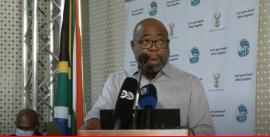
Employment and Labour conveys condolences to the families of the 11 departed miners in Implants
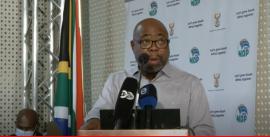
The Department of Employment and Labour has sent its deep condolences to the families of the 11 miners who tragically lost their lives at the Impala Platinum Mine in Rustenburg in the North West.
On Monday, Implats reported that a serious safety incident involving a winder rope occurred at its 11 Shaft operation at Impala Platinum.
According to the mine, workers were being brought to the surface at the end of their shift when the conveyance system that carries workers up and down an underground shaft 1 000 metres deep began a rapid descent.
Employment and Labour Minister Thulas Nxesi said the department views the occurrence as the most painful.
“Our hearts are heavy for the lives lost and those touched by this tragic incident. The department will ensure relevant support is provided where necessary and needed.
“The Department extends its heartfelt condolences to the families of the 11 miners, their families, colleagues, and the mining industry as a whole,” the Minister said.
The department also wished the 75 employees who were hurt a speedy recuperation.
Nxesi also urged those responsible for Health and Safety in the mines to conduct quick investigations, to establish whether there was negligence or not. If there was, the Minister emphasised that the law should take its course, within the relevant prescripts.

SAPS proud of its men and women in blue

As the country observes the 25th anniversary of the 16 Days of Activism for No Violence against Women and Children Campaign (25 November to 10 December), the South African Police Service (SAPS) has embarked on profiling a series of untold stories of its men and women in blue.
This is to celebrate the men and women who go beyond the call of duty to protect women, children and other vulnerable groups.
Today, the spotlight is on Captain Karin Botha, a forensic social worker attached to the Germiston Family Violence, Child Protection and Sexual Offences Investigations (FCS) unit.
Forensic Social Work is a specialised field of Social Work practice within the FCS environment, which is characterised by the social worker’s primary function of providing expert testimony in courts of law.
Moreover, a forensic social worker’s core function is to conduct forensic interviews in the investigation of child abuse cases using age appropriate techniques in order to obtain accurate information from child victims to assist courts to make just and fair decisions.
Botha holds a degree in Social Work and a Master’s degree in Forensic Practice.
Some of her career highlights include when the North Gauteng High Court in Pretoria sentenced a 42-year-old father to four life terms and an additional 73 years direct imprisonment on multiple counts of rape, statutory rape, sexual grooming, incest, possession of child pornography and sexual abuse, earlier this year.
The father pleaded guilty to all the charges levelled against him for raping and sexually abusing five child victims – two of whom are his biological daughters, between 2019 and 2020. The victims were aged between nine and 13 around the time of the abuse.
Botha was assigned to obtain these victims’ statements and compiled their competency assessment reports, which assisted the court to hand down an appropriate sentence.
She was also assigned to compile a victim impact report and testified in court as an expert witness in the sentencing of Nicholas Ninow, dubbed the ‘Silverton Dros rapist’.
The North Gauteng High Court in Pretoria sentenced Ninow to life in prison and an additional 10 years imprisonment in 2019 on charges of rape, possession of drugs and defeating the ends of justice.
Ninow attacked and raped a 7-year-old girl in the restroom of the DROS restaurant in Silverton, Pretoria, in September 2018.
In 2020, Botha was awarded with a Certificate of Commendation by the Minister of Police for the instrumental role she played in the sentencing of a paedophile to life in prison and an additional 100 years imprisonment for multiple counts of possession, manufacturing and distribution of child pornography, as well as child abuse.
Botha said she assesses over 100 sexually abused child victims a year, who fondly refer to her as ‘tannie Karin’. Botha feels humbled by her profession that allows her to make a difference in abused children’s lives.
“Parents, caregivers, teachers or any other adult should never doubt or dismiss a child when they are disclosing the possibility of sexual abuse. Contact your nearest police station, open a case and act in the best interest of our children,” Botha said.
Captain Botha is the personification of ‘real heroes do not wear capes’, as she continues to be a voice for ‘voiceless’ child victims.
Men in blue set their sights on perpetrators

As the country marks the 16 Days of Activism of No Violence Against Women and Children campaign, the South African Police Service (SAPS) has highlighted the work of its men and women in blue who work tirelessly to put behind bars those involved in the abuse of women, children and vulnerable groups.
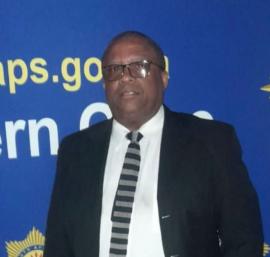
One such example is Warrant Officer Alistair Rezant who is attached to the Western Cape SAPS’s Family Violence, Child Protection and Sexual Offences Investigations (FCS) unit.
With an overwhelming success rate, W/O Rezant has managed to secure a total of 1 105 years imprisonment sentence for rapists.
This year, the investigator secured a lengthy conviction for Riegard David Myburgh who was found guilty for numerous counts of rape and sexual assault charges. Myburgh is a paedophile who targeted young boys between 8 and 11 years of age between 2014 and 2019.
Because of Warrant Officer Rezant’s meticulous investigation, Myburgh’s name has been entered into the National Register for Sex Offenders (NRSO) which records the names of persons who have been convicted of charges of sexual offences committed against a child or a mentally disabled person.
The member was also instrumental in securing the conviction of Mark Labuschagne who was a handyman at a retirement village in the Western Cape.
Labuschagne was sentenced to 15 years direct imprisonment for sexually assaulting an elderly women at the retirement village and for performing acts of self-masturbation in front of the elderly. His victims were aged between 70 and 96 years of age.
Labuschagne’s name was also recorded in both the Sexual Offences Register and the Abuse of Elderly Persons Register. In addition, he was declared unfit to possess a firearm and also unfit to work with children
The member has vowed to put more of such offenders behind bars.
“Cases related to GBV and sexual offences remains a priority for me. I always oppose bail applications for GBV perpetrators and ensure that all cases relating to rape and abuse are watertight so that they are not withdrawn at the court of law,” said W/O Rezant.
“These hefty sentences meted against sexual offenders should serve as a deterrent to would be offenders,” he said.