

KZN government moves to assist Clairwood fire victims

The KwaZulu-Natal Provincial Government has mobilised resources to provide emergency relief to displaced residents in the Clairwood informal settlements after the fire that destroyed more than 200 shacks last week Friday.
KwaZulu-Natal Premier Nomusa Dube-Ncube, together with Human Settlements and Public Works MEC, Sipho Nkosi and eThekwini Municipality Speaker, Thabani Nyawose, visited Clairwood on Monday to assess the extent of the damage, to understand the impact on the community and express solidarity with the affected residents.
“Government has mobilised resources to provide emergency relief to those affected. Shelter, food, and other essential supplies are being arranged for displaced residents,” Dube-Ncube said, adding that attention is also being paid to long-term recovery.
Dube-Ncube said a big challenge facing the province is that people are invading privately-owned land, which is not suitable for housing construction.
The other problem, she said, is people who already own RDP houses, but decide to stay in informal settlements so that they rent out their houses.
“We cannot give them services because it’s privately-owned land and we can’t provide building materials here because we will be doing something illegal.
“We need to make sure it’s legitimate people who get assistance. Normally when such a tragedy happens, you find a lot of people come and register, claiming they are victims,” Dube-Ncube said.
She said government is working with law enforcement agencies and the community to crack down on people who intimidate tenants.
The Premier said the actions taken and promises made during the visit will be closely monitored, as they hold the potential to bring hope and relief to the hundreds of affected residents, who are patiently awaiting assistance in their time of need.
The Premier is also expected to meet with local authorities and emergency services to coordinate a comprehensive response plan.

Fighting the harmful effects of alcohol

By Dr Ntombifuthi Nala
Many South Africans thrive on celebrations, whether it is a national accomplishment such as winning the Rugby World Cup, or a personal achievement such as passing an exam. These celebrations are often accompanied with dancing, singing and of course alcohol.
While alcohol is a means of celebrations and enjoyment, it can be open to misuse or abuse that can lead to the destruction of lives.
Every year the lives of 3 million individuals are lost due to alcohol, representing 5 per cent of all deaths. This is worrisome in South Africa where alcohol is the most widely used psychoactive substance and high levels of binge drinking and associated harms prevail.
In characterising the challenge, Minister of Social Development, Lindiwe Zulu, stated that “alcohol is one of the most abused substances that causes the most harm to the most people in our country”.
Alcohol abuse not only harms the health of an individual by affecting their vital organs and increasing susceptibility to life threatening diseases, it also jeopardises the safety, well-being and lives of others.
In searching out solutions to reduce alcohol-related harms and best practices for regulating alcohol, South Africa recently hosted the Global Alcohol Policy Conference (GAPC).
This is the first time that the conference was held in Africa, which brought together policy makers, academics, representatives of community-based organisations and NGOs from across the globe.
The conference made strong inroads in the formulation of a global alcohol policy that protects children and vulnerable adults. It also engaged on how further the regulation of alcohol marketing could help fight the abuse of alcohol.
During the conference Minister Zulu committed to reviewing the Liquor Amendment Bill which seeks to strengthen regulations on alcohol trading, marketing and sales. The bill put forward strong interventions which includes increasing the legal age of drinking to 21 and introducing an increased radius limitation for the trade of alcohol around educational and religious institutions. It also places liability on alcohol retailers and manufacturers for harm resulting from contravening regulations.
These proposals are important in advancing our fight against alcoholism, particularly in curbing access for young people as one in three teenagers are addicted to drugs and alcohol in our country.
The plight of underage drinking and non-compliance with alcohol-related laws were recently brought to the fore at the Enyobeni tavern tragedy that resulted in the loss of 21 young lives.
In strengthening our efforts to address the challenges caused by alcohol and substance abuse in the country, the Department of Social Development has drafted a policy framework on the Prevention of and Treatment for Substance Use Disorders, which will soon be gazetted for public comment. Cabinet also recommended an inter-Ministerial Committee for prevention, reduction and treatment strategies for alcohol and substance abuse.
Whilst government strives to reduce alcohol-related harms by reinforcing our laws and developing new strategies, we urge South Africans to be responsible citizens by adhering to current legislation.
The National Liquor Act prohibits the sale of alcohol to anyone under the age of 18, which calls for the co-operation of parents, community members, and liquor outlets to ensure that alcohol is not sold to children.
Establishments with liquor licences must perform verification checks against identity documents to ensure a person is of the legal age to consume alcohol. These checks are essential, especially as pens down parties, rage festivals and a host of social gatherings will occur as exams come to an end and the festive season approaches.
South Africans are urged to act responsibly this festive season should they choose to consume alcohol, and to always say no to the use of drugs. Excessive alcohol intake is widely linked to an increase in accidents, violent behaviour, fights and domestic violence.
Alcohol abuse is one of the main contributors to crime, especially gender-based violence and femicide in South Africa. We ought to make it our duty to report incidents of GBVF, alcohol–related and other crimes, to law enforcement authorities.
Reducing alcohol-related harms requires the combined efforts of everyone. When we do our part by practising responsible drinking and adhering to our laws, we can celebrate without putting our health, safety and the lives of others at risk.
*Dr Ntombifuthi Nala, Director: Research and Knowledge Management at the Government Communication and Information System (GCIS)

Three suspects arrested for child pornography

The South African Police Service (SAPS) Serial and Electronic Crime Investigations (SECI) unit has, in collaboration with the USA Department of Homelands Security, arrested three child online sexual predators in Gauteng.
The trio was arrested in a simultaneous takedown operation in the past week, relating to a number of suspects who were identified as South African users who are involved in the possession, distribution, manufacturing, accessing and downloading of child pornography.
Members of the SECI at Head Office and in Gauteng conducted the preliminary investigations on the users, and various provinces were identified where the suspects reside.
After several months of investigation and planning by SECI, perpetrators were identified in Gauteng and a joint Operation was planned.
In Springs, Gauteng police arrested a 63-year-old male British citizen, who was found to be in the country illegally. The suspect faces offences related to bestiality. Other offences are related to child pornography such as possession and distribution of child pornography.
The second suspect, who is a 43-year-old South African male, was arrested in Benoni, Gauteng. The suspect also faces offences relating to child pornography.
The third suspect, a 43-year-old South African male, suspect was arrested in Krugersdorp, Gauteng. He too faces charges relating to child pornography.
As a result of these operations, three South African children, who were used during the commission of the above offences, were identified and a dog was saved.
The operations will continue throughout the country to unravel a network of child sexual predators.
The trio has already appeared before various courts including Springs, Benoni and Krugersdorp Magistrates Court in Gauteng on Monday. Their cases were postponed for further investigation and bail applications.
SECI is a unit within the Detectives divisions under the Family Violence, Child Protection and Sexual Investigations (FCS) unit. The unit members are responsible for investigating, tracing and apprehending serial rapists and electronic crimes relating to online child sexual exploitation.
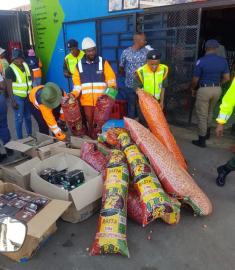
Residents warned to be vigilant when buying from spaza shops
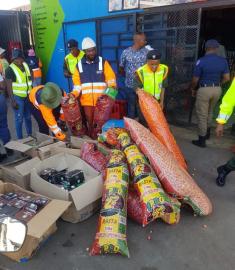
Residents of the City of Ekurhuleni have been warned to exercise caution when buying products from spaza shops.
This as a spate of incidents has left at least six children dead and several others hospitalised around the country ,allegedly as a result of consuming expired or counterfeit goods from spaza shops and street hawkers.
The City of Ekurhuleni said: “The City’s Environmental Health Practitioners (EHPs) have intensified food hygiene and safety inspections at food handling premises to stop the practice.
“The city encourages the public to buy foodstuffs only sold from premises that have a Certificate of Acceptability. This certificate is only issued after inspections are conducted and the premises meets all food safety requirements.”
The following are markings that can be used to identify whether food stuff is still fresh to eat:
- Date of minimum durability (“Best Before” or “Best Before End”), which means the date which signifies the end of the period under any stated storage condition during which the product will remain fully marketable and will retain any specific qualities for which claims have been made. Beyond the date, the food may still be perfectly satisfactory. These foodstuffs do not require to be removed from the shelves and can be sold for human consumption.
- “Sell by” or “display until” means the last day of offer for sale to the consumer, after which there remains a reasonable storage period at home. The food that has past the sell by or display until date must be removed from the shelves and must not be sold for human consumption to the public.
- “Use By” (Best Consumed Before, recommended last consumption Date, Expiry Date) means the date which signifies the end of the estimated period under the stated storage conditions, after which the product probably will not have the quality attributes normally expected by the consumers and after which date the food should not be regarded as marketable. These foodstuffs must be removed from the shelves and must not be sold for human consumption to the public.
Some foods are exempted from date markings. These include some alcoholic products, chewing gum, fruits and vegetables that have not been peeled or treated and sugars.
Residents are encouraged to report any shop selling expired or counterfeit products to the City of Ekurhuleni environmental health offices.
“The public is also discouraged from playing the role of an EHP by inspecting and seizing foodstuff from the shops as this is impersonation of a EHPs. In terms of the Health Professions Act, 56 of 1974 no person shall perform any act deemed to be an act pertaining to any registerable health profession, such as environmental health profession,” the city said.

RTMC warns traffic officers against accepting bribes

As the festive season approaches, the Road Traffic Management Corporation (RTMC) has warned law enforcement officers that anti-corruption units will be out in full force to deal with unacceptable, unethical and unprofessional conduct.
This warning follows the sentencing of a Mpumalanga traffic officer by the Ermelo Regional Court for taking a R200 bribe from undercover anti-corruption agents.
The man was arrested after soliciting a R200 bribe from an agent during Project Arrive Alive on 22 January 2020 and was subsequently arrested on 3 March 2021.
The man pleaded guilty to all charges and was sentenced to a R4 000 fine or 12 months imprisonment. He was further sentenced to five years imprisonment, wholly suspended for five years should he not be convicted of the same crime during this period.
“Bribery, corruption, and other unlawful activities do not only tarnish the image of our traffic law enforcement fraternity; it leads to devastating consequences, including loss of life.
“The RTMC calls for harsher sentences against officers who solicit bribes from motorists and urges citizens to report suspected acts of fraud, corruption, and malfeasance to ntacu@rtmc.co.za or by WhatsApp to 083 293 7989.”
The man was also subjected to a disciplinary hearing, which found him guilty and terminated his employment. He took the matter to arbitration but failed to have the decision of the disciplinary committee overturned.

Measures in place to deal with Diphtheria outbreak

The Department of Correctional Services (DCS) is leaving “nothing to chance” as it deals with the outbreak of Diphtheria at the Pollsmoor Correctional Centre, says it’s National Commissioner, Makgothi Thobakgale.
This after a 19-year-old inmate died and eight other inmates tested positive for the contagious bacterial infection at the Pollsmoor Correctional Centre in the Western Cape.
“We would like to assure the public and stakeholders that we are taking proactive measures to address and contain any possible spread of the disease. The epidemiological investigation on the index case is still ongoing.
“Recognising the potential risks associated with communal living, we have implemented a comprehensive set of measures to mitigate the spread of the disease within the correctional setting.
“We are doing this because we also know that [a] Diphtheria outbreak in a correctional environment requires a coordinated and comprehensive response in order to contain the spread and provide appropriate medical care to the affected individuals,” he said at a media briefing on Monday.
Thobakgale outlined the measures taken which include:
- Vaccination campaign: The department has initiated a vaccination campaign to ensure that all eligible individuals receive the Diphtheria vaccine. A total of 342 inmates have been vaccinated. In terms of officials, the department stands at 36.
- Hygiene practices: Inmates and staff members are once more being educated and encouraged to practice enhanced hygiene, including regular handwashing with soap and water, covering mouth and nose when coughing or sneezing, and the use of hand sanitizers. Facilities are being deep cleaned in an effort to minimize the risk of disease transmission. This involves pest control.
- Isolation: according to Thobakgale, direct contacts are “effectively on day 16 of isolation”. Appropriate medical care is also provided to those classified as high risk.
- Regular Health screenings: Inmates and staff members are now subjected to regular health screenings to detect any potential cases early to enable DCS to prevent the spread of the disease and be ready to deal with new infections should they emerge.
- Medical attention: Health care professionals are available and are treating affected inmates. Appropriate medical treatment is also being offered. The Department of Health is also working closely with DCS in this regard thus ensuring a comprehensive response plan.
“We are leaving nothing to chance, health education efforts to inform inmates, DCS officials and service providers about the symptoms of Diphtheria, the importance of vaccination, and preventive measures are being amplified. Our health care team is vigilant in monitoring the situation and the infection prevention measures are for every individual in a correctional facility to follow through.
“The situation is calm and under control. No new cases have been reported in the past five days. Hence, we do believe that the measures that we have put in place shall be effective in ensuring the well-being of everyone in our care,” he said.
Roots of the outbreak
Reflecting on the events leading up to the outbreak, Thobakgale explained that the 19-year-old inmate who died, fell ill after being transported back to the facility following a court appearance on October 17.
“When the inmate showed signs of not feeling well, the Correctional Services Health Care officials treated him and a decision was taking that he be transferred to an outside hospital. At the time the inmate showed malaise and respiratory symptoms hence the transfer to Victoria Hospital on 28 October.
“He received further treatment and was tested for Diphtheria and the results came back positive on 02 November 2023. Unfortunately, the inmate’s condition deteriorated and he sadly passed away on 5 November 2023 at the Groote Schuur Hospital,” he said.
Thobakgale said following the inmate’s diagnosis, the department immediately embarked on a contact tracing exercise with some 54 inmates and 15 correctional services officials identified as contacts.
Some eight inmates tested positive.
“[The officials] were tested and released to isolate at home. The provisional results have since came back negative, awaiting confirmatory results.
“As a department, it was important that we act with necessary urgency. The health and well-being of our incarcerated inmates, staff members, and the surrounding community are of utmost importance to us, and we are obligated to ensure a safe and healthy environment.
“Diphtheria is a vaccine-preventable disease, and through…comprehensive measures, we aim to minimize the risk of transmission at Pollsmoor Correctional facility,” he said.

NSFAS applications open next week

Applications for financial aid for all learners who wish to enter the post-school system and students who do not have financial assistance to continue their studies in the 2024 academic year will officially open on 21 November 2023.
In a statement issued on Monday, the National Student Financial Aid Scheme (NSFAS) said the applications for 2024 funding will open on 21 November 2023 and close on 31 January 2024.
The reason for opening applications in November is so that NSFAS can afford the beneficiary shorter turn-around times for decision making, which is aligned to the financial eligibility assessment which requires updated South African Revenue Service (SARS) information.
“NSFAS is awaiting SARS completion of its tax period and to enable NSFAS to have the necessary and updated information available during our application season. We encourage all students who wish to study in the post school education and training sector higher education and training space to ensure that they apply on time.
“It is also important that students note that they don’t need results when they are entering post school education and training for the first time. Furthermore, NSFAS is engaged in conversation with the Department of Basic Education to improve the application validation processes including verifying parental relationships and all these improvements will ensure that funding decisions are confirmed timeously,” NSFAS said.
NSFAS urged students to provide accurate information, particularly parental information, when applying so that when validations occur with Home Affairs, students can be easily funded and not be subjected to appeal processes to prove parental relationship.
The parental relationship verification has been a challenge where students change their parents’ information for the sake of the bursary.
The entity said the partnership with the Department of Basic Education will further strengthen its ability to verify parental relationships.
The NSFAS Board also announced that it will continue to make immediate funding decisions for new applicant South African Social Security Agency (SASSA) beneficiaries. Immediate funding decisions mean that as soon as the applicants submit their applications they will receive an outcome.
“The moment you are verified as a SASSA beneficiary, we will not require any supporting documents. In fact, all new applicants will not require supporting documents, except for learners with disabilities.
“All rejected applicants will be able appeal and it is important that students submit the appropriate supporting documents,” NSFAS explained.
Among the new features for the 2024 application period include the NSFAS mobile application which will be rolled out initially for iPhone operating system (IOs), Android, and in due course of HUAWEI devices.
The student app will include a biometric capability which will be rolled out later in the year.
Students will also be able to track their application statuses and funding via whatsapp on 078 519 8006, and USSD at *120*67327#.
Meanwhile, NSFAS announced that its Board, in consultation with the Department of Higher Education and Training is finalising the funding guidelines for the academic year 2024.
The scheme said the guidelines will be announced on 21 November 2023, together with the opening of the application season for the academic year 2024.

Nzimande commends arrest in university stabbing incident

The arrest of a university student for allegedly stabbing his wife at a private student residence in Belhar, Cape Town, on Saturday, has been commended by Higher Education, Science and Innovation Minister, Dr Blade Nzimande.
The 26-year-old woman was a student at the Cape Peninsula University of Technology (CPUT), while her alleged attacker, aged 30, is a University of Western Cape (UWC) student.
According to UWC, the suspect and the CPUT student are married.
Nzimande welcomed the swift response of law enforcement agencies in arresting the perpetrator, who according to the video footage in circulation, was merciless and barbaric in committing the crime against his partner.
Nzimande noted that gender-based violence (GBV) is a global pandemic that affected one in three women in their lifetime.
“As many as 38% of murders of women are committed by an intimate partner, 35% of women worldwide experienced physical and sexual intimate partner violence or non-partner sexual violence,” Nzimande said.
As part of dealing with gender-based violence in institutions, the Minister launched the Transforming MENtalities initiative, which is a multistakeholder partnership within Post School Education and Training (PSET) with a particular focus on mobilising men to be part of championing a world free of gender biases, stereotypes, violence and discrimination.
Nzimande urged all institutions working with Higher Health, which oversees wellness at higher education institutions, to continue working collectively in implementing programmes towards addressing the challenges of sexual and gender-based violence within the PSET system.

Spheres of government called to enhance service delivery

Water and Sanitation Deputy Minister David Mahlobo has called on all spheres of government to fast-track service delivery to communities to realise a better life for all.
Mahlobo made the call during the District Development Model (DDM) Social Compact Imbizo, held at the Phuthadithjaba Multi-Purpose Centre in the Free State on Friday.
He cited the recently released South African National Census statistics as a clear indicator that the population of the country is increasing, therefore efforts need to be doubled to meet the increasing needs of communities.
“Statistics South Africa says we have provided more than 90% of the population with water. While we can say we have made strides in this regard, we know that we have not reached everyone as we should and we need to reach out to them as well, because it is our mandate and it is their constitutional right to be supplied with water,” Mahlobo said.
As a solution, the department is assisting municipalities to build new infrastructure, refurbish and upgrade the existing ones, to meet the demand for water, while reducing water loses because of aging infrastructure.
Through its Regional Bulk Infrastructure Grant (RBIG) and Water Services Infrastructure Grant (WSIG) programme, the department funds municipalities for water infrastructure.
“In Maluti-A-Phofung, we have intervened when there were water challenges through our RBIG programme and allocated R176 million in the 2022/2023 financial and R154 million this financial year for water projects.
“Further to this, through our WSIG programme, we have allocated R127 million from 2022/2023 until 2024/2025 for drilling of boreholes in Intabazwe, Mokgolokweng sewer pumpstations and Mokgolokweng bulk and sewer networks,” Mahlobo said.
The Deputy Minister noted that for the first time the communities of Maluti-A-Phofung have finally received water from Sterkfontein Dam which, he said, was “something that seemed like a pipe dream”.
He added that the communities in the area will benefit from the Lesotho Highlands Water Project once it is completed.
Among the work in progress for intervention in Maluti-A-Phofung area, includes the following projects:
• Upgrading of Sterkfontein Water Treatment Works
• Refurbishment and Upgrading of the Fika Patso Water Purification Plant
• Upgrading of the Intabazwe Rising Main
• Bulk water supply to Tshiamo and Makgolokweng
• Upgrading of the supply to Phuthaditjhaba and CBD area
• Refurbishment of the Elands Waste Water Treatment Work
• Upgrading of the Kestell Waste Water Treatment Works
• Refurbishment of the Makwane Waste Water Treatment Works
• Refurbishment of the Moeding Waste Water Treatment Works
• Upgrading of the Phuthaditjhaba Waste Water Treatment Works
• Upgrading of the Tshiame Waste Water Treatment Works
• Upgrading of the Wilge Waste Water Treatment Works
• Drilling of boreholes in Intabazwe
• Improving water revenue and reducing non-revenue water
An allocation for infrastructure development has also been made for this financial year to municipalities under Thabo Mofutsanyana District, including R100 million for Setsoto, R83 million for Nketoana and R60 million for Dihlabeng.
The imbizo, which was attended by Deputy Ministers in the Presidency, DDM Champion in the district Nomasonto Motaung and Pinky Kekana, Free State Premier Mxolisi Dukwana, and Thabo Mofutsanyaba District Executive Mayor Connie Msibi, among others, also discussed the development of a social compact through the DDM approach and how to make a social compact towards improving service delivery in communities.
The imbizo also reviewed the progress of the Thabo Mofutsanyane District Social Compact, reviewed partnerships and devised means to strengthen them.
It further looked at water and sanitation services in the area, as drivers of socio-economic development.

Israel-Palestine expected to be under discussion during Qatari State Visit

Discussions about the ongoing Israeli-Palestinian conflict will be on the table when President Cyril Ramaphosa embarks on a State Visit to Qatar on Wednesday.
The President’s visit to the Middle Eastern nation is at the invitation of His Highness Sheikh Tamim bin Hamad Al Thani, Amir of the State of Qatar.
The State Visit will form part of the two days of engagement between the governments of South Africa and Qatar on 14 and 15 November.
“The governments of South Africa and Qatar share deep concern regarding the conflict, notably the unfolding human catastrophe in Palestine, violations of international human rights and international humanitarian law, the large-scale loss of life and the ongoing hostilities, especially in Gaza.
“The leaders will discuss respective efforts to ensure that the conflict does not escalate to other parts of the region and that a peaceful resolution is found. South Africa also welcomes Qatar’s mediation efforts in this crisis,” the Presidency said in a statement on Monday.
A wide range of issues are also expected to be under discussion with the ministers of International Relations and Cooperation, Trade, Industry and Competition; Agriculture, Land Reform and Rural Development; Mineral Resources and Energy, Defence, Basic Education and the Minister in the Presidency accompanying the President.
The two countries have shared diplomatic relations for at least 30 years and the visit will be President Ramaphosa’s first visit to the Middle Eastern nation in his capacity as Head of State.
“During their meeting, President Ramaphosa and His Highness Sheikh Tamim bin Hamad Al Thani are expected to deliberate on various geopolitical issues that are currently impacting the world. Both parties are committed to enhancing their economic ties and focusing on improving economic relations including trade, investment, and tourism.”
Trade
According to the Presidency, Qatar became South Africa’s fifth largest trading partner in the Middle East with exports to that country reaching some $206 million in 2022. In the same year, imports from Qatar reached $252 million.
“The bulk of the exports were in the manufacturing sector, accounting for about 56% of total exports. South Africa has witnessed a surge in its imports from Qatar between 2017 and 2022, primarily due to the import of petroleum oils,” the statement read.
In a bid to deepen trade relations, a high level delegation of South African business people are expected to join the President on the visit.
“The President will be joined by a high-level business delegation and is expected to engage the Qatari business community to explore opportunities for cooperation in areas such as the creative industries, energy, mining, agro-processing, retail, healthcare, tourism, and shipbuilding.
“South Africa is a significant investor in Qatar, especially in the petrochemical-related sector, with a total investment of approximately USD 8.7 billion.
“Sasol has a 49% shareholding with Qatar Petroleum, and established ORYX GTL, the world’s first commercial-scale gas-to-liquids plant. Sasol’s GTL technology is used in ORYX GTL to convert natural gas into liquid fuel and chemical products,” the statement read.