
Police crackdown nets 13 and seizes firearms
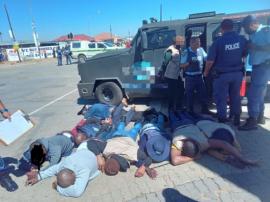
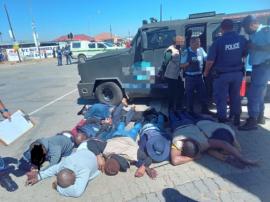
Police have seized 18 firearms and ammunition following a shootout between two alleged security companies in Kagiso.
The South African Police Service (SAPS) in Gauteng said that 13 suspects were also arrested in Wednesday’s incident.
It is reported that, the police members from West Rand District attended to a shooting incident whereby upon arrival they found two groups of what is believed to be security companies affiliated to two different taxi associations shooting at each other.
“When the police approached, the occupants from the armoured vehicle started jumping out and fleeing on foot. Thirteen suspects were cornered and arrested while 13 riffles, four pistols including scores of ammunition and magazines were seized from the scene and one firearm was found hidden at a nearby filling station,” said the SAPS on Thursday.
Two people from one of the groups where injured during the shootout and were taken to hospital.
All seized firearms will be subjected to further investigations and ballistic testing to ascertain if they were not used in the commission of other serious and violent crimes.
The suspects are expected to appear before court soon on charges of attempted murder and the discharging of firearms in a municipal area. Police investigations continue.

Diphtheria outbreak at W Cape prison kills inmate

Health Minister, Dr Joe Phaahla, announced on Thursday an outbreak of diphtheria disease at the Pollsmoor Correctional Centre in the Western Cape, which has since claimed one life.
A 19-year-old male inmate presented with diphtheria symptoms on 28 October and was referred to the local hospital for further medical care.
“Throat swabs were collected the same day for culture laboratory testing and the results returned positive five days later on 2 November. Unfortunately, his health condition continued to deteriorate until he regrettably passed away on 5 November,” a statement from the department said.
Diphtheria is a disease caused by bacteria called Corynebacterium diphtheria.
The bacterium usually affects the mucous membranes of the nose and throat, causing respiratory and skin infections.
Public health measures have since been undertaken to bring the outbreak under control. These include contact tracing of inmates, correctional services staff, consulting healthcare workers and emergency services personnel.
Meanwhile, more tests were conducted with the 55 identified close contacts as part of the case investigation, of which eight inmates tested positive for this serious infection.
Of these, the department said, two of them presented mild symptoms, while the other six were asymptomatic.
“All patients including the deceased fall within the age group of 18 to 23 years old. Immediate contacts of the patients and the deceased have been put in isolation from the rest of the correctional centre section to prevent further spread of the disease.”
In addition, two staff members displayed symptoms compatible with diphtheria and have received treatment and are still waiting for their laboratory test results.
The Western Cape Department of Health, working with the Department of Correctional Services, has since embarked on a vaccination campaign in the affected section of the correctional centre.
The department said two laboratory-confirmed cases of diphtheria disease were recorded earlier in the year from an adult in KwaZulu-Natal and a child in the Western Cape.
Diphtheria, according to the department is an uncommon, but vaccine-preventable serious infection. The toxin may lead to difficulty in breathing, heart rhythm problems, and even death.
The bacteria spread from person to person, usually through respiratory droplets from coughing or sneezing.
The symptoms of diphtheria include sore throat with the formation of a membrane on the tonsil and throat and swollen glands in the front of the neck.
Close contacts of known cases are at increased risk of infection, the department explained.
“Routine diphtheria vaccination is part of the childhood vaccine programme and parents are encouraged to get their children vaccinated.”
Healthcare workers are urged to maintain a high index of suspicion in order to ensure that cases are detected early, while all individuals are reminded of the importance of ensuring that they and their families are up-to-date with their vaccinations.
In South Africa, diphtheria-containing vaccine is offered to all children free of charge in public sector facilities at six, 10 and 14 weeks and 18 months as one component of the hexavalent jab.
“Booster doses are offered at six and 12 years, and to all Grade 5 learners in public schools during the Human Papillomavirus (HPV) vaccination campaign.”
Battle against illegal mining receives a boost
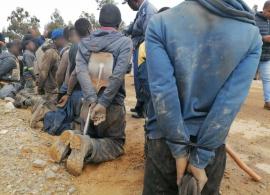
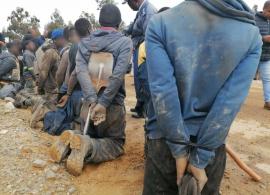
President Cyril Ramaphosa has authorised the employment of 3 300 members of the South African National Defence Force (SANDF) for service in cooperation with the South African Police Service to prevent and combat crime and maintain and preserve law and order under Operation Prosper.
“Members of the SANDF will, in cooperation with the South African Police Service, conduct an intensified anti-criminality operation against illegal mining across all provinces, from 28 October 2023 until 28 April 2024,” the Presidency said in a statement on Thursday.
The expenditure expected to be incurred for this deployment amounts to R 492 143 296.
The President set out the employment in a letter to the Chairperson of the National Council of Provinces, Amos Masondo.

Former Transnet executives pension payouts interdicted

The Special Tribunal has handed down an order interdicting the pension payouts of two former Transnet executives linked to fruitless and wasteful expenditure of about R33.5 million at the state-owned entity.
The two are former executive managers responsible for group business continuity and disaster management Lerato Mary Theresa Makenete and former executive manager for safety, Landela Hawkins Madubane. Their pension funds amount to some R8.9 million.
The application for the order was brought to the court by the Special Investigating Unit (SIU) and the state-owned freight rail and logistics company.
“Transnet initiated and called on the support of the SIU to investigate this matter and requested the support of the SIU to expand and complete the investigations. An investigation by the SIU into the affairs of Transnet has revealed that Makenete and Madubane allegedly colluded with three service providers to abuse Transnet’s emergency procurement process during COVID-19.
“During the emergency procurement…Transnet contracted Ramoyadi Air Conditioning, Ndzalo2 Trading and Eagles Ropes to deliver over a million disposable breathalyser straws. Makenete and Madubane allegedly colluded with suppliers to defraud Transnet by inflating the price of the straws from R0.29 per straw to R29.99 per straw, resulting in a total payment of R33 834 698.40,” the SIU and Transnet said in a joint statement.
The two institutions have initiated proceedings against Makenete and Madubane in an attempt recover the financial losses suffered by Transnet due to the overpayment and brought an application to review and set aside the contracts.
“Following the conclusion of the investigation, the SIU made disciplinary referral to Transnet against Makenete and Madubane. Transnet actioned the referral, however, they both failed to appear for disciplinary hearings, but the proceeding continued in their absence. The duo was found guilty and dismissed.
“[The] SIU refers any evidence pointing to criminal conduct it uncovers to the National Prosecuting Authority (NPA) for further action,” the statement read.
SA remains the preferred investment destination in Africa
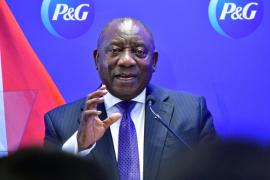
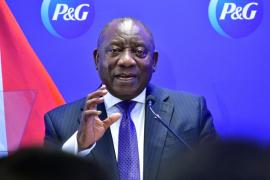
President Cyril Ramaphosa has emphasised that South Africa remains one of the preferred investment destinations and is an important gateway for markets and other business opportunities throughout the continent.
The President was delivering remarks at the Procter & Gamble Plant launch in Kempton Park, in Ekurhuleni, Gauteng.
“As a clear demonstration of the value of trade between African countries, Procter & Gamble currently exports from South Africa to Namibia, Swaziland, Mozambique and Botswana. We understand that the company is set to supply the African continent from South Africa through the implementation of the African Continental Free Trade Area.
“The African Continental Free Trade Area will unlock opportunities for the development of export markets, enhance industrial bases and regional value chains.
“We expect the continental free trade area to reduce the cost and improve the ease of doing business in Africa,” he said, adding that government wants to make the movement of products, processes and people seamless as companies increase their footprint on the continent.
Over the years, P&G has been a valuable partner to the South African government through the South Africa Investment Conference (SAIC), continually announcing new investments.
Procter & Gamble stands behind many brands that are household names in South Africa, such as Vicks, Old Spice, Gillette, Oral B and Pampers, amongst others, and has a strong manufacturing footprint in the country.
The company has been in Africa for over 50 years. It has manufacturing operations in South Africa, Nigeria, Kenya, Egypt and Morocco, and has distributor operations in over 45 countries.
The President said that it has been greatly encouraging to see the company’s response to South Africa’s ambitious investment drive and the investment commitments made by the company at the five South Africa Investment Conferences that we have held since 2018.
“It is a pleasure being here today with all of you to launch this state-of-the-art production line of Pampers Premium Care. The timing of this launch is very opportune.
“South Africa has just hosted the 20th AGOA Forum. It was an opportunity to showcase the capabilities of the African continent to the United States, the world’s largest consumer market. I was pleased to see that leading companies that have an established presence on our continent, like Procter & Gamble, were represented,” he said.
The launch of Tuesday’s production line is the latest in a number of projects that have given effect to Procter & Gamble’s investment pledges.
Through these and other investments, Procter & Gamble is contributing to the reindustrialisation of South Africa’s economy.
“To drive growth that is sustainable and inclusive, we are working to expand and diversify our manufacturing base, and improve its competitiveness and dynamism,” he said.
The President noted that disruptions to global supply chains caused by COVID-19 lockdowns have highlighted the imperative for companies all over the world to diversify their sources of supply.
Investment
“Just as we have seen the benefits of nearshoring and localisation for South African manufacturers, we can appreciate its value to broader global supply stability.
“South Africa is an investment destination with significant untapped potential. We have the ability to attract higher levels of investment and we look forward to working with Procter & Gamble on its future pipeline of investments,” he said.
While investment decisions often take several years to reach fruition, the President said that the investment commitments made to date have already resulted in substantial investment into the productive economy and have created jobs.
He highlighted that Procter & Gamble has heeded government’s call and has sought to increase the participation of small South African businesses in its value chains.
“We are encouraged by the company’s commitment to sourcing local materials, reducing waste, promoting skills development and creating more roles for women in the company.
“We welcome the work the company has undertaken alongside government departments in expanding access to menstrual hygiene products and supporting Early Childhood Development centres.
“We see these partnerships as a testament to the continued commitment of Procter & Gamble to South Africa and the African continent,” the President said.
The President emphasised that government will continue to support Procter & Gamble to increase its footprint through local sourcing and to contribute to job creation, technological development and sustainability.
He congratulated the Procter & Gamble team, from the shop floor to the senior executives, on the launch of this production line.
The President further congratulated the team for the continuous stream of investments being made to increase the company’s footprint on the continent.
“Through the launch of this production line, Procter & Gamble is making a worthy contribution towards our vision of African producers supplying quality goods to African markets.
“This is the vision of a continent that is emerging as the next frontier of global production, meeting the needs of its own people and the peoples of the world,” he said.
Pandor warns of looming genocide in Gaza, calls for immediate cease fire
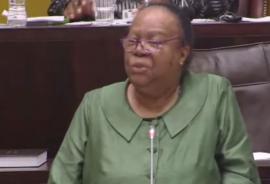
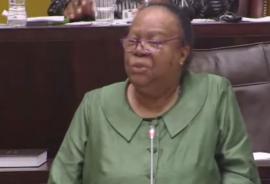
International Relations and Cooperation Minister, Dr Naledi Pandor, on Tuesday warned that the crime of genocide “sadly” looms large in the current situation in Gaza, as the conflict between Israel and Palestine continues.
“We recall that in 1994, a genocide occurred on the African continent, with much of the whole world watching as innocent people were massacred,” she said.
Pandor, who delivered a statement in the National Assembly explaining the country’s standpoint on the war, called for an immediate ceasefire in Gaza and the opening of humanitarian corridors and basic services to allow much-needed aid to reach those that are injured.
“The actions that we are witnessing daily by Israel are a violation of international law, including the United Nations Charter, the Geneva Convention and all its protocols, and its attacks on and kidnapping of innocent civilians.”
While she did not mince her words when talking about Israel, she told the Members of Parliament that Hamas has also violated international law.
“While we express horror at the violence, it is critical that we acknowledge that the illegal occupation of Palestine by Israel for several decades has led to bitter hatred and increased violence, and this violence is not the first violence the people of Palestine have experienced.”
The violation, she said, has been going on for decades.
“The murder of children of women… is an act that should have resulted in the International Criminal Court issuing an immediate arrest warrant for key decision makers, including Mr Benjamin Netanyahu, who is responsible for violations of international criminal law.”
According to Al Jazeera, at least 10 328 Palestinians in Gaza have been killed in Israeli attacks since October 7. Meanwhile, the news channel said the death toll in Israel over the same period stands at more than 1 400.
Pandor has once again stressed that the Israeli-Palestinian conflict can only be solved through the establishment of two States, Palestine and Israel, living side by side in peace.
“The Palestinian State should be created along the lines of the 1967 border with East Jerusalem as its capital, and in line with standing multiple UN resolutions.”
Pandor believes that for this two-State solution to materialise, a peace process initiated by the United Nations (UN) needs to commence urgently.
“We are aware that increasing settlements and illegal occupation have been used to make the creation of a Palestinian State almost impossible.”
Pandor has since outlined concrete actions to end the suffering, including an immediate comprehensive ceasefire and the opening of humanitarian corridors.
She called on all parties to exercise restraint and to desist from fueling unjust war and human suffering, including by seizing the supplying of weapons to the various parties and for the release of all civilian hostages.
“Africa seeks the resumption of a comprehensive dialogue led and owned by Palestinians and Israelis themselves and facilitated by the United Nations,” she said.
In addition, she called for the deployment of a UN Rapid Deployment Force in Palestine mandated to monitor the implementation of a ceasefire, cessation of hostilities and most importantly, to protect civilians.
“Our common humanity dictates that all human lives matter. The time for the international community to stand together and act is now. We, who enjoy freedom from apartheid, can never ever be the ones who agree to any apartheid form of oppression.
“This brutality should not be accepted. We must call for a ceasefire.”
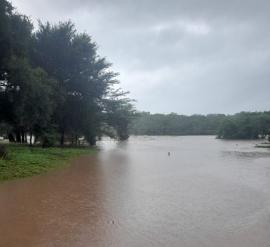
September floods declared a national disaster
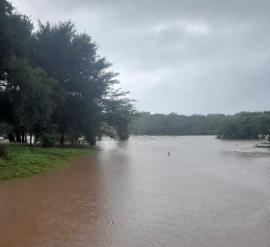
The Western Cape Provincial Government has welcomed the decision to declare the floods that took place in September as a national disaster.
In a notice published in the Government Gazette on Tuesday, the National Disaster Management Centre declared the floods as a National Disaster for the Western Cape and Eastern Cape provinces.
“We are pleased with this declaration, as it now enables all three spheres of government to work together to fund and repair the damage left in the wake of the unprecedented rains experienced over the Heritage Day long weekend in September,” Western Cape Local Government, Environmental Affairs and Development Planning MEC, Anton Bredell, said.
Bredell said the disaster classification makes it possible for the provincial government to approach the National Disaster Management Centre for relief funds to support the work needed to recover and repair damages suffered to public infrastructure, including buildings, roads, bridges, and water networks.
The MEC said the damage assessments for the September floods are estimated at R441 million for provincial infrastructure, and a further R154 million for municipal damages.
“We will now request the National Disaster Management Centre to approach National Treasury with these numbers [but] there is no certainty on how much or when we will receive any support from the national government. The provincial government will reprioritise existing budgets and continue with our own recovery efforts as best we can,” Bredell said.
According to the latest figures from provincial Infrastructure Department, 22 roads remain closed as repairs are prioritised for roads that connect communities and vital for economic activity.
In the aftermath of the floods, both the N1 and N2 highway, including more than 150 other roads, were closed.
The Environmental Affairs and Development Planning Department has so far received 238 applications to do emergency repairs in rivers and streams that under normal conditions would require lengthy environmental approvals.
“The department has already finalised 196 of these applications making use of Section 30A of the National Environmental Management Act, which allows for verbal approval in an emergency to carry out listed or specified activities to prevent or contain further damages to affected areas,” Bredell said.

SARS receives 7 million personal income tax returns

The South African Revenue Service (SARS) has received seven million non-provisional returns from compliant taxpayers, who have fulfilled their legal obligations by filing their personal income tax (PIT) returns by the end of the Filing Season.
SARS has received a total of seven million returns from non-provisional taxpayers, compared to six million last year.
SARS said 88% of returns were processed online via the eFiling and MobiApp platforms; 93% of returns were processed in five seconds; 79% of refunds were processed in 72 hours, and more than R29 billion has already been paid in refunds.
SARS has also thanked taxpayers who made outstanding payments that were due.
“SARS Auto-Assessment is also gaining traction with four million taxpayers receiving assessments already calculated in the current year, up from three million the previous year.
“The rapid development of data science, algorithms, machine learning and the various third-party data sources has enabled SARS to provide taxpayers with a smooth and seamless service experience.
“While these digital platforms have been used to give the best service to compliant taxpayers, it has also allowed SARS to identify categories of non-compliant taxpayers,” SARS said on Tuesday.
SARS has seen an increase in the levels of compliance; however, it remains concerned about non-compliant taxpayers who have not submitted a return as required.
SARS has identified the following in relation to non-compliant taxpayers:
- Registered taxpayers who have not, for whatever reason, filed a return;
- Taxpayers who have not made a payment where it was due;
- Taxpayers who are not registered as taxpayers, despite being economically active; and
- Taxpayers who may in the past not have been required to file, but receive income from employment, investments, rental, or other income; certain taxpayers may also have received shares or have active business interests that push them above the income threshold, which means they have to file.
“Non-compliant taxpayers are reminded that they do face legal consequences for failing to register, file a return and/or make payments where applicable.
“These taxpayers are urged to regularise their tax matters as a matter of urgency and are encouraged to approach the Voluntary Disclosure (VDP) unit before SARS contacts them.
“If such a taxpayer’s VDP application reaches SARS after SARS has contacted them, the VDP option falls away and their applications will not be accepted. SARS is willing and ready to assist taxpayers who want to be compliant. Where taxpayers wilfully and intentionally ignore their legal obligations, SARS will act sternly,” SARS said.
SARS Commissioner Edward Kieswetter expressed his appreciation to compliant taxpayers who have discharged their legal obligations.
“Some taxpayers are intentionally non-compliant by making false declarations to SARS or plainly ignoring their legal obligations. Those who engage in such conduct must know that what they are doing is in fact not only a civil offence, but also a criminal offence, which will be met with the proportionate response. The courts have confirmed that SARS is acting lawfully by confronting non-compliance,” Kieswetter said.
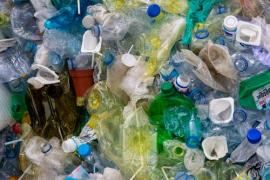
Government to tackle plastic pollution with labour, plastic sector
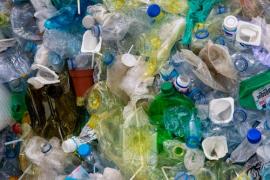
While government has made progress in tackling plastic pollution, it has committed to address the problem of plastic pollution in consultation with the plastic industry and organized labour as the sector sustains approximately 60 000 jobs.
Over the past two years, five registered extended producer schemes that support plastic waste collection and recycling have been registered in the country, resulting in the removal of 368 600 tons of plastic waste from the environment.
“It has supported between 60 000 and 90 000 waste reclaimers and it has promoted hundreds of public clean up and public education initiatives,” Minister of Forestry and Fisheries and Environmental Affairs Barbara Creecy said on Tuesday.
The Minister was addressing the National Stakeholder Consultation Session on the Intergovernmental Negotiating Committee third session (INC-3) on the development of the international legally binding instrument on curbing plastic pollution taking place in Nairobi, Kenya.
“South Africa has a significant plastics industry that sustains approximately 60 000 formal jobs. Because of this we will ensure that as we approach the problem of plastic pollution and the measures necessary, we work in consultation with the plastics industry and organized labour.
“In the retail and fast-food space many outlets have substituted single use plastics with bio-degradable products. We now have regulatory requirements for re-cyclate content in plastic and black bags,” the Minister said.
Government’s initiatives to tackle plastic pollution have been done as part of the Extended Producer Responsibility (EPR) initiatives, which is a key policy instrument to address the increasing volumes of plastic pollution.
The Minister said negotiations with the plastic sector must be guided by the following principles:
- The first is that all decisions must be based on the best available science and what this science is telling us about the impact of certain products on the environment.
- The second is there needs to be open and transparent sharing of information about the chemicals used in plastic production, given the various applications of plastics in food contact applications;
- The third is that this new international legally binding instrument will likely result in the need for new regulatory controls on a domestic level;
- The fourth issue is finance: should the international instrument lead to obligatory measures to curb plastic pollution, there will be a need for these measures to be supported by equally ambitious means of implementation. So developing countries will argue for a financial mechanism that would ensure predictable and adequate financial resources to assist in curbing plastic pollution in developing countries.
Last year, South Africa supported the development of an internationally legally binding instrument to combat plastic pollution at the Fifth Session of the United Nations Environment Assembly in the first quarter of 2022.
“At that time we recognised the threat plastic pollution poses to human health, ecosystem functioning, and the marine environment. In signing up for this process, we recognised our constitutionally imposed obligation to protect our environment and human health.
“Consequently, on the domestic front we understand that this requires a holistic approach that understands the full life-cycle of plastic manufacture, use, and disposal in the context of the National Waste Management Strategy, 2020,” the Minister said.
Accordingly, South Africa has focused on three aspects:
- Supporting and strengthening municipal waste management services to prevent plastic leaking into the environment;
- Developing extended producer responsibility schemes to collect, reuse and recycle plastic waste with the aim of promoting a circular economy in the plastic industry;
- Promoting public awareness and clean up campaigns to remove plastic waste from rivers, wetlands, and beaches.
Bid to lower intensity of load shedding on track
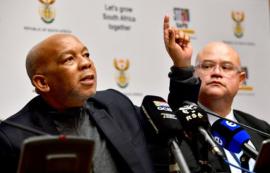
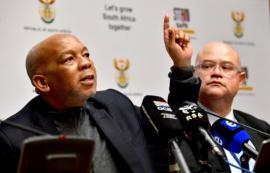
Minister in the Presidency for Electricity, Dr Kgosientsho Ramokgopa, says it is important for Eskom to up the reliability of generating units in order to maintain the credibility of efforts to lessen the intensity of load shedding.
The Minister was speaking at Arnot Power Station in Mpumalanga on Monday, where he kicked off a series of follow-up visits to power stations.
“We are on track to reducing significantly the intensity of load shedding. Of course, we had a period of eight days with no load shedding, then we hit a snag where 11 units were out as a result of boiler tube leaks. Those units are coming back.
“It’s important that we maintain the reliability of these units so that we are able to restore and maintain the credibility of our efforts and the ability of Eskom to resolve this challenge,” he said.
Ramokgopa said over the next two months, more generating units are expected to return to service – further boosting generation capacity for the grid.
“We are expecting Kusile [Power Station] Unit 2 to come on stream by the third week of November, and Unit 5 by the third week of December.
“But that’s not sufficient. We need additional generation capacity, especially renewable energy sources, because the Eskom fleet alone won’t resolve load shedding and secure energy security. That’s why we are investing a lot of effort and resources to ensure that we find a solution for the financing and rollout of transmission,” he said.
The Minister said financing for the rollout will cost “upward of R390 billon”.
“We are at an advanced stage, and taking a proposal to Cabinet to say this is how we think we can be able to tap into the liquidity that exists in the private sector so that we don’t just over-rely on these units that are ageing.
“We need additional generation sources and those principally have to be renewables. But renewables need transmission capacity… renewables also thrive on the existence of baseloads [like] coal, nuclear and hydro, [which] are some of those that are important to the resolution of this problem,” Ramokgopa said.