
Workshop to empower innovators gets underway
Small businesses, innovators and other role players in the intellectual property space will benefit from a specialised workshop that will help them tackle commercialisation challenges in the national system of innovation.
The advanced workshop on intellectual property commercialisation which kicks off today is taking place under the auspices of the Swiss-South African Intellectual Property project.
The project, according to the Department of Science and Innovation (DSI), is a collaborative venture between South Africa and Switzerland that aims to promote the use and protection of intellectual property rights.
The Department of Trade, Industry and Competition and its entity, the Companies and Intellectual Property Commission, are also participating in the project.
Meanwhile, the National Intellectual Property Management Office (NIPMO) will implement the DSI’s intellectual property programme.
The three-day workshop, which is scheduled to conclude on 2 November in Stellenbosch in the Western Cape, will include lectures, panel discussions and group discussions.
It will also focus on small, medium and micro enterprises, innovators, and anyone with an interest in intellectual property commercialisation in their innovation journey.
City Power to take over load shedding operations in supply areas
City Power is expected to take over control of the load shedding operations for most of the areas it supplies effective from Monday, 6 November 2023.
This is according to a joint statement released by City Power and power utility Eskom.
“This undertaking will bring changes to the load shedding blocks which will affect the schedule in areas load shed by City Power in Johannesburg and Eskom across Gauteng.”
The statement noted that areas that are load shed by City Power will remain on a two-hour schedule even during Stages 5 and above of load shedding.
“The two entities are both committed to ensuring that the security of supply is not compromised, and the obligations as outlined in NRS 048-9:2019 are followed and complied with as per distribution licensing conditions to protect the integrity and stability of the national grid even with the effected changes,” the statement read.
Areas which will continue to be load shed by Eskom are: Tshepisong, Lufhereng (Roodepoort), Hoogland, Maroeladal, Morningside, Riverclub, Dainfern, Bloubosrand, Waterford Estate, Riverbend, Kyasands, Bellairspark (Randburg), Halfway House, Halfway Gardens, Vorna Valley, Willowway (Midrand) and Marlboro Transit Camp (Alexandra).
“The two entities will keep exploring technical solutions that will enable City Power to take over the load shedding operations of its remaining customers. City Power has its processes, systems, and technical capacity in place to take over the added load shedding operations as part of the new schedule.
“The revised blocks and schedules will be available for the City Power and Eskom customers on 6 November 2023 on their websites. City Power customers are urged to contact the utility directly for the revised load shedding schedule,” the statement read.
For the revised schedules, customers can also visit www.citypower.co.za and Eskom customers can view their schedule at www.eskom.co.za
“City Power and Eskom will continue to partner and collaborate with the communities and stakeholders to ensure that electricity is delivered to all customers, as we know that electricity remains an essential service,” the statement concluded.
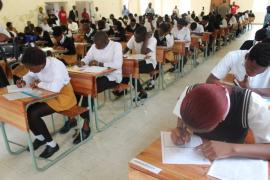
Class of 2023 sit for their first paper

With the start of the National Senior Certificate examinations today, Minister in The Presidency Khumbudzo Ntshavheni, has expressed confidence in the work done by the Department of Basic Education, schools management and educators to prepare the Class of 2023 for their final exams.
Class of 2023 sit for their first paper“We are also confident that the learners are ready and have prepared for this crucial examination period. As we wish the Class of 2023 all the best, we take this opportunity to remind them that it is their determination and hard work that will yield positive results,” the Minister said in a statement.
More than 95% of registered matric exam candidates (almost a million learners) will sit for the English additional language paper today.
Government has called on parents, guardians, and society as whole, to support these learners as they get tested to become future leaders and impactful role-players in communities.
More than 717 377 full time candidates and 181 143 part-time candidates in the public education system alone are registered to write the final examinations across 6 898 centres nationwide.
At the end of this examination period, the Class of 2023 will have collectively written 207 exam papers.
Government has urged parents and guardians to play a supportive role in their children’s academic journey and create a stress-free environment for studying.
“It is common for learners to feel anxious or overwhelmed during this time and learners are advised to talk to their parents, teachers, someone they trust or contact the South African Depression and Anxiety Group on 0800 567 567.
“The country has a collective responsibility to ensure that the first day of the National Senior Certificate (Matric) examinations are not disrupted,” the Minister said.
Government also extended well wishes to the more than 72 500 invigilators in 6 898 exam centres, who carry the responsibility of ensuring the integrity of the exams at the coal-face of the examinations.

Transport PPE contract reviewed and set aside

The Special Tribunal has set aside an R8 million personal protective equipment contract awarded by the Transport department in 2020.
The contract was awarded to the company, Ecko Green, to supply the taxi industry with personal protective equipment (PPE).
This as the Special Investigating Unit’s (SIU) application to review and set aside a personal protective equipment PPE contract awarded by the Department of Transport in April 2020 was successful.
The SIU welcomed the tribunal’s judgment in a statement.
“An investigation by the SIU revealed that Ecko Green was not registered on the government’s Central Supplier Database (CSD) when it was awarded the contract. Ecko Green edited details of another company on CSD in April 2020 for the purpose of submitting bid documents to the department.
“The Special Tribunal ruled that the procurement process that led to the awarding of the contract to Ecko Green is declared irregular and unlawful. Ecko Green was awarded a PPE contract despite not being on the department’s supplier database and its name was given to the department by a senior SANTACO [South African National Taxi Council] official.
“The company was ordered to pay the department R1 701 000 plus interest, within 30 days from the date of the order. This amount represents profit derived from the PPE contract,” the SIU said in a statement on Sunday.
The investigation also found that Ecko Green allegedly made a R220 000 payment to a company linked to then SANTACO chief executive officer Nkululeko Buthelezi.
“Buthelezi is the one who handed a list of suppliers to the transport department, which included Ecko Green. When questioned about the payment, Ecko Green director Sharon Bhimjee claimed that the funds were for ‘rendered advisory services’ by Buthelezi and were not associated with the Ecko Green contract.
“[Special Tribunal Judge Lebogang Modiba] stated that had Ecko Green declared its relationship with Buthelezi and disclosed the conflict of interest to the department, Ecko Green would have been excluded from the bidding process. Ecko Green’s failure to disclose Bhimjee’s business associate’s relationship with Buthelezi is grossly irregular, Judge Modiba found,” the SIU said.
Springboks win is a symbol of SA’s journey to nationhood
The Springboks’ nail biting victory over New Zealand carries far greater meaning and symbolism for South Africans than just a sporting achievement.
This is according to President Cyril Ramaphosa through his weekly newsletter on Monday.
The President described the win as historic at the Stade de France over the weekend and a reflection of South Africa’s own democratic journey.
“When South Africa first competed in the Rugby World Cup in 1995, our democracy was just a year old. Back then, there was just one black player on the team, the legendary Chester Williams. Of the squad that played in the past weekend’s final, just short of half were black players, including the team captain, Siya Kolisi.
“The journey of the Springboks to the historic victory in the 2023 Rugby World Cup is as much about our journey towards nationhood as it is about sporting excellence. It is as much about our quest to ensure that representation in all facets of public life, including sport, stands as a potent symbol of the cherished values upon which this country was founded,” he said.
President Ramaphosa said the fervent support for the ’Boks coming from all races and cultures shows that the team – whose history has been closely linked with the brutal Apartheid government – is embraced by South Africans everywhere.
“The fervent, colourful and touching displays of national pride from South Africans both at home and abroad during this tournament, show that perhaps as never before, the Springboks have well and truly been embraced by all races as their own.
“The viral clip of Springboks winger Makazole Mapimpi being cheered on by customers and store staff whilst out grocery shopping, and that of Eben ‘Elizabedi’ Etzebeth and RG Snyman dancing with South African fans near the Eiffel Tower in Paris are among my personal favourites.
“Witnessing so many South Africans don the national team’s colours and profess their support online and on other platforms speaks to the deep love for our country and to our ability to pull together even when the going gets tough,” he said.
The President reflected that South Africa’s “nationhood” has grown despite obstacles and uncertainty.
“At times such as this, when our country faces many problems that at times cause our spirits to flag, we are reminded that our South Africanness, our sense of community and belonging, and our very nationhood did not evolve overnight.
“It has taken considerable time to forge, and at times faced obstacles that threw us into uncertainty and doubt. But if the story of the transformation of South African rugby, a sport that was once the bastion of racial supremacy, is anything to go by – our country will continue to reap the benefits of change if we remain united and if we stay the course,” the President said.
He acknowledged that the country faces problems that “cannot be forgotten or wished away by a fleeting moment such as a sporting victory” but highlighted that the victory has united the country.
“It is our hope that it must also serve to inspire the younger generation to derive important life lessons about perseverance, teamwork, discipline and leadership. The interview that Siya Kolisi gave shortly after the team’s win on Saturday will be remembered as one of the most poignant and meaningful from a sports person in our country.
“He spoke about the different backgrounds of the team members and the difficulties they have had to overcome to reach this pinnacle of sporting achievement. You have to be South African to see, feel and experience the things we do,” he said.
“This Springbok squad is one of the best rugby teams in the history of the sport. But they are far more than that. They are also great ambassadors for our country and for the values that continue to drive our efforts to build a united, more equal and prosperous nation,” the President concluded.
Operation Shanela efforts pay off
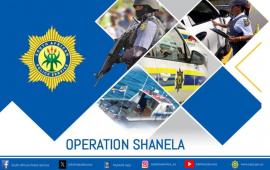
Efforts by various law enforcement agencies to curb various crimes in communities continue to yield successful outcomes with over 300 suspects having been arrested over the weekend in Gauteng.
The joint efforts comprised members of the South African Police Service (SAPS), Ekurhuleni Metro Police Department (EMPD), Gauteng Traffic, the Community Policing Forum, the Department of Home Affairs and other law enforcement agencies.
During the integrated Operation Shanela on Saturday, law enforcement agencies arrested two suspects for possession of three unlicensed firearms and ammunition while executing their duties at Moleleki Extension 2. The two were arrested after law enforcement officers went to a car wash and noticed a man hiding something in one of the cars. The police immediately approached the car and upon searching it, discovered two AK47 rifles, a pistol and ammunition.
“Among the suspects arrested this weekend, 277 suspects were nabbed by detectives who were tracing suspects in the District Policing precincts during their Shanela operations conducted on Saturday, whereby 129 [suspects] were arrested for contact crime, 21 for contact related crime, five for property crime, two for tempering with essential infrastructure, five for crimes depending on police action and 34 for gender-based violence,” said police on Sunday.
Ekurhuleni District Commissioner Major General Anna Sithole commended the efforts by the teams to reduce crime.
Meanwhile, in KwaZulu-Natal, 62 suspects were arrested for various crimes in KwaDukuza on Friday following an Operation Shanela initiative in the central business district.
Various disciplines from the KwaZulu-Natal police joined forces with multiple stakeholders to remove criminals from the streets.
The suspects were arrested for various offences such as possession of drugs, dangerous weapons, illicit cigarettes, illegal medicines as well as counterfeit goods.
A total of 36 illegal immigrants were also detained for contravention of the Immigration Act.
The police also recovered 60 heroine capsules as well as dagga and counterfeit goods with a street value of R140 000. A number of scrapyards were also searched and the police seized scaffolding equipment and a bakkie.
The arrested suspects are expected to appear in the KwaDukuza Magistrate’s Court today.

Springboks to embark on a four-day trophy tour

South Africans will get an opportunity see the 2023 Rugby World Cup trophy when the Springboks rugby team tour the country this week.
The world champions will embark on a four-day Trophy Tour to major regional population centres from Thursday. The team arrives back in South Africa on Tuesday (10:55am) at OR Tambo International Airport and will commence the tour 48 hours later.
This as the national side triumphed over New Zealand in the final match of the tournament, beating New Zealand 12-11 on Saturday to lift the Webb Ellis trophy.
The tour will start in Pretoria, Johannesburg and Soweto – concluding at FNB Stadium – on Thursday, 2 November. It will then continue in Cape Town (Friday, 3 November) and Durban (Saturday, 4 November) before concluding in the Eastern Cape (East London) on Sunday, 5 November.
“The locations have been selected for population size in the first three instances and because of the Eastern Cape’s rugby significance in the fourth. Satellite tours to Bloemfontein, Nelson Mandela Bay and other centres will be scheduled for 2024. Such tours following the 2019 victory had to be abandoned because of the COVID-19 pandemic.
“The route for each tour has been prepared in consultation with the respective local authorities and the South African Police Service,” SA Rugby said on Sunday.
Route maps and timings will be published at www.springboks.rugby, on SA Rugby’s social media channels and by local authorities in due course.
SARS apologises to taxpayers
The South African Revenue Service (SARS) has put on hold the SMSs that were sent out earlier this week, referring to possible prosecution of taxpayers for their failure to file their returns, as they are legally obligated to do.
“The SMS that was sent out earlier this week, in relation to outstanding returns fell short of the high professional standard we seek to uphold. SARS therefore sincerely apologises for the manner in which this matter was handled, the frustration it may have caused honest taxpayers, and any inconvenience caused,” SARS said on Thursday.
SARS said the intended message was meant as a genuine and helpful reminder to taxpayers to file tax returns due and fulfil their legal filing obligation.
“While SARS is empowered by law to remind all taxpayers that are still registered with SARS of their legal obligation to file their relevant returns by the due date, SARS does not commence legal action before engaging with taxpayers.”
SARS said that a company is expected to file a return if it meets the following conditions:
- Derived gross income of more than R1 000;
- Held assets with a cost of more than R1 000 or had liabilities of more than R1 000, at any time;
- Derived any capital gain or capital loss of more than R1 000 from the disposal of an asset to which the Eighth Schedule of the Income Tax Act applies; and/or
- Had taxable income, taxable turnover, an assessed loss or an assessed capital loss.
Taxpayers who meet the above conditions must file their returns.
“Unfortunately, SARS’ reminders are ignored by some taxpayers, which means that their situation escalates to levels where legal action may be required. Even then, they are reminded about their obligation to file the outstanding returns,” SARS said.
SARS has reminded taxpayers that it remains their legal obligation to ensure that their tax affairs are regularised, where these are not in order.
“SARS will engage with taxpayers with respect to outstanding returns at the appropriate time. We need to be clear that taxpayers who continue to ignore reminders and fail to regularise their tax matters, in accordance with the law, will eventually have to answer for their continued non-compliance.
“Lastly, SARS appreciates the effort of honest taxpayers who diligently comply and fulfil their obligations. We value your valuable contribution to the important work incumbent on us.”
Climate finance remains a key issue: Creecy
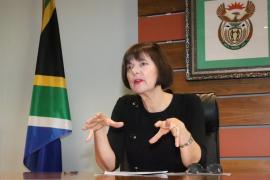
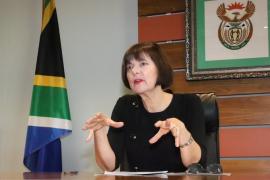
Minister of Forestry, Fisheries and the Environment, Barbara Creecy, has expressed concern that developing nations have continually called for more support for the financing of the fight against climate change, yet the funding targets pledged by developed countries are still not being met.
“At the 28th session of the Conference of the Parties (COP28), there will be a renewed call for a scaled-up and predictable goal for climate finance. The deadline for agreeing upon this goal is 2024, and the success of this COP, and perhaps future climate talks, will depend on the outcome,” Creecy said on Thursday.
She was addressing the National Stakeholder consultations on the UN Framework Convention on Climate Change (UNFCCC) COP 28.
“Whilst the establishment of a global fund for loss and damage is indeed a milestone, the difficult task of working out the details of the fund – how it will be financed, where finance will come from, and the form of such finance – will be one of key agenda items in Dubai.
“As with all COPs, finance will remain a key issue. COP 28 therefore takes place in a context where we cannot simply congratulate ourselves for the apparent progress we have made whilst key issues still need to be addressed,” the Minister said.
COP28 to the UNFCCC will be held at Expo City, Dubai in the United Arab Emirates (UAE) from 30 November – 12 December 2023.
“At COP 27, South Africa and the Africa Group put forward the proposal to include the special needs and circumstances of the continent on the conference agenda, but this did not enjoy consensus. This proposal will be made again at COP 28.
“Acknowledging the special circumstances of the African continent will be an important step in upholding the principle of differentiated responsibility, and would recognise the continent’s vulnerability to climate change, but also the need for mitigation and adaptation support,” the Minister said.
She said the first Global Stocktake (GST) will be completed at COP28, where the world will take stock of the collective progress since adopting the Paris Agreement, and make recommendations where implementation of the Agreement is not on course to achieve its long-term goals.
“We already know we are not on track, based on the detailed evidence presented by Parties and other stakeholders during the technical dialogues of the GST over the last year. The outcome of the GST will be the central outcome of COP28, and this outcome must increase collective action on mitigation, adaptation, loss and damage and the provision of support to developing countries to achieve this, commensurate with the challenges we face,” Creecy said.
She noted that the technical phase of the GST (in a series of technical dialogues) has made clear that, while action is proceeding under the Paris Agreement, much more is needed now on all fronts.
“The world is far better off than it would have been without the Paris Agreement and multilateral cooperation, but we are not on track to achieve the global goals we agreed to in Paris in 2015.
“The discussions on the outcome of the GST have started, and focus on key political messages, and more importantly, multilateral and national measures that need to be put in place to accelerate our journey towards a more sustainable and equitable world.
“As the co-facilitator of the consultations on the outcome of the political phase of the GST, together with Demark, South Africa is supporting the incoming Emirati COP Presidency to help identify areas of convergence and divergence between Parties in the run-up to and during COP28,” the Minister said.
She said at the past three COPs, the South African delegation has joined delegations from other developing countries in calling for a clear adaptation work programme with clear targets for building the resilience of developing countries and clear financial mechanisms to achieve this.
“To date there has been little or no progress on this matter,” the Minister said.
SA fully committed to addressing climate change
Creecy affirmed South Africa is commitment to addressing climate change based on science, equity and in the context of sustainable development.
“Hence, our updated Nationally determined contributions (NDCs) seek to balance the three structural components of mitigation, adaptation and the need for international support for implementation.
“Our Climate Change Bill, which was adopted by the National Assembly on Tuesday, will lay a strong legal basis for climate action, and the regulatory framework for the whole of government, business, organised labour and civil society to implement our country’s climate commitments,” the Minister said.
She said COP28 provides a key platform for broader conversations, including:
- How developing countries in Africa can take advantage of their abundant renewable resources and strategic minerals to build shared prosperity and sustainable development on the continent;
- The threat to sustainable development posed by unilateral trade measures imposed outside the Paris Agreement and in violation of its key principles, and
- The pressing need for transformation of the global financial architecture to make the global financial system fit for purpose, in assisting countries to combat climate change and achieve their sustainable development goals.
Mashatile dismisses notion that cadre deployment is linked to municipal service delivery challenges
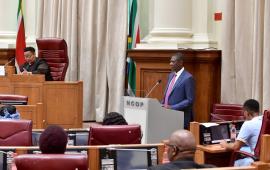
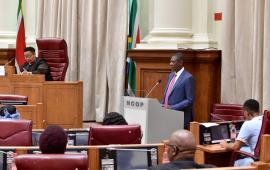
Deputy President Paul Mashatile has told the National Council of Provinces (NCOP) that government has no cadre deployment policy, legislation or procedure.
“Nonetheless, the ANC established a cadre development and deployment process after the democratic breakthrough in order to safeguard democracy and good governance, while assuring rapid and purposeful transformation,” he said on Thursday.
The Deputy President was responding to a question in Parliament about whether cadre deployment has led to a lack of service delivery, as many officials in municipalities are unqualified to undertake the necessary infrastructure maintenance, leading to excessive sewer spillages.
Mashatile explained that the logic behind establishing a cadre development and deployment process is to ensure that the most suitable practices are used in recruitment and prioritising the appropriate placement of skills, especially during the transition period and beyond.
“The process of appointing Mayors, Speakers and Exco Members in municipalities is led by the African National Congress. It is, therefore, incorrect to link cadre deployment with service delivery challenges faced by our municipalities.”
In addition, Mashatile said government is committed to professionalising the public service.
In 2022, the State adopted a National Framework towards the Professionalisation of the Public Sector.
“In our view, the professionalisation of the public sector requires a non-partisan approach, which embraces the merit principles in all staffing practices in the public sector.
“For this to be realised, the public sector must be non-partisan by insulating it from the politics of political parties. This is important for the bureaucracy to continue to implement its political mandate loyally and diligently, as set by voters and the governing party or parties, yet refrain from being a political actor itself.”
He said the ruling party has always argued for the professionalisation of public service, including the development and adoption of the Public Service Act.
the Public Service Act, he stressed, demands a credible process, panel-driven interview, verification of qualification and contestable outcome.
“We remain committed to building a patriotic, professional public service with the necessary technical knowledge to deliver services for the people.”
Deputy President Mashatile reiterated that the challenges facing local government are multi-dimensional and primarily rooted in poor governance, weak institutional capacity, poor financial management, and political instability.
Shifting his focus to the Theba Chweu issue in Mpumalanga, he said the local municipality has acknowledged challenges with their Water Waste Treatment Plant (WWTP), which causes continuous sewer spillages.
“However, progress has been reported towards addressing this challenge,” he said, adding that the refurbishment and upgrade of the Lydenburg WWTW is underway.
He told the Members of Parliament that the project is funded by the Department of Water and Sanitation and Ehlanzeni District Municipality as the implementing agent.
“As a government, we now have a fully-fledged war room on service delivery focusing on a package of interventions that are aimed at accelerating the stabilisation of local government, focusing on addressing water and energy challenges.”
Government is also fast-tracking the processing of the South African National Water Resources Infrastructure Agency Bill, 2023, which is intended to establish the National Water Resources Infrastructure Agency that will improve the management of bulk water infrastructure in South Africa.
Agriculture
In addition, he stated that government was steadfast in accelerating land reform and rural development, while agricultural support remains top of the agenda.
He touched on the Department of Agriculture, Land Reform and Rural Development’s R2.15 billion budget to assist farmers with production inputs and the revitalisation of an enabling agricultural infrastructure under the rural infrastructure development sub-programme.
In addition, he said the department will implement 83 infrastructure development projects in farmer production support units, fencing and animal handling facilities in the 2023/24 financial year.
“We are implementing the re-vitalisation programme of agricultural infrastructure because it is a critical intervention towards improving agricultural production and food security.”
He believes that beneficiaries of the land reform programme should become active players in the economy.
“This is evident in the River Valley Catalytic Programme, which focuses on irrigation and water infrastructure for agricultural production through irrigation schemes, construction and rehabilitation of rural and farm access roads to markets.”