

Climate Commission to hold Komati Power Station community consultations

The Presidential Climate Commission (PCC) says it expects to host a multi-stakeholder community consultation at Blinkin Village in Mpumalanga to “consider and discuss its Interim Report and Recommendation on the Komati Power Station Decommission and Repurposing process”.
The community consultation will be held on Friday.
“The report follows initial submissions and an oversight visit conducted by the Commission on 7 July this year. The PCC visited the Eskom Komati Power Station earlier this year with the intention of understanding the process of decommissioning and repurposing, and make recommendations on the lessons learnt from the process.
“The consultation on Friday follows from the decision of the commission’s 11th quarterly meeting held on the 29th of September, to go back and consult with various stakeholders about the ongoing process of decommissioning and repurposing the Komati Power Station and to enrich and address gaps on the PCC’s interim report and the associated recommendations,” the PCC said in a statement.
The Komati Power Station was officially taken off the grid in October last year after serving the population since 1961.
Since then, Eskom has revealed that it will use the power station as a renewable energy site.
The Komati site is expected to be powered by 150MW of solar power, 70MW of wind power and at least 150MW of battery storage power.

Be on the look out for scammers, warns department

The Department of Public Works and Infrastructure (DPWI) has issued a warning to members of the public, especially job seekers and small businesses, of scammers who are out in full force ahead of the festive season.
“Please be not foolish with your money and be misled and lied to by scammers,” the Department of Public Works and Infrastructure said in a statement.
The department said it does not offer any jobs or tenders that are not officially advertised in the Department of Public Service and Administration (DPSA) circular, on the official departmental website – www.publicworks.gov.za – or national newspapers.
The website, application links and the email addresses always end with “gov.za” and never with “.org” as advertised in the latest fraudulent adverts.
The public is warned to be on the lookout for these scammers who often request payments from people for government services that are never paid for.
“Please take note that the government will never request payments for services, jobs and tenders – the so-called RFQ. Any request or demand for money on any ‘job advert’ should set off the alarm bells already.
“We urge all job seekers to always verify all advertised vacancies by going to the official websites as highlighted above. Job seekers are also advised to visit the DPWI offices to verify any vacancies advertised,” the department said.
Any Request for Quotation (RFQ) or suspicious job offers must be verified with the department.
The public is advised to visit the departmental website or contact 012 406 1439 or Lesole.Matsotso@dpw.gov.za.
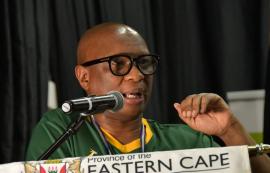
Kodwa attends International Convention Against Doping in Sport

Minister of Sport, Arts and Culture Zizi Kodwa is leading the South African delegation at the Ninth Session of the Conference of Parties (COP9) to the International Convention Against Doping in Sport.
The conference, which starts on Wednesday until Thursday in France, will consider issues of the World Anti-Doping Agency (WADA), compliance to the International Convention Against Doping in Sport, and governance in anti-doping policies.
Kodwa will also attend COP9 in his capacity as Vice-President of the International Conference of Ministers and Senior Officials Responsible for Physical Education and Sport (MINEPS).
The Minister was elected to this role at MINEPS VII, the Seventh International Conference of Ministers and Senior Officials Responsible for Physical Education and Sport.
As Vice-President of MINEPS, Kodwa plays a leading role in the only global platform of its kind, which engages governments, intergovernmental organisations, the sport movement, academia and non-government organisations in intellectual, technical and strategic exchanges in the field of physical education and sport.
At COP9, Kodwa will advance South Africa’s position to encourage the United Nations Educational, Scientific and Cultural Organisation (UNESCO) to improve and strengthen its compliance mechanism.
The Minister Kodwa will also play a leading role in uniting African states at this gathering.
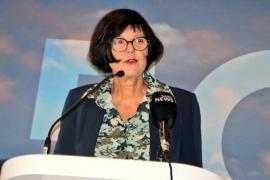
Call to reduce carbon emissions
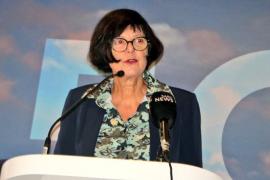
Minister of Forestry, Fisheries and Environmental Affairs, Barbara Creecy, has called for nations to move with speed to reduce carbon emissions to limit the severity of climate change impacts.
“Simultaneously, we have to adapt and build resilience to the impacts that will occur, even in a 1.5 degree world. The Sixth Report of the International Panel on Climate Change shows us that the world is already dangerously close to an average temperature increase of 1.5 degrees above pre-industrial times,” the Minister said on Tuesday.
She was addressing the National Assembly debate on the Climate Change Bill, which will enable the orderly reduction of greenhouse gas emissions through the implementation of sectoral emission targets to guide the journey to the mid -century net- zero commitment.
The Bill will also ensure the country reaches its Nationally Determined Contribution by assigning individual enterprises carbon budgets and facilitating public disclosure of the progress.
“We know climate change impacts will hit the most vulnerable communities first, and will hit them the hardest. A key part of building climate resilience is to set up ‘early-warning’ systems so that communities can prepare for disasters before they happen,” the Minister said.
According to the Global Commission on Adaptation, knowing that a natural disaster event will happen 24 hours before it occurs can reduce damage by 30 percent.
The Department of Forestry, Fisheries and the Environment and the South African Weather Service (SAWS) currently provide regular weather updates and have technology that can give South African communities advanced warning of extreme weather events.
“Our fundraising efforts aim to improve existing infrastructure and replace outdated and dysfunctional systems. Responding to climate change is not the responsibility of government alone.
“Every aspect of society and the economy will be impacted upon. Consequently, the Bill will formally establish the Presidential Climate Commission as a statutory body to mobilise communities, organised labour, business and civil society to represent a whole of society response to future challenges,” Creecy said.
Last month, African leaders adopted the Nairobi Declaration on Climate Change and Call to Action, which recognises that decarbonising the global economy is an opportunity to contribute to equality and shared prosperity on our continent.
“In support of this vision, President Cyril Ramaphosa, at the United Nations Climate Summit, called on developed countries to meet the need for new, predictable public finance to support climate adaptation and build resilience to loss and damage in developing countries so that no country should ever have to choose between development aspirations and climate action.
“With abundant solar and wind resources, and significant reserves of critical minerals, South Africa is positioning itself to be a leader in renewable energy, green hydrogen and sustainable industrialisation.
“The Just Transition Framework developed by the Presidential Climate Commission aims to ensure that climate actions adhere to principles of procedural, restorative and distributive justice. Consequently as our country develops our vision of a Just Transition to a low carbon economy and climate resilient society we will ensure it is sustainable, inclusive, comprehensive and leaves no one behind,” the Minister said.
The Climate Change Bill will provide impetus for mainstreaming the country’s climate and disaster response by placing a legal obligation on every organ of state to coordinate and harmonise policies, plans, and programmes, to make sure climate change risks and associated vulnerabilities are acted upon by national, provincial and local government.
“Because sub national governments already face financial shortfalls, the Bill provides mechanisms for national government to provide additional support for our climate change response. Already the Department has mobilised finances to assist municipalities to prepare climate response strategies.
“Honourable members, government and society have already achieved a great deal through voluntary co-operation. With this important legal instrument, we are approving today, much more can be achieved for both people and nature,” the Minister said.

Minister Nxesi commends CCMA on clean audit outcome

Employment and Labour Minister Thulas Nxesi has commended the Commission for Conciliation Mediation and Arbitration (CCMA) for delivering another clean audit outcome in the financial year 2022/23.
In a statement, the department said the endorsement by the office of Auditor-General of South Africa (AGSA) will strengthen the organisation’s continued commitment of expeditious dispute management, prevention and resolution services.
The CCMA, in maintaining an unqualified audit opinion with no findings audit for the 2022/23 financial year, further reported that a 94% performance was achieved against planned targets of the approved 2022/23 Annual Performance Plan (APP).
Nxesi said the clean audit opinion means that the CCMA’s 2022/23 audited Annual Financial Statements (AFS) were free from material misstatements, that no irregular, fruitless and wasteful expenditure incidents were reported, and no issues of supply chain management were observed.
A clean audit further confirms that reported performance is supported by valid, reliable and complete performance evidence.
“The above noted audit opinion and performance results are registered amidst fiscal constraints, an increased caseload and difficult labour market conditions brought about by the current socio-economic challenges confronting the South African labour market.
“Despite these challenges, the CCMA remained undeterred in its delivery of its mandate, the commitment to the adherence of good corporate governance is re–affirmed in this regard,” Nxesi said.
The Minister commended the CCMA’s governing board, senior management team, the Commissioners, the Commission Staff Association (CSA) and all employees for their passionate work and patriotism to the country as they work under extraordinary times as they execute their duties.

DCS aims for improved inmate matric pass rate
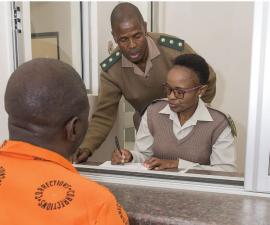
With the national matric exam season about to get underway, the Department of Correctional Services (DCS) is aiming for an improvement in the pass rate for inmates writing matric exams.
National Commissioner of Correctional Services, Makgothi Thobakgale, said: “Education fosters a sense of self-worth and purpose among inmates. As a result, this can boost their self-esteem and reduce the likelihood of returning to criminal activities. [Through] strategic partnerships and hard work by educators and correctional officials, DCS is more optimistic of a promising future”.
Last year, inmates obtained an 87.5% pass rate with some 11 schools reaching a 100% pass rate.
“As if that was not enough, four inmates went on to achieve six distinctions, wherein, the best performing offender scored an average of 87.9%. With a better level of preparedness in the 2023 academic year, DCS is confident of an improved performance for the current year,” the department said.
The department explained that at least 198 inmates will sit for the exams.
“They commenced with Computer Applications Technology on 24 October 2023 and shall go full steam on 30 October 2023 tackling English Paper 1. [The department] had 204 registered inmates for the [National Senior Certificate] examinations but six benefited from the special remission of sentences, thus taking them out of Correctional Centre schools.
“The NSC examinations are an important yardstick for Correctional Services as we seek to inspire positive change within the correctional system, empower inmates with the tools for personal growth and rehabilitation, and to ultimately reduce the crime rate in the country,” the department said.
Furthermore, other inmates will also be taking up their pens to write other examinations.
“The same push is to be experienced with another cohort of inmates involved in examinations, being Adult Education and Training (AET), and Tertiary Education and Technical Vocational Education and Training (TVET), in various facilities across the country. A total of 1 180 inmates will be sitting for AET Level 4 examinations, whilst 1 471 will be writing TVET papers,” the department said.
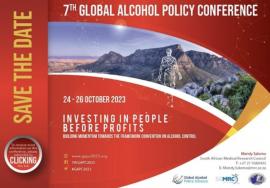
Collective action needed to reduce alcohol harm

The first Global Alcohol Policy Conference held on African soil got off to a good start as Minister of Social Development Lindiwe Zulu reaffirmed government’s commitment to work towards reducing alcohol harm alongside academics, policy specialists and civil society.
“For us as the host country, this conference could not have come at a more opportune time. A [few] months ago, we tabled the Draft Policy on the Prevention and Treatment for Substance Use Disorders to the Social Protection, Community and Human Development (SPCHD) Cabinet Committee for public consultation.
“The policy provides a framework for decision-making within the whole sector about where the greatest drug-related harms are occurring, and identifying the best strategies to address those harms,” Minister Zulu said.
The 7th Bi-Annual Global Alcohol Policy Conference (GAPC) – currently being held in Cape Town – is the leading forum for the world’s alcohol policy makers, advocates, researchers, civil society activists and practitioners.
The conference is an important gathering for government, policy makers, civil society organisations, academia and research institutions in the frontlines of drugs and the alcohol sector across the globe.
The Cabinet Committee approved the Policy for public consultation and recommended the resuscitation of the Inter-Ministerial Committee for alcohol and substance abuse to ensure coordination, strategic alignment and decision making in harm prevention and reduction strategies across government.
Bongiwe Ndondo, the Chairperson of the Southern African Alcohol Policy Alliance in South Africa, called on government to truly prioritise people.
“I wish to remind us that our lawmakers are us, and we are our law makers. The people we send to be legislators are who our advocacy efforts need to target the most. Perhaps even more than government, who should be enforcing what society has agreed,” Ndondo said.
She added that the role of regulators needs to be strengthened. One must underscore the role of government as a referee in protecting citizens’ interests and in particular those most impacted and with the least power.
Ndondo reminded conference delegates of the need to be aggressive against the alcohol industry as their interest is never on the side of the people.
“I want to remind us that we have been here before. We cannot forget the gains made in the fight against smoking, a dark period in our history when the power and influence of the tobacco industry seemed unsurmountable; when the industry employed aggressive tactics to thwart and derail legislative changes intended to safeguard the interests of public health,” she said.
She urged South Africans to see the battle for the regulation of alcohol use in the same light as tobacco regulation.
“We are faced, collectively, with the responsibility to centre humanity in the face of narrow commercial interests of a powerful minority. We know that corporates left to their own, will maximise profits at the expense of all and sundry,” Ndondo said.
Chairperson of the Global Alcohol Policy Alliance (GAPA), Professor Sally Casswell in her opening remarks said there is a need to work towards the reduction of alcohol harm and the reduction of inequities in relation to alcohol harm.
“The industries are in fact targeting the consumers, new consumers in middle-income-countries in order to increase their growth and their profits,” Casswell said.
The conference continues today and will discuss:
⁃ regulating digital marketing of alcohol
⁃ Disrupting the impacts of conflicts of interest: Government and Inter-governmental responsibility and accountability in relation to conflict of interest.
Disaster teams respond to damage caused by heavy rains in KZN
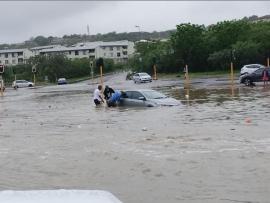
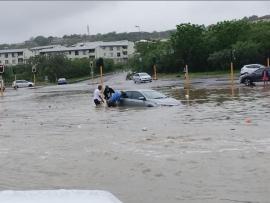
KwaZulu-Natal Provincial Disaster Management teams are currently assisting people affected by heavy rainfall and strong winds that caused widespread destruction, particularly in Mtubatuba in the northern part of the province, at the weekend.
According to the provincial Department of Cooperative Governance and Traditional Affairs’ (CoGTA) initial report, at least four people from Mtubatuba lost their lives due to a thunderstorm accompanied by strong winds over the weekend.
The storm ripped roofs off houses and caused damage to infrastructure, including power cables, roads, bridges, and vehicles.
“Up to now more than 70 houses in the Somkhele and KwaMyeki areas have been identified as destroyed. Some houses suffered complete damage, rendering families homeless.
“There are also reports of damaged vehicles and in certain areas Eskom poles and cables are scattered across roads and people’s properties. Community halls and churches have opened their doors to the public, while others have sought alternative accommodation with relatives,” the department said in a statement.
In the Harry Gwala District, the Greater Kokstad Municipality has also experienced heavy rains and a hailstorm in the Pakkies Location. Approximately six households were affected, with no reported fatalities, injuries, or displaced individuals at the time of the report.
In the Umzimkhulu Municipality, heavy rains in the Madakeni location affected four households, with no fatalities reported, while in the Umgungundlovu District, about 23 households in the Rosetta informal settlement under the Mpofana Local Municipality were affected by the hailstorm on Saturday.
In Ulundi, under the Zululand District Municipality, a block of rental rooms was blown away by strong winds, with no reported injuries.
Cooperative Governance and Traditional Affairs MEC, Bongiwe Sithole-Moloi has conveyed her sincere condolences to the families and friends affected by the incidents.
Sithole-Moloi said disaster management teams will continue on-site assessments and provide relief including mattresses, blankets, food, and plastic sheeting.
“We are collaborating with other government departments, such as social development and human settlements, to aid all victims. Our teams, in conjunction with municipalities, will persist in assessments to determine necessary government intervention.
“We extend condolences to those who lost loved ones during this period. While we acknowledge that certain incidents are unavoidable, such as the thunderstorm with strong winds that devastated houses in Mtubatuba, we encourage communities to take safety precautions, such as relocating to safer areas where possible,” Sithole-Moloi said.
As heavy rains persist across various parts of the province, the MEC said provincial disaster management teams remain on high alert.
She said ongoing assessments will lead to an updated report, once the preliminary findings are consolidated.
Meanwhile, the MEC will today visit the affected families in Mtubatuba to convey her condolences to the families, and also conduct an assessment of the extensive damages in the area, where several homes were destroyed.
Inter-faith community called on to help crime afflicted communities
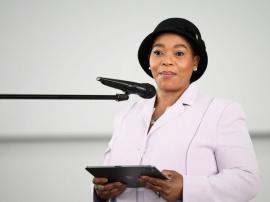
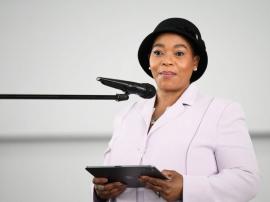
KwaZulu-Natal Premier, Nomusa Dube-Ncube, has reiterated the call to the inter-faith community to continue praying for all communities afflicted by crime, gender-based violence and femicide (GBVF), rape and murder.
“It is my view that crime prevention cannot be left to be the responsibility of government alone. Let us all hold hands and work together,” Dube-Ncube said.
Dube-Ncube made the call during the Provincial Youth Committee Gospel Arts and Culture Competition, held in Mthwalume, South Coast on Sunday. Participants in the competition showcased their talents and competitive spirit in gospel music, arts and culture.
The Premier said violence meted out against women in particular, is a shame and is a threat to all social cohesion and nation-building efforts.
“Today’s event reminds us that our communities are plagued by the scourge of GBVF and Crime in general. Crime here in the Mthwalume area in recent years and GBVF in particular has been a major worry.
“While the Minister of Police, Bheki Cele has assured me that the crimes of murder especially GBVF are being attended to, I urge the community to work closely with the SAPS [South African Police Service] to do everything to address all the sources of crime in this area and in the rest of the province,” she said.
The Premier said the advent of the Fourth Industrial Revolution (4IR), places power in the hands of artists.
“With access to technology artists can now interact directly with their audience, create songs and post to all streaming platforms without the help of a manager or record label. This can take place whether you are Johannesburg or New York or even in a backroom here in Mthwalume.
“While the labels and record companies still do have a place, artists are now positioned better to attract success before labels get to them. Today’s event is therefore more than just entertainment or competition, but is an opportunity to minister, and also to provide economic empowerment opportunities in music and the performing arts to artists from all over our province,” the Premier said.
She added that bringing a gospel competition to Mthwalume is a demonstration that gospel music, which is one of the most popular genres in South Africa, belongs to the people. She said it underlines her belief that development of rural areas is as important as addressing the issue of services in rural areas.
Mashatile to address National House of Traditional Leaders gathering
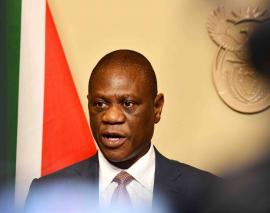
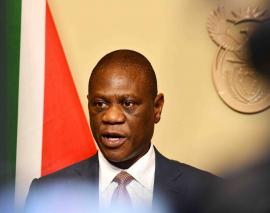
Deputy President Paul Mashatile is expected to participate and speak at a gathering convened by the National House of Traditional and Khoi-San Leaders.
According to the Presidency, he will meet with the leaders as Chairperson of the inter-ministerial task team on matters of traditional and Khoi-San leaders, at the Ilanga Estate, Bloemfontein, Free State, on Tuesday, 24 October.
The 2023 Traditional and Khoi-San Leaders Xivijo, will focus on promoting development and social cohesion in traditional communities through cooperation with government and the private sector.
The meeting will emphasise the purpose and objective of building cohesive communities driven by the vision for development, Ubuntu and self-sustainability.
Xivijo is a Xitsonga expression of a gathering, usually called by the traditional leadership.
Representatives of the National, Provincial and Local Houses of Traditional and Khoi-San Leaders, Congress of Traditional Leaders of South Africa (Contralesa), the Royal Leaders of South Africa (Rolesa), National Khoi-San Council, government and private sector representatives are expected to attend the gathering.
The aim, the Presidency said, is to engage on all matters affecting the institution of traditional leadership and its contribution to rural development.
“Established by the President, the inter-ministerial task team led by Deputy President Mashatile, will during this candid session, present progress reports on work carried out by various work streams led by Cabinet Ministers in addressing issues raised by the traditional leadership.”
This programme will include progress achieved in several areas including:
• Advancing land ownership, tenure rights and fast-tracking socio-economic development of rural communities.
• Building institutional capacity and ensuring support to traditional and Khoi-San leaders.
• Advancing infrastructure investment and skills development in rural communities.
• Promoting unity, social cohesion and nation-building in rural communities.
• Fast-tracking the finalisation of policy, legislative and constitutional matters.
“Government is committed to work together with the institution of traditional leadership in addressing the socio-economic challenges facing the country and it is also dedicated to strengthening the significant role they play, in the reconstruction and development of the country, especially in rural areas,” said the Presidency.
The Deputy President will be accompanied by Cabinet Ministers, Free State Premier, Mxolisi Dukwana, and senior government officials.