
Farmers urged to implement risk-reduction measures
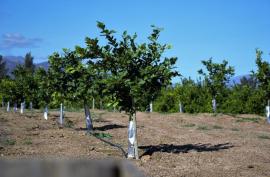
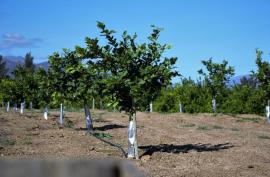
Farmers have been advised to be on the lookout for daily extreme weather warnings and implement risk-reduction measures.
This comes as the Department of Agriculture, Land Reform and Rural Development (DALRRD) says that in large parts of the country poor to reasonable veld and livestock conditions are being reported.
“Veld fires in several provinces have resulted in damage to grazing land and infrastructure, as well as contributing to livestock fatalities. Land preparations are underway for summer crops, and assessments are being conducted by provinces to quantify the damage,” the department said.
According to the Seasonal Climate Watch issued by the South African Weather Service (SAWS) on 3 October 2023, above normal rainfall is anticipated for large parts of the country during the early part of summer “though mostly with low probabilities of above normal rainfall”.
“Below normal rainfall is expected during mid-summer over the western and central parts of the country as predictions still favour above normal rainfall conditions over the north-eastern parts of the country during mid-summer, even with an El Niño in place,” the weather service reported.
The weather service warned that the El Niño effect might still manifest its influence over the next few months and change the outlook of the rainfall forecast for mid- and late summer. Both minimum and maximum temperatures are expected to be above normal countrywide.
Considering the seasonal forecast and accompanying caution, the department advised farmers to approach the season with vigilance.
“Dryland farmers should wait for sufficient soil moisture before planting. Drought-tolerant cultivars should be prioritised in areas that have constantly been experiencing dry conditions.
“In regions that are in a reasonable condition, farmers are advised to prepare in line with the expected conditions, i.e. in line with the seasonal forecast. However, they should not expand planting land unnecessarily,” the department said.
It advised farmers to consider short-season cultivars and note that rainfall distribution continues to remain a challenge, and not all areas might receive the anticipated above normal rainfall that is well distributed.”
It further advised farmers to put measures in place for pests and diseases associated with wet and hot conditions, as normal rainfall and high temperatures are anticipated during early summer.
“Farmers using irrigation should comply with water restrictions in their areas. Farmers must continually conserve resources in accordance with the Conservation of Agricultural Resources Act (CARA), 1983 (Act No. 43 of 1983).
“Livestock should be kept in balance with carrying capacity of the veld and provided with additional feed such as relevant licks. Additionally, livestock should be provided with enough water points on the farm as well as shelter during bad weather conditions,” the department said.
The creation and maintenance of fire belts should be prioritised as well as adherence to veld fire warnings.
“Episodes of flooding resulting from rain-bearing weather systems are likely and preventive measures should be in place. Farmers are encouraged to implement strategies provided in the early-warning information issued.”
Reflecting on 30 years of media freedom
Media Monitoring Africa Head of Programmes Thandi Smith has recognised government’s role in supporting and promoting media freedom while reflecting of the 30 years of media freedom in the country.
“We can be confident in celebrating the gains that we have made. The 2023 World Press Freedom Index has shown that South Africa ranks 25 out of 180 countries in terms of a free press, which is something to celebrate,” Smith said on Wednesday.
The 21st edition of the World Press Freedom Index, which is compiled annually by Reporters Without Borders (RSF), evaluates the environment for journalism in 180 countries and territories.
Addressing a webinar reflecting on the 30 years of community media in South Africa, she said Namibia is the only African country that is ahead of South Africa, ranked at 22.
“In the continent we are in the top two of the most free media countries. Government has had an important role to play in promoting and supporting the free media that we do enjoy in South Africa,” Smith said.
As part of commemorating Media Freedom Day, the Government Communication and Information System (GCIS) hosted a webinar reflecting on the 30 years of community media in South Africa.
While government’s efforts of creating an environment for a free media are being recognised, Smith cautioned government against reversing the gains that have been made.
She mentioned that the sustainability and lack of funding for community media was a threat to media freedom.
“The importance of community media cannot be challenged. It is one of the three tiers of the media that plays a critical role in the country. We are also seeing that we are taking a few steps back in supporting and promoting the media freedom that we have enjoyed over the years.
“We are backsliding in terms of the legislation and regulation being drafted at the moment that is clamping down on those gains in the sense of media freedom. This is reflected in the recently publicised SABC Bill and the White Paper,” she said.
The SABC Bill among other things proposes reducing the size of non-executive Board members from 12 to 11 and the executive members from three to two. It revised the governance structure and funding model of the SABC.
The Draft White Paper on Audio and Audiovisual Content Services Policy Framework: A New Vision for South Africa 2020 sets out new mechanisms to regulate audio and audiovisual content services.
Smith expressed concern at the lack of funding of the SABC.
“The lack of funding around the public broadcaster is an issue. In South Africa, you need a sustainable public broadcaster in order to counter misinformation. A sustainable public broadcaster is of utmost important. When we talk about media freedom, it comes with the issue of credibility. Credibility and media freedom go hand in hand,” she said.
Alex FM Station Manager Takalane Nemangowe called for an improvement in the working relationship between government and community media.
With government’s commitment to push through the 30% quota for advertising spend as a set aside for community media, he called for this to be implemented.
“The day that that commitment is met, part of our problems as a sector are going to be resolved. If government utilises community media to share its message, our problems will be solved,” Nemangowe said.
He said the sector is faced with challenges of access to funding to ensure sustainability, ability to retain staff and compensate staff with a stipend and lack of resources.
“We need to engage and find each other. We need to meet each other halfway and assist each other and get our people to benefit from government’s content. There is a lot of good that government is doing. Government must work with us, we do have people who listen to us and read our content,” Nemangowe said.
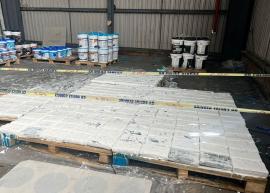
SAPS leads R70 million drug bust at Durban Harbour
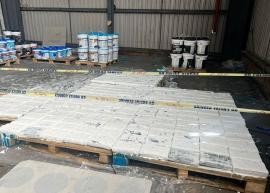
An intelligence driven operation led by members of the South African Police Service (SAPS) Durban Harbour and members of the Directorate for Priority Crime Investigation (DPCI) in KwaZulu-Natal has led to a drug bust of cocaine worth R70 million.
In a statement, SAPS highlighted that for the past month, SAPS Durban harbour members have been monitoring and keeping surveillance on a vessel that was making its way to South Africa from Brazil.
“Prior to the vessel arriving at the Port of Durban, members intercepted the identified vessel and mobilised various units and resources to conduct a search and seizure operation on the identified containers.
“Today, a multidisciplinary operation was conducted and 20 litre paint containers were seized. Inside, police found 200 blocks of cocaine worth R70 million,” SAPS said on Wednesday.
The management of the SAPS, led by the Minister of Police, General Bheki Cele commended the meticulous investigative work at play.
“We will continue to stamp the authority of the state, we are strengthening our response and our strategy in dealing with these syndicates”, Minister Cele said.
Meanwhile, the National Commissioner of the SAPS, General Fannie Masemola said that the National Safer Festive Season Operations are gaining momentum.
“Well done to the team for intercepting these drugs that were hidden in paint. This is only the beginning of our safer festive operations. Just last week we confiscated R75 million worth of counterfeit goods in Cape Town.
“We will continue to intercept these illicit activities throughout the country. We are heightening and intensifying our fight against crime especially, organised crime syndicates. This particular investigation will focus on the origin and destination of the drugs to ensure we effect arrests”, Masemola said.
Minister Cele visits family of slain cop
Earlier on Wednesday, a delegation led by Minister Cele visited the family of Warrant Officer Sthembiso Mazibuko who was shot and killed during an operation in Ntuzuma.
He had 17 years’ service and was attached to the National Intervention Unit (NIU).
The delegation also proceeded to visit the member who was injured in the same operation in hospital where management wished him a speedy recovery.
The funeral details of the fallen hero will be announced in due course.

Gaza hospital strike
Gaza hospital strike- US assesses that Israel is ‘not responsible’ for Gaza hospital blast.
The US government assesses that Israel “was not responsible” for the blast at a hospital in Gaza on Tuesday, according to the National Security Council, following President Joe Biden’s comments that a Palestinian militant group was behind the strike.
A spokesperson for the NSC, Adrienne Watson, said the assessment was based on available reporting, including “intelligence, missile activity, and open source video and images of the incident.”
“While we continue to collect information, our current assessment, based on analysis of overhead imagery, intercepts and open-source information, is that Israel is not responsible for the explosion at the hospital in Gaza yesterday,” Watson said in a statement on Wednesday.
The NSC followed up with an additional statement Wednesday afternoon leaning further into its assessment. “Intelligence indicates that some Palestinian militants in the Gaza Strip believed that the explosion was likely caused by an errant rocket or missile launch carried out by Palestinian Islamic Jihad (PIJ). The militants were still investigating what had happened,” Watson said.
Israeli officials have released audio of what they say is Hamas militants discussing the blast and attributing it to a rocket launched by PIJ.
Officials told CNN separately that the initial evidence gathered by the US intelligence community suggests that the hospital strike came from a rocket launched by the Palestinian Islamic Jihad group.
Among the evidence that’s been gathered is a blast analysis that suggests it was a ground explosion rather than an airstrike that hit the hospital, one of the sources said. There was no singular crater suggesting there was a bomb, but there was extensive fire damage and scattered debris that is consistent with an explosion starting from the ground level, according to the source.
That analysis is one datapoint that’s led intelligence officials to lean toward assessing that the attack on the hospital was a rocket launch gone wrong.
Still, the blast analysis is just one of the things being examined by the intelligence community, which has surged intelligence collection assets to the region. US intelligence officials have not made a final assessment and are still gathering evidence, the officials said.
In addition to the blast analysis, the initial US assessment was based on overhead imagery collected from US satellites and intelligence intercepts provided by the Israelis, according to officials.
Current and former law enforcement officials say US the assessment of the cause of the blast is being hampered because of the lack of access to the site and analysis of the bodies recovered. FBI teams can typically use samples from the scene to, within hours, identify the rocket fuel and explosives used, one former FBI official said. Without examining the scene, US officials are left to analyze signals and other intelligence that can help make a strong circumstantial assessment of the cause but is not definitive.
Biden says ‘errant rocket’ led to blast
Not long after landing in Israel on Wednesday, Biden weighed in on who was behind the strike on the hospital. “Based on what I’ve seen, it appears as though it was done by the other team, not you,” Biden told Israeli Prime Minister Benjamin Netanyahu after his arrival in Israel on Wednesday.
Asked what made him confident the Israelis weren’t behind the hospital strike, Biden said: “The data I was shown by my Defense Department.”
In his remarks later on Wednesday, Biden reiterated that based on the information the US has seen, the blast appears to have been “the result of an errant rocket fired by a terrorist group in Gaza.”
“The Palestinian people are suffering greatly as well – we mourn the loss of innocent Palestinian lives,” he said. “Like the entire world, I was outraged and saddened by the enormous loss of life yesterday in the hospital in Gaza. Based on the information we’ve seen to date, it appears the result of an errant rocket fired by a terrorist group in Gaza. The United States unequivocally stands for the protection of civilian life during conflict, and I grieve, I truly grieve for the families were killed or wounded by this tragedy.”
Authorities in Gaza have said Israel was behind the deadly blast at the hospital, while the Israel Defense Forces said its intelligence showed a “failed rocket launch” by the Palestinian Islamic Jihad group was responsible for the explosion.
An IDF spokesman said Wednesday that imagery following the blast showed “no cratering and no structural damage to nearby buildings.”
“There are no craters here. The walls stay intact. This shows is it not an aerial munition that hit the parking lot” of the hospital, IDF spokesman Rear Adm. Daniel Hagari said at a news conference Wednesday. “Analysis of our aerial footage confirms that there was no direct hit of the hospital itself. The only location damaged is outside the hospital in the parking lot where we can see signs of burning.”
The US intelligence community has been reviewing different kinds of intelligence to try to reach an assessment, including overhead imagery from satellites as well as the blast analysis, the officials said.
“I’m not sure the IC is ready to make an absolutely conclusive attribution but what we’re hearing is consistent with what the president said,” Rep. Jim Himes of Connecticut, the top Democrat on the House Intelligence Committee, said following a classified briefing on Capitol Hill on Wednesday morning.
House Intelligence Chairman Mike Turner of Ohio and Himes issued a joint statement Wednesday saying, based on information from the Biden administration, they believed the hospital attack “was not the result of Israeli military action.”
Senate Intelligence Chairman Mark Warner of Virginia and the panel’s top Republican, Sen. Marco Rubio of Florida, said in a joint statement that the information they reviewed left them “confident” the strike was “the result of a failed rocket launch by militant terrorists and not the result of an Israeli airstrike.”
Israel provided US with intelligence
Israel has also provided the US with intelligence it has gathered related to the explosion, according to an Israeli official and another source familiar with the matter. The Israeli official said that Israel had passed signal intelligence on the explosion to US intelligence. Signals intelligence includes intercepted communications and other forms of data collected through various means.
“I believe the US intelligence community likely has enough imagery, communications intercepts, and other data to determine where the projectile originated that stuck in the Al-Ahli al-Arabi hospital and what the original statements of people on the ground were as to what they believed happened,” said Mick Mulroy, a former Deputy Assistant Secretary of Defense for the Middle East and retired CIA officer.
“In addition, from the video released publicly, the explosion is consistent with a rocket that still had a lot of rocket fuel at the time of impact,” Mulroy added.
Retired Lt. Gen. Mark Hertling, a CNN national security and military analyst, said the US military has overhead platforms that see “a missile burn when it takes off or when something explodes and comes out of the sky.”
The imagery released by the Israeli military of the explosion site was also “compelling,” Hertling said.
“It is very compelling, but when you also look at that aftermath, where’s the crater? When you’re talking about a crater from an Israeli bomb, there’s going to be a hole there,” he said.
British officials in public and private on Wednesday have not yet gone as far as the US. One official said it’s “not conclusive, but the Israeli assertion is not unfounded.”
“We’re not quite there yet,” another official said. “Not because we dispute what they’ve seen. We’re still at ‘Let’s look at all the facts.’”
UK Prime Minister Rishi Sunak said Wednesday that British intelligence services were working “rapidly” to establish the facts behind the deadly blast.
“We should not rush to judgments before we have all the facts on this awful situation,” Sunak told lawmakers in the UK parliament.
US intel surges collection in the region
Multiple officials said that the US intelligence community has surged intelligence collection assets to the region, primarily through overhead intelligence collection as well as some special operations support.
One military source described the move as “a major shift” and “lots of focus on this from across the IC,” though the source said it’s not clear how long this shift will last.
It’s not clear how helpful the additional resources will be when it comes to both hostage intelligence and Hamas planning in such a densely populated area, according to a US official – especially if most of the hostages are in the tunnels.
It might help a little bit with planning for potential ground clearance, and some of the signals intelligence collection capabilities could detect Hamas communications to help pinpoint hotspots of their activity. But the official noted that Hamas has been pretty smart about staying off communications – one of the reasons, sources say, the group was able to avoid Israeli detection during the planning of the October 7 attack in Israel.
Overhead surveillance would likely be much more helpful for keeping an eye on Hezbollah and Iran, according to two officials. The US would absolutely not want to be surprised by a Hezbollah attack, however unlikely, and could provide the Israelis with warnings and indications of any imminent operation.
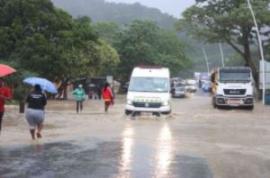
Three die, teenager missing in Eastern Cape rains
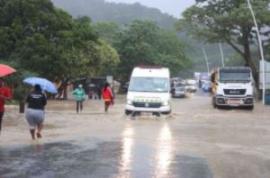
The OR Tambo District Municipality Mayor Mesuli Ngqondwana has sent condolences to families that have lost their loved ones following Monday’s heavy rains in various parts of the district.
In the Nyandeni Local Municipality, three people have lost their lives in separate incidents.
A 14-year-old pupil lost her life after she drowned while crossing Phompo river at Maqebevu village (Ward 19). A pregnant mother and her child succumbed to injuries after a house fell on them at Rainy village outside Libode.
Police divers and the community of Nkumandeni A/A are searching for a 17-year-old girl who was allegedly swept away while crossing a river on her way back from school.
The Disaster and Risk Management teams remain on high alert and incidents can be reported on 047 501 6494 / 047 501 6584.

Two sentenced for tampering with rail infrastructure

The Passenger Rail Agency of South Africa (PRASA) has welcomed the 10-year direct imprisonment of two Zimbabwean nationals for tampering with essential infrastructure.
In a statement on Wednesday, the agency hailed the sentence as a victory and commended its security for apprehending the men.
Namer Ndovu (27) and Collen Singanje (28) received 10-year direct imprisonment sentences each in the Pretoria North Magistrates Court on Tuesday.
“On 21 December 2020, the two were caught at Eskia Mphahlele Drive, in the Wonderboom area by PRASA security guards, with eight pieces of signal copper cables. The PRASA security guards took the two and the cables to the police station to report the matter, where they were arrested and have been in custody since,” the agency said on Wednesday.
In court, they pleaded not guilty to the charges; however, state prosecutor Lufuno Manena was able to prove the state’s case beyond a reasonable doubt.
The state called John Motswaledi, a corporate security investigator at PRASA, who told the court that each cable was valued at R 3000 each, however, the crime committed had an impact of over R300 000, on the company because of what went into replacing and repairing the damage done.
“In aggravation, Prosecutor Manena told the court that damaging infrastructure affects the economy of the country, ordinary citizens, and businesses. He also told the court that under the circumstances, the community needs to be protected by the courts by imposing a stiff sentence, which will deter not only the two but also wannabe suspects.
“Therefore, he asked the court to impose an appropriate sentence to restore trust in the justice system. Magistrate Phogotlhe Motlang agreed with the state,” said PRASA.

National School of Government turns 10

The National School of Government (NSG) turns 10 years this month and a number of activities are taking place this week to mark the milestone as well as the contribution of the school towards public sector capacity building and performance.
Principal of the NSG, Professor Busani Ngcaweni, said the school will use the celebrations to reach out to its target market in the public sector and raise awareness of the work of the School in broader society.
“The NSG has an important role to play in the drive towards a more professional, efficient, effective and caring public sector. Together with our partners, we look forward to working even harder to attain the goals set by government to achieve an ethical, capable developmental state,” said Ngcaweni.
The NSG came into existence through a proclamation by the President which was gazetted on 21 October 2013, replacing the then Public Administration Leadership and Management Academy (PALAMA). The proclamation made the NSG a national government department under the portfolio of the Minister of Public Service and Administration.
The NSG will mark its 10th year anniversary with a celebratory event on 19 October 2023, among other events and the NSG Open Week.
The School said it has scored several achievements in the past 10 years of existence. The institution has delivered training to more than 526 000 participants, generating revenue from course fees of more than R1 billion.
“The past three years since 2020 have been a period of renewal and repositioning, with the NSG engaging in a robust marketing and visibility drive within its target market, public servants, as well as the broader public sector and academia in South Africa and beyond,” the National School of Government said in a statement.
“The school hosted several high impact engagements such as the Master Classes delivered virtually and face-to-face, thus earning a space as a thought leader on governance and the building of a professional public sector.
“The NSG continues to ensure good governance and financial management, with unqualified and clean audits being registered in consecutive years,” the NSG said.
The NSG has proven to be resilient during difficult times. Through innovation and agility, the school overcame the impact of the COVID-19 pandemic.
“The pandemic lockdown that was declared in March 2020 caused booking cancellations and a low uptake of courses.
“The NSG COVID-19 response plan prioritised digital and online learning interventions as well as the installation and application of digital tools.
“The NSG also saw an unprecedented number of online enrolments for eLearning courses. For the period April 2020 to December 2021, 123 000 learners enrolled for the eLearning courses. Over the last three years alone, there has been eLearning enrolments of more than 194 000 learners,” it said.
The work of the NSG has also been enhanced by the decision of government to make building a capable, ethical and developmental state the number one priority among the seven priorities outlined in the 2019-2024 Medium Term Strategic Framework (MTSF).
The NSG offers training in the three spheres of government to all levels – from the cadet and foundation phase to middle and senior management as well as executive management.
its expanded mandate also includes Directors-General, Deputy Directors-General and political office-bearers, where the focus includes building expertise on economic governance, political oversight and accountability.
The past three years have seen Ministers, Deputy Ministers, Mayors and councillors participating in the programmes of the school as part of the concerted effort at improving state capacity at the highest level.
The delivery model includes classroom-based learning, practice-based learning, e-Learning, webinars, student exchanges and dialogue with actors in the public and private sector.
The work of the NSG is also supported by various local and international partners.
The NSG committed in its Strategic Plan 2019-2024 to use partnerships with public and private institutions in South Africa and the rest of the world to deliver quality education, training and development interventions to expand learning opportunities through access to international expertise and represent the NSG in the global knowledge exchange network in order to position it globally and expand its international footprint and recognition as a thought leader. The School works with Higher Education Institutions (HEIs) and other Management Development Institutes in South Africa, Africa and around the world.
These partnerships have seen public officials engage in exchanges with similar and leading institutions from Africa, Asia, Europe and the Americas.
Flagship programmes
The NSG delivers high-level executive education programmes as well as compulsory programmes for public servants.
The Cabinet-approved Economic Governance School for Members of the Executive programme targets Ministers, Deputy Ministers, Premiers, Members of Executive Councils, Mayors and Members of Mayoral Councils. The purpose of the programme is to enable Members of the Executive to reflect and broaden perspectives on critical topics as they work towards building a capable developmental state and to achieve the country’s economic recovery.
The NSG also delivers Etella, which means ‘lead’ in Sesotho, a leadership programme for Accounting Officers, namely Directors-General, Heads of Departments (HoDs) in provincial government, Municipal Managers, Chief Executive Officers of public enterprises and Ambassadors as Heads of Missions.
All persons wishing to be appointed into the senior management service in government must successfully complete the compulsory Nyukela programme offered by the NSG, with effect from 1 April 2020. In the 2022/23 financial year, a total of 7450 learners enrolled for the course, with 5523 learners successfully completing the programme. The target group includes those individuals who aspire to work in the senior management service for the first time, and those progressing from one level within the SMS to another, who have not yet done this programme.
The Ethics in the Public Service course was made compulsory for all public servants and has been promoted extensively online as one of the NSG’s flagship programmes. It continues to attract many public servants, which augurs well for Priority One, to build an ethical, capable and developmental state. In the 2022/23 financial year, there was a total enrolment of 16753 participants. A total of 13765 learners completed the course, which reflected an 82% achievement.
The NSG programmes also extend to traditional leadership. A total of 73 traditional leaders attended the NSG Art of Facilitation programme in the Eastern Cape and KwaZulu-Natal provinces. The programme seeks to empower traditional leaders to act as economic change agents in their communities and to participate in leading rural development interventions that create sustainable jobs and community wealth.
Calls for SITA, union to resolve wage deadlock
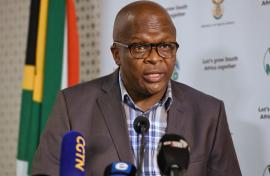
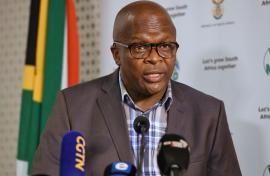
Minister of Communications and Digital Technologies Mondli Gungubele has called on the union representing State Information Technology Agency (SITA) workers and the department to find an amicable resolution to the deadlocked wage negotiations.
Earlier this week, members of the Public Servants Association (PSA) announced their strike action when wage negotiations had hit a dead end.
“The Department of Communications and Digital Technologies has been alerted by SITA of the deadlock with negotiations and the subsequent protest action. The department acknowledges the rights of employees to embark on such action.
“Although the department has noted calls for the Minister to intervene, it is important to note that this is a labour matter between the PSA representing the employees and SITA as employer, where the department cannot interfere. Minister Gungubele is, however, calling upon both parties to find a speedy and amicable resolution to ensure that service delivery is not negatively affected,” the Minister said on Tuesday.
The department has been assured by SITA that plans are in place to ensure that key operations of the agency will be protected from any negative impact by this protest action.
SASSA takes services to rural Marapyane
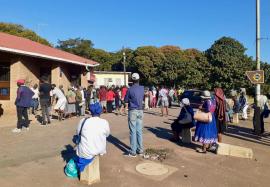
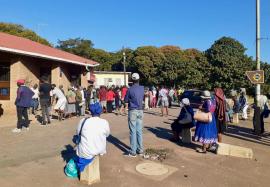
In an effort to deal with the high level of unemployment in the area, the South African Social Security Agency (SASSA) in Mpumalanga will today take its services to the Marapyane community located within the Nkangala District.
According to SASSA, most of the communities in the area and the surroundings are dependent on social grants for survival.
The agency said their services will be offered during the Integrated Community Registration Outreach (ICROP).
“Communities will have full access to all SASSA services and get an opportunity to apply for social grants. Beneficiaries who wish to change the payment method to their banks of choice will be assisted on the spot. All spheres of government, relevant stakeholders and financial institutions will be available to offer their services,” SASSA said.
The agency explained that it was taking its services to Marapyane because there is a temporal service point that operates from Monday to Friday, 09:00 – 15:00.
This service point provides services to five out of 31 wards with a total of 17 villages within a 30km radius.
“As a result, the local office saw the need to conduct an ICROP with the intention of to reducing the intake backlog, overcrowding and long traveling distances by clients to other nearby SASSA offices,” the agency said.
For more information clients can contact the toll free number during working days/hours on 0800 60 10 11, or Whatsapp 082 046 8553.
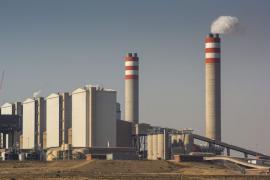
Minister welcomes return of Kusile Unit 1
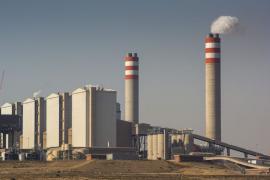
The Ministry of Electricity says the return to service of unit 1 at Kusile Power Station marks a critical milestone in the quest to “recover South Africa’s economy”.
Eskom on Monday announced that the unit had returned to service a month and a half ahead of schedule since it was taken offline late last year.
The ministry said the Minister in the Presidency for Electricity, Dr Kgosientsho Ramokgopa, has welcomed the development.
“The return of the unit, which had been out of commission, together with unit 2 and 3 since August 2022 following safety concerns with the structural integrity of the stack, comes two months ahead of schedule and adds 800MW onto the grid.
“This marks significant overall improvements to generation performance with Kusile Unit 3, which came back online on 29 September 2023, also returning back to service two months ahead of schedule.
“The third of the units (Unit 2) is now expected to similarly return to service in November 2023, whilst Unit 5 will come into commercial operation in December 2023,” the statement read.
The Ministry highlighted the impact that the return of the unit will have.
“The return of the Kusile units represents a critical milestone in our quest to recover South Africa’s economy, protect jobs, advance universal access and improve the quality of life.
“The Minister remains focused on bolstering the country’s electricity generating capacity by giving accelerated attention to the expansion and strengthening of transmission infrastructure to accommodate new renewable generation capacity.
“The Minister congratulates Eskom’s Generation team for the sterling hard work to bring back stability and credibility to the Eskom generation fleet and reducing the intensity and severity of load shedding,” the statement said.