
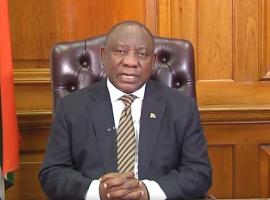
President extends condolences to victims of the Israeli-Palestinian conflict
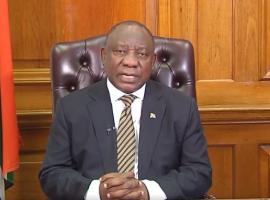
President Cyril Ramaphosa has extended his condolences to all victims of the Israeli-Palestinian conflict and says South Africa stands ready to share its experience in mediation and conflict resolution.
“South Africa stands ready to work with the international community and to share our experience in mediation and conflict resolution as we have done on the continent and around the world,” President Ramaphosa said in a statement.
This follows an escalation of hostilities on Saturday that has left about 2000 people dead, 160 000 displaced and 7000 injured.
The President has also called for the immediate and unconditional opening of humanitarian corridors.
“Our thoughts are with all the victims’ families and loved ones during this perilous period of fighting. We remain gravely concerned at the devastating escalation in the Israeli-Palestinian conflict and the atrocities committed against civilian populations.
“We call for the immediate cessation of violence and the exercise of restraint. It is vital that all those who require urgent humanitarian assistance are provided with the basic life supporting necessities and that human suffering is ameliorated,” President Ramaphosa said.
The President further urged the international community to accelerate its support to an inclusive process towards a lasting and durable peace that produces a viable Palestinian State, existing in peace alongside Israel, within the 1967 internationally recognised borders with East Jerusalem as its capital.
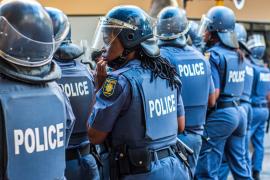
NW police launch manhunt for six escapees
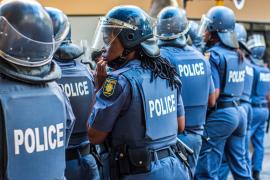
Police in Mogwase in the North West have rearrested two of the eight awaiting trial detainees who escaped from the Mogwase Magistrates’ Court holding cells on Tuesday.
According to police information, a member escorted the accused from the court room to the cells. The member had just unlocked the cell door for the awaiting trial detainee when those who were inside suddenly pushed the burglar door, overpowered the member and ran away in different directions.
The two accused, Lebogang Mokotleng and Tshepang Raselemane were rearrested a few minutes later at Mogwase Taxi Rank.
Lebogag Mokotleng (27) was arrested for robbery with a firearm, attempted murder and unlawful possession of firearm and ammunition while Tshepang Raselemane (25) is facing charges of robbery with a firearm, possession of a firearm and ammunition and possession of suspected stolen property.
The other six, Tebogo Mosito (29) Letlatsa Mpota (31), Katlego Mafatlhe (35), Keitumetse Lekolomi (25), Thabang Matlho (25) and Katlego Mkitle (26) were among others, arrested for murder, robbery with a firearm and possession of a firearm, attempted murder and possession of suspected stolen property.
Members of the community are encouraged not to try and re-arrest the detainees as they are dangerous, but to contact the Investigating Officer, Lieutenant Colonel Shimane Kubyadi on 082 856 1087 or Crime Stop number: 08600 10111.
Anonymous tip-offs can also be communicated via the MySAPS App from a smartphone.
AfCFTA to lead to diversification of exports
The successful implementation of the African Continental Free Trade Area (AfCFTA) is expected to lead to diversification of exports and increased productive capacity.
This is according to the Director of African Union and Africa Multilateral Economic Relations at the Department of Trade, Industry and Competition (dtic), Claudia Furriel.
Furriel was unpacking the AfCFTA Agreement at a webinar hosted by the dtic intended to engage the chemicals, cosmetics, plastics, and pharmaceutical sectors, as well as industry agencies, associations, and export councils including their members, on the benefits of exporting under the AfCFTA.
“The successful implementation of AfCFTA is expected to lead to diversification of exports, increased productive capacity, acceleration of growth, increased investment, increased employment opportunities and incomes and most importantly broaden economic inclusion,” Furrel said.
“According to the World Bank, the AfCFTA will boost regional income by 7% or $450 billion, speed up wage growth for women, and lift 30 million people out of extreme poverty by 2035,” she said.
While outlining steps to address challenges that are facing the successful implementation of the AfCFTA, Furriel emphasised that an investment-led trade approach was key.
She said trade integration and liberalisation must be accompanied by programmes to support African industrialisation, regional value chains and infrastructure development.
She added that continued engagement with the Southern African Customs Union (SACU) and other AfCFTA members on rules of origin that will support Africa’s industrialisation objectives is vital to the successful implementation of the AfCFTA.
The Scientific Director at L’oreal South Africa, Dershana Jackison, described the AfCFTA as a key business, regulatory and policy instrument that will shape the cosmetic market of the future.
She urged industry players and trade associations to actively participate in its implementation and for government to ensure that the cosmetic sector is prioritised.
Jackison noted that standards harmonisation and technical regulatory convergence for the continent were important as they would dictate market control and access to currently untapped African markets.
But for this to happen, she said the industry players through trade associations and government must influence and contribute to the direction they take.
“It is estimated that the AfCFTA has a potential to boost intra-Africa trade by 52.3% by eliminating import duties and to double this trade if non-tariff barriers are reduced. Access to African markets through the AfCFTA is expected to expand the size of Africa’s economy to US$29 trillion by 2050. This offers huge opportunities for the cosmetic sector,” Jackison said.
According to the Senior Manager of Analytical and Material Sciences at the National Metrology Institute of South Africa (NMISA), Dr Maria Fernandes-Whaley, NMISA’s efforts in the essential oils industry offer tangible benefits to South African businesses in the chemicals, cosmetics and related sectors, aligning with the AfCFTA’s goals of enhancing intra-African trade and economic growth.
“The recent launch of the first accredited testing service for essential oils in Southern Africa by NMISA holds tremendous promise for not only the essential oils industry but also for various sectors, including chemicals and cosmetics, under the AfCFTA,” Fernandes-Whaley said.
Fernandes-Whaley said NMISA’s accreditation to the international standard ISO/IEC 17025 carries significant implications for South African industries, particularly those in the chemicals and cosmetics sectors.
She said one of the key advantages offered by NMISA’s accredited testing service is the international recognition of test reports and certificates of analysis for essential oils.
“This recognition eliminates the need for further testing when South African companies export their products, which can be a cumbersome and costly process. As a result, producers in Southern Africa, including those in the cosmetics sector, will gain a competitive edge by enhancing the credibility and quality assurance of their products on the international market,” Dr Fernandes-Whaley said.
The dtic has embarked on provincial awareness workshops which provided a platform for information sharing with the private sector on the benefits offered under the agreement.
The workshops were also used to also identify South African companies in various provinces in the targeted sector masterplans and other priority sectors that have the capacity to export to the rest of the continent.
More workshops focusing on different sectors are being organized, the department said.
Programme to assist unemployed people get driving licenses
The KwaZulu-Natal Transport Department has called on all unemployed citizens in the province to apply for a programme designed to assist them get drivers’ licenses and increase their chances of getting a job.
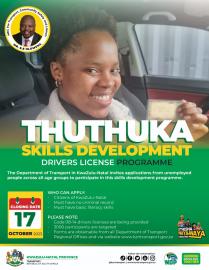
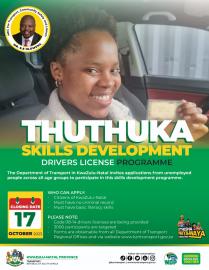
As part of the provincial Transport Month campaign, Transport, Community Safety and Liaison MEC, Sipho Hlomuka, launched the Thuthuka Driving Skills Programme that will assist more than 3 000 people across all age groups to get free learners and driving licences from Code 08 to Code 14.
“This is part of our ongoing contribution to job creation because we know that when people have licences, they stand a better chance of being employed across all sectors. We have already begun to engage with the driving schools’ executives to bring them on board and work with them in rolling out this programme,” Hlomuka said.
Hlomuka added that through the Thuthuka Driving Skills Programme initiative, the department is working on the eligibility criteria for obtaining a driver licence.
To access the application form for the programme, click on https://bit.ly/3ZNieZ0, alternatively, you may access the form on the department’s website http://www.kzntransport.gov.za then click on Electronic Reading Room on the left-hand sidebar and choose forms from the options, then choose forms again. Click on the Thuthuka Skills Development Programme Application Form in order to download and fill out the form.
Completed forms may be handed in at the nearest Department of Transport Regional Office or Cost Centre office, as well as the department’s Head Office.
Applications for the programme close on 17 October 2023.
Protests by internal contract workers condemned
Meanwhile, Hlomuka has condemned the protests by the department’s internal contract workers, which has seen the attack of department officials and government cars being stoned.
The protests have been taking place at various departmental offices due to grievances surrounding the recruitment process of Road Worker Aides.
Hlomuka said, as part of S’thesha Waya Waya, more than 5 978 posts were advertised for Road Worker Aids and Grader Operators.
The MEC noted that due to the number of posts, the department knew that there would be a huge number of people applying, and in the process “a lot of dissatisfaction to many people seeking employment, even among our own internal contractor workers who are employed through the Vukayibambe Routine Road Maintenance Programme”.
“We have labour laws in the country and if people are unhappy about the recruitment process there are clear channels to follow. Where there are genuine complaints, we have directed the Head of Department to investigate any concerns and call upon our contract workers to not resort to violence,” Hlomuka said.
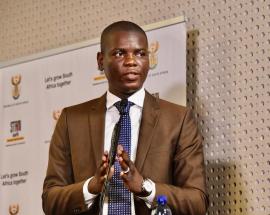
New online service a milestone for Justice Department
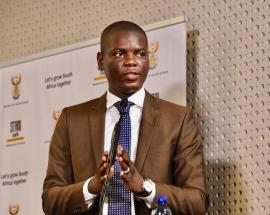
The newly launched Masters’ Deceased Estate Online Registration System is a milestone for how the Masters’ office renders services to the public.
This is according to Justice and Correctional Services Minister Ronald Lamola, who was addressing the launch of the system on Tuesday.
“This system will be a catalyst to changing this environment…. modernising it, digitising it, and making it accessible to members of the public and also all the professional bodies that operate in the space of the Master’s [office] services,” he said.
The new online system will, amongst others, allow members of the public to register deceased estates either in the comfort of their homes, offices or anywhere in the world, without having to visit a Master’s office (except with the lodgement of original wills). Online registrations will also speed up the registration process and ensure quicker availability of the details/particulars of the beneficiaries and trustees.
With the electronic booking of appointments — where a client needs to physically visit a Master’s office — the client will be able to choose a suitable date and time slot for their appointment.
Lamola said the system will also protect clients from fraudulent activities.
“We are also aware of the challenges that you as stakeholders have also suffered not only in terms of accessing our services but also in terms of the manipulators of the system… such as fraudulent letters of authority and so forth. Already, the risks have been mitigated and we believe that if we all follow those systems, we’ll be able to guard against further fraudulent activities by unscrupulous players out there.
“We hope that the LPC [Legal Practice Council] will play its role on the unscrupulous attorneys who also sometimes take their chances and also hopefully the accounting profession will do the same with the accountants who also sometimes take… advantage of the unsuspecting members of the public,” he said.
Lamola said that the digitisation of services of the Master’s office is the beginning of a migration of most of the department’s services.
“It has been a long journey for the department to reach this milestone but we are very excited that we have reached it and there is a foundation that has been laid in terms of digitising and modernising the entire justice system.
“So what you see today is part of our vision not only for the Master’s office but also in terms of online maintenance, in terms of liquidations… and all the services that the Master’s provide [and] also the courts… We have already seen court online, cases online and the various platforms that the department is trying infuse to modernise the entire administration of the justice system,” he said.
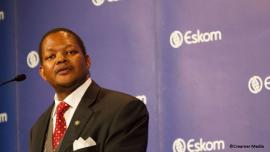
Eskom board chairperson steps down
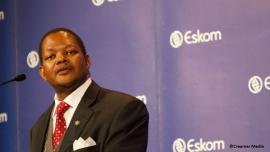
Eskom board chairperson, Mpho Makwana, is expected to step down from his role at the power utility’s next AGM scheduled for the end of October.
This was announced by the Department of Public Enterprises (DPE) in a statement.
Makwana is expected to be replaced by current board member, Mteto Nyati, as chairperson, with a handover process to be done throughout this month.
Public Enterprises Minister Pravin Gordhan said: “We wish to thank Mr Makwana for his contribution during the most difficult time for Eskom. We wish him well in his future endeavours.
“Our efforts to stabilise Eskom and restructure it into three subsidiaries — generation, transmission and distribution — remain on track. As government, we are committed to ensuring that Eskom has the right skills, talent and experience to support our pursuit of a more secure energy future for South Africans.”
Makwana wished the power utility success.
“I am grateful for the opportunity afforded to me by the government of the Republic of South Africa to serve a second term as chairperson of the Board of Directors of Eskom SOC Limited. I wish Eskom and its people success, and thank its committed stewards for their unstinting efforts to revive the utility.
“I thank the Minister for the positive, amicable manner upon which we conclude my tenure,” Makwana said.
New Border Management Authority a boost for SA’s security and development
President Cyril Ramaphosa has used his weekly newsletter to the nation to highlight the importance of the New Border Management Authority (BMA) in boosting the country’s security and development.
The President said that the establishment of the BMA is a significant step towards safer communities, better law enforcement and the growth of the economy through greater trade with the country’s neighbours.
President Ramaphosa emphasised that ensuring the borders are well-managed and well-protected is key to the security and development of the country.
“Maintaining the integrity of our country’s borders is key if we are to realise the aspiration of every South African to live in peace and harmony with ourselves and our neighbours.
“It is a daunting undertaking. Our land border is over 4 800 km long and is shared with six countries. We have 53 land ports of entry, 11 international airports and eight sea ports.
“The launch last week of the country’s first integrated, unified Border Management Authority (BMA) is therefore a milestone in the necessary effort to secure our borders,” the President said.
Turning to the challenges faced on our borders, the President said that they are both historical and contemporary.
He highlighted that the apartheid regime flagrantly disregarded the sovereignty of neighbouring countries to conduct illegal cross-border raids.
He added that “it abused immigration measures to harass its opponents, and enforced hated policies like influx control and the exploitation of labour from the region.”
President Ramaphosa told the nation that it then became the priority of the democratic government elected in 1994 to progressively reform the border management and migration regime, not just in the interests of economic growth and development, but also so that these reforms should reflect the broader values of the new state.
“The democratic government has worked to uphold the right of citizens to freedom of movement and residence, as well as the rights of refugees and asylum-seekers under international conventions.
“It also sought to deepen trade and investment between South Africa and other Southern African countries, and contribute to the political and economic integration of the African continent,” he said.
Over time, however, he said, the complexities of border management have resulted in an uncoordinated approach by the various authorities.
He highlighted that one of the challenges has been the sheer number of government departments and entities involved in this work. This includes the absence of a central authority which led to fragmentation of efforts and made it difficult to enforce accountability. This in turn rendered the country’s borders vulnerable.
The UN Office on Drugs and Crime has noted that South Africa has become an important transit route for organised criminal networks involved in human trafficking, drugs and small arms smuggling and various other forms of cross-border crime.
It has also noted that as the economic powerhouse of the region, South Africa continues to attract economic migrants who are undocumented, especially from the SADC region.
The President said that the proliferation of cross-border crime, illicit trade and illegal migration as a result of porous borders presents a serious threat to national security and the economy. He added that it also places strain on already stretched resources and public services, and fuels social instability.
“We have in recent times seen anti-foreigner sentiment resulting in acts of violence and harassment. As a country, we must condemn without reservation all acts of violence against foreign nationals, regardless of their immigration status, and work together to prevent such acts.
“At the same time, we must recognise that South Africans are justifiably concerned about illegal migration. Like any sovereign nation, we have the right to guarantee the integrity of our borders and provide that all who reside in our borders have a legal right to be here.
“Those who have sought refuge in South Africa or wish to live and work here are subject to immigration regulations and must adhere to the country’s laws,” the President said.
The Border Management Authority is tasked with ensuring that the country’s immigration laws are enforced, and that the borders are well-protected and ports of entry well-managed.
The new authority is now the third armed service in South Africa after the South African National Defence Force (SANDF) and the South African Police Service (SAPS).
The first officers of the new BMA border guard were deployed in July this year at vulnerable segments of the border, including at informal crossings.
Although they will be conducting border law enforcement functions, including access control, the SANDF remains responsible for border protection and safeguarding.
With this new structure in place, President Ramaphosa said the country will also be able to better prevent the illegal importation and exit of goods, curb illegal migration and human smuggling, and combat cross-border crime.
The BMA will take on the work of several other departments and agencies and is already working with the South African Revenue Service, SAPS and SANDF to integrate border management functions.

DWS withdraws government waterworks draft regulations

The Department of Water and Sanitation (DWS) has announced the withdrawal of the proposed regulations relating to access and use of government waterworks and surrounding State-owned land for recreational purposes.
The draft regulations were published in the Government Gazette on 24 March 2023, for a second round of public comments to solicit inputs from various stakeholders and members of the public who have interests in accessing and using the departmental infrastructures for recreational purposes.
“The draft regulations were withdrawn after considering the public comments received during public consultations as well as from written comments. Newly proposed regulations will be reissued once the reviewing process is concluded,” the department said in a statement.
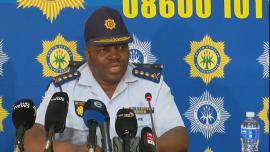
Police dealing decisively with crime ahead of festive season: Masemola
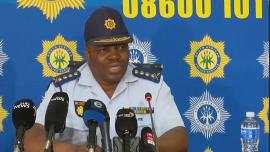
The National Commissioner of the South African Police Service (SAPS), General Fannie Masemola, has reassured that police will continue to deal decisively with criminals ahead of the busy festive season.
Through Operation Shanela, police continue to “dislodge and disrupt activities of organised crime syndicates” linked to serious and violent crimes, especially aggravated armed robberies such as cash-in-transit (CIT) heists.
Masemola said police remain on course to sniff out more syndicates. He said police “will not negotiate with criminals”.
“We are tailoring our operations to ensure that a strong presence of police is felt on the ground. We are investing in our police to ensure they are operationally ready and have the required resources,” Masemola said.
In the latest takedown operation, Gauteng police arrested four suspects linked to a CIT robbery, which took place in Kaalfontein, near Tembisa.
The suspects were traced to various addresses in Tembisa. In their possession, police found a Mercedes Benz alleged to be used as a getaway vehicle, dye stained money, explosives and an AK47.
In their preliminary investigation, the police have established that the Mercedes Benz that has been recovered was hijacked in Springs earlier this year. The owner of the vehicle will be traced and informed accordingly.
In KwaZulu-Natal, four suspects were shot and killed during a confrontation with police at a home utilised as a safe haven for the syndicate in KwaMashu on Friday morning.
In their possession, police found four firearms including an AK47, explosives and false vehicle number plates.
The Hawks also arrested a 38-year-old Zimbabwean national, who was found with explosives on Friday morning. The team was following up on information when a bus from Zimbabwe, heading to Johannesburg, was pulled over on the N14.
The team is investigating the possibility of such explosives being utilised in the spate of CITs in the country. Investigations continue to trace the origin of the explosives and where they were destined.
The police are also appealing to communities not to pick up money at CIT crime scenes, as this amounts to theft and defeating the ends of justice.
According to the police, CIT crime scenes are dangerous and can also pose a risk for the loss of life.
High-density operations are being intensified through regular roadblocks, stop and searches and the tracing of wanted suspects across the country to ensure the safety and security of all people living in South Africa.
“Day in and day out, we are taking down these criminals one by one! These takedowns must serve as a deterrent to those involved in these aggravated robberies. We are ushering in the festive season and we are prepared to deal decisively with crime and criminals in all forms and shape,” Masemola said.
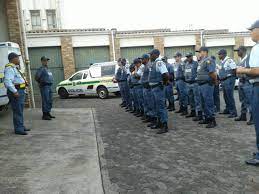
Operation Shanela continues to disrupt criminal activities
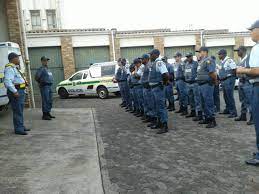
Through the South African Police Service’s (SAPS) Operation Shanela, at least 124 suspects and 137 daily wanted suspects were arrested for committing various crimes over the past weekend.
Operation Shanela’s disruptive actions were executed in hotspot areas across the Northern Cape province which included vehicle checkpoints, stop and searches, blue light and foot patrols, compliance inspections and tracing of wanted suspects by detectives across the province.
The outstanding success includes the arrest of two males, age 28 and 36, for possession of stolen property valued at R43 000 after the Kimberley Crime Prevention Unit received information of a tuckshop selling branded goods in bulk belonging to a local supermarket.
The police in Delportshoop recovered and confiscated a stolen vehicle and arrested a 62-year-old male for theft of a motor vehicle after the police were alerted by a tracking company about a stolen vehicle that was stationary around Ulco mine.
Another two male suspects, aged 37 and 40, were arrested and charged under the Northern Cape Nature Conservation Act 9/2009 sec 50 & 51 for alleged illegal possession of endangered plants on the R382 road between Steinkopf and Port Nolloth.
A white Isuzu Double Cab bakkie was stopped and searched and police confiscated ten 50kg bags containing 4485 Conophytum Bilobum plants.
Police also confiscated the Isuzu bakkie as it was allegedly utilized in the commission of a crime.
During the operation, the following items, such as alcoholic beverages, dangerous weapons, drugs including crystal meth, dagga mandrax and tik were confiscated.
A total of 56 compliance inspections at second-hand dealers, liquor outlets and premises, formal and informal businesses, farms and mines were executed.
Numerous roadblocks were conducted across the province during which 25 vehicle checkpoints and eight roadblocks were conducted which resulted in 1631 vehicles stopped and searched and 4637 persons searched.
Police across the province also conducted routine visits at ATM’s, business premises, National Key Points, Post Offices and tuckshops.
The Provincial Commissioner of the Northern Cape, Lieutenant General Koliswa Otola, congratulated all SAPS personnel and other law enforcement agencies for ensuring that those who violated the laws are confronted and dealt with decisively.
She also appreciated community structures for their role and assistance in the fight against crime.