
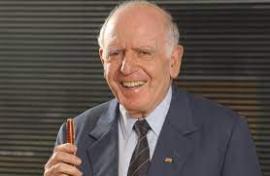
Pick n Pay founder and philanthropist Raymond Ackerman passes away
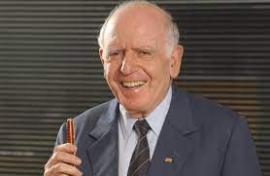
President Cyril Ramaphosa has expressed sadness at the passing of Pick n Pay founder and philanthropist Raymond Ackerman, who was also an Esteemed Member of the Order of The Baobab.
President Ramaphosa has extended his condolences to Wendy Ackerman, children, Gareth, Kathy, Suzanne, Jonathan and the extended family.
Ackerman, who passed away at the age of 92, was awarded the Order of The Baobab in 2014 for his commitment to uplifting the lives of South Africans by providing scholarships to young people and conducting socially responsible retail business.
Ackerman was one of the first retailers to fight on behalf of the South African consumers against the apartheid state’s monopoly on basic goods.
He drastically reduced the cost of essentials such as bread, milk and chicken. He also spoke against the inclusion of value-added tax (VAT) on basic food lines, a course that they fought and won on behalf of the poor.
He was one of the first executives to promote black South Africans to senior positions and to acknowledge black trade unions. This was at the period when such unions were banned from operating in the country.
He also abolished race classification on the company’s human resources payroll.
Since the 1970s, the Ackerman Family Trust has supported hundreds of young people to become graduates across a broad range of professions.
“We mourn with the Ackerman family as they bid farewell to a husband, father, grandfather and great grandfather whose name resounded as comfortably in millions of households around the country,” President Ramaphosa said.
“Raymond Ackerman was an outstanding business leader and entrepreneur who placed people first and stood up to the injustices and discrimination which the apartheid regime sought to outsource to the business sector,” the President said.

Assets of alleged illegal mining kingpins frozen

The Pretoria Asset Forfeiture Unit (AFU) of the National Prosecuting Authority (NPA) and the Hawks Priority Crimes Specialised Investigation and Serious Organised Crime Investigation have secured preservation orders to freeze assets “which are proceeds of unlawful activities of a syndicate dealing in unwrought gold” in Gauteng.
The frozen assets include 51 vehicles and seven properties with a value of more than R16 million.
“The orders were to preserve various properties belonging to Bethuel Ngobeni, Lerato Bathebeng, Poppy Mathongwane, Bongani Khumalo, Dumisani Moyo [and his company] Kesitaal Pty Ltd, Nhlanhla Magwaca, Neo Duba, Tsepo Dube, Itumeleng Magagane, Gloria Magagane Mlambo, Nhlanhla Mathebula, Manuel Nhamucho and Thabiso Sechele, which are proceeds of unlawful activities of a syndicate dealing in unwrought gold in Khutsong and Carletonville.
“This emanates from a criminal investigation by the DPCI [Directorate for Priority Crime Investigation] that resulted in six accused being arrested, who are alleged to be illegal mining kingpins. All the accused are remanded in custody, however Moyo was granted bail after he appealed at the high court. Some of the properties belong to four of the accused,” the NPA said in a statement.
The criminal case in this regard is expected to be heard in court on Thursday, 7 April.

Master Offices services to go digital

The Department of Justice and Constitutional Development (DJCOD) is expected to officially launch the Masters’ Deceased Estates Online Registration System in October.
In a webinar to inform the public about the new online service, Advocate Kanyane Mathibe, Chief Director for Strategy and Policy in the Office of the Chief Master said the system seeks to enable the Masters’ offices to serve clients in a quicker manner and reduce queues.
“We then embarked on a journey to develop an online deceased estates registration system that cuts the time in half that you can now register or report estates in the comfort of your home or in your office without having to interact with the Masters’ Office except in the lodgement of an original will where you would still need to lodge the original will after which the letter of authority would be granted.
“Further to that, we then allowed other features to be developed including an online appointment booking system where you would be able to book an appointment with the master in your jurisdiction at a specific time and you will be attended to either by an estate controller, a legally trained professional or an assistant master…depending on the complexity of the matter,” Mathibe said.
She explained that the office had received a number of complaints about services at the Master’s Office and this, coupled with other factors, prompted the move towards an online service.
“We have had challenges. Some…would have submitted complaints about the challenges that you’re experiencing with the Masters’ Office. We’ve got long queues. We’ve got more clients than we have the capacity to handle in our offices. We’ve seen increased customer complaints over the year, two years or so with the slow response of our systems, the high likelihood of fraud where letters of authority are being manipulated through fraudulent activities.
“Repeat walk ins where you come into the Master’s Office, you do not have the right documents, we send you back and you still have to come back. In some instances, misplacing or losing client documents where then duplicate files would have to be created. And we’ve been plagued by load shedding…that interrupts our services in offices where back up power has not been installed,” she said.
Mathibe added that a new letter of authority will be put in place in order to cut out incidents where letters of authority or executorship were fraudulently obtained through falsifying signatures.
“We now have a QR Code…that is embedded in a letter of authority. So the new letter of authority…it’s got an embedded QR code where you can then verify the authenticity of the letter of authority or the letter of executorship by a master,” she said.

Postbank SASSA cards restored

The technical difficulty that intermittently affected social grants customers using the Postbank South African Social Security Agency (SASSA) Gold Cards has been resolved for all ATM and Post Office branch transactions.
This means that SASSA customers using the Postbank SASSA Gold Cards can now access their social grants money via ATM’s and Post Office branches.
“The processing of the reversals of funds debited on the accounts that declined since yesterday (Tuesday) due to a system error is underway. Beneficiaries that have attempted withdrawals since yesterday are urged to give this process some time before attempting any further transactions. It is anticipated that the funds will be reversed into all beneficiaries accounts approximately in the next 24 hours,” the Postbank said on Wednesday.
Postbank’s technical teams are working on restoring the transactions inside the retailers to full capacity as there are still intermittent challenges with transactions performed through this channel.
“We apologise to our valued customers for the inconvenience caused by this incident and thank them for their patience. Postbank will continue providing detailed updates.
“Social grants recipients are also advised that the technical challenge experienced with grants withdrawals since yesterday are an isolated incident that is not related to the validity of the Postbank SASSA Gold Cards.
“SASSA Gold Cards remain valid as a means to accessing social grants payments despite the expiry date written on the cards until Postbank replaces the cards within cards replacement period granted to us by the Reserve Bank,” the Postbank said.
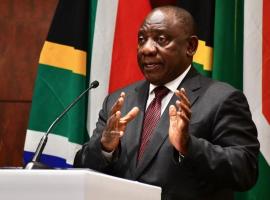
Lady R executive summary report released
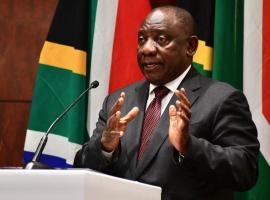
The executive summary of the independent panel’s investigation into the December 2022 docking of the Lady R vessel at Simonstown has been released.
The Presidency on Tuesday evening said that due to the classified nature of the evidence that informed the report, “government will not publicly engage further on the substance of the report”.
The vessel’s docking gave rise to public controversy, when now debunked allegations suggested that South Africa had loaded weapons onto the ship bound for Russia to assist in that country’s current conflict with Ukraine.
In the executive summary, the panel – led by Judge Phineas Mojapelo – explained that cargo was only offloaded from the vessel.
“The details of the equipment offloaded and its intended use were made known to the panel. In light of this classified information, the panel accepted the reasons provided for the decision to offload the equipment at night.
“This, as well as the nature and purpose of the equipment, are aspects which may need to be considered when the President decides what may be published.
“Despite some rumours that some equipment or arms were loaded on the Lady R, the panel found no evidence to substantiate those claims. Available evidence only confirmed the offloading and that there was nothing loaded,” the summary reads.
The executive summary is available for download here https://www.presidency.gov.za/download/file/fid/2862.
During his address to the nation on Sunday, President Cyril Ramaphosa highlighted that the allegations had done damage to South Africa’s image.
“In recent months, statements from several quarters have used these allegations to call into question South Africa’s commitment to its position on the Russia-Ukraine conflict. The allegations levelled against our country had a damaging effect on our currency, economy and our standing in the world. In fact, it tarnished our image as a country.
“When all matters are considered, none of the allegations made about the supply of weapons to Russia have been proven to be true, and none of the persons who made these allegations could provide any evidence to support the claims that had been levelled against our country,” he said.
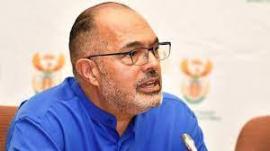
SARS Commissioner calls for tax administrators to be excluded from budget cuts
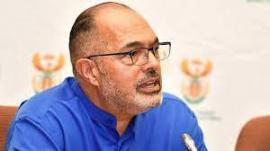
South African Revenue Service (SARS) Commissioner Edward Kieswetter has called on National Treasuries to exclude tax administrations from across-the-board austerity measures, as it poses a threat to innovation, fiscal integrity and sovereignty.
“Once you suspend funding, the end result will always be the suspension of innovation and regression against the progress of other administrations. This goes against the intrinsic value of digitalisation in improving tax compliance and detecting tax non-compliance,” Kieswetter said on Tuesday in Cape Town.
He was addressing the 2nd Network of Tax Organisation (NTO) Technical Conference, which took place under the theme: ‘Digitalisation of Tax Administrations and Contemporary Issues’.
“As more financial transactions are taking place digitally, more third party data sources are shared with tax administrations, and central bank digital currencies are emerging, the importance of digitalisation and consequently the use of data science, and artificial intelligence have become central to revenue collection, compliance and trade facilitation.
“So, in short, whenever budget cuts are required, National Treasuries – Budget Offices are advised to avoid across-the-board cuts and ensure a more prudent approach to invest to build enabling and productive economic capacity, create employment, and thus expand the tax base.
“This secures fiscal integrity and sovereignty in the long run. Tax administrations should be excluded from across-the-board austerity measures. The investment in digitalisation should not be disrupted. The cost of recovery is simply too high in every respect,” Kieswetter said.
He said the COVID-19 pandemic accelerated the modernisation and digitisation of work at SARS.
“COVID-19 inadvertently took us to the drawing board to think from first principles, and very quickly accelerated our response towards reprioritising our technology investment to enable our employees to work during the hard lockdown and to allow taxpayers to continue to fulfil their tax obligations,” the Commissioner said.
Although SARS has made progress, he explained that much more still needs to be done, as the revenue service is behind in its digitalisation journey.
“I want to pause here and focus on one element as a critical enabler of the digitalisation journey – and that relates to funding. Before State capture, SARS was a leader in digital modernisation for many years.
“However, partly due to financial constraints, but also a short-term approach, budgets were then frozen for a number of years and SARS fell behind in driving technological innovation. We have now managed to restore some additional funds to continue our modernisation, but we are still substantially underfunded to move at the necessary speed in an environment that is changing exponentially, business models are being disrupted, and tax crime proliferating at an alarming rate,” he said.
SARS faces the challenge of not only having to play catch-up after many years of underinvestment, but also of accelerating modernisation simply to remain relevant.
“We are at a point where we can again focus on innovation. The important lesson here is that the digitalisation journey is not a finite project, but a new way of being. It is an ongoing journey. Once you suspend funding, the end result will always be the suspension of innovation and regression against the progress of other administrations,” the Commissioner said.
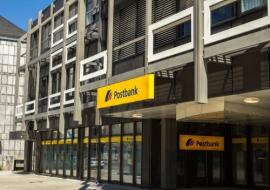
Postbank experiencing technical glitch
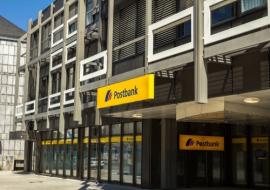
The Postbank has advised South African Social Security Agency (SASSA) grant beneficiaries that it is experiencing intermittent technical issues which are affecting some beneficiaries’ ability to withdraw their funds from ATMs and retailers.
The technical challenges also affect some SASSA Social Relief of Distress (SRD) R350 withdrawals within the retailers.
SASSA grants beneficiaries are assured that Postbank’s technical teams are working around the clock to resolve the issue.
“Postbank deeply understands the inconvenience and challenges that this technical issue poses to our valued SASSA grants customers. We apologise unreservedly to all our customers. Postbank will advise as soon as the technical issue is resolved,” Postbank said in a statement.
Postbank said social grants payments transactions via SASSA Gold Cards within the Post Office branches are processing normally and not affected by the issue.
At least five injured in Braamfontein fire

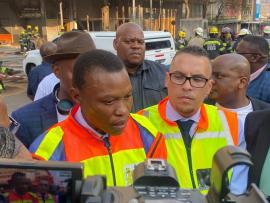
An explosion from a gas pipeline in Braamfontein, Johannesburg, has left at least five people injured, while a truck and a building close to the Nelson Mandela Bridge caught fire.
According to a statement released on the City of Johannesburg’s X (formerly known as Twitter) account, Mayor Kabelo Gwamanda explained that the incident occurred while maintenance was being carried out on an Egoli Gas pipeline.
“The explosion is confirmed to be a gas explosion from an Egoli Gas pipeline that was undergoing maintenance.
“Following the Bree Street incident, the City has placed pressure on eGoli and other service providers to test and maintain their systems to prevent future accidents and minimise the risk to leaks and explosions. Sadly, this explosion occurred during the course of such maintenance.
“Residents in the area are advised that they may experience a strong gas scent and mustn’t be concerned as the gas is being released into the atmosphere and poses no risk to health and life,” Gwamanda said.
Since July, at least two major incidents have rocked the area, namely, a methane gas pipeline explosion at Lillian Ngoyi (Bree) Street, which killed one person and caused serious infrastructure damage, and last week’s Usindiso Building fire, which claimed at least 74 lives.
Gwamanda warned residents to stay clear of disaster areas for their own safety.
“We must, however, also decry a growing tendency where people converge around a scene of disaster, taking pictures and videos, as opposed to evacuating and moving away from such scenes. The Boksburg explosion must be a lesson that scenes of disaster must be cleared immediately by all,” said Gwamanda.
In a statement, Egoli Gas confirmed that the pipeline belongs to it and said the fire was “contained within 15 minutes”.
The company said it has been working closely with the City of Johannesburg since the Lillian Ngoyi Street explosion in July “to make the city safe”.
“This involves exposing sections of pipeline and sleeving to ensure integrity of the network. This process of making the city safe is being rolled out in phases, following the explosion in Bree Street in July and possible damages to the Egoli infrastructure due to that incident.
“A root cause analysis will be concluded and agreement has been reached with the executive team of Johannesburg that JMPD [Johannesburg Metro Police Department] and EMS [Emergency Medical Services] will be informed of future work to assist with the management of traffic and public movement in areas where work is planned,” Egoli gas concluded.
President condemns attacks on judiciary
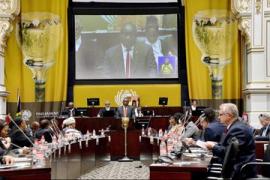
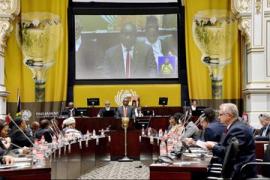
President Cyril Ramaphosa has reiterated his condemnation of the attacks on the judiciary.
“All the citizens of South Africa are enjoined to respect, protect and promote our Constitution and the rule of law by respecting and protecting the judicial authority of our courts.
“This is important to ensure that our constitutional democracy continues to thrive,” President Ramaphosa said on Tuesday in Cape Town.
Participating in a Questions for Oral Reply session in the National Assembly, the President explained that the judiciary is an essential part of the democratic order.
“The Constitution clearly states that the courts are independent and subject only to the Constitution and the law, which they must apply impartially and without fear, favour or prejudice.
“I have often spoken out publicly against attacks on our judiciary. Unless supported by evidence, such claims undermine confidence in our courts and weaken our Constitutional order,” he said.
The President acknowledged that the Constitution guarantees of freedom of expression and opinion. However, he reminded South Africans that these freedoms should not undermine the Constitutional order, as this may lead to the erosion of trust in the judiciary.
Section 165(3) of the Constitution states: “No person or organ of State may interfere with the functioning of the courts”.
President Ramaphosa encouraged anyone who feels aggrieved by the conduct of any member of the judiciary to approach any of the relevant bodies to lodge a complaint.
“In the case of judges, this body is the Judicial Service Commission and in the case of magistrates, it is the Magistrates Commission. If the grievance is about a court’s decision, there are processes of review and appeal available.
“The Chief Justice is tasked with the development, implementation and monitoring of the norms and standards applicable to the Judiciary and therefore the Chief Justice can also be approached to ensure that the norms and standards are adhered to,” the President said.

South Africa’s GDP grows by 0.6%

Stats SA has announced that South African real Gross Domestic Product (GDP) expanded by 0.6% in the second quarter of 2023, which measured is from April to June.
Six industries on the supply side of the economy grew in the second quarter, with manufacturing and finance driving much of the upward momentum.
“On the demand side, the country benefitted from a sharp rise in investments in machinery and equipment, which included products related to renewable energy. Despite a decline in the overall household consumption, consumers continued to spend more on restaurants and hotels,” Stats SA said on Tuesday.
The GDP growth in the second quarter follows a 0.4% rise in the first quarter.
“Manufacturing production expanded by 2.2%, mainly pushed higher by petroleum, chemical products, rubber and plastic products. Manufacturers in metals, metal products, machinery and equipment also recorded a good quarter, driven in part by increased demand for crude steel.
“Increased investment in South Africa’s automotive sector helped lift the production of transport equipment and motor vehicles. The finance industry edged higher by 0.7%, boosted by financial intermediation, insurance and real estate services,” Stats SA said.
After two consecutive quarters of decline, South Africa’s agriculture sector recorded a positive performance with a 4.2% rise in output, which was driven by increases in the production of field crops and horticulture products.
“Favourable weather conditions, increased cultivation and a rise in export demand provided further support. Mining looked good too, posting a second straight quarter of growth. Platinum group metals, gold, minerals classified in the category ‘other metallic minerals’ and coal helped lift the industry.
“The personal services industry was positive on the back of higher growth in education and health. The rise in general government services was mainly due to an increase in staff numbers.
“Not all industries had a good second quarter. After 18 months of consistent growth, the transport, storage and communication industry stumbled, declining by 1.9%. Transport support services were lacklustre and there were declines in land freight and road passenger transport,” Stats SA said.
The trade industry was down on the back of weaker retail and wholesale figures.
The overall decline was partially offset by increased activities in the motor trade, tourist accommodation and restaurant, catering and fast-food sectors.
“After holding its head above water for nine months, the construction industry lost steam in the second quarter. A decline in economic activity related to non-residential and residential buildings pulled the industry lower. There was a small uptick in construction works, but this was not enough to lift the industry into positive territory,” Stats SA said.
Investments in machinery and equipment
Stats SA noted that a sharp rise in investments in imported machinery and equipment – mostly for electricity infrastructure – drove gross fixed capital formation higher.
“This was supported by an increase in sales of locally produced electric motors, generators and special purpose machinery. The demand for machinery and equipment contributed to the 3.3% rise in imports. Imported products included those related to renewable energy, batteries, vegetable products, artificial resins and plastics, base metals and articles of base metals, and animal and vegetable fats and oils.
“South African exports edged higher by 0.9%, driven by increased trade in chemical products; prepared foodstuffs, beverages and tobacco; vehicles and transport equipment; mineral products and machinery and electrical equipment.
“Household consumption decreased in the second quarter as consumers cut back on a variety of goods and services. Despite the overall decline, households continued to increase their spending on restaurants and hotels, representing a seventh consecutive quarter of growth for this category,” Stats SA said.