
Justice department leads delegation to attend Bushiris’ extradition hearing

The Department of Justice and Constitutional Development (DJOD) will lead a delegation to Malawi for the extradition hearing of controversial pastor Shepherd Bushiri and his wife Mary.
The hearing is expected to be heard in the Malawi High Court next Tuesday.
“In leading this delegation the department is fulfilling its role as a central authority. In the extradition context, a central authority is a designated government department that has the responsibility for receiving, managing and executing extradition requests.
“The delegation’s participation to the hearing is in line with section 6 of the Extradition Act of Malawi. [The delegation] consists of senior and highly experienced prosecutors from the National Prosecuting Authority, the Investigative Directorate and investigators from South African Police Services,” the department said.
In a judgement earlier this year, the court ruled that witnesses who will be called in the extradition hearing must be physically present in the court.
“The High Court further ruled that the witnesses required to traverse the provisions of this section are state agents who will be able to comprehensively address these issues,” the DJCOD said.
Bushiri and his wife are wanted in South Africa on charges of fraud and money laundering for their role in an alleged investment scheme worth some R100 million.
Employers warned against employing undocumented foreign nationals

Employment and Labour Deputy Minister Boitumelo Moloi told employers that the Department has noted with concern that the agricultural and mining sector employers are employing undocumented foreign nationals.
Moloi was delivering her keynote address at an Employers Session held at the Kuruman Lodge in Kuruman on Thursday.
“There is a misconception that South Africans are lazy, resulting in employers hiring undocumented foreign nationals. This perception is not true. Farm murders are made worse because these undocumented foreign nationals cannot be traced or found as we do not have their details,” Moloi said.
Moloi told the gathering that the department is busy with the National Migration Policy which will assist with the regulation of employment of foreign nationals.
She called on employers to engage the government. “We need to talk to each other. You must tell us what you want from our learning institutions,” she said.
She warned the employers on the dangers of high level of unemployment among the youth in the country.
She said youth unemployment is a time bomb. “Imagine what will happen if one day, the youth decide to close your workplaces where you employ undocumented foreign nationals. The situation will be terrible,” she said.
The Deputy Minister said that the department has no intention to penalise undocumented foreign nationals, but would like to assist them in complying with the laws of the country.
She requested them to call the department if they in doubt or need assistance.
Moloi encouraged employers to utilise the department’s Employment Services of South Africa (ESSA) to register their vacancies and use the system to get employees.
Following the meeting with employers, Deputy Minister Moloi went to Mothibistad where she launched a Mobile Employment Centre.
There she told the youths to use the facilities to their advantage and stop paying labour brokers for placements.
She warned them against their tendency to choose jobs, looking for higher post jobs as well as using social media platforms to their disadvantage.
Moloi said the youth must stop being selective on jobs because they will never know what they are best at until they try it.
She further encouraged them to clean their social media platforms as some prospective employers use them for selection.
The event was held in collaboration with other government departments, Sector Education & Training Authorities (SETAs) and the John Taolo Gaetsewe District Municipality.
The Department’s Public Employment Service registered more than 700 job-seekers at the event and the project concludes today at Thabo Moorosi Multipurpose Centre.
KZN government forges ahead with supporting youth owned businesses

KwaZulu-Natal Premier, Nomusa Dube-Ncube, has reaffirmed the provincial government’s commitment to forge ahead with the roll-out of the R100 million Youth Empowerment Fund, aimed at supporting youth owned businesses and creating successful young entrepreneurs.
Dube-Ncube said the youth fund is making a huge impact in levelling the economic playing field, as it seeks to end the economic exclusion and marginalisation of black youth in the mainstream economy, while sustaining jobs and ensuring reliable sources of income for the youth.
She said the province is determined to make young people job creators, as opposed to only job seekers.
“We have demonstrated this in practice through earlier funding allocations and support to youth enterprises which have now entered the business market and is creating jobs. There is a proper monitoring and evaluation process in place to ensure that the funding allocation is indeed benefiting young entrepreneurs,” Dube-Ncube said.
The Premier highlighted that, since its launch, a total of 53 youth enterprises have benefitted from the Youth Empowerment Fund, and have created close to 500 jobs employing other young people with some landing contracts outside the borders of the province and the country, while growing the economy in the process.
An investment team, which operates under the supervision of the KwaZulu-Natal Growth Fund Trust (KZNGF), is responsible for screening all applications.
The team is appointed by the Director-General in the Office of the Premier, Dr Nonhlanhla Mkhize.
The Premier said the criteria used by the investment team stipulates that commercial viability is a “crucial requirement for the funding of any business.”
In order to qualify for the youth fund programme, Small, Micro and Medium Enterprises (SMMEs), and its shareholders/members must:
- Have a profit motive;
- Have its principle place of business operations in the KZN Province, or where the KZN Youth Fund grant is being applied in KZN most of the revenue must be generated in KZN, which excludes goods for export;
- Be incorporated either as a limited liability company, close corporation, co-operative, partnership, or an incorporated company;
- Have a minimum of 51% of its issued ordinary shares owned by African youth who are KwaZulu-Natal citizens by jurisdiction or white disadvantaged youth as defined;
- Employ at least one KZN African black youth/woman shareholder on a full-time basis;
- The owners must demonstrate their commitment to the business in the form of time (operational involvement), assets and/or cash, the extent of which will be determined on a case-by-case basis;
- The majority shareholder(s) must be between the ages of 18 and 35;
- Be an existing business owner;
- Require funding between R50 000 and R2 000 000; and
- Must have the relevant management experience and expertise with the ability to manage the business or must be willing to go through a development programme geared for this purpose.
“In building this future, the upliftment of the youth is paramount, as evidenced by the increased investment in the KwaZulu-Natal Youth Empowerment Fund which now will move from R50 million to R100 million.
“Last year, the Youth Development Fund spent R90 million in support of business mostly owned by the youth involved in every sector of our economy. For the 2023/24 financial year, R100 million is repurposed for youth development to benefit more youth in sectors and businesses that employ more people,” the Premier said.
Dube-Ncube is expected to soon announce the Youth Empowerment Fund beneficiaries who were selected after a rigorous process.
Justice Minister commends arrest of Rwandan genocide fugitive

Justice and Constitutional Development Minister Ronald Lamola has welcomed the arrest of a Rwandan fugitive.
The 61-year-old man, Fulgence Kayishema, was arrested at a grape farm in Paarl in the Western Cape on an Interpol Red Notice for his alleged role in the killing of some 2000 people during the Rwandan genocide.
“With this arrest two emphatic statements cannot be refuted, that the long arm of the law knows no time bounds and South Africa is not willing to be a safe haven for fugitives. We will continue to assist other countries and international bodies to trace fugitives. We expect the same from other countries,” Lamola said.
The department explained the man’s arrest.
“The arrest comes after an Interpol Red Notice was issued at the request of the United Nations International Residual Mechanism for Criminal Tribunal (IRMCT). The fugitive was wanted by the IRMCT for genocide and crimes against humanity in Rwanda.
“Kayishema is alleged to have orchestrated the killing of approximately 2000 Tutsi refugees – women, men, children, and elderly – at the Nyange Catholic Church during the 1994 Genocide against the Tutsi in Rwanda. He has been at large since 2001,” the department said.
Stage 8 load shedding a possibility this winter
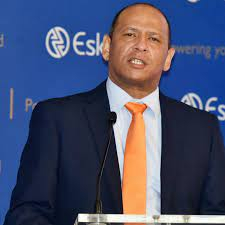
Eskom Acting CEO, Calib Cassim, has announced that if a series of interventions to reduce power demands and improve reliability is unsuccessful this winter, load shedding could intensify to Stage 8.
“It is going to be a difficult winter,” he told the media on Thursday.
Citing the contributing factors, Cassim said the State-owned entity is approaching the cold season with 3 000 megawatts (MW) less capacity compared to last year, due to units 1, 2 and 3 of Kusile Power Station and 1 unit of Koeberg Nuclear Power Station being currently offline.
“However, the focus during this winter, first and foremost, must be the performance of the generation fleet around the Energy Availability Factor (EAF).”
Presenting the winter plan, the Acting CEO said with the support of the system operator and energy planning, Eskom is focused on the key objective of keeping unplanned demand at, at least 15 000MW.
“However, we know it’s been a struggle to keep it at this level and in maintaining that level of 15 000MW can correspond to much lower levels of load shedding during morning peaks, during the day and evening peaks.
“We will indicate that if the interventions that we have planned for the winter do not achieve the desired outcomes and our UCLF [unplanned capability loss factor] reaches levels of 18 000MW, then the likelihood of Stage 8 load shedding during peaks is extremely high.”
While the power system is constrained, Cassim stressed that South Africa would not be plunged into a complete grid collapse.
“I must reiterate that in terms of a national blackout, we are confident that it will not occur because of the interventions and the control mechanisms that we have in place through a competent system-operated team.”
Cassim stressed that load shedding is necessary to keep control of the transmission grid.
“That is why the choice of the levels of load shedding is then executed to remain in control of the grid.”
Eskom said it is focusing on improving the performance of power stations and the EAF, which has deteriorated from 60% in March to 52% currently.
In the medium term, Cassim said the entity will work around the clock to ensure it recovers, restores and brings online three units at Kusile by November 2023.
Cassim also announced during this winter period, Eskom will utilise much more high open cycle gas turbines (OCGTs) within the allocated budget and the debt relief.
He said Eskom’s Generation Group has a budget of R20 billion for OCGTs, which are power stations that use diesel as their primary resource.
Demand-side management (DSM), Cassim said, is another crucial lever.
DSM programmes allow for the effective management of customers’ energy consumption to reduce peak demand or overall consumption during specific periods.
“We must also have an appreciation that over and above what Eskom needs to do and control, having more capacity and megawatts onto the grid is essential to give us stability in terms of the electricity sector and reliability,” said Cassim.
He welcomed Minerals and Energy Minister Gwede Mantashe’s various Bid Windows in his Budget Speech vote, which entail renewables of 5 000MW, 1 230MW of battery storage and 3 000MW of gas.
In addition, Cassim said Eskom has now allocated and released capital expenditure across generation transmission and distribution groups for the next three years.
Meanwhile, Eskom Board Chairperson, Mpho Makwana, said the power system will be more constrained, with weather forecasters anticipating a much colder winter season.
“These challenges will result in high electricity demand as heating of our homes and spaces is required,” he explained.
Makwana said load shedding during winter months requires a coordinated effort among all stakeholders in the country.
“We fully comprehend the adverse impact rotational load shedding has on South Africans and the already fragile economy. We’re doing everything to mitigate the intensity of rotational load shedding, including taking lessons from the rest of the world.”
Makwana said the Board of Directors is working tirelessly with all key partners and shareholders to turn the tide on this “negative reality”.
Consultations underway to transition from analogue to digital broadcasting
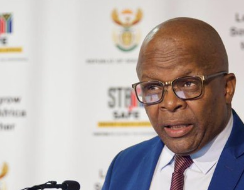
Communication and Digital Technologies Minister, Mondli Gungubele, says the department is extensively engaging with various stakeholders and roleplayers to ensure broad and substantive consultations are done regarding the transition from analogue to digital broadcasting.
Tabling the department’s R3.5 billion budget for 2023/2024 in Parliament on Wednesday, Gungubele said five provinces, including the Free State, Northern Cape, North West, Limpopo and Mpumalanga, have successfully switched off and are currently receiving television broadcast on a digital platform.
However, Gungubele said despite the successful switch off of the five provinces, he is currently facing legal action from stakeholders, who argued that the switch off process should not be concluded without greater engagement with stakeholders.
He said the court ruled that further consultation with stakeholders was necessary before proceeding with the analogue switch off, and in December 2022, the Minister proposed 31 March 2023 as the date for the analogue switch off.
“Stakeholders who would be affected by this were invited to provide their feedback and suggestions and on 9 December 2022, a Government Gazette was published, which notified and invited the industry, affected parties and members of the public to make substantive submissions,” Gungubele reported.
He said the department is extensively engaging with the various stakeholders and role players to ensure broad and substantive consultations regarding the transition from analogue to digital broadcasting.
“In the meantime, we are continuing to install set-top boxes for outstanding households and once this consultation process is completed, we will announce the final date for analogue switch off, which will free up much needed spectrum, in accordance with the President’s directive,” Gungubele explained.
The Minister emphasised that it is necessary to conclude the Broadcast Digital Migration (BDM) project, “hence, we have decided to switch-off the remaining 151 transmitters in the Eastern Cape, Western Cape, KwaZulu-Natal and Gauteng during this year”.
The department aims to conclude the distribution of available set top boxes to registered indigent households as soon as possible.
Digitalisation of the State
The Minister also commended initiatives by government departments, including Home Affairs, the South African Police Service, and others, towards digitising their paper-based records into digital format.
However, he said, his department and its entities remain committed to ensuring that government fully digitalise its services in the Medium Term Expenditure Framework (MTEF).
He underscored a need for the State Information Technology Agency (SITA) to re-establish itself as the leading expert on Information and Communication Technologies (ICT) matters in government, instead of just being an “IT procurement shop”.
To achieve this, he said, the agency must prioritise the integration of core government services within this financial year in order to facilitate a seamless exchange of citizen data across departments for effective and efficient delivery of government services.
“Additionally, SITA needs to ensure full digitalisation within the MTEF. Currently we have 120 Batho Pele e-services on the e-government portal ranging from agro-processing, exam queries, licensing and permit platforms, and SARS e-filling.
“The priority in this financial year is to ensure that the department, working in conjunction with SITA, scales up these e-services and ensures full utilisation by citizens,” Gungubele said.
Despite the challenges posed by a tough economic climate and ongoing social struggles, he argued that the ICT sector in South Africa has continued to demonstrate steady growth.
“In 2021, the sector recorded R243.6 billion in revenue, representing an increase from R243 billion in 2020. South Africa therefore remains an attractive destination for investors seeking to engage with the ICT Sector,” the Minister said.
The Post Office of tomorrow
While acknowledging the challenges facing the South African Post Office (SAPO), Gungubele assured citizens that government has been working tirelessly with the entity to explore various options to find an optimal approach within the legal framework, and under the provisional liquidation order.
“Despite the current challenges, the public can still expect to receive their letter posts, courier packages, renew their vehicle licenses, withdraw their social grants and receive their chronic medication through SAPO. The Post Office of Tomorrow Strategy will also aim to improve the customer experience by simplifying and streamlining processes, as well as increasing accessibility and convenience.
“This will be achieved through innovative technology solutions such as online portals and mobile applications, as well as enhancing the efficiency of existing postal services. With these efforts, SAPO will be able to remain relevant and competitive in the rapidly evolving digital age,” Gungubele said.
He said SAPO has been allocated R2.4 billion to assist in bringing stability to the entity.
President Ramaphosa reiterates South Africa’s position on Russia-Ukraine conflict

President Cyril Ramaphosa, through his weekly newsletter to the nation, has reiterated South Africa’s stance that the conflict between Russia and the Ukraine must be resolved through negotiation and peaceful means.
This after the US Ambassador to South Africa, Reuben Brigety, said that South Africa supplied weapons to Russia after a Russian vessel, known as Lady R, docked in South Africa in December last year.
“Consistent with our stance on conflicts in other parts of the world, South Africa’s view is that the international community needs to work together to urgently achieve a cessation of hostilities and to prevent further loss of life and displacement of civilians in Ukraine. It needs to support meaningful dialogue towards a lasting peace, which ensures the security and stability of all nations.
“As a country, we are committed to the articles of the United Nations Charter, including the principle that all members shall settle their international disputes by peaceful means. We support the principle that members should refrain from the threat or use of force against the territorial integrity or political independence of other States.
“Our position seeks to contribute to the creation of conditions that make the achievement of a durable resolution of the conflict possible. The reality is that the Russia-Ukraine conflict – and the tensions that underlie it – will not be resolved through military means. It needs to be resolved politically,” President Ramaphosa said.
The President emphasised that government’s stance of non-alignment does not “favour Russia above other countries. Nor do we accept that it should imperil our relations with other countries”.
He explained that as President, he has met with USA President Joe Biden and British Prime Minister Rishi Sunak to reiterate this position of non-alignment and called for peaceful resolution of the Eastern European conflict.
“In all our interactions with these countries, we restate our belief that the United Nations remains the only viable mechanism through which the global community can strive for peace and common development.
“Yet the conflict in Ukraine has highlighted the weaknesses in the structure and practices of the United Nations. The composition of the UN Security Council, in particular, does not reflect the realities of the current global landscape. It needs to be overhauled so that there is equitable representation and a more inclusive mechanism for resolving international disputes.
“South Africa is a sovereign state, governed by a democratic Constitution and committed to the consistent application of international law. We will continue to fulfil our obligations in terms of the various international agreements and treaties to which we are signatories,” he said.
Foreign policy and the Lady R
The President explained that South Africa has pursued an independent foreign policy since the advent of democracy and that it has come under “extraordinary pressure… to abandon its non-aligned position and take sides in what is in effect a contest between Russia and the West” since the Russia-Ukraine conflict broke out.
“One of the most impressive features of the international anti-apartheid movement was that it drew support from countries and citizens from across continental and ideological divides. The struggle to end apartheid was taken up in capitals from Africa to Europe, from the Americas to Asia. Our leaders worked hard to gain the support of governments, lawmakers and citizens across the divisions of the Cold War.
“That experience – of reaching out across political divides and building relations with very different countries – has helped to shape our foreign policy. This has been coupled with a firm belief in the value of an inclusive multilateral world order and the peaceful resolution of conflict through dialogue,” he said.
Turning to the issue of the docking of the Russian vessel, the President said an independent inquiry headed by a retired judge will establish the facts of the matter.
“South Africa’s position on this issue was well explained by my envoy, Prof Sydney Mufamadi, and his delegation who recently travelled to Washington DC for discussions with representatives of the United States government.
“We are determined, in both word and action, to maintain our position on the peaceful resolution of conflict. Guided by the lessons of our history, we will continue to resist calls, from whatever quarter, to abandon our independent and non-aligned foreign policy,” President Ramaphosa said.
Nzimande condemns violent disruptions at Cape varsities

Higher Education, Science and Innovation Minister, Dr Blade Nzimande, has strongly condemned incidents of violent disruptions, arson, vandalism and intimidation at the Cape Peninsula University of Technology (CPUT) and the University of the Western Cape.
“Government cannot and will not tolerate the threat to lives and destruction of property, and requests university management to tighten up security at all campuses in order to ensure the safety of all students and workers,” Nzimande said.
Nzimande said arson, vandalism and intimidation will never justify and cannot be associated with any legitimate forms of protest. He said it must be “condemned unequivocally by all, including by student leaders themselves”.
According to reports, a number of grievances led to the clashes that played out last week on campuses between students, campus security and the police. Chief among these are changes made to some of the terms of student funding from the State.
The Minister appealed to both the universities to work with the law enforcement agencies to ensure that perpetrators of these criminal acts are exposed, and that the necessary disciplinary actions are taken against all students who are involved.
In order to resolve genuine student concerns, Nzimande said, the Department of Higher Education and Training, together with the National Student Financial Aid Scheme (NSFAS), has been consulting stakeholders at the universities – including the Student Representative Council (SRC) – to resolve the impasse.
The Minister also appealed for calm and for all the stakeholders to continue to participate in the consultation processes.
He said he will be awaiting a full report from the consultation processes, and a way forward.
22 South Africans stuck in Egypt to return home
The Department of International Relations and Cooperation (DIRCO) has confirmed on Tuesday that it has successfully intervened on behalf of 22 South Africans who were still trapped in Egypt after fleeing the conflict-torn Sudan.
This comes after the Gift of the Givers received a call on Monday about the locals stuck on a ship in Safaga port, Egypt, since Saturday, 29 April.
The disaster response non-governmental organisation said they arrived from Port Sudan, where they had been on contract since September last year for a project that required two more weeks for completion and then the war broke out.
The organisations said they were “stuck” on a cargo ship, not a commercial liner, which complicated matters.
“Regarding the 22 South African nationals who were stranded at Safaga port and refused permission to disembark from their boats by the Egyptian authorities because clearances were required by authorities, we’re happy to report this morning that we have successfully intervened on their behalf,” said DIRCO spokesperson, Clayson Monyela.
According to Monyela, Egyptian authorities have since granted the South African citizens permission to get off the boat to proceed with their journey and an official from the South African Embassy in Cairo has been tasked with signing them off.
“They will then proceed to Cairo, fly via Ethiopian Airlines back to South Africa with the stopover at Addis Ababa.”
Meanwhile, 51 South African citizens, who were stranded in Sudan, touched down at the OR Tambo International Airport in Johannesburg on Sunday.
“The lesson from this experience is that private companies who choose to make their own private arrangements for the employees, in a situation like this at play in Sudan, it is always beneficial to inform and talk to government because there are processes that need to be complied with and certain interventions that can only be made by government.
“We’re happy now that all South African nationals that we know and are aware of have all been successfully evacuated out of Sudan.”
He described the mission as “dangerous and risky” and thanked Egypt, Sudan and Saudi Arabia and Gift of the Givers for offering their helping hand.
“We’ve brought our people home and we’re happy about that. We also acknowledge the role of the South African National Defence Force for their role in making this possible.”
Tensions erupted in Sudan on 15 April between the army and the Rapid Support, killing over 500 people, with thousands injured.
G4S served with notice to terminate Mangaung correctional facility contract

Department of Correctional Services (DCS) Minister Ronald Lamola has told Parliament’s Portfolio Committee on Justice and Correctional Services that the department has served international security company G4S with a notice to terminate its contract.
The company was in contract with the department to run the Mangaung Correctional Facility where rapist and murderer Thabo Bester escaped last year.
“The notice to terminate follows a legal opinion that DCS had sought. It has been deemed that BCC is not suitable to continue with the contract. In line with the concession contract agreement, a termination notice for a period of 90 days has been served to BCC, and thereafter, the contract will cease to operate.
“DCS has already resumed with an internal exercise for the takeover process,” Lamola said.
The Minister told the committee that in the 2021/22 financial year, there were some 22 escapes from correctional facilities across the country.
“We are the first to acknowledge that one escape at our facilities is one too many. We will redouble our security operations to prevent escapes and deal harshly with officials who fail to adhere to Standard Operating Procedures as the National Commissioner acted yesterday in the Mthata management area where there was an escape of two inmates and one has been recaptured.
“Eight officials who were on duty on the date of the escape and did not adhere to standard operating procedures have been suspended,” he said.
Meanwhile, police spokesperson Brigadier Athlenda Mathe says at least two more G4S employees have been arrested in connection with Bester’s escape from prison.
“The pair will appear before the Bloemfontein Magistrate’s Court on Wednesday…on a charge of assisting an inmate to escape from lawful custody and defeating the ends of justice.
“The team investigating this case have so far arrested eight suspects and cannot rule out the possibility of effecting more arrests,” Mathe said.