
SASSA explains R350 grant application approval process
The South African Social Security Agency (SASSA) in Mpumalanga says approval of the R350 Social Relief of Distress Grant (SRD) follows a process – one being a verfification that the applicant does not receive an income.
In a statement on Tuesday, the agency said applicants should note that if their application is still pending it means, it’s not yet verified.
“The applicants must be aware that the agency does not only verify banking details but it also verifies citizenship with the Department of Home Affairs, and it also verifies with the Department of Employment and Labour to check whether the person is UIF [Unemployment Insurance Fund] registered or not.
“If the verification of the above mentioned requirements are not yet finalised, the status will state ‘pending’. When the applicant has successfully passed all verification, SASSA will approve the application and the status will be updated to ‘approved’,” SASSA said.
SASSA said some of the delays that cause beneficiaries not to receive the R350 grant after approval is that they do not provide banking accounts/details but they only choose the name of the bank where they want to get the grant.
Beneficiaries have been reminded to keep on checking their personal details to ensure that they are correct and the grant is received by the right person.
For more information, applicants can contact the agnecy’s toll free number: 0800 60 10 11 or 013 574 9428/9363 from 08:00 – 16:00 during week days Monday – Friday.
Electoral Commission welcomes signing of the Electoral Amendment Bill

The Electoral Commission has welcomed the signing into law of the Electoral Amendment Bill.
The Commission says the assent by the President provides the necessary legal certainty required to prepare for the National and Provincial Elections which will be held in 2024.
“Such certainty in the legal framework can only augur well for the Electoral Commission, the voting public, possible contestants, observers and other interested stakeholders,” the Electorial Commission said.
The foremost implications of the Act are as follows:
- For the first time individuals who are not associated with political parties will stand as candidates for elections into legislatures and the National Assembly.
- It commits the country to a process of Electoral reform beyond the 2024 elections.
Now that the policy choices for the coming elections have been made, the Electoral Commission will move with deliberate speed to finalise the supporting business applications necessary for the implementation of the Act.
These include, among others:
- Rewriting the Candidate Nomination System to facilitate the participation of independent candidates and unrepresented political parties together with a portal to enable candidates to capture the details of voters who support their candidature;
- Redeveloping the Results System to facilitate the recordal of votes cast in favour of independent candidates and translating these into seats where the relevant threshold is met;
- Updating platforms and mechanisms of liaison with parties to also include independent candidates;
- Reviewing the Political Party Funding legislation in order to include funding of elected independents; and
- Ensuring enactment of consequential amendments and regulations to enable the realization of the objects of the Act.
The Commission has now approved an integrated chart of electoral milestones which contains all activities and timelines that underpin preparations for 2024 National and Provincial Elections. In this regard the Commission wishes to highlight the following:
Independent Candidates
The Act determines the participation of independent candidates on the following basis:
- An independent candidate may be nominated to contest in one or more regions but may only be elected to one seat in the National Assembly.
- An independent candidate may only be nominated to stand in a provincial legislature in a province in which they are registered.
- An independent candidate may only be a member of either the National Assembly or a provincial legislature.
- A prescribed declaration confirming that the candidate has submitted names, identity numbers and signatures of voters who support his or her candidature:
- In relation to the election of the National Assembly, the names must equal 15 per cent of the number of votes required to obtain a seat for that region in the preceding election if contesting only one region o 15 per cent of the highest of the quotas in the preceding election, if intending to contest in more than one region.
Where the 15 percent of the highest of quotas is not achieved, that independent candidate may only contest in the region or regions as determined by the next highest quota met
- In relation to a provincial legislature, 15 per cent of the votes required to obtain a seat in the preceding election, in respect of that province.
Further requirements include:
- Candidates must pay a prescribed deposit. Deposits paid by independent candidates may be different from those paid by political parties.
- Candidates must undertake to be bound by the Electoral Code of Conduct.
- Candidates must sign a declaration that they are not disqualified in terms of the Constitution.
- In respect of provincial elections, candidates must sign a declaration that they are registered in that province.
Registered political parties that do not have seats in any legislature or the National Assembly will have to meet the same 15 percent quota requirement and also pay a deposit.
Ballot Papers
The participation of independent candidates in elections of the National Assembly as a consequence of the signed law, has the following noteworthy implications:
- The amended Act provides for an additional ballot paper in the election of the National Assembly thereby offering voters a non-binary choice of either a party or independent.
The effect of this is that the regional and compensatory ballots are separate (two ballots instead of a single ballot as was previously the case).
The regional ballot for the National Assembly includes parties and independents. The other (national) ballot contains only parties in order to restore proportionality.
The ballots for the regional seats in the National Assembly will be region-specific in a manner similar to provincial legislature ballots.
- The introduction of the second ballot for the election of the National Assembly, results in an increased number of ballot papers to be printed without the corresponding increase in time lines. Thus the ballot printing window remains an immutable 28 days.
- The number of ballot papers for provincial legislature elections remains unchanged at one ballot per province. These will contain the names of parties and independent candidates.
Voter Registration
Ahead of each election, the Electoral Commission undertakes registration drives to register new voters and to enable already registered voters to inspect and where necessary update their registration details. These drives result in updating of the voters’ roll.
For this purpose, the Electoral Commission announces that it will open its network of approximately 24 000 voting stations over the weekend of 18 and 19 November 2023 to register new voters for the forthcoming elections and to facilitate inspection of the roll.
Voting station based registration represents the most equitable manner of equalising access to the vote.
Additional modalities of registration have also been implemented to facilitate continuous registration.
Those with access to the internet may register, inspect and update their details at any time before the proclamation of the elections by visiting www.elections.org.za.
Voters may also visit the local offices of the Commission in each municipality or take advantage of the various activation campaigns that the Commission will undertake in various areas to register and update their details.
Vote where you are registered
In National and Provincial Elections, voters vote at the voting station where they are registered. However, the Electoral Act had provided for an exception.
This exception was intended to facilitate the continued franchise of persons who unavoidably found themselves outside areas in which they were registered on voting day.
However, over time, this well-meaning provision has been misused in a manner that may imperil proper administration of elections and creates perceptions that some voters are able to vote more times than they are entitled to.
The new framework now provides that those who, for unavoidable reasons, are likely to find themselves outside of their voting station of registration, must give prior notice of their intention to vote at a different voting station.
“The Commission reiterates that with the assent of the Bill certainty has now been created in the planning framework for the 2024 National and Provincial Elections. Our time is short and we cannot afford any delay,” the Commission said.
All electoral stakeholders are asked to start their preparations in order to avoid missing immutable electoral timelines.
N3 highway reopens after multiple car crash
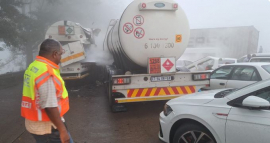
The KwaZulu-Natal Department of Transport has reopened the N3 freeway between Hilton and Cedara after hours of closure following a multi-vehicle crash on Monday afternoon.
In a statement on Monday, KwaZulu-Natal MEC for Transport, Sipho Hlomuka, said various government emergency response services had worked tirelessly to ensure the reopening of the freeway, removing the wreckage of five trucks, eight minibus taxis and 22 light motor vehicles which were involved in the pile up.
Vehicles were moved amid a long backlog of traffic on the N3 northbound (Johannesburg bound).
“The road was opened after the recovery of all the five bodies of the deceased, assisting survivors on scene and transporting critical patients to health care facilities for urgent medical attention.
“Through an integrated government response, various interventions are being made, including setting up shelter in uMngeni Town Hall and activating an emergency contact centre. Various social partners are also mobilised and are also assisting the affected motorists and public transport commuters,” Hlomuka said.
The taxi industry provided alternative transport to public transport commuters, who wished to continue with their journey to their respective destinations.
The MEC commended the hard work by various emergency services and sent his deepest condolences to all the affected families, and wished a speedy recovery to all those who sustained injuries.
“We acknowledge the magnitude of this horrific accident and the trauma felt by all those involved. Some motorists have been stuck for hours and lost a lot of time in traffic.
“We, however, wish to salute all the emergency response teams for a job well done under such unfavourable weather conditions. As provincial authorities, we are hugely disappointed with the fatal crashes recorded during this Easter weekend,” Hlomuka said.
Hlomuka appealed to motorists who will be continuing with their journey and those who are still going to travel to be on high alert and ensure maximum adherence to traffic regulations.
“To those who still wish to locate their family members or get a status update on the road are urged to contact the emergency contact centre number on 033 940 8484,” the MEC said.
Meanwhile, KwaZulu-Natal Premier Nomusa Dube-Ncube said the provincial government is working closely with law enforcement agencies to investigate the cause of the accident and to ensure that those responsible are held accountable.
“Our priority at this time is to provide support and assistance to the injured and the families of the deceased. We urge all road users to exercise caution and adhere to road safety rules and regulations to prevent such tragedies from happening in the future,” Dube-Ncube said.
The Premier has also sent her condolences to the families and loved ones of those who lost their lives.
Transport Minister Sindi Chikunga is expected to visit the accident scene this afternoon to assess the level of damage and progress made to reopen the highway for traffic.
Thabo Bester escape: G4S ex-employee to appear in court

A 39–year-old former G4S employee and a 65-year-old man are expected to appear in the Bloemfontein Magistrate’s Court today in connection with Thabo Bester’s escape from prison.
According to the South African Police Service (SAPS) national spokesperson, Athlenda Mathe, a multi-disciplinary team investigating Bester’s escape from the Mangaung Correctional Centre arrested the duo at the weekend.
Mathe said the former G4S employee was arrested at his residence in Bloemfontein on Saturday, 8 April 2023, while the 65-year-old man was arrested on Friday, 7 April 2023, at his home in Port Edward, KwaZulu-Natal.
“Both suspects have been charged with aiding and abetting a convicted prisoner to escape from lawful custody,” the statement read.
G4S is a multinational security company that operated and partly-owned Mangaung Correctional Centre, where Bester was incarcerated.
GroundUp recently broke the story about the escape of rapist and murderer Bester in May 2022.
The fugitive Bester, his girlfriend Dr Nandipha Magudumana and a third person believed to be a Mozambican national were arrested on Friday night in Tanzania, close to the Kenyan border.
Mathe announced that a delegation led by the SAPS Deputy National Commissioner responsible for Policing, Lieutenant General Tebello Mosikili, has arrived in Arusha, Tanzania.
“The team is currently engaged with their Tanzanian counterparts to finalise all legal processes required towards bringing escapee Thabo Bester and his accomplices to justice in South Africa.”
The National Commissioner of the SAPS, General Fannie Masemola, according to the spokesperson, has welcomed the latest arrests and said the possibility of more arrests could not be ruled out.
The 65-year-old is believed to be Magudumana’s father.
“General Masemola has again reiterated the appeal to media and the public to exercise patience and allow the investigators the space to conduct the investigations with no undue pressure and expectation.”
The Correctional Services National Commissioner, Makgothi Thobakgale, announced last month the appointment of a Temporary Manager for the correctional facility.
According to the Correctional Services’ findings following their investigation, Bester was assisted to escape from lawful custody on 3 May 2022, yet the contractor maintains that he died in his cell.
Thobakgale said a private vehicle was allowed inside the facility without a gate pass on the day of the escape, possibly carrying an unknown body that was burnt beyond recognition in his cell.
“Tampering with surveillance cameras points to a failed monitoring system deliberately orchestrated to conceal crucial evidence and individuals who aided Bester to escape.
“This is also a failure to guarantee safe custody of inmates and a breach in terms of the responsibilities allocated to the contractor,” Thobakgale said at a media briefing in March.
Government withdraws State of Disaster on electricity
Government announced on Wednesday that it has terminated, with immediate effect, the National State of Disaster declared by the Minister of Cooperative Governance and Traditional Affairs (CoGTA) on 9 February 2023.
This comes after a legal challenge to stop the State of Disaster by the Organisation Undoing Tax Abuse (OUTA), which questioned its rationality.
“The State of Disaster was a necessary response to the impact of critical levels of load shedding on the economy and vulnerable sectors such as health and small businesses,” CoGTA said in a statement.
Following the declaration of the State of Disaster in February, government said it adopted wide-ranging regulations.
These regulations, according to the department, set out the responsibilities of the different organs of the State to mitigate the impact of severe load shedding, prevent the escalation of electricity supply constraints, and avert a national emergency.
“These regulations and the underlying actions were put in place in support of the Energy Action Plan (EAP). This was to support an effective and integrated response across all spheres of government,” CoGTA explained.
The department believes that the State of Disaster enabled the State to enhance interventions by the National Energy Crisis Committee (NECC) in terms of the EAP.
The interventions in the EAP aim to fix Eskom and improve the availability of existing supply, enable and accelerate private investment in generation capacity and speed up procurement of new capacity from renewables, gas and battery storage.
The goal is also to unleash businesses and households to invest in rooftop solar and fundamentally transform the electricity sector to achieve long-term energy security.
The newly appointed Minister of Electricity, Dr Kgosientso Ramokgopa, recently undertook oversight visits to power stations and consultations within government, including with Eskom, to identify and resolve electricity supply constraints.
“As a structure that integrates areas of responsibility and resources within government, the NECC provides support to the Minister in the identification and resolution of bottlenecks,” the department said.
Given these developments, the CoGTA Minister Thembisile Nkadimeng has decided to terminate the State of Disaster.
“Following the termination of the State of Disaster, all regulations and directions made in terms of Section 27(2) of the Act, under the declaration of the National State of Disaster to deal with the impact of the severe electricity supply constraint, are repealed with immediate effect.”
Government, through the NECC, has since committed to continuing to engage, cooperate and coordinate its actions to reduce and eradicate load shedding using existing legislation and contingency arrangements.
These include measures already taken to protect critical infrastructure, facilitate emergency energy generation and protect consumers in terms of relevant competition law.
“A range of interventions and support measures introduced by departments, as an accelerated response at the time the State of Disaster was declared, will be sustained in terms of existing legislation.”
Nkadimeng has since expressed her sincere appreciation for the constructive and collaborative way in which stakeholders in civil society have worked with government in a short time to achieve progress in keeping the lights on and enabling the economy and public services to function more productively.
The department said a relevant Gazette would be issued soon.
Three Limpopo criminals sentenced to 705 years in prison

The South Gauteng High Court has handed a combined 705 years imprisonment sentence to three members of a criminal gang convicted on 19 charges including murder, robbery, assault, attempted murder, possession of firearms, ammunition and kidnapping.
The incidents occurred in the Mopani district in Limpopo between 2017 and 2018.
The landmark conviction came following a trial which began in August 2019 and was built on detective work that involved not only the SAPS but also investigators from various banks.
Three members of the gang, Calvin Congo Mabunda (42), Sibusiso Shamase Mkhwanazi (43) and Bhova Sticks Nkuna (54) began their criminal acts by targeting the district due to a high number of pensioners who were having to withdraw large amounts of cash in the Giyani, Bolobedu, Malamulele and Mokwakwaila policing precincts.
Spotters in the bank would observe the withdrawal and once the victims had left the premises, other members of the gang would be alerted and the unsuspecting victims would then be followed.
In some instances, they followed their victims’ home from the bank and broke down their front doors and robbed them in their houses.
In one instance, Mabunda held a knife to a woman’s throat after she had bought beer and food for a lobola celebration.
The gang’s violent crime spree across Giyani resulted in the police establishing a special task team to apprehend them. The gang members were arrested on 06 January 2018 after robbing a Superspar employee at gunpoint.
The employee allegedly collected R20 000 worth of change from the bank to be transported to the supermarket in the area.
He was allegedly followed by the accused and during the robbery, a shot was fired and drew the attention of police who were patrolling nearby.
The police gave chase and cornered Mkhwanazi and Mabunda at Homu 14 village. The following day, a blue car that was also involved in the robbery was spotted and the police were able to arrest Bhova, after a chase and shoot-out that left a patrol van with a bullet hole in it.
After the arrest of the trio, the spate of violent robberies that were plaguing the Giyani policing area suddenly stopped and further investigations positively linked the suspects to other additional offences that happened in Gauteng and North West provinces.
In 2019, there was enough evidence to go for trial, all the cases across the three provinces were centralised at the South Gauteng High Court.
The three accused were subsequently handed the following sentences on Tuesday, which were diligently investigated by Warrant Officer Robert Khazamula Chabalala attached to the Provincial Organized Crime Unit in Limpopo province, as follows:
– Calvin Congo Mabunda (42) was sentenced to an effective 250 years
– Sibusizo Shamase Mkhwanazi (43) was sentenced to 278 years
– Bhova Sticks Nkuna (54) was sentenced to 177 years
“I’m delighted with the permanent removal of the three accused from society, who never showed any remorse while committing these barbaric acts. This is exemplary to would-be criminals that crime will always be paid in an unpleasant and beneficial manner to the society’s advantage,” Lieutenant General Thembi Hadebe said.
Eskom PFMA partial exemption withdrawn, for now
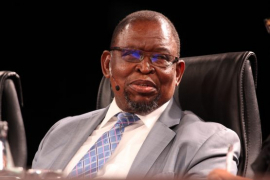
Finance Minister Enoch Godongwana says National Treasury has withdrawn Eskom’s partial exemption from the Public Finance Management Act (PFMA) granted to the power utility last week.
Godongwana announced the withdrawal during a joint meeting of Parliament’s Committee on Appropriations, the Standing Committee on Finance, the Standing Committee on Public Accounts, the Standing Committee on the Auditor General and the Portfolio Committee on Public Enterprises.
The exemption would have allowed Eskom to report irregular, fruitless and wasteful expenditure on its annual report and not annual financial statements.
“The public has taken an interest in this matter precisely because of the history of corruption. We appreciate that South Africans are quite aggressive and vigilant against corruption, which is going to be an important point for our society. We take that as a positive step.
“We had these [public] comments and everything and yesterday. We had an intensive discussion with the AG [Auditor General]. In that discussion, there were some comments by the AG which have to be part of the framing of the gazette.
“In light of those comments and generally the comments by the public, we have decided to withdraw the gazette for now and take all these comments into account, and also have a detailed consultation with the Auditor General and the auditors… of Eskom so that checks and balances for corruption are tightened,” Godongwana said.
On Tuesday, National Treasury had explained that reporting these irregularities increased the “likelihood of qualified audit opinion… that triggers loan covenants, which will likely further increase Eskom’s cost of borrowing and may result in additional fiscal pressure from Eskom’s debt burden”.
In the parliamentary meeting on Wednesday, Godongwana reiterated that position, emphasising that the intention of the exemption was “not to hide anything” but to allow the power utility to have a better financial statement and protect the fiscus, considering government’s R254 billion debt arrangement with the power utility.
“When Eskom applied [for the exemption], we had to ask ourselves a question. If Eskom’s financial statements are being constrained by these irregularities, what are the implications for Eskom’s cost of capital? If they cannot raise that capital, what are the implications for the fiscus? We look at it from a fiscal sustainability eye.
“We then said we should grant Eskom the exemption… from disclosing those in the annual financial statement. But those should be disclosed in the broader annual report. In other words, we are not hiding them. The intention… is to allow Eskom to have a better financial statement but at the same time, create an environment where there’s transparency on corruption and irregular expenditure and all of those things.
“Deliberately so, we also wanted to make sure that we even set conditions for Eskom to report quarterly on what actions are they taking in that regard,” Godongwana said.
Gauteng IDZ blazes trail in job creation and economic development
The Gauteng Industrial Development Zone SOC Limited (Gauteng IDZ) has set its sights on being the leading economic zone in the country and in Africa.
Gauteng Economic Development MEC, Tasneem Motara, on Tuesday said that the IDZ aims to promote job and enterprise development opportunities.
Established in 2009, the Gauteng IDZ is mandated to develop and operate the designated OR Tambo Special Economic Zone (SEZ) at OR Tambo International Airport.
In support of its mandate, the Gauteng IDZ works to create an enabling platform for manufacturing investment opportunities that support the positioning of OR Tambo International Airport SEZ and the Gauteng city region as globally competitive investment locations.
During a media tour at In2Food’s production facility at the OR Tambo SEZ on Tuesday, Motara said commended the efforts made by the Gauteng IDZ.
“We are still growing and tenants are expressing interest in coming to this area. It is strategically located not far from the airport.
“The Gauteng IDZ aims to promote job and enterprise development opportunities, facilitated through partnerships that enable the sustainable growth of emerging enterprises or new industrialists contributing to economic growth,” Motara said.
In2Food is one of Africa’s largest premium food packing and processing companies and is one of the companies that pledged during the 2018 Investment Conference.
President Cyril Ramaphosa in 2018 committed to raising over R1.2 trillion worth of investments over a five-year period.
At the third Investment Conference in 2020, pledges of about R774 billion had been made.
In 2018, In2Food announced an investment of R241 million. The company has built a state-of-the-art 22 700m2 fresh food facility, which is described as the largest in the southern hemisphere and the second largest CO2 refrigeration facility in the world. The company has created 600 jobs.
Their facility produces about 2 000 litres of soup and 10 000 pancakes per hour.
In2Food has contributed to increased exports of fresh products from the OR Tambo district, and is the largest supplier of fresh and prepared foods for Woolworths.
To date, In2Food Bonaero (as the SEZ operations are known) has created some 2 240 jobs. The company is also committed to supporting emerging farmers, providing them with off-take and helping them align to the quality standards of Woolworths.
Energy
Another promising company, SolarAfrica, which is based in Gauteng, is making inroads in the area of energy solutions for commercial and industrial businesses, including residential properties and houses.
SolarAfrica can help clients save up to 50% on monthly electricity costs. It also reduces carbon emissions, helping to reach green energy targets.
SolarAfrica has been named the continent’s leading solar energy firm, scooping the prestigeous African Solar Company of the Year Award at the 2021 Africa Solar Industry Association Awards held in London.
A major project undertaken by the company is the 13.5 MW solar PV carport grid-tied system installed at the car manufacturer Ford South Africa’s plant in Silverton, Pretoria.
During a media tour at the Ford plant, SolarAfrica’s Brandon Horn said solar energy is critical as the country battles challenges such as load shedding and the high cost of grid electricity.
“As a result of industry struggling, there are opportunities in the renewable energy sector to help industry alleviate the pressure of additional costs to their businesses,” Horn said.
Ford SA is offsetting 35% of its electricity demand through solar energy, a move that has helped the factory to reduce its electricity bill by 15%.
Horn said SolarAfrica is currently building a 1 000 MW solar farm near De Aar in the Northern Cape, which is being built in 100 MW phases, the first of which is set to be brought onto the grid in 2024.
Prominent Mpumalanga businessman appears in court for fraud
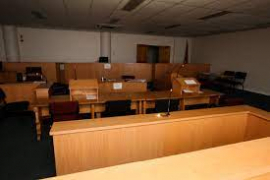
A prominent Mpumalanga businessman has appeared in the Mbombela Magistrate’s Court in connection with R60 million motor vehicle licensing fraud.
Demieties Pieter Botes joined 16 licensing officials and one vehicle fleet owner who were arrested last year in connection with the scandal. The Hawks arrested the 46-year-old man on Tuesday.
Botes faces 261 counts of fraud emanating from transactions conducted in 2017 when officials that worked at the Mbombela provincial helpdesk of the Department of Community Safety, Security and Liaison fraudulently licensed his fleet of vehicles, which include truck-tractors and tippers.
The Mpumalanga provincial government suffered a loss of R1 005 923.40 in uncollected vehicle license fees because of fraud committed on Botes’s vehicles alone.
He was granted R15 000 bail and the case was postponed to 20 July 2023. The matter has been transferred to the Mbombela Commercial Crimes Court where he will stand trial together with his 16 co-accused.
The arrest followed extensive investigations involving the Road Traffic Management Corporation’s (RTMC) National Anti-Corruption Unit, the Hawks, and the Special Investing Unit.
“The investigation revealed that administration clerks who worked at the Mbombela help desk and other registering authorities manipulated the electronic national administration traffic information system (eNaTIS) between 2018 and 2019 to assist motor vehicle owners to avoid payment of vehicle licence fees and penalties owed to the state.
“Their modus operandi involved changing the ownership of affected motor vehicles into the name of an unsuspecting individual, a deceased person or a dormant company. Fees and arrear penalties will then be passed on the unsuspecting individual or companies before vehicle ownership is changed back to the rightful owner without any debt due from the rightful owner,” the RTMC said.
In some instances, fees were dumped onto government vehicles by using a GG authority code. The suspects are jointly facing 603 charges of corruption, fraud, and money laundering.
Investigations are continuing and the possibility of further arrests has not been ruled out.
Some relief for motorists in April

Consumers of diesel, paraffin and gas will breathe a little easier following price decreases in all fuels and slight changes in the prices of petrol.
This after the Department of Mineral Resources and Energy (DMRE) released the updated prices for fuel, gas and paraffin for the month of April.
The new prices are as follows:
- 93 grade petrol will decreased by one cent per litre
- 95 Petrol is expected to increase by two cents per litre
- Diesel 0.05% will go down by some 73c
- Diesel 0.005% is expected to also decrease by some 74c
- Wholesale illuminating paraffin will decrease by R1.24
- The price of Single Maximum National Retail price for illuminating paraffin will decrease by R2.01
- The Maximum LP Gas Retail Price will decrease by 92c
“The average international product prices of petrol decreased following the lower brent crude oil prices during the period under review. The movement in product prices has led to a lower contribution to the Basic Fuel Price of petrol 93 Octane by 40c per litre and 95 Octane by 39c per litre, diesel 500 ppm by R1.16 per litre and 50ppm by R1.17 per litre as well as illuminating paraffin by R1.77 per litre.
“The Rand depreciated, on average, against the US Dollar from 17.74 to 18.03 Rand per USD during the period under review when compared to the previous one. This led to higher contributions to the Basic Fuel Prices of petrol, diesel and illuminating paraffin by 37c, 39c and 38c per litre, respectively,” the DMRE said.
The department also highlighted that there was “volatility” in the markets over the past month.
The main contributing factors are the international Silicon Valley and Credit Suisse Banks failures – this caused uncertainty in the markets and a shift from crude oil to Gold and other precious metals which resulted in a decrease of crude oil prices – and the interest rate hikes by the US Federal Reserve also contributed to the decrease of crude oil prices on fears of a global economic recession.
The department announced that Minister Gwede Mantashe has “approved the implementation of revised zone differentials into the price structures of petrol, diesel and illuminating paraffin” which will come into effect on Wednesday.
A decrease in the slate levy is also expected.
“The annual adjustments to road transport tariffs applicable in petrol, diesel and [illuminating paraffin] price structures will range from an increase of 40.8c per litre in Gordonia Central Magisterial District Pricing Zone to an increase of 7.8c per litre for petrol and diesel as well as 14.1c per litre for [illuminating paraffin in] Zone 9C-Gauteng.
“As at the end of February 2023, the cumulative slate amounted to a negative balance for petrol and diesel of R 2.43 billion. In line with the provisions of the Self-Adjusting Slate Levy Mechanism, there is a decrease of 4.38 cents per litre in the Slate levy which will be implemented into the price structures of petrol and diesel with effect from [Wednesday]. The slate levy applicable will be 17.54c per litre,” the department said.