
SA strikes deal to buy gas from Mozambique
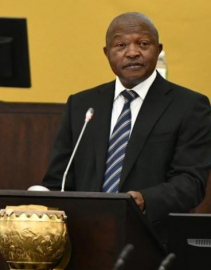
Deputy President David Mabuza says government has reached an agreement with Maputo that will see South Africa getting a supply of gas from Mozambique.
The Deputy President said this when he responded to oral questions at a sitting of the National Assembly on Thursday.
“Discussions between our Minister here of Mineral Resources [and Energy] and Mozambique are quite advanced in terms of gas that we should transport from Mozambique to the country.
“I can safely say that we have reached an agreement,” he said on Thursday.
Responding to questions from Members of Parliament (MPs), the Deputy President said alternative energy generation measures are being explored and implemented to augment electricity supply and improve the stability of the grid.
Deputy President Mabuza also said the Department of Mineral Resources and Energy has amended the Electricity Regulations of New Generation Capacity. The department has also put together processes to be followed to ensure requests by municipalities for own generation are speedily attended to.
He told MPs that currently, 292 small-scale generators have registered with the National Energy Regulator of South Africa (NERSA) and have generation capacity of 187MW.
“The Independent Power Producers Office is processing offers by independent power producers for approval by Eskom and National Treasury.”
He said the Minister of Mineral Resources and Energy has issued determinations on the required new generation capacity, in concurrence with the NERSA.
“The Determinations made, resulted in the procurement of more than 7 309 MW from renewable and non-renewable energy.
“Most of these power plants are already in operation, with less than 400MW still under construction,” he said.
Unemployment rises to 35.3%
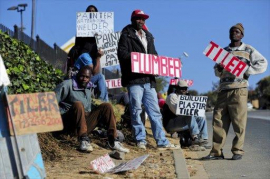
Unemployment in South Africa grew by 0.4 of a percentage point to reach 35.3% in the final quarter (Q4) of 2021, Statistics South Africa has revealed.
Releasing the Quarterly Labour Force Survey (QLFS) statistics on Tuesday, Statistician-General Risenga Maluleke said Q4 of 2021 showed that the number of employed persons increased by 262 000 to 14.5 million.
However, the number of unemployed persons also increased by 278 000 to 7.9 million, compared to the 3rd quarter of 2021.
“While the number of not economically active population decreased by 397 000 to 17.4 million during this quarter. The number of discouraged work-seekers decreased by 56 000 (1.4%) and the number of people who were not economically active for reasons other than discouragement decreased by 341 000 (2.4%) between the two quarters,” said the statistics agency during a press briefing at the Isibalo House in Pretoria.
Stats SA said the changes in the labour market resulted in the official unemployment rate increasing by 0.4 of a percentage point from 34.9% in Q3.
“The unemployment rate according to the expanded definition of unemployment decreased by 0.4 of a percentage point to 46.2 % in quarter 4 2021 compared to quarter 3 2021,” Maluleke said.
The agency said while the number of not economically active population decreased by 397 000 to 17.4 million during this quarter.
The 2021 Q4 report also reveals that the number of people who were not economically active for reasons other than discouragement decreased by 341 000 (2.4%) between the two quarters.
“These changes in the labour market resulted in the official unemployment rate increasing by 0.4 of a percentage point from 34.9% in the third quarter of 2021 to 35.3% in the fourth quarter of 2021 – the highest since the start of the QLFS in 2008.
“The unemployment rate according to the expanded definition of unemployment decreased by 0.4 of a percentage point to 46.2% in quarter 4 2021 compared to quarter 3 2021.”
Stats SA said formal sector employment increased by 143 000 jobs between Q3:2021 and Q4:2021, while the informal sector shed jobs by 48 000 in the same period.
Between the Q3 2021 and Q4 2021, a net increase in employment of 262 000, was mainly due to an increase recorded in Private households (129 000), Trade (118 000) and Community and social services (73 000). Decreases were observed mainly in Manufacturing (85 000), followed by Construction (25 000).
President Ramaphosa to present testimony at July unrest hearings
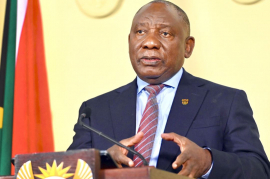
President Cyril Ramaphosa is expected to appear at the South African Human Rights Commission’s (SAHRC) National Investigative Hearing into the July 2021 Unrest in KwaZulu-Natal and Gauteng provinces on Friday.
“The President of the Republic of South Africa…will appear before the Hearing Panel and give testimony with regard to his responsibility as the Head of State and the Head of South Africa’s Executive with regard to the July 2021 unrest in KwaZulu-Natal and Gauteng Provinces,” the SAHRC said.
During the unrest, some 300 people were left dead and businesses as well as public infrastructure suffered at least R25 billon in damages – prompting the SAHRC to conduct the hearings which kicked off in KZN during November last year.
Ministers from the Justice, Crime Prevention and Security (JCPS) cluster have already appeared at the hearings as well as victims, high ranking police officials and other witnesses.
Meanwhile, the SAHRC’s Eastern Cape provincial office is expected to launch a report on violence in schools following a dialogue on the topic held last year.
“The launch aims to raise awareness on the continued rampant violence in schools. Recommendations and comments stemming from the dialogue will be ventilated with the relevant Departments in attendance.
“Further, a plan of action will be carved by all relevant stakeholders with the aim of a continued collaboration to ensure the curbing and eradication of violence in schools. The launch will target government departments, institutions, unions, community based organisations and civil society organisations,” the SAHRC said.
Climate change and fires

By Trevor Abrahams: Managing Director: Working On Fire
The United Nations Environment Program (UNEP) released a landmark report last week calling for a radical change in government spending on wildfires, shifting investments from reaction and response to prevention and preparedness.
Canadian researchers have also highlighted the growing challenge of wildland fires globally, concluding that the last decade saw the worst records in eight successive years for wildland fires across the globe.
Meanwhile in the Western Cape, the Department Forestry, Fisheries and the Environment, and the Expanded Public Works Programme funded Working on Fire (WoF) programme has attended some 70 fires already in the current summer fire season (1 December 2021 to date).
The UNEP report produced by more than 50 international researchers, including South Africans, estimates that the risk worldwide of highly devastating fires could increase by up to 57 percent by the end of the century, primarily because of the rate of global climate change.
The report calls for governments to dramatically shift their approach to preventing, rather than only focusing on fighting, fires, which they said would be more effective.
“There isn’t the right attention to fire from governments,” according to fire expert at the University of Cape Town and an author of the report Glynis Humphrey.
“We have to minimize the risk of extreme wildfires by being better prepared: invest more in fire risk reduction, work with local communities, and strengthen global commitment to fight climate change”, cautions Humphrey.
For the past 18 years, Working On Fire holds a proud record of contributing to combatting an average of 2 500 wildland fires annually in South Africa. Significantly, Working On Fire’s overall strategy has been to apply the principles of integrated fire management in order to reduce the frequency and impact of uncontrolled veld fires, in coherence with the UN report which recommends “two-thirds of spending in planning, prevention, preparedness and recovery, with one-third spent on response.”
Over almost two decades, WoF has worked consistently to create communities that are fire resilient by implementing Integrated Fire Management (IFM) principles. Given the fact that over 90 percent of unwanted fires are caused by human negligence, fire awareness education is a key principle of IFM. WoF hence devotes considerable amount of resources to education in fire prone communities, fuel load reduction through controlled burning and constructing fire breaks, early detection and rapid deployment.
The Fire Awareness Education Programme is directed at all sectors of our fire prone communities, especially children. It combines environmental education, fire and life safety education and disaster risk assessment and mitigation.
WoF recruits and trains young men and women from across South Africa, with a strong focus on marginalized communities. There are currently more than 5000 participants in the programme, 94% of whom are youth, 31% women (the highest level in any comparable fire service in the world) and 3% with disabilities.
WoF has trained and empowered firefighters to conduct and facilitate lessons for learners and educators, as well as community outreach activities. In addition, research is ongoing to ensure content, methodologies and techniques are current and relevant to local communities.
The UNEP report also recommends that governments collaborate with other countries with expertise in fire management.
WoF has over the years deployed firefighting teams to assist Chile, Indonesia and on four occasions, Canada. In its last deployment to Manitoba, Canada in August-September 2021, the Manitoba Minister for Climate and Conservation issued personal letters of appreciation to each of the 109 WoF personnel for serving with distinction in assisting their counterparts in Manitoba in containing the wildfires in the region.
In its fourth quarter edition 2021, the International Association of Wild Fire Magazine quotes a press release by the Manitoba government thanking the South African firefighters:
“The minister noted these firefighters were welcomed to the communities and brought professionalism and dedication to their jobs, as well as great team spirit shown through their colourful marching, chanting and singing at Richardson International Airport in Winnipeg upon their arrival, and when moving through the communities where they were deployed.”
All of this indicates that this was by far one of the most successful international deployments and indeed a huge vote of confidence for WoF. These young men and women represented our country with pride and dignity, their work ethic, professionalism, and fitness levels are highly regarded in Canada. It was a wonderful experience to see how they managed to work seamlessly alongside firefighting authorities from Manitoba Wildfire Services.
Aerial firefighting
An indispensable component to its firefighting success lies in WoF’s aerial firefighting capacity. While aerial resources are not a silver bullet and cannot extinguish fires as a stand-alone resource, they are an essential element of fire suppression activities in support of ground teams. Strategically targeted water drops cool the fire-line and enable ground teams to move in and snuff the flames.
WoF’s aerial firefighting partner is Kishugu Aviation. For the current summer season to date, 25 Kishugu aircraft supplied to WoF and other partners have flown 620 hours as part of efforts to contain fires.
The prediction for the future is grim in that the threat of wildland fires are likely to get worse. The time for preparation is now.
First published in City Press, Sunday 20 March 2022
SA’s investment drive soldiers on despite COVID pandemic

South Africa’s investment drive has soldiered on, despite the devastating COVID-19 pandemic exacerbating slow economic recovery.
This was on Wednesday revealed during a business breakfast as South Africa gears to host the fourth instalment of the South African Investment Conference (SAIC) next week.
The SAIC spearheads government’s investment drive of attracting R1.2 trillion investment in five years. The business breakfast was attended by business executives and investment envoys representing various African states and representatives of the South African government.
“South Africa remains an investment destination of choice,” said Ambassador Sadick Jaffer, Department of Trade and Industry, Chief Director: Investment Promotion in InvestSA. InvestSA is a division of the Department.
“At the last SAIC held in Johannesburg in 2020, about 50 entities made new investment pledges to the value of R109 billion, bringing the 3-year total to 774 billion. Five of these projects, worth R4.3 billion have already been launched and 21 others are under construction or being rolled out – these are worth R34 billion,” Jaffer reported.
Of the 71 projects announced in 2019, 24 projects had been launched and an additional 25 projects worth R199.4 billion were under construction.
In addition, he said seven projects worth R45.6 billion, accounting for 12.5% of investments made in 2019, were in the early stages of implementation.
“Against the backdrop of slow economic recovery exacerbated by a devastating COVID-19 pandemic which disrupted the global supply chain, our investment drive soldiered on.
“We adapted and adopted new ways of engaging with potential investors with one central message – South Africa remains an investment destination of choice,” said Jaffer.
The chief director said the investments were monitored until completion, saying this was with the aim of identifying challenges timeously and assisting when required.
Presidential Investment envoy, Jeff Radebe, said South Africa’s strategic position within the Africa Continental Free Trade Area (AfCTA) placed it in good stead to benefit from opportunities presented by AfCTA.
“Africa offers investors access to a market of more than one billion people with a gross domestic product that exceeds $2.6 trillion,” he noted.
The former Minister said historic trade barriers were coming down and economic activities were increasingly conducted seamlessly across the continent.
“Africa is growing fast into an integrated investment destination,” he said.
AfCTA, which brings together 55 member states of the African Union, and came into effect in January 2021, aims to accelerate intra-continental trade and boost Africa’s standing in the global market.
“AfCFTA adds a new dimension to the 2022 Investment Conference,” Radebe added.
“Now we can demonstrate the significant advantages of investing in the South African economy and how returns can be multiplied through access to a much larger market. South Africa is an attractive destination for investors located outside of the continent. Many such companies also prefer to locate their regional headquarters here because of the access to quality infrastructure and connections to global supply networks.
“Through our participation in AfCFTA, we have preferential access to African markets and a deep understanding of business conditions on the continent.”
McCain sliced beans, Spar stir fry products recalled

The National Consumer Commission (NCC) has urged consumers in possession of certain McCain sliced beans and Spar stir fry products to return them to the point of purchase.
In a statement, Acting Commissioner Thezi Mabuza said the supplier informed the Commission of its precautionary recall after small fragments of glass were found in the products.
The products were packaged from July 2021, with best before dates between 2022 and 2023.
“We urge consumers who might have these products not to consume them and to return them to the retailer for a full refund or an exchange. The safety and protection of South African consumers is the mainstay of the Consumer Protection Act (CPA),” Mabuza said.
While the Commission welcomed the precautionary recall by manufactures and suppliers, Mabuza reiterated that regular quality check routines and processes are critical in order to deliver goods or services that will satisfy customers’ needs.
“The Commission is monitoring the recall based on its Recall Guidelines and also allowing the supplier to conduct further investigations to detect any further potential risk,” Mabuza said.
Ukraine conflict fuels petrol, food price increases

Deputy Finance Minister David Masondo has warned that with South Africa being a net importer of oil, the persistent conflict in Ukraine is having a severe impact on fuel prices which, in turn, is driving up food prices.
Participating in a Parliamentary debate that looked at the economic impact of the conflict on the South African economy, Masondo said there is the prospect of persistent supply and demand imbalances, which risks driving inflation higher and tightening financial market conditions.
“Since the conflict, there have already been sharp increases in the prices of crude oil, maize, wheat, and sunflower oil futures contracts. This is likely to persist until a resolution to the conflict is found,” he said.
The Deputy Minister said higher fuel and grain prices erode the disposable income of consumers.
He said this as local fuel prices recently went up to more than R21 per litre for the first time ever.
“This increase is due to the higher global price of crude oil, which over the last month alone, has increased to above $110 per barrel, compared to around $80 per barrel at the beginning of 2022.
“As a net importer of oil, South Africa, is unfortunately at the mercy of the global oil prices.”
National Treasury working with the Department oto review fuel pricing
Masondo said the National Treasury is fully aware of the impact of these rising prices on the quality of the lives and the cost of living of South Africans, especially the poor, who spend a disproportionate share of their income on transport and food.
“This makes the work that we have embarked on with the Department of Mineral Resources and Energy to review the approach to fuel pricing that much more urgent.
“We are working tirelessly to complete the work as soon as possible,” he said.
Masondo said, however, that government cannot make any hasty decisions, as any changes that are made on fuel pricing will have a lasting impact on the industry.
“In the meantime, we encourage those industries that qualify for the diesel rebate on the fuel and road accident fund to apply for it.
“The higher global inflation prospects could lead to higher interest rates, with tighter financial conditions and reduced capital flows to emerging markets.
“The adverse effects of developments in Ukraine have not spilled over to South Africa significantly, with the Rand having depreciated by only 1.3 percent in wake of the conflict.”
Masondo called for the silencing of the guns and a return to meaningful dialogue, negotiation and compromise.
Diplomacy “key to end Ukraine crisis”

International Relations and Cooperation Deputy Minister, Candith Mashego-Dlamini, says diplomacy remains the key to a peaceful resolution to the Russia-Ukraine conflict.
The Deputy Minister said this when she participated in a Parliamentary debate on the conflict in the Ukraine on Tuesday.
“As a nation birthed through negotiation, South Africa is always appreciative of the potential dialogue has in averting a crisis and de-escalating conflict.
“In line with our strong commitment to the peaceful resolution of conflict, South Africa urges all parties to devote increased efforts to diplomacy and to find a solution that will help avert further escalation.
“The door of diplomacy should never be closed, even as conflict has broken out,” she said.
Mashego-Dlamini said South Africa’s approach on the Russia-Ukraine conflict has been based on the several key principles, which in turn are based on the country’s foreign policy.
This includes expressing deep concern at violation of the UN Charter and international law, the loss of life, the humanitarian impact and the forced displacement of people as a result of the war in Ukraine; and recognising that armed conflict will no doubt result in human suffering and destruction, the effects of which will not only affect Ukraine, but also reverberate across the world.
“No country is immune to the effects of this conflict. As the UN Secretary-General has indicated, the conflict will ‘have a huge impact on the global economy in a moment when we are emerging from the COVID [pandemic] and so many developing countries absolutely need to have space for the recovery’.
“South Africa emphasises respect for the sovereignty and territorial integrity of States,” said Mashego-Dlamini.
On 9 September 2021, BRICS leaders expressed concern at the continuing conflict and violence in different parts of the world.
The BRICS leaders reaffirmed their commitment to the principles of non-interference in the internal affairs of States and reiterated that all conflicts must be resolved by peaceful means, and through political and diplomatic efforts, in line with the international law of the UN charter.
Mashego-Dlamini said South Africa urged all parties to approach the situation in a spirit of compromise, with all sides respecting international law.
“Peaceful resolution of the matter can be achieved by all parties if diplomatic efforts to find a solution to the concerns raised by Russia resume.
“Currently, it is critical for all parties to uphold and protect human rights, and abide by their obligations in terms of international law and international humanitarian law.”
The Deputy Minister said South Africa continues to support and encourage regional initiatives such as the Minsk Agreements, and that SA welcomes the work of the Normandy Format, the Trilateral Contact Group and the Organisation for Security and Cooperation in Europe (OSCE).
“Noting that international action must create an environment conducive for diplomacy, dialogue and mediation, greater attention must be paid to bringing the sides closer to dialogue and not take them further apart.
“The international community should support engagement between the parties in a spirit of compromise, while de-escalating tensions, committing them to the cessation of hostilities, and building trust and confidence.
“As the government of South Africa, we urge all South Africans not to take sides in the conflicts between Russia and Ukraine, as this could go against our principles. In addition, South Africa has a good bilateral relations with both countries.”
Climate change poses risk to gender equality

The Deputy Minister of Forestry, Fisheries and the Environment, Makhotso Sotyu, says the loss of biodiversity and its knock-on effect on livelihoods poses a risk to African women, leaving them even more vulnurable to the negative effects of gender inequality.
Addressing a side event on ‘African Women Resilience in the Context of Climate Change’ during the Commission for the Status of Women (CSW66) in New York on Tuesday, Sotyu said climate change is causing massive livelihood losses and damages for African women, including through the loss of biodiversity, among others.
“South Africa agrees with many other African countries that advocate for a need to integrate gender perspectives into our design, funding, implementation, monitoring and evaluation of policies and programmes on climate change. We further agree on gender mainstreaming across sectors at all levels of government,” the Deputy Minister said.
On the one hand, she noted the recent devastating extreme weather events associated with flooding on the African continent, while on the other hand, drought is increasing food insecurity, and wildfires are destroying vast tracks of land.
“The threat of climate change-related events to agricultural production, food security and human settlements is a matter of grave concern for South Africa.
“The African rural farming communities of largely women will thus need to transform unsustainable production, consumption and land use patterns towards climate resilient agricultural practices,” the Deputy Minister said.
Reports tabled at the CSW show that human pressures will push one million species towards extinction in the coming years.
“If left unchecked, these interlinkages between climate change, biodiversity loss, desertification, land degradation, pollution and the COVID-19 pandemic could unleash devastating effects on humanity, especially for African women. The economic risks posed by climate change could widen the gender gap, including gender violence,” the Deputy Minister said.
Projected global greenhouse gas emission increases indicate that the world will exceed the global target of limiting temperature increases to well below 2 degrees by the end of the century. For Africa, this means a world that is 4 – 6 degrees Celsius hotter.
Furthermore, warming, ocean acidification and deoxygenating oceans, as well as rising sea levels, will particularly put pressure on many African coastal towns and local fishing communities.
“African countries are advocating for resources to implement climate action measures. This is because the burden of climate change falls heaviest on the most vulnerable sectors of society.
“Burden-shifting to developing countries and unilateral efforts to redefine and narrow eligibility for climate change support, as well as placing conditionality on support, are specific threats to gender rights in developing countries,” she said.
The Deputy Minister said much more needs to be done to fully realise the empowerment of women and girls, particularly in developing countries.
“We recognise and appreciate the important roles that women and girls are playing as effective, powerful leaders and change-makers for climate adaptation and mitigation. They are involved in sustainability initiatives around the world, in their communities, and their participation and leadership results in more effective climate action.
“As stated in the 2030 Agenda for Sustainable Development, to empower women and girls to have a voice and be equal players in decision-making related to climate change and sustainability is essential for sustainable development. Without gender equality today, a sustainable equal future remains beyond our reach,” she said.
Pay your power bill: Eskom
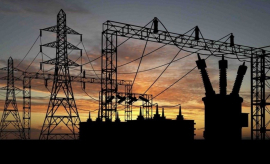
State owned power utility Eskom is calling on all customers – whether business, government or the general public – to pay their electricity bills.
This after the power utility won a legal battle against the Letsemeng Local Municipality in which the local government institution was instructed to pay its R41 million electricity bill.
“The SCA [Supreme Court of Appeal] made it clear that the fact that a municipality raises a dispute…as a defence or claims that it is unable to pay does not absolve it of its legal obligations to pay Eskom for the bulk electricity it receives. The SCA has authoritatively made it clear that there is no legal basis for delinquent municipalities’ failure to pay Eskom.
“Eskom welcomes the decision and assures the public that it will continue with its efforts to recover the debt owed by delinquent municipalities,” the energy supplier said.
Eskom said the decision by the SCA is “ground breaking” in light of the R44 billion in total owed to the cash strapped power utility.
“Eskom’s attempts to recover the debt have often been frustrated by conflicting high court judgments – some of which have been used by delinquent municipalities as justification for their failure to meet their obligations to Eskom.
“In this ground breaking judgement on the issue of municipal debt, the SCA laid down clear legal principles which uphold Eskom’s right to receive payment for the bulk electricity it suppliers to municipalities. The appeal was instituted by Eskom against the decision of the Free State High Court which had earlier dismissed Eskom’s application which sought to compel the municipality to pay for the bulk electricity received from Eskom,” the power utility said.
Meanwhile, Eskom has called for patience after customers in at least three districts in the Eastern Cape continue to live with electricity blackouts.
Parts of the Amathole, OR Tambo and Chris Hani districts in the province have been battling power outages as a result of inclement weather in that part of the country.
“Eskom has experienced network setbacks as more storms made landfall in some parts of the Eastern Cape last weekend leaving numerous customers without electricity supply. Eskom technicians are working hard to ensure complete restoration of power supply,” the power utility said.
The area has been beset with power failures for the past three months with heavy rainfall, strong winds and thunderstorms battering the province.
The energy supplier explained the persistent rains are a risk to technicians working on the ground and Eskom infrastructure.
“Inclement weather puts the Eskom network at risk and can affect the electricity supply for customers, potentially leaving customers with prolonged periods without electricity. Eskom urges customers to be patient and follow the channels made available to log faults…and to treat all electrical appliances as live at this time,” Eskom said.