
Government working on addressing load shedding

Trade, Industry and Competition Minister, Ebrahim Patel, says government is working on addressing load shedding.
Patel said once a solution has been found, an announcement will be made through the Minister of Energy.
Speaking on the sidelines of the Black Industrialists and Exporters’ Conference, Patel admitted that load shedding is not good for business.
In his keynote address at the conference, President Cyril Ramaphosa also spoke of the country’s energy challenge, saying this is being addressed.
“In particular, we need to act decisively and urgently to end the load shedding that is causing such damage to our economy and such disruption to our society. Like every other actor in the economy, black industrialists can simply not grow without a reliable supply of affordable energy.
“Much has been done over the last four years to transform the country’s energy landscape and bring new generation capacity online.
“But that is not enough, and we need to move faster. That is why I have brought together all relevant departments and entities to work on an integrated set of measures to add additional power to the grid in the shortest possible time.
“We are currently engaged in consultations with social partners on these measures, and will soon be able to announce a package of measures that provides an effective response to our energy crisis,” he said.
On the funding of businesses, Patel explained that government does not fund businesses but businesses are offered loans that they repay at a later stage.
Patel explained that the Black Industrialists and Exporters’ Conference is a platform for black businesses to showcase their experiences.
“As government, we are getting black businesses talking to one another and networking,” Patel said.
Patel said government welcomed small businesses who provide important services to the community and medium-sized businesses who employ people in productive labour, as well as trade union leaders who represent the workers.
WATCH | Black Industrialists & Exporters Conference  | Media briefing
  | Awards Ceremony and Gala Dinner
“We welcome a number of representatives of workers’ trusts, who hold shares in the firms they are working in, with hundreds of thousands of workers now owning such shares.
“We have small panel beater shops that are now on the panels of large insurers after the Competition Commission investigation into restrictive practices and ways to broaden access for small businesses.
“We have industrialists who have invested their money to build new factories, expand mines, develop more agricultural lands, obtain machinery and employ young South Africans,” Patel said.
Patel said SA last year achieved a record performance, exporting R1.8 trillion, representing almost one third of the country’s GDP.
“Some of the exports came from black-owned firms present here today. We are now working with a black exporters’ network to be launched today to increase the volume of exports and create local jobs.
“These are businesses who in many cases have showed resilience; and they are the productive engines that create jobs,” Patel said.
Patel said these are businesses that in many cases have showed resilience and they are the productive engines that create jobs.
“We welcome 18 funding entities who are in the business of financing small and medium sized businesses, including commercial banks, DFIs [development finance institutions] like the IDC [Industrial Development Corporation] and NEF [National Empowerment Fund], and other funders,” Patel said.
Championed by the President since its inception in 2015, the inaugural Black Industrialists and Exporters’ Conference showcased progress of government measures in promoting access and transformation to more black industrialists in the economy and the opportunities that the Africa Free Continental Trade Area (AfCTA) offers.
Zikalala urges communities to take a stand against violence

KwaZulu-Natal Premier, Sihle Zikalala, says it is only when communities are prepared to expose those within their own families, who are involved in criminal activities, that the scourge of crime in the country can finally be dealt with.
Zikalala made the remarks during the memorial service of 13 people, who were from UMzimkhulu, KwaZulu-Natal. The 13 were among 16 people who were shot and killed at Mdlalose’s Tavern in Nomzamo informal settlement, Soweto, two weeks ago.
The memorial service followed several deadly incidents that took place at taverns, including Enyobeni in East London, where 21 young people died. Almost two weeks ago, a mass shooting occurred at Samukelisiwe Tavern in Sweetwaters, Pietermaritzburg, where 12 patrons were shot at randomly, leading to the death of four people.
According to Police Minister, Bheki Cele, at least 130 AK47 cartridges were discovered after the tragic shooting at Mdlalose’s Tavern.
Speaking at the memorial service held in UMzimkhulu Hall on Wednesday, Zikalala warned that violence in society has the potential to derail the programme of delivering a better life for all, and undermines the achievements made by the democratic government since 1994.
“As we gather here at this memorial service, we are called on to be vigilant and to jealously guard our hard won peace. KwaZulu-Natal and indeed our country simply cannot afford the violence and murders. We must give peace and development a chance,” Zikalala said.
Zikalala emphasised that citizens must work side by side to eradicate the culture of violence and bloodshed, and create a new “model man and woman who frown upon violence and intimidation”.
He said that now is the moment to seize the day to create safer, stable and thriving communities, where young people have an array of choices for recreational activities.
More importantly, Zikalala said, efforts must be doubled transform and deracialise the economy to ensure that black people in general and Africans in particular also have meaningful participation in the country of their birth.
“This means that we must create opportunities for the rural youth of KwaZulu-Natal in the villages and townships where they are raised. It is clear that lack of opportunities and rural poverty continue to push poor youth to move to bigger cities, like Durban and Johannesburg, in search of economic opportunities.
“Nearly three decades into freedom and democracy, it is clear that our country still has to overcome apartheid spatial planning, rural poverty, and exploitative labour migration that has been the backbone of the colonial and apartheid economy,” Zikalala said.
Youth urged to take full advantage of opportunities
Meanwhile, Zikalala urged young people to take full advantage of the opportunities that the democratic State is providing to educate and skill them from grade R, all the way to institutions of higher learning.
He said the KwaZulu-Natal provincial government has identified youth skilling, youth economic empowerment, as well as youth employment as an urgent priority.
“Education and skills are fundamental to self-development, and we urge all young people of UMzimkhulu and the Harry Gwala District to make use of them,” the Premier said.
He said government will continue to support initiatives to grow youth employment in KwaZulu-Natal and support youth entrepreneurs through initiatives including Operation Vula, KwaZulu-Natal Youth Development Fund, support for the township and rural economy, the Black Industrialist Programme, set-asides for women and youth and 30% of public procurement going to young people.
“We appeal to all the youth of this province to stand up and look for these opportunities. We also implore the private sector in KwaZulu-Natal to do more to support youth development and economic empowerment.”
CPI soars to 7.4%
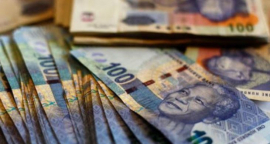
South Africa’s annual consumer price inflation (CPI) reached 7.4% in June 2022, Statistics South Africa (Stats SA) says.
This is a 0.9% increase from the 6.5% recorded in May 2022.
Statistician General Risenga Maluleke on Wednesday said this was the highest rate since May 2009 when the rate was 8.0%.
“The consumer price index increased by 1.1% month-on-month in June 2022. The main contributors to the 7.4% annual inflation rate were food and non-alcoholic beverages; housing and utilities; transport; and miscellaneous goods and services,” he said.
Food and non-alcoholic beverages increased by 8.6% year-on-year, and contributed 1.5 percentage points to the total CPI annual rate of 7.4%, said Stats SA.
“Housing and utilities increased by 5.1% year-on-year, and contributed 1.2 percentage points. Transport increased by 20.0% year-on-year, and contributed 2.7 percentage points. Miscellaneous goods and services increased by 4.0% year-on-year, and contributed 0.6 of a percentage point. In June, the annual inflation rate for goods was 11.0%, up from 9.5% in May; and for services it was 3.9%, up from 3.6% in May,” it said.
Government institutions urged to pay suppliers on time

The National Treasury has urged government institutions to pay their suppliers on time and not contribute to the dire effects of the COVID-19 pandemic that has already put a strain on the financial sustainability of SMMEs.
This comes after the Treasury’s annual report on non-compliance with payment of suppliers’ invoices revealed that government departments had made a 63% improvement on the payment of suppliers’ invoices. The department released the report on Monday.
“The late and/or non-payment of supplier’s invoices have a negative impact on socio and economic challenges that our country is facing. To ensure that supplier operations continue without strain and financial difficulties, government institutions are urged to pay their suppliers on time,” the Treasury said in a statement.
The report shows that there was an improvement in the payment of invoices by government to service providers within 30 days in the 2021/22 financial year.
It said the number of invoices paid after 30 days by national and provincial departments in the 2021/2022 financial year amounted to 401 691 invoices with the Rand value of R 33.7 billion.
“The number of invoices older than 30 days and not paid by national and provincial departments at the end of March 2022 amounted to 67 862 with the Rand value of R 6.1 billion.
“There was a 63% improvement in the number of invoices older than 30 days and not paid at the end of the 2021/2022 financial year, which amounted to 134 invoices to the Rand value of R5 million when compared to 358 invoices to the Rand value of R426 million reported at the end of the 2020/2021 financial year,” said the Treasury.
There was, however, a noticeable regression in the number of invoices paid after 30 days by national department and a regression in the number of invoices older than 30 days.
National Treasury has recommended:
- Payment of invoices within 30 days be included in the performance agreements of accounting officers, chief financial officers and other officials working in this area;
- Disciplinary actions against officials who fail to comply with the requirements to pay invoices within 30 days and who undermine the systems of internal control be taken;
- Accounting officers take steps to ensure that the information to be submitted to the relevant treasury is duly signed off and submitted to the relevant treasury as per the timeframes stipulated in the National Treasury Instruction Note number 34;
- Accounting officers and chief financial officers address the root causes of the late and/or non-payment of invoices to improve compliance with the requirement of Treasury Regulation 8.2.3;
- Payment of suppliers within 30 days be a standing agenda item for discussion at every EXCO meeting of departments; and
- Accounting officers consider recommendations provided to improve the level of compliance with the requirement to pay supplier’s invoices within 30 days.
The department said the purpose of the annual report was to keep the relevant stakeholders abreast of non-compliance with the legislative requirements to pay supplier’s invoices within 30 days.
The report provides a trends analysis of what transpired in the 2021/2022 financial year when comparing with previous financial year analysis.
“The annual report also provides common reasons recorded by departments for late and/or non-payment of invoices and the continuous efforts taken by the National Treasury to improve compliance with the requirements to pay invoices within 30 days,” it said.
The National Treasury said Instruction Number 34 issued in 2011, requires departments to submit 30 days exception reports to the relevant treasuries by the 7th day of each month, with details of the number and Rand value of invoices paid after 30 days from the date of receiving invoices, the number and Rand value of invoices that are older than 30 days which remained unpaid, and the reasons for the late and/or non-payment of these invoices.
“The National Treasury continues to monitor the level of compliance with the requirement to pay supplier’s invoices within the prescribed period in terms of section 38(1)(f) of the Public Finance Management Act (PFMA), 1999 (Act No. 1 of 1999) and Treasury Regulation 8.2.3,” reads the statement.
Tshwane measles outbreak officially now over, says NICD

The measles outbreak in the Tshwane District has been declared over since more than 42 days, or two incubation periods, have passed without new cases being detected since the outbreak.
According to the National Institute for Communicable Diseases (NICD), as of 11 July 2022, no new laboratory-confirmed measles cases were reported to be linked to the measles outbreak in Tshwane District.
“The number of measles cases detected and epidemiologically linked to the measles outbreak in the Tshwane District remains at four. The last laboratory-confirmed measles case was reported on 25 June 2022,” the NICD explained.
Also, no additional laboratory-confirmed measles cases in the district had an epidemiological link to the home-based school facility outbreak.
In addition, the NICD said the City of Tshwane and provincial health officials conducted public health investigations and responses that resulted in the measles vaccination campaign in crèches and schools where the measles outbreak occurred, and areas where another case was detected.
The institute said Gauteng is planning a measles vaccination campaign targeting children aged six months to 14 to increase immunity and prevent new measles cases.
“Clinicians and caregivers should continue to check the children’s vaccination booklets to ensure they are up to date with their measles vaccination,” the institute advised.
The measles vaccine is given routinely at the age of six and 12 months, while catch-up doses should be administered to children who missed their vaccinations.
Measles, according to the NICD, is a highly contagious disease and it spreads through infectious airborne respiratory droplets from an infected person when coughing or sneezing.
It commonly presents with respiratory tract symptoms and any of the three Cs — conjunctivitis, cough, and coryza.
“Other symptoms can include fever, fatigue, and muscle pain, which typically appear before the onset of the disease’s characteristic maculopapular rash.”
However, children under the age of one may develop complicated measles including bronchopneumonia, keratoconjunctivitis (inflammation of the cornea and conjunctiva), and rarely, encephalitis (inflammation of the brain).
“These complications may lead to irreversible damage and/or death, especially in immunocompromised or malnourished children. Even healthy children who develop measles develop transient immunosuppression and are more susceptible to common childhood illnesses for at least one year after infection.”
SARS operations unaffected by wage negotiation strike

The first day of the wage strike by South African Revenue Service (SARS) workers had seen minimal disruption to its services, says the revenue collectors.
In a statement, the revenue collector said 18 of its branches had to close down due to absence of workers.
It said: “Overall taxpayers have continued to interact with the organization through the wide range of on-line services. SARS has rescheduled most of the appointments that were made before the industrial action started”.
SARS said it has furthermore put business continuity plans and other contingencies in order to continue to deliver essential service to taxpayers.
“We urge the public to utilize our website for further updates on how to engage with SARS to fulfil their required obligations. Taxpayers are encouraged to avoid coming to a SARS office,” SARS said.
SARS appealed to staff to remain peaceful in their protest and to respect picketing rules as specified in the CCMA Picketing Rules issued.
It said it remained empathetic to financial challenges faced by its staff as a result of increasing food and fuel prices as well as other essential services.
The resumption of strike follows its temporary suspension by the PSA in May, and union leadership has indicated that they intend to remain on strike until SARS improves its wage offer.
“The dispute arose because of trade unions’ rejection of the available R70 million for baseline increases for bargaining unit employees.
“SARS has communicated that it does not decide on its own funding, but is dependent on an annual allocation made through a process managed by National Treasury. The demand of labour of CPI plus 7% is simply unaffordable until the SARS receives further funding,” reads the statement.
“SARS will always respect the constitutionally protected right of workers to strike within the strict provisions of the law, whilst at the same time take the necessary steps to fulfil its legal mandate and serve taxpayers and traders. The “no work, no pay” will apply for those employees that are participating in the industrial action.”
The revenue collector said it had demonstrated transparency in its financial position and willingness to engage the union leadership on ending the impasse.
“SARS has done everything in its power and within the available funding to extend the offer to trade unions, which remains available. SARS remains willing to continue engagements with the trade unions on the offer as well as the boarder Employee Value Proposition,” it said.
18 SARS branches close over strike

The South Africa Revenue Service (SARS) has announced that 18 of tax branches would not be in operation on Tuesday as its staff embark on a wage strike.
In a statement, SARS said: “(We) apologise for any inconvenience caused but due to Industrial Action taking place across SARS, we are experiencing delays in servicing our taxpayers.”
The revenue collector urged the public to continue to make use of its digital services during this time.
SARS staff first embarked on strike in May, when labour and the employer could not settle on a wage agreement.
According to reports, unions have rejected a proposed wage increase of 1.39%.
In May, SARS said it simply did not have the resources to meet the labour demand of CPI plus 7%.
The following tax branches and customs offices are closed:
Gauteng
- Edenvale
- Benoni
- Randfontein
- Springs
- Boksburg
KwaZulu-Natal
- Richardsbay
- Pietermaritzburg
- Durban
Western Cape
- Cape Town
- Mitchellsplain
- Paarl
- Beaufort West
Mpumalanga
- Mbombela
Eastern Cape
- Mthatha
- Uitenhage
- East London
Northern Cape and Free State
- Upington
- Qachas (Border post)
Department kicks off raw water tariff consultations

Consultations between the Department of Water and Sanitation and key stakeholders across the country are underway to determine bulk water tariffs for the 2022/23 financial year.
Department’s Director for Institutional Establishment in the Northern Cape, Tenda Rasikhanya, said two stakeholder engagement meetings, are scheduled for the Northern Cape.
“We are meeting with stakeholders in Upington at the Desert Palace on 20 July 2022 and the Kimberley engagement is scheduled at the Kimberley Garden Court for the 21 July 2022,” Rasikhanya said.
Rasikhanya noted that supplying water to all people at an acceptable level of assurance and quality, costs money, both in terms of capital investment in infrastructure, and the operation and maintenance associated with water treatment, bulk water distribution and reticulation in human settlements.
In terms of the National Water Act of 1998, the department is required to establish an annual raw water pricing strategy after consulting widely with different water users, including mines, industries, agriculture, energy and domestic users.
The Act states that the Minister of Water and Sanitation is required to establish a pricing for raw water charges.
The pricing of water is based on the Pricing Principles, including user pay, polluter pay, ecological sustainability, differentiated charges, accountability and governance.
WHO calls emergency meeting as monkeypox cases rise

The World Health Organisation (WHO) announced its plan to reconvene the Emergency Committee on monkeypox under the International Health Regulations as infections continue to soar globally.
In June, the WHO’s Emergency Committee resolved by consensus the outbreak does not constitute a global public health emergency at this stage.
However, addressing the media on Wednesday, WHO Director-General, Dr Tedros Adhanom Ghebreyesus, said he remains concerned by the scale and spread of the virus.
Speaking to the media, Ghebreyesus said there are now more than 6 000 cases recorded in 58 countries.
In addition, Ghebreyesus said testing remains a challenge and suspects some infections are not being “picked up”.
“Europe is the current epicentre of the outbreak, recording more than 80% of monkeypox cases globally,” Ghebreyesus revealed.
“My teams are following the data. I plan to reconvene the Emergency Committee so they’re updated on the current epidemiology and evolution of the monkeypox outbreak and the implementation of countermeasures. I’ll bring them together in the week of 18 July or sooner if needed.”
Meanwhile, he told the media that the agency is working with countries and vaccine manufacturers to coordinate vaccine sharing, which is currently scarce and desperately needed for people at higher risk of contracting the viral disease.
“WHO is also working closely with civil society and the LGBTQI+ community, especially to break the stigma around the virus and spread information so people can protect themselves.”
He commended those posting videos on social media talking about their symptoms and experiences.
“This is a positive way to break down the stigma about a virus that can affect anyone.”
According to the latest epidemiological update, from 1 January to 4 July 2022, 6 027 laboratory-confirmed cases of monkeypox and three deaths have been reported to WHO from 59 countries in five WHO regions.
Since 27 June 2022, 2 614 new cases (77% increase) and two new deaths have been reported, while nine new areas have reported infections.
“The clinical presentation of monkeypox cases associated with this outbreak has been atypical, as many cases in newly-affected areas are not presenting with the classically described clinical picture for monkeypox, that is, fever, swollen lymph nodes, followed by a centrifugal rash.”
Data shows that among the cases who reported at least one symptom, 81% presented with systemic rash (widespread rash on the body), 50% presented with fever and 41% presented with genital rash.
Winter initiation season records 8 deaths in EC

Eight initiates have died in the Eastern Cape since the beginning of traditional male circumcision season on 17 June 2022.
The development was this week confirmed by the Parliament’s Portfolio Committee on Cooperative Governance and Traditional Affairs (COGTA) during an oversight visit to two initiation schools in Port St John’s, which is part of the OR Tambo District Municipality.
The committee was briefed about initiation challenges in Port St John’s Local Municipality, Ngquza Hill Local Municipality, King Sabatha Dalindyebo (KSD) Local Municipality, Nyandeni Local Municipality and Mhlontlo Local Municipality.
The National Initiation Oversight Committee, established by the Minister of Cooperative Governance and Traditional Affairs and the Eastern Cape Provincial Initiation Coordinating Committee, formed part of the team that is accompanying the committee on the oversight visits.
Committee chairperson Fikile Xasa said the deaths occured in the KSD Local Municipality and Mhlontlo Local Municipality.
“The committee will be visiting the KSD municipality tomorrow as part of its oversight programme. The committee will be provided with additional information on the cause of these deaths,” he said.
Furthermore, he said, the committee was informed that there were 66 confirmed legal initiation schools and 68 illegal initiation schools in the OR Tambo District.
“The committee was also informed that the closure of illegal initiation schools was complicated by the fact that there are no hospital beds available for the initiates that are rescued from these illegal schools and that the erstwhile rescue centres are no longer operational due to the COVID-19 pandemic and depletion of resources.”
The Customary Initiation Act, he added, is clear on what action needs to be taken against illegal schools and they need to be closed down.
“The committee expects traditional surgeons and nurses who are part of these illegal schools to be arrested and charged.
“The committee is clear that law enforcement agencies should not tolerate any lawless behaviour from communities that protect illegal traditional surgeons and nurses. Additionally, the police informed the committee that they have made 8 arrests and opened 21 cases for the current season,” he said.
The committee commended the decision taken by Matatiele in the Alfred Nzo District Municipality not to open any initiation schools this winter season due to poor weather conditions.
The committee will today meet with local houses/traditional councils in KSD and visit initiation schools in Mthatha.