
Russia, Ukraine conflict may impede global economic recovery

The rising oil price, the potential weakening of the rand against the United States dollar, and supply constraints around wheat, pose upside risks to food and headline inflation.
This is according Minister of Finance Enoch Godongwana who noted that the conflict between Russia and Ukraine carries with it significant risks for a world economy that is yet to fully recover from the shock of the COVID-19 pandemic.
“The longer the conflict lasts as well as the imposition of further sanctions could lead to widespread global inflation and impede global economic recovery,” Godongwana said on Wednesday.
He made these remarks in Parliament during the debate on the 2022 Fiscal Framework and Revenue Proposals.
“On the positive side, we expect that the rally in export commodity prices, stemming from supply concerns brought about by the conflict, will provide added support to the local mining sector and a possible windfall to revenue collections,” the Minister said.
The recently released Gross Domestic Product (GDP) for the fourth quarter of 2021 by Statistics South Africa shows that the economy grew by 1.2 percent, after shrinking by 1.7 percent in the third quarter of 2021.
“This is 0.2 percent lower than the Treasury estimations. Overall, South Africa’s economy grew by 4.9 percent last year, compared to the COVID-19 driven contraction of 6.4 percent in 2020. This represents a slightly better growth than estimated by National Treasury.
“There were improvements in a number of sectors namely: agriculture, manufacturing, services and transport. Of concern are declines in mining production, construction, electricity, government and financial services,” the Minister said.
He called for the acceleration of the pace of inclusive economic growth and job creation.
“This must shape all our macro and micro economic policies and interventions. It is only through a sustained economic growth that South Africa will be able to significantly reduce unemployment, poverty and inequality.
“As outlined in the Economic Reconstruction and Recovery Plan, and emphasised in the State of the Nation Address as well as the Budget Speech, we must act urgently to deepen social compacting and broaden consensus around what needs to be done to pull our economy out of its poor state,” the Minister said.
In this regard, work has begun to finalise a series of social compacts with various social partners.
“Efforts to grow our economy will not only depend on macro-economic interventions. We must continue with our reform agenda – in energy, telecommunications, rail, ports water and sanitation, as well as in boosting tourism and attracting rare skills into our economy.
“We are encouraged that the spectrum auction began yesterday, and will be complete by the end of this month. This will support lowering the cost of data; improving broadband coverage including in rural areas; increasing broadband speeds; and the rollout of 5G,” he said.
Load shedding moves to Stage 4

Due to further failures of generation units, power utility Eskom has escalated load shedding from Stage 2 to Stage 4 on Thursday.
The power utility had implemented Stage 2 load shedding on Monday after seven units lost generating capacity over the weekend.
Currently, unplanned breakdowns at power stations amount to some 15 439 MW of lost power with at least 5505MW of planned outages underway.
In a statement, Eskom said at least four units ran into challenges on Tuesday evening – necessitating the need to escalate the severity of load shedding.
“Overnight a unit each at Kendal, Duvha, Camden and Kusile power stations tripped. Since then, we have returned four units to service. However, these units still need to ramp up to full output, which necessitates a high usage of emergency generation reserves today. This being the fourth day of extremely high diesel usage, the emergency reserves are being depleted faster than can be replenished,” the electricity supplier said.
Stage 4 load shedding will continue until 5am on Friday morning and will be followed by Stage 2 load shedding until Monday morning.
“Stage 4 load shedding will…give us the space required to replenish the emergency reserves and continue to manage the system safely. Eskom would like to apologise for the implementation of load shedding, and will continuously review the situation and act appropriately as circumstances change.
“Eskom appeals to all South Africans to help us limit the impact of load shedding by reducing the usage of electricity and to switch off all non-essential items,” the power utility said.
The power producer is expected to brief the media on developments at power stations today.
Helen Joseph Hospital records an increase in Mental Health admissions

The Helen Joseph Hospital has recorded an increase in mental healthcare patients, with some patients coming from outside of the hospital’s feeder area.
This was revealed by the Gauteng MEC for Health, Dr Nomathemba Mokgethi, responding to a question in the legislature.
In a statement on Wednesday, the Gauteng Health Department said that as at January 2022, Helen Joseph had treated 876 patients at the Emergency Department compared to 80 in January 2021.
The department explained that at Ward 2 and 3, 1 395 people were treated by January 2022, compared to 620 in 2021, and the outpatient department had treated 520 patients by January 2022, compared to 244 by January 2021.
MEC Mokgethi said that the increase in admissions can be attributed to poor socio-economic circumstances aggravated by the COVID-19 pandemic, large scale use of illegal substances, and unwillingness of some families to take back members with mental health illness upon discharge.
She added that the temporary closure of sections of Charlotte Maxeke Johannesburg Academic Hospital (CMJAH) has also contributed to the increase in patients.
The MEC said various measures are being introduced at hospital to ensure the provision of care for the growing number of mental health patients.
“These include the increase of bed capacity as well as repurposing a temporary structure to house more patients. The hospital is also liaising with other psychiatric wards in other facilities to transfer patients whenever there is capacity,” Mokgethi said.
The MEC has pleaded with families who refuse to take back their loved ones with mental health illnesses to work with government and welcome their family members with care upon discharge from health facilities.
She noted that more needs to be done at various health facilities, however, the provincial government is making efforts to ensure that all facilities are up to standard.
Meanwhile, last week Mokgethi visited the newly opened psychiatric ward at Bheki Mlangeni District Hospital in Soweto.
“We are making efforts to ensure that psychiatric wards across our health facilities meet the standards and regulations of the Mental Health Care Act. The wellness of mental health patients is our top priority, thus the installing of 24-hour security cameras to monitor and ensure patient safety,” the MEC said.
Power station breakdowns put power system under pressure

Breakdowns and shut downs at Eskom’s power stations has led to the implementation of Stage 2 load shedding.
According to the power utility, at least seven units were affected – putting the power grid under severe pressure.
“Medupi Unit 3 broke down, necessitating load shedding to be [implemented]…continuously until 5am on Wednesday. This adds to the multiple generating unit failures that occurred over the past 24 hours and has severely reduced available generating capacity.
“Since [Monday] morning, a unit each at Matla, Kendal, Matimba, Kusile and Grootvlei power stations tripped, while a unit each at Arnot and Hendrina power stations were forced to shut down. This, in addition to other units that had tripped during the weekend, reduced available generation capacity, forcing Eskom to rely heavily on emergency generation reserves to keep the lights on,” the power utility said.
Eskom explained that the current bout of load shedding will allow the power utility to replenish emergency generation reserves which have been used “significantly since the past weekend”.
“While we expect some generation units to return to service…Eskom appeals to all South Africans to help us limit the impact of load shedding by reducing the usage of electricity and to switch off all non-essential appliances,” Eskom said.
Meanwhile, President Cyril Ramaphosa has acknowledged that the power utility is facing serious challenges – some of which can be remedied through government’s procurement of additional power.
“Eskom is dealing with a very difficult situation. We are short of 4000MW so when they reach…their availability factor – which is low – then they are challenged because they don’t have an additional 4000MW.
“We are speeding up the acquisition of the 4000MW. Once we’ve got an additional 4000MW, we are in a much better position. This is important for the economy, for the people of South Africa. We want to see this resolved [but] there will be those hiccups, those ups and downs. But the matter is being addressed, is being handled,” he said.
The power utility is expected to brief the media on the current challenges facing the power grid on Tuesday.
Post office suspends mail service to Russia, Ukraine, Belarus

The South African Post Office (Sapo) has suspended the mail service to Russia, the Ukraine and Belarus.
In a statement on Wednesday, the Post Office said airmail remains available to 33 countries and surface mail to 51 countries.
“Customers who order items from other countries should include their cell phone number with their address details so that the Post Office is able to send them an SMS when the item is ready for collection.
“Customers who send items to other countries must make sure they do not send anything that is not allowed in the mail, which includes any arms, ammunition, explosives, liquids or items that could break and leak. No plant or animal material may be sent to other countries. For more information, please visit the website of the postal administration in the receiving country,” Sapo said.
The Post Office has encouraged customers to take care when packing items for dispatch abroad, as mail is transported in bulk.
“International items are delivered within an average of 10 workdays. For a quicker service, the post office offers the EMS service, which delivers items within 24 hours of arrival in the destination country.
“Customers can easily access the electronic customs declaration form on the Post Office website for quick clearance of parcels. The form is under ‘tools’ on the website www.postoffice.co.za,” Sapo said.
South Africans are entitled to two tax-free gifts from abroad per year, provided the value of each gift is below R1 400.
More information is on the SARS website at https://www.sars.gov.za/customs-and-excise/sending-or-receiving-goods-in-the-post/.
Roundtable discussions to prevent teenage pregnancy
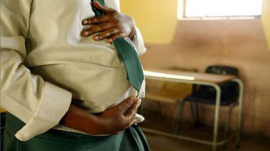
The Department of Social Development is hosting roundtable discussions countrywide to strengthen the existing child protection system to prevent teenage pregnancy.
The discussions, which started on Tuesday in Lusikisiki, in the Ingquza Hill District Municipality, aim to target the districts that have recorded the highest number of teenage pregnancies in the past two years. These are in KwaZulu-Natal, Gauteng, Limpopo and the Eastern Cape.
According to Statistics South Africa, the country recorded 34 587 teenagers who gave birth in the 2020/21 financial year.
The department’s Acting Chief Director: Child Protection, Neliswa Cekiso, said as a department tasked with the responsibility to care for and protect children, the high number of teenage pregnancies should be a cause for concern.
“Teenage pregnancy is a multifaceted problem that requires a comprehensive intervention,” Cekiso said.
Attended by representatives from the Departments of Social Development, Health, Basic Education and the South African Police Service, and traditional leaders, among others, the round table discussion agreed that there is a need for a holistic approach to address the challenge of teenage pregnancy.
Cekiso revealed that during 2019, KZN had 671 deliveries by children aged between 10-14 years and 661 deliveries in 2020.
The Eastern Cape had 671 deliveries by children aged between 10-14 years during 2019 and 661 deliveries in 2020. The 15-19-year-olds recorded 17 211 deliveries in 2019 from the Eastern Cape and 17 740 in 2020.
Cekiso noted that Section 110 of the Children’s Act, 38 of 2005, makes provision for reporting of suspected cases of abuse for purposes of triggering immediate response and measures to assist a child whose life is at risk.
She also emphasised that daily reported abuse disclosed by a child to a mandatory or non-mandatory adult “whether it happened a long time ago or recently, needs to be taken seriously and most importantly reported to the police or the Department of Social Development”.
“We all have an obligation as communities, parents, caregivers, teachers, health professionals to report suspected child abuse cases,” Cekiso said.
Noluthando Gwiji from the Eastern Cape Department of Health said while there are interventions and continuous campaigns by the department, the numbers are not going down which should be a serious concern for the country.
“There are times at Holy Cross Hospital in Flagstaff where 80% of deliveries are by children,” a concerned Gwiji said.
In order to ensure targeted interventions to the affected pregnant children, the National Department of Social Development has requested provincial departments to profile and assess the children so that adequate services can be provided, including investigation and referral to the South African Police Service, in instances of statutory rape.
The department has also engaged with the Directors General of Health and Basic Education so that current policies and programmes can be evaluated and improved, at a national level.
On 17 February 2022, the Department of Basic Education launched its policy on the prevention and management of learner pregnancy in schools in North West.
According to the United Nations Population Fund (UNFPA), teenage pregnancy is a global problem but occurs most often in poorer and marginalized communities.
Many girls face considerable pressure to marry early and become mothers while they are young.
The roundtable discussions will continue in KZN in March.
SA braces for steep fuel price hike

Mineral Resources and Energy Minister, Gwede Mantashe, has announced that the price of petrol and diesel are expected to increase at the beginning of March.
The fuel prices for March are expected to increase as follows:
- Both grades of petrol are expected to increase by at least R1.46.
- The price of 0.05% Sulphur Diesel is expected to rise by at least R 1.44.
- 0.005% Sulphur diesel is expected to cost at least R 1.48 more.
The Minister said a combination of factors, including the conflict between the Ukraine and Russia, contributed to the steep increases.
“The main reasons for the fuel price adjustments are due to the average Brent Crude oil price, which increased from $93.00USD [to] $96.47USD during the period under review; and the escalating crisis between Russia and Ukraine, which led to a surge in crude oil prices amid supply fears [and] subsequent sanctions on Russia by the USA and UK, which have contributed to the increase in crude oil prices,” Mantashe said.
Meanwhile, the prices of gas and illuminating paraffin are also on the rise. Prices are expected to increase as follows:
- Wholesale illuminating paraffin is expected to cost at least R1.21 per litre more.
- The single maximum retail selling price (SMRP) for illuminating paraffin is expected to go up by R1.61.
- The maximum retail price for LP Gas is expected to show a rise by at least 70c per kilogram.
The new prices are expected to take effect on Wednesday.
Consumers urged to return Similac Alimentum infant formula

The National Consumer Commission (NCC) has urged consumers in possession of Similac Alimentum 400G infant formula to immediately discontinue use of the product, and return it to the point of sale for a full refund.
Acting Commissioner Thezi Mabuza says the supplier informed the Commission of the precautionary recall of Similac Alimentum in South Africa.
“The manufacturer, Abbott Laboratories-Nutrition, informed the Commission of a voluntary recall following a global recall, as announced by the supplier.
“We understand that this product is manufactured at their plant in Sturgin, MI, in the United States of America, and was imported to South Africa and other countries.
“The supplier confirmed that the recall was prompted by consumers who reported that their infants presented some symptoms after ingesting the formula in the USA,” Mabuza said.
According to Abbott Laboratories, only four cases were reported in the USA. The company said, however, that the presence of Cronobacter and Salmonella in the infant formula is a cause for concern.
“As the Commission, we want to emphasise that while there are no cases reported in South Africa as yet, we urge consumers who might have bought this product not to feed their infants but to immediately return it to the point of purchase for a full refund.
“Ingesting Salmonella may lead to diarrhoea, fever and abdominal cramps, while Cronobacter infection may also cause damage to the bowel system.
“We therefore encourage parents who have concerns that they might have fed their infants the product in question to seek medical attention. The Consumer Protection Act (CPA) provides for safety of consumers at all times, and minors are regarded amongst the most vulnerable consumers.
“We appreciate the precautionary recall by the supplier. However, producers/manufacturers are required to supply or distribute goods that are safe and of good quality to avoid these mishaps. The Commission is monitoring the recall based on its Recall Guidelines,” Mabuza said.
No security threat to SA

Police Minister Bheki Cele has told a joint sitting of Parliament that there is no security threat to the country.
He said this when he participated in a debate on the State of the Nation Address on Monday.
“Allow me to reiterate and reaffirm our strong position as the security cluster, without fear of contradiction, that there is no threat to the stability of this country.
“I repeat, there is no threat to the stability of this country. Some components of the security services of this country may be limping but they are not down and they are certainly not out!” said the Minister.
This comes after President Cyril Ramaphosa said that following the report of the expert panel on the July 2021 unrest, government will begin a process of putting together a response plan to address the weaknesses that the report identified.
Participating in the debate, Cele said mopping up a mess that was deliberately created to weaken the country’s security agencies and law enforcement will take some time.
“But, rest assured, the work has started and it will be done. Those criminals who were hell bent on seeing this country go under, during the July attempted insurrection, failed.
“They failed because the police acted and did what they could in the most difficult of circumstances.
“The men and women in blue of this country, did all they could in the hardest of times. Our “security cluster” is functional; this is why our prisons are full as we speak. [Justice and Constitutional Development] Minister Ronald Lamola can attest to this. Those incarcerated criminals did not walk [in] there on their own free will,” said Cele.
Phaahla cautions against rushing to end state of disaster
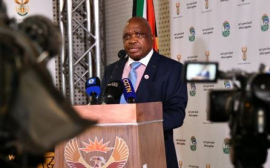
Health Minister, Dr Joe Phaahla, says before the country ends the National State of Disaster, there is a need to ensure there are enough measures in place to handle future COVID-19 waves.
He said this when he participated in a debate on the State of the Nation Address on Monday.
“As we are exiting the fourth wave of COVID-19, everyone is eager for this pandemic to come to an end. The reality, however, is that while we have learned more about the virus, we have more weapons and the virus is seemingly getting weaker, the war is far from over,” he said.
Phaahla said as the President stated on Thursday in the SONA, the country wants to get out of the disaster situation sooner rather than later.
In his speech, the President said the country is now ready to enter a new phase in the management of the pandemic.
“It is our intention to end the national state of disaster as soon as we have finalised other measures under the National Health Act and other legislation to contain the pandemic,” he President said.
He also said this was at the back of the fact that nearly 42% of all adults and 60% of everyone over 50 is fully vaccinated.
On Monday, Phaahla called for patience and cautioned against rushing to end the State of National Disaster.
“The truth, however, is that a rash and precipitate declaration of victory can lead to severe repercussions as we have seen in other countries.
“We want to make sure that as we exit the disaster, we have enough cautions and measures to handle the next variant and wave.
“Let us all embrace the way forward of the President when he said: ‘If we all get vaccinated, continue to observe basic health measures and remain ever vigilant, we will be able to get on with our lives even with the virus in our midst’.
“There can be no better summary, the future is in our hands. Let us not politic about COVID-19, the virus does not differentiate people on party loyalty or ideology.”