
SANDF rejects claims it employs child soldiers
The South Africa National Defence Force (SANDF) has refuted claims that it recruits child soldiers after a social media post that made rounds recently.
South African Army Chief, Lieutenant General Lawrence Khulekani Mbatha, said he was outraged by the “repeated efforts by faceless criminals to bring the South African Army (SA Army) into disrepute”.
“The recent use of the various social media platforms targeting youths as young as 15 years is absolutely unethical, incorrect and should be condemned by all law-abiding citizens of our country.”
According to a statement released on Monday, neither the SA Army nor the SANDF engages in the employment of child soldiers.
“The Constitution of the country and the relevant legal prescripts of government employment do not allow for the recruitment of minors. It is therefore illegal and unethical to suggest that the SA Army is calling for minors to apply for employment.”
The SANDF said scammers have resorted to luring desperate youths and their unsuspecting parents by offering stipends, free accommodation and free applications, a deviation from the crooks’ well-known modus operandi of asking for an application fee to make their advertisements enticing.
“The South African Army and the SANDF wishes to reiterate categorically that there is currently no official marketing and recruitment drives being conducted.”
The SA Army has since vowed to cooperate with the relevant law enforcement agencies to track, trace and bring to book the perpetrators of these “atrocious” criminal acts.
More generating units to return to service – Eskom

State power utility Eskom says it expects the return of more generating units to service this week, which will further ease constraints on the national power grid.
This after the power utility stopped load shedding on Sunday evening following at least five days of rolling power cuts.
“The period of load shedding assisted us in replenishing the emergency generation reserves in anticipation of the week ahead. Since Saturday morning, Eskom teams have returned nine generating units to service, helping to ease the capacity constraints,” Eskom said.
The energy giant said although it had returned some units to service, at least five other generating units are out following failures over the weekend.
“A generating unit each at Hendrina, Majuba and two units each at Kriel and Matumba power stations, as well as three Kusile units returned to service.
“Five other units have not yet returned to service from failures over the weekend. Eskom expects to return some of these and more generating units during the week,” the power utility said.
Eskom implored South Africans to continue to use electricity wisely.
“Eskom would like to thank all South Africans for their tolerance and understanding during the load shedding. We further appeal to the public to continue using electricity sparingly and to switch off non-essential items,” the power utility said.
New anti-GBV legislation offers more protection for victims, survivors
President Cyril Rampahosa says three new pieces of legislation aimed at fighting gender-based violence and femicide are a step in the right direction in the fight against the scourge.
Last week, Ramaphosa signed into law the Criminal and Related Matters Amendment Act, the Criminal Law (Sexual Offences and Related Matters) Amendment Act and the Domestic Violence Amendment Act.
The three laws were formulated following the 2018 National Presidential Summit on Gender Based Violence and Femicide which gave rise to the country’s National Strategic Plan of Gender-based Violence and Femicide.
“I am pleased that despite the significant disruptions caused to the Parliamentary programme by the COVID-19 pandemic, our parliamentarians have passed laws that will strengthen existing provisions around gender-based violence.
“I signed into law three pieces of legislation that honour our promises to strengthen the criminal justice system, promote accountability across the state and put support for survivors at the centre of all our efforts,” the President said.
The bills introduce a wider range of protections for victims and survivors including:
- Protecting the vulnerable from secondary victimisation by allowing courts to appoint intermediaries through which a minor, a disabled person or an elderly person can be examined in proceedings.
- Tightening the bail regime.
- Outlawing of sexual grooming and exploitation of persons with mental disabilities and the Sexual Offences Register.
- Making it a criminal offence not to report any sexual offences against vulnerable persons.
- Tightening up of obtaining protection orders and broadening the scope of the conditions under which to apply for a protection order.
The President explained that the new pieces of legislation also place responsibility on members of society to act against incidents of domestic abuse or sexual offences against the most vulnerable.
“All adult persons who have knowledge or suspicion that domestic violence is being perpetrated against a child, a person with a mental disability or an elderly person are obliged to report such acts to a social worker or to the police. Failure to do so is a criminal offence.
“This puts into law the principle that violence against women and children is everyone’s responsibility. When a woman or child is beaten, hurt, raped, assaulted or killed, it is a shame on us all. It is even worse if we knew it was taking place and could have prevented it,” said President Ramaphosa.
He reiterated that although the new legislation empowers the judiciary in the fight against gender-based violence and femicide in the courts, the root of solutions to the scourge still lies within society.
“Leaving an abusive relationship is never easy. But as the government, we have promised to provide the legal protection and support an abused person needs for themselves, their children and those close to them. The passage of these new laws is a step in this direction. But it is not the solution. We must prevent violence and abuse from happening in the first place.”
Mbalula releases report on 2020 air crash

Minister of Transport, Fikile Mbalula, has publicly released the report into the unfortunate incident where three South African Civil Aviation Authority (SACAA) employees lost their lives when the aircraft they were traveling in crashed two years ago.
The three officials — Captain Thabiso Tolo, first officer Tebogo Lekalakala and flight inspector, Gugu Mnguni — were traveling from George Airport on a flight calibration mission on 23 January 2020 when this unfortunate incident happened.
“While the report is final, parties may still bring forth any new evidence they believe is material to the investigation and will add value in preventing future accidents and incidents of this nature,” the Minister said on Tuesday.
Addressing a media briefing in Pretoria, Mbalula said the full report is immediately available on the website of the South African Civil Aviation Authority (SACCA), www.caa.co.za.
The initial investigation was conducted by the Accident and Incident Investigation Division (AIID), a functionally independent unit reporting to the Minister, but administratively attached to the SACAA.
The preliminary report was released by AIID in February 2020, 30 days after the accident and as required by Annex 13 of the Chicago Convention.
“Following engagements with the families in the period following the accident, who they (families) and the aviation industry expressed discomfort with the proximity of the AIID to SACAA and expressed preference for an independent investigation, I then issued an order to this effect.
“I then appointed the Ethiopian Aircraft Accident Investigation Bureau (AAIB), who undertook the independent aviation safety investigation,” Mbalula said.
There were delays with the investigation, which were occasioned by the travel restrictions and some members of the investigating team contracting COVID-19. Despite the challenges, the investigation was concluded.
“On Sunday 23 January 2022, I met the Tolo, Lekalakala and Mnguni families and handed over the final report which had been released to us by the Ethiopian Aircraft Accident Investigation Bureau.
“The report was then published and also uploaded on the website of the SACAA on the same day as required by Annex 13 of the Chicago Convention. I extended my apologies to the families for the delay in finalising the report, which process was impacted on by the COVID-19 restrictions.
“Death of any kind brings sorrow, anguish and unanswered questions and many of us battle to find closure as those we lost are forever lingering in our memories,” the Minister said.
In terms of Annex 13 of the Chicago Convention, the sole purpose of the investigation is the prevention of accidents and not to apportion blame or liability.
“I am equally bound by the same Convention, to which South Africa is a signatory and have domesticated its provisions. With the report having been publicly released, affected parties can submit any further portfolio of evidence to the AAIB should they wish to rebut any finding in the report in terms of Annex 13 of the Convention, Standard 5.13,” the Minister said.
The Convention states that after the investigation has been closed, new and significant evidence becomes available, the State, which conducted the investigation, shall reopen it. However, when the State, which conducted the investigation, did not institute it, that State shall first obtain the consent of the State, which instituted the investigation.
“While our Civil Aviation regulation would ordinarily be applicable, were we the ones who conducted the investigation, the full provisions of the Chicago Conventions are applicable in this instance,” the Minister said.
W Cape unveils contractor’s framework targeting women and youth

The Western Cape Human Settlements Department has unveiled its contractor’s framework, targeting particularly women and youth contractors.
Western Cape Human Settlements MEC, Tertuis Simmers, said this initiative, which is a first of its kind in South Africa, invites bids from historically disadvantaged individuals (HDI) in engineering and construction to participate in a framework agreement with the department.
Simmers said the agreement will be applicable for a period of three years.
“This means that all those with successful bid submissions are placed on the framework, where, should they meet all the relevant criteria for a specific contract, they would then be able to submit quotations for that contract,” Simmers explained.
Simmers said the scope of engineering and construction work for the purpose of the implementation of human settlements infrastructure delivery may fall within one or more of the classes of construction work.
These include general building; civil engineering; electrical engineering works – building; electrical engineering works – infrastructure; landscaping, irrigation and horticulture works; and steel security fencing or precast concrete fencing.
The MEC said the framework has strict conditions, which should be met in order for a contractor to bid. These include 51% women ownership, 51% black youth ownership and 51% black ownership by people with disabilities, amongst others.
Simmers said the launch of the framework demonstrates the department’s continued commitment to empowering the country’s HDI.
“We’ve already shown that we invest in the empowerment of our contractors by spending more than 50% of our Human Settlement Development Grant on their development. With this historic initiative, we’re taking it a step further, as this will ensure that more contractors have access to these types of opportunities,” Simmers said.
The bid submission opened on 21 January 2022 and will close on 25 February 2022 at 11am.
Simmers encouraged all those who meet the various criteria to use this opportunity and make submissions.
“We’ve specifically opened this door to this group, so that those who might not have had an opportunity before, can now also be part of this exciting process.”
All those interested in bidding can collect the tender documents from the 6th floor at the Western Cape Department of Human Settlements, 27 Wale Street, Cape Town or the 2nd floor, Department of Human Settlements, York Park Building, York Street, George, from the Supply Chain Management Procurement office.
Any further queries regarding the tender procedure can be directed E Pillay on 021 483 3173 or email Esther.Stephanus-Pillay@westerncape.gov.za, or S July email Simthandile.July@westerncape.gov.za.
Queries around technical aspects may be directed to Sandile Gqoboka on 021 483 3973 or email sandile.gqoboka@westerncape.gov.za(link sends e-mail).
The physical address for the closing of bids are: Tender Box, Ground floor, Western Cape Government Department of Human Settlements, 27 Wale Street, Cape Town, or 2nd floor, Department of Human Settlements, York Park Building, York Street, George.
PSC assessing complaint into government recruitment processes

The Public Service Commission (PSC) has received a complaint requesting a formal investigation into the alleged interference of the Cadre Deployment Committee of the African National Congress into Public Service appointments.
The complaint was lodged by Member of Parliament, Dr Leon Schreiber.
The Commission is assessing the complaint, including the question of the PSC’s legal mandate to investigate such complaint in order to determine the appropriate action to take in the matter.
The PSC is tasked and empowered to, amongst others, investigate, monitor, and evaluate the organisation and administration of the Public Service.
This mandate also entails the evaluation of achievements, or lack thereof of government programmes.
The PSC also has an obligation to promote measures that would ensure effective and efficient performance within the Public Service and to promote values and principles of public administration as set out in the Constitution, throughout the Public Service.
DWS concerned about possible liquid gas chlorine shortages

The Department of Water and Sanitation (DWS) has raised concern about possible liquid gas chlorine shortages from its supplier based in Kempton Park, Gauteng, which could affect water supply.
“If this were to happen, liquid gas chlorine shortages would [possibly affect] the treatment of potable water and effluent water managed by Water Service Authorities (WSAs), metros and water boards,” department spokesperson, Sputnik Ratau, said.
Ratau said while the department has no intention of speaking on behalf of the chlorine gas supplier, it believes the supplier will do everything in its power to ensure that water supply and effluent water treatment are not negatively impacted by the shortages.
Ratau said to date, the department has not received any reports that water boards are experiencing shortages of chlorine in their operations.
“As the department, we hope that water boards, metros and WSAs have spare supplies that will last them until shortages subside. The latest report from the supply company indicates that production is stable at 80%,” Ratau said.
Ratau said as of Wednesday, the supply company was packaging chlorine for the City of Cape Town, in accordance with the existing agreement.
He said the department, through its provincial offices, will continue to track daily reports across the country to determine how the shortages are affecting the WSAs, metros and water boards, if at all.
“The department will monitor the developments and work with all affected parties, including the supply company, WSAs, water boards and water specialists to ensure the quality of the water supplied to water users and the receiving environment are not compromised,” Ratau said.
Ongoing heavy rains classified as national disaster
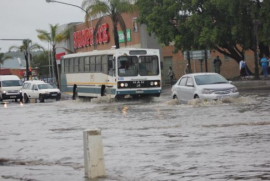
The National Disaster Management Centre (NDMC) has classified the damaging recent inclement weather in parts of the country as a national disaster.
The heavy summer rain has claimed over 80 lives, with damage to property, infrastructure and the environment caused by flooding, strong winds, sink holes, and landslides.
In a statement, the Department of Cooperative Governance and Traditional Affairs said the NDMC was working closely with provinces and all affected organs of state and continues to receive reports on the extent of the damage caused.
CoGTA spokesperson Lungi Mtshali in statement said the decision to classify the weather pattern as a national disaster came after consultation with all provinces and other relevant roleplayers on the extent of the damages.
He said the classification was in line with the mandate of the Head of NDMC under section 23 of the Disaster Management Act, 57 of 2002.
“This classification is done to confirm that the situation is regarded as a disaster and is of a magnitude that exceeds the capacity of affected municipalities and Provinces to deal with.
“It further assigns primary responsibility to the national sphere of government for the coordination and management of the disaster and enables organs of state in all spheres to assist in dealing with the disaster and its consequences,” he said.
The department said the classification would activate the provisions of section 19 (6) of the Division of Revenue Act 2021 to enable all affected accounting officers to redirect/repurpose their allocations and to access Department of Cooperative Governance disaster grants to deal with the effects of the disaster.
It urged the public to continue observing weather warnings as issued regularly by the South African Weather Service and to practice safety measures in the face of continuing rains and resultant storms and flooding incidents.
“A special plea is particularly made to those who are located in low lying areas to take precautionary measures including relocation away from those risky areas,” said Mtshali.
NCCC considering way forward on National State of Disaster

President Cyril Ramaphosa says the National Coronavirus Command Council (NCCC) is considering whether or not the country will continue with the National State of Disaster legislation currently in place.
The National State of Disaster was declared by Cooperative Governance and Traditional Affairs (COGTA) Minister, Dr Nkosazana Dlamini Zuma, as a response to the onset of the COVID-19 pandemic in March 2020,nearly two years ago.
“We are examining how best we should handle the state of disaster in this period where the infections have tapered down and to see the efficacy of using the State of Disaster legislation or utilising other measures.
“The National Coronavirus Command Council is examining exactly that to see whether we can use health protocols, health regulations to move forward in our management of this pandemic,” President Ramaphosa said.
The President said the legislation has allowed government to navigate through the COVID-19 pandemic and its impact.
“Many have challenged in the courts the utilisation of the State of Disaster but I think since the disaster descended on our country we have managed the process rather well… Of course there is a good argument to be put forward that now that we are where we are, should we not examine and look at other methods [or] other instruments that can be utilised,” he said.
President Ramaphosa said the decision on whether to continue on with the National State of Disaster is a “collective process” however, and any decision on it must be based on rationality.
“[We] are a free country, people have every right to advocate for the dropping of the State of Disaster instrument.
“We are government, we’ve got to be very rational in everything that we do so we are examining that. If [we do not drop the legislation] then we will have a very rational explanation to say why we should continue with the State of Disaster legislation,” he said.
President Ramaphosa: Terrorism cannot be permitted to continue to thrive

President Cyril Ramaphosa says acts of terrorism and violent extremism that have led to loss of lives, property and displacement of people, especially women and children, cannot be allowed to continue without a proportionate response.
The President was delivering opening remarks at the Southern African Development Community (SADC) Extraordinary Organ Troika Summit, held together with Personnel Contributing Countries plus the Republic of Mozambique on Tuesday, in Malawi.
President Ramaphosa is convening the summit in his capacity as Chair of the SADC Organ on Politics, Defence and Security Cooperation.
The summit is meant to review progress of the SADC Mission in Mozambique (SAMIM), which was deployed by SADC until 15 January 2022, to support Mozambique to combat terrorism and acts of violent extremism in the Cabo Delgado Province.
“Since the deployment of SAMIM in Mozambique, significant progress has been made. The security situation in Cabo Delgado is improving, which has allowed for some internally displaced persons to return to their homes and resume their normal lives,” Ramaphosa said.
He said that efforts of the Mission, working in collaboration with the Mozambican Defence Force, has created safe passage to facilitate the provision of humanitarian assistance to the population affected by terrorist activities.
“I wish to express appreciation and commend the work of SAMIM on the ground. I equally appreciate and commend Member States who have supported this work financially and through the deployment of personnel and equipment,” he said.
The President noted that while there were gains by the missions, there have also been challenges. He said they were saddened by the casualties suffered by SAMIM and the Mozambican Defence Force.
“I wish to extend our deepest condolences to the Governments of Botswana, Lesotho, Mozambique, the United Republic of Tanzania, and my Government, South Africa, for the demise of our brave sons, who were lost in the line of duty.
“SADC will forever cherish their service and contribution to peace and security in the region. We also extend our best wishes for the speedy recovery of those who were wounded in action,” he said.
President Ramaphosa emphasised that terrorism cannot be permitted to continue to thrive in any part of our region as its presence will reverse the stability and progress SADC has achieved in its four decades of existence.
“As we consider the agenda before us, we are cognisant of the magnitude of ground that still needs to be covered in the work of SAMIM. Therefore, we cannot let our guard down.
“Our meeting must indicate a strengthened commitment to defeat and uproot terrorism from our region,” he said.
Today, the President will participate in the SADC Extraordinary Summit of Heads of State and Government.