
Petrol price pain at the pumps

South Africans will be paying more at the pumps from Wednesday when fuel prices are expected to increase.
According to the Mineral Resources and Energy Department, the price of petrol (both 93 and 95) will go up by 81c per litre, while the price of diesel 0.05% will increase by 72c and diesel 0.005% sulphur will increase by 75c per litre.
“The main reasons for the fuel price adjustments are due to…[t]he contribution of the Rand/US Dollar exchange rate. The Rand depreciated, on average, against the US Dollar during the period under review when compared to the previous one.
“The increase in the prices crude oil…[t]he average Brent Crude oil price increased from 82.50USD to 83.00USD per barrel during the period under review. The key driver is the higher global demand recovery amid a weaker supply response from non-OPEC and other oil producers,” the department said in a statement.
The department said other factors contributing to the increase include petroleum products prices around the world, the adjustments in the Regulatory Accounting System Industry Margins and the implementation of the Slate Levy.
Meanwhile, the wholesale price of illuminating paraffin has increased by 42c per litre, while the maximum retail price for illuminating paraffin has increased by 56c per litre.
The retail price for gas also increased by R1.83 per kilogram.
Protect domestic tourism during 4th wave, urges Minister Sisulu

Protecting the country’s domestic tourism has been identified as the main priority after South Africa was placed on a travel ban by several countries, following the identification of the Omicron COVID-19 variant.
This was consensus reached by relevant stakeholders during an urgent meeting with the Tourism Minister Lindiwe Sisulu on Sunday.
In a statement, the Ministry said the meeting was held to identify how public and private sector stakeholders could proactively collaborate to mitigate the effects instituted by the travel bans. The travel bans came after the South African Health Department revealed the discovery of the variant last week.
The Ministry said in the meeting that the red listing of South Africa and other SADC countries was a “knee jerk reaction” that would negatively impact the peak inbound tourism period.
Prof. Marc Mendelson, infectious diseases and HIV medicine head at the Groote Schuur Hospital, provided a scientific perspective on what the next steps would be in determining the extent to which vaccines would be effective against the new variant.
Minister Sisulu said the meeting was the first of many the Ministry would be holding as a public-private tourism sector war room to deal with crises such as this.
The team, she said, would also address legacy issues that hinder the extent to which tourism could contribute to South Africa’s economy.
The war room was expected to meet regularly to roll out and follow up on practical actions adopted by industry stakeholders to deal proactively with challenges that beset the sector.
She said the immediate priority was to preserve domestic tourism over the upcoming festive season to secure livelihoods.
“While we await scientific certainty surrounding this new variant, the impact to Brand South Africa and the deep tourism value chain has been devastating,” she said.
To this end, the Ministry said stakeholders in the meeting provided several alternatives. These included reducing the size of indoor gatherings, expanding curfew and prioritising vaccination to mitigate the impact on the country’s healthcare system.
Rosemary Anderson, chairperson of FEDHASA said there was no question that South Africans needed to get vaccinated as a “matter of urgency”.
She said: “We depend on tourism for jobs and livelihoods.”
Anderson added that the country could not afford a repeat of December 2020 where restaurants and hospitality businesses bore the brunt of COVID-19 regulations.
“Our industry has had to endure being thrust from wave to wave for the past 20 months and it simply isn’t sustainable to keep businesses open and livelihoods intact. It is up to South Africans to do their part and help us keep our doors open by complying with the protocols and getting their #jab4tourism,” she said.
TBCSA, SATSA, SAACI and Cape Town Tourism were among industry associations that attended the session.
KZN municipalities urged to reduce unnecessary water losses

KwaZulu-Natal municipalities and the provincial Water and Sanitation Department have been urged to step up measures to curb water losses.
Addressing water services authorities on the second day of a working session at Olive Convention Centre in eThekwini on Thursday, Water and Sanitation Minister, Senzo Mchunu, emphasised that the scale of water losses in the province is alarmingly high, and this is due to leaks, burst pipes, illegal connections, vandalism and ageing infrastructure.
“It is the right of the communities to receive water from us, it is not a favour, and it is also important to note that water is the main priority and the main supporter of life. This is a commodity that is not in abundance in the country,” Mchunu said.
Mchunu encouraged municipalities and the provincial department to endeavour to unearth innovative ideas of utilising rainwater.
This proposal is triggered by the fact that recently, KwaZulu-Natal has been getting the highest rainfall in the country on average.
Joined by his deputies, David Mahlobo and Dikeledi Magadzi, Mchunu is on a ministerial visit to KwaZulu-Natal to assess the state of water projects.
The visit also includes meetings with various stakeholders to assess the status of water and sanitation security, focusing on the deficit of availability of water resources and funding required for water infrastructure, among others.
Mahlobo reiterated the issue of water losses as a matter of grave concern that needs to be urgently attended to.
Mahlobo noted that eThekwini Metro is losing the most amount of water in the country, with the Newcastle District Municipality losing approximately 30 million litres of water on a daily basis.
“This is a clear indication that the gravity of water losses in the province is extremely huge,” the Deputy Minister said.
Magadzi said a comprehensive strategy is required in order to recoup lost water.
She stressed that wasteful utilisation of water is “a thing of the past”, and urged municipalities to move towards ensuring the installation of meters in order to receive revenue.
Loadshedding continues
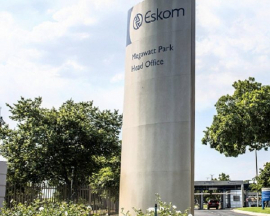
Stage two loadshedding is expected to continue until Thursday as Eskom attempts to replenish its electricity reserves.
On Friday, the power utility announced the extension of loadshedding after losing several of its units to breakdowns at Tutuka power station. Eskom is experiencing a depletion of emergency generation reserves due to breakdowns at Komati and Hendrina power stations.
“Whilst still recovering four units at Tutuka, which had experienced conveyor belt failures, the fleet suffered a cluster of boiler tube leaks within a short period of time. The return of a generating unit at Majuba power station…provided some relief. However, this was insufficient to curb the extensive use of emergency reserves,” the power utility said.
Eskom said the loadshedding will also “address other additional risks in the generation fleet”.
“During this time, Eskom will be working hard to return a number of generating units to service and we urge the public to continue using electricity sparingly. Total breakdowns amount to 14 760MW, while planned maintenance is 5 277MW of capacity.”
Treasury studying plans to tackle country’s poverty gap

The National Treasury has commissioned a study to determine what long-term plan can be devised to narrow the country’s current poverty gap.
Addressing Parliament’s Select Committee on Appropriations (SCOA), Treasury said it was considering five options.
These included evaluating the current R350 grant; the Basic Income Grant; the Brazilian model that offers grants to poor households rather than individuals; an evaluation of the Presidential Employment Initiative and consideration of a job seekers’ grant.
Treasury, the Financial and Fiscal Commission (FFC) and the Parliamentary Budget Office (PBO) presented their perspectives on the Second Special Appropriation Bill to the SCOA on Wednesday.
In a statement, Committee chairperson Dikeledi Mahlangu cautioned that the country should not be turned into a welfare state.
She said there was a need for a sustainable strategic plan going forward and called for the avoidance of a recurrence of the bungle during the previous disbursement of the R350 grant.
She also called for a proper plan to be put in place to avert any possible fraud.
The Committee said in a statement that Treasury had assured the committee that “elaborate cross-reference checks” were in place, involving multiple government departments and agencies, which counter the previous inefficiencies and make it difficult for fraud to occur.
Mahlangu in the meeting also called on the National Treasury to support small business owners through the application procedures.
She reiterated that the committee always derives valuable inputs and technical expertise from its interactions with these entities.
“We value these interactions because it will go a long way in advancing the call for economic transformation and inclusive growth and to ensure that public finances are appropriated for their intended objectives and are managed more efficiently,” she said.
To address the impact of the civil unrest in Gauteng and KwaZulu-Natal in July and the third wave of the COVID-19 pandemic, a proposed R32.85 billion was set to provide funding allocations to the South African Special Risks Insurance Association (Sasria), the Department of Social Development, the Department of Police, the Department of Defence, and the Department of Trade, Industry and Competition.
In its presentation, the National Treasury explained to the committee why Sasria’s R3.9 billion injection request should be considered urgent.
Dr Mark Blecher from Treasury said the allocation to Sasria was meant to honour its insurance claims, estimated at well over R25 billion, emanating from losses incurred by its clients (shops, malls and factories) during the civil unrest in July.
Part of this Bill was an urgent request for R26.7 billion for the Department of Social Development, aimed at extending the R350 Social Relief of Distress (SRD) Grant to March 2022 for the benefit of 9.4 million eligible beneficiaries.
The FFC welcomed the R26.7 billion allocated to the Department of Social Development to extend the R350 SRD grant to March 2022.
Eskom to deal with R35.3 billion municipal debt
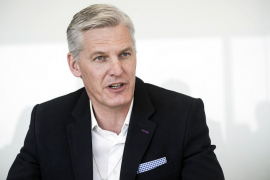
Eskom has reiterated its commitment to improving the arrear municipal debt that has ballooned to R35.3 billion for the financial year ending March 2021.
To address this, among other challenges, Eskom said it was working closely with the Political Task Team led by the Deputy President, David Mabuza.
Outlining its financial results on Tuesday, Eskom Chief Financial Officer, Calib Cassim, said the outstanding municipal debt rose by 26% to R35.3 billion.
“Cost savings alone is not a solution,” Cassim stressed.
In addition to working with the office of the Deputy President, the power utility is also embarking on active partnership agreements with some of the municipalities, in which it hopes to arrest the spiral in outstanding debt.
“Eskom’s capital position must be resolved. Cost-reflective tariffs and resolving the municipal arrear debt are required to achieve the successful implementation of Eskom’s turnaround and to ensure long-term financial sustainability. For its part, Eskom continues its concerted effort to reduce the debt and to improve gearing,” said Cassim.
Meanwhile, the State-owned entity has reported that it has so far secured R16.2 billion of its R41.6 billion funding requirement for the 2022 financial year.
In addition, the strengthening of the rand had a significant positive impact on results for the year, the entity said.
However, Cassim stated that Eskom’s liquidity remained a concern due to the high cost of servicing the outstanding debt, working capital requirements, escalating municipal arrear debt, and sub-investment grade level credit ratings, among other factors.
“This picture is likely to remain unchanged in the short- to medium-term. However, reliance on government support mitigates the material uncertainty regarding Eskom’s status as a going concern,” said Cassim.
Gross debt
Eskom admitted that the performance during the year under review was challenging.
While the SOE managed to reduce its gross debt by R81.9 billion, a 16.9% reduction, R401.8 billion outstanding debt remains remained.
According to Eskom, it attracted a net finance cost of R31.5 billion, turning an operating profit of R5.8 billion into a loss of R18.9 billion after tax.
Meanwhile, it achieved operational cost savings of R14.4 billion, against a target of R14.1 billion.
Although sales volumes were down, primary energy costs increased by 3.4% to R115.9 billion, while normalised operating costs increased by 1.6%.
Impact of COVID-19
Eskom said it was not spared from the worst effects of the COVID-19 pandemic.
“The slowdown of economic activity due to the pandemic led to an unprecedented decline in sales, which fell 6.7% from the previous year. Sadly, the losses Eskom suffered because of the COVID-19 pandemic were not limited to our finances,” said André de Ruyter, Eskom Group Chief Executive.
De Ruyter announced that the entity lost 153 staff members to the deadly virus, including 17 contractors as of August 2021.
“Our sincere condolences go to the affected families,” said De Ruyter.
However, he said believes that every crisis brings with it an opportunity.
“In this case, Eskom used unfortunate lower demand presented by the lockdown to conduct much-needed maintenance at some of our power stations.”
In addition, revenue increased to R204.3 billion during the year, from R199.5 billion the previous year.
This was mainly attributed to an 8.76% annual increase in the electricity tariff during the period, offset by a reduction of 6.7% in sales volume.
Vandalism
Eskom has also noted improvement in transmission and distribution network performance.
Meanwhile, high levels of asset vandalism, equipment theft, and overloaded networks continued to increase breakdowns and maintenance costs, limiting the return on investment and posing a safety risk.
However, the SOE said it was concerned by the increase in electricity theft and illegal connections, which has necessitated load reduction in areas with a high incidence of illegal connections.
De Ruyter explained that Eskom’s long-term objectives of achieving operational and financial sustainability are dependent on the successful implementation of the turnaround plan currently underway.
“The turnaround plan, which is overseen by a diverse executive committee, comprising 56% Black female representation, focuses on operations recovery, improving the income statement, strengthening the balance sheet, driving business separation, and bringing about a winning, can-do culture,” said De Ruyter.
Transport dept tackles licence backlog

With the current backlog that is being experienced at Driving Licence Testing Centres (DLTCs), government is further extending the grace period for the renewal of licences.
“In order to give motorists a fair opportunity to renew their licences, while we are rolling out a number of measures to improve efficiencies and resolve challenges, we have decided to extend further the grace period for the renewal of licences,” Minister of Transport Fikile Mbalula said on Friday.
The onset of the COVID-19 pandemic resulted in restrictions that led to the closure of DLTCs, which caused backlogs.
Addressing a media briefing, the Minister said nationally, 1 210 965 licences are not yet renewed, out of a total of 2 852 388 expired licences.
This represents 42.4% non-renewal, with 57.6% of all expired licences having been renewed.
“All learner’s licences, driving licence cards, temporary driving licences and professional driving permits that expired during the period that commenced from 26 March 2020 up to and including 31 August 2021, are deemed to be valid, and their validity periods are extended for a further grace period ending on 31 March 2022.
“This extension comes into effect from the date of publication of the Directions in the Government Gazette,” the Minister said.
Considering that Gauteng poses the biggest challenge due to the large population of motorists, and the fact that it remains the only province that has extensively deployed the online booking system, specific actions have been identified to tackle challenges specific to the province.
Gauteng has experienced serious capacity challenges which result in, among other things, the non-availability of booking slots to those who intend to renew their licences.
“In addition to the interventions the province and the Road Traffic Management Corporation (RTMC) are making in arresting the corruption that has bedevilled the system, additional capacity will be added through the opening of two Driving Licence Testing Centres operated by the RTMC at Waterfall Park in Midrand and Eco Park in Centurion.
“These two centres will open their doors on 1 October 2021 and will operate seven days a week, from 7am to 9pm. The operationalisation of these centres will add 35 380 renewal slots per month and increase Gauteng capacity for renewal slots by 48%,” the Mbalula said.
He said an email service for Gauteng users who experience difficulties with online bookings and renewing their licences has been activated.
“A new DLTC in Tembisa also opened its doors in July 2021. The RTMC has fitted two buses with state-of-the-art equipment to serve as mobile centres to assist with licence renewals.
“Once the RTMC registration as DLTC has been finalised, these buses will be deployed in Diepsloot and Alexandra. The planned deployment date is 1 October 2021,” Mbalula said.
Moreover, two self-service kiosks are being prepared for testing and should be rolled out by October 2021 to assist those who do not have immediate access to a DLTC.
“As part of the rollout of a bouquet of services to improve customer experience, processes to introduce online payments are advanced and a banking partner has already been appointed.
“While we had agreed with the MECs that operating hours of DLTCs must be extended, a number of provinces have experienced challenges relating to overtime. However, significant progress has been made in this regard,” the Minister said.
In seven of the nine provinces, large registering authorities and DLTCs have extended their operating hours to include Saturdays, and further augmented their human resource capacity.
Challenges are still being experienced in the Northern Cape and the City of Tshwane.
Government looks at incentives to tackle youth unemployment
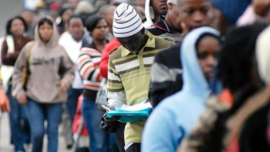
As the levels of youth unemployment reach alarming levels, Deputy President David Mabuza says government will look at incentivising discouraged work-seekers and employers to address the challenge.
The Deputy President said this when he responded to oral questions during a virtual sitting of the National Council of Provinces on Thursday.
“Moving forward and working with our social partners, it will be important to find practical measures of incentivising further discouraged young work-seekers and also scaling up our incentives to employers in both the public and private sectors to employ young people to gain a foothold and the requisite experience,” he said.
Recent unemployment statistics revealed a bleak picture for young people, with 64.4% of those aged between 15 to 24 being unemployed, and 42.9% of those aged between the ages of 25 and 35 finding themselves out of work.
Addressing provincial NCOP delegates, the Deputy President said government recognises that the COVID-19 pandemic has had a negative impact on efforts to create jobs, particularly for the youth and people with disabilities.
Since the advent of COVID-19 in March 2020, the share of young people under 35 years old in all employment levels has fallen from 56% before the pandemic to 50% today.
“Among the concrete measures is to ensure that there is high absorption capacity of young people and women, and set-asides in sectors such as agriculture and agro-processing, mining, tourism, the oceans economy and service industries,” Mabuza said.
At the recently held Fourth Human Resource Development Council Summit, social partners agreed on the urgent need to address the issue of young people that drop out at various points of their schooling prior to attaining their matric qualification, as they add to the tally of young people that are not in employment, education or training.
“We further agreed that our response should be comprehensive enough to ensure that we equip young people with skills that are relevant, and will close the prevalent gap of skills required and those available in the labour market.
“We are optimistic that through our coordination of the Human Resource Development Council, we will be able to find workable, long-term solutions to the skills gap and youth unemployment through convergences in the deployment of resources to achieve better outcomes.
“The importance of pragmatic public-private partnerships cannot be emphasised enough to empower and capacitate young people, for whom economic emancipation remains a deferred dream,” said Mabuza.
SAA poised for take-off in September
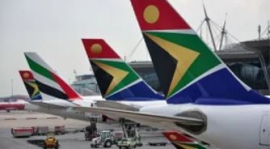
South African Airways (SAA) has announced that it expects to resume operations on the Johannesburg-Cape Town route and other African destinations on September 23.
The carrier has not taken to the skies since early last year partly due to the advent of the COVID-19 pandemic and subsequent hard lockdown as well as the need to finalise its business rescue process.
The national carrier came out of business rescue at the end of April this year.
SAA Board chairman John Lamola said since the national carrier came out of business rescue, the Department of Public Enterprises together with the airline’s board and management team have been planning for the relaunching of a restructured and fit for purpose airline.
“The airline is restarting with a formidable business case,” Lamola said on Wednesday.
Interim SAA Chief Executive Officer Thomas Kgokolo said they are determined to make the airline a leader in the aviation sector.
“After months of diligent work, we are delighted that SAA is resuming service and we look forward to welcoming on board our loyal passengers and flying the South African flag. We continue to be a safe carrier and adhering to COVID-19 protocols. There is a profound feeling of enthusiasm within Team SAA as we prepare for take-off, with one common purpose – to rebuild and sustain a profitable airline that once again takes a leadership role among local, continental, and international airlines,” he said.
Kgokolo noted that the airline is conscious that the sector is facing difficult times.
“The aviation sector is currently going through a testing period, and we are aware of the tough challenges that lie ahead in the coming weeks. We thank South Africa for the support we have received in getting us to where we are today. As we are now poised for take-off, we see this as a major milestone for SAA and the country,” he said.
Tickets go on sale on Thursday, 26 August 2021, with the airline initially operating flights from Johannesburg to Cape Town, Accra, Kinshasa, Harare, Lusaka and Maputo.
The airline says destinations will be added to the route network as operations ramp up in response to market conditions.
Voyager bookings and Travel Credit Voucher redemption will be available from 6 September 2021.
SA unemployment reaches 34.4% in 2021 Q2

Unemployment in South Africa rose to 34.4% in the second three months of 2021, according to results of the Quarterly Labour Force Survey (QLFS).
The outcome of the QLFS was released by Statistician-General, Risenga Maluleke, on Tuesday.
Addressing reporters, Maluleke said for the second quarter of 2021, the number of employed persons decreased by 54 000, reaching 14.9 million.
Statistics South Africa said the number of unemployed persons increased by 584 000 to 7.8 million compared to the first quarter of 2021.
During this period, the number of discouraged work-seekers increased by 186 000 (5.9%), while the number of people who were not economically active for reasons other than discouragement decreased by 571 000 (4.5%) between the two quarters.
This resulted in a net decrease of 386 000 in the not economically active population.
“These changes resulted in the official unemployment rate increasing by 1.8 percentage points from 32.6% in the first quarter of 2021 to 34.4% in the second quarter of 2021 – the highest since the start of the QLFS in 2008.
“The unemployment rate according to the expanded definition of unemployment increased by 1.2 percentage points to 44.4% in quarter 2, 2021, compared to quarter 1, 2021. The results indicate that the South African labour market is more favourable to men than it is to women,” Maluleke said.
The survey found that men are more likely to be in paid employment than women, regardless of race.
The report found that the proportion of men in employment is higher than that of women; more men than women are participating in the labour market as the labour force participation rate of men is higher than that of women; and the unemployment rate among men is lower than among women.
“The rate of unemployment among women was 36.8% in the second quarter of 2021 compared to 32.4% among men according to the official definition of unemployment.”
During this period, the unemployment rate among Black African women was 41.0%, compared 8.2% among White women, 22.4% among Indian/Asian women and 29.9% among Coloured women.
Formal sector employment in the three months decreased by 375 000 while the other sectors experienced increases in employment in quarter 2, 2021.
The survey found that informal sector employment during this period increased by 184 000 (7.4%); private households by 67 000 (6.0%), and employment in agriculture increased by 69 000 (8.7%).
In the period under review, the survey found that some industries created jobs while others shed employed between the two quarters.
This resulted in a net decline of 54 000 in total employment.
Employment mainly increased in Construction (up by 143 000) and other industries that had job gains include Trade (108 000), Agriculture (69 000), Private households (67 000) and Transport (66 000). Job losses were observed in Finance (278 000), Community and Social Services (166 000) and Manufacturing (83 000).