
Free State public warned of imposter electricians
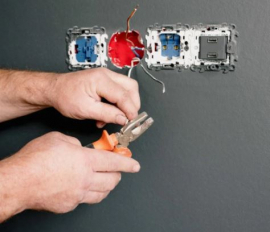
The Department of Employment and Labour has urged the public in the Free State to be on the lookout for people posing as electricians.
The department said it has opened a criminal case against an individual who was in possession of a fraudulent certificate of registration as an electrical contractor.
The matter was brought to the attention of department Occupational Health and Safety Inspectors when a home owner complained of sub-standard electrical installation done by the accused at his new house.
“The alleged imposter also issued a Certificate of Compliance for electrical installation to confirm that the installation is safe and compliant with standards, although it was not.
“Subsequent to this complaint, the department undertook an investigation into the allegations, and discovered that the accused had a fraudulent electrical contractor’s registration certificate and a wireman’s licence.”
The department said it is only mandated to issue a letter of registration to competent electrical contractors, in terms of Regulation 6 of Electrical Installation Regulations, 2009.
Regulation 6 provides that “no person may do electrical installation work as an electrical contractor, unless that person has been registered as an electrical contractor in terms of these Regulations”.
The accused was never issued with a letter of registration by the department.
Home, building and business owners are therefore urged to ensure that they only appoint competent and legally registered electrical contractors to work on their electrical installations, as this will ensure the safety of occupants.
To verify the authenticity of any electrical contractor’s letter of registration, or to lodge an electrical complaint, members of the public in the Free State can contact the Department of Employment and Labour on 051 505 6371/6200.
Reduce power usage to ease pressure on the system

Eskom has urged the public to reduce their usage of electricity, as cold weather conditions persist.
The South African Weather Service (SAWS) has forecasted a week of very cold temperatures across the majority of South Africa from Tuesday, lasting well into the weekend.
The icy and rainy conditions are due to a succession of cold fronts expected to sweep across the country.
“Following this warning, Eskom would like to appeal to members of the public to reduce the usage of electricity, as the cold conditions will put severe pressure on the power system.”
Eskom said its system is currently performing relatively well and the implementation of load shedding is not expected at this point.
According to the utility, there have been no power cuts since 13 June 2021 due to some improvement in the performance of the generation fleet.
“However, the cold front will increase the demand for electricity, thereby putting pressure on the power system. Therefore, Eskom urges the people of South Africa to help reduce electricity usage in order to ease the pressure on the system.”
Eskom said it would communicate promptly should there be any significant changes to the performance of the system.
Tackling youth unemployment

As many young people continue to grapple with the rate of unemployment in the country, work is underway to turn the situation around.
Results of the Quarterly Labour Force Survey (QLFS) showed that South Africa’s unemployment stood at 32.6% in the first quarter of 2021. Unemployment among those aged 15-34 years stood at 46.3% and the rate was 9.3% among university graduates.
The country has long been facing the challenge of unemployment.
This is what informed the development of a National Youth Policy (NYP) 2020-2030, which was approved in October 2020, and unveiled in March this year.
The policy aims to strengthen youth development, both during and post the COVID-19 era. It also seeks to add to creative and innovative ways to address the high unemployment rate, which is also linked to mental health issues.
Established by the Department of Women, Youth and Persons with Disabilities (DWYPD), the policy for 2020-2030 builds on South Africa’s first and second NYPs, which covered the 2009–2014 and 2015-2020, periods respectively.
The policy improves upon and updates the previous policies by highlighting the current and new challenges that South African youth face. It also takes into cognisance the historical realities that the country faces, including slow economic growth.
The 2020-2030 NYP also identifies the potential human capital inherent in young people as an untapped potential that should be harnessed for the benefit of society. It also advocates the need for key players, including government and private and civil society sectors, to intensify their commitment to keep youth development as a priority.
Research done by the DWYPD, which focused on the 25-year review, showed that the country is not doing much when it comes to the development and empowerment of young people.
“[The] public and private sector is not responding effectively to young people’s needs. The policy seeks to try and ensure that service providers accelerate implementation of interventions, so that young people can benefit and become contributing members of society. Many youth take far too long to transition to adulthood due to unemployment, and this is a concern,” says Chief Director responsible for youth development in DWYPD, Dr Bernice Hlagala.
In an interview with SAnews, Hlagala says the policy has an Integrated Youth Development Strategy, developed by the National Youth Development Agency (NYDA).
“The strategy is informed by five key pillars of the policy, which are quality education skills and second chance; economic transformation, entrepreneurship and job creation; mental health and promotion of physical health, and also looks at issues of pandemics; social cohesion and nation building; and effective and responsive youth development machinery.”
Set aside
Apart from the issue of unemployment raised during public consultations, prior to policy approval last year, the Fourth Industrial Revolution (4IR) was also under the spotlight, where young people recommended that 4IR should be seen as a cross-cutting pillar and lead to job creation.
“We have now said that all industries that have a high absorption capacity need to prioritise and employ young people, There’s a need for [a] set aside for young people in sectors like agriculture, tourism mining, [and the] oceans economy.”
The policy also emphasises the need to address societal issues facing young people.
“In the new policy there’s now emphasis on promoting mental health as many young people are suffering from mental health [challenges], scaling up the national youth service programme, in order to ensure young people have values inculcated within them. Currently there’s a shortage of centres for substance abuse, and we are advocating for [an] increase of rehabilitation centres and services in place, as well as awareness programmes,” she explains.
Government departments will also identify specific responsibilities and targets, and further redirect young people on where they should go in order to access resources they require.
Government through the policy is confident that young people will be provided with quality education.
“We also hope that it will enable them to get employment, or to become entrepreneurs so that they can create jobs for themselves and other young people. We also look at the policy enabling young people to contribute to their immediate communities and society.
“This policy will promote physical and mental health, whilst ensuring that the institutions responsible for young people are responsive to their needs,” says Hlagala.
Making a difference
Previous versions of the National Youth Policy have had success, including the increase in the number of youth owned businesses from 595 000 in 2015 to 641 000 in 2016, as well as financial and technical support to youth start-ups and enterprises.
Other successes registered include an almost double enrolment in schools with an increase in the number of learners with post-school qualifications from 1.7 million to 3.6 million. There has also been improved youth participation in public employment programmes and the approval of the National Youth Service Framework, among others.
Several interventions aimed at improving the health and well-being of youth were also attained by NYP, and these include the Prevention of and Treatment for Substance Abuse Act 70 of 2008, the National Drug Master Plan 2013–2017, National Adolescent and Youth Health Policy 2016-2020 and the B’WISE mobisite, which was launched in 2017.
Various national and international policies and legislative frameworks inform the 2020-2030 policy.
The national policies include the Constitution; National Development Plan (NDP 2030); National Youth Service Framework (2002); National Youth Development Agency (NYDA) Act and the 25 Year Review (1994-2019) recommendations.
Among the international frameworks that inform the policy are the African Youth Charter (2006); the United Nations World Programme of Action for Youth to the Year 2000 and Beyond (1995) as well as the Sustainable Development Goals (SDGs).
The policy is a tool that that can be used to tackle the country’s unemployment challenge.
Government committed to implementing IRP 2030 amid load shedding

Cabinet has acknowledged the frustration of South Africans as the country continues to experience power outages.
Addressing media on Thursday following Cabinet’s meeting this week, acting Minister in the Presidency, Khumbudzo Ntshavheni, said the outages were due to failures in Eskom’s infrastructure electricity networks.
South Africans have, since last Monday, been contending with load shedding.
She said Cabinet remained committed to the implementation of the Integrated Resource Plan 2030, which is based on a diversified energy mix that will reduce reliance on a single or a few primary energy sources.
“The DMRE [Department of Mineral Resources and Energy] has also opened bid window five of the Renewable Energy Independent Power Producer Procurement Programme to procure 2 600 megawatts of wind and solar power to support the National Grid.”
The Minister said electricity regulation reforms have also enabled municipalities with the capacity to purchase their own power from other alternative power producers.
“This will alleviate pressure from the Eskom power grid.”
Concern at high unemployment figures
Employment and Labour Minister Thulas Nxesi has expressed concern at the country’s unemployment figures.
Statistics South Africa, in its Quarterly Labour Force Survey this week, revealed that unemployment in South Africa reached 32.6% in the first three months of the year.
“The progress is still very slow with [the] unemployment rate increasing by 0.1 percentage point, followed by a decrease in employment levels by 28 000 individuals between quarter four of 2020 and quarter one of 2021,” he said in a statement on Thursday.
In other words, only 8 000 additional individuals reported to be unemployed between quarter four of 2020 and quarter one 2021.
Comparison on year-on-year change reflects an additional 172 000 individuals that were added in the basket of unemployed people in the country since March 2020. These main results are still indicating that the search for a better life is ongoing in particular the cycle of high inequality, high unemployment and poverty is visible.
This was despite some industries having made some inroads. Nxesi said the overall picture is still a cause for concern.
Major losses were recorded in industries classified as non-essentials. These included construction and trade industries with 87 000 and 84 000 jobs losses, respectively.
The Department of Employment and Labour is however confident that the employment trajectory will relatively surpass the current COVID-19 challenge. This is based on a number of factors, among others, the COVID-19 vaccine programme and the Presidential Employment Stimulus which aims to create new job opportunities,” said the department.
Nxesi said the department was encouraged by a Commission for Conciliation, Mediation and Arbitration (CCMA) intervention that saved more 55% of jobs by April 2021.
“Using the results of S189 form, 2 213 out of 4 037 of employees who were potentially going to be retrenched were retained into their jobs.
“Furthermore, the payments made through [the] Unemployment Insurance Fund [UIF] related to COVID-19 TERS was one of the key strategic labour market intervention in line of poverty relief, for the most vulnerable sectors in the country and had it not been for this intervention, the picture would be worse,” said the Minister.
He added that the strength of the recovery remains on the implementation of the Economic Recovery Plan (ERP), which calls on all social partners to work together and preserve the country economic development prospects.
Youth unemployment
“One of the most concerning areas was in the youth category which remains the most vulnerable in the South African labour market.
“For instance, 32.4% of the 10.2 million youth (15-24 years) reported not to be in employment, education or training (NEET) in quarter one of 2021. It constituted 29.6% of NEET in December 2020. Nevertheless, the NEET rate for females was higher than that of their male counterparts in both quarters.”
The department said a yearly comparison showed that the percentage of young persons aged 15–34 years who were not in employment, education or training (NEET) increased by 1.9 % points from 41.7% in quarter one of 2020 to 43.6% (out of 20.4 million) in quarter one of 2021.
“This being Youth Month calls upon us to put in place extensive plans to help the youth out of this quagmire.
“Through our labour activations program funded by the UIF, we are seeing a lot of young people take up entrepreneurial work and thriving. This is where employment happens and as the department, we are supporting these enterprises,” he said.
Jobs centres
“We are also in line to launch a number of Jobs Centres which are targeted mostly to the youth in our country. And through the Public Employment Services, we have been involved in partnerships with a number of industries whereby we source job opportunities.”
He said this was already working well in the Cape Winelands District.
“We have seen off takes in Limpopo and Mpumalanga. We are also encouraged by the interest that more young people are showing in the Employment Services of South Africa. We encourage them to register – in fact we encourage any work seeker to register on the system which has been showing notable success in placing work seekers,” said Nxesi.
President Ramaphosa calls for equitable vaccination access
President Cyril Ramaphosa has called for equitable vaccine access as poorer countries lag behind in their COVID-19 inoculation drive.
Speaking during the 74th World Health Assembly (WHA), President Ramaphosa said this week’s assembly was taking place in one of the critical periods in recent history as countries grapple with the COVID-19 pandemic.
“At this year’s World Health Assembly, we’re urged to end this pandemic, prevent the next one and build a healthier, safer and fairer world,” he said on Monday.
To achieve this year’s agenda, President Ramaphosa has called on world leaders to urgently address the huge divide in the provision of lifesaving jabs.
“Millions of people in wealthier nations have been vaccinated, while billions of people in poorer countries still wait and are still vulnerable to infection, disease and to death.”
He believes that all leaders need to work together to remedy the situation.
“This is not only a moral imperative. Effective and comprehensive global vaccination is vital to ending the pandemic. None of us can hope to be safe unless we’re all safe all over the world.”
The World Health Assembly is the decision-making body of the World Health Organisation (WHO) attended by all Member States.
Increase vaccine production
President Ramaphosa, who co-chairs the Access to COVID-19 Tools (ACT) Accelerator, has also pleaded with the global leaders to continue to support the initiative to raise US$18.5 billion.
ACT Accelerator is a global collaboration accelerating the development, production, and equitable access to COVID-19 tests, treatments, and vaccines.
“We must urgently increase vaccine production across the world, including in low-and middle-income countries.”
He also shone the spotlight on the limited waiver on intellectual property rights as a mechanism to promote rapid, equitable access.
According to the President, this will allow countries to allow the use of intellectual property, share technologies to produce vaccines and therapeutics, lower prices and expedite distribution to everyone across the globe.
“As we emerge from the worst of the pandemic, we need to build more robust pandemic response systems.”
He told delegates that countries must invest in national health systems, as they are crucial to the health of people and the sustainability of economies.
“While the pandemic has exposed some of the weaknesses in our respective health systems, it has also required decisive measures to strengthen them.”
Meanwhile, the President said he believes that building healthier, safer and fairer lives is also about delivering integrated services for HIV, tuberculosis, non-communicable diseases and maternal, newborn and child services.
He paid tribute to the contribution of the millions of health workers and other frontline personnel who have demonstrated amazing courage and dedication.
He also thanked the WHO’s Director-General, Dr Tedros Ghebreyesus, and his staff for the “excellent” job done in managing this pandemic.
Vaccine crisis
Director-General Ghebreyesus also shared President Ramaphosa’s sentiments.
He said the ongoing vaccine crisis is a “scandalous” inequity that is perpetuating the Coronavirus pandemic.
According to Ghebreyesus, over 75% of all vaccines have been administered in just 10 countries.
“There is no diplomatic way to say it: a small group of countries that make and buy the majority of the world’s vaccines control the fate of the rest of the world,” Ghebreyesus added.
In addition, he said the number of vaccine doses administered globally so far would have been enough to cover all healthcare workers and the elderly, had they been distributed equally.
“But right now, there is not enough supply. Countries that vaccinate children and other low-risk groups now do so at the expense of healthcare workers and high-risk groups in other countries.”
Ghebreyesus said since the assembly started on Monday, almost 1 000 people have lost their lives to COVID-19.
“And in the time it takes me to make these remarks, a further 400 will die.”
The 74th World Health Assembly, which kicked off on Monday under the theme “Ending this pandemic, preventing the next: building together a healthier, safer and fairer world,” will conclude on 1 June 2021.
SARS attends to tax avoidance in the minibus industry
Plans are afoot by the South African Revenue Services (SARS) to address tax avoidance in the country’s minibus taxi industry, Finance Minister Tito Mboweni has revealed.
Tax avoidance, the Minister said in a Parliamentary response, was, however, across the tax ecosystem in general.
In an effort to address this, the revenue collector was adopting a number of targeted interventions.
The Minister said the interventions are aimed at achieving the SARS strategic intent of building a tax and customs system that is premised on voluntary compliance.
Democratic Alliance Member of Parliament, Geordin Hill-Lewis had in his question to the Minister, asked how much in corporate tax, had the revenue collector received from the minibus taxi industry.
Mboweni said R5 million had been collected in Corporate Income Tax (CIT) from taxi operators.
However, he said, this amount includes tax collected from their employment income.
“This is because the industry does not correctly disclose income from taxi business on their CIT returns but included under a generic income source code. We were not able to determine income solely from taxi operations. Our analysis indicates that the majority of the taxi industry is declaring a nil return or are having a refund due to them,” he responded.
He added that the strategic intent of collection was achieved through the creation of clarity and certainty of tax obligations, making it simple, easy and seamless to meet tax obligations and ultimately by creating a credible threat of detection whilst making it hard and costly to remain non-compliant.
“To this end, SARS has a unit dedicated to improving compliance of SMMEs, taxi industry included; we had various engagements with the industry bodies in the year 2020/21 to create alignment as well as to educate,” he said.
Furthermore, SARS has worked in collaboration with the Department of Transport to share data on work on their taxi industry transformation agenda.
In response to the perceived non-compliance by the taxi industry, the revenue service has commenced a process of developing a compliance plan for the Taxi industry to encourage voluntary compliance and potentially propose the appropriate tax regime specifically for the industry.
“This work will be concluded in the 2021/22 financial year. The working with and through stakeholders as one of the stated strategic objectives is crucial and informs the stakeholder engagements as detailed above,” he said.
Unemployment soars to 30.8%
Unemployment in South Africa has soared to 30.8% in the last three months, the Quarterly Labour Force Survey (QLFS) for the third quarter of 2020 revealed.
The rise was a 7.5% increase from the second quarter. This comes after Stats SA in September reported that despite the South African economy shedding 2.2 million jobs due to the COVID-19 lockdown, unemployment in the country dropped to 23.3% in the second quarter of 2020.
According to the report, released by Statistics South Africa (Stats SA) on Thursday, “The number of employed persons increased by 543 000 (3.8%) to 14.7 million compared to the second quarter of 2020. Unemployment increased substantially by 2.2 million (52.1%) to 6.5 million compared to quarter 2 of 2020 resulting in an increase of 2.8 million (15.1%) in the number of people in the labour force”.
The national statistics service in the report said the number of discouraged work-seekers increased by 225 000 (9.1%), while the number of people who were not economically active for reasons other than discouragement decreased by 2.9 million (15.8%) between the two quarters. This, Stats SA said, resulted in a net decrease of 2.6 million (12.8%) in the not economically active population.
The unemployment rate according to the expanded definition of unemployment increased by 1.1 percentage points to 43.1% in quarter 3 of 2020 compared to quarter 2 of 2020.
However, the survey noted that employment increased in all sectors in the third quarter.
In this regard, formal sector employment increased by 242 000 (2.4%) while informal sector employment increased by 176 000 (7.7%).
“Private households increased by 116 000 (11.5%), [while] employment in Agriculture increased by 9 000 (1.1%),” reads the report.
The document also notes that employment increased in all industries, except utilities and transport. The industries which gained the more jobs were finance (200 000), community and social services (137 000) and private households (116 000).
Compared to quarter 3 of 2019, said the agency, employment contracted in all industries except mining where it remained unchanged in the quarter under review.
Stats SA added that most job losses were observed in trade (400 000), manufacturing (300 000), community and social services (298 000) and construction (259 000).
“To capture changes brought about by the national lockdown, the additional questions that were included in Q2: 2020 questionnaire were also included in Q3: 2020. The results indicate that, of the 14.7 million persons who were employed in Q3: 2020, more than seven out of ten people (73.2%) were expected to work during the national lockdown by the companies/organisations they work for,” reads the report.
Stats SA said those who actually worked were predominately men in most industries, except in the community and social services sector and private households, where the majority were women. “About nine out of ten people employed within the Construction industry who worked during the lockdown, were men,” reads the report.
Those who were expected to work in the reference week during the national lockdown but could not do any work during that period indicated the national lockdown as the main reason for not actually working (71.7%).
Compared to the second quarter of 2020 where 17.0% indicated that they worked from home, this proportion declined to 10.9% in the third quarter of 2020. Working from home was more prevalent in Gauteng and Western Cape and among Professionals and Managers.
The agency added that the majority of those in employment continued to receive pay during the lockdown. However, those with lower levels of education were more likely to receive reduced salaries than those with higher levels of education.
Unemployment drops to 23.3%
Despite the South African economy shedding 2.2 million jobs due to the COVID-19 lockdown, unemployment in the country dropped to 23.3% in the second quarter of 2020, Statistics South Africa (Stats SA) has revealed.
This finding is contained in the Quarterly Labour Force Survey (QLFS), which reveals that the number of employed persons decreased by 2.2 million to 14.1 million, compared to the first quarter of 2020.
“Contrary to what one might expect in the face of such a large decline in employment, unemployment declined substantially as well – decreasing by 2.8 million to 4.3 million, compared to quarter 1 of 2020, and resulting in a decrease of 5 million (down by 21.4%) in the number of people in the labour force,” Statistician-General Risenga Maluleke said on Tuesday.
Stats SA said despite the massive decline in employment, the number of discouraged work-seekers, like the number of unemployed, decreased by 447 000.
During this period, the number of people who were not economically active for reasons other than discouragement increased by 5.6 million between the two quarters, resulting in a net increase of 5.2 million in the not economically active population.
“These changes resulted in a significant decrease of 6.8 percentage points in the official unemployment rate from 30.1% in quarter 1 of 2020, to 23.3% in quarter 2 2020,” the report found.
This is the lowest rate recorded since Quarter 3 2009.
The statistics service said the sharp fall in the unemployment rate in quarter 2 is not a reflection of an improvement in the labour market but rather an effect of the national lockdown, since the official definition of unemployment requires that people look for work and are available for work.
“In essence, the national lockdown hindered people from looking for work, so this significant decline in unemployment while employment is declining is inherent in the official definition of unemployment.
“The unemployment rate, according to the expanded definition of unemployment, increased by 2.3 percentage points to 42.0% in quarter 2 2020 compared to quarter 1 2020, reflective of the fact that people were available for work but did not actively look for work.
“Almost all of the 5.2 million people who did not look for work for reasons other than discouragement indicated ‘national lockdown’ as the main reason for not looking for work. This phenomenon of a greater increase in inactivity than in unemployment is not unique to South Africa.
“It has been observed in most countries across the world, with the exception of Canada and the United States, as highlighted in the recent ‘ILO monitor: COVID-19 and the world of work’ report.
“So, the picture observed in South Africa is in line with the rest of the world,” Stats SA said.
During this period, employment decreased in all sectors in quarter 2 2020.
Formal sector employment decreased by 1.2 million (10.8%); the Informal sector shed 640 000 (21.9%) jobs; Private households shed 311 000 (23.6%) jobs, and employment in Agriculture declined by 66 000 (7.6%).
All industries experienced job losses in quarter 2 2020 compared to quarter 1 2020. The industries which recorded the highest job losses were Community and social services (515 000), Trade (373 000), Private households (311 000), Finance (283 000), Construction (278 000) and Manufacturing (250 000).
Employment also contracted in all industries year-on-year. The highest job losses were observed in Trade (482 000), Community and social services (379 000), Manufacturing (334 000) and Construction (297 000).
To capture changes brought about by the national lockdown, some additional questions were included in the quarter 2:2020 questionnaire.
Stats SA said respondents were asked if they were working from their usual place of work or working from home; whether they continued to receive salaries during lockdown; whether they received full or reduced salaries; whether they would be returning to the same job/business after the lockdown, and whether they thought they might lose their jobs or their businesses would close in the foreseeable future due to COVID-19.
Of the 14.2 million persons who were employed in the second quarter of 2020, more than half (58.1%) were expected to work during the national lockdown by the companies/organisations they work for.
Stats SA said although most of those who worked during the national lockdown did so from their usual place of work, and about 17.0% indicated that they worked from home.
The proportion of those who worked from home was higher in Gauteng and Western Cape than in the other provinces.
The share of those who worked from home was higher among professionals (44.7%) and managers (40.6%), indicating access to tools of the trade to facilitate work from home.
The majority of employed persons continued to receive pay during the lockdown. However, about one in five of them had a reduction in their pay/salary.
“There seems to be some relationship between level of education and reduction in pay/salary. Almost 9 in every 10 employed graduates (89.7%) continued to receive a full salary, compared to 75.2% of those with less than matric as their highest level of education,” said Stats SA.
3 000 jobs lost in the non-agricultural sector
The formal non-agricultural sector shed 3 000 jobs between December 2019 and March 2020, Statistics South Africa (Stats SA) announced on Tuesday.
According to the quarterly employment statistics (QES), there were 10 231 000 people employed in South Africa’s formal non-agricultural sector in March 2020, compared to the 10 234 000 in December 2019.
The national statistical service said the latest report includes employment up to the quarter ending in March this year and is not indicative of the impact on employment due to the COVID-19 pandemic.
“Job losses were reported in the trade industry with 17 000 in the first quarter. Losses were mainly due to decreases in employment in the retail and wholesale trade sub-industries by 14 000 and 3 000 employees respectively,” Stats SA said.
Meanwhile, employment in the construction industry decreased by 14 000 jobs.
Stats SA said job cuts were also seen in the manufacturing industry with a quarterly decrease of 2 000 employees in March 2020.
“This was mainly due to decreases in employment in the wood and products of wood and cork, except furniture, articles of straw and planting materials, paper and paper products, publishing, printing and reproduction of recorded media and transport equipment sub-industries,” Stats SA explained.
Meanwhile, the community, social and personal services industry reported annual growth of 54 000 employees in March 2020 due to increases in employment in provincial departments, local government, national departments, health and social work, universities and technikons.
Also, the business services industry grew by 8 000, mining by 3 000 and the transport industry with 2 000 jobs.
The electricity industry remained unchanged.
“Full-time jobs increased by 18 000 quarter-on-quarter, whilst 37 000 jobs were lost compared to the same period last year,” Stats SA said, adding that part-time jobs declined by 21 000, while 40 000 jobs were added year-on-year.