
Queen Letizia Join in the Celebrations as Spain Wins the World Cup
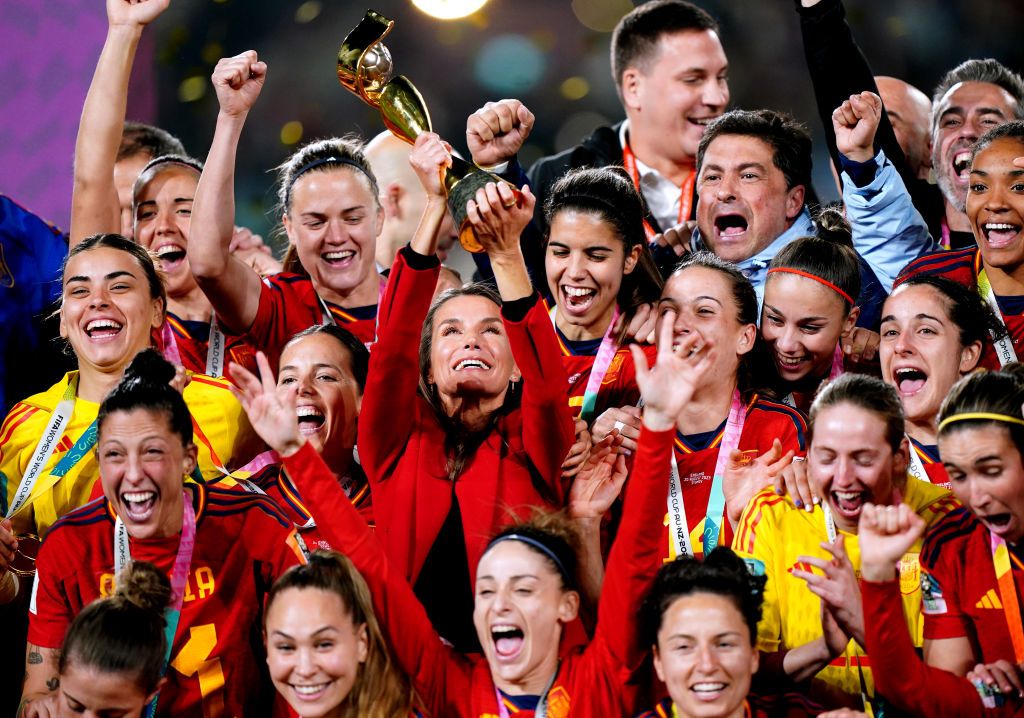
Spain’s Queen Letizia and her daughter, Princess Sofía, were in the stands yesterday to watch Spain defeat England 1-0 to win the Women’s World Cup. After the match ended, the royal women took to the field to celebrate with La Roja, the Spanish women’s national football team.
With the team, Letizia ended up in front of many of the players and coaching staff, holding a jersey they gifted her. Soon, they began to chant “que bote la Reina,” which translates roughly to “Bounce/Jump Queen!” and the Spanish Queen complied happily, and began to jump up and down with the athletes. She was wearing a red pansuit that was the same color as their jerseys, and Letizia fit right in with the team.
Photographers also captured the moment Letizia was jumping with the team, and the joy on the players’ faces is clear:
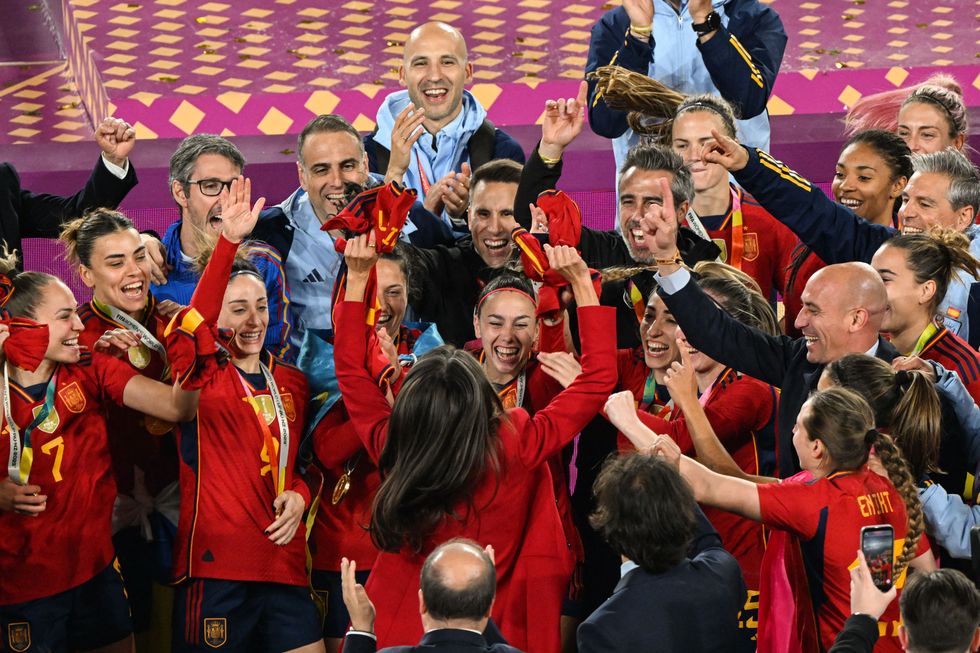
SAEED KHAN//GETTY IMAGES
The Spanish team’s social media even recognized the special significance of this moment, tweeting “Que Bote La Reina!!” in all caps.
Afterwards, the team begin chanting, “Sofía, Sofía!” in reference to Infanta Sofía, who was standing by her mom with a Spanish flag wrapped around her shoulders. During the trophy ceremony, Letizia hugged every player after they were presented with their gold medals.
Letizia and Sofía also joined the team in lifting up the trophy, and afterwards, they went to the locker room of the Spanish team and congratulated the players and the coaching staff, “highlighting the brilliant performance carried out throughout the tournament,” according to the Spanish royal family.
Messi leads Inter Miami to claim first trophy
Lionel Messi scored early in regulation and converted the first shot in penalty kicks as Inter Miami beat Nashville SC 10-9 on penalties in the Leagues Cup final on Saturday night (Aug. 19).
Messi scored midway through the first half, his 10th goal in seven games since joining Inter Miami — all in the Leagues Cup competition — as his new team claimed its first trophy.
Messi also opened the penalties by converting his shot. The penalty kicks ended in the 11th round in a showdown between the goalkeepers. Drake Callender scored his penalty for Miami and then made the title-clinching stop on a shot by Nashville’s Elliot Pannico.
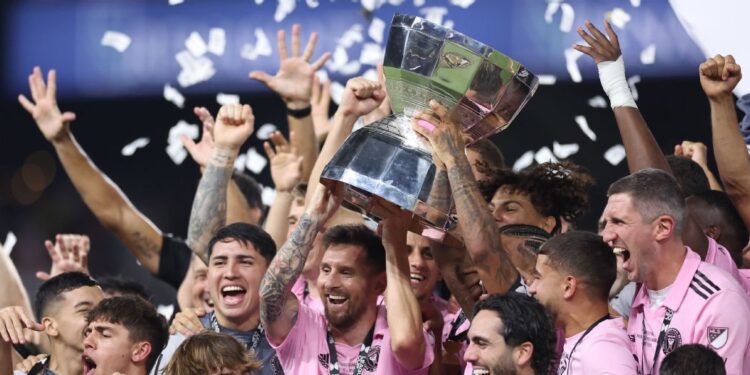
Miami players hoisted Messi on their shoulders and had an extended celebration on the field long after the trophies had been handed out.
Miami Coach Tata Martino credited the new group of newcomers like Messi, Sergio Busquets, and Jordi Alba, quickly gelling with the team.
“We had to incorporate a lot of new players but I’m very impressed how it came together,” Martino said through a translator.
“I remember the first days (in charge),” Martino continued. “We needed to do more trainings to give shape to the team and I was thinking, how convenient it is to move on in this tournament because we can take advantage of this month to play more. But after this month, we are champions”
Martino’s postgame press conference ended when Miami players burst into the room, singing and spraying champagne on the coach. But the team won’t have long to celebrate. Miami faces Cincinnati in the U.S. Open Cup final on Wednesday (Aug. 23) .
Nashville coach Gary Smith tipped his hat to Messi.
“You’re looking at a game with the greatest player on the planet possibly being the difference in what went on today,” Smith said.
Callender was proud of the role he played in helping Inter Miami claim the tourney crown.
“It’s a huge honor to play a role in our first win in a final,” Callender said. “It’s pretty surreal. Very emotional. This team works so hard day-in, day-out to be able to perform like this on a night like this. And to have it come down to the very end, it was amazing to see the grit, just the belief of what we’re capable of. It’s something special and I’m just blessed to be a part of it.”
Callender said he tried to stay as calm as possible through the numerous kicks.
“I just had to stay focused, breathe through it, stay as calm as possible,” he said. “I mean, this atmosphere here tonight is electric. So I embraced the moment and I just believed in the work that I put in and the repetitions I put in leading up to that moment and it just ended up going our way.”
Messi opened the scoring in the 23rd minute. The ball landed at his feet after a pass from teammate Robert Taylor was blocked. Messi dribbled past Nashville defender Walker Zimmerman and unleashed a bending shot from just outside the penalty box into the top left corner of the goal. A diving Panicco had no chance at playing the ball.
“It’s one of those things where the bounces don’t go your way and his ability to put it in the top corner is what makes him a special player,” Zimmerman said. “No mistakes were made on that play. It was a good challenge and a little unfortunate bounce there.”
Messi wasn’t particularly influential before he scored the goal, and the crowd showered him with boos each time he touched the ball. But the stadium erupted in cheers when the seven-time Ballon d’Or winner who led Argentina to the World Cup crown last year scored.
Nashville tied the game in the 56th minute when Fafa Picault’s header off a corner kick ricocheted off Miami’s Benjamin Cremaschi and into the net off goalkeeper Callender.
Messi had a shot from the area he had scored from earlier in the 71st minute, but hit the post as the teams played to a 1-1 draw in regulation.
Miami striker Leonardo Campana had a chance to win the game in the last play in regulation, but his sliding shot on an open goal hit the post. Messi held his head in his hands when the ball trickled out of play.
Messi mania had gripped Music City after Nashville SC advanced to the final against Miami with a win against Monterrey of the Mexican league on Tuesday. Ticket prices skyrocketed after they went on sale the following day but eased somewhat in the days before the game. The cheapest seats still cost several hundred dollars. A capacity crowd of 30,109 filled Geodis Park.
Nashville native Reese Witherspoon brought out the game ball and two-time NBA MVP Giannis Antetokounmpo took some shots on goal before the game. Both are minority owners of Nashville SC.
Inter Miami’s Argentine forward Lionel Messi and teammates celebrate with the trophy after Inter Miami won the Leagues Cup final, on Aug.19, 2023.
Marikana Massacre
On 16 August 2012, the South African Police Service (SAPS) opened fire on a crowd of striking mineworkers at Marikana, in the North West Province. The police killed 34 mineworkers, and left 78 seriously injured. Following the open fire assault – 250 of the miners were arrested.
This event culminated after an intense week-long protest in which the miners were demanding a wage increase at the Lonmin platinum mine in a wildcat strike. A wildcat strike, or ‘unofficial industrial action’, is strike action undertaken by unionised workers without the union-leadership’s authorisation, support, or approval. On 9 August about three thousand miners went on strike to demand a living wage. On 10 August, a large group of the striking miners approached the National Union for Miners (NUM) local office in order to demand support from their union, and were instead met with the firing of live ammunition, fatally wounding two miners.
This fatal breakdown in communication between the miners and their union further aggravated a volatile situation, in which the miners and their families were desperately trying to have their voices heard and their needs met. The miners were unable to attain a meeting with NUM or Lonmin representatives and events became increasingly militaristic following the death of the two protesting miners.
Between 12- 14 August at least four miners, two police officers and two security guards died in the ensuing violence. On 13 August, 30 miners were delegated to cross the veld (field) that separated them from another Lonmin platinum mine, Karee, where miners were also undergoing a wildcat strike. The 30 miners were forced by security to turn back without being allowed to meet with miners on the other side. On their way back they were met with a contingent of police. Eye-witness reports say there were about 10 nyalas (military police vans) and two police trucks. The police barred their way and told them to lay down their weapons (machetes also known as pangas), to which the workers refused, saying they needed the pangas for everyday living in the ‘bush’.
The police allowed the miners to continue, but once they were about 10 metres away, the police allegedly began to open gun fire (rubber bullets and later live ammunition) on them, and the miners retaliated. Two policemen and two miners were killed in this battle, and one miner injured severely.
The strike continued despite gaining no support from NUM and receiving no official commitment from Lonmin management to enter into negotiations. The strike was for a wage increase and to address the poor living and work conditions of miners and their families in Marikana. These issues were not formally addressed by the NUM or by Lonmin during the protest. Many of the strikers instead began losing their jobs and the protesters were met with unrelenting hostility by security, the police, and union personnel and management.
Despite having no legal protection or union support, thousands of miners continued to strike in solidarity for their common goal – a better quality life and the dignity it affords. The families of the striking miners were also in general solidarity with the protest and worked to support the movement, joining in protest action and bringing supplies when necessary.
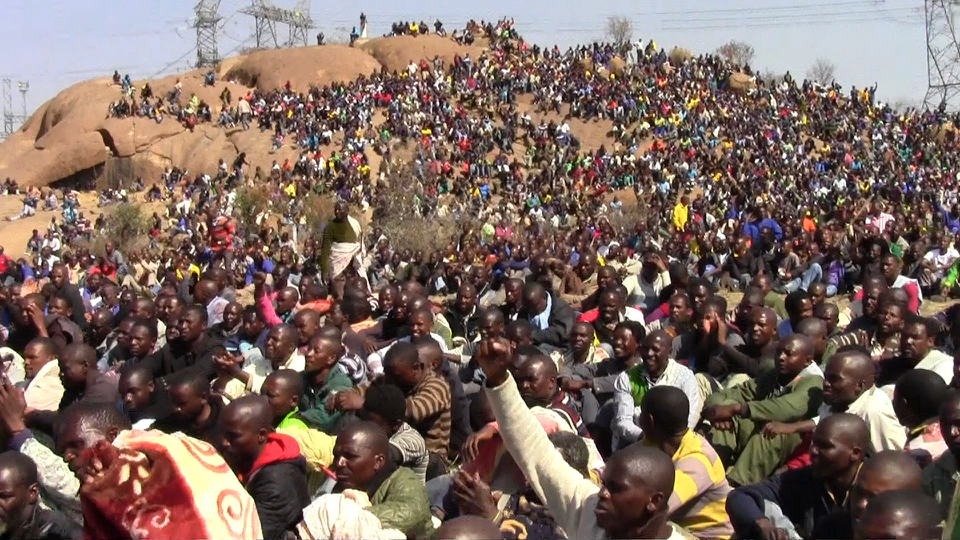 Striking mine workers gather on hill on 16 August 2012, before massacre occurs.
On 14 August Lonmin officially halted production at the Marikana platinum mine.
The miners set up camp on a hill called Wonderkop near the Lonmin mine. Police and miners occasionally entered into discussions however the miners remained steadfast in their strike action, and on 16 August a full frontal attack was launched on them.
More than 400 police were deployed, most in camouflage military gear and armed with R5s, a licensed replica of the Israeli Galil SAR, or LM5 assault rifles, designed for infantry and tactical police use. A barb wire fence was set along the outside perimeter to close the miners in, and military police vehicles and helicopters were deployed on the scene. The police were deployed in a manner that caused concern among the strikers. Despite statements that the police were acting in self defence, it is considered by many that they were not in any real danger. About a dozen miners were caught on camera being shot at directly, and this footage has received global attention and outrage. However most of the miners who were killed and injured were not caught on camera, with some of the miner’s bodies reportedly discovered behind boulders and in retreat. Many of the slain and injured had gunshots in their backs and there were miners who were found with injuries of being ridden over by nyalas.
Not a single policeman was killed or severely on 16 August 2012.
Addressing a press conference, SAPS authorities claimed its officers opened fire on the miners in self-defence, after the miners attempted to attack them using machetes, spears and clubs. The official number of people killed was confirmed by National Police Commissioner General Riah Phiyega, weeks after the incident.
Among the miners killed, was Mgacineni “Mambush” Noki, Bongani Nqongophele, Janaveke Raphael, Van Wyk Sagalala, security guard Matlhomola Mabelane, Andries Ntshenyeho, Xolani Nduzuzu, Telang Mohai, Thabile Mpumza, Stelega Gadlela, Thabiso Thelejane, Thabiso Mosebetsane, Jackson Lehupa and many others.
The Marikana Commission of Inquiry was set up to investigate the massacre of miners at Marikana. The commission’s first seating was on 1 October 2012, its final sitting was on 14 November 2014, and its report was submitted by President Zuma on 31 March 2015.
The report absolved the key political figures who were accused of having a hand in the events leading to the massacre, including Deputy State President Cyril Ramaphosa who at the time of the massacre was a non-executive director at Lomnin, former Police Minister Nathi Mthethwa, former Mineral Resource Minister Susan Shabangu and the National Police Commissioner Ria Phiyega. It also found that Lonmin had failed to engage with workers and the trade unions operating in that sector, NUM and AMCU, were found not to have had full control of its members who embarked on the unprotected strike.
South Africa is world’s third biggest producer of platinum, one of the highest trading resources on the market. Lonmin had 28 000 miners in its employ and has since retrenched thousands of its workers. Families of the miners slain and injured are still seeking reparations.
 Police advance after shooting striking workers with live ammunition on 16 August 2012
Mammila used 2018 TKO final to fuel Mosele to haunt Pirates

Mammila and Mosele were together when Baroka stunned Pirates to lift the Telkom Knockout in 2018, where the former was the club’s CEO. Mosele played a telling role in Bakgaga’s TKO success, bossing the midfield in the game that had ended 2-all in extra time, before the Limpopo side won the tie on penalties.
“To be honest, I showed them [his players], especially Mosele, the Baroka vs Pirates when we beat Pirates through penalties in the Telkom Cup,” Mammila said.
“I showed him how cool he was. Then I took him to Pirates, I said ‘you’ve done well at Pirates, you even got a national team call-up…it doesn’t mean that because you ended up not getting more game time you’re not good enough’.
“I said ‘don’t show Pirates but show the country that you are a better player’ and he agreed. He said ‘Morgan thanks for being there for me, you are my father. I am going to thank you, I am going to reward you with a good game’ and that’s what he gave.”
Mosele was voted man of the match against the Buccaneers, his second man of the match gong this season after bagging his first in their league opener against Kaizer Chiefs that ended goalless at Moses Mabhida Stadium almost two weeks ago. In their next game, Chippa host perennial league kings Mamelodi Sundowns at the same venue in Gqeberha on Saturday (8pm).
We’ll maintain petrol price without subsidy reversal — Tinubu
President Bola Tinubu said yesterday that the federal government would take measures to maintain the current pump price of Premium Motor Spirit, PMS, otherwise known as petrol, in the country without a reversal of its policy on subsidy removal.
He also said the threat by the Nigeria Labour Congress, NLC, to shut down the economy over rumoured plan to further increase fuel price was premature, stressing that it was incumbent on all stakeholders to maintain their peace.
The President assured that there would be no further increase in the price of petrol in any part of the country.
The Nigerian National Petroleum Company, NNPC Limited, said late last night it had no plan to raise the pump price per litre of petrol.
This came as the Kenyan government, which also removed fuel subsidy at a time Nigeria did same, reintroduced fuel subsidy to curb soaring prices of petrol, kerosene and diesel in the country, though for 30 days.
Special Adviser to the president on Media and Publicity, Ajuri Ngelale, disclosed these while briefing State House correspondents at the Presidential Villa, Abuja, shortly after meeting with President Bola Tinubu on the issue, especially following threats by Nigeria labour Congress, NLC, to go on strike without notice, if fuel price was again increased.
According to him, the official position is that there is no increase in prices at this time as “the president is convinced, based on information before him, that we can maintain current pricing without reversing our deregulation policy by swiftly cleaning up existing inefficiencies within the midstream and downstream petroleum sector to stabilise price.”
He said it was incumbent on all stakeholders to hold their peace and endeavour to do due dillegence to ascertain the true position of things.
The presidential spokesman presented a chart to prove that the cost of petrol was still much more cheaper in Nigeria than in other West African countries.
He stated: “This morning (yesterday), I had the privilege of sitting down with His Excellency, President Bola Tinubu, as we discussed the current unfolding situation in the country as it relates to fuel supply and demand.
“The president wishes first to state that it is incumbent upon all stakeholders in the country to hold their peace.
“We have heard very recently from the organized labour movement in the country concerning their most recent threat.
“We believe that the threat was premature and that there is need on all sides to ensure that fact-finding and diligence is done on what the current state of the downstream and midstream petroleum industry is before any threats or conclusions are arrived at or issued.
“Secondly, Mr. President wishes to assure Nigerians, following the announcement by the NNPC limited just yesterday that there will be no increase in the pump price of petroleum motor spirit anywhere in the country.
“We repeat, the president affirms that there will be no increase in the pump price of premium motor spirit. We also wish to affirm that the president is determined to maintain competitive tension within all sub-sectors of the petroleum industry.
“He is determined to ensure that our policy drawn up as well as policy implemented follows the cue that there will be no single entity dominating the market.
“The market has been deregulated; it has been liberalized and we are moving forward in that direction without looking back.
“The president also wishes to affirm that there are currently inefficiencies within the midstream and downstream petroleum sub-sectors that once very swiftly addressed and cleaned up, will ensure that we can maintain prices where they are without having to resort to a reversal of this administration’s deregulation policy in the petroleum industry.
“I wish at this juncture to also provide a set of graphics which the president has authorized me to share with Nigerians that otherwise would be confidential. These are graphics supplied to Mr. president by NNPCL.
“In the graphic, what you will find is the present cost of refined premium motor spirit at the pump in each of the West African nations that are our neighbours and I’ll just name some for example, even as I know, you will be showing your audiences the graphics, which the president has graciously approved for public release today.
“In Senegal, the pump price today is N1,273 equivalent per litre; Guinea N1,075 per litre; Côte d’ Ivore N1,048 per litre equivalent; Mali N1,113 per litre; Central African Republic N1,414 per litre, while Nigeria is currently averaging between N568 and N630 per litre.
“We are currently the cheapest, most affordable purchasing state in the West African sub-region by some distance. There is no country that is below N700 per litre.
“So, this is the backdrop we have seen, that at the inception of our deregulation policy as of June 1 as Mr. President took office, we have seen PMS consumption in the country drop immediately from 67 million litres per day, down to 46 million litres. The impact is evident.
“What it also mean though, is that we are not at the end of the tunnel. There is still a bit of darkness to travel through to get towards light. And we are pleading with Nigerians to please be patient with us.
“As we promised from the beginning, we will be open with Nigerians, we will be transparent with them. And we are ready to show you exactly what it is that our nation is facing with respect to the illiquidity in the market in terms of foreign exchange, as a result of what is now known to have been a gross mismanagement of the Central Bank of Nigeria, CBN, over the course of several years preceding this time.”
No plan for fresh petrol price hike, says NNPC as queues resurface
Also late Monday night, the Nigerian National Petroleum Company, NNPC Limited said it had no plan to raise the pump price per litre of Premium Motor Spirit, PMS, also known as petrol.
NNPC Limited spokesman, Muhammad Garbadeen, said in the statement that the company had no intention to increase petrol price for the third consecutive time since the removal of petrol subsidy on May 29, 2023.
“Dear esteemed customers, we at NNPC Retail value your patronage, and we do not have the intention to increase our PMS pump prices as widely speculated.
“Please buy the best quality products at the most affordable prices at our NNPC Retail Stations nationwide,” Garbadeen said.
Kenya reinstates fuel subsidy for 30 days to curb soaring prices
Meanwhile, the Kenyan government has reintroduced fuel subsidy to curb soaring prices of petrol, kerosene and diesel in the country.
The development came after months of violent anti-government protests over the burden of high living costs, with inflation also now reducing from 7.9 per cent in June to 7.3 per cent last month.
Tributes to Essex-born Game of Thrones actor Darren Kent
Friends, family and figures from the entertainment world have paid tribute to an Essex-born actor who has died aged 36.
Darren Kent appeared in shows such as Game of Thrones, EastEnders and the BBC adaptation of Les Misérables.
Mr Kent, who lived in Southend-on-Sea, was also a patron for Equal People Performing Arts, a charity promoting inclusion in the performing arts.
Fellow patron Lee Mead said the actor, who died on Friday, was “so special”.
Posting on X, formerly known as Twitter, Mr Mead described Mr Kent as a “fine actor”.
He said Mr Kent was “always giving of his time to people and always so positive”.

Mr Kent, an Italia Conti Stage School graduate, also worked as a director and screenwriter.
In 2021, his short film, You Know Me, won Best Director and Best Short Film at the January London International Monthly Film Festival.
A statement from his agent, Carey Dodd Associates, said Mr Kent died on Friday surrounded by his family and closest friends.
It added: “His indomitable spirit and love of life inspired all he met.
“He will be remembered not only for his talent, but as a warm and generous friend.”
Convicted sex trafficker and child rapist Gerhard Ackerman sentenced to life imprisonment
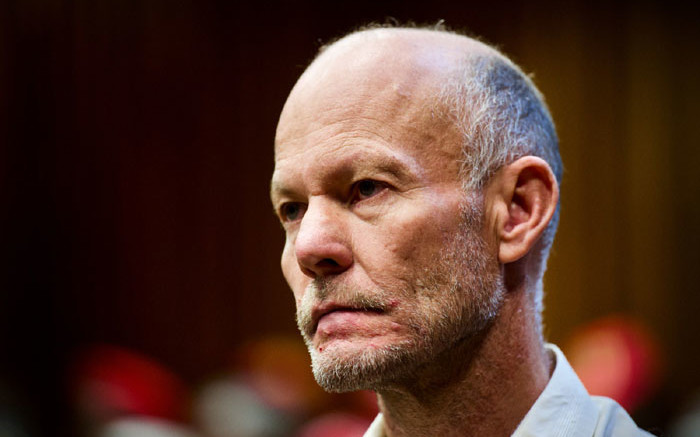
Convicted sex trafficker and child rapist Gerhard Ackerman has been handed 12 life sentences for crimes related to the sex abuse ring he ran in Johannesburg.
Ackerman appeared in the Gauteng High Court in Johannesburg on Monday, where Judge Mohamed Ismail sentenced him for the more than 700 charges he had been found guilty of.
The life sentences were imposed for each of the rape and human trafficking counts, including the rape of minors.
Ismail said Ackerman was a “plainly evil man” who lured children and opened them up to abuse from other men for his own benefit.
Ackerman was found guilty of:
Human trafficking
Sexual exploitation of minors
Hundreds of counts of possession of child pornography
Creating child pornography
Sexual grooming of minors
Exposing himself to children
Most of the crimes Ackerman committed related to his possession of child porn and the child sex abuse ring he masterminded with the help of well-known advocate and acting judge, Paul Kennedy.
Kennedy was arrested and charged alongside Ackerman but died to suicide before the trial started.
In his judgment, Ismail said Kennedy had killed himself because he realised his days were numbered when he was arrested.
In running the child sex abuse ring, Ackerman would find young teenage boys from poor and troubled families on social media. Most of the boys were between the ages of 14 and 16.
He would then gain their trust and offer them work at his “massage parlour,” which was effectively a front for his sex abuse business.
After convincing the boys to work as masseurs, Ackerman trafficked them to the brothel and harboured them.
The boys were then sexually groomed and sold for sexual services to a large list of clients.
South Africa’s former president Jacob Zuma pardoned after ‘special remission’
South Africa’s president Cyril Ramaphosa has approved a pardon for his predecessor Jacob Zuma as part of a “special remission” that also released thousands of other prisoners, the latest twist in a legal case that has tested the rule of law in Africa’s most industrialised economy.
The former president, 81, was handed a 15-month prison sentence in 2021 for defying an investigation into systematic corruption of state institutions during his rule, but was later released on medical grounds.
Zuma briefly returned to a prison in the state of KwaZulu-Natal on Friday but was released hours later under a scheme whereby Ramaphosa “approved the remission of non-violent offenders in South Africa”, the country’s department of correctional services said.
Ramaphosa granted the special remission pardon to almost 10,000 prisoners because of prison overcrowding, and the need to protect inmates from health risks and a “surge in gangsterism”, the department added.
But critics noted how the block pardon came just as South Africa’s prison service was due to decide on whether Zuma should return to jail, after the country’s highest court last month upheld a ruling that the correctional department had wrongly granted him medical parole in 2021.
The Zuma sentencing saga has shone a light on the rule of law in South Africa and Ramaphosa’s promises to arrest the country’s decline after the rot known to South Africans as the years of “state capture”.
An inquiry into the scandal, in which the powerful Gupta business family was accused of using a friendship with the former president to loot the state, concluded last year that Zuma “readily opened the doors” to graft. Zuma and the Guptas deny any wrongdoing.
Opposition figures condemned the pardon for Zuma, and the unusual circumstances in which it was done.
John Steenhuisen, Democratic Alliance leader, said Ramaphosa’s government had “once again weaseled out of standing up for the rule of law and the constitution, and chosen through a cynical and manipulative move to set Jacob Zuma free”. Herman Mashaba, leader of the ActionSA party, said the decision made “a mockery of the criminal justice system”.
Nicole Fritz, executive director of the Helen Suzman Foundation, a legal watchdog, said South African authorities had found a way “to ensure that Zuma doesn’t return to a jail cell”.
But she also said it was an exceptional case, involving a relatively rare prison sentence for contempt of court and wrongful medical parole. “It was an incredibly difficult and complex situation, and I don’t think many democracies handle accountability for former leaders well,” she added.
South Africa’s constitutional court had originally found Zuma in contempt for defying its orders to appear before an inquiry into the looting of state resources during his nine years in power.
Last month’s decision meant that this sentence legally still stood but that the prison service could decide whether his period of parole could count towards time served or whether he should be re-incarcerated.
Makgothi Thobakgale, head of the prison service, said Zuma’s brief return to prison on Friday meant that his department had complied with the court rulings and that granting of the pardon was a separate process.
Zuma surrendered himself to police in 2021 but his supporters unleashed South Africa’s worst-ever bout of post-apartheid violence and unrest in response.
Looting and attacks on infrastructure in the heart of the South African economy in KwaZulu-Natal, Zuma’s power base, and Gauteng, the country’s industrial hub, killed more than 300 people and wrecked scores of businesses.
A military deployment eventually suppressed what Ramaphosa called an attempted insurrection. Zuma was paroled months later.
Zuma lost the presidency and a power battle in the ruling African National Congress as far back as 2018, but analysts have said that the ANC fears both a repeat of the July 2021 violence, which amounted to a civil war within the movement, and losing KwaZulu-Natal in national elections next year.
The party is facing a battle to retain the majority it has held since the first democratic elections in 1994 and polls have indicated that it could lose the significant population centres of both KwaZulu-Natal and Gauteng.
Over the years South African presidents have occasionally used powers under the country’s constitution to remit sentences, including Ramaphosa previously in 2019 and Zuma in 2012.
Premier League
The Premier League (legal name: The Football Association Premier League Limited) is the highest level of the English football league system. Contested by 20 clubs, it operates on a system of promotion and relegation with the English Football League (EFL). Seasons typically run from August to May with each team playing 38 matches against all other teams both home and away.[1] Most games are played on Saturday and Sunday afternoons, with occasional weekday evening fixtures.[2]
The competition was founded as the FA Premier League on 20 February 1992 following the decision of First Division (top-tier league from 1888 until 1992) clubs to break away from the English Football League. However, teams may still be relegated into and promoted from the EFL Championship. The Premier League takes advantage of a lucrative television rights sale to Sky:[3] from 2019 to 2020, accumulated television rights were worth around £3.1 billion a year, with Sky and BT Group securing the domestic rights to broadcast 128 and 32 games respectively.[4][5] The Premier League is a corporation where chief executive Richard Masters is responsible for its management, with member clubs acting as shareholders.[6] Clubs were apportioned central payment revenues of £2.4 billion in 2016–17, with a further £343 million in solidarity payments to EFL clubs.[7]
The Premier League is the most-watched sports league in the world, broadcast in 212 territories to 643 million homes and a potential TV audience of 4.7 billion people.[8][9] For the 2018–19 season, the average Premier League match attendance was at 38,181,[10] second to the German Bundesliga‘s 43,500,[11] while aggregated attendance across all matches was the highest of any association football league at 14,508,981,[12] and most stadium occupancies are near capacity.[13] As of 2023, the Premier League is ranked first in the UEFA coefficient rankings based on performances in European competitions over the past five seasons, ahead of Spain’s La Liga.[14] The English top-flight has produced the second-highest number of European Cup / UEFA Champions League titles, with a record six English clubs having won fifteen European championships in total.[15]
Fifty-one clubs have competed since the inception of the Premier League in 1992: forty-nine English and two Welsh clubs. Seven of them have won the title: Manchester United (13), Manchester City (7), Chelsea (5), Arsenal (3), Blackburn Rovers (1), Leicester City (1) and Liverpool (1).[16] Only two of them have won three titles in a row (Manchester United – twice – and Manchester City), while only six clubs have avoided relegation: Arsenal, Chelsea, Everton, Liverpool, Manchester United and Tottenham.[17]
Miss South Africa 2023

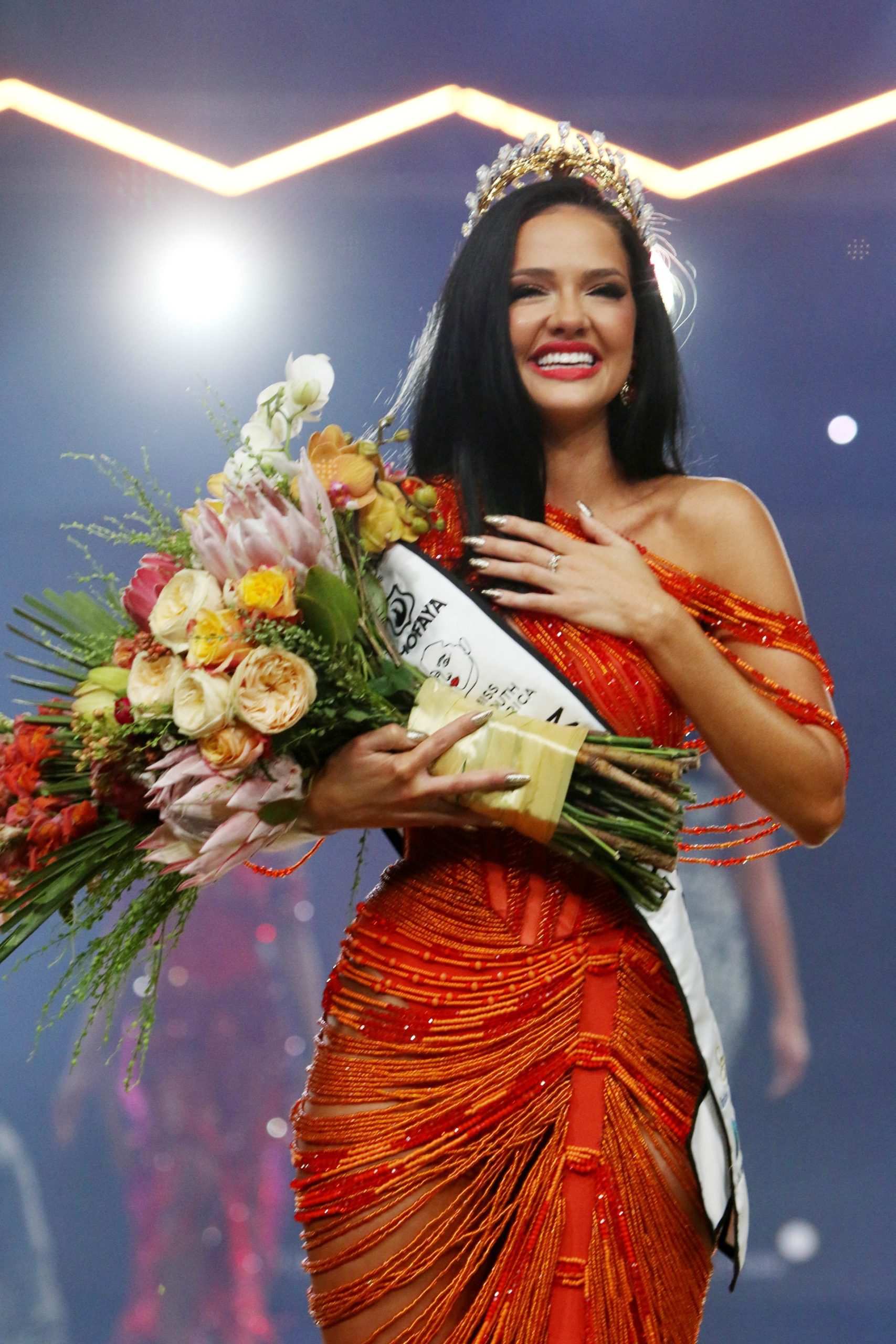
An ecstatic Natasha Joubert from Tshwane has been crowned Miss South Africa 2023 at the spectacular pageant finale held at the SunBet Arena at Time Square in Pretoria on Sunday night.
Joubert (26) is a BCom Marketing Management graduate and is the owner and fashion designer of Natalia Jefferys, a company she started when she was 19.
Runner-up was Johannesburg’s Bryoni Govender who was also the Motherkind fitness award winner.

An emotional and overwhelmed Joubert said she was truly humbled and grateful to win the title and to be the first to wear the glittering new Mowana (“Tree of Life”) crown from Nungu Diamonds.
RELATED: New Miss South Africa crown
She received R1 million in cash in a prize and sponsorship package that includes the use of a serviced apartment at the lavish Brookfield at Royal in Kensington – developed by Tricolt – for the year of her reign. She will also get to drive a Mercedes-Benz GLC as well as go on a trip to Paris sponsored by L’Oreal.
In her acceptance speech Joubert, a firm favourite among the crowd watching the pageant, said: “I am incredibly honoured and humbled to be crowned Miss South Africa 2023. As I step into this new role, I am filled with a sense of responsibility to make a positive difference in the world around me. I believe that success is not just about personal accomplishments, but about the opportunities we have to give back and uplift those around us. I will strive to be a source of inspiration and support for others, just as I have been supported on my journey now and before.
“This moment is the epitome of a full circle moment for me. A dream that started 11 years ago – and which three years ago did come to fruition after proudly representing my country on an international stage at Miss Universe at Miss Universe South Africa – has today become a reality. It took a lot of hard work, grit, self-confidence and support to keep my dream alive and to keep on believing in the beauty of second chances. It is a journey that I will forever be grateful for which moulded and shaped me into the woman I am today.
“I pledge to use this platform to advocate for the causes close to my heart and to be a source of inspiration for others. Entrepreneurship lies at the heart of innovation and economic growth. It is the driving force that propels nations forward, creating jobs, nurturing creativity, and fostering a spirit of resilience.
“I will also commit to cultivating an environment where entrepreneurial spirits can thrive. It pains me to know that more than half of South Africa’s youth lack the financial means to pursue their dreams. I was fortunate to receive a bursary that enabled me to continue my education, and I have been proactive in giving back. Not waiting for a crown on my head, I’ve been working to make a difference,” she revealed.
The winner of the special Crown Chaser of the season award, as voted for by the public, was Lungo Katete.
Says Stephanie Weil, CEO of the Miss South Africa Organisation: “Huge congratulations to Natasha, our newly crowned Miss South Africa 2023. A worthy winner, she embodies the Miss South Africa Organisation’s vision that if you can dream it you can achieve it and that just one person can make a big difference. May this year’s winner inspire a nation. We can’t wait to see what she achieves. And well done to runner-up Bryoni and the other five finalists who gave it their all on the evening. We truly had a strong group of women vying for the crown this year, a testament to the importance and value that the Miss South Africa title has come to stand for.”