
SA enters second wave of COVID-19 infections
South Africa has officially hit the second wave, with 6 709 new COVID-19 infections cases reported in the last 24 hours pushing the total number of cases to 828 598.
In a special briefing on Wednesday night, Health Minister, Dr Zweli Mkhize, said the country now meets the resurgence criteria formulated by scientists and modelling teams.
Meanwhile, he announced that teenagers are driving the second wave of infections this time around.
“In the last two days the age distribution of new cases showed a different pattern from the norm, the peak age in this period is in the 15 to 19 age group,” he said.
“This is believed to be due to a large number of parties involving young people drinking alcohol with no adherence to non-pharmaceutical interventions,” he added.
The Minister said the super-spreader events “spillover” into the rest of the country, as this age group is highly mobile, while the majority of them are asymptomatic.
“If this trajectory continues, our healthcare system will be overwhelmed by the numbers. Hence, part of the recommendations that are being tabled by provinces themselves is that large gatherings and parties must be urgently curtailed.”
New cases peak exponentially
Four provinces are currently leading the pack, with the Western Cape recording the highest number of new cases at 30%, while the infections have peaked by 24% in the Eastern Cape, 23% in KwaZulu-Natal and 17% in Gauteng.
The Free State, Limpopo, Mpumalanga, and the North West accounted for 1% of new cases each, while the Northern Cape contributed to only less than 1%.
The Minister has also raised concerns about the positivity rate that currently stands at 18%.
“This is well above the ideal 10% that the Ministerial Advisory Committee on COVID-19 recommends,” he said.
“You will notice from the seven days moving average graph that the rapid increase in KZN and Gauteng are exponential. This means that we should expect faster-rising numbers at a higher peak than in the first wave.”
The Minister said his department has already sent letters to all MECs urging them to prepare their respective provinces for a second wave.
“The key issues that we have raised are that the provinces need to ensure that testing turnaround times are as quick as possible to facilitate patient flow, assess bed capacity including recalling field hospital beds, attend to staffing and equipment needs urgently and to tighten up monitoring and evaluation and reporting to national department,” he added.
Deaths
According to the stats, 135 more people succumbed to COVID-19 related deaths, which pushes the death toll to 22 574.
Of the latest fatalities, 56 are reported in the Eastern Cape, 48 in the Western Cape, 16 in Gauteng, 15 in Free State, 15 in Free State and seven in KwaZulu-Natal.
“We convey our condolences to the loved ones of the departed and thank the health workers that treated the deceased patients,” Mkhize said.
In addition, the recoveries now stand at 754 658.
The information is based on the 5 690 263 tests completed, of which 38 200 were performed since the last report.
Globally, the World Health Organization is reporting 67 780 361 confirmed cases of COVID-19 infections, including 1 551 214 deaths.
Municipal project manager sentenced to 5 years for fraud
The Qumbu Regional Court has sentenced Mhlontlo Local Municipality project manager, Zwelilungile Siqhola, to five years’ imprisonment after convicting him on a charge of fraud.
Between April and June 2017, 41 year-old Siqhola awarded a tender for construction of a concrete slab on a road at Khalankomo village in Qumbu, Eastern Cape, to a company belonging to his sister-in-law.
He then submitted an invoice of R169 000 and signed a certificate of completion, even though the slab was never constructed.
As a result, Mhlontlo Local Municipality paid the money into the account of Siqhola’s sister-in-law, whose bank card was kept by Siqhola. He spent the money as his.
Siqhola’s arrest followed complaints from the Khalankomo community who informed the municipality that they were struggling to access the remote area of their village because the slab they requested was never constructed.
During trial, Siqhola pleaded not guilty.
Senior State Advocate Mtutuzeli Rangula secured the conviction after leading the evidence of Mhlontlo Acting Municipality Manager, Thando Mase the owner of the company fraudulently awarded the tender, as well as the ward councillor of Khalankomo Village.
During the course of the trial, Siqhola, who was out on warning, was arrested again after the police foiled a murder attempt on Mase, who was the state’s key witness.
Siqhola is due back in Mthatha Magistrates’ Court on 22 January 2021, where he is facing a charge of conspiracy to commit murder, fraud and illegal possession of a firearm and ammunition.
SIU lauds Special Tribunal in fight against corruption
The Special Investigating Unit (SIU) has lauded the establishment of the Special Tribunal as a game changer and effective tool in the fight against corruption in South Africa.
This comes as the world commemorated International Anti-Corruption Day on Wednesday.
The SIU said the setting up and subsequent operation of the Special Tribunal in 2019 has made it possible for it to expedite recovery of State monies and State assets lost through negligent and corrupt means.
The Special Tribunal adjudicates on matters that the SIU institutes for civil litigation relief following the conclusion of investigations.
“The SIU no longer has to queue at high courts with other litigants and experience delays, which may make recovery of stolen money more difficult as culprits may have enough time to hide or dissipate the money and assets,” said the SIU in a statement.
Through the Special Tribunal, the SIU can now quickly recover monies and assets lost by state institutions through irregular and corrupt means as compared to high courts; and hold those responsible for the loss accountable.
The SIU can also request relief in the form of preventing further losses to the state.
Successes
To date, the SIU has instituted 46 civil matters in the Special Tribunal to the value of R6.9 billion as compared to 50 civil matters in the ordinary courts with a current value of R9 billion.
Some of the civil matters in normal courts date back to 2008. The number of cases at the Special Tribunal includes 11 civil matters to the value of R259 million, which are related to supply and delivery of personal protective equipment (PPE) as part of government’s response to COVID-19.
Among the latest rulings by the Special Tribunal include the declaration of R18 million assets belonging to former Transnet executive Herbert Msagala being forfeited to the State. The assets include 35 luxury vehicles, five properties which includes two farms and houses in gated estate.
“The Special Tribunal interdicted the Transnet Pension Fund not to pay out the pension of Mr. Msagala until the conclusion of the action proceedings against Mr. Msagala in the Tribunal for recovery of secret profits made at the expense of Transnet.”
Another case saw the Tribunal grant the SIU an interim order to freeze the accounts of Alinani Trading (PTY) LTD, a company involved the supply and delivery of PPE items to the Eastern Cape Department of Education.
In the case, the Tribunal further interdicted and restrained the Department of Education from making any payments due to the company and individuals related to the company, of which one is a senior manager in the Department.
The third case said the SIU, granted an order restraining and interdicting both the Government Employee Pension Fund and the Government Pensions Administration Agency from paying out R2 million pension benefits to former North West Department of Health’s Head of Department (HOD) Dr. Andrew Lekalakala.
This was after the SIU approached the Special Tribunal for an order authorising the halting of the Dr. Lekalakala’s pension benefits, pending the outcome of its investigations into several allegations of financial irregularities, estimated at about R30 million, which occurred during his tenure as HOD.
The SIU has also been granted an interim order freezing R38.7 million held in several bank accounts of 40 Gauteng-based contractors involved in the supply and delivery of COVID-19 PPE.
Additionally, the Special Tribunal granted the SIU permission to institute civil proceedings against two contractors, Caledon River Properties (Pty) Ltd and Profteam CC.
The two contractors were allegedly paid R21.8 million before work could start by the Department of Public Works and Infrastructure for the construction of the 40 kilometre borderline fence at the Beit Bridge Border post in Limpopo.
In the statement, the SIU called on the public to partner with the unit in its fight against corruption so the country can recover the monies that are stolen for use in the changing lives.
Fraud and corruption allegations may be reported via the following platforms: siu@whistleblowing.co.za and on the hotline: 0800 037 774.
Science is key to responding to epidemics
A rapid and adequate response to epidemics requires investment in science, technology and education.
These were the words of renowned scientists Professor Quarraisha and Salim Abdool Karim who shared lessons learnt from HIV for COVID-19.
“In March somebody asked me, will we have a COVID-19 vaccine this year and my response was no way. It takes at least seven to 10 years to do that. Well, today as we gather we have five vaccines that have been shown to be efficacious. It really is the tale of the hare and the tortoise and it tells us that science moves because of investments and while it took us 30 years, we still don’t have an HIV vaccine.
“We have been able to move much more rapidly because of the investments made in HIV and TB [Tuberculosis] that we were rapidly able to mobilise to respond to this [COVID-19],” said Professor Quarraisha Abdool Karim.
The esteemed Professor made the remarks during the opening session of the Science Forum South Africa 2020 where she, together with her fellow epidemiologist, researcher and husband, renowned Professor Salim Abdool Karim, delivered the plenary lecture.
Professors Quarraisha Abdool Karim and Salim Abdool Karim both work at the Centre for the AIDS Programme of Research in South Africa (CAPRISA), as Associate Scientific Director and Director respectively.
Recognising innovation
Detailing their work on HIV with research spanning over three decades, the pair delivered the opening lecture at this year’s forum where they were later presented with the Strait of Magellan Award by Chilean Ambassador to South Africa Francisco Javier Berguño Hurtado.
The Strait of Magellan Award is an initiative of the government of Chile to honour the 500th anniversary of the beginning of explorer Ferdinand Magellan’s historic journey around the earth, which was completed by Sebastián Elcano.
According to Berguño Hurtado, Chile commemorates this date through the recognition of innovators who, through their research or actions, have contributed to providing solutions to global needs.
The initiative, Berguno Hurtado said, seeks to recognise innovation and entrepreneurship, with the aim of building a better world together.
Highlighting the lessons learned from HIV for COVID-19, Prof Quarraisha Abdool Karim said they have learned that public communication, science advocacy, political leadership, community engagement and partnerships are key for mounting a comprehensive response when confronted with epidemics.
“To know our epidemics and know our responses, needs strong information systems and rapid case identification through testing and rapid diagnostics that are appearing for COVID-19 is going to change the face of our response, but we also learned how fragile we are in Africa when we don’t drive innovation.
“When we don’t drive things that we need and we have to join the queue with better resourced nations and we saw that with PPEs [personal protective equipment] and we saw that with test kits and we are likely to see that with vaccines as well,” she said.
Adequate response
Science has to be at the core of the country’s response to COVID-19 and epidemics, she said.
“We also heard about incomplete knowledge and differences of opinion and replicability is what takes us to consensus,” she said.
Reflecting on their research, Professor Salim Abdool Karim noted as issues, ethics, denialism and stigma that can delay the effective roll out of treatment in epidemics.
“In 2000, I was asked to write this editorial published in Science and Nature about the big issues we were grappling with about the ethics of the HIV vaccines and globalisation. Just think for a moment this in 2000, 20 years later we [are] now having the same discussion about COVID vaccines and ethics,” he said.
Taking up that challenge from Science and Nature, Karim said part of his research looked into HIV denialism.
At the time, the country was grappling with the denialism issue which saw the country fall behind in terms of making HIV treatment available.
“And this reminds me a lot of the denialism about COVID and not just when somebody points to Brazil, the US or the UK but even in our own country – oh it’s just like flu. That is just another form of denialism for COVID,” he said.
Professor Karim said by understanding the issues in HIV research, South African was better positioned to prepare and respond to COVID-19.
The three-day forum will continue virtually on Thursday and wrap up on Friday.
Eight-year sentence for Crusaders’ terrorist activities
The two members of the “Crusaders” right-wing organisation have been sentenced in the Middelburg Regional Court for contravention of Protection of Constitutional Democracy against Terrorist and Related Matters Act.
This is after the pair planned to carry out terrorist attacks on government institutions and the African population in South Africa on 28 November 2019.
Eric Donald Abrahams, 55, and Erroll Abrahams, 50, part of the Crusaders organisation, also planned and conspired to overthrow the democratically-elected government and replace it their organisation.
“This objective would be achieved by carrying out attacks on military and police installations as well as on informal settlements occupied by African persons,” said the South African Police Service (SAPS) spokesperson, Colonel Katlego Mogale.
In 2019, the Crimes Against the State Section of the Directorate for Priority Crime Investigation arrested the pair in Kliprivier, Gauteng.
“They remained in custody until the finalisation of the case,” said Mogale.
The two have been slapped with a 15-year imprisonment of which seven years are suspended for five years for preparing and planning to carry out terrorist attacks.
They also received five years imprisonment each for the financing of specified offence or terrorism, unlawful possession of a prohibited firearm, unlawful possession of a firearm, unlawful possession of ammunition and unlawful possession of more than 200 cartridges.
“Effectively each accused will serve eight years in prison. All other sentences will run concurrently with the sentence on preparing and planning to carry out terrorist attacks.”
The court has further ordered in terms of section 103 of the Firearms Control Act, that both accused are unfit to possess firearms, ammunition, competency certificates, licences, authorisation and permits.
The case against the other accused, Harry Knoesen, will continue on 1 February 2021 for High Court trial date after he pleaded not guilty.
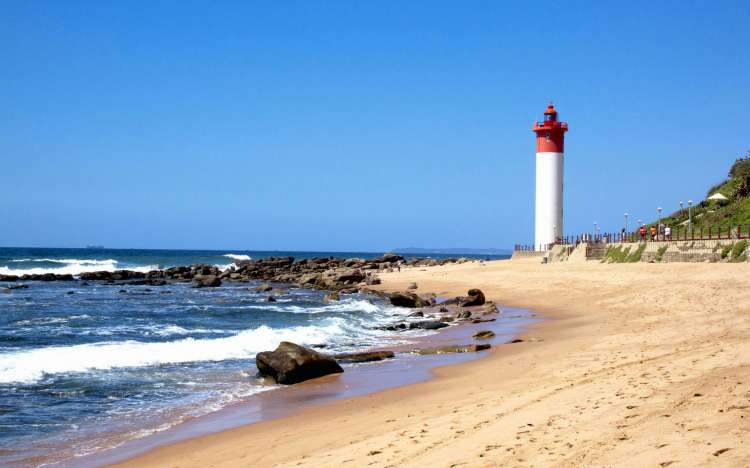
No decision yet on closure of beaches, says KZN Premier
KwaZulu-Natal Premier Sihle Zikalala says no formal decision has been taken regarding the reports and proposals around the possible closure of the provincial beaches over the festive season.
“At this stage there is no decision the provincial government has taken or contemplating to take with regards to the closure of beaches. This may only change based on the assessment of the situation on the ground and based on advice by medical experts,” Zikalala said.
The Provincial Command Council, chaired by the Premier, is seized with the task of preventing a second wave of COVID-19 infections from hitting the province of KwaZulu-Natal.
To this end, Zikalala said the province has activated its resurgence implementation strategy and plan.
“The primary focus for now is on efforts to mitigate and prevent the resurgence of COVID-19 without further disruptions to economic activity and livelihoods of people. The provincial government continues to engage with stakeholders such as Amakhosi and municipalities and continues to receive updates on the state of infections,” Zikalala said.
The Premier emphasised that the primary goal at this stage, is to do all they can to curb the spread of COVID-19 infections, while at the same time working hard to revive the economy following the devastation caused by the pandemic.
“The province is therefore looking at what best can be done to save lives while also protecting livelihoods. The matters in the public domain are currently part of the debates and proposals by various stakeholders and will be discussed once they are formally tabled,” Zikalala said.
The Premier reiterated his call to all people of KwaZulu-Natal to do their best and play their part to prevent the spread of the virus.
“Behaviour change and adherence to COVID-19 protocols remains our potent weapons. Let us wear a mask at all times, avoid gathering and keep social distance. It is important to sanitise regularly [and] all of us must also comply with level 1 disaster regulations,” the Premier said.
Festive Season launch
Meanwhile, Zikalala will on Friday unveil the KZN Integrated Festive Season Safety and COVID-19 prevention plans.
Matters relating to the safety of holidaymakers and measures that will be taken to ensure there is no spike in infections will be outlined during this launch.
NW opens work opportunities for unemployed agricultural graduates
In a quest to facilitate entry and participation of young people in the agricultural sector, the North West Agriculture and Rural Development Department is calling on young and unemployed graduates to apply for contract posts within the department.
The department said that the programme is part of the youth employment intervention announced by the national government.
“Successful candidates will enter into a contract with the department which will run for a period of two years and priority will be given to unemployed graduates from agricultural colleges,” the department said.
In order to be considered for the posts, applicants must be South African citizens residing in the North West Province; unemployed graduates with recognised agricultural qualifications including diploma, postgraduate diploma or bachelor’s degree; applicants must be entering internship in government for the first time and be between the ages of 18 and 35.
Women and people with disabilities are also encouraged to apply.
All applications must be submitted on a Z83 application form obtainable from any Public Service Department or on www.dpsa.gov.za. The application form should be accompanied by a comprehensive CV, and not more than six months certified copies of ID and qualifications.
Applications must be submitted to any Agriculture and Rural Development Department office in the North West Province or email to ekgositau@nwpg.gov.za or matlotlengM@nwpg.gov.za with the relevant reference numbers.
The closing date for applications is 30 December 2020 at 1pm.
For more information, contact TE Kgositau on 082 331 5281 or MM Motlhabane on 073 198 7617.
Government determined to uproot corruption without fear: Mchunu
Public Service and Administration Minister, Senzo Mchunu, has reiterated government’s commitment to fighting corruption without fear or favour.
Mchunu said lack of integrity has put millions of people under the shadow of poverty, while some loot the State’s coffers.
“This is at the expense of those who otherwise deserve the use of the resources for their betterment,” the Minister said on Wednesday.
Mchunu was delivering his address at the commemoration of International Anti-Corruption Day, observed annually in recognition of the United Nations Convention against Corruption, to which South Africa is a signatory.
The Public Service Commission led the discussion, in partnership with the United Nations in South Africa and the University of South Africa.
“This is a very important day where we really have to recommit ourselves to fighting [corruption], not just because we’re called by the United Nations or by our government but as individuals,” Mchunu said.
The Minister also made a firm commitment to align South Africa’s domestic laws and policies on corruption to international standards and instruments.
He said every government in the world needs to fight corruption and also prevent it.
“There will always be people who want to corrupt and expropriate certain resources for their own personal benefits and aggrandisement at the expense of other people, and this is greed.
“It’s also a sin in the Bible and also a sin we commit in the glare of the public… It’s a criminal offence for which governments need to garner part of their resources to ensure they prevent… [to stop] those amongst us who want to be greedy.”
Mchunu believes that arresting the corrupt is not enough. However, he is also advocating for the recovery of stolen assets, as the effects of corruption are devastating.
“Not only does it rob our country of the necessary resources for development, but it further violates the Constitutional rights of all citizens of the country, leaving them with little or no resources for a better life.”
Mchunu said it also counters government’s efforts to deliver on its promises to the people.
The Minister spoke against officials who use their position of trust “to extend their ugly hands to the resources of those who are poor”.
“Not only do their actions cast government in a bad light, but they diminish hope for a better South Africa.”
He said government is striving to put the needs of South Africans first at all times, and only wants public servants who will dutifully serve the public.
“Those who continue to contravene the law will have to be brought to book without delay and any fear or favour,” he stressed.
Mchunu reminded public servants of one of the National Development Plan’s goals, which is to live in a corrupt-free country, with an accountable government.
The public must report corruption
Meanwhile, Mchunu said Ministers and individual public servants must independently account for their actions, omissions and commissions.
“Gone are the days when the public must fear and get silenced by those who are corrupt.”
He urged citizens to inform authorities of any misconduct, as well as non-government organisations to come forward to report any malfeasance.
Mchunu said dealing with graft is one of government’s key priorities, which is evident in Cabinet’s approval of the National Anti-Corruption Strategy.
The strategy will aid the country by providing an intervention framework to coordinate their plans against fraud and corruption.
He informed delegates that there is political will to publicly denounce and deal with corruption, and has encouraged law enforcement agencies, especially the heads, to fear nothing.
“Go directly to criminals, go directly to corrupt people and deal with them. Government is solidly behind you and there’s no doubt about it.”
Professionalism
Meanwhile, government said it is advancing the professionalisation of public servants.
Mchunu said government employees should be professional, ethical, productive and innovative.
“Those values are very important in ensuring the integrity of the public service.”
The National School of Government is currently offering compulsory courses, such as Ethics in the Public Service, aimed at improving the public service.
Mchunu said the State is determined to gain public trust and make the public service an employer of choice.
He acknowledged that there is a trust deficit, which government is working on to regain credibility and legitimacy.
“We must be seen as legitimate and we must start earning it now. Public servants must assist government to earn that credibility and trust which we… have lost.”
Social grant beneficiaries urged to be vigilant during festive season
With the festive season approaching, the South African Social Security Agency (SASSA) has urged all social grant beneficiaries to be vigilant and ensure that they don’t fall victim to fraudsters and criminals when collecting their November and December social grants.
“Frail pensioners, people living with disability and other grant types beneficiaries are being targeted by thugs and scammers during the festive season. Some of these criminals visit pay points, pretend to be SASSA officials and others pretend to be offering assistance at the automated teller machine (ATMs),” Mpumalanga SASSA spokesperson Senzeni Ngubeni said on Wednesday.
Ngubeni urged all beneficiaries to ensure that they keep their Personal Identification Number (PIN) code or payment cards secured and secret to everyone suspicious, including relatives, children or micro loan companies “because they can then withdraw their money without the beneficiary’s consent”.
“If the beneficiaries suspect that the pin code has been exposed to the wrong person, they have a right to change it at the South African Post Offices or private banks. If beneficiaries encounter any challenges that the money has been withdrawn, they must ask for the statement at the Post Office or bank to see the transactions – where and when the money was withdrawn,” Ngubeni said.
She said this will make the process easy to lodge a complaint of illegal withdrawal and open a criminal case at the nearest police station.
Beneficiaries must remember the following:
- After collecting the money at the pay point, ATM and merchants must put it at a safe place and ensure that no one is noticing him or her;
- Do not allow any strangers to assist you carrying your bags or withdrawing money at the ATM; and
- Do not use your card as security to get a loan from a money lender.
For more information, contact SASSA toll free number 0800 60 10 11 from 08am – 4pm during the week.
By-elections underway in various provinces
By-elections are currently underway in 118 voting stations across all nine provinces, with 77 candidates representing 14 political parties along with 18 independent candidates contesting the ward by-elections.
The by-elections take place in 24 wards across 17 municipalities in all nine provinces. The voting stations will be opened between 7am and 9pm for voters to cast their votes.
In a statement, the Electoral Commission (IEC) said that a total of 171 829 voters appear on the certified voters’ roll for these elections.
The IEC said that 3 088 special voting through home visits and 3 067 at voting stations took place on Tuesday for voters whose applications for special votes were approved.
Chairperson of the Electoral Commission of South Africa, Glen Mashinini, supported by Gauteng Provincial Electoral Officer Thabo Masemula will be visiting four voting stations in Ekurhuleni.
In Gauteng, the Chairperson will be visiting four voting stations in ward 27, which has over 16 000 registered voters. The ward became vacant as a result of the termination of the councillor’s party membership.
Voters are reminded to only vote at the voting station where they are registered. Voters can check their registration and voting station by SMSing their ID number to 32810 (cost R10); bring their green barcoded ID document or smartcard ID; wear a mask and observe social distancing at all times; and bring their own pen if they wish to avoid using the ones provided.
COVID-19 protocols
Meanwhile, the Electoral Commission said that it has implemented strict safety measures and protocols at voting stations to ensure the safety of all voters, election staff, observers and other stakeholders.
These include strict social distancing practices both outside and inside voting stations and the mandatory wearing of masks over nose and mouth of all persons within the boundaries of the voting station.
The safety measures and protocols also include the application of hand sanitisers to all persons entering and exiting the voting station; and the replacement of the traditional indelible ink marker pens with an indelible ink liquid which will be applied from a bottle to the thumb of voters using cotton buds which will be disposed after each use.
“Protective equipment including masks, gloves and face shields will be worn by election staff at voting stations and additional safety equipment will be worn for staff conducting home visits for those voters who are physically disabled, infirm or pregnant,” the IEC said.