
SA records 667 049 COVID-19 cases
South Africa recorded 1 861 new COVID-19 cases, while 77 more people succumbed to the disease on Thursday.
This brings the cumulative number of detected COVID-19 cases to 667 049 since the outbreak, while the death toll now stands at 16 283.
Of the latest fatalities recorded, 58 are from Gauteng, eight from KwaZulu-Natal, seven from the Eastern Cape and four from the Western Cape.
“Our recoveries now stand at 595 916, which translates to a recovery rate of 89.3%,” said Health Minister, Dr Zweli Mkhize.
The information is based on the 4 102 162 tests conducted, 18 405 of which were performed in the last 24 hours.
The Minister once again pleaded with people to be vigilant and take precautions against the spread of the virus, even though the country is under lockdown level 1.
Globally, there have been 31 798 308 confirmed cases of COVID-19, including 973 653 deaths reported to the World Health Organisation.
Thumbs up for Northern Cape Education
Basic Education Deputy Minister Dr Reginah Mhaule has commended the Northern Cape Education Department for its commitment towards improving learning outcomes.
“Schools in the Northern Cape are working tirelessly to ensure desired curriculum coverage prior to the 2020 National Senior Certificate (NSC) examinations later this year,” Mhaule said.
Accompanied by Northern Cape MEC for Education Zolile Monakali, Mhaule undertook a two-day oversight visit programme to Kuruman and Kathu this week, to assess the status of school functionality since all learners returned to the classroom a month ago.
Among the schools visited by Mhaule were Galaletsang High School, Gaegake Primary School and Deben Primary School in the John Toalo Gaetsewe District.
She concluded her oversight programme at Kathu High School.
Mhaule said that schools and learners must be fully supported in order to improve the quality of passes and achieve a higher volume of bachelors this year.
She also encouraged the province to support primary schools with an attempt to lay a strong foundation for learners in General Education and Training (GET).
The Deputy Minister further acknowledged the efforts made by educators with comorbidities who reported for duty this week, after having been granted concessions to work from home due to their vulnerability.
She emphasised that although the teachers reported for duty, the Basic Education Department and provincial Education Departments will not terminate contracts of the substitute teachers in the sector.
“You may be well aware that due to social distancing phenomenon class sizes in several schools are undoubtedly cut down, leaving the sector in high need of additional teachers,” the Deputy Minister said.
Mhaule also called on educators, learners and members of the public to adhere to COVID-19 regulations and maintain social distancing, the wearing of face masks and hand sanitising at all times.
“As the basic education sector, we must take responsibility to prevent the spread of Coronavirus in our communities,” Mhaule said.
MEC Monakali pledged his unwavering support for all learners, especially Grade 12s.
He said that the provincial department has finalised the matric intervention programmes which will unfold in October 2020.
“These interventions include weekend lock-in sessions, Saturday classes and extended spring camps. We are targeting close to 8 000 Grade 12 learners which will benefit from our final push activities ahead of the 2020 NSC examinations,” Monakali said.
Shift to level 1 a ‘welcomed move’
South Africa’s move to lockdown level 1 has been welcomed by all sectors of society including labour, business, civil society and political formations, says Cabinet.
According to a Cabinet statement released on Thursday, the further opening of businesses will contribute immensely to rebuilding the economy, restoring growth and creating much-needed jobs.
“The National State of Disaster regulations, which give effect to the announcements by the President, were gazetted on Friday, 18 September 2020.
“The new regulations eased certain restrictions implemented since March 2020 to prevent the spread of the virus,” said the Executive.
These include the permissible number of people at public gatherings, events and funerals, as well as the opening of borders for travel within Africa and internationally, effective from 1 October 2020, among others.
Funerals can now have 100 people, up from the 50 allowed under level 2.
Religious gatherings such as churches are now allowed to house a maximum of 250 congregants no matter how big the venue is and this goes for other social gatherings too, such as weddings.
For outdoor gatherings, venues are not allowed to have more than 500 people, while gyms are now allowed to have 50% of the capacity of the venue.
South Africa moved to level 1 of the lockdown from midnight on Sunday, 20 September 2020.
Cabinet members have encouraged more engagement with traditional leadership to address issues related to initiation schools and practices that are still prohibited during level 1 of the lockdown.
Cabinet has urged all people in South Africa to continue observing COVID-19 health protocols such as maintaining social distancing, wearing a mask in public and regularly washing hands with soap and water or using an alcohol-based hand sanitiser.
To date, South Africa has 667 049 COVID-19 cases and 16 283 deaths.
Cabinet has also urged the public to download the COVID Alert mobile app from the Apple App Store or Google Play.
The app, which has been zero-rated by mobile networks, can be downloaded without any data costs and is aimed at improving contact tracing by alerting users if they have been in close contact with others who have tested positive for the virus in the past 14 days.
The app does not gather any personal information or track a user’s location.
Cabinet approves publication of 4IR Commission report
Cabinet has approved the publication of the Presidential Commission on the Fourth Industrial Revolution (PC4IR) report in the Government Gazette.
The report makes proposals to reinvigorate the country’s industrialisation aspirations, and improve global and continental economic competiveness to enhance inclusive growth.
The key drivers of the PC4IR Strategy include economic competiveness, responding to service delivery challenges, human capacity investment and responding to COVID-19.
“This gives effect to the 2018 State of the Nation Address, which directed that a Digital Industrial Revolution Commission would respond to rapid technological advances and ensure the nation’s prosperity,” Cabinet said in a statement following its virtual meeting on Wednesday.
SASSA online service
Cabinet has also welcomed the launch of the online grant application portal by the South African Social Security Agency (SASSA), which enables applications to be lodged on https://services.sassa.gov.za.
Cabinet noted that the portal, which will initially be piloted on Child Support, Older Persons and Foster Child grants, will save potential beneficiaries transport costs and the inconvenience of standing in queues.
“Cabinet encourages new applicants to use the self-service, as it helps to eliminate the potential risk of contracting COVID-19 at overcrowded public places.”
Cabinet reiterates determination to win GBVF fight
Cabinet has reiterated its determination to fight gender-based violence and femicide (GBVF) by strengthening the law, and providing psychosocial support and advocacy programmes within communities.
Based on data obtained through the South African Police Service (SAPS), government has identified 30 GBVF hotspots around the country.
“Cabinet has assured the affected communities that working with the police, intervention measures will be strengthened to ensure the protection and safety of women and children,” said Cabinet in a statement.
Cabinet has welcomed the R50 million donation from the United Kingdom, which will extend the Solidarity Fund’s ongoing efforts to counter the economic devastation caused by the COVID-19 pandemic.
The funds, Cabinet said, will focus on projects that support and promote women.
Cabinet also expressed concern at disturbing reports of human trafficking involving women and children in the country. Police are following up and investigating all reported cases related to these crimes.
Cabinet has appealed to the public to report these heinous crimes to the police immediately instead of using social media platforms, which makes it difficult for law enforcement agencies to respond quickly and adequately.
Cabinet urged the public, however, to refrain from peddling fake news, which may cause unnecessary panic, inflame emotions and incite violence in society.
Anyone with information should contact the SAPS on the Crime Stop number 08600 10111 or use the free MySAPS Application, which can be downloaded on any iPhone or smartphone.
Cabinet welcomes arrests in train infrastructure vandalism
Cabinet has welcomed the recent arrests of suspects in Johannesburg and Cape Town allegedly involved in the theft of copper cables and train signal cables.
Police also acted swiftly in arresting people involved in the destruction of the main road in Msinga, KwaZulu-Natal.
Last week, five suspects were arrested in two separate incidents for tampering with essential infrastructure.
One man was arrested after being found in possession feeder cables with a market value of R380 000 as well as copper cables worth R150 000.
The 48-year-old was arrested during a joint operation of a multidisciplinary team consisting of members from the South African Police Service (SAPS) and the Passenger Rail Agency of South Africa (PRASA).
A bakkie and tools that were allegedly used in the commission of the crime were seized.
In another incident, four men were arrested after being found tempering with infrastructure in Germiston. They were found in possession of copper cables worth a market value of R14 483.
In a post-Cabinet statement issued on Thursday, Cabinet commended this breakthrough in the theft and vandalising of rail infrastructure a serious crime, which resulted in some instances in the loss of innocent lives due to train collusions.
“Public infrastructure remains the cornerstone of driving our economy. It remains a critical component in our drive to grow the economy and create the much-needed jobs. Cabinet calls on all South Africans to report these criminal activities to the police,” said Cabinet.
Parliament not set to fully open
Parliament has dismissed the Citizen newspaper’s claims that it will fully open for physical meetings on 5 October 2020.
In a statement on Thursday, Parliamentary spokesperson Moloto Mothapo said the report is replete with blatant falsehoods and fictitious references.
“As if these fabrications were not bad enough, the story further claims that the ‘regular Cabinet programme will resume on 6 October’, cringeworthily attributing this to what it calls ‘Parliament’s communications department’.
“Not only does the newspaper seem to be inventive with sources and attributions, but it also seems unable to distinguish between Parliament and Cabinet, as it uses the two interchangeably.
“It boggles the mind how such errors could make it through the newspaper’s checks and balances into the public domain,” Mothapo said, noting that the paper did not contact Parliament for the story.
He said Parliament will be writing to the Press Ombudsman to seek redress.
“For the record, Parliament has been open for business, even under the lockdown regulations, since April. MPs [Members of Parliament] have been working both from the precinct and remotely, through what is called the hybrid system, in order to conform to the current COVID-19 regulations, which prescribe the number of people that can gather in one place to perform various duties,” Mothapo said.
No decision has been taken regarding any change to this status quo, Mothapo said.
“Members of Parliament are currently on a constituency period following an intense third term programme, which also had to be extended several times in order to complete the urgent business of Parliament.”
Global players urged to back African stimulus package
President Cyril Ramaphosa has called on the international community to support the rollout of a comprehensive stimulus package for African countries.
Addressing a virtual sitting of the 75th United Nations General Assembly debate on Tuesday, President Ramaphosa, who is also the Chairperson of the African Union (AU), said the stimulus package will enable African countries to mitigate the health impacts of COVID-19 and aid the continent in the immense task of rebuilding its shattered economies.
“When Secretary-General António Guterres delivered the 18th Nelson Mandela Annual Lecture in July 2020, he called on the nations of the world to forge a New Social Contract and a New Global Deal.
“He said we must create equal opportunities for all, that we must advance a more inclusive and balanced multilateral trading system, that debt architecture must be reformed, and that there should be greater access to affordable credit for developing countries. It is a call we, as South Africa, wholly endorse,” said the President.
To ensure that no country is left behind, the President reiterated the AU’s position that economic sanctions against Zimbabwe and Sudan should be lifted to allow their governments to respond adequately to the pandemic.
Expanding economic opportunities
President Ramaphosa said the pandemic has highlighted the urgency with which global leaders must strive to meet all the Sustainable Development Goals (SDGs), especially Goal 1, which is to end poverty in all its forms everywhere.
“Until we eradicate global poverty, we will always fall short of realising the vision of the founders of the United Nations (UN). We must expand economic opportunities to all people around the world, but most especially to the young, to women and to vulnerable people.
“We must boldly pursue avenues of redistribution and redress as a means of advancing shared prosperity. We must deal decisively with the rot of corruption that is robbing our people of the opportunities and services that are their right,” he said.
Action against racism
The President further called on the UN to spare no effort to end prejudice and intolerance in all its forms and wherever they may be found.
He said the year 2020 will be remembered for the massive groundswell to push back the frontiers of racism under the umbrella of the #BlackLivesMatter movement.
“As a country that has known too well the anguish of institutionalised racism, South Africa supports the demands for swift action against racism, whether committed by individuals, companies, officials or a state.”
Empowering women and girls
The President emphasised the need to intensify efforts to empower women and girls as the world marks the 25th anniversary of the adoption of the Beijing Platform for Action.
“It is the right of women and girls to be full and equal participants in the workplace, in political life and decision-making, in the economy, in obtaining an education and in society as a whole. South Africa is proud to be a member of the UN’s Generation Equality campaign and has prioritised the eradication of gender-based violence and femicide.
“At a continental level, we are working to finalise and adopt an AU Convention on Violence against Women during the course of this year. AU member States are engaging on measures to promote financial inclusion, preferential procurement and preferential trade agreements for women,” the President said.
Security Council
Meanwhile, President Ramaphosa reiterated the call for greater representation of African countries on the Security Council, saying this should be taken up with urgency at intergovernmental negotiations.
“It is only through a reformed and inclusive UN Security Council that we will be able to collectively resolve some of the world’s most protracted conflicts.
“As we celebrate the founding of an organisation dedicated to freedom and equality, the people of Palestine and Western Sahara continue to live under occupation. We repeat our call for an end to the illegal occupation of Western Sahara and for the Palestinian people’s right to self-determination.”
He further called for the lifting of the economic embargo and blockade of Cuba.
Civil servants at the frontline of the battlefield
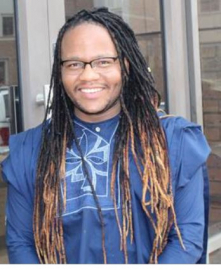
Boots on the ground, a sound strategy and the promise of a better tomorrow are some of the crucial ingredients needed to win a war.
In this war, South Africa and many other countries around the world share a common enemy — COVID-19.
Artilleries and grenades are not required but the expertise of scientists, health researchers and healthcare professionals is what is desperately needed.
They are at the forefront of the response as they work around the clock to diagnose, treat and study the virus.
As the race to find a cure continues, epidemiologists have played a critical role in monitoring developments.
Epidemiologists continue to be responsible for collecting information on the disease from surveillance systems, which report the data of new cases, hospitalisations, deaths, as well as demographic information.
Leading the Epidemiology and Surveillance Work Stream at the North West provincial COVID-19 nerve centre is National Institute for Communicable Diseases (NICD) provincial Epidemiologist, Wellington Maruma.
At a time when the country commemorates Public Service Month (PSM), Maruma, 27, takes pride in his work as a public servant.
Commemorated annually in September, PSM serves as a reminder of what it means to serve communities, while also looking at the impact that government has, especially on service delivery.
Maruma has imparted the skills needed in the battlefield against Coronavirus.
“One of the greatest things that I have been able to achieve at the nerve centre is the transfer of skills. This is very important with epidemiology because it’s a scarce skill and you don’t want to be the only one with a specific skill,” he tells SAnews in an interview.
Like anyone intent on winning a war will know, gathering intelligence on the enemy is crucial.
As part of the country’s response, the nerve centre produces COVID-19 situational reports, which describes the distribution of cases, identifies hotspots and incident risk, progress on contact tracing, statistics on the enhanced community screening program, the recovery rate, as well as the case fatality rate on a daily basis.
The centre also analyses and interprets data on all confirmed cases.
When the centre was established, Maruma, who is also part of the first cohort of qualified Implementation Scientists in Africa, assisted in the drafting of its terms of reference.
With 216 countries affected by COVID-19, Maruma emphasises the importance of keeping up to date with the latest global knowledge, as information on the virus is evolving and vaccine clinical trials are being conducted.
“We want to know what went wrong, so that we don’t try out something that has been proven not to work and waste resources on that. My job is to make sure the province understands the knowledge in the simplest form because most of the knowledge uses scientific jargon,” he says.
The making of a dedicated civil servant
Maruma’s journey to where he is today in the public service began at Monash University in 2012, when he pursued a degree in Public Health and later went on to graduate with an Honours degree. His research focused on the relationship between stunting and childhood obesity by exploring the prevalence of malnutrition from a nutritional feeding program in early childhood development centres.
While studying towards his degree, he completed an internship with HOPE Worldwide, an organisation that serves vulnerable children, households and communities.
During this time, he also supported the development of the assessment data collection tools for the Early Childhood Household Stimulation (ECHS) program funded by the United States Agency for International Development (USAID) and non-profit human development organisation FHI360.
He was also awarded a scholarship by the United States of America’s National Institutes of Health (NIH) Fogarty International Centre and the National Institute for Mental Health (NIMH) to pursue a Masters of Science in Epidemiology at the University of the Witwatersrand.
“I chose to do a Masters of Science in Epidemiology. [This is] because the degree equips you with a lot of skills to conceptualise epidemiologic approaches to understanding the causes of ill health in population-based research, knowledge of appropriate data collection methods, handling large data sets and being able to use the different statistical approaches to summarise data and write the scientific output for different audiences,” he says.
In 2017, Maruma was placed at the Aurum Institute, where he conducted his research for his Master’s degree, which focused on factors influencing the collection of data by ward-based outreach teams (WBOT) for Tuberculosis (TB) contact tracing.
The institute is a leading healthcare organisation, which has been successfully battling HIV and TB for over 20 years.
In as much as he was doing his research, Maruma made sure to use his time wisely by working on various research projects with scientists at the institute, providing them with technical support in terms of data quality assessments, drafting of standard operating procedures (SOPs), data collection and analysis using both quantitative and qualitative research methodologies.
His hard work paid off when the organisation offered him a contract position as a research assistant.
One of the key studies that was paramount in his career was on ‘Optimising the efficiency of household contact tracing for TB control in South Africa’ where he assisted with data quality assessments.
The findings of that scientific output were presented at the 2018 TB Conference in Durban.
Maruma also presented the findings of his Masters research project at the same conference and also at the 2018 Ekurhuleni Research Conference.
“That was one of the key highlights, seeing my contribution being recognised by the scientific community. I worked with scientists at the Aurum Institute, Dr. Candice Chetty and Professor Charalambous, who are the principal investigators for the main study to which my research was nested under.”
While at the institute, he also played a significant role on the pilot study that assessed the use of incentivised mobile technology to improve uptake of HIV testing services among 15 to 24-year-olds.
Maruma was thrown in the deep end a few months into his job as a provincial epidemiologist, when he had to conduct an outbreak investigation on mumps at a primary school in Zeerust in 2019.
He took this challenge, which he now cites as one of his career highlights, in his stride.
“I supported the Communicable Disease Control Directorate within the provincial Department of Health to do the outbreak response. I went on to write the scientific output, which I presented at the 2019 Federation of Infectious Diseases Societies of Southern Africa (FIDSSA).”
Last year, Maruma also worked with the Wits Health Consortium on the National Department of Health`s National Immunisation Coverage Survey – specifically conducting training on the data collection tools and supporting the data management processes.
He was also part of the NICD`s provincial epidemiology team that provided support to the department when conducting the Ebola preparedness assessment for the would-be designated treatment hospital in the North-West.
Maruma’s dedication to his work embodies the theme for this year’s Public Service Month – ‘Growing South Africa together for an Ethical Public Service’.
The theme seeks to instil and rebuild good ethics and professionalism in how public servants perform their functions, while also recognising the selflessness of thousands of frontline public servants.
This month, public servants are encouraged to reflect on the services they provide, and gain a thorough and deep understanding of what it means to be professional and ethical.
At a time when government is working to rid the country of corruption and nepotism, the contribution and hard work of public servants like Maruma are the building blocks to winning the war against the virus.
Just as an archer carries their arrows on the journey to battle, public servants across the various government spheres remain as crucial cogs not only in fighting COVID-19 but also in the rendering of essential services to citizens.
After all, winning any kind of war – be it against COVID-19, corruption, gender-based violence or injustice – requires national effort.
SA to partner for women’s digital financial inclusion
President Cyril Ramaphosa will today participate in the High Level Virtual Panel hosted by the G7 Partnership for Women’s Digital Financial Inclusion in Africa.
To be held under the theme ‘Catalysing Digital Financial Services for Women Across Africa: Supporting Recovery, Resilience, and Innovation During COVID-19’, the panel takes place on the sidelines of the 75th Session of the United Nations General Assembly.
The panel is co-hosted by the Bill and Melinda Gates Foundation and will feature Queen Máxima of the Netherlands, who serves as the UN Secretary-General’s Special Advocate for Inclusive Finance for Development; Bruno Le Maire, the French Minister of Economy and Finance, and Melinda Gates, Co-Chair of the Bill and Melinda Gates Foundation.
President Ramaphosa is scheduled to participate in the discussions from 17h00.