
Inclusive growth key to address gender equality
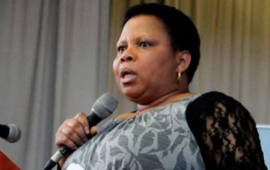
The Deputy Minister of Forestry, Fisheries and the Environment Maggie Sotyu says with women recognised as the most vulnerable to the impact of climate change, inclusive economic growth is key to addressing gender inequality.
Sotyu said this when she participated in the debate on International Women’s Day during a sitting of the National Assembly on Tuesday.
She said women are increasingly being recognised as more vulnerable to climate change impact than men as they constitute the majority of the world’s poor as they are more dependent on natural resources which climate change threatens the most.
“It is therefore important that inclusive economic growth is key to addressing unemployment, gender equality, health and other poverty-related issues,” she said.
Sotyu said government’s National Climate Change Adaptation Strategy, which was approved in 2020, defines the country’s vulnerabilities and outlines plans to reduce those vulnerabilities.
She also said that the strategy leverages opportunities and outlines required resources for such action, with demonstrating progress on climate change adaptation.
“It also outlines the set objections, interventions and outcomes to enable the country to give expression to its commitment on the Paris Agreement.
“As a guiding principle, our strategy aims to promote the participation of women, take gender differences and vulnerabilities to climate change into account and address the needs and priorities of both women and children,” she said.
Sotyu said the years 2020 and 2021 have been record-breaking for extreme weather events around the world with extreme weather that is more frequent, intense and widespread than experienced in past years.
She also said that the vulnerability to biodiversity loss and climate change impact are deeply connected to gender and sustainability interventions, responses and solutions need to consider gender issues if they are to fully meet the objects for which they were established.
“We are also promoting integration of gender issues in disaster resilient-related programmes, including promoting and requiring the generation of gender disaggregated data and analysis and the monitoring and evaluation of the specific impact these events have on women and girls.
“Furthermore, our department has developed a strategy towards gender mainstreaming in the environment 2016-2021 – the first of such sector strategy in the country – to provide strategic guidance for gender mainstreaming in the environment sector. This is with the purpose to ensure that initiatives in the sector are aimed to support the creation of policies that support gender analysis and mainstreaming during the development of new projects and including gender perspective into the whole project cycle management.”
Beitbridge border fence contractors ordered to pay back profits
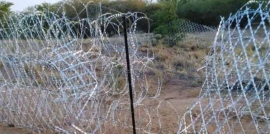
The Special Tribunal has ordered that the companies contracted to construct the 40km long Beitbridge border fence pay back any profits received for the project.
The construction of the fence was done as part of the emergency COVID-19 procurement during 2020 but soon after it was erected; it fell apart – prompting a Special Investigating Unit (SIU) investigation.
The investigation yielded evidence of irregularities in the awarding of the contracts to companies Caledon River and Profteam CC, including advance payments amounting to at least R21 million.
At least R40 million had been set aside for the project.
In her ruling, Judge Lebogang Modiba said the state and public were the “biggest losers” in the case and suggested that state officials also be held accountable for their actions.
“They have been deprived of the variety of public, social and economic benefits that flow from a solid border track at the Beit Bridge border and are saddled with a deficient border fence.
“Further corrective measures lie in holding the officials who designed, approved and implemented the Beitbridge Border Fence Project and its related procurement process and those who failed to take the appropriate steps to enhance the integrity of the fence,” Judge Modiba said.
She added that the order presents fair relief to all the parties involved.
“In the present circumstances, this relief…vindicates the values of fairness, equity, transparency, competitiveness and cost effectiveness that were disturbed when the [companies] were awarded the contracts unlawfully.
“It also entrenches the rule of law by ensuring that while the [companies] are not left worse of as a result of the invalidation of the contracts, they also do not benefit from unlawful contracts,” she said.
SIU spokesperson Kaizer Kganyago said the corruption-busting unit welcomed the judgement, which also ordered the two companies furnish the tribunal with “audited financial statements and debatement of account reflecting their respective income and expenditure in the contracts, supported by expert report.”
“Furthermore, the Special Tribunal ordered that [the companies] payback profits earned within 30 days of submitting the income and expenditure report. In the event of dispute in profits, the parties have been ordered to approach the Special Tribunal for an appropriate order on supplemented papers as necessitated by the circumstances,” he said.
KZN SAPS operations nab 8 600 suspects in February

A series of multidisciplinary operations targeting individual crimes on specific days of the week saw police in KwaZulu-Natal nab over 8 000 suspects, as the province confronts lawlessness head-on.
In a statement, provincial police spokesperson, Lieutenant Colonel Nqobile Gwala, said operations have been conducted in all districts across the province and will continue “as long as criminals engulf our neighbourhoods”.
“During these operations, police utilise various operational concepts such as roadblocks, stop and searches, raids on drug dens, as well as liquor outlets and suspect raids.
“Compliance inspections are carried out on specific entities that are contributing to our crime picture, such as second hand dealers, scrap yards and pawn shops,” said Gwala.
Between 1 and 28 February 2022, police officers across the province arrested 8 628 persons for various crimes.
A total of 2 681 arrests were made for contact crimes. The contact crimes arrests included 139 arrests for murder, 261 for robbery, 209 for rape, 1 780 for assault, as well as 108 for trio crimes (carjacking, house robbery and business robbery). A total of 352 arrests were made for property crimes such as burglary, theft of vehicles and stock theft.
Gwala said dangerous weapons, large quantities of drugs, liquor and counterfeit goods were seized by police during the operations.
A total of 1 839 suspects were arrested for drug related offences and 716 were arrested for liquor related offences in KwaZulu-Natal during this period, while 443 suspects were arrested for driving under the influence of liquor.
Police seized 273 illegal firearms, with 3 269 various rounds of ammunition in operations during the same period. All firearms seized will be subjected to ballistic testing to determine if they were used in any other crime.
Gwala said the increased involvement of communities in community policing forums and other legal crime fighting groups is most welcome, as vigilance is key to breaking the back of crime syndicates.
“During this period, many criminal groups were intercepted by police and security companies as they were prowling the streets with the intention of committing crimes.
“We also urge citizens to continue providing tip-offs to police on criminal activities by contacting your local police stations, as well as Crime Stop on 08600 10111 or by reporting via the MYSAPS App,” she said.
President terminates employment of General Sitole
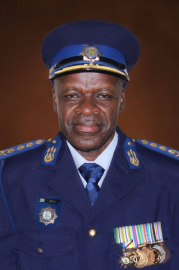
President Cyril Ramaphosa has, by mutual agreement, terminated the employment contract of the National Commissioner of the South African Police Service (SAPS), General Khehla Sitole.
In a statement, the Presidency said this is with effect from 31 March 2022.
“President Ramaphosa and General Sitole have agreed that the early termination of the Commissioner’s contract is in the best interests of the country,” said the Presidency.
The time in the lead up to Sitole’s departure will enable a proper hand over of various tasks, including all ongoing investigations, to one of the senior members of the team at the SAPS, who had been assisting Sitole.
“I am grateful to General Sitole for the constructive discussions we have had over the termination of his position as National Commissioner.
“I wish to convey my appreciation to General Sitole for his service to the nation over many years in the SAPS. I wish him the best in his future endeavours,” said President Ramaphosa.
An announcement will be made in due course on filling of the position of the SAPS National Commissioner following Sitole’s departure.
Sitole was appointed to the post in November 2017.
Forensic company appointed to investigate NSF maladministration, corruption
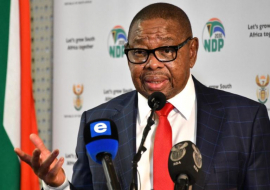
Higher Education, Science and Innovation Minister, Blade Nzimande, has appointed a forensic company to conduct a full-scale forensic investigation into the financial affairs of the National Skills Fund (NSF).
This follows the Auditor-General’s report that found that a large amount of just under R5 billion could not be properly accounted for over two financial years by the National Skills Fund.
The forensic company’s appointment is in addition to the Ministerial Task Team (MTT) appointed by Nzimande to conduct a strategic review of NSF, including general operations of NSF, its efficiency, and relevance with regards to the national skills priorities of the country.
The review also includes the mandate, policy scope and analysis of NSF capacity, systems and organisational modelling, in relation to its mandate as a Schedule 3A skills levy entity.
Nzimande said the MTT held numerous stakeholder engagements from August 2021 to December 2021, ranging from NSF itself, related government departments, labour entities, as well as business and fund beneficiaries also conducting in loco inspections across the country in the sites in which NSF funded skills development projects.
“I expect that the MTT recommendations will clearly outline the strategic role and optimal future functional business model to enable NSF’s catalytic contribution to skills development and innovation in the country, considering the revolutionary changing nature of work and change of dynamic between the world of training and the world of work,” Nzimande said.
The Minister added that work is underway, and the MTT will be providing him the monthly reports regarding its work.
The MTT is expected to present a final report on their findings and recommendations to the Minister in June 2022.
“The current work by the Department of Higher Education and Training will go a long way in responding to the concerns raised by the Standing Committee on Public Accounts (Scopa) and other Parliamentary oversight committees on challenges experienced by the NSF,” Nzimande said.
SAPS PPE corruption accused granted bail

Some 10 people have been granted bail in the Palm Ridge Specialised Crimes Court where they appeared in a matter related to the procurement of Personal Protective Equipment for the South African Police Service (SAPS).
There are at least 15 accused in the case – including former police officials and officers, officers who were still employed by the police and businesspeople.
According to National Prosecuting Authority Investigating Directorate spokesperson, Sindiswa Seboka, the cohort allegedly committed theft, fraud, forgery and corruption in relation to the awarding of SAPS contracts worth at least R1.9 million.
Sebok said bail was granted for accused businessperson, Lorette Joubert, Kumarasen Prithiviraj, Volan Prithiviraj, Maricha Joubert, former police officers Ramahlapi Mokwena, Lesetja Mogotlane, Veeran Naipal, Alpheus Makhetha and Kysamula Mabasa and SAPS clerk Marcell Marney.
“The group was granted bail of R20 000 each. The court ruled that they are to hand over their passports and not be in communication with Muthray and Associates law firm, or the court will not hesitate to revoke their bail.
“The reason for the gang not to reach out to the law firm is because, in another matter, the law firm represented some of the accused and legal services paid for by the company claimed (Siyanqoba) to have unduly benefitted from cover quoting contracts within SAPS,” Seboka said.
Seboka said at least two others were denied bail in the hearing.
“The pair [Kishene Chetty and former police manager Brigadier James Ramanjalum] were denied bail on the basis of having allegedly committed corruption while out on bail in other matters.
“The state did not oppose bail for three [others] who are retired police officer Isaac Ngobeni and serving police officer Stephinah Mahlangu and civilian Salamina Khoza, who were granted bail last week,” she said.
Seboka explained that the accused were nabbed last week in a joint operation by a task team of the National Police Commissioner and the NPA’s Investigating Directorate.
“The arrests follow an investigation into the capture of the SAPS procurement and supply chain to aid front companies to score lucrative contracts and facilitate kickbacks to SAPS senior officials. This is the sixth case by the ID tackling the scourge of corruption within the police service,” she said.
The accused are expected back in court next month.
NPA seized with 37 high profile State Capture cases

Justice and Correctional Services Minister Ronald Lamola says the National Prosecuting Authority (NPA) is currently seized with 37 high profile State Capture cases.
He said this when he participated in the debate on the State of the Nation Address on Tuesday.
“The NPA’s Investigating Directorate is seized with 37 high profile state capture cases, with 14 matters enrolled in court relating to the various sectors it is focused on. In the next month, the Investigating Directorate will be enrolling additional three seminal matters.”
Lamola said in terms of asset forfeiture, the Gauteng High Court granted an order to seize assets worth R1.4 billion belonging to the accused implicated in the corruption scandal involving the construction of Eskom’s Kusile power station.
“In the Bloemfontein High Court, the NPA has been granted an unlimited restraint order to the value of R 520 million for assets in relation to various Gupta-linked companies. A preservation order was filed by the NPA for the Optimum Mine estimated at R8 billion.
“This is on the back of R870 million and R1,1 billion recovered from McKinsey & Company for their involvement in [the] Transnet and Eskom saga respectively, R217 million has been recovered from Bain and Company and the SIU has recovered over R1.5 billion from ABB South Africa,” he said.
Progress made to prosecute COVID-19 related corruption
Lamola said, meanwhile, that the Fusion Centre, established by government to bring together key law-enforcement agencies to tackle COVID-19 related cases, is making headway in the fight against corruption.
“The Fusion Centre, established by government to bring together the key law enforcement agencies to strengthen the collective efforts to prevent, detect, investigate, and prosecute COVID-19 related corruption, has enrolled 45 cases in court with 101 accused facing charges as of January 2022, 16 of these cases have been finalised with a guilty verdict.”
He said the NPA’s Asset Forfeiture Unit has recovered R168 million on COVID-19 related matters.
Lamola also said that the Special Tribunal, announced by President Cyril Ramaphosa in 2019, has recovered R500 million through preservation, review and setting aside orders.
Corruption cases are a top priority

National Director of Public Prosecutions, Advocate Shamila Batohi, says fighting corruption is the top priority of the National Prosecuting Authority (NPA).
The NPA head was updating Parliament’s Standing Committee on Public Accounts (SCOPA) on cases referred to the NPA by the Special Investigating Unit (SIU).
“The work of the SIU is just a fraction of the work, even that relating to corruption that the NPA does with so many priorities. But we have decided that the top priority for the next six months is going to be focusing on corruption. The wheels of justice are beginning to turn with regard to corruption. We are beginning to move slightly more quickly,” she said on Tuesday.
As a result of SIU referrals, the NPA currently has 41 cases on court rolls and there have been 41 guilty pleas. There are 23 other accused persons facing charges in courts, eight warrants of arrest have been authorised and there are a further two matters awaiting a decision.
Batohi reflected on her time in office saying it been an “extremely challenging three years” and acknowledged that the NPA would have preferred to have been “more down the line” when it comes to the number of successful prosecutions.
“What is very clear is that even though we’re not where we want to be, we are far from where we were. There’s been a lot of work that has gone [on] in the past three years and there’s still a lot of work to happen.
“We have a full leadership team at the helm of the NPA and a leadership team that is strongly committed to the rule of law, to accountability and to make sure that we hold people accountable not just for corruption but for all of the…different crime types that the NPA has to deal with,” she said.
Case referrals
The NPA head highlighted that although the SIU is mandated to refer cases to the NPA, the authority itself is not legally mandated to do investigations.
“That is something that we need to look at changing in terms of legislation because the NPA does not do criminal investigations although now with the proclamation of the ID (Investigating Directorate) there are some matters that the SIU has been seized with that the ID is dealing with where they have a mandate to investigate criminally.
“But most of the matters referred to the NPA creates the impression that they are ready for prosecutions and that the NPA must now take a decision to prosecute but that is not the case. As much as the work of the SIU is very important in terms of the link between the work that they did and the criminal investigations that must follow, basically what we do is forward these matters to the [Hawks] to investigate,” she said.
Batohi told the committee that it is “critically important” for different role players within the criminal justice system – including the SIU, the NPA itself and the Hawks – to be “pulling in the same direction” in order to further entrench the rule of law.
“We certainly need better coordination. We need better alignment of our performance indicators and various processes. We do need to all act with a joint sense of urgency.
“The rule of law in South Africa, I think, is on life support at the moment and we need to address this now. In order to do this in the criminal justice system, we need to draw on each other’s strengths and we need to respect the legal mandates of all of us within the criminal justice system which are very different but complimentary,” she said.
Turning to the NPA’s Investigating Directorate, Batohi said the unit is heading into an exciting new era and will be ramping up the fight against corruption.
“As the president said at SONA [State of the Nation Address], the ID is now poised to deliver on its mandate. It has been a very difficult and tough time trying to capacitate and set up the ID. But the fact that the Zondo Commission is now winding up its work…a number of resources are being migrated to the ID which will certainly boost its capacity to be able to deal with these cases much more effectively,” she said.
Eskom employee nabbed for theft

An Eskom employee is facing charges of theft after he was caught allegedly stealing transformer oil and power safety solvent gel at the power utility’s Rosherville premises in Johannesburg.
According to Eskom, the man was stopped by security personnel while attempting to leave the premises.
“The employee was caught…with three full drums of transformer oil, an empty one, as well as six containers of 5 litre power safety solvent gel for which he had no full removal permit. The South African Police Service was called and the suspect was apprehended and taken into custody.
“The Eskom security personnel discovered the theft upon inspection of the removal permit as part of their access control while the employee was attempting to leave the premises with the alleged stolen property. It was discovered that the permit only authorised the removal of two full drums of the oil and two empty ones but it contained nothing about the gel,” the electricity provider said.
The man has since appeared in court and will also face internal disciplinary action.
The power utility recently stepped up security at its premises with added measures such as drone patrolling, stricter access control and using intelligent cameras to track movements.
Eskom Gauteng’s Safety, Health, Environment, Risk, and Quality manager Kith Maitisa said the power provider is committed to fight acts of criminality both internally and externally.
“We are disappointed that one of our own is implicated in the alleged theft. Eskom remains committed to resource optimisation where we ensure that all material is channelled to its intended use. We will continue to heighten efforts to curb material loss and any criminal acts by anyone, including our employees,” he said.
He urged the community to report any electricity related criminal activities to police.
“We continue to urge all those who may be aware of any form of criminal acts by Eskom employees or anyone else, to anonymously alert us by calling the Eskom Crime line on 0800 112 722,” he said.
Tembisa Hospital temporarily closed after fatal shooting

The Gauteng Department of Health (GDoH) has advised members of the public who need to access health care services at Tembisa Hospital today, to visit other health facilities, as the hospital remains inaccessible following a fatal shooting incident.
The incident has left both patients and staff members in shock.
According to the department, patients currently admitted at the facility continue to receive care.
Members of the public will be notified when the facility reopens later today.
Just after 08:00 this morning, a 30-year-old police officer entered the hospital driving a State vehicle with blue lights on and parked at the Accident and Emergency Department’s parking lot.
The man then called his 30-year-old partner, who was on duty at the time, to come to the parking lot. Upon arrival, the police officer opened fire on the Enrolled Nursing Assistant and then turned the gun on himself.
Unfortunately, the nurse died on the scene while the police officer is currently in a critical condition.
Given the tragic incident, Tembisa Hospital is currently not in a position to receive the public into the facility and is diverting calls to nearby facilities.
This will allow the police to work on the scene of the incident and for the debriefing and counselling of both staff and patients.