
Government provides shelter for GBV victims
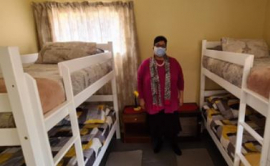
In an effort to respond to Gender Based Violence (GBV), the Department of Public Works and Infrastructure (DPWI) has so far made 12 properties available for shelters for GBV victims.
In a statement on Sunday, Minister of Public Works and Infrastructure Patricia de Lille said six of these shelters are in Gauteng and six are in the Western Cape.
“The department is currently working with officials in the Department of Social Development to identify and allocate more properties for shelters in all provinces. As we commemorate Women’s Month, we must be mindful of the great amount of work still ahead of us to truly realise freedom and equality for women,” the Minister said.
In February this year, President Cyril Ramaphosa launched the Gender Based Violence and Femicide (GBVF) Response Fund1, which is being led by the private sector with R128 million pledged by companies and organised business to fight this scourge.
The GBVF Response Fund1 is part of a national response to gender-based violence and femicide in South Africa.
The GBVF Response Fund was established to allocate financial support to various programmes under the National Strategic Plan to address GBVF such as prevention and rebuilding social cohesion, justice, and protection and safety measures.
During the joint sitting in the National Assembly on the 18 September 2019, the Minister made a commitment that the DPWI would use state-owned properties to install anti-GBVF messaging as a campaign to show government’s solidarity with communities and families who have been affected by this scourge and to demonstrate government efforts in the fight against GBVF.
The anti-GBVF messaging campaign has already started with the first billboard which was placed along Kgosi Mampuru Road in Tshwane and a mural at Manenberg Police Station in Cape Town.
DPWI is working to expand this GBVF advocacy communication campaign to all provinces.
The billboards also publicises the number of the GBV command centre where communities and victims of GBV can get help to ensure that we save more lives and put an end to this scourge.
“My appeal to families and community members is to also work with us and help victims by supporting them and helping them to report abuse as this can save a victim’s life.
“Too often people are afraid to speak out for fear of tarnishing the family’s name but the lives of our women and children is worth more and we must do all we can to protect them and bring those who hurt women to book. We must break the silence and stop protecting perpetrators.
“There must be a firm hand in how we deal with these cases so that we stamp out GBVF and show women that as a whole society, we stand with them and we are all here to protect them,” the Minister said.
CEO of the GBVF Response Fund1, Lindi Dlamini, said the constitutional ideals of a democratic and free South Africa cannot be said to have been achieved if women and children are not living free of fear.
“We cannot be the generation that won freedom, standing on the shoulders of our forebears, and did not use that as a springboard to create an even better future for the next generation.
“Propelled by that goal, the GBVF Response Fund1 will work tirelessly to support the implementation of initiatives and programmes aimed at the effective elimination of GBVF which is such a stain on our young democracy,” Dlamini said.
The GBVF Response Fund 1 has committed to work towards a civilised and liberated South Africa, guided by the National Strategic Plan (NSP) for GBVF.
“The purpose of the NSP is to provide a multi-sectoral, coherent strategic policy and programming framework to strengthen a coordinated national response to the crisis of GBVF by the government of South Africa and the country as a whole.
“It is that purpose that guides the Fund to reach across sectors for their financial and non-financial contribution to fight against the GBVF scourge. We thank Minister Patricia de Lille for honouring her commitment. We commit to work with her, other sectors of government, business and civil society, to find solutions that will help in the eradication of GBVF and restoration of human dignity for all,” Dlamini said.
Relief for looted businesses
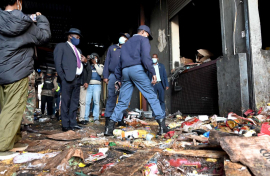
The Department of Employment and Labour has approved the Unemployment Insurance Fund’s temporary relief scheme to assist workers of looted businesses in KwaZulu-Natal and Gauteng.
In a statement on Friday, the department said the UIF’s Destroyed, Affected or Looted Workplaces: Temporary Financial Relief Scheme has finally been approved through the Government Gazette published on Tuesday, 10 August 2021.
“This financial relief scheme has been established to assist workers whose workplaces have been closed due to recent unrest in KwaZulu-Natal and Gauteng, resulting in either reduced pay or no pay at all,” the department said.
According to the department’s estimates, more than 75 000 workers have been impacted by the unrest in both provinces.
The scheme seeks to assist workers in affected businesses. However, every employer who is not yet registered with UIF will have to register first with the UIF to access the benefit.
Qualifying employers will be required to apply on behalf of their employees through a process that the UIF will specify.
The process will enable employers to make bulk applications and they will be required to meet the following conditions:
- The employer must be registered with the UIF;
- The employer’s closure must be directly linked to the destruction, damage or looting of its workplace;
- The employer must provide details of the destruction, closure, or damage to, or looting of, its workplace and submit documentary proof of a report to the South African Police Services, with proof that a case has been opened by providing a case number, and, if insured, proof of submission and acknowledgement of receipt of the insurance claim;
- The employer must confirm in writing or electronically that – he/she accepts the terms of the Scheme herein and any procedure document issued by UIF, and
- Submit any other information that the Minister or delegated authority may require to assess eligibility of claim.
The department said payment of the temporary financial relief may only be done directly into the worker’s bank account, unless the UIF Commissioner specifies the conditions under which payments can be made into the employer’s account.
“The relief will be paid based on the income replacement rate calculated on the sliding scale of 38% -60% based on the employee’s remuneration. The maximum payment will not exceed R6 700 and the minimum will be not less than R3 500.00 per month or a flat rate, as the Minister or Accounting Authority may decide depending on financial considerations of the UIF,” the department explained.
The temporary financial relief is de-linked from the UIF’s normal benefits, therefore the “normal rule that for every four days worked, the employee accumulates a one-day credit, and the maximum credit days’ payable is 365 for every four years, does not apply”.
“This will enable workers who have no credits to receive financial support whilst their workplaces are in the process of rebuilding or reopening. The UIF is earnestly reconfiguring its systems for processing of temporary financial relief claims, and an announcement on the claims process and platforms and the date from which claims can be submitted will be made as soon as possible,” the department said.
Applause for witnesses at State Capture Inquiry

President Cyril Ramaphosa has applauded the commitment and courage of the many witnesses who appeared before the Commission of Inquiry into State Capture and Corruption.
“While there have certainly been systemic failures, governance lapses and errors, the fundamental reality is that state capture happened because certain individuals each made a deliberate decision to engage in acts of corruption and criminality,” President Ramaphosa said on Thursday.
In his closing remarks at the Commission of Inquiry into State Capture and Corruption, President Ramaphosa said despite the evidence presented before the Commission, and despite the excellent work by many investigators, academics and the truly outstanding journalists, the country may never know the true cost of state capture.
“We may be able to establish how much of public funds has been stolen, by how much costs for public goods and services may have been inflated, and what it has cost to investigate these cases and prosecute those responsible,” President Ramaphosa said at his second and last day of him giving testimony at Commission.
President Ramaphosa said it might be possible to quantify the infrastructure and services that could have been provided to the people of South Africa with the funds that were stolen and wasted as a result of state capture.
“We could quantify this in terms of hospital beds, commuter trains, houses, social grants, water reticulation, maintenance of roads and any number of other public goods and services that state capture robbed our people of.
“But what is more difficult to measure is the broader cost to our economy and our society. It is difficult to measure the effect of state capture on business and consumer confidence on the loss of investment. We similarly cannot quantify the impact of state capture on our standing and image internationally,” said the President.
State capture said the President, led to the departure from the public service of highly qualified and experienced people, either because they refused to be part of it or because they presented a threat to those who were part of such activities.
“It is likely that state capture also discouraged many talented young people from joining government, which has significant implications for the public service of tomorrow. By weakening our security forces and law enforcement agencies, the actions associated with state capture placed the security and integrity of our country at risk.
“Perhaps the most devastating and lasting cost of state capture and corruption is its effect on the confidence of the people of South Africa in the leaders and officials in whom they placed great trust and confidence and responsibility,” President Ramaphosa said.
Erosion of confidence in the rule of law
The President said state capture has damaged people’s confidence in the rule of law, in public institutions, in law enforcement agencies and, even to some extent, in the democratic process.
“The people of South Africa look to this Commission to uncover the truth, to identify those responsible and to recommend measures that should be taken against those who are responsible and to prevent it from happening again,” President Ramaphosa said.
The work of the Commission he said will help to make a clear and decisive break with the corrupt practices that have cost the country so much.
“It is important to acknowledge that we would not have reached this point and this Commission would not be sitting now had it not been for the determined actions of South Africans, many of whom marched in the streets of our country protesting against corruption and demanding a clean government.
“It was the people of this country who, in their various formations, stood up to what they saw as acts of gross wrongdoing and abuse of power,” the President said.
He applauded the commitment and courage of the many witnesses who appeared before the Commission to give an account of what went wrong.
“Having born witness to the crimes of state capture, the worst thing we can do is to allow it to ever happen again. We have a shared responsibility to leave the era of state capture firmly behind us, and to act together to prevent corruption in all its forms,” said President Ramaphosa.
Suspect nabbed for R50 000 bribe relating to PPE deal

A 31-year-old suspect appeared in the Nelspruit Magistrates’ court this morning, following his arrest in a joint operation by the Hawks’ national Serious Corruption Investigation and the Special Investigative Unit in Mpumalanga on Monday.
The suspect was arrested after offering and handing over R50 000 to the complainant in order to have a case relating to the Personal Protective Equipment (PPEs) against his sister disappeared.
The case in question is against an official from the Department of Public Works in Mpumalanga.
“The complainant had reported that the individual contacted her and requested to meet.
“They met and the suspect requested the SIU official to make the case disappear. Upon finalizing the amount, the suspect went to collect the money.
“The suspect later returned and upon handing over the gratification, he was arrested,” the South African Police Service (SAPS) said.
Police also found money on the suspect to the value of R63 600 which was seized.
The National Head of the Directorate for Priority Crime Investigation, Lieutenant General Godfrey Lebeya, commended the team members from the SIU and the Hawks for working together to ensure that the Constitution and the Laws of the Republic are protected and upheld.
“Those who try to corrupt our members, will learn the hard way that we have adopted a Zero tolerance approach to corruption,” Lieutenant Gen Lebeya said.
Lesufi dismayed at alleged rape of Grade 1 learner
Gauteng Education MEC Panyaza Lesufi has expressed his anger at the alleged sexual assault of a Grade 1 learner at Khensani Primary School in Soshanguve, Tshwane.
According to initial reports, the incident allegedly occurred on Monday, 02 August 2021, during school hours when a girl learner requested to use the bathroom.
The learner informed her mother the following day that she was allegedly raped by a General Assistant at the school.
“We are disturbed and angered by the allegations of a sexual assault of a Grade 1 at Khensani Primary in Soshanguve. We always strive to make our schools safe havens for our learners and are angry that a young girl has allegedly been raped at one of our schools. We call on everyone with any information that can help in this matter to contact law enforcement agencies,” Lesufi said on Monday.
Lesufi said the department’s psychosocial unit has already visited the school and offered support to the family of the learner.
“We can further confirm that the learner received medical attention and is not back at school yet. A case has been opened with the police.
“We condemn any actions which places our learners in danger and will continue to call on the police to act swiftly on such matters so that we can continue to ensure that our schools are safe for all learners,” the MEC said.
Former Nelson Mandela Bay officers granted bail

Four former Nelson Mandela Bay municipal officers, three company directors and three juristic persons have been granted bail by the Gqeberha New Law Court after appearing on allegations of fraud, corruption and money laundering.
The group was arrested by the Directorate for Priority Crime Investigation (Hawks) for their alleged role in the irregular awarding of a public health tender in the municipality.
“In 2014, the Nelson Mandela Bay metro’s Public Health Directorate awarded a tender to Milongani Eco Consulting CC to do environmental impact assessment. The contract is reported to have been for a duration of three years expiring in July 2017,” said Hawks spokesperson Captain Yolisa Mgolodela on Tuesday.
She said the tariff rate was R350 per hour.
“Further allegations are that, within 24 hours of signing the contract, an invoice of R1 million was immediately submitted and paid by the municipality.
“It is also reported that other numerous payments were made for services that were never rendered thus prejudicing the municipality cash of R26 million. It is further alleged that even interns within the municipality with expired contracts were also paid out of this contract,” she said.
Mgolodela said the suspects were released on bail on Thursday. Bail ranged fromR1000 to R20 000 depending on varying circumstances. The matter was remanded to 28 January 2022.
R50 000 reward for information on police station robbery

The Directorate for Priority Crime Investigation is offering a reward of R50 000 to anyone who can provide information that could lead to the arrest and prosecution of three suspects involved in the Tsineng police station armed robbery.
On Saturday, the armed suspects entered the Tsineng police station in the Northern Cape pretending to file a complaint.
While the police official was busy addressing them, one of the suspects jumped over the counter and pointed a firearm at the official.
The police official was then ordered to open a safe and the suspects managed to flee with eight pistols, three rifles and two shotguns with live ammunition. No shots were fired and no injuries sustained.
Anyone with information is requested to contact the Hawks’ Investigating Officers, Colonel Mgcineni Sityodana on 071 481 2802 or Warrant Officer Modise Bogacwi on 082 495 0819, or alternatively contact the police’s Crime Stop number 0860010111 or use My SAPS App. All information provided will be treated in the strictest confidence.
SAPS making progress in addressing KZN violence
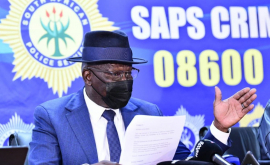
The South African Police Service (SAPS) has made significant progress in dissecting the causes and effects of the recent wanton destruction of infrastructure and business lootings in KwaZulu-Natal, says Police Minister Bheki Cele.
The Minister revealed this while briefing the media on the law enforcement and social cohesion interventions in Phoenix following the chaotic scenes of two weeks ago.
Cele on Tuesday said the SAPS was making strides in bringing to book those who instigated the events that resulted in the death of 342 people in KZN and Gauteng.
He said the calamity in Phoenix was precipitated by “racist vigilantism, as communities sought to protect themselves and their properties from looters”.
During the unrest, Cele said Phoenix and surrounding areas “became the epicentre of heinous criminal and racist incidents, which resulted in brutal killings and injuries, horrendous damage to property and untold pain and trauma”.
“We want to assure the nation that the crimes committed in Phoenix or anywhere else in the country will not go unpunished,” the Minister said.
The wheels of the catastrophe were set in motion on 12 July when the Phoenix community set up blockades and patrolled the neighbourhood streets after the start of mass looting and unrest in Durban.
While initially armed checkpoints were set up at strategic access points, the situation rapidly deteriorated and soon, the streets became scenes of crime.
Cele said the problem was aggravated when some people operating the checkpoints turned to vigilantism, and started to racially profile people, denying them entry into the area.
“This amounted to unlawful discrimination and a restriction of movement for mainly African people.
“According to police reports, a vehicle (bakkie) with no registration plates, carrying looted items, was stopped and searched at one of the checkpoints.”
Cele said four male occupants of the bakkie fired shots at community members.
While four suspects fled into the bushes, four African males sustained gunshot wounds, with one of them dying on the scene.
Their vehicle was set alight.
The Minister said police believe this incident sparked a chain of stoning and burning of vehicles, as well as shootings, stabbings and assaults.
It is alleged that at the road closures in the area, some motorists were robbed and their cars ransacked.
“Irrespective of gender or age, some motorists were allegedly forcefully taken out of their motor vehicles and then assaulted with baseball bats, bricks and sticks.
“Some people were even butchered with bush knives and other sharp instruments. It is alleged that some people were shot and killed, and their vehicles were set alight,” Cele said.
Harrowing accounts of targets narrowly escaping death while trying to enter Phoenix to access clinics and the local pharmacy have been widely shared.
“I have also met with Phoenix community members, who have condemned these savage acts and many are coming forward with information that is assisting police investigations,” Cele said.
The reign of terror claimed the lives of 36 people, revealed the Minister. Of these, investigations show that 30 people died of gunshot wounds. Two were burnt to death; one was stabbed and another run over by a car. Two others died from the brutal injuries they sustained after being assaulted.
Cele said they were investigating 52 cases of attempted murder, and probing nine cases of common assault and 16 cases of assault GBH.
Cele said what happened in Phoenix were “criminal acts of the worst kind, which also took a racial turn”.
“These acts have no place in our society and the perpetrators will be arrested and prosecuted,” he said.
A team of 31 experienced detectives from national and provincial KZN were deployed to investigate, make arrests and attend court cases “to ensure justice prevails”.
To date, 22 suspects have been arrested.
The Minister said some of the suspects were allegedly connected to several murder, attempted murder, malicious damage to property, and defeating the ends of justice cases.
Investigations are also underway to determine the role of private security firms in the violence. The Private Security Industry Regulatory Authority (PSIRA) has seized 152 firearms from four private security companies working in the area. A further 112 illegal firearms have also been seized during police operations in Phoenix.
Investigating the authorities
Also under scrutiny will be the local SAPS response, said Cele.
The South African National Defence Force is providing support to the SAPS and its specialised units, such as Public Order Police, Tactical Response Teams (TRT) and Metro Police daily in the areas of Phoenix, Bhambayi, Zwelitsha and aMaoti.
Cele said: “I want to assure these families that the police will continue their relentless pursuit of the killers and their accomplices. We are committed to upholding the law and seeking justice”.
Stats SA issues scam warning

Statistics South Africa has warned the public of imposters pretending to be fieldworkers from Stats SA.
“The scammers are going door-to-door claiming to be profiling households. They request members of the public to provide their banking details and also to confirm if they have mobile banking apps,” said Stats SA of the scammers targeting communities in Giyani, Limpopo.
It is alleged that some members of the community have been robbed of money by these scammers.
In a statement on Tuesday, Stats SA said it does not ask respondents to provide their banking details or to confirm if they are using mobile banking apps.
“Members of the public are urged to be vigilant and not fall victim to the scam. The organisation has communicated its temporary suspension of all face-to-face data collection due to the latest COVID-19 restrictions,” it said.
This includes the frame update project, in which fieldworkers go door-to-door collecting contact details from households so that Stats SA can use alternative interviewing modes, including computer-assisted telephone interviewing (CATI) and computer-assisted web interviewing (CAWI), to ensure the continued provision of much-needed economic and social statistics.
“We are currently conducting a risk assessment to determine when we can resume face-to-face data collection. The public will be informed once this decision has been finalised,” Stats SA said.
Stats SA fieldworkers can easily be identified through Stats SA-branded bibs, Stats SA ID cards and introduction letters.
To verify that the person at your door is a legitimate Stats SA staff member, you can check online (http://www.statssa.gov.za/Fieldworkerverification/FWVerification.php ), contact the call centre on 0800 110 248, or your nearest provincial or district office.
Work to restore stability in KZN continues
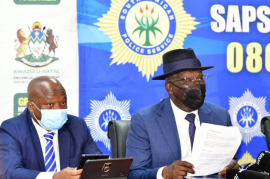
While calm has returned to KwaZulu-Natal following last month’s civil unrest, concerted efforts are underway to resort peace and stability, says KwaZulu-Natal Premier Sihle Zikalala.
In the wake of last month’s violent scenes, which claimed over 330 lives, the province and national government’s security cluster marshalled in resources to restore stability.
“It is our priority to bring peace and stability,” said Zikalala, while updating the public on the law enforcement and social cohesion interventions in Phoenix following the chaotic scenes of two weeks ago. Thirty-six people were killed in the township.
The second priority, he said, was to provide relief and support to the process of rebuilding with “immediate but lasting effect”.
“We are assessing the impact of civil unrest and compiling our comprehensive report to the National Disaster Management Centre,” he said, adding that this would assist and support the provincial government submission for the declaration of the state of disaster.
While figures were not final, Zikalala said costs incurred in various provincial departments was about R2 billion and R34 million for municipalities.
“These figures are not final and are expected to grow as we consolidate our report. In line with what the minister said, ours in his regard is to ensure stability. That must be a program that is sustainable,” he said on Tuesday.
He emphasized the need to build harmony and coexistence among citizens, especially in the area of Phoenix and surroundings.
In 2017, the provincial government hosted the Social Cohesion and Moral Regeneration summit. Since then, a Social Cohesion and Moral Regeneration Council, which includes prominent members of society, had been formed.
The key objectives of this is to develop a comprehensive provincial strategy. The strategy, said Zikalala, would address feelings of marginalisation and exclusion based on race. It would also address the perception that foreign and other African nationals, are benefiting more than local citizens from the economy.
He said that sustainable solutions are needed “to bring about radical socio economic transformation to address socio economic inequalities that prevail”.
Restoring trust
Also speaking at the briefing, Police Minister Bheki Cele said while much ground had been covered on the security front in Phoenix, “crucial work” to rebuild trust between communities is underway.
He extended his appreciation to the work of the Peace Committee that was set up in the wake of the crimes.
The forum consists of members of Bhambayi, Zwelisha, Umaoti, Inanda and Phoenix areas.
He said: “It is these determined and committed women and men who raised their hands to be part of the solution, in the face of adversity.
“They stand together against the divisions sowed among the people of this area.”
The forum worked with the South African Police Service in facilitating the reporting of cases of missing persons.
The Minister said the forum has been at the forefront of assisting bereaved families to identify the remains of their loved ones at the Phoenix government mortuary.
“This Peace Committee is playing a vital role in ensuring that the communities they represent are kept abreast with information at all times. This Peace Committee saw the light at a time when there was only darkness, despair and hopelessness.
Together, they put aside their differences and worked towards the same goal. They have shown us the way forward,” said the Minister.