
Eskom, unions reach wage agreement

Eskom says the wage agreement reached with unions on Tuesday will not immediately alleviate the burden of load shedding on the power system.
The power utility reached an agreement with unions of a 7% pay hike, following more than a week of intense strike action, which plunged the country into stage six load shedding.
“[The agreement] brings the Central Bargaining Forum (CBF) talks and the damaging, disruptive and costly wage dispute to an end, paving the way for a full return to work of all employees.
“Following this agreement, the National Union of Mineworkers (NUM), the National Union of Metalworkers of South Africa (NUMSA) and Solidarity have urged their members to return to work immediately.
“It is important to note that while the workforce is returning to work, the system will still take some time to recover. As a result of the strike, maintenance work has had to be postponed, and this backlog will take time to clear,” Eskom said.
The power utility called on workers to return to power stations and begin work to stabilise the system.
“Eskom also wishes to urge all employees to return to their workstations immediately to relieve the pressure on the system and to deliver the service the people of South Africa expect from Eskom, and to assist in restoring generation performance negatively impacted by the unlawful strike.
“Eskom would like to pay tribute to and thank those many employees who keep going beyond the call of duty and continue to make personal sacrifices to help keep the lights on during this very challenging time,” the power producer said.
Meanwhile, the power utility has announced that load shedding will be reduced to stage five from 4pm to 10pm on Wednesday and Thursday.
The revised schedule is as follows on Wednesday:
- Stage 4 from 5am to 4pm
- Stage 5 from 4pm to 10pm
- Stage 4 from 10pm to midnight
and on Thursday:
- Stage 2 from midnight to 5am
- Stage 4 from 5am to 4pm
- Stage 5 from 4pm to 10pm
- Stage 4 from 10pm to midnight
eThekwini residents brace for load shedding

Communities in the eThekwini Municipal area will have to brace for the start of load shedding after Eskom announced that it plans to implement the power cuts as soon as possible.
Some areas in the municipality have thus far been exempt from load shedding following damage to electricity infrastructure during flooding in the area in April.
The two entities released a joint statement clarifying the steps to be taken in the implementation of load shedding.
“The municipality has agreed on the process for the soonest implementation of load shedding to assist Eskom to mitigate the risk of a national grid collapse. The municipality has further assessed the long term strategy to implement load shedding as soon as possible to the equivalent load as was the case prior to the [flooding] disaster,” the joint statement read.
According to the statement, following several meetings, the power utility and the municipality have agreed on the following:
- The eThekwini Municipality’s electrical network and water infrastructure is in an extremely vulnerable state and additional risk needs to be managed very carefully.
- The municipality is committed to implement load shedding in a safe and sustainable manner in consultation with Eskom when the national grid is at risk.
- If for any reason, after load-shedding in the first few instances, a negative impact on the electrical and water infrastructure is deemed to be unacceptably high, the municipality will engage with Eskom immediately.
- The municipality has already begun to perform all the required planning to ensure that the above can be executed.
- The Energy Regulator of South Africa (NERSA) will be kept informed of the status of the eThekwini Municipality network.
Studies have shown that the municipality lost between 700 to 800MW of power on their electrical infrastructure during the floods which continues to be unavailable until extensive repairs can be conducted.
“[There] is agreement that the integrity of the electrical infrastructure was so severely compromised that if parts of the infrastructure and loads were to trip either through a manual intervention (load shedding) or an electrical fault, it is possible and likely that the Municipality grid could be even more damaged, thus further lengthening the duration of the outage.
“Both Eskom and eThekwini Municipality are mindful that further electrical damage would severely compromise the Municipality’s current water rationing program. [However], as a responsible organ of state, the municipality agrees on the need to implement load shedding for the purposes of grid stability.
“Both Eskom and the municipality commit to assess the progress regularly and to work closely to minimise risk to the municipality and the grid,” the statement read.
Communities urged to unite against GBV

KwaZulu-Natal Social Development MEC, Nonhlanhla Khoza, has urged society to unite against the continued murder of women in the province.
“It is imperative for the communities not to be silent, but isolate all those involved in gender-based violence (GBV) cases,” Khoza said.
Khoza made the call outside the Camperdown Magistrate’s Court, where police officer Mthokozisi Nene made a brief appearance in connection with the death of his wife.
Nene, 44, allegedly shot and killed his wife Thobeka MaMsomi Nene during an argument at their family home in Inchanga, west of Durban, two weeks ago.
Khoza, including Member of the Provincial Legislature James Nxumalo, the deceased’s two daughters and community members, were among the people who attended the court case on Monday.
The MEC said men should lead from the front in all campaigns aimed at curbing the scourge of GBV.
Nene was denied bail and the case was postponed to 13 July 2022.
Khoza applauded the court for denying bail to Nene, saying that such people should remain in custody for the duration of the hearing of their court cases.
“We were pleased that they considered a lot of aspects in this case. It is clear that the murder was premeditated. We are saddened by this situation, where children lost their mother at the hands of their father,” Khoza said.
She added that it was unthinkable that anyone would consider taking the life of their partner, especially a person who is supposed to provide support to the family.
“A police officer also has a responsibility to protect the community, but this one was heartless. He took the law into his own hands and allegedly shot dead an innocent woman in full view of her children,” the MEC said.
She expressed concern at Nene’s lack of remorse in court, as he had not surrendered the firearm he allegedly used to murder his wife to the police.
“We are disturbed that our children have been robbed of a teacher, but our social workers will provide school children, the deceased’s biological children and the family with psycho-social support. We are pleased that the community has come together to oppose bail for this man. We will continue to monitor this case until it comes to an end,” she said.
Nxumalo urged law enforcement agencies to do everything within their powers to ensure that the perpetrator of this heinous crime remains in prison.
“He has to face the full might of the law,” Nxumalo said, adding that she wants men who commit GBV to be held responsible and the killing of women and children avoided.
Protect children from alcohol, drug abuse

President Cyril Ramaphosa has called on civil society, government and communities to come together to fight the scourge of underage drinking in South Africa.
This in the wake of the tragedy in which 21 young people – some as young as 13 – died at the Enyobeni Tavern at Scenery Park in the Eastern Cape in the early hours of Sunday morning, recently.
In his weekly letter to the nation this morning, the President said the growing trend of underage drinking is not only illegal but also psychologically and physically detrimental.
“The increased social acceptability of young people drinking alcohol has become a serious problem in a country where the majority of the drinking population are already classified by the World Health Organisation as binge drinkers.
“Alcohol use amongst adolescents is associated with impaired function, absenteeism from learning, alcohol-related injuries, suicidal thoughts and attempts, and risky behaviour,” he said.
Investigations into the tragedy by the South African Police Service and the Eastern Cape provincial government are already well underway.
“We must come together to combat this vice that is robbing our young people of the best years of their lives and making them susceptible to alcohol addiction.
“As families it means having open and frank conversations about alcohol and setting boundaries. Children under the age of 18 consuming alcohol is against the law.
“As adults we should refrain from practices such as sending minors to buy alcohol for us or capitulating to requests to buy these young people alcohol,” President Ramaphosa said.
The President acknowledged that the abuse of alcohol by children “is a form of escapism” in communities where “opportunities for safe and age-appropriate recreation are few”.
“In the wake of the tragedy, the community has pointed out that there are no viable sports grounds, community libraries or youth centres in Scenery Park.
“As government at national, provincial and local level we need to respond to the pleas of this community and those of other communities by developing more recreational spaces, facilities, programmes, and projects for our young people in disadvantaged areas in the province,” he said.
President Ramaphosa reiterated his call for all South Africans to come together against alcohol abuse in children.
“As communities we must work with our Community Policing Forums, with our civic organizations and with our school governing bodies and play a more active role in the lives of our children and in ensuring their safety and well-being.
“Let us work together to protect our precious future generation from the ravages of alcohol and drug abuse and their effects.
“Let us work together to ensure that those who put profit before the lives of our children are not allowed to operate. Let us also set a positive example in our own relationship with alcohol,” he said.
Various stages of load shedding for the week

Eskom has announced that various stages of load shedding will be implemented throughout the week with generation capacity shortages expected.
The power utility has been battling to keep the lights on with violent strikes at its power stations exacerbating the electricity supplier’s troubled circumstances.
“As the generation capacity shortages persist over the next few weeks, load shedding will continue to be implemented at various stages. Eskom cautions the public that it will still take a few weeks for the power generation system to fully recover to pre-strike levels,” Eskom said.
By Monday morning, Eskom reported that it currently has more than 21 000MW of energy unavailable due to planned maintenance and breakdowns.
“Depending on several possibilities, including the workforce fully returning to work to conduct much-needed repairs to equipment, it is anticipated that load shedding will gradually be lowered to Stage 2 by the weekend. Of course, Eskom will communicate and implement any changes as may be necessary,” Eskom said.
For Monday, stage 4 load shedding will be implemented until 4pm with stage 6 immediately following that until 10pm this evening.
From 10pm until midnight, stage 4 load shedding will return.
On Tuesday stage 2 will be in force from the early hours of the morning to 5am.
Stage 4 will then be implemented until 4pm, also followed by stage 6 until 10pm and a drop down to stage 4 once again until midnight.
“Eskom would like to remind the public that load shedding is implemented only as a last resort to protect the national grid. We therefore urge all South Africans to continue using electricity sparingly, especially during these uncertain times on the power system.
“Eskom thanks all workers who have reported for duty and who continue to perform diligently under extremely challenging conditions,” the power utility said.
CPI reaches 6.5%

Annual consumer price inflation (CPI) reached 6.5% in May, Statistics South Africa (Stats SA) has revealed.
The figure is a 0.7% increase from the 5.9% in April and March.
Stats SA said the increase breaks through the upper limit of the South African Reserve Bank’s monetary policy target range.
This is the highest reading since January 2017 when the rate was 6.6%, it said.
The impact of fuel prices
In a statement, the agency said transport and food and non-alcoholic beverages (NAB) accounted for just over half of the annual rate, with sharp price increases recorded in both categories.
“Fuel, in particular, continues to be a major contributor. If the impact of fuel is removed from the CPI reading in May, the headline rate falls to 5.1% from 6.5%.
“Diesel prices jumped by 8.1% between April and May, taking the annual rate to over 45%. The average price of a litre of diesel in May 2021 was R16.20 – meaning it cost R729 to fill a 45-litre tank. Twelve months later, with the average price at R23.67 per litre, filling the same tank cost R1 065.”
Petrol prices moderated between April and May, edging lower by 0.7%. Despite this decline, petrol is almost 27% more expensive than it was in May 2021, reads the statement.
Cooking oil prices continue to soar
During this period, prices for food and NAB jumped by 2.1% between April and May, representing the largest monthly increase since February 2016 when the monthly rise was also 2.1%. At that time, the country was experiencing a severe drought.
“The oils and fats product group continues to witness sustained levels of high inflation. The annual rate was 26.9% in May, representing the 17th month that the rate has been above 10% (since December 2020). Prices jumped by 10.1% between April and May, representing the first time since 1997 that the monthly rate was above 10%.
“Sunflower oil, the product with the highest weight in the oils and fats group, is almost 40% more expensive than it was a year ago. Prices jumped by 16.1% between April and May,” said Stats SA.
The monthly rate for bread and cereals was 3.4%, taking the annual rate to 8.4%. Maize meal recorded a monthly increase of 5.1% and a loaf of white bread was 3.7% more expensive.
Stats SA said annual meat inflation remained above the 6% mark since November 2020, with the reading for May 2022 at 9.4%. Prices for individually quick frozen (IQF) chicken portions and stewing beef increased by 13.7% and 12.2%, respectively, in the 12 months to May.
Stage 2 load shedding until midnight

Eskom says due to the breakdown of four generation units this morning, contributing to the capacity constraints, Stage 2 load shedding will be implemented today from 10:00 until midnight.
Starting tomorrow until Sunday night, Stage 2 load shedding will be implemented from 05:00 until midnight.
According to Eskom, there is likelihood that the stage of load shedding might need to be increased during the evening peaks.
“Eskom will continue to closely monitor the system, adjust and communicate any changes as may be necessary. We appeal to all South Africans to help limit the impact of shortages by continuing to reduce the usage of electricity and to switch off all non-essential items,” Eskom said in a statement.
A generation unit each at the Kendal and Matimba, as well as two units at the Matla Power Station broke down this morning. This reduced generation capacity by 2 400MW adding to the ongoing capacity constraints.
There has been a delay in returning to service a unit at Kusile Power Station which is now expected to return to service tomorrow.
“We currently now have 3 630MW on planned maintenance, while another 2 277MW of capacity is unavailable due to breakdowns,” Eskom said.
Eskom cautioned the public that as the shortage of generation capacity persists, the system will continue to be constrained with an elevated risk of load shedding over the coming weeks.
“We would like to remind the public that load shedding is implemented only as a last resort to protect the national grid. We therefore urge all South Africans to continue using electricity sparingly especially between 05:00 – 10:00 in the mornings and 16: 00 – 22:00 in the evenings,” Eskom said.
PRASA addresses concerns of traders
The Passenger Rail Agency of South Africa (PRASA) says it is clamping down on traders who lease out their allocated space at its stations to people who should not be trading.
This comes after allegations made in the media by someone who purports to be a member of Operation Dudula claiming that South Africans are excluded from trading opportunities at its various premises/stations.
In a statement on Tuesday, PRASA said it works with various informal trading associations to provide informal businesses and micro entrepreneurs with trading opportunities at various PRASA stations.
“Informal Traders belong to an association that liaise with PRASA on behalf of its members. Demarcation and allocation of trading space is done by PRASA. To trade at our facilities one would need to be registered with an association.
“It has also come to our attention of a practice where some traders lease out their allocated space to people who should not be trading on the spaces. We are clamping down on this practice through our own internal processes,” the agency said.
Recently the PRASA board approved the PRASA Informal Trading Policy, which seeks to further regulate the allocation of demarcated spaces and improve on the spatial areas where informal trade is allowed within the confines of the laws of the country and the Conditions of Carriage that set out the Terms and Conditions of using our premises.
“We are currently engaging all relevant stakeholders about the policy. PRASA supports economic development initiatives and will not discriminate micro entrepreneurs based on their race, gender, or nationality.
“However, only people who meet the criteria can operate on our spaces and the policy will ensure that any acts of illegality or criminality are prevented. PRASA has no control over trading spaces on other public spaces outside of our premises.
“It is within the ambit and jurisdiction of the said Metros and Municipalities to regulate public spaces outside of PRASA’s jurisdiction,” the agency said.
Progress made in water, power supply restoration in KZN

KwaZulu-Natal Premier, Sihle Zikalala, says substantial progress has been made in restoring water and power supply in areas affected by the recent floods.
“The Inner West Region is almost 90% restored. The Outer West Supply has improved from 45% to 95%. The Central Region has improved from 45% to 85%. The South Region has improved from 15% to 85%, while the North Region supply has moved from 15% to 60%,” Zikalala said on Tuesday at a briefing.
Zikalala expressed his gratitude to the Gift of the Givers foundation, which has donated 14 boreholes, with 11 already having been drilled.
However, the Premier noted that while the restoration of water and electricity has reached over 90% overall, there remains a number of hotspots in the province.
“In Ilembe, KwaDukuza Water has no supply to the power generation plant due to plant repairs and this is affecting Shakaville and Lindelani. Mbozamo is still on the operating rule of closing water at night,” Zikalala said.
The Premier reported that the construction and restoration work on uThongathi Water Treatment Works is expected to take up to four months, with completion in September this year. He said a budget of at least R30 million has been allocated.
eThekwini Municipality, Zikalala reported, has availed a number of mobile and static water tankers (for self-collection) to service affected communities.
Reviving the economy
With regard to the development of flight routes, Zikalala said the province’s recovery plans have been severely hampered by the recent closing down of British Airways and Kulula.
He, however, welcomed the report by the Department of Economic Development, Tourism and Environmental Affairs — under MEC Ravi Pillay — that hotel occupancy rates are gaining traction and recovering from the recent floods.
Zikalala assured that water challenges at King Shaka International Airport have been addressed and long-term plans are in place to increase water supply through boreholes to insure against any future emergency.
Repairs are also underway to key attractions such as the Mandela Capture Site, the two world heritage sites – Howick Falls and the beachfront – as part of the recovery and reconstruction process.
“The Bayhead Road repairs are progressing very well, with the execution of earthworks now in full throttle. Bluff Road is being used for fuel cargo in the interim, and we are pleased to note that the container terminal has addressed its entire backlog and has released 100% of the delayed imported cargo,” the Premier said.
With regard to rail infrastructure, Zikalala said the Passenger Rail Agency of South Africa (PRASA) has announced plans to resume the Umlazi service line on 1 September and KwaMashu line on 9 September 2022.
Cell phone networks, Vodacom and MTN, which were affected by the floods, have also reported that over 80% of damaged infrastructure is now back in operation.
However, the Premier said the telecommunications sector has raised its concerns about ongoing vandalism of its infrastructure, and the repair of roads and electricity supply to speed up the restoration of communication services.
On support for business, the Premier announced that the provincial Economic Development and Environmental Affairs Department is leading the provision of funding to 394 businesses that have applied for assistance, which is currently valued at R196 million.
“The applications are mainly from companies in the agriculture, services and manufacturing sectors,” said Zikalala.
Transport infrastructure
Zikalala said damage to KZN transport infrastructure from the recent floods amounts to R6 billion, including the M4 and R102.
He reported that the South African National Defence Force is installing bailey bridges, while the KZN Department of Transport (DOT) is leading a massive project called Valamapotholes (patching potholes programme), working together with municipalities.
“In the medium-term, 730 key projects have been approved throughout the province to be implemented through emergency procurement, which includes the closure of potholes and repairs to damaged roads. KZN DOT has submitted 49 bridge sites to the national Department of Public Works for consideration for the bailey bridges programme.
“The Department of Agriculture and Rural Development is assisting households and farmers with regard to soil testing services, provision of lime, fertilisers, tools, fencing, water tanks, re-gravelling and repairing damaged roads and the construction of culverts. The objective is to resuscitate livestock operations on affected farms and support sugar cane, and the implementation of biosecurity measures,” Zikalala said.
Over 20 unidentified bodies not collected after KZN floods
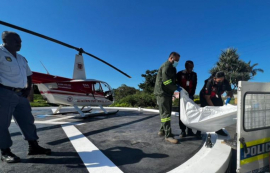
A total of 85 280 people have been affected by floods which wreaked havoc in KwaZulu-Natal, leaving thousands of people in five districts and eThekwini Municipality homeless, and 461 fatalities.
Giving an update on the progress made by the province following the April and May flood disasters, KwaZulu-Natal Premier Sihle Zikalala reported that 23 unidentified bodies with DNAs are still not collected.
“A total of 87 people are still reported missing. There are 6 895 people homeless and 50 injured. In all, a total of 27 069 households were affected with 8 584 houses totally destroyed and 13 536 partially destroyed.
“During the disasters we rescued a total of 249 people alive through our search and rescue operations. We currently still have on the ground a total of 3 941 teams involving the SANDF [South African National Defence Force], SAPS [South African Police Services], disaster teams and Road Traffic Inspectorate teams involved in the sectoral responses to this disaster,” Zikalala said.
Zikalala said the demobilisation, especially in the SANDF will happen in a phased manner, but the specialised teams including the engineers and others will remain behind.
The Premier added that while search continues for missing people, the Department of Justice and Correctional Services is being engaged on the process of presumption of death, where it is proven that “we have no prospects to find the missing persons alive”.
However, he said this would be used as the last resort to assist the families to find closure.
R25 billion to repair damaged infrastructure networks
Zikalala announced that the cost of the flood damage is officially at R25 billion, affecting mainly infrastructure networks, manufacturing and agriculture.
“The impact of the floods on eThekwini has been massive and we believe that while we attend to the entire province, we should speed up our response in eThekwini because this is where we are to make the greatest impact on reversing the destruction,” Zikalala said.
He said the settlements located close to rivers and waterways in the coastal areas, including informal settlements, were among the most affected, especially those located in poor terrain.
“We have learnt through a joint study by the eThekwini Metro and the Council for Scientific and Industrial Research that 1.3 million people live within the flood line in the city. We are also told that 33.2% or more than a quarter of all dwellings in the city are informal structures and this excludes rural dwellings.
“This poses a major challenge to the recovery programme and calls for a long-term approach which will protect our communities from such emergencies in future,” the Premier said.
Major progress in rehabilitation and reconstruction
The Premier also highlighted that major progress has been made to get the province fully back on its feet, and now entering the second stage, which is to restore infrastructure and revive the economy.
“While immediate humanitarian relief has been secured, we are certain that all affected persons are safe and that their basic needs have been met. The focus has now shifted to stabilisation, rehousing people who have lost homes and restoring provision of services as well as rehabilitation and reconstruction (Building Back Better) programme.
“This will involve the construction and repair of major infrastructure. It will also involve the construction of permanent houses in suitably located areas and measures to protect the residents of these areas from such adverse weather events in the future,” Zikalala said.