
Scrap metal export ban a boost for Transnet

Transnet says government’s ban on the export of scrap and waste metal will go a long way in the fight against metal theft.
Government recently announced that the six-month ban is aimed at making it difficult for criminals to sell stolen copper cables and other metals.
State-owned companies (SOCs) such as Transnet, Eskom and PRASA [Passenger Rail Agency of South Africa] have become a target for metal and cable thieves, costing South Africa’s economy billions of rands annually.
“We are pleased that government has acted decisively against the scourge of metal theft, which doesn’t just plague Transnet. Transnet Freight Rail [TFR] has a rail network infrastructure of 30 400 km in track, and theft and vandalism of our infrastructure results in delays on the system and possible derailments.
“TFR has long viewed this as economic sabotage. Since 1 April 2022, there have been more than 377 export coal trains cancelled due to security incidents, which is about an average of 11 trains a week. Whilst this is an improvement compared to the 2021/22 financial year, the security solution is not sustainable,” the SOC said.
Transnet revealed that since the beginning of the financial year, it has lost some 742km of cable to criminality.
“Transnet has received assistance from coal customers in funding security on the North corridor from Ermelo to Richards Bay. This allowed the company to deploy additional security task teams and drones. As a result, there has been a 30% reduction in security incidents. However, the security incidents have not reduced sufficiently to completely reduce the impact on train cancellations.
“The announcement by government will go a long way to mitigate the security challenges experienced by TFR and industry. TFR looks forward to government’s finalisation of a more permanent legislative solution to curb cable theft,” the company said.
SA needs R1.5 trillion for Just Energy Transition

South Africa requires an initial funding of about R1.5 trillion to transition to a low carbon and climate resilient society for the five-year period 2023–2027, says Presidential Climate Commission (PCC) Commissioner Joanne Yawitch.
Addressing a hybrid Special Sitting on Understanding the contents of South Africa’s Just Energy Transition Investment Plan (JET-IP) on Thursday, Yawitch said achieving the JET IP outcomes is dependent on the scale and nature of financial support that South Africa can secure from the international community to complement domestic resources.
“At the 26th Conference of the Parties (COP) in 2021, a Just Energy Transition Partnership (JETP) was forged with France, Germany, United Kingdom, the European Union, and the United States (forming the International Partners Group [IPG]) in which the IPG undertook to mobilise US$8.5 billion (~ ZAR 128 billion) over five years to support South Africa’s Just Energy Transition.
“The initial IPG offer of US$8.5 billion is thus a catalytic contribution towards addressing the JET IP priorities,” she said.
The IPG funds will be primarily directed towards the electricity sector for the decommissioning of coal plants; the expansion and strengthening of the transmission grid and distribution infrastructure; supporting economic diversification in affected coal mining areas and the deployment of renewable energy.
The IPG US$8.5bilion offer comprises grants, concessional and commercial loans, and guarantee instruments, contributing to approximately 12% of South Africa’s JET IP funding needs for the period.
“South Africa’s dependence on fossil fuels gives rise to a range of climate, energy and transition risks, especially for affected workers, communities, businesses and exporters.
“However, embracing new economic opportunities in green technologies can drive industrial development and innovation, leading to a sustainable and resilient future with decent work, social inclusion and lower levels of poverty,” Yawitch said.
The JET IP represents the initial building blocks of managing South Africa’s Just Energy Transition and climate response, which will be a managed, phased, long-term process of economic, social, and environmental change.
It will involve multi-year, multi-sectoral, and multi-jurisdictional initiatives with many stakeholders, including significant capacity building to manage the scale of the Just Energy Transition.
“Implementation must be based on solid foundations for a sustained, focused, and visible effort across government, civil society, trade unions and the private sector that can adapt as needed over time. It will be grounded in existing South African institutions and systems and will adopt both local and global best practice,” Yawitch said.
The JET IP is premised on South Africa’s National Development Plan (NDP) 2030, with its focus on tackling the country’s systemic challenges of poverty, inequality, and unemployment.
It is in line with South Africa’s updated Nationally Determined Contribution (NDC) which was lodged with the United Nations Framework Convention on Climate Change (UNFCCC) prior to its 26th Conference of the Parties (COP 26) in Glasgow in November 2021, and South Africa’s long-term Low-Emissions Development Strategy (LEDS) submitted to the UNFCCC in 2020.
The NDC commits the country to reducing its emissions to within a range of 420-350 megatons carbon dioxide equivalent (MtCO2-eq) by 2030.
Official unemployment rate decreases
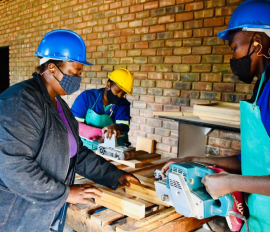
The official unemployment rate has slightly decreased by one percentage point to 32.9% in the last quarter of 2022, with some 204 000 job gains during the last quarter – a year-on-year decrease of about two percentage points.
This is according to Statistics South Africa’s Quarterly Labour Force Survey released by the agency on Tuesday.
“The number of unemployed persons decreased by 269 000 to 7.7 million and discouraged work-seekers also decreased by 54 000 to 3.5 million in the third quarter of 2022 compared to the previous quarter.
“The number of people who were not economically active for reasons other than discouragement increased by 264 000 between the two quarters, resulting in a net increase of 210 000 in the not economically active population.
“The above changes in employment and unemployment resulted in the official unemployment rate decreasing… from 33.9% in the second quarter of 2022 to 32.9% in the third quarter of 2022.
“The unemployment rate, according to the expanded definition of unemployment, also decreased by 1 percentage point to 43.1%. This is reflective of the fact that people were available for work but did not actively look for work.
“All provinces recorded a decrease in the expanded unemployment rate, except in the North West, Limpopo and Free State, where it increased by 4.1 percentage points, 2.4 percentage points and 0.5 of a percentage point respectively.
“The largest decrease was recorded in KwaZulu-Natal (down by three percentage points), followed by Western Cape and Gauteng (down by 1.8 percentage points each) and Mpumalanga (down by 1.6 percentage points),” Stats SA said.
Stats SA emphasised that although youth unemployment also recorded a 1% decrease, this group still remains vulnerable.
“The third quarter of 2022 results continue to show that the youth (aged 15 – 34 years) remain vulnerable in the labour market, with an unemployment rate of 45.5%. The total number of unemployed youth decreased by 182 000 to 4.6 million in [the third quarter]. There was an increase of 25 000 in the number of employed youth during the same period,” Stats SA said.
According to Stats SA, employment gains were recorded in several industries, which brought the total number of employed persons in South Africa up to some 15.8 million.
“[Some] 204 000 jobs were gained between the second quarter of 2022 and the third quarter of 2022. The total number of persons employed was 15.8 million in the third quarter of 2022.
“Manufacturing (123 000), Trade (82 000), Construction (46 000) and Transport (33 000) recorded the largest job gains, while job losses were recorded in Finance (80 000), Private households (36 000) and Mining and Agriculture (1 000) each. Sectors that recorded job increases were the formal and informal, with 235 000 and 6 000 respectively,” Stats SA said.
Nearly 40 million children ‘dangerously’ susceptible to growing measles threat – WHO

Measles vaccination coverage has steadily declined since the beginning of the COVID-19 pandemic, the new World Health Organisation (WHO) and United States Centres for Disease Control and Prevention (CDC) reports revealed.
According to the joint publication, a record high of nearly 40 million children missed a measles vaccine dose, of which 25 million children missed their first dose and an additional 14.7 million children skipped their second dose in 2021.
“This decline is a significant setback in global progress towards achieving and maintaining measles elimination and leaves millions of children susceptible to infection.”
In 2021, according to the WHO and CDC, there were an estimated nine million cases and 128 000 deaths from measles worldwide.
Meanwhile, the research found that 22 countries experienced large and disruptive outbreaks.
Declines in vaccine coverage; weakened measles surveillance; continued interruptions and delays in immunisation activities due to COVID-19; as well as persistent large outbreaks in 2022 mean that measles is an imminent threat in every region of the world.
In South Africa, Limpopo recorded 52 cases since the beginning of the measles outbreak.
This comes after the National Institute For Communicable Diseases of South Africa declared a measles outbreak after three cases from two healthcare facilities were reported in the same district in October.
“The paradox of the pandemic is that while vaccines against COVID-19 were developed in record time and deployed in the largest vaccination campaign in history, routine immunisation programmes were badly disrupted, and millions of kids missed out on life-saving vaccinations against deadly diseases like measles,” said WHO Director-General, Dr Tedros Adhanom Ghebreyesus.
“Getting immunisation programmes back on track is critical. Behind every statistic in this report is a child at risk of a preventable disease.”
According to the two organisations, the situation is grave.
Measles is one of the most contagious human viruses but is almost entirely preventable through vaccination.
“Coverage of 95% or greater of two doses of measles-containing vaccine is needed to create herd immunity to protect communities and achieve and maintain measles elimination. The world is well under that, with only 81% of children receiving their first measles-containing vaccine dose, and only 71% of children receiving their second measles-containing vaccine dose.”
These figures, according to the institutions, are the lowest global coverage rates of the first dose of measles vaccination since 2008, although the coverage varies by country.
Meanwhile, no WHO region has achieved and sustained measles elimination.
Since 2016, 10 countries that had previously eliminated measles experienced outbreaks and re-established transmission.
“The record number of children under-immunised and susceptible to measles shows the profound damage immunisation systems have sustained during the COVID-19 pandemic,” said CDC Director, Dr Rochelle Walensky.
Delays increase the risk of measles outbreaks, so the time for public health officials to accelerate vaccination efforts and strengthen surveillance is now.
CDC and WHO urge coordinated and collaborative action from all partners at global, regional, national, and local levels to prioritise efforts to find and immunise all unprotected children, including those who were missed during the last two years.
Gordhan denies claims about DA access to Kusile Power Station

The Department Public Enterprises Minister, Pravin Gordhan, is accusing the Democratic Alliance (DA) of “political grandstanding” over the electricity crisis by attempting an unplanned visit to the Kusile Power Station on Wednesday.
This comes after DA leader, John Steenhuisen, said he was disappointed with government after he was denied access to Eskom’s Kusile Power Station in Mpumalanga.
However, according to the department, once informed that Steenhuisen was en route to the power station for an unplanned visit, Gordhan called him as a matter of courtesy, to facilitate a constructive engagement.
“I explained to him that Eskom senior management is busy with important board engagements today. I am willing to make myself available to brief him,” explained Gordhan.
The Minister, according to the department, then suggested that arrangements could be made for such a visit with a full briefing and for the necessary protocols to be complied with.
“The DA Members of Parliament in various portfolio committees and the Standing Committee on Public Accounts (Scopa) have on several occasions undertaken visits to Kusile and Eskom facilities and are fully aware of the security arrangements and protocols to be followed prior to visiting national key points.”
The department has since denied claims that the Minister blocked Steenhuisen’s visit to the power station and that the assertions were “misleading and not true”.
Meanwhile, according to the department, normal parliamentary processes require a request to be sent to the Minister of Public Enterprises to inform Eskom timeously to make the necessary arrangements and ensure the safety of all people.
DA, according to the department, did not use normal procedures to request a visit to the Kusile Power Station in line with National Key Points Act and parliamentary protocols.
“It is quite clear that this is a DA grandstanding that has nothing to do with the energy crisis confronting the country, nor do they have any solutions for the energy crisis except criticism,” said Gordhan.
“We have previously debated with the DA indicating that the issue of electricity crisis must be treated as a national issue and should not be used as a party-political football in any shape or form,” the Minister added.
Crime against women remains “worryingly high” – Cele

Police Minister Bheki Cele has once again raised concern at the country’s alarming rate of crimes against women and children.
This after Quarter 2 of 2022 crime statistics saw a double-digit percentage increase for murder, attempted murder and assault GBH [grievous bodily harm] against women. The Minister on Wednesday released the statistics, which reflected the country’s crime trends between July and September 2022.
Addressing media, Cele said the rate at which women are abused, violated and killed in South Africa remains worrying and unacceptable.
“Many are killed by the people they know, people they love and trust,” he said.
In the reporting period, Cele revealed that over 13 000 women were victims of assault with intent to cause grievous bodily harm.
While 1 277 women were victims of attempted murder, 989 women were murdered during this reporting period.
Rape
Over the three months, the Minister said over 10 000 rape cases were opened with the South African Police Service (SAPS).
“From a sample of 8 227 rape incidents that were perused, it was determined that 5 083, which is 62%, of these incidents occurred at the residence of the victims or perpetrators. [A total of] 1 651 of the rape incidents occurred at public places such as streets, parks and beaches,” the Minister said.
At least 69 people were raped at abandoned buildings.
The Minister said Mpumalanga was the only province to report a decrease in rape incidents.
“Inanda police station in KwaZulu-Natal, Mthatha in the Eastern Cape and Delft in the Western Cape are the three top stations with the highest rape cases.
“Buses, taxis, trains and other modes of public transport were the third most likely places of occurrence for rape incidents,” Cele said.
Women and children
The Minister said the statistics were indicative of communities that continue to fail to protect children.
Shockingly, in just six months, 558 children were killed in South Africa between April to September 2022.
In this regard, Cele said police were investigating 294 attempted murder dockets opened between July and September 2022.
A total of 1 895 assault GBH cases, with children as victims, were opened with the police during this reporting period.
“It is on this note that the SAPS continues to prioritise gender-based violence (GBV) related crimes,” said the Minister.
FCS cases
Between July and September this year, the FCS [Family Violence, Child Protection and Sexual Offences] unit arrested 4 375 perpetrators of crimes committed against women and children.
“Police traced and arrested 410 rapists during this reporting period. Sixty-eight of them have been sentenced to life behind bars,” Cele said.
The Minister said it was very encouraging that the Criminal Justice System continues to send a strong message of zero tolerance to rape through the stiff sentences handed out to rapists.
“It is clear that the broader civil society, religious organiaations and various community structures must sharply address the causes and preventative measures of crimes against women and children.”
Cele said the Ministry remains extremely concerned about rape at educational premises.
Over the three-month reporting period, 83 rapes occurred at educational facilities, including schools and tertiary institutions.
“One needs to take into cognizance that educational facilities refer to the scene of the crime and should not be interpreted to imply that all perpetrators and or victims were pupils or students,” he said.
Alarmingly high aggression, violence fueling murder rate

Aggression and violence are at worrying levels in South Africa, crime statistics reveal.
This reality was emphasised in the 2022 second quarter crime statistics released by Police Minister, Bheki Cele, on Wednesday.
“Violence meted not only against women and children, but violence playing out in homes, on our roads and even inside public safe spaces such as churches and schools, is staggering,” the Minister said.
The quarter, which spans from July to September, saw a record number of assault cases reported to the police in five years.
Over this period, 7 004 people were murdered in South Africa.
“Arguments, misunderstandings and incidents of road rage and provocations accounted for 956 murders in the country,” he said.
The Minister revealed that vigilantism claimed the lives of 528 people, while 362 people were killed during the commission of a robbery.
“Inanda and uMlazi police stations in KwaZulu-Natal and Nyanga in the Western Cape registered the highest counts of murder during this period,” he said, adding that 274 counts of murder were reported in those three areas combined.
He said the high murder rate can also be attributed to multiple murders, where two or more people were killed in one incident.
SAPS is investigating 250 dockets of multiple murders, with 578 victims. This included the mass shooting at Mdlalose tavern in Soweto, where 17 people were killed in July in a single shooting incident.
Police have since arrested five suspects for their role in that shooting.
The Minister said KwaZulu-Natal recorded the highest number of multiple murders, followed by Gauteng and the Western Cape.
“Equally, the police in the three provinces continue to make arrests and bring the gunmen and their handlers to book. Police operational responses nationwide, should continue to remove guns that are in the wrong hands,” he said.
During this period, 22 police officers were killed during July to September 2022, this is two members less compared to the same reporting period last year.
“It is on this note that this Ministry will never stop calling on SAPS members to defend themselves at all times from ruthless criminals whenever they are under attack. It is quite simple; police must meet fire with fire!” he said.
In the three months, Cele revealed that police investigated 85 640 assault GBH [grievous bodily harm] and common assault cases.
Of these 12 203 assault GBH cases, most took place behind closed doors – either at the home of the victim or the home of the perpetrator.
The second most likely place of occurrence for assault GBH was at public places such as streets, open fields, recreational centers or abandoned buildings.
A total of 6 662 assault GBH cases were domestic violence-related.
SAPS is clearing DNA backlog
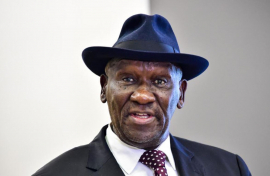
The South African Police Service (SAPS) continues to take big steps towards ending the DNA backlog at our forensic service laboratories, says Police Minister Bheki Cele.
This was on Wednesday revealed by the Minister while releasing the second quarter 2022 Crime Statistics.
Addressing reporters during a press briefing, Minister Cele said: “The prioritisation project of court ready cases, where there are outstanding forensic reports, continues to gain momentum.”
He said teams from the SAPS and the National Prosecuting Authority (NPA) were working together with agility and have, to date, processed 17 410 court ready gender-based violence and femicide (GBVF) cases.
“This is an increase of over five thousand cases, since the last crime statistics were released in August. The DNA backlog at all SAPS laboratories currently stands well below the 70 000 mark. This number is decreasing with each day, due to the strong interventions in place at forensic service labs countrywide,” he said.
He said while new DNA specimens were coming in for analysis, the assurance has been made to the Police Ministry that the SAPS would meet its deadline of clearing the DNA backlog.
“We have truly come a long way since the DNA backlog was first discovered at our forensic service laboratories in May 2021.
“Daily work and interventions continue, to ensure the SAPS never goes back to the dark days, where the DNA backlog reached levels of over 200 thousand cases,” said the Minister.
He said all hands were on deck to capacitate and empower the forensic service laboratories to deliver a quality service for all South Africans.
Fight against cancer gets a boost in sub-Saharan Africa

The National Cancer Registry (NCR) has been named one of three IARC-GICR Collaborating Centres for sub-Saharan Africa by the International Agency for Research in Cancer (IARC) Global Initiative for Cancer Registry Development (GICR).
The World Health Organisation (WHO) has identified common childhood cancers and cervical cancer as global priorities.
While 80% of children diagnosed with cancer in high-income countries survive, only 20% of children with the disease in low and middle-income countries survive.
The WHO has made childhood cancer a global priority to reduce these disparities and improve cancer outcomes for children.
The NCR, a division of the National Health Laboratory Service (NHLS), said cervical cancer is the most common cause of cancer death in women in South Africa and sub-Saharan Africa.
The NCR serves as South Africa’s main source of national cancer incidence data.
The WHO has launched a global strategy to eliminate cervical cancer, which involves increasing human papillomavirus (HPV) vaccination in girls to 90%, twice-lifetime cervical screening to 70%, and treatment of cervical pre-cancer and cancer to 90%, also known as the 90-70-90 cervical cancer elimination strategy.
“As the IARC-GICR Collaborating Centre, the NCR will be responsible for building capacity for childhood cancer registration in cancer registries in sub-Saharan Africa.
“The NCR will also be responsible for training cancer registries on linking patient records from HPV vaccination registers, cervical cancer screening registers and cancer registries for monitoring the progress of cervical cancer elimination in sub-Saharan Africa,” the NICD explained.
Acting Head of the NCR, Dr Mazvita Muchengeti, said: “Our data systems for HPV vaccination, cervical cancer screening, diagnosis, treatment and death registration are fragmented.”
She believes that these need to be harmonised to accurately measure progress towards cervical cancer control and to make policies that work in sub-Saharan Africa.
“A global and regional partnership, along with the mobilisation of networks for sharing knowledge and experiences, is crucial to cervical cancer control.”
As a part of reducing global disparities in the survival of children with cancer, Muchengeti said data-driven policies are needed.
“Every child with cancer should be counted and the stage at which the cancer is diagnosed so that we can adequately allocate resources to control childhood cancer.”
Umalusi appoints panel to investigate matric math question

Umalusi, the Quality Council for General and Further Education and Training, has established a three-member independent panel to investigate the reasons that led to the inclusion of the “problematic” Question in the 2022 matric final Mathematics Paper 2.
The National Senior Certificate paper was written on 7 November 2022.
Umalusi on Monday said the panel was specifically tasked to investigate how the error crept in and why it was not detected between the examiners, internal and external moderators up to the printing stage.
In a statement, Umalusi spokesperson, Biki Lepota, said: “In other words, the focus is on the entire value chain: all the processes that the question paper was subjected to during the stages of its development, quality assurance and printing.
Chaired by Penelope (Penny) Vinjevold, the three-member panel inlcudes Professor Sudan Hansraj and Professor Nic Heideman.
Lepota said the panel has the mandate to fully investigate the matter and submit its final report to Umalusi.
“The report will be shared publicly on 16 January 2023 during the media briefing on the approval of the release of the 2022 examination results of the different assessment bodies,” he said.
Umalusi CEO, Dr Mafu Rakometsi, said: “Umalusi wishes to restate two points. The first is that the investigation will in no way delay the release of the NSC results. As per the approved schedule, the results will be approved on 16 January 2023 by the Executive Committee (EXCO) of Umalusi Council and the Minister of Basic Education will release the results to the public on 19 January 2023.”
Secondly, he said Umalusi “wants to reassure the public that it will do everything humanly possible to ensure that no candidate is disadvantaged by the error in Question 5.1”.
In order to allow the due process to unfold unhindered and to protect the independence of the work of the panel, Umalusi will answer questions on this matter when the report is released to the public on 16 January 2023.