
eThekwini Municipality vows to continue search for missing employees

eThekwini Municipality Mayor, Mxolisi Kaunda, has vowed that the municipality will do everything in its power to assist the families in searching for missing municipal employees.
The two municipal employees went missing and presumed drowned following the heavy rains and flood over the weekend.
The two men are believed to have been on duty over the weekend when they went missing, and their vehicle has been spotted in a river near Osindisweni.
According to Kaunda, the city learnt of the incident on Monday, and the search and rescue operation commenced.
“The vehicle they were travelling in was spotted. Search and rescue teams then went into the water to investigate. Unfortunately, there were no occupants inside.
“The team then resolved to search around the vehicle. However, due to strong currents that were posing a serious threat to the lives of the divers, the search operation had to be aborted,” Kaunda said.
The Mayor has assured the families of the employees that the city’s search and rescue teams have been looking for them and the team will not stop until they are found.
“[On Tuesday], the teams embarked on an aerial search with no success. The search is continuing, and the city will keep the families abreast of developments,” Kaunda said.
Stronger community partnerships needed in fight against crime
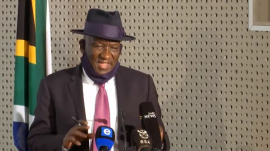
Police Minister, Bheki Cele, says the fight against crime requires a healthy relationship between the police and the communities they serve.
The Minister dedicated his Budget Vote speech on Tuesday to rebuilding and strengthening community relations in the fight against crime when he appeared before a mini-plenary of the National Assembly on Tuesday.
“We are advocating for progressive change. Communities must be able to say these are our police and the police must equally embrace communities and continue to serve and protect,” he said.
Cele said Community Policing Forums (CPFs), business and the police must establish and maintain a partnership with the community, and promote communication between the police and the community.
“[They] furthermore [must] promote cooperation and ensure that the police fulfil the needs of the community in respect of policing, improve the service of the police to the community, improve transparency and accountability of the SAPS, and promote joint problem identification and problem solving.
“The philosophy of community policing is not new. In fact, it has been proven that the more involved law enforcement is with the residents they are sworn to protect, the more residents can help police achieve their goals of reducing crime.”
To date, there are currently 772 functional CPFs countrywide.
Cele said the death of over 300 people during the week-long lawlessness in July last year will remain one of the darkest times in the country’s democratic history.
He said the unrest called for clear reforms of security services and at the same time, exposed the divide between the police and the communities they serve.
“The police needed the community and the community needed the police. But it was clear community policing was at its weakest and there was little to no trust between the police and the communities.
“The July 2021 unrests that engulfed South Africa posed a serious security threat to the country’s economy and highlighted some security gaps in intelligence-driven collaboration between the private security industry and other government law enforcement agencies.”
The Minister said in responding decisively to the July unrests, a total of 19 instigators of violence were arrested including those who meted out untold brutality to another race group, under the disguise of defending their community and property during the unrest.
“To date, 36 suspects have been arrested for their alleged respective roles in the murder of 35 people and 31 people have been arrested for attempted murder in Phoenix.
“Meanwhile, the Private Security Industry Regulatory Authority [PSiRA] has conducted an analysis to determine what went wrong and what needs to be improved in terms of the private security industry’s involvement as a force-multiplier in the fight against crime and the protection of the country’s economy.
“PSiRA believes that a concerted effort in building relations between the industry and other law enforcement agencies in terms of information gathering and sharing will go a long way in preventing similar incidents in the future.”
Cele said in line with the many improvements to follow, the collaboration of PSiRA, SAPS and the State Security Agency will see the authority launching a mandatory counter-terrorism awareness campaign in the form of 40 hours of training for the private security industry in the next two quarters of this financial year.
“PSiRA and SAPS will collaborate to ensure a practical working relationship between the private security industry and State Security agencies, in line with the established and existing partnership frameworks.”
National Minimum Wage: No major negative impact on employment

Employment and Labour Minister, Thulas Nxesi, says ever since its inception, the National Minimum Wage (NMW) has not, contrary to assertions, had any negative impact on employment.
Nxesi said this when he tabled the department’s budget vote during a mini plenary of the National Assembly on Tuesday.
“Contrary to the opposition’s belief that the introduction of the minimum wage would have a negative impact on employment levels, the research findings indicate that there is no major negative impact on employment as a result of the National Minimum Wage,” he said.
The National Minimum Wage Act was assented to in November 2018, setting a historic precedent in the protection of low-earning, vulnerable workers in South Africa. This also provided a platform for reducing inequality and the huge disparities in income in the labour market.
Nxesi said, meanwhile, that the recent 6.9% adjustment of the National Minimum Wage, which increased rates from R21.69 to R23.19 per hour effective 1 March, 2022, would benefit tens of thousands of domestic workers.
This is, he said, applicable to all sectors, including the farming and domestic work sectors.
“This increase will benefit about 892 000 domestic workers who are overwhelmingly women, and 800 000 farmworkers.”
Support for desperate job seekers
The Minister said, meanwhile, that the department’s Public Employment Services branch — which drives the implementation of labour market policies, including the provision of free career counselling, job placement, retraining and up-skilling — strives to create an enabling environment for employment.
“At an operational level, the Department of Employment and Labour continues to provide support to many desperate work seekers. For the period April 2021 to 28 February 2022, 839 000 work seekers were enrolled by the department on its Employment Services of South Africa system, and 257 000 work seekers were provided with employment counselling services by the department’s employment counsellors.”
Nxesi said 124 000 job opportunities were canvassed with employers, and 59 000 unemployed work seekers were placed in employment opportunities.
“It is important that this service is utilised across the economy and across the public sector.”
eThekwini Municipality works speedily to restore key services

eThekwini Municipality Mayor, Mxolisi Kaunda, has called upon residents to be patient as the municipality works speedily to restore key services, following heavy rains over the weekend.
Kaunda conducted a tour of Umdloti to assess the extent of the damage following heavy rains that have damaged homes, roads and other infrastructure in the north coast community, particularly in Umdloti.
“We had to prioritise visiting uMdloti given the severity of the damage in this area. Our water treatment plant has been damaged and this will affect our ability to provide water to residents in this area,” Kaunda said.
He said municipal emergency services remain on high alert, even though the intensity of the rain in most areas of eThekwini has now subsided.
“Various municipal teams are working round the clock to assist communities and to restore key services,” Kaunda said.
About 190 people evacuated
The Mayor reported that teams had to evacuate some residents overnight, as the rain continued to damage the city.
“Rain gauge and river level analysis were undertaken continuously to identify vulnerable and high-risk areas. Most rainfall was experienced over north and central areas of eThekwini with Bluff and Umdloti receiving high levels of rainfall.
“A family in ward 40 was evacuated to Kwa-Nozaza temporary mass care centre after their house collapsed. About 190 people were relocated from Tehuis to SJ Smith Hall. Mattresses and blankets were provided as a temporary relief,” Kaunda said.
Elderly residents in two retirement homes in Tongaat and Westbrook were also relocated to safety on Saturday night after their homes were affected. However, Kaunda said many of them have since returned to their homes.
Kaunda also noted that various roads have been damaged with some affected by mudslides.
He said that teams were dispatched to remove rubble, trees and mudslides.
“The amount of rain was extensive and as such the drainage systems were severely affected. Despite this, some roads have re-opened for traffic,” the Mayor said.
Over 80 care centres accommodating displaced people
Kaunda said the relief interventions are ongoing to ensure that all community halls with displaced people are receiving adequate relief assistance, social support services and medical assistance.
Currently, he said, there are 82 care centres accommodating displaced people across the city.
“Our health teams continue to provide health services to care centres, including the newly established centre at SJ Smith. Food, non-perishable items, clothing, blankets and matrasses are available to assist those in need.”
Electricity infrastructure still vulnerable
Kaunda said that there has been several outages throughout the city caused by the heavy rains; however, many of them have since been attended.
“Electricity infrastructure is still vulnerable since the April floods and any amount of rain can cause further damage to it. Electricity teams are prioritising fault repairs across the city, especially those faults that affect large areas.
“The Water Treatment Works in Umdloti was flooded. Areas such as Mosely Park, Gillits and KwaNdengezi are also affected by water outages. We are still assessing whether these heavy rains had an impact on the work we had already started in oThongathi,” the Mayor said.
Durban transport operating at full capacity
Meanwhile, Kaunda assured that Durban Transport is operating at full capacity, even though some areas are affected by road closures.
“In such cases there will be detours. The People Mover service is operating normally,” Kaunda said.
Racism still a feature of everyday life in SA – President Ramaphosa

President Cyril Ramaphosa has used his weekly newsletter to the nation to speak against racism which is still part of the daily South African experience.
This comes after the Stellenbosch University urinating incident where a white student is seen in a video degrading and humiliating a fellow black student by urinating on his study material.
This incident caused widespread anger that such acts still take place in a country with a bitter past like South Africa, a past which the country fought so hard to overcome.
The President said it is more troubling that such incidents are happening at schools and places of higher learning, adding that a number of the people involved were born after the end of apartheid.
“While the incident at the University of Stellenbosch may seem like an aberration – an appalling act that has been roundly condemned – the truth is that racism is still a feature of everyday life in South Africa. The sooner we recognise that reality, the sooner we can change it,” the President said.
President Ramaphosa said that racism, here and around the world, is driven by feelings of superiority on the part of those who perpetuate it.
Athough racism can be directed against anyone, he said it is black people who bear the brunt, both in the past and in the present.
“As the ‘Black Lives Matter’ movement has so strongly asserted, we need to systematically dismantle and eradicate attitudes of white superiority,” he said.
The statesman said that it was encouraging and exhilarating to see young South Africans taking the lead in the effort to systematically eradicate racism.
He said that the thousands of students who have joined protests at Stellenbosch and elsewhere were not responding to just one incident but were responding to a deep and pervasive problem in society, which they themselves have to confront daily.
Ending racism
“Ending racism is not just about changing attitudes; it is also about changing the material conditions that still today separate black and white South Africans.
“We have come too far and the sacrifices made have been too great for such appalling acts of racism to turn us against each other. Rather, we must use this incident to confront the issue of race and racial inequality in our society,” he said.
President Ramaphosa said that it is government’s wish and expectation that the student population and the broader Stellenbosch university community, both black and white, find each other and rally together to confront racism honestly with courage and truthfulness.
“They must roundly reject what has happened and express their determination to achieve a learning environment free of bigotry, racism and chauvinism and embrace a non-racial future for Stellenbosch University. By so doing they will set the standard for us all,” he said.
The President further referenced a 2016 judgment on a case involving an employee of the South African Revenue Service who was fired for using the k-word at work, where Chief Justice Mogoeng Mogoeng wrote: “There are many bridges yet to be crossed in our journey from crude and legalised racism to a new order where social cohesion, equality and the effortless observance of the right to dignity is a practical reality”.
“If we are going to cross these bridges, we need to understand what is causing racist attitudes to flourish in our schools and places of higher learning. We need to understand what kind of institutional cultures contribute to racism in the workplace, in social organisations and in communities,” President Ramaphosa said.
Frank and honest dialogue needed
He said that the country needs frank and honest dialogue between people of different races on the experiences of black people in South Africa 28 years into democracy.
“These discussions should be part of the life orientation curriculum in our schools. The arts and culture community should produce content and programming that fully reflects the diversity of the country and the lived experiences of people of all races.”
The President said that greater emphasis should be placed on inculcating tolerance and respect for diversity in the classroom from a young age.
He added that parents should be part of this effort because the reality is that racist, chauvinistic and sexist attitudes among the younger generation are often a reflection of what they observe and learn from their parents and older relatives at home.
“As many student leaders who took part in protests over the past week said, when it comes to transformation the time for half-measures is over.
“This doesn’t only apply to overt racism in schools, workplaces and places of higher learning, but to all of society. Just as racists must be held accountable for their actions, all sectors of society, including business, must advance transformation,” he said.
Rights to equality and human dignity
President Ramaphosa also touched on the rights to equality and human dignity which are the cornerstones of our Constitution. He said that building a non-racial and non-sexist society is everyone’s shared fundamental responsibility.
“In complying with employment equity legislation, in advancing broad-based black economic empowerment, in taking practical steps towards redress and undoing the legacy of our discriminatory past, we are not just obeying the law.
“We are redressing a grave injustice and building a new country in which race, class and gender no longer determine the circumstances of one’s birth or one’s prospects in life,” the President said.
Load shedding expected throughout the week

State power utility Eskom has announced a further week of stage two load shedding following the continued shortage of generation capacity at its power stations.
The electricity supplier has been battling breakdowns and the slow return to service of some of its generation units for the past two weeks leading to load shedding from about 5pm to 10pm daily.
“While there may be instances where load shedding might need to be implemented outside of these hours, as far as possible, Eskom will endeavour to limit the implementation of load shedding to the evening peak in order to limit the impact of the capacity shortages on the public,” Eskom said in a statement.
On Sunday, the power utility said it has at least 18 000MW of capacity unavailable due to planned and unplanned outages.
“Eskom will continue to closely monitor the system, adjust and communicate any changes as may be necessary. We appeal to all South Africans to help limit the impact of load shedding by reducing the usage of electricity and to switch off all non-essential items,” the statement read.
The electricity supplier urged consumers to continue to use electricity sparingly as it continues to battle power station breakdowns.
“Eskom would like to remind the public that load shedding is implemented only as a last resort to protect the national grid. We therefore urge all South Africans to continue using electricity sparingly especially between 5am to 9am in the mornings and 4pm to 10pm in the evenings,” Eskom said.
Cable theft at Hendrina linked to load shedding

Public Enterprises Minister Pravin Gordhan says the incident of cable theft at the Hendrina Power Station, by people suspected to work at the plant, is along with several other incidents the reason that millions of South Africans have had to sit in the dark this week.
Gordhan said this when he tabled the department’s Budget Vote at a plenary of the National Assembly on Friday.
“I was informed by the management of Eskom this morning that yet another incident has taken place at the Hendrina Power Station, where an important cable which is required to start a unit that was undergoing repairs and to get it synchronised with the rest of the system was cut.
“So these flexible copper bars which are required to synchronise this unit to the rest of the power infrastructure was stolen next to the generator and the reactor earth bars, as they are called, were also stolen by obviously people working within the power station,” he said.
This comes as Eskom has implemented stage 2 load shedding every day between 17:00 and 22:00 this week, with this escalating to stage 3 on Tuesday.
Gordhan this incident, along with other incidents, was the reason most South Africans found themselves without electricity this week.
“These are among other revelations that have occurred over the past few days – the corruption with the supply of oil, the cable that was cut at another power station a few days ago – these are all directly related to the load shedding that we experience today over and above other operational issues.
“I thought it was important that the public is aware of some of the challenges we face, something that I will return to,” he said.
Gordhan said the acts of “the greedy, the corrupt, the bully, the counter-revolutionary set back our progress as a democracy and stop us from becoming a caring nation”.
“While they sit back to enjoy their spoils, the damage they cause is borne by our communities – by workers, by small businesses, by the unemployed and youth
Now is the time for all of us to join the ranks of those who want to build a better future and better institutions and not just point fingers among us.
“Now is the time to care for the hungry, the marginalised, those in despair. Nothing can destroy the might of an organised people driven by a clear vision and who take their destiny into their own hands and change the course of history,” said Gordhan.
Eskom taking urgent steps to improve generation performance
Gordhan said Eskom’s generation is underperforming with the Energy Availability Factor languishing at 58%, as opposed to the target of 75% set out in the IRP2019.
Eskom is taking urgent steps to improve the performance of generation.
“Daily production and oversight meetings are held to hold power station management accountable for performance. An operations excellence initiative is also in place to identify the major causes of underperformance and to make improvements.
“At selected power stations war rooms will be set up to ensure that production challenges get tackled in a systematic way,” the Minister said.
He said a skills mentoring programme, using highly experienced power station managers, has been launched.
“This team will be deployed to power stations where load losses are particularly severe.”
Load shedding Friday, Saturday and Sunday evenings

Eskom has announced that stage 2 load shedding will be implemented from 17:00 – 22:00 on Friday, on Saturday and on Sunday evenings.
“Due to the continued shortage of generation capacity, stage 2 load shedding will be implemented from 17:00 until 22:00 tonight. Load shedding will be repeated at the same time on Saturday and Sunday evenings.
“Eskom will continue to closely monitor the system, adjust and communicate any changes as may be necessary,” said the state utility on Friday.
Eskom currently has 3405MW on planned maintenance, while another 15534MW of capacity is unavailable due to breakdowns.
The state-owned entity reminded the public that load shedding is implemnted only as a last resort to protect the national grid.
Eskom appealed to all South Africans to help limit the impact of loadshedding by reducing the usage of electricity and to switch off all non-essential items.
“We therefore urge all South Africans to continue using electricity sparingly especially between 05:00 and 09:00 in the mornings and 16:00 – 22:00 in the evenings.”
More beds to address overcrowding at corrections centres

Justice and Correctional Services Minister Ronald Lamola says despite a decrease in overcrowding at corrections centres, the system remains under pressure and projects to add more beds are near completion.
He said this when he tabled the department’s budget vote during a mini-plenary of the National Assembly on Thursday.
“Overcrowding in our facilities continues to be a perennial challenge that requires holistic attention in terms of crime deterrence by our communities. For as a long as people continue to commit crime, we are thus left vulnerable to possible overcrowding in correctional centres.
“Although there has been a reduction in the inmate population over the years, the correctional system remains under pressure,” he said.
Lamola said over a period of five years, from 2015/16 to 2020/21, the department has recorded a reduction of 12.99%.
In real figures, there was a shift from 161 984 to 140 948.
“Sadly, there are spikes that we often encounter. What cannot be avoided is the fact that overcrowding is brought by external factors to Correctional Services.”
Lamola said the construction of additional bed space at Parys has achieved 85% completion and is scheduled to be finalised during the 2023/2024 financial year.
“This upgrade project will provide an additional 176 bed spaces,” he said.
The upgrade and refurbishment of the Emthonjeni Youth Centre will regain a total of 640 bed spaces and transform the centre into a state-of-the-art Integrated Security Systems facility.
“This project is scheduled for completion during the 2022/23 financial year.”
Lamola said another milestone is the refurbishment of the Umzimkulu Correctional Centre which was finalised during the 2021/22 financial year. The facility will be operationalised during the current financial year.
“Work is also continuing when it comes to the welfare of our officials. The Waterval Management Area was struck by a Tornado in 2019, leaving serious destruction to the centre and the residential area of our officials.
“As a result, the officials whose houses were damaged became displaced and had to be relocated elsewhere on the terrain.
“We are pleased to announce that the refurbishment of 42 staff houses will be finalised during the month of June 2022.”
Damage to KZN companies estimated at R7 billion
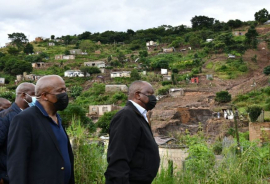
A survey by the Department of Trade, Industry and Competition has revealed that at least 826 companies were affected by the recent floods in KwaZulu-Natal, with the cost of the damage estimated at R7 billion.
KwaZulu-Natal Premier Sihle Zikalala said on Thursday the top three districts that had the biggest impact included eThekwini Municipality with 239 companies responding, accounting for 50.6%, followed by iLembe with 87 companies, accounting for 18.43%, and the Ugu District with 54 companies accounting for 11.44%.
He said the floods had affected 31 220 jobs with eThekwini accounting for 68% of the jobs affected.
“The damage to Toyota has resulted in their temporary closure in the Durban South basin, an estimated 30 000 employees across the manufacturing industry are out of work currently. This means that employees could be without pay for approximately three months, given the severity of damage at Toyota South Africa.
“We are, however, very encouraged by the decision and the commitment of Toyota globally and other businesses to rebuild and build back better here in KwaZulu-Natal despite the setbacks and losses to business caused by the floods. Recovery priorities include working with the private sector to ensure a disaster-proof rebuilding process,” Zikalala said.
The Premier was addressing the media on the provincial government’s effort to recover and rebuild from the devastation caused by the floods.
Improvements in port operations
Zikalala announced that port operations are being improved, but are affected by the rest of the network in the province.
Currently, two lanes on Bayhead Road are open and operational while the repairs to the road are being carried out.
“Unfortunately, rail in the port area is damaged and will be back in operation in July 2022. There is consideration to open a new road along the railway line to ease movement of cargo.
“Electricity and water challenges around the port are affecting many companies and until there is progress on roads feeding into the M7, we will be affected by costly delays at the Port of Durban,” Zikalala said.
However, operations at King Shaka International Airport are back to normal with the Dube Trade Port providing water tinkering by utilising its own equipment and sourcing water from their own dams.
“As a result, the much-publicised water crisis at King Shaka, a strategic location especially for the tourism sector, has now thankfully been resolved,” he said.
R67.5 million to support SMMEs
On small, micro and medium enterprises (SMMEs) support, Zikalala said measures are being implemented to assist spaza shops in townships and implementing tourism sector interventions, and SMME relief for infrastructure.
“For this purpose, the Department of Economic Development, Tourism and Environmental Affairs is repurposing R67.5 million towards the SMME and Co-Ops Relief Fund, as approved by Provincial Treasury.
“The Fund will prioritise township and rural businesses, and informal traders in eThekwini Metro, Ilembe, King Cetshwayo and uGu Districts.
“In this regard, the Executive Committee has approved the application to National Treasury for the release of R1 billion funding for immediate needs while awaiting the appropriation of the rest of the disaster funds. This is to cover the shelter support, human settlement interventions, water and sanitation interventions, roads and relief,” Zikalala said.
High voltage sub stations restored
The Premier also reported that all high voltage sub stations have been restored, with some work still in progress on low and medium voltage faults.
He noted that eThekwini alone had in excess of 100 power stations that were severely affected by the floods, leaving many parts of the city in darkness.
“Power supply interruptions are being experienced in areas such as KwaNdengezi, Zwelibomvu and Marrianridge almost daily. This is caused by an electricity overload.
“The city has advised that work at the Marianridge substation to resolve this problem is expected to be completed in the next two weeks,” he said.
R125 000 donor funds received
Meanwhile, Zikalala announced that as at 15 May 2022, a sum of R125 000 has been donated through a dedicated bank Account number: 4103831039 with ABSA Bank, opened by the province.
“Of this amount R100 000 is specifically earmarked for the Department of Health [and] the balance of R25 000 will be used towards the rebuilding process. The bulk of donor funding has been sent directly to NGOs and can be accounted for by the NGOs.
“The Human Rights Commission and the United Nations Coordinating Office in South Africa will work with NGOs to ensure that citizens receive a report on who did what with the donations earmarked for the people affected by floods.
“There were many announcements made by various corporate companies and all of us will need to account and be transparent about what we did and how the money earmarked for flood victims in KwaZulu-Natal in 2022 was spent,” Zikalala said.