
Cele commends R400m cocaine bust

Police Minister, Bheki Cele, has commended the recent arrest of three men for the possession of a cocaine consignment valued at R400 million in the Western Cape.
The three were arrested by the Directorate for Priority Crime Investigation (Hawks), together with Crime Intelligence and Western Cape Traffic, while they were travelling on the N1 towards Cape Town.
Ministry spokesperson, Lirandzu Themba, said the consignment was in a truck that was intercepted and large quantities of drugs were found concealed in false wooden boards, stacked at the back of the truck.
Cele, together with Provincial Commissioner Lieutenant-General Thembisile Patekile, on Monday attended the first court appearance of the three men, aged between 39 and 47, at the Athlone Magistrate Court.
Cele said the drug bust will mean more crimes associated with drugs are prevented.
“Police are often accused of being reactive and clearly this is a demonstration that police are tightening crime prevention and are being proactive. The Western Cape police have really done a great job in terms of removing over 600kg of cocaine, worth millions of rands, before they could be sold on our streets. These drugs are often generators of crime and are most detrimental to our communities, especially to our youth,” he said.
The Police Ministry welcomed the continuous, targeted operations led by crime intelligence and the Hawks in the province to disrupt the whole illicit drug supply chain.
“Communities are encouraged to continue to come forward with information that can assist police investigations,” said Themba.
New app to tackle potholes

Transport Minister, Fikile Mbalula, has encouraged the public to report potholes on municipal and provincial roads on a newly launched app in order to enable government to repair them speedily.
Addressing the launch of Operation Vala Zonke – a comprehensive programme to address potholes across all spheres of government, the Minister said the app can be downloaded on Google Playstore and the Apple App store.
“The app will work in conjunction with the South African National Roads Agency SOC Ltd (SANRAL) pothole management app and will allow the public to raise any issues, upload pictures of potholes, and provide real-time location of the road on an interactive map that will show the owners of the different roads. The app will also provide status updates on issues raised using a pothole ticketing system.
“The information then gets assigned to the relevant authority, depending on where the road is, and the maintenance depot responsible for that road attends to fixing the pothole,” Mbalula said on Monday in Vanderbijlpark, Gauteng.
As the implementing agency for this campaign, SANRAL will closely monitor and assess the impact of the interventions over the next six months, which is the duration of the campaign.
A monitoring and evaluation capability has been put in place. This will enable SANRAL to generate audit reports, which will form the basis for validation of the work undertaken and the turnaround time in attending to potholes.
“Through this intervention, we are raising the bar on service delivery by ensuring that the voice of the citizen is heard. This campaign will change the face of our municipal and provincial roads from pothole-riddled to an acceptable state of repair. This launch will be replicated across the country with Premiers and MECs leading provincial launches,” the Minister said.
SANRAL will co-ordinate the effort of working with the provinces and municipalities to ensure potholes are attended to speedily.
“SANRAL has a policy of fixing any reported potholes within 48 hours. While national roads are overwhelmingly in a pristine condition, we recognise that provincial and municipal roads require a decisive strategy and active support to augment capacity gaps.
“Potholes have remained a problem and have posed a danger to road users throughout the country. Potholes are particularly dangerous at night or in rainy weather,” Mbalula said.
The Minister continued to appeal to motorists to drive safely on the roads, irrespective of whether there are potholes or not
“We will continue to design and build our roads in a way that is most safe for all road users. Fixing the potholes on the country’s roads is an enormous task, which will take time, but we are confident that through the coordinated approach led by SANRAL we will be able to tackle this task and make a telling difference that our people can see and experience,” he said.
Government has committed to reaching out to private companies, communities and other stakeholders to play their part in supporting government efforts of preserving and improving the road infrastructure.
“Through partnerships with institutions of learning and the sector education and training authorities, we will infuse a strong skills development methodology to the intervention. A skills revolution must become a pillar of this intervention at all levels of government,” the Minister said.
Women challenged to find solutions to climate change

South African women have been challenged to take part in conversations aimed at finding solutions to mitigate the impact of climate change.
Member of the Presidential Climate Change Commission, Princess Tsakani Nkambule, said women must be at the centre of decision making because they endure the most of the adverse effects of climate change.
“As women, we need to prepare [ourselves] on how we will be impacted by this climate change conditions, [and] how do we adjust our businesses in our environment to respond to the impact of climate change.
“Women in South Africa, especially women in rural areas are vulnerable and at the worst conditions. Women, children and the unemployed form part of society that need to ensure that during transition they are not left behind,” Nkambule said on Friday.
Nkambule was speaking at a webinar on the impact of climate change on women.
The webinar, hosted by the Government Communication and Information System (GCIS) as part of Women’s Month celebrations, provided a conversational space for women to reflect on the unique ways in which they are impacted by climate change, including ways in which different industries can adapt their operations to respond to the effect of climate change.
WATCH | 
Nkambule noted that the country is pursuing an energy mix that includes renewables.
“As women where are we? How do we participate in this environment, how do we transform our businesses as we are operating today and move towards the green economy? How do we ensure that in our environment there’s upskilling to allow us to participate in this economy?”
Farmer Thandiwe Mchunu, from Amahlongwa near Umkomaas, on the KwaZulu-Natal south coast, insisted that there is no need to take organic waste to landfills.
Instead, she said, households can use their vegetable peels.
“What we need to do, even at household level, whenever you are in the kitchen peeling that onion, or just eating your banana or orange, do not take the peels to the bin. We are turning food waste into fresh food, we have the skills and strength [and] even support from our communities and families. Ours is to access the market to grow from small scale to big scale farmers,” Mchunu said.
She also admits that while there is plenty of land in rural areas to be used for farming, it is not easy for women to access it.
“Everyone needs to come into [the] economic war and fight to enter the space, whether you are in rural areas or in the township, you need to be able to ask yourself what are you contributing to mitigate climate change,” Mchunu said.
Mchunu, who is currently studying towards a Master’s Degree in Chemical Engineering, also noted that South Africa has many women graduating in engineering, even in the Science, Technology, Engineering, and Mathematics (STEM) areas. She said these are change maker careers that can come up with solutions to address climate change.
Just Energy Transition Framework
Last month, the Presidential Climate Committee (PCC) presented the Just Energy Transition (JET) Framework to President Cyril Ramaphosa, which will serve as a key evidence-based guide for policy making for South Africa’s transition from a carbon intensive economy towards a greener and cleaner economy.
President Ramaphosa said as the framework underscores, combating climate change is not only an environmental imperative, but an economic one as well.
“This framework is an evidence-based document and a victory for evidence-based policymaking. The publication of this framework must now serve as a call to action to each of us to embrace the opportunities presented by a low-carbon, inclusive, climate resilient economy and society,” the President said at the time.
The PCC has held stakeholder engagements, community dialogues and colloquiums in a bid to conduct robust research and analysis and hear views on South Africa’s transition in a bid to leave no one behind.
Gauteng motorists warned against reckless behaviour

Ahead of the Women’s Day holiday, the Gauteng Traffic Police have conducted a drinking and driving operation in Eldorado Park, in an effort to crack down on reckless and negligent drivers.
“The Gauteng Traffic Police will continue to enforce compliance with road safety rules and regulations in an effort to save the lives of road users. All drivers who are found conducting themselves with impunity will be apprehended to face the full might of law,” Gauteng Traffic Police Spokesperson Sello Maremane said on Monday.
During the operation, which was held this past weekend, officers arrested nine drivers for allegedly driving under the influence of alcohol.
The drivers are expected to appear in the Kliptown Magistrate’s Court on Monday to face charges of driving under the influence of alcohol.
The highest drunk driver recorded 0.72 mg/1000 ml, which is 2 times over the legal limit of 0.24mg/1000 ml, meanwhile the lowest recorded was at 0.55 mg/1000 ml.
The ages of the drivers range between 30 and 45 years.
“The reckless behaviour by drivers on Gauteng roads is highly regrettable and will not be tolerated since it undermines our efforts to promote road safety. Drinking and driving under the influence of alcohol significantly contribute to the high rate of road traffic crashes leading to fatalities in the province,” Maremane said.
Stage two load shedding this afternoon

Eskom has announced that it will implement load shedding from this afternoon after the power utility faced some challenges at several power stations.
“Due to a shortage of generation capacity, stage two load shedding will be implemented during the evening peak period of 4pm to midnight this afternoon and at the same time tomorrow. Eskom will promptly communicate any further significant changes.
“The delay in returning a generation unit to service each at Arnot, Koeberg and Kusile power stations, as well as the unplanned outage of a generation unit each at Camden, Medupi and two units each at Grootvlei, Hendrina and Majuba power stations have exacerbated the capacity constraints. Some generation units are anticipated to return to service over the next few days,” Eskom said.
The power utility had warned on Tuesday that load shedding could be implemented at short notice, should generation units face problems with returning to service.
Currently, at least 15 501MW of capacity is unavailable due to breakdowns, with a further 2 931MW of energy out on planned maintenance.
“Eskom would like to remind the public that loadshedding is implemented only as a last resort to protect the national grid. We therefore urge all South Africans to continue using electricity sparingly especially during these uncertain times on the power system,” Eskom said.
Government, private sector called to coordinate transformation programmes
As the country observes Women’s Month, the Portfolio Committee on Women, Youth and Persons with Disabilities has called on government and the private sector to coordinate their transformation programmes to achieve the desired outcomes.
Committee Chairperson, Nonhlanhla Ncube-Ndaba, emphasised that implementing policies to achieve gender transformation is of paramount importance.
“Women’s empowerment talk and policy reviews have not helped the situation. These programmes must translate into sustainable development and impact on the lives of women and the girl child,” Ncube-Ndaba said.
Ncube-Ndaba also called on South Africans to replicate the revolutionary behaviour of women who marched to the Union Buildings in 1956, and their vision for a better life for all South Africans.
“These gallant women were united and spoke in one voice in their struggle for the empowerment and emancipation of women,” she said.
The chairperson welcomed Women’s Month on a sad note amid several violent crimes committed every day against women and girl children in the country.
She said that South Africa has become an unsafe place for women and girl children.
“It is unacceptable that every day acts of violence are committed against children as young as two. Our country has become a haven for thugs, men who behave as reliable fathers during the day, who speak against Gender-Based Violence (GBV) and all forms of abuse and promote human rights for women and children, but who abuse women and girl children in their homes.
“Something drastic needs to happen and those who are responsible for perpetuating crimes against women and children must face severe consequences. Work places, schools, institutions of higher learning, government institutions and political parties are all affected by this demon,” Ncube-Ndaba said.
She added that while the government and civil society search for the root causes of GBV and other crimes against women and children, “the perpetrators of these crimes should be dealt with harshly”.
Ncube-Ndaba further urged organisations involved in activities that fight against GBV to also conduct their programmes in prisons and rural areas.
This year’s Women Month is celebrated under the theme “Women’s Socio-Economic Rights and Empowerment: Building Back Better for Women’s Improved Resilience”.
The concept of Generation Equality is a global campaign and links South Africa to global efforts to achieve gender equality by 2030.
Free State municipal manager to remain behind bars

Maluti-a-Phofung municipal manager, Futhuli Patrick Mothamaha, will remain behind police cells until Friday when he reappears before the Phuthaditjhaba Magistrates’ Court on a raft of corruption related charges.
Mothamaha was on Tuesday arrested on charges of fraud, corruption, uttering, forgery and contravention of the Municipal Finance Management Act.
Hawks spokesperson, Captain Christopher Singo, said the case related to a R58 million security contract awarded by the municipality in 2020.
He said: “It is alleged that in 2020, the suspect authorised a service provider for security services without a tender being advertised. It is further reported that some senior officials at the municipality wrote several letters to the suspect advising him to advertise the tender for the security but he failed to do so. An estimated amount of R58 million was paid to Kill Crime Security Company irregularly for a period of two years”.
The matter was reported to the Hawks’ Serious Corruption Investigation team based in Bethlehem for further investigation which culminated in the suspect handing himself over to the Hawks’ investigating officers on Tuesday.
Meanwhile, his co-accused who are directors of the security company, Thabiso Sekosana (55) and Dimakatso Chistine Sekosana (29) were on Monday released on R150 000 bail each. The case was postponed to Tuesday, 30 September 2022.
Auditor-General Tsakane Maluleke in June, while releasing 2020/21 consolidated general report on local government audit outcomes, identified the Free State municipality as one of the country’s worst performing municipalities nationwide. She said the municipality could not provide evidence of most financial transactions for the financial year.
Support young people in business, urges Creecy

Minister of Forestry, Fisheries and the Environment, Barbara Creecy, has emphasised the importance of supporting young people with business ventures, as they are in a position to lead the search for sustainable solutions.
“In this regard, we are mindful that by supporting youth entrepreneurs in the green economy space, we are also opening up the possibility for them to participate in relevant areas of the Economic Reconstruction and Recovery Plan and recent developments in the renewable energy sector,” Creecy said on Tuesday.
She was addressing an award ceremony for green entrepreneurs in the Driving Force for Change (DFC) II Youth Challenge at the Birchwood Conference Centre in Boksburg.
The DFC II Youth Challenge builds on the 2020 DFC Youth Initiative to create opportunities for young green entrepreneurs/Small, Medium and Micro Enterprises (SMMEs) to access the much-needed business acumen support (develop early-stage entrepreneurship skills and competencies) and further develop/refine their businesses plans.
“It remains our responsibility to provide our youth with as much support to turn ideas into reality and to create a conducive environment wherein green and sustainable business ventures may contribute in driving our country’s economy forward. Let us continue to support and motivate our youth to do more and achieve more,” the Minister said.
Creecy encouraged young women entrepreneurs to take up green business opportunities being made available through similar initiatives in the future.
“The trend from the first two calls for proposals clearly shows there is indeed an appetite for such initiatives among women, although fewer women than men applied in both rounds of the Initiative,” the Minister said.
Through the DFC II Youth Challenge, 13 youth entrepreneurs, five of whom were women, were provided with a financial incentive and business acumen skills training to support them in developing their respective business ventures.
These start-ups had a range of focus areas, including monitoring municipal water quality, focusing on waste management, and conservation and ecosystem services.
“Central to the approach guiding the Driving Force for Change is an understanding that climate change, biodiversity loss and environmental pollution are putting the future sustainability of our planet in jeopardy,” the Minister said.
The programme aims to identify constructive solutions to what are otherwise overwhelming and existential problems.
“Green and circular economy approaches are recognised as global best practice, and are being integrated into climate change mitigation and adaptation strategies around the world.
“Government’s partnership with the Youth for Change Initiative is an example of how we can build social and economic resilience. We recognise that young people, as the future custodians of our planet, are in a unique position to lead the search for sustainable solutions,” Creecy said.
The Minister launched Driving Force for Change II Youth Challenge in August 2021 in partnership with the International Labour Organisation (ILO), through the Partnership for Action on Green Economy (PAGE) Programme, the Deutsche Gesellschaft für Internationale Zusammenarbeit (GIZ) on behalf of the German Federal Ministry for the Environment, Nature Conservation and Nuclear Safety (BMUZ), and in collaboration with the Departments of Employment and Labour (DEL) and of Small Business Development (DSBD) and with support from the National Business Initiative (NBI).
Eliminating malaria remains top priority

Controlling and eliminating malaria remains critical for the health of southern Africa and cross-border partnership is key to achieving this goal.
This was highlighted at the 7th Malaria Research Conference hosted by the South African Medical Research Council Malaria Research Group (MRG) and the Department of Health.
This year’s gathering, currently underway, focuses mainly on the progress that has been made towards achieving the department’s goal of eliminating malaria by 2025, amidst the COVID-19 pandemic.
According to the South African Medical Research Council (SAMRC), some countries, including South Africa, have now embarked on a malaria elimination agenda since transmission has drastically reduced, especially in the southern African region. Of the 16 Southern African Development Community (SADC) countries, eight are targeting elimination by 2030.
In addition, cross-border malaria, one of the conference’s thematic areas, poses a serious threat to the country’s elimination efforts.
According to the SAMRC, this is the reason cross-border collaboration is vital to contribute to a greater body of knowledge and research.
The parastatal medical research organisation also seeks to improve the health status and quality of life of people living in malaria-endemic areas by facilitating high-quality scientific research and innovative practices that inform the development of policy, health services, health promotion and capacity development.
The SAMRC Office of Malaria Research Director, Professor Rajendra Maharaj, said: “Researchers and control staff need to work together to achieve elimination since translational research is the key to overcoming challenges amplified by the COVID-19 pandemic”.
In partnership with the department, the MRG has since developed a prioritised research agenda to foster networking and collaboration among different role players to synergise efforts in malaria research towards a common goal.
Meanwhile, Health Minister, Dr Joe Phaahla, emphasised South Africa’s goal to eliminate the life-threatening disease by 2025.
He believes that innovative technologies and relevant research are required to guide implementation policies.
Phaahla said neighbouring countries like eSwatini and Mozambique are working towards malaria elimination. However, he stated that success can only be attained through joint concerted efforts from all partners and governments.
“Malaria is not country-specific, the mosquito knows no borders, nor does it respect any specific air space. Therefore, regional, and cross-border collaborations and partnerships are vital to elimination,” said the Minister.
Phaahla believes that all these tools and technologies bear fruit if communities in the endemic provinces and regions do not see the need for them, adding that more awareness is needed in communities.
“Advocacy and awareness campaigns within communities will help people understand the continued need for malaria control activities and interventions.”
One killed, 46 arrested in West Rand illegal mining operations
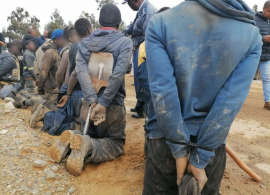
One person was shot dead while 46 of his accomplices were arrested when a police operation descended on an illegal mining operation in the West Rand on Tuesday.
Hawks spokesperson, Lieutenant Colonel Philani Nkwalase, said the operation was part of ongoing law enforcement interventions.
The operation consisted of the Hawks Serious Organised Crime Investigation team in the West Rand, the South African Police Service (SAPS) Airwing, K9 unit, Crime Intelligence (CI), Local Criminal Record Centre (LCRC), and the Forensic Science Laboratory.
Also part of the operation was the Gauteng Traffic Saturation Unit, G4S and Fidelity Security Helicopters, Sibanye Stillwater Protection Services and Eskom officials.
Nkwalase said the operation “resulted in a resounding success”.
The search and seizure operation which was attended by the Minister of Police, General Bheki Cele, MP, accompanied by Gauteng Provincial Commissioner, Lieutenant General Elias Mawela, Hawks Gauteng Provincial Head, Major General Ebrahim Kadwa and District Commissioner of West Rand, Major General Kekana, was carried out simultaneously at eight premises in Krugersdorp and Randfontein.
“A total of 46 suspects were arrested and one fatally wounded. The suspects include foreign nationals from neighbouring countries and their status in the country is now a subject of an ongoing investigation.
“Furthermore, 700 tons of gold-bearing material surpassing R2.5 million was found in five of the illegal plants uncovered and 20 cell phones were seized for further investigation,” said Nkwalase.
The suspects are expected to appear in court soon to face charges that include contravention of Precious Metals Act 37 of 2005, Mining Health and Safety Act 29 of 1996, theft, Mineral and Petroleum Recourses Development Act 28 of 2002 and possibly the Immigrations Act 13 of 2002.