
SALGA to engage N Cape municipalities
The South African Local Government Association (SALGA) National Executive Committee (NEC) will on Wednesday engage with municipalities in the Northern Cape on a range of issues facing local government, which require immediate attention.
SALGA in a statement said the planned engagements are as a result of the NEC’s resolve to intensify regular interaction between SALGA and its member municipalities. SALGA uses a rotating system of convening scheduled NEC meetings throughout the nine provinces.
The meeting will take place at the Mittah Seperepere Conference Centre in Kimberley.
In tomorrow’s meeting, each district municipality will be expected to present on the state of the municipalities.
This will be in the areas of:
- Leadership: Role of political and administrative leadership in the district.
- State of service delivery in the district.
- Audit outcomes of municipalities for last financial year and the related financial accountability and sustainability challenges.
- Legal and regulatory compliance, including state of litigation against each municipality in the district.
- List of advocacy or support requests from SALGA.
- State of municipalities under Section 139 intervention or Section 106 investigation.
World Bank approves SA’s R7.6bn loan for COVID-19 vaccines
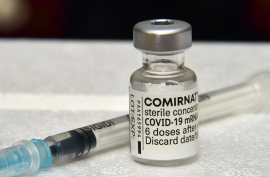
The World Bank has approved a €454.4 million (R7.6 billion) loan to South Africa for the country’s COVID-19 Emergency Response Project.
Approved by the Bank’s Group Board of Executive Directors on Monday, the loan comes following a request by the Government of South Africa for assistance in financing vaccine procurement contracts.
In a joint statement by the World Bank and the National Treasury, the entities said, specifically, this project will retroactively finance the procurement of 47 million COVID-19 vaccine doses by the GoSA.
They said: “South Africa is the epicentre of the COVID-19 pandemic in Africa, with the highest cumulative numbers of infections and deaths. By supporting the country’s COVID-19 vaccination program, the project will help the government better cope with the pandemic, as the country experiences its fifth wave, and support the GoSA to create the fiscal space needed to strengthen its health system and ensure financial and institutional sustainability”.
The country’s robust vaccination program has seen 36.4 million doses having been administered, with about 50.3% of adults and 29.9% of 12 to 17-year-old adolescents vaccinated, as at 13 June.
However, they said, more can be done to increase vaccine coverage, curb the spread of the virus, and boost the country’s economic recovery.
Along with the Genomic Surveillance Project, the COVID-19 Emergency Response Project forms part of World Bank’s expanded support for South Africa’s response to the pandemic.
Surveillance Project seeks to improve the capacity to identify variants of SARS-CoV-2 in South Africa and the Africa region.
Government welcomed the loan approval, saying it would support COVID-19 vaccination as the spread of the virus continues to pose a threat to South Africa’s citizens, health system, and economic recovery.
Treasury said the loan forms part of government efforts to reduce debt service costs by making use of cheaper sources of funding through multilateral development banks, whilst supporting the health system to respond to COVID-19 through the roll-out of vaccines, critical research, and treatment measures,” says Ismail Momoniat, National Treasury Acting Director-General.
In addition to providing vital support to South Africa’s health system, this new low-interest loan contributes to the government’s fiscal relief package while reinforcing South Africa’s decisions on how best to provide relief to the economy and those worst affected by the crisis.
The loan complements support by the International Monetary Fund, the African Development Bank, and the New Development Bank as part of the Government of South Africa’s broader financing strategy to access external financing from international financial institutions.
As at 16 May 2022, the World Bank Group COVID-19 Response had deployed $20 billion to support vaccine procurement and roll out enabling the affordable and equitable access to COVID-19 vaccines needed to reverse the pandemic’s massive health, social, and economic impact.
The financing is helping 96 operations (including MPA Vaccine operations) in 73 countries, more than half of which are located in Africa, by supporting countries’ vaccination programs.
KZN flood relief donor account gets over R3.6m

Over R3.6 million has been donated through a dedicated bank account opened by the KwaZulu-Natal Provincial Government towards the rebuilding process following the floods.
KwaZulu-Natal Premier, Sihle Zikalala, on Tuesday said as at 1 June 2022, the donor account had R3 625 960 in total, with R100 000 specifically earmarked for the Department of Health.
“An amount of R3 million is set aside for education, mainly the fixing of four schools, while R500 000 from the government of Qatar will be allocated to the Department of Social Development.
“We wish to acknowledge the generous donations we have received from major donors such as the government of the United Arab Emirates, Spirit Ambassadors International Church and Sasol.
“Harmony Gold pledged an amount of R600 000, which is not yet in the donor account, as well as relief supplies donated by Harmony Gold employees in solidarity with the flood victims. We wish to thank all the donors for lending a helping hand to the people in their time of need,” Zikalala said.
Explaining the processing involved in accessing the funds, which have been earmarked for the disaster by National Treasury, Zikalala said that while National Treasury has indicated that short-term immediate humanitarian relief is available to the tune of R1.018 billion, the funds are earmarked for disasters that may occur in the whole country during the 2022/23 financial year.
He confirmed that that there is no outstanding application from the province either for short-term humanitarian support or long-term reconstruction, and all the applications have been submitted to National Government via the National Disaster Management Centre.
“Our provincial Disaster Management Centre has made an application to the National Disaster Management Centre for short-term humanitarian relief support to the tune of R100 billion. Further to this, the province has made a request for R12.656 billion for the municipal response and R5.157 billion for the provincial response.
“This brings the total applied for to R17.813 billion for KZN sector departments and municipal damages. The province has received acknowledgements to this effect, with independent verification of our application having been done by the Municipal Infrastructure Support Agent (MISA) and the Department of Water and Sanitation specialist engineers,” Zikalala explained.
In the meantime, he said all provincial government departments are reprioritising their budgets in order to aid the funding of the recovery process.
“In aggregate terms, our provincial departments are planning to reprioritise R3.652 billion towards the disaster, with these funds coming mainly from conditional grants under the Departments of Transport and Human Settlements.
“Further non- infrastructure related funding including support to business is coming from [the Department of Economic Development and Environmental Affairs],” he said.
Insured properties not covered by emergency funding
The Premier noted that the grant framework for emergency funding does not allow the release of funding for properties that are insured.
He said while most municipalities have insurance cover, their covers are not sufficient and comprehensive enough for the magnitude of the disaster experienced by the province.
“The implications are that if government applies the existing principles of the grant framework, municipalities will not be able to adequately fix all the damage that has been incurred. It is against this background that we are raising the need for a review of the legislative regime of disasters.”
Zikalala said the province’s internal audit is working with the Auditor-General’s Office to conduct audits at the provincial Departments of Education, Transport, Human Settlements, Cooperative Governance and Traditional Affairs and Social Development, with physical verification of Temporary Residential Units also having commenced.
Progress made in water, power supply restoration in KZN

KwaZulu-Natal Premier, Sihle Zikalala, says substantial progress has been made in restoring water and power supply in areas affected by the recent floods.
“The Inner West Region is almost 90% restored. The Outer West Supply has improved from 45% to 95%. The Central Region has improved from 45% to 85%. The South Region has improved from 15% to 85%, while the North Region supply has moved from 15% to 60%,” Zikalala said on Tuesday at a briefing.
Zikalala expressed his gratitude to the Gift of the Givers foundation, which has donated 14 boreholes, with 11 already having been drilled.
However, the Premier noted that while the restoration of water and electricity has reached over 90% overall, there remains a number of hotspots in the province.
“In Ilembe, KwaDukuza Water has no supply to the power generation plant due to plant repairs and this is affecting Shakaville and Lindelani. Mbozamo is still on the operating rule of closing water at night,” Zikalala said.
The Premier reported that the construction and restoration work on uThongathi Water Treatment Works is expected to take up to four months, with completion in September this year. He said a budget of at least R30 million has been allocated.
eThekwini Municipality, Zikalala reported, has availed a number of mobile and static water tankers (for self-collection) to service affected communities.
Reviving the economy
With regard to the development of flight routes, Zikalala said the province’s recovery plans have been severely hampered by the recent closing down of British Airways and Kulula.
He, however, welcomed the report by the Department of Economic Development, Tourism and Environmental Affairs — under MEC Ravi Pillay — that hotel occupancy rates are gaining traction and recovering from the recent floods.
Zikalala assured that water challenges at King Shaka International Airport have been addressed and long-term plans are in place to increase water supply through boreholes to insure against any future emergency.
Repairs are also underway to key attractions such as the Mandela Capture Site, the two world heritage sites – Howick Falls and the beachfront – as part of the recovery and reconstruction process.
“The Bayhead Road repairs are progressing very well, with the execution of earthworks now in full throttle. Bluff Road is being used for fuel cargo in the interim, and we are pleased to note that the container terminal has addressed its entire backlog and has released 100% of the delayed imported cargo,” the Premier said.
With regard to rail infrastructure, Zikalala said the Passenger Rail Agency of South Africa (PRASA) has announced plans to resume the Umlazi service line on 1 September and KwaMashu line on 9 September 2022.
Cell phone networks, Vodacom and MTN, which were affected by the floods, have also reported that over 80% of damaged infrastructure is now back in operation.
However, the Premier said the telecommunications sector has raised its concerns about ongoing vandalism of its infrastructure, and the repair of roads and electricity supply to speed up the restoration of communication services.
On support for business, the Premier announced that the provincial Economic Development and Environmental Affairs Department is leading the provision of funding to 394 businesses that have applied for assistance, which is currently valued at R196 million.
“The applications are mainly from companies in the agriculture, services and manufacturing sectors,” said Zikalala.
Transport infrastructure
Zikalala said damage to KZN transport infrastructure from the recent floods amounts to R6 billion, including the M4 and R102.
He reported that the South African National Defence Force is installing bailey bridges, while the KZN Department of Transport (DOT) is leading a massive project called Valamapotholes (patching potholes programme), working together with municipalities.
“In the medium-term, 730 key projects have been approved throughout the province to be implemented through emergency procurement, which includes the closure of potholes and repairs to damaged roads. KZN DOT has submitted 49 bridge sites to the national Department of Public Works for consideration for the bailey bridges programme.
“The Department of Agriculture and Rural Development is assisting households and farmers with regard to soil testing services, provision of lime, fertilisers, tools, fencing, water tanks, re-gravelling and repairing damaged roads and the construction of culverts. The objective is to resuscitate livestock operations on affected farms and support sugar cane, and the implementation of biosecurity measures,” Zikalala said.
KZN aims to accommodate over 4 000 displaced families

As the construction of Temporary Residential Units (TRUs) continues, KwaZulu-Natal Premier, Sihle Zikalala, says the provincial government’s focus is to accommodate more than 4 396 families that were accommodated in halls, churches and schools following heavy rains in the province.
Zikalala said the province has been able to make remarkable progress working across spheres, and with the support and leadership of the entire national government, led by President Cyril Ramaphosa.
“At least 206 TRUs have been completed to date and there is progress in identifying land for further building. So far, four properties under Tongaat Hullet have been identified.
“Of the land identified in other parts of the province, 258 land parcels (41.88%) do not have geophysical constraints, with 5.8%) out of these being in eThekwini,” Zikalala said.
Unsuitable land parcels delays provision of permanent structures
Zikalala acknowledged that the availability of land parcels suitable for the building of TRUs has been a major constraint to the finalisation of accommodation challenge, and has delayed the building of TRUs and the provision of permanent structures, as part of the recovery.
“Provincial government is concerned about people continuing to live in shelters as this is not only stagnating the lives of victims, but our social cluster departmental budgets are now getting exhausted. The priority is to get our communities back on their feet and for them to use their skills and talents to take out a living away from the shelters,” the Premier said.
Zikalala added that one thing they are learning from this disaster is that the laws and by-laws need to be improved to facilitate a speedy response to emergencies.
He said the provincial government is noting that by-laws still require compliance and adherence even in a disaster “as if a person wants to build a house under normal circumstances”.
“This should change and so should the applications and funding approvals process for immediate relief, as well as the sourcing of land. We are also experiencing a situation where in sharp contrast to public pronouncements to be part of the solution to the disaster, owners are doubling and trebling land prices when approached by government for the re-housing of flood victims.
“Consequently, land has become a huge stumbling block to the disaster intervention. We need to debate if existing laws and regulations should not for the future, during disasters be amended to include the expropriation of land through a swift process. Our laws and by-laws are meant to facilitate recovery and should not in emergencies and life and death situations serve as an impediment,” the Premier said.
He said a land that is about five kilometres is required from social amenities, including schools for flood victims and next to economic opportunities and workplaces.
“Government has also noted with concern resistance from some established communities who are opposed to the resettling of flood victims on government-owned land next to their properties, under what is called ‘NIMBY’ or the ‘Not in My Backyard’ syndrome.
“Yet these are communities that attempted to occupy moral high ground claiming to be in solidarity with the homeless flood victims. The reality is that government cannot build TRUs on the very unsuitable land that saw homes being washed away in the floods,” Zikalala said.
Over 20 unidentified bodies not collected after KZN floods
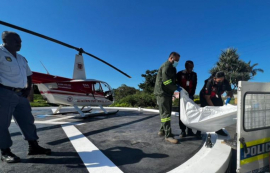
A total of 85 280 people have been affected by floods which wreaked havoc in KwaZulu-Natal, leaving thousands of people in five districts and eThekwini Municipality homeless, and 461 fatalities.
Giving an update on the progress made by the province following the April and May flood disasters, KwaZulu-Natal Premier Sihle Zikalala reported that 23 unidentified bodies with DNAs are still not collected.
“A total of 87 people are still reported missing. There are 6 895 people homeless and 50 injured. In all, a total of 27 069 households were affected with 8 584 houses totally destroyed and 13 536 partially destroyed.
“During the disasters we rescued a total of 249 people alive through our search and rescue operations. We currently still have on the ground a total of 3 941 teams involving the SANDF [South African National Defence Force], SAPS [South African Police Services], disaster teams and Road Traffic Inspectorate teams involved in the sectoral responses to this disaster,” Zikalala said.
Zikalala said the demobilisation, especially in the SANDF will happen in a phased manner, but the specialised teams including the engineers and others will remain behind.
The Premier added that while search continues for missing people, the Department of Justice and Correctional Services is being engaged on the process of presumption of death, where it is proven that “we have no prospects to find the missing persons alive”.
However, he said this would be used as the last resort to assist the families to find closure.
R25 billion to repair damaged infrastructure networks
Zikalala announced that the cost of the flood damage is officially at R25 billion, affecting mainly infrastructure networks, manufacturing and agriculture.
“The impact of the floods on eThekwini has been massive and we believe that while we attend to the entire province, we should speed up our response in eThekwini because this is where we are to make the greatest impact on reversing the destruction,” Zikalala said.
He said the settlements located close to rivers and waterways in the coastal areas, including informal settlements, were among the most affected, especially those located in poor terrain.
“We have learnt through a joint study by the eThekwini Metro and the Council for Scientific and Industrial Research that 1.3 million people live within the flood line in the city. We are also told that 33.2% or more than a quarter of all dwellings in the city are informal structures and this excludes rural dwellings.
“This poses a major challenge to the recovery programme and calls for a long-term approach which will protect our communities from such emergencies in future,” the Premier said.
Major progress in rehabilitation and reconstruction
The Premier also highlighted that major progress has been made to get the province fully back on its feet, and now entering the second stage, which is to restore infrastructure and revive the economy.
“While immediate humanitarian relief has been secured, we are certain that all affected persons are safe and that their basic needs have been met. The focus has now shifted to stabilisation, rehousing people who have lost homes and restoring provision of services as well as rehabilitation and reconstruction (Building Back Better) programme.
“This will involve the construction and repair of major infrastructure. It will also involve the construction of permanent houses in suitably located areas and measures to protect the residents of these areas from such adverse weather events in the future,” Zikalala said.
SARS welcomes SCA ruling on seized goods

The South African Revenue Service (SARS) has welcomed the unanimous judgment of the Supreme Court of Appeal (SCA) affirming the revenue collector’s procedure and right to seize goods which have been under-declared when crossing into South Africa.
Ruling on the matter involving SARS and a freight company that had its goods seized in 19 containers imported from China.
In a statement, SARS said the goods had been under-declared for customs duties on import.
“These containers contained textiles and clothing goods, which were flagged by SARS’ electronic risk engine, designed to counter fraud and illegal activities, which was further investigated by Customs staff,” said SARS.
Argument in the SCA from the Respondents was that SARS’ decision ought to be set aside on the grounds of “procedural unfairness, irrationality and unreasonableness”.
The SCA wholly rejected this argument, overturned the High Court’s prior decision in favour of the agent and traders and issued a cost order in favour of SARS.
The SCA ruled that SARS had acted within its mandated scope, that SARS had acted procedurally fairly and that SARS had acted on evidence gathered.
SARS said the importation of clothing and textiles has been steadily increasing since the dawn of democracy due to the availability of cheap manufactured goods outside of South Africa.
“This case is an important reflection that SARS performs its functions for the benefit of South Africa and her people and is a reminder that SARS is an integral component in the economy. The judgment confirms that SARS is dedicated to enforcing its mandate to control the importation of certain goods to support and promote the macro-economic policy objectives of the government.”
SARS said it was firmly committed to service excellence and this includes not being deterred by aggressive litigation that undermines the fiscal and economic fabric of the country.
SARS Commissioner Edward Kieswetter, who expressed his satisfaction with the decision, said there are concerted attempts by those engaged in illicit activities to circumvent the support put in place by government for local industries thereby eroding productive capacity in the country with accompanying job losses, particularly in the local manufacturing sector.
“This limits the country’s potential to grow and create jobs, and leads to unfair competition for legitimate trade.
“SARS is continually refining its capacity to detect this non-compliant behaviour, and will do all in its power to make it costly to non-compliant taxpayers, while facilitating legitimate trade”.
SASSA to pay R350 grant for new cycle in mid-June

The South African Social Security Agency (SASSA) says payments for the new cycle of the special COVID-19 Social Relief of Distress Grants (SRD) R350 grant – from April 2022 – will be paid as from mid-June 2022.
On Monday, SASSA said it will continue clearing outstanding payments from the previous cycle as and when the bank details are confirmed.
“The payments will not be done together, but will be done month by month. More than one payment may be made in a month, but no one will receive double payments in amount,” the agency said.
SASSA said it will do these multiple payments in a month until the backlog has been finalised, where after monthly payments will resume.
Briefing media after Cabinet’s meeting last week, Minister in the Presidency, Mondli Gungubele, reiterated government’s commitment to pay out the R350 SRD grant to beneficiaries.
This came after media reported that some grant beneficiaries had not received payments for up to three months.
“This government will always fulfil whatever undertaking it has [with regards to the SRD]. If there was a period of non-payment… on behalf of this government, we will make that apology.
“But as along as those SRDs are due, in line with the President’s commitment, they will be paid,” Gungubele said.
SA records 962 new COVID-19 cases

South Africa has recorded 962 new COVID-19 cases in the past 24 hours, bringing the total number of laboratory-confirmed cases to 3 978 590.
According to the Department of Health, the cumulative number of recoveries now stand at 3 854 873 with a recovery rate of 96.9%.
The department has also reported seven deaths, bringing the total fatalities to 101 484.
Meanwhile, South Africa has administered a total of 1 303 COVID-19 vaccines in the last 24 hours, bringing the total number of vaccines to 36 448 670 to date.
The province with the highest number of vaccines administered is North West province with 467, followed by KwaZulu-Natal at 397 and Gauteng at 253.
As at 5pm on Sunday, 50.30% of the adult population has been fully vaccinated.
OCJ probing R225m IT tender
The Office of the Chief Justice (OCJ) says it is investigating a R225 million tender that was allegedly riddled with irregularities.
This after weekend media reports revealed that three former employees of the OCJ, who were privy to the set-up of the tender, recently resigned from the OCJ in order to allegedly illegally benefit from the tender.
“As stated to the Sunday Times, the OCJ is currently in the process of gathering all relevant information relating to the matter and is taking legal advice. At the appropriate time, the OCJ will inform the public on the matter. We can assure the public that the State funds relating to this matter are safe.
“In view of this, the OCJ will not at this stage be making further comments or providing any additional information in this regard,” the OCJ said in a statement.
Meanwhile, the Special Investigating Unit (SIU) has moved to clear the air on media reports that the unit has issued an apology to former National Department of Health (NDOH) Minister, Dr Zweli Mkhize, regarding the Digital Vibes COVID-19 communications tender scandal.
Reports suggested that the corruption busting unit had issued the apology for allegedly failing to transcribe key interviews with witnesses, which led to adverse findings against the former minister.
SIU spokesperson, Kaizer Kganyago, said the article had the potential to “mislead the public” about the current ongoing litigation in the case.
“The review process is ongoing and the parties are responding to each other’s requests in the process. One of the requests to the SIU was to transcribe the recordings obtained during the investigations. The SIU legal team is attending to this request as a matter of urgency to ensure that the outsourced transcribing service delivers timely.
“The ‘apology for the inconvenience caused’ relates to the process issue and not to ‘Digital Vibes’, as it appears in the article. The SIU will ensure that there is fairness to all parties, as we all prepare for the review. The SIU will at no stage seek to delay the matter,” Kganyago said.