
Coronavirus: Deep cleaning at Grayston Prep
Grayston Preparatory School will today undergo a deep-cleaning process in preparation for re-opening its doors to learners on Wednesday.
On Monday, the school closed its doors after it emerged that a staff member came into contact with one of the people who tested positive for Coronavirus last week.
“As the department, we can confirm that Grayston Preparatory School will be opening its doors on Wednesday. On Tuesday, they will be doing what they refer to as deep cleaning,” said Gauteng Education spokesperson Steve Mabona.
The school’s executive team met with representatives of the Grayston school board, the Gauteng Education Department, the Gauteng Health Department and the Independent Schools Association of Southern Africa on Monday.
“We have also taken independent medical advice. Based on the advice received, the following actions will occur.
“The staff member in question will remain in self-imposed isolation for the quarantine period. At this stage, she remains asymptomatic and in good health. She will take guidance from the NICD [National Institute for Communicable Diseases] as to the protocol going forward,” said Grayston Preparatory School in a statement on Monday.
The school stressed that according to information from experts, its staff, children and parents are, at most, secondary or tertiary contacts and so are at very low risk.
“School will re-open on Wednesday and we look forward to the return of all our learners. On their return, children will receive age-appropriate guidance from their class teachers on general hygiene and precautionary measures in such situations,” said the school.
As per its school policy, Grayston Preparatory advised parents that if their child is unwell, it is best to keep them at home and consult a medical practitioner.
Coronavirus: SADC Health Ministers strategise
Health Ministers in the Southern African Development Community (SADC) have urged Member States to mobilise domestic resources and invest in public health systems to ensure resilience and health security.
The Ministers met on Monday to discuss Coronavirus and how the region should respond. To date, seven cases of new Coronavirus (COVID-19) have been confirmed in South Africa after a group of 10 people travelled to Italy and returned to the country on 1 March.
The meeting held at Julius Nyerere International Convention Centre in Dar es Salaam, Tanzania, was attended by Angola, the Democratic Republic of Congo (DRC), Lesotho, Malawi, Mauritius, Namibia, South Africa, Tanzania, Zambia and Zimbabwe.
The purpose of the meeting was to share existing knowledge and information on the COVID-19 outbreak, which has had devastating global impacts since its outbreak in December 2019, and agree on how to harmonise and coordinate the preparedness and response to COVID-19 in the SADC region.
The Member States were urged to put in place National Preparedness and Response Plans, as well as contingency and emergency funds to address gaps in prevention, impact mitigation and other interventions.
The Ministers encouraged Member States to promote preventive measures such as handwashing and sanitisation of surfaces in workplaces and domestic settings.
At the meeting, China, the World Health Organisation (WHO) and the Africa Centre for Disease Control & Prevention (CDC) were commended for the efforts being made towards addressing COVID-19. The Ministers pledged SADC’s continued solidarity towards China and other countries affected by the virus.
The meeting also noted that COVID-19 has been declared a Public Health Emergency of International Concern (PHEIC) by WHO on 30 January 2020, with potential significant impacts.
The Member States agreed to establish coherent mechanisms of sharing information on issues of transboundary public health concern.
They agreed to re-establish and expand the terms of reference of the Technical Committee for Coordinating and Monitoring the Implementation of the SADC Protocol on Health. The team comprises Directors of Public Health and Directors of Medical Services.
The meeting also received a presentation by WHO and the Chinese government on measures being taken at global level.
The meeting recommended a temporary suspension of SADC regional face-to-face meetings and encouraged the use of video conferences, webinars and Skype calls for holding such meetings, until such a time when the situation has been contained.
Load shedding moved up to stage 4
Load shedding has moved to stage 4 this afternoon, after the Koeberg unit 1 tripped.
“The unit has been disconnected from the grid due to a fault on the turbine side. However, the nuclear reactor remains safe.
“The teams are investigating the root causes of the fault and will advise on the remedy as soon as it is established,” Eskom said.
The loss of the approximately 930MW unit puts further strain on the generation fleet, necessitating an increase in the stage of load shedding.
“As the ageing fleet is currently constrained, unpredictable and vulnerable, we advise South Africans that the stage of load shedding may change at short notice, should there be any unexpected change in the generation system performance. Demand has also incrementally risen since January.
“It is only through partnership between Eskom and all stakeholders that we may soon emerge from these difficult times.
“We urge every South African to cooperate in managing electricity consumption with care to help us minimise load shedding. We thank you for your cooperation and understanding so far,” Eskom said.
Customers are requested to continue to use electricity sparingly to assist Eskom to reduce demand.
· Keep your morning shower short to lessen the load during morning peak.
· Take food out of the freezer for dinner and put it in the fridge to thaw. It’ll save you using the microwave to defrost it later.
· Set air conditioners’ average temperature at 23°C.
· Switch off geysers over peak periods.
· Unplug that cell phone charger before you leave the house. It uses electricity even if your phone is not plugged in.
· Use the cold water tap rather than using the geyser every time.
· Set your swimming pool pump cycle to run twice a day, three hours at a time.
· At the end of the day, turn off computers, copiers, printers and fax machines at the switch.
“We appeal to customers to revisit their load shedding schedules on the Eskom website — https://loadshedding.eskom.co.za — or local municipal websites, depending on their electricity supplier, to review amendments,” Eskom said.
Coronavirus affecting tourism industry
Tourism Minister Mmamoloko Kubayi-Ngubane says the outbreak of the Coronavirus has already affected the tourism industry negatively.
The number of Coronavirus cases in South Africa has risen to seven, after four more new cases were confirmed on Monday.
Speaking at the Tourism Leadership Forum held in Sandton, north of Johannesburg on Monday, Kubayi-Ngubane said on the African continent, cases have been reported in Senegal, Algeria, Egypt, Morocco, Nigeria and Tunisia.
“Here at home we now have seven confirmed cases of the virus, and it remains uncertain whether the number of cases will grow or the virus will be contained to just a few cases.
“Despite the fact we have had very few cases of the virus, the local tourism industry has already suffered serious losses,” Kubayi-Ngubane said, adding that these losses are still going to increase.
Kubayi-Ngubane said the impact of the virus could lead to closure of businesses and severe job losses.
“In this scenario, the global economy descends into a recession and our country’s economy suffers significant contraction for the year 2020,” the Minister said.
Kubayi-Ngubane said to mitigate against the potential negative impact on businesses and jobs, government will work with all stakeholders to implement measures that will assist to bring relief to affected businesses and individuals.
“The longer these restrictions continue, the hardest hit part of the value chain will be the core industries which include accommodation, food and beverage services, recreation and entertainment, transportation and travel service,” the Minister said.
Kubayi-Ngubane said government will engage treasury to assist businesses in distress to access the employment incentives that have been put in place and will negotiate with various meeting and events owners to postpone to future dates based on scenarios to minimise cancellations.
“The economic impact of the Coronavirus will be felt in every corner of the world and almost every sector of the economy,” the Minister said.
The seven were part of a group of 10, who recently returned to South Africa from a skiing holiday in Milan, north of Italy, where they reportedly contacted the virus.
The Department of Health has embarked on a rigorous campaign of tracing every person the seven individuals have been in contact with since returning to South Africa just over a week ago.
Some of the identified patients had shown symptoms, while others had not. However, they have all been placed on self-quarantine at home or have been admitted in hospital.
Novel Coronavirus (COVID-19)
Latest information from the the National Institute for Communicable Diseases (NICD)
This morning we had received results of the direct contact of the first patient, his wife. She had also travelled with him to Italy as part of the group of ten. I now wish to advise the public that she has tested positive for COVID-19 and is therefore the third confirmed case in South Africa. (https://www.gov.za/speeches/minister-zweli-mkhize-confirms-third-case-coronavirus-covid-19-south-africa-8-mar-2020-0000)
The Minister of Health wishes to advise all South Africans that a second case of COVID-19 has now been confirmed in South Africa. The 39 year old lady who is from Gauteng is a direct contact to the first case from KwaZulu-Natal. She was part of the group of 10 that had travelled to Italy. (https://www.gov.za/speeches/minister-zweli-mkhize-confirms-second-case-c…)
On Thursday March 5, the National Institute for Communicable Diseases confirmed that a suspected case of COVID-19 has tested positive. The patient is a 38-year-old male who travelled to Italy with his wife. They were part of a group of 10 people and they arrived back in South Africa on March 1, 2020. (https://www.gov.za/speeches/health-reports-first-case-covid-19-coronavirus-5-mar-2020-0000)
The Minister of Health, on 05 March 2020, made an official announcement of a local confirmed COVID-19 case in South Africa, of a 38-year old man from KwaZulu-Natal who travelled to Italy. The National Institute for Communicable Diseases (NICD), a division of the National Health Laboratory Service, wishes to clarify that the COVID-19 indicates the strength of our surveillance and South Africa’s health systems to be able to detect and rapidly identify cases.
The case has been isolated and containment measures are ongoing including the monitoring of contacts. It is important to note that the identification of a single imported case in a traveller from an area with widespread community transmission does not mean that COVID-19 is currently spreading in South African communities. The risk to the general community of acquiring COVID-19 remains low. (http://www.nicd.ac.za/first-case-of-covid-19-announced-an-update/)
For daily updates of countries, territories or areas with reported laboratory confirmed COVID-19 cases, please refer to:
- World Health Organisation COVID-19 situation reports https://www.who.int/emergencies/diseases/novel-coronavirus-2019/situation-reports
- Coronavirus COVID-19 Global Cases by Johns Hopkins CSSE https://gisanddata.maps.arcgis.com/apps/opsdashboard/index.html#/bda7594740fd40299423467b48e9ecf6
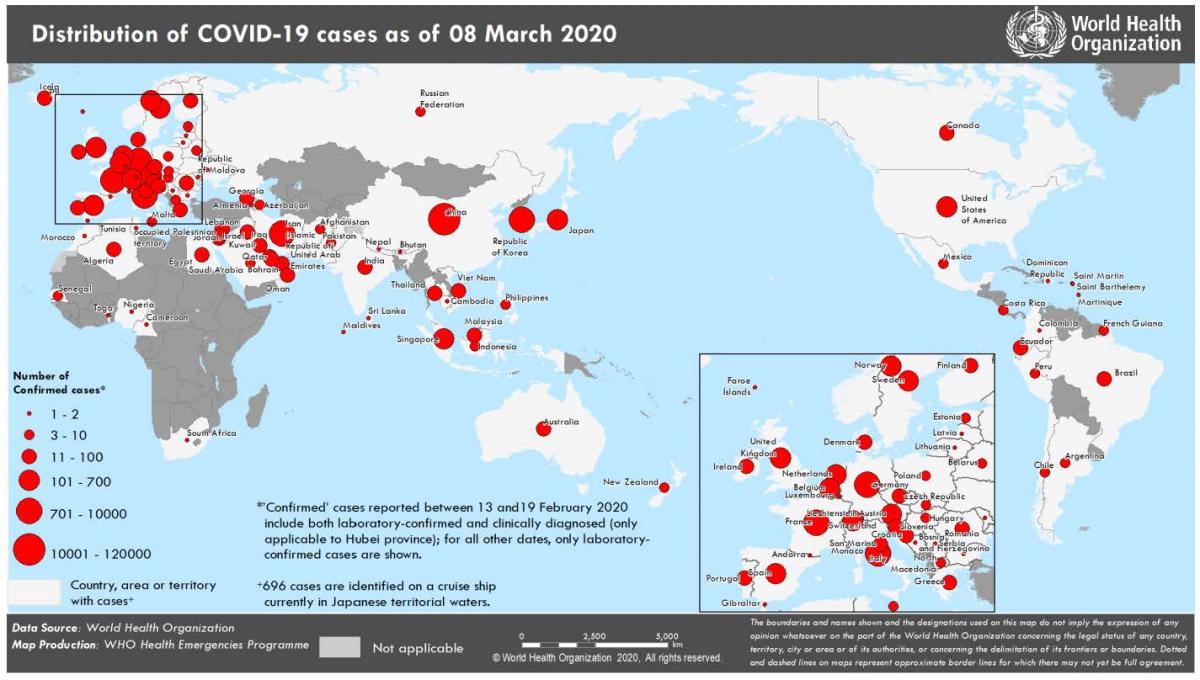
Source: World Health Organistion https://www.who.int/docs/default-source/coronaviruse/situation-reports/2…
Hotline number
National Institute for Communicable Diseases 0800 029 999
The Department of International Relations and Cooperation has set up a 24-hour hotline number for South African citizens based in Wuhan City, China.
South African Embassy in Beijing
Hotline: +86 135 0105 9041
Ms Lesego Pelompe
Mr Siyabonga Ponco
South African Consulate General in Shanghai
Hotline: +86 159 0045 4282
Ms Grace Motloutzi
Family members who require more information about their loved ones who will be repatriated can contact the Department of International Relations and Corporation (DIRCO) on the following contact details:
Email address: cicc1@dirco.gov.za or cicc2@dirco.gov.za
Telephone number: 012 351 1754.
Coronavirus / COVID-19
On 31 December 2019, the World Health Organization (WHO) was alerted to several cases of pneumonia in Wuhan City, Hubei Province of China. On 7 January identified the new virus as a coronavirus, which is a family of viruses that include the common cold, and viruses such as SARS and MERS. This new virus was temporarily named “COVID-19.”
On 30 January the WHO declared the Novel Coronavirus a Public Health Emergency of International Concern and on the same day South Africa activated its Emergency Operations Centre (EOC).
WHO has been working with Chinese authorities and global experts to learn more about the virus, how it affects the people who are sick with it, how they can be treated, and what countries can do to respond.
The situation around the COVID-19 is still evolving. You will be updated as new information becomes available.
The attached communication toolkit serves to educate and create awareness on the emerging coronavirus.
Frequently asked questions
What is 2019 Novel Coronavirus?
The 2019 Novel Coronavirus, or COVID-19, is a new respiratory virus first identified in Wuhan, Hubei Province, China.
What is a novel coronavirus?
A novel coronavirus (CoV) is a new coronavirus that has not been previously identified.
What is the source of COVID-19?
Public health officials and partners are working hard to identify the source of the COVID-19. Coronaviruses are a large family of viruses, some causing illness in people and others that circulate among animals, including camels, cats and bats. Analysis of the genetic tree of this virus is ongoing to know the specific source of the virus. SARS, another coronavirus that emerged to infect people, came from civet cats, while MERS, another coronavirus that emerged to infect people, came from camels.
How does the virus spread?
This virus probably originally emerged from an animal source but now seems to be spreading from person- to-person. It is important to note that person-to-person spread can happen on a continuum. Some viruses are highly contagious (like measles), while other viruses are less so. At this time, it is unclear how easily or sustainably this virus is spreading between people.
Is COVID-19 the same as the MERS-CoV or SARS virus?
No. Coronaviruses are a large family of viruses, some causing illness in people and others that circulate among animals, including camels, cats and bats. The recently emerged COVID-19 is not the same as the coronavirus that causes Middle East Respiratory Syndrome (MERS) or the coronavirus that causes Severe Acute Respiratory Syndrome (SARS). However, genetic analyses suggest this virus emerged from a virus related to SARS. There are ongoing investigations to learn more. This is a rapidly evolving situation and information will be updated as it becomes available.
Prevention
How can I help protect myself?
There is currently no vaccine to prevent COVID-19 infection. The best way to prevent infection is to avoid being exposed to this virus. Everyday preventive actions to help prevent the spread of respiratory viruses, includes:
- wash your hands often with soap and water for at least 20 seconds. If soap and water are not available, use an alcohol-based hand sanitiser
- avoid touching your eyes, nose, and mouth with unwashed hands
- avoid close contact with people who are sick
- stay home when you are sick
- cover your cough or sneeze with a tissue, then throw the tissue in the trash
- clean and disinfect frequently touched objects and surfaces
What should I do if I had close contact with someone who has COVID-19?
If you have had close contact with someone who is confirmed to have, or being evaluated for, COVID-19 infection, you should:
- monitor your health starting from the day you first had close contact with the person and continue for 14 days after you last had close contact with the person. Watch for these signs and symptoms:
- fever. Take your temperature twice a day
- coughing
- shortness of breath or difficulty breathing
- other early symptoms to watch for are chills, body aches, sore throat, headache, diarrhoea, nausea/vomiting, and runny nose
- if you develop fever or any of these symptoms, call your healthcare provider right away
- before going to your medical appointment, be sure to tell your healthcare provider about your close contact with someone who is confirmed to have, or being evaluated for, COVID-19 infection. This will help the healthcare provider’s office take steps to keep other people from getting infected. Ask your healthcare provider to call the health department or National Institute for Communicable Diseases (NICD)
- if you do not have any symptoms, you can continue with your daily activities, such as going to work, school, or other public areas
Medical information
What are the symptoms and complications that COVID-19 can cause?
Current symptoms reported for patients with COVID-19 have included mild to severe respiratory illness with fever, cough, and difficulty breathing.
Should I be tested for COVID-19?
If you develop a fever and symptoms of respiratory illness, such as cough or shortness of breath, within 14 days after travel from China, you should call ahead to a healthcare professional and mention your recent travel or close contact. If you have had close contact with someone showing these symptoms who has recently travelled from this area, you should call ahead to a healthcare professional and mention your close contact and their recent travel. Your healthcare professional will work with the health department and NICD to determine if you need to be tested for COVID-19.
Am I at risk for COVID-19 infection in South Africa?
There are currently no reported cases of COVID-19 in South Africa. This is however a rapidly evolving situation and the risk may change daily. Regular updates will be provided by the Department of Health and NICD.
Has anyone in South Africa been infected?
A: Yes, on Thursday March 5, the National Institute for Communicable Diseases confirmed that a suspected case of COVID-19 has tested positive. The patient is a 38-year-old male who travelled to Italy with his wife. They were part of a group of 10 people and they arrived back in South Africa on March 1, 2020. (https://www.gov.za/speeches/health-reports-first-case-covid-19-coronavirus-5-mar-2020-0000).
Am I at risk for novel coronavirus from a package or products shipping from China?
There is still a lot that is unknown about the newly emerged 2019 novel coronavirus (COVID-19) and how it spreads. Two other coronaviruses have emerged previously to cause severe illness in people (MERS and SARS). COVID-19 is more genetically related to SARS than MERS, but both are betacoronaviruses with their origins in bats. While we do not know for sure that this virus will behave the same way as SARS and MERS, we can use the information from both of these earlier coronaviruses to guide us. In general, because of poor survivability of these coronaviruses on surfaces, there is likely very low risk of spread from products or packaging that are shipped over a period of days or weeks at ambient temperatures. Coronaviruses are generally thought to be spread most often by respiratory droplets. Currently there is no evidence to support transmission of COVID-19 associated with imported goods and there have not been any cases of COVID-19 associated with imported goods.
Travel
Is it safe to travel to China or other countries where COVID-19 cases have occurred?
Travellers should avoid all non-essential travel to China.
- There is an ongoing outbreak of respiratory illness caused by a novel (new) coronavirus that can be spread from person-to-person.
- Chinese officials have closed transport within and out of Wuhan and other cities in Hubei Province, including buses, subways, trains, and the international airport. Other locations may be affected.
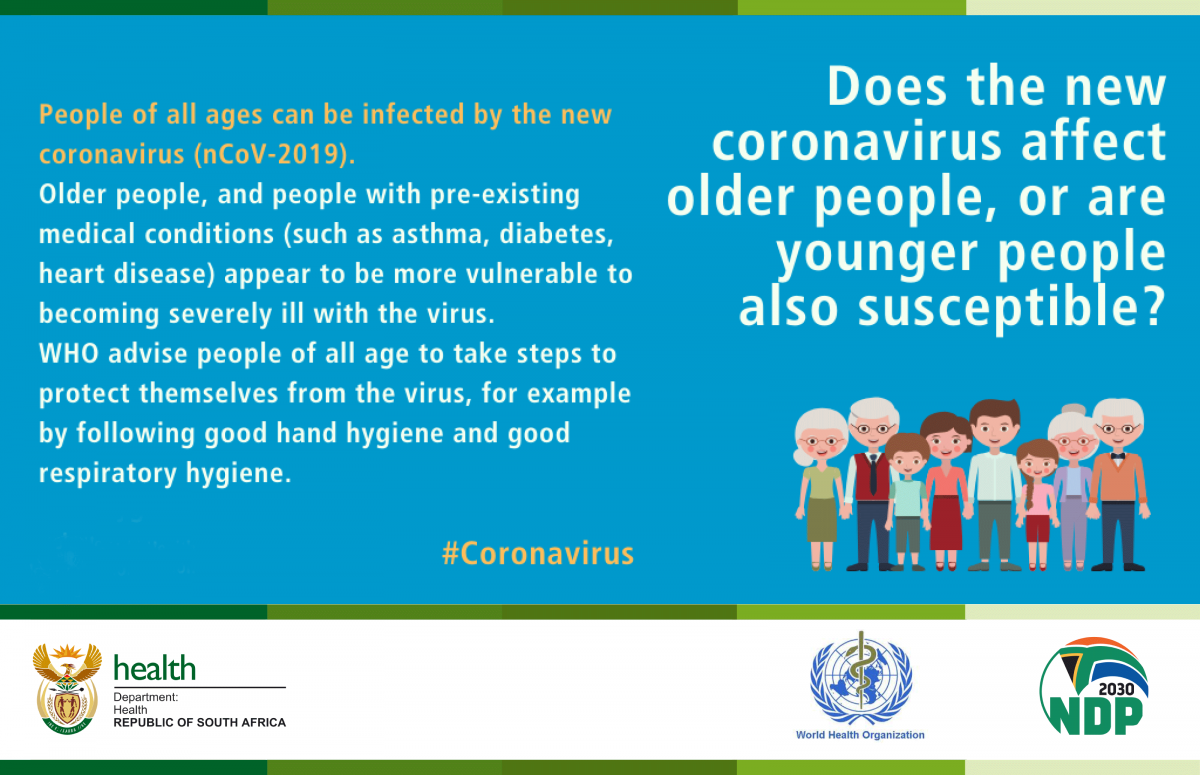
- Preliminary information suggests that older adults and people with underlying health conditions may be at increased risk for severe disease from this virus.
The situation is evolving. This notice will be updated as more information becomes available.
What if I recently traveled to China and got sick?
If you were in China and feel sick with fever, cough, or difficulty breathing, within 14 days after you left, you should:
- seek medical care right away. Before you go to a clinic, doctor’s office or emergency room, call ahead and tell them about your recent travel and your symptoms
- avoid contact with others
- not travel while sick
- cover your mouth and nose with a tissue or your sleeve (not your hands) when coughing or sneezing
- wash hands often with soap and water for at least 20 seconds to avoid spreading the virus to others. Use an alcohol-based hand sanitiser if soap and water are not available
2019-nCoV and animals
What about animals or animal products imported from China?
There is no evidence to suggest that animals or animal products imported from China pose a risk for spreading COVID-19 in South Africa. This is a rapidly evolving situation and information will be updated as it becomes available.
Should I be concerned about pets or other animals and COVID-19?
While this virus seems to have emerged from an animal source, it is now spreading from person-to-person. It is recommended that people traveling to China avoid animals both live and dead, but there is no reason to think that any animals or pets in South Africa might be a source of infection with this new coronavirus.
Should I avoid contact with pets or other animals if I am sick?
Do not handle pets or other animals while sick. Although there have not been reports of pets or other animals becoming sick with COVID-19, several types of coronaviruses can cause illness in animals and spread between animals and people. Until we know more, avoid contact with animals and wear a facemask if you must be around animals or care for a pet.
Disaster Management Act Guidelines
- Guideline on classification of a disaster and the declaration of a state of disaster
- Guideline on conducting an initial on-site assessment
- Guideline on contingency planning and arrangements
Statements
- Minister Zweli Mkhize confirms third case of Coronavirus Covid-19 in South Africa, 8 Mar 2020
- Government is identifying accommodation facilities to accommodate South Africa nationals to be evacuated from China, 7 Mar 2020
- Confirmation of second case of Covid-19 in South Africa, 7 Mar 2020
- Government dismisses M&G allegations as misleading, 6 Mar 2020
- Minister Zweli Mkhize reports first case of Covid-19 Coronavirus, 5 Mar 2020
- NATJOINTS update on repatriation process of South African citizens in Wuhan, 4 Mar 2020
- Defence on joint inter-departmental evacuation of South African citizens from Wuhan, 3 Mar 2020
- Minister Zweli Mkhize: Evacuation of citizens from Wuhan, 1 Mar 2020
- President Cyril Ramaphosa directs evacuation of South Africans from China following Coronavirus outbreak, 27 Feb 2020
- China commends South Africa for successful efforts in keeping Novel Coronavirus out of the country, 25 Feb 2020
- Minister Zweli Mkhize on Coronavirus monitoring, 1 Feb 2020
Stage 1 load shedding expected today
Eskom says it will implement stage 1 load shedding today.
“We regret to inform the country that starting from 9:00 today, Eskom will implement stage 1 load shedding until 23:00. It is envisaged load shedding may continue to be implemented until Thursday,” Eskom said.
This is due to a number of units still on unplanned breakdowns, which will return only during the course of the week.
“This will also help Eskom to build emergency reserves that were depleted as we drove to keep the lights on during the high equipment breakdowns we experienced towards the end of last week.
“Load shedding will put Eskom in a better position to meet the rising demand during the week. Work is also continuing to return to service some of the unplanned breakdowns we experienced,” Eskom said.
The system is currently constrained, unpredictable and vulnerable. Demand has also risen since January, putting pressure on the ageing fleet.
“We urge every South African to co-operate in managing electricity consumption with care to help us minimize load shedding,” Eskom said.
Customers are requested to continue to use electricity sparingly and to assist Eskom to reduce demand:
- Keep your morning shower short to lessen the load during morning peak;
- Take food out of the freezer for dinner and put it in the fridge to thaw. It’ll save you
using the microwave to defrost it later; - Set air conditioners’ average temperature at 23°;
- Switch off geysers over peak periods;
- Unplug that cell phone charger before you leave the house. It uses electricity
even if your phone is not plugged in; - Use the cold water tap rather than using the geyser every time;
- Set your swimming pool pump cycle to run twice a day, 3 hours at a time; and
- At the end of the day, turn off computers, copiers, printers and fax machines at
the switch.
“We appeal to customers to revisit their loadshedding schedules on the Eskom website, (https://loadshedding.eskom.co.za) or local municipal websites, depending on their electricity supplier, to review amendments,” Eskom said.
Coronavirus being handled with urgency, care: President
South Africans should not panic but rather be alert. That is the advice from President Cyril Ramaphosa following the announcement of the first case of the Coronavirus in the country.
The President has assured that government is and will continue to demonstrate urgency and caution as the country deals with its first confirmed case of Coronavirus.
The President on Thursday held an impromptu briefing shortly after landing at the Waterkloof Airforce Base in Pretoria.
The Minister of Health, Dr Zweli Mkhize, had earlier announced the first case of Coronavirus (COVID-19) just moments before a Parliamentary debate on South Africa’s readiness to deal with the virus.
On Thursday morning, the National Institute for Communicable Diseases (NICD) had contacted the Minister after confirmation that a suspected case of COVID-19 had tested positive.
The patient is a 38-year-old male, who travelled to Italy with his wife. They were part of a group of 10 people and they arrived back in South Africa on 1 March 2020.
The Minister then got in touch with the President, informing him of the news.
“I informed him [Minister Mkhize] that he should go ahead and make the news public in Parliament so that South Africans are immediately informed, so as to avoid fake news spreading around the country, and also to have a level of transparency,” said the President.
According to the Minster, the patient consulted a private general practitioner on 3 March with symptoms of fever, headache, malaise, a sore throat and a cough. The practice nurse took swabs and delivered it to the lab.
The patient has been self-isolating since 3 March. The couple also has two children.
A tracer team has been deployed to KwaZulu-Natal with epidemiologists and clinicians from the NICD. The doctor, who handled the patient, has been self-isolating as well.
The Emergency Operating Centre (EOC) has identified those who came into contact with the patient by interviewing the patient and doctor.
The NICD explains that in the instance of a traveller, people who are most at risk are the close contacts of the patients. The NICD has a definition of what constitutes a close contact. These people will be required to self-quarantine in their homes for 14 days. They will be monitored by the NICD medical staff to make sure that if they get any symptoms, they are rapidly tested.
The President said the immediacy with which the case is being dealt with shows that South Africa is ready to deal with the Coronavirus.
“We are in constant contact with the World Health Organisation (WHO) and we also have South Africans who are working at the WHO, constantly keep us up to date about this virus.
“We will keep informing South Africans very openly and transparently about the number of steps that we will be taking,” he said.
President Ramaphosa appealed for calm as news of the virus spreads.
“South Africans should not panic. We should be alert, so that if people show signs of some of the symptoms, they immediately are able to get medical assistance from all our medical care people – whether in the private or public sector,” said the President.
South Africa now joins Egypt, Nigeria, Senegal, Algeria as the African countries affected by the virus.
Plans are already afoot for the repatriation of South Africans from Wuhan City, Hubei province – the epicentre of the Coronavirus.
With the impact of the virus being felt globally, the President reiterated that South Africans must brace themselves.
“It will have a huge impact on a number of things like travel. It will have a negative impact on the economy, which as we all know is in a precarious [state],” said President Ramaphosa.
What is being done
The Department of Health has activated an emergency operations centre to deal with Coronavirus.
There is dedicated staff working exclusively on Coronavirus. Provinces have also activated outbreak response teams.
Hospitals in all provinces have been equipped and are prepared to receive potential Coronavirus cases. These hospitals have been identified as centres for isolation and treatment.
The department announced the following hospitals as centres for isolation and treatment of people infected with Coronavirus:
- Polokwane Hospital in Limpopo
- Rob Ferreira Hospital in Mpumalanga
- Charlotte Maxeke Hospital, Steve Biko Hospital and Tembisa Hospitals in Gauteng
- Grey’s Hospital in KwaZulu-Natal
- Klerksdorp Hospital in the North West
- Kimberly Hospital in the Northern Cape
- Pelonomi Hospital in the Free State
- Livingstone Hospital in the Eastern Cape
- Tygerberg Hospital in the Western Cape
Reduce your risk
The best way to prevent infection is to avoid being exposed to this virus.
Everyday preventive actions to help prevent the spread of respiratory viruses, include:
- Washing your hands often with soap and water for at least 20 seconds.
- If soap and water are not available, use an alcohol-based hand sanitiser.
- Avoid touching your eyes, nose, and mouth with unwashed hands.
- Avoid close contact with people who are sick.
- Stay home when you are sick.
- Cover your cough or sneeze with a tissue, then throw the tissue in the trash. Cough etiquette involves maintaining distance, covering coughs and sneezes with disposable tissues or clothing and washing hands.
- Clean and disinfect frequently touched objects and surfaces.
Take action if you had close contact with someone confirmed to have been evaluated for the virus.
- Monitor your health starting from the day you first had close contact with the person and continue for 14 days after.
- Watch for signs and symptoms such as fever, coughing, shortness of breath or difficulty breathing.
- Other early symptoms are chills, body aches, sore throat, headache, diarrhoea, nausea/vomiting, and runny nose.
- If you develop fever or any of these symptoms, immediately call your healthcare provider.
- Before going to your medical appointment, tell your healthcare provider about your close contact with someone who is confirmed to have the Coronavirus.
- This will help the healthcare provider’s office take steps to keep other people from getting infected as well as alert the Health Department or National Institute for Communicable Diseases
SA applying stringent measures to deal with Coronavirus: Mkhize
The Minister of Health, Dr Zweli Mkhize, says South Africa will monitor pedantically developments around Coronavirus after confirming the first positive case of COVID-19.
Briefing the media on Thursday afternoon following the first confirmed case of Coronavirus in the country, Mkhize said there is no need to panic as medical authorities are taking all measures to contain the spread of the virus.
A 38-year-old KwaZulu-Natal man, who travelled to Italy with his wife, has tested positive for the virus. The couple was part of a group of 10 people and they arrived back in South Africa on 1 March 2020.
According to the Minster, the patient consulted a private general practitioner on 3 March with symptoms of fever, headache, malaise, a sore throat and a cough. The practice nurse took swabs and delivered it to the lab. The patient has been self-isolating since 3 March. The couple also has two children.
The National Institute for Communicable Diseases’ Professor Cheryl Cohen, who was briefing in Cape Town with the Minister, said as far as travellers are concerned, people who are most at risk of exposure are the traveller’s close contacts.
“The people that we will be quarantining are the people close to this individual.
“We have a definition of what constitutes a close contact. All those people will be asked to self-quarantine in their home for 14 days and be monitored by our medical staff to make sure that if they get any symptoms, they are rapidly tested,” she said.
Cohen said the case definition of the virus has been expanded to include testing of any person with a pneumonia of unexplained aetiology, even if they have not travelled.
“That was included to increase our sensitivity, our ability to detect a case should the virus be circulating in the community. We are planning to start testing for the virus on our routine surveillance programme.
“We have systems in place to monitor respiratory disease, predominantly focused on influenza,” she said.
Who is most at risk?
There’s currently no data indicating that people with HIV are more severely affected by the virus.
“What we know is that the severe cases to date are with elderly people. Based on what we know from other respiratory illnesses like influenza — including bacterial causes of pneumonia — people who are receiving antiretroviral treatment and are stable on treatment and well suppressed, the treatment substantially reduces their risk of severe illness with these viruses and there’s no reason to suspect that this should be different,” Cohen said.
She advised people who are concerned they meet the case definition of Coronavirus infection to seek care.
“Identify yourself at a [health] facility very quickly and don’t mix with other people. In the case of the infectious person, if you do have a surgical mask available, that could be helpful to reduce respiratory droplets,” she said.
Current status
Cohen said there is no indication that COVID-19 is spreading widely in South Africa.
“At this time, for the general public of South Africa, there isn’t a risk in terms of this virus spreading in the general community,” Cohen said.
The Minister said South Africa has not put any travel restrictions but vigilance will be increased to monitor the virus.
“We are going to be including a number of countries where we think that the level of transmission is higher, and encourage people to self-disclose their whereabouts and their contacts with people who could have been infected…
“We are going to follow international norms once we find that there was any contact,” Mkhize said.
Dedicated Hospitals
In addition to the operations centre, the department announced the following hospitals as centres for isolation and treatment of people infected with Coronavirus:
- Polokwane Hospital in Limpopo
- Rob Ferreira Hospital in Mpumalanga
- Charlotte Maxeke Hospital, Steve Biko Hospital and Tembisa Hospitals in Gauteng
- Grey’s Hospital in KwaZulu-Natal
- Klerksdorp Hospital in the North West
- Kimberly Hospital in the Northern Cape
- Pelonomi Hospital in the Free State
- Livingstone Hospital in the Eastern Cape
- Tygerberg Hospital in the Western Cape
First case of Coronavirus reported in SA
The Minister of Health, Dr Zweli Mkhize, has confirmed the first case of Coronavirus in South Africa on Thursday afternoon.
The Minister took to Twitter to make the announcement just moments before a Parliamentary debate on South Africa’s readiness to deal with Coronavirus (COVD-19).
“This morning, Thursday, March 5, the National Institute for Communicable Diseases (NICD) confirmed that a suspected case of COVID-19 has tested positive.
“The patient is a 38-year-old male, who travelled to Italy with his wife. They were part of a group of 10 people and they arrived back in South Africa on 1 March 2020,” tweeted the Minister on his official account.
According to the Minster, the patient consulted a private general practitioner on 3 March with symptoms of fever, headache, malaise, a sore throat and a cough. The practice nurse took swabs and delivered it to the lab.
The patient has been self-isolating since 3 March. The couple also has two children.
“The tracer team has been deployed to KwaZulu-Natal with epidemiologists and clinicians from NICD. The doctor has been self-isolating as well.
“The Emergency Operating Centre (EOC) has identified the contacts by interviewing the patient and doctor,” said Mkhize.
Following the Parliamentary debate, the Minister will hold a media briefing to ensure that the public is immediately kept abreast.
“A press briefing will be held later after the parliamentary debate this evening to shed more light on this issue,” said Mkhize
Petrol price comes down in March
The petrol price will again come down by between 19 and 54 cents a litre this week.
The Department of Mineral Resources and Energy has announced a 19 cent decrease in the price of 93 (ULP and LRP) and 95 (ULP and LRP) as of Wednesday.
Meanwhile, both grades of diesel (0.05% Sulphur) and diesel (0.005% Sulphur) will come down by 54 cents a litre.
The price adjustment will see a litre 95 come down to R15.84 cents in Gauteng, down from the R16.03 in February.
The price of illuminating paraffin (wholesale) will decrease by 68 cents per litre, while that of illuminating paraffin (SMNRP) go down by 91 cents a litre.
The Maximum Retail Price for LPGAS will decrease by 32 cents per kilogram.
The department said the average international product prices for petrol, diesel and illuminating paraffin decreased during the period under review.
“The Rand depreciated against the US Dollar during the period under review, on average, when compared to the previous period,” said the department.
The March product prices adjustment is the third consecutive drop in the petrol price since the start of the year.