
Government continues load shedding exclusion drive

Government’s efforts to avoid load shedding at essential service facilities continues with some 76 hospitals already excluded from the rolling power cuts, while work for 46 others is ongoing, says Public Enterprises Minister Pravin Gordhan.
This as the North Gauteng High Court ordered that hospitals, schools and police stations be exempted from load shedding. The court also gave the Public Enterprises Minister 60 days to ensure that those public facilities have sufficient electricity supply.
According to Gordhan, the Department of Public Enterprises (DPE) had already initiated efforts with the Health Department and Eskom to identify 213 facilities that need continuous electricity supply.
“The DPE initiated the work to segregate these hospitals, working with the Department of Health. As government, we are continuously working to determine what other facilities can be isolated from the integrated grid. In certain instances it is not possible,” he said.
Turning to load shedding itself, Gordhan said government has increased efforts to increase Eskom’s generation capacity and bring down load shedding.
The power utility continues to battle breakdowns and delays in returning generating units to service at power stations resulting in increased stages of load shedding.
“It is regrettable that as a country we do not have an adequate supply of electricity. This is the reason we have load shedding, and our efforts are targeted at ensuring that our generation capacity is urgently increased.
“The load shedding that is affecting families, schools, health care and business facilities is regrettable. This is not wilful, and it is not in the absence of continued and determined efforts to mitigate the negative impacts of load shedding,” Gordhan said.
The department said Gordhan has cautioned against political point scoring related to load shedding.
“Minister Gordhan said it was disheartening that some political elements were so devoid of any empathy and were seeking to use the suffering caused by load shedding to score cheap political points. Most notable in this regard were the attempts by Build One South Africa (BOSA) Leader Mmusi Maimane to capitalize on the suffering of citizens for political mileage.
“Minister Gordhan said the DPE’s decision to appeal the recent ruling by the North Gauteng High Court on load shedding was about ensuring that current and ongoing efforts to stabilize the national grid were not compromised due to the ongoing need to balance supply and demand for electricity.
“The Government has expressed regret at the hardship that load shedding has imposed upon the citizens and has vowed to press ahead with coordinated efforts to urgently increase the country’s electricity generation capacity to mitigate the impact and the severity of load shedding,” the department said.
Employers warned against employing undocumented foreign nationals

Employment and Labour Deputy Minister Boitumelo Moloi told employers that the Department has noted with concern that the agricultural and mining sector employers are employing undocumented foreign nationals.
Moloi was delivering her keynote address at an Employers Session held at the Kuruman Lodge in Kuruman on Thursday.
“There is a misconception that South Africans are lazy, resulting in employers hiring undocumented foreign nationals. This perception is not true. Farm murders are made worse because these undocumented foreign nationals cannot be traced or found as we do not have their details,” Moloi said.
Moloi told the gathering that the department is busy with the National Migration Policy which will assist with the regulation of employment of foreign nationals.
She called on employers to engage the government. “We need to talk to each other. You must tell us what you want from our learning institutions,” she said.
She warned the employers on the dangers of high level of unemployment among the youth in the country.
She said youth unemployment is a time bomb. “Imagine what will happen if one day, the youth decide to close your workplaces where you employ undocumented foreign nationals. The situation will be terrible,” she said.
The Deputy Minister said that the department has no intention to penalise undocumented foreign nationals, but would like to assist them in complying with the laws of the country.
She requested them to call the department if they in doubt or need assistance.
Moloi encouraged employers to utilise the department’s Employment Services of South Africa (ESSA) to register their vacancies and use the system to get employees.
Following the meeting with employers, Deputy Minister Moloi went to Mothibistad where she launched a Mobile Employment Centre.
There she told the youths to use the facilities to their advantage and stop paying labour brokers for placements.
She warned them against their tendency to choose jobs, looking for higher post jobs as well as using social media platforms to their disadvantage.
Moloi said the youth must stop being selective on jobs because they will never know what they are best at until they try it.
She further encouraged them to clean their social media platforms as some prospective employers use them for selection.
The event was held in collaboration with other government departments, Sector Education & Training Authorities (SETAs) and the John Taolo Gaetsewe District Municipality.
The Department’s Public Employment Service registered more than 700 job-seekers at the event and the project concludes today at Thabo Moorosi Multipurpose Centre.
Stage 8 load shedding a possibility this winter
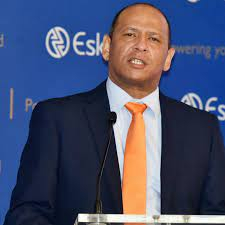
Eskom Acting CEO, Calib Cassim, has announced that if a series of interventions to reduce power demands and improve reliability is unsuccessful this winter, load shedding could intensify to Stage 8.
“It is going to be a difficult winter,” he told the media on Thursday.
Citing the contributing factors, Cassim said the State-owned entity is approaching the cold season with 3 000 megawatts (MW) less capacity compared to last year, due to units 1, 2 and 3 of Kusile Power Station and 1 unit of Koeberg Nuclear Power Station being currently offline.
“However, the focus during this winter, first and foremost, must be the performance of the generation fleet around the Energy Availability Factor (EAF).”
Presenting the winter plan, the Acting CEO said with the support of the system operator and energy planning, Eskom is focused on the key objective of keeping unplanned demand at, at least 15 000MW.
“However, we know it’s been a struggle to keep it at this level and in maintaining that level of 15 000MW can correspond to much lower levels of load shedding during morning peaks, during the day and evening peaks.
“We will indicate that if the interventions that we have planned for the winter do not achieve the desired outcomes and our UCLF [unplanned capability loss factor] reaches levels of 18 000MW, then the likelihood of Stage 8 load shedding during peaks is extremely high.”
While the power system is constrained, Cassim stressed that South Africa would not be plunged into a complete grid collapse.
“I must reiterate that in terms of a national blackout, we are confident that it will not occur because of the interventions and the control mechanisms that we have in place through a competent system-operated team.”
Cassim stressed that load shedding is necessary to keep control of the transmission grid.
“That is why the choice of the levels of load shedding is then executed to remain in control of the grid.”
Eskom said it is focusing on improving the performance of power stations and the EAF, which has deteriorated from 60% in March to 52% currently.
In the medium term, Cassim said the entity will work around the clock to ensure it recovers, restores and brings online three units at Kusile by November 2023.
Cassim also announced during this winter period, Eskom will utilise much more high open cycle gas turbines (OCGTs) within the allocated budget and the debt relief.
He said Eskom’s Generation Group has a budget of R20 billion for OCGTs, which are power stations that use diesel as their primary resource.
Demand-side management (DSM), Cassim said, is another crucial lever.
DSM programmes allow for the effective management of customers’ energy consumption to reduce peak demand or overall consumption during specific periods.
“We must also have an appreciation that over and above what Eskom needs to do and control, having more capacity and megawatts onto the grid is essential to give us stability in terms of the electricity sector and reliability,” said Cassim.
He welcomed Minerals and Energy Minister Gwede Mantashe’s various Bid Windows in his Budget Speech vote, which entail renewables of 5 000MW, 1 230MW of battery storage and 3 000MW of gas.
In addition, Cassim said Eskom has now allocated and released capital expenditure across generation transmission and distribution groups for the next three years.
Meanwhile, Eskom Board Chairperson, Mpho Makwana, said the power system will be more constrained, with weather forecasters anticipating a much colder winter season.
“These challenges will result in high electricity demand as heating of our homes and spaces is required,” he explained.
Makwana said load shedding during winter months requires a coordinated effort among all stakeholders in the country.
“We fully comprehend the adverse impact rotational load shedding has on South Africans and the already fragile economy. We’re doing everything to mitigate the intensity of rotational load shedding, including taking lessons from the rest of the world.”
Makwana said the Board of Directors is working tirelessly with all key partners and shareholders to turn the tide on this “negative reality”.
22 South Africans stuck in Egypt to return home
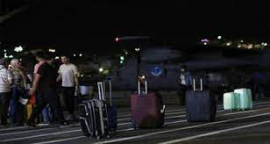
The Department of International Relations and Cooperation (DIRCO) has confirmed on Tuesday that it has successfully intervened on behalf of 22 South Africans who were still trapped in Egypt after fleeing the conflict-torn Sudan.
This comes after the Gift of the Givers received a call on Monday about the locals stuck on a ship in Safaga port, Egypt, since Saturday, 29 April.
The disaster response non-governmental organisation said they arrived from Port Sudan, where they had been on contract since September last year for a project that required two more weeks for completion and then the war broke out.
The organisations said they were “stuck” on a cargo ship, not a commercial liner, which complicated matters.
“Regarding the 22 South African nationals who were stranded at Safaga port and refused permission to disembark from their boats by the Egyptian authorities because clearances were required by authorities, we’re happy to report this morning that we have successfully intervened on their behalf,” said DIRCO spokesperson, Clayson Monyela.
According to Monyela, Egyptian authorities have since granted the South African citizens permission to get off the boat to proceed with their journey and an official from the South African Embassy in Cairo has been tasked with signing them off.
“They will then proceed to Cairo, fly via Ethiopian Airlines back to South Africa with the stopover at Addis Ababa.”
Meanwhile, 51 South African citizens, who were stranded in Sudan, touched down at the OR Tambo International Airport in Johannesburg on Sunday.
“The lesson from this experience is that private companies who choose to make their own private arrangements for the employees, in a situation like this at play in Sudan, it is always beneficial to inform and talk to government because there are processes that need to be complied with and certain interventions that can only be made by government.
“We’re happy now that all South African nationals that we know and are aware of have all been successfully evacuated out of Sudan.”
He described the mission as “dangerous and risky” and thanked Egypt, Sudan and Saudi Arabia and Gift of the Givers for offering their helping hand.
“We’ve brought our people home and we’re happy about that. We also acknowledge the role of the South African National Defence Force for their role in making this possible.”
Tensions erupted in Sudan on 15 April between the army and the Rapid Support, killing over 500 people, with thousands injured.
Higher load shedding stages back

State power utility Eskom has announced that load shedding will be ramped up to higher stages this afternoon (Tuesday) due to delays in the return to service of at least nine generating units.
Stage 6 load shedding will commence from 4pm this afternoon until 5am on Wednesday morning.
This will be followed by Stage 4 which will remain in place until 4pm.
Stage 6 will then commence again with a drop down to Stage 3 from 5am on Thursday morning.
“The delays in returning a unit to service at Arnot, Camden, Duvha, Kendal, Kriel, Lethabo, Matimba, Matla and Tutuka power stations contributed to the current capacity constraints. The team is working around the clock to ensure that generating units are returned to service as soon as possible.
“We thank those South Africans who do heed the call to use electricity sparingly and efficiently in helping to alleviate the pressure on the power system, as this is assisting in avoiding higher stages of load shedding,” Eskom said.
Fish deaths at Hartbeespoort Dam caused by lack of oxygen
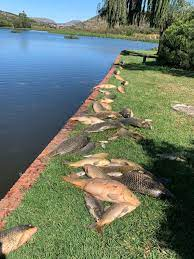
Investigations conducted by the Department of Water and Sanitation (DWS) has revealed that the fish that died on 11 April at the Hartbeespoort Dam, was due to extremely low oxygen levels in the dam.
This comes after thousands of dead fish among the hyacinth were discovered closer to the shore by the Ifafi Aquatic Club and the Schoemansville Oewer Club members.
The department’s probe involved taking samples at four different sites of the dam. These include the dam edge near the overgrown hyacinth, 60 metres away from the edges, Ifafi Aquatic Club jetty and near the Ifafi Aquatic Club.
The results, the department said, revealed that excessive algal growth caused by high nutrients, that is the phosphorus and nitrogen content levels in the water, led to oxygen depletion and fish mortality.
“The occurrence of low oxygen concentration in water is typical in sewage-contaminated systems with high organic matter and could not be attributed to high water temperatures given the average temperature of 22 degrees Celsius at the time of sampling.”
To address the hyacinth and algal growth at the dam, the DWS has recently appointed Magalies Water for three years to develop and implement a programme that will deal with the invasive plant and the algae that are infesting the dam.
“The entity is expected to develop a resource management and remediation plan to address the poor water quality, minimise and control the plant and algal growth in the dam and the upstream catchment, which lead to its pollution and compromises water quality and use of the dam,” the department explained.
The team has also been tasked to develop a short-term intervention plan to remove the hyacinth, review the algal management strategy and develop a catchment management plan to address the receiving of water into the dam from the upper catchment.
“The plan will also involve the repurposing and readapting of the Metsi a Me programme to focus on the upper catchment which is contributing to the eutrophication of the dam.”
The programme is expected to start by mid-May and will incorporate the Biological Control Programme managed by the Department of Forestry, Fisheries and Environment (DFFE).
SA citizens stranded in Sudan safely cross into Egypt – Dirco
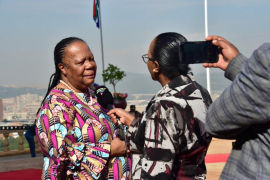
International Relations and Cooperation Minister, Dr Naledi Pandor, confirmed on Tuesday that South Africans who were stranded in Sudan have now safely crossed into Egypt after a 72-hour ceasefire was agreed.
“We evacuated not only South Africans,” Pandor said, speaking on the sidelines of the Finland State Visit at the Union Buildings in Pretoria.
According to Pandor, South Africa was also asked to assist with Angola, Namibia, Zimbabwe and some Brazilian citizens.
“So, they have crossed successfully and safely. The task now is to get them to South Africa and that lies in the capable hands of the South African National Defence Force (SANDF),” she explained, adding that government is still awaiting the final details on when they will land on home soil.
On Sunday, the SABC stated that the SANDF team was on its way to the warring country to evacuate local citizens.
SAnews on Monday reported that 77 South Africans were stuck in Sudan following the conflict that broke out last week between the Sudanese Armed Forces (SAF) and the Rapid Support Forces (RSF).
According to reports, tensions erupted on 15 April during negotiations to integrate the RSF into the country’s military as part of plans to restore civil rule and over 420 people have since been killed.
Pandor said it is in the global interest for the conflict to end and that the leaders will continue with their broad efforts to engage and draw the two parties together.
According to the department’s spokesperson, Clayson Monyela, two buses have safely arrived at the border with Egypt.
“We have officials from the SA Embassy in Egypt to receive them and facilitate their entry into Egypt. The South African government will pay for their flights back to South Africa,” he tweeted.
He also thanked everyone for their support, including the Gift of the Givers and the Egyptian government.
Meanwhile, he said there are 12 more nationals that will leave Sudan today.
The Minister raised concerns about lives being lost and the capital city Khartoum that is being battered, while citizens continue to bear the brunt.
United States Secretary of State, Antony Blinken, tweeted: “Following intense negotiations, the SAF and RSF have agreed to implement and uphold a 72-hour nationwide ceasefire starting midnight, 24 April.
“We welcome their commitment to work with partners and stakeholders for permanent cessation of hostilities and humanitarian arrangements.”
Eskom stepping up initiative to curb peak electricy demand

Eskom says it will be ramping up its demand side management (DSM) initiatives in order to better manage the supply and demand of electricity in South Africa.
The power utility held its first national Demand Side Management Indaba in Gauteng on Monday.
During the Indaba, the power utility’s board chairperson, Mpho Makwana, said the DSM initiatives assist the power utility to reduce pressure on the system during peak hour as well as give consumers the opportunity to save on electricity bills.
“The effective implementation of the DSM programmes could create a win-win situation – reducing pressure on the power system and enabling consumers to realise cost savings by being more energy conscious and reducing their consumption without affecting business productivity or quality of life,” he said.
The power utility has embarked on several initiatives such as energy saving through promoting the use of compact fluorescent lights, energy efficiency, demand response, distributed generation and energy storage.
Makwana highlighted that demand side initiatives have been implemented all over the world and produced results.
“DSM is not a South African concept. It is global phenomenon with the best-in-class countries already using technology to manage demand. The array of policy measures to incentivise demand-side participation, promote energy conservation and reduce peak demand can be replicated in our country,” Makwana said.
He called on all South Africans and those doing business in South Africa to implement power saving initiatives in order to assist the power utility to reduce the strain on the power grid.
“DSM programmes can be more effective through a collaborative approach. I’d like to acknowledge and thank our large customers who are participating in the Eskom’s DSM initiatives. We’d like to encourage and invite all stakeholders from businesses, industries to residential customers to come on board. I also thank South Africans for heeding the call to use electricity sparingly and efficiently to help alleviate the pressure on the power system.
“Eskom is grateful to the National Energy Crisis Committee (NECOM) for coordinating the National Demand Side Management Indaba. It is through initiatives such as these that we can partner and strive for a sustainable future,” Makwana said.
Cabinet briefed on the state of electricity

Cabinet has been briefed about the current state of the electricity system as well as progress on the Energy Action Plan.
“The meeting discussed short and medium-term measures to ensure energy security, taking into account our immediate energy needs,” said Government acting spokesperson, Michael Currin, on Wednesday.
Cabinet noted the presentation by Electricity Minister Kgosientsho Ramakgopa and directed that a further assessment of the electricity situation and measures to be taken and be addressed at the next NECOM meeting that will be convened as speedily as possible.
Government continues to implement the country’s Energy Action Plan in earnest, with the long-term goal of securing continuous, credible energy supply.
To respond to the severe impact of load shedding on households, small businesses and the economy as a whole, President Cyril Ramaphosa announced a range of measures in July 2022 to improve the performance of existing power stations and add new generation capacity as quickly as possible.
The Energy Action Plan was developed through extensive consultation and endorsed by energy experts as providing the best and fastest path towards energy security.
While Government understands the frustration and the inconvenience that loadshedding is causing, it has reiterated that loadshedding is implemented only as a last resort in view of the shortage of generation capacity and the need to attend to breakdowns.
Government has assured citizens that work is underway to improve the performance of power stations to reduce stages of load shedding while driving work to bring more capacity onto the grid as quickly as possible.
According to Government, progress has been made in several areas since the adoption of the Energy Action Plan.
These include the relaxation of some requirements, which will enable quicker procurement, and the removal of licensing requirements for generation projects to enable private investment.
N3 highway reopens after multiple car crash
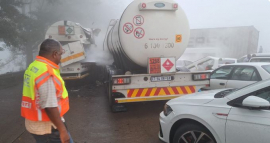
The KwaZulu-Natal Department of Transport has reopened the N3 freeway between Hilton and Cedara after hours of closure following a multi-vehicle crash on Monday afternoon.
In a statement on Monday, KwaZulu-Natal MEC for Transport, Sipho Hlomuka, said various government emergency response services had worked tirelessly to ensure the reopening of the freeway, removing the wreckage of five trucks, eight minibus taxis and 22 light motor vehicles which were involved in the pile up.
Vehicles were moved amid a long backlog of traffic on the N3 northbound (Johannesburg bound).
“The road was opened after the recovery of all the five bodies of the deceased, assisting survivors on scene and transporting critical patients to health care facilities for urgent medical attention.
“Through an integrated government response, various interventions are being made, including setting up shelter in uMngeni Town Hall and activating an emergency contact centre. Various social partners are also mobilised and are also assisting the affected motorists and public transport commuters,” Hlomuka said.
The taxi industry provided alternative transport to public transport commuters, who wished to continue with their journey to their respective destinations.
The MEC commended the hard work by various emergency services and sent his deepest condolences to all the affected families, and wished a speedy recovery to all those who sustained injuries.
“We acknowledge the magnitude of this horrific accident and the trauma felt by all those involved. Some motorists have been stuck for hours and lost a lot of time in traffic.
“We, however, wish to salute all the emergency response teams for a job well done under such unfavourable weather conditions. As provincial authorities, we are hugely disappointed with the fatal crashes recorded during this Easter weekend,” Hlomuka said.
Hlomuka appealed to motorists who will be continuing with their journey and those who are still going to travel to be on high alert and ensure maximum adherence to traffic regulations.
“To those who still wish to locate their family members or get a status update on the road are urged to contact the emergency contact centre number on 033 940 8484,” the MEC said.
Meanwhile, KwaZulu-Natal Premier Nomusa Dube-Ncube said the provincial government is working closely with law enforcement agencies to investigate the cause of the accident and to ensure that those responsible are held accountable.
“Our priority at this time is to provide support and assistance to the injured and the families of the deceased. We urge all road users to exercise caution and adhere to road safety rules and regulations to prevent such tragedies from happening in the future,” Dube-Ncube said.
The Premier has also sent her condolences to the families and loved ones of those who lost their lives.
Transport Minister Sindi Chikunga is expected to visit the accident scene this afternoon to assess the level of damage and progress made to reopen the highway for traffic.