
Freight bottlenecks, geopolitical conflicts hampering mining sectors
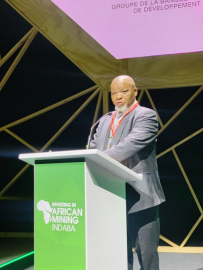
Mineral Resources and Energy Minister, Gwede Mantashe, says the country has to urgently prioritise the resolution of challenges facing freight and railways operations if the mining industry is to capitalise on the current minerals boom.
The Minister made the call while delivering the opening address at the 2023 Investing in Africa Mining Indaba in Cape Town on Monday.
Addressing delegates, he said 2022 had been a grim year for the mining industry.
“It is a year in which international and domestic factors negatively affected mining production and mineral sales.
“International factors included soaring energy prices due to the ongoing geopolitical dynamics, whereas domestic factors included the ongoing power supply disruptions (load shedding) and the logistical bottlenecks on our railways and ports.”
Mantashe said the soaring of global energy prices negatively impacted the industry’s operational costs.
“For instance, the price of crude oil averaged $100 per barrel in 2022 and as a result, mining companies had to pay exorbitant prices for fuel and electricity,” he said.
Domestically, the industry was hard hit by increased power outages.
This, Mantashe said, led to a decline in mineral production across all commodities.
“It is estimated that load shedding cost the economy about R1 billion a day. In November 2022, mining production contracted by 9%, marking a 10th consecutive month of contraction in volumes produced.
“That decline is manifesting itself in many ways. You find mines producing and keep stockpiles because those stockpiles cannot be moved to the ports. Those are the issues we need to confront. Investors, as they come here, must appreciate that we have these challenges and we have to overcome them.”
However, looking at positives, the Minister pointed to the success of Goldfields, which during this period increased production by 10%.
He said Goldfields was an example of innovation and foresight that led to different outcomes compared to the rest.
“It is our considered view that Gold Field’s performance was in part because of the reforms on embedded generation which they took advantage of following the amendments to Schedule 2 of the Electricity Regulation Act (ERA),” he said.
Last year, the Act was amended to allow the licensing requirement for generation projects for own use. The cap was increased from 1 megawatt to 100 megawatts, and ultimately removed altogether.
“This cushioned them [Goldfields] from the impact of load shedding, as they were able to generate their own energy, and thus increased and maintained production,” he said.
With the industry relying heavily on efficient transportation, Mantashe said the current logistical bottlenecks on railways and ports continue to contribute to the decline in export volumes of bulk commodities.
These include coal, iron ore, manganese and chrome.
“As a result, the country is not fully benefitting from the commodity boom of these minerals.
“Transnet is currently exploring efforts aimed at accelerating the improvement of its rail network to support the return to service of locomotives to enable the export of bulk commodities.
“We further welcome the establishment of joint structures by Transnet and the Minerals Council South Africa (MCSA) to ensure that all possible actions are taken speedily to stabilise and improve South Africa’s operation efficiencies at the ports.
“We believe this kind of cooperation between Transnet and the industry will bear fruits like we saw at the height of the Covid-19 pandemic,” Mantashe said.
At the centre of the country’s current energy challenges, he said, “is the decline in the Energy Availability Factor (EAF) from an estimated 75% to 49%”.
“Therefore, the most feasible and logical option to exercise to resolve load shedding is by arresting the decline in the EAF,” he said.
Mantashe said failure to attend to and address the declining Eskom plant performance and subsequent higher stages of load shedding “is an irritation to society and has the potential of pitting society against government”.
Curbing mine deaths
In the past year, the industry, he said, made significant inroads in reducing fatalities.
In 2022, the industry recorded 49 fatalities, which was the lowest ever in history.
The figure represents a 34% improvement year-on-year, compared to 74 fatalities recorded in 2021.
Meanwhile, the Minister told delegates that the Department of Mineral Resources and Energy and the Industrial Development Corporation have created a R500 million exploration fund to help the country unleash junior miners and the emergence of new mines.
He said the fund will be supported with geological information to de-risk the exploration activities and increase the chances of success.
“The initial phase of the implementation of this fund is deliberately kept small to prove the value of geological information to accelerate advancement along the exploration value chain trajectory to pre-feasibility stage,” he said.
Stakeholders warned against misleading Parliament committees

The Portfolio Committee on Higher Education, Science and Innovation has warned stakeholders in the higher education sector about the seriousness of deliberately misleading parliamentary committees on the real state of affairs on the ground.
The committee sent the warning during its oversight visit in Ehlanzeni District Municipality in Mpumalanga on Friday.
The committee visited Ehlanzeni Technical and Vocational Education and Training (TVET) College and Mpumalanga Community Education and Training (CET) Centre, as part of its oversight on the higher education sector’s readiness for the 2023 academic year.
During the visit in Ehlanzeni TVET College, the committee was informed that the college is ready for the 2023 academic year, with preparations started in 2022 for classes commencing on 18 January 2023.
The college noted that at one of its campuses, classes were hampered by the delay in results for students writing National Certificate Vocational exams. However, the matter has since been resolved.
The college said applications to study at Ehlanzeni College are fully online. However, if students struggle with the online application process, provision is made to accommodate in-person and on-campus registrations.
According to Ehlanzeni College, 91% of students are funded through the National Student Financial Aid Scheme (NSFAS), while 9% are funded through the Sector Education and Training Authority (SETA).
Portfolio Committee chairperson, Nompendulo Mkhatshwa, said the committee was concerned after hearing differing views on the state of affairs at Ehlanzeni College from the student representative council (SRC) and organised labour.
“The committee was also concerned about the filing of vacant funded posts and called for the college to speedily address this as a matter of urgency. The committee proposed the immediate creation of a stakeholder engagement structure that would include all role players,” Mkhatshwa said.
The committee was joined by Members of the Mpumalanga Provincial Legislature education committee members during the visit. The province committed itself to assist Ehlanzeni to deal with some of its problems so that it can function more efficiently.
The committee also held a meeting with Mpumalanga CET Centre’s regional office on its readiness for the academic year ahead.
The centre has 108 learning centres within the Ehlanzeni District Municipality. Some of the challenges it faces include insufficient funding to cover all its needs for effective service delivery and funded programmes.
The committee reiterated that a discussion is needed on the proposal to move CETs from Basic Education, and that the Department of Public Works and Infrastructure (DPWI) needs to be engaged to release unused buildings to CETs.
Some of the successes highlighted by the CET include the training of students in upholstery skills. However, the centre does not have its own facilities to train students.
The committee commended the work of the Mpumalanga CET and called for it to share its good practices with other struggling neighbouring centres.
Two cholera cases confirmed in South Africa

Health Minister, Dr Joe Phaahla, has called for vigilance as the country has recorded two laboratory-confirmed cases of cholera imported from Malawi.
According to the department, the cases were confirmed in two sisters, who had travelled together from Johannesburg to Malawi to attend a funeral service, and returned by bus on 30 January 2023.
“Both patients had developed symptoms on their return to Johannesburg. One patient presented to a local clinic and was then admitted to hospital. During the case investigation and follow-up of close contacts, the sister reported that she also developed diarrhoea whilst travelling back from Malawi but it resolved within a day and she did not seek health care.
“A close contact (household family member) of one of the cases/patients was admitted to hospital on 4 February with diarrhoea and dehydration, and is considered a possible case. Laboratory test results are pending and follow-up of close contacts is ongoing,” the department said in a statement.
The department said it is working closely with the affected province, the National Institute for Communicable Diseases (NICD) and World Health Organisation (WHO) to closely monitor the situation.
It urged all people experiencing symptoms, including diarrhoea and dehydration, with or without travel history to cholera outbreak countries, to report to their nearest health facilities for health screening and early detection.
“The World Health Organisation does not recommend any travel or trade restrictions on countries based on current available information, in line with the international health regulations. Port health officials at the ports of entry (especially land and air) will remain on alert for travellers arriving from countries experiencing a cholera outbreak,” the department said.
Cholera is an acute enteric infection caused by the bacteria Vibrio cholera, and outbreaks usually occur in settings with inadequate sanitation and insufficient access to safe drinking water. Cholera typically causes acute watery diarrhoea and can affect people of all ages.
It mainly spreads through contaminated/polluted water, and people can become infected directly through drinking contaminated water, or indirectly through eating contaminated food.
The infection is often mild or without symptoms, but can sometimes be severe and life-threatening.
“Symptoms range from mild to severe and watery diarrhoea and dehydration. The incubation period (the period from when a person ingests cholera-contaminated water/food to when they first become ill) ranges from a few hours to five days, usually two to three days.
“Most persons infected with cholera will experience mild illness or not feel ill,” the Health Department said.
Although cholera is often predictable and preventable, the department has urged people to ensure proper hand hygiene, including thorough washing of hands with water and soap before and after using the bathroom/toilet, and preparing or eating food.
The use of safe or disinfected water for preparing food, beverages and ice is recommended to prevent possible cholera transmission. Safe disposal of human excrement and nappies is recommended.
The department said cholera is not endemic in South Africa, and the last outbreak was in 2008/9, with about 12 000 cases.
“That resulted from an outbreak in Zimbabwe, which led to a surge of imported cases and subsequent local transmission in Mpumalanga and Limpopo provinces through contaminated water,” the department said.
Free State condemns viral corporal punishment incident
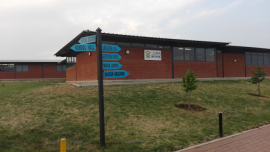
The Free State Department of Education has instituted an investigation into an alleged incident of corporal punishment administered last week by the principal of Ntsu Secondary School in Bethlehem in the Thabo Mofutsanyane District.
In a statement, department spokesperson, Howard Ndaba, said corporal punishment against any learner is condemned in the harshest possible terms.
Corporal punishment is banned and may not be used as a method of enforcing discipline in schools.
“Principals, educators, learners, parents and/or any support staff are required to report the use of corporal punishment following the prescripts contained in the protocol to deal with incidences of corporal punishment in schools.
“Harsh action will be taken against anyone who violates the prohibition on corporal punishment,” said Ndaba.
He said images depicted on various social media platforms indicate that the principal of Ntsu Secondary used corporal punishment as a way to discipline a learner who reportedly failed to comply with the detention sanction conditions at school.
“Corporal punishment is a violation of children’s rights, physical integrity, dignity, health, development, education,” the spokesperson said.
The effects of corporal punishment are far-reaching and can cause mental and physical harm to children, as well as short- and long-term aggression and antisocial behaviour in learners, even as they mature.
Crucially, Ndaba said, corporal punishment is not a solution to disciplinary problems in a school or any other setting.
The department has commenced with an investigation into the incident and will work with urgency to establish the facts.
“The department will continue to promote safety at schools and remind teachers of their responsibilities regarding the administration of discipline in schools.
“School governing bodies are requested to mobilise all stakeholders to play a meaningful role in the abolition of corporal punishment in schools,” he said.
North West deals with inconsistent provision of basic services

The North West government has committed to attend to the inconsistent provision of basic services, improve information availability on service delivery challenges as well as develop a system that will help government resolve identified service delivery challenges.
This comes after outrage by residents who complained about aging infrastructure, vandalism, as well as ongoing electricity power cuts, which continue to have an adverse impact on the provision of water in various localities across the province.
This has prompted the government to find a solution to these matters by resolving them using the Rapid Service Delivery Monitoring and Intervention Strategy.
The North West government said government departments and institutions will strengthen communication and keep residents abreast of intervention measures they employ to address service delivery backlogs.
Communities will also have an opportunity to report and alert government of any service interruption through a web-based free access online application that has been developed by the Office of the Premier.
The strategy will be implemented through the Provincial Accelerated Service Delivery Plan.
North West Premier Kaobitsa Bushy Maape has urged various levels of government to work together and ensure the full implementation of the strategy.
“This strategy is aimed at intensifying our efforts to expedite delivery of services in municipalities and avert violent protests over provision of services. Municipalities are also considering alternative energy sources to ensure uninterrupted provision of water in many of our localities.
“We have also been alerted of possible acts of vandalism in our water infrastructure. We have requested police to follow all leads, investigate these allegations and arrest perpetrators of this hideous crime,” Maape said.
The North West Premier’s Coordinating Council recently held a meeting following inconsistent provision of services in some parts of the province sparking outrage by residents.
The Coordinating Council also reflected on the visit by the Minister of Water and Sanitation Senzo Mchunu in the province.
The visit is one of the many initiatives by the provincial government to work hand in glove with the National Department, Water Boards and the Private Sector to address challenges of water and sanitation in various communities across the province.
Various intervention measures are already in full swing. A follow up meeting is expected to be held in due course to take stock on progress made.
“We want to include everybody in these initiatives. Mining operations in the Bojanala District are already assisting through Corporate Social Investments and Social Labour Plans. We want to scale-up these efforts through an intensified collaborative effort,” the Premier said.
A Technical Team that has been assembled by Premier Maape is currently undertaking visits in localities across the province to monitor provision of services in various government departments and institutions.
The initiative is also aimed at developing remedial action plans to find solutions on a number of service delivery challenges confronting communities across the province.
“We want to interact directly with communities to understand their plight and challenges. These visits will help us a great deal in making informed decisions about a number of projects we intend to implement.
“There are already various infrastructural projects that will be carried out between now and the next financial year and we want these initiatives to benefit locals in one way or the other,” Maape said.
Eskom calls on City of Tshwane to settle bill

Eskom has called on the City of Tshwane municipality to pay its bulk electricity supply to enable the power utility to “continue supplying electricity to the city”.
This after Eskom revealed that the municipality’s debt has risen to some R1.4 billion.
“The City of Tshwane’s electricity debt has compounded…due to its short payments and non-payments spanning several months in the recent past. The city short paid its November 2022 account of R780 million, negatively impacting the liquidity, financial performance and sustainability of the power utility.
“Eskom does not have the financial capacity to finance the CoT’s operations and calls on the city to do right by its residents and pay the bulk electricity account to enable Eskom to continue supplying electricity to the city,” Eskom said.
The electricity supplier said it has engaged with the CoT to pay the remaining balance on the November account however, “the bill remains outstanding”.
“Eskom approached the Department of Cooperative Governance and Traditional Affairs (Cogta) to mediate in the resolution of the CoT’s poor payments that continue to spiral out of control. The Public Finance Management Act requires that institutions recover what is owed to them, hence Eskom sought the intervention of Cogta in the matter.
“Eskom has previously reported on CoT’s erratic payments on its bulk account. On 5 January, the power utility made the same plea to settle its long outstanding invoice of November 2022 in a meeting between the two entities but to no avail,” Eskom said.
Government urges caution during heatwave
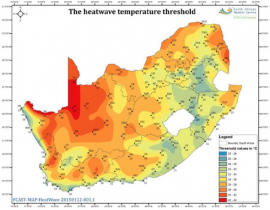
Government has urged South Africans to take extra caution as the heatwave persists in certain parts of the country.
In a statement on Tuesday, GCIS Acting Director-General, Michael Currin, said: “We are concerned about the impact of the hot weather, parts of South Africa has been experiencing.”
He said residents must drink water and wear light clothing.
“If you are working in direct sunlight, take regular breaks to avoid exhaustion. In particular, residents of KwaZulu-Natal and Gauteng are urged to take precautions against heat-related health complications as temperatures are expected to soar today, as per weather warnings.”
He said government was extremely sad to hear about the passing of eight people of heat stroke in the Northern Cape after a heatwave hit the province.
“Government sends its deepest condolences to the bereaved families,” said Currin.
Committee to ensure sustainable water service management

Water and Sanitation Minister, Senzo Mchunu, has announced that he is setting up a Steering Committee to oversee and ensure a sustainable water and sanitation services management in North West province.
Mchunu said that under the Steering Committee, to be chaired by him and North West Premier, Bushy Maape, a Technical Task Team will be established and include professional engineers from Water and Sanitation, Magalies Water Board, and all districts and local municipalities.
The Technical Task Team will carry out the technical work of assessing, planning and implementation of water and sanitation needs of the whole province.
“The technical structure will be represented by technical individuals, such as engineers because this is a purely technical committee that will be responsible for assessing every municipality, looking at available resources, analysing existing water schemes, those projects that are complete and incomplete, and all causes of stress on water in the province, and come up with solutions.
“This task team should be able to provide us with a detailed plan of what needs to be done, costs and contributions by each municipality, at a local and district level, and the Board as well as the department in order to restore water in areas where there are challenges,” Mchunu said.
Mchunu added that he is confident that the formation of these structures will yield positive results in resolving water challenges affecting most communities in the various parts of the province.
Accompanied by Deputy Minister Dikeledi Magadzi, Mchunu visited Maquassi Hills and the Ramotshere Moiloa Local Municipalities during a planned visit from 19-20 January 2023, to assess the state of water and sanitation at the two municipalities.
The Minister also received an update on the water supply interventions implemented through the Water Services Infrastructure Grant (WSIG) granted by the department.
He emphasised the need for collective planning and implementation of action plans by all role-players to ensure synergy and sustainable provision of water and sanitation services in the province.
Mchunu reiterated that one of the reasons that the work carried out by government is not able to meet people’s needs and demands is due to the “mentality of working in silos.”
While acknowledging that the issues of water in the North West do exist and are serious, Mchunu argued that they are not insurmountable.
“They are not such a big issue that they may make us put our hands on our heads and wonder how we are going to fix it, rather it needs is a collective approach. We therefore, are going to fix this ourselves as national, provincial and local government, as well as the role-players in this water sector,” Mchunu said.
The Technical Task Team is expected to report on the compressive plan to the Steering Committee during the first week of February 2023, where it will provide guidance on what needs to be done to ensure reliable water supply in the whole province.
During his Ministerial working session in the province in February last year, Mchunu visited Dinokana in Ramotshere Moiloa Municipality, which is one of his flagship projects.
The department is currently intervening in the municipality through the Rural Water Supply Project to ensure that communities have access to water.
Adding to Eskom capacity a matter of “extreme urgency” for government – Ramaphosa

President Cyril Ramaphosa has moved to assure South Africans that government is using every means and resource at its disposal to get more capacity onto Eskom’s grid “as a matter of extreme urgency” with the Energy Action Plan at the core.
The President was addressing the nation through his weekly newsletter after South Africans have been experiencing a sustained period of the higher stages of load shedding.
President Ramaphosa said government is taking action to address the myriad of challenges Eskom is facing, with particular focus on improving the performance of Eskom’s ailing coal fired power stations which serve at least 80% of South Africa’s energy needs.
“A team of independent experts is conducting a diagnosis of the problems at poorly performing power stations and taking action to improve plant performance. Six power stations have been identified for particular focus over the coming months to recover additional capacity.
“Eskom is also working to connect Kusile Unit 5 to the grid by September this year. Every urgent effort is being made to restore other units at Medupi, Kusile and Koeberg with significant capacity,” he said.
The President added that Eskom is also taking steps to procure some 1000MW of energy from neighbouring countries with the power utility also aiming to “buy surplus power from companies with available generation capacity for a period of three years”.
Furthermore, government has also signed procurement deals in Bid Windows 5 and 6 of the Renewable Independent Power Producer Programme (REIPPP) which is expected to add some 2800MW of energy to the grid once completed in at least two years.
The President said government has allowed for private power producers to contribute to the strained grid.
“The licensing requirement for embedded generation projects has been removed. Since we first raised the licensing threshold to 100 MW, the pipeline of private sector projects has grown to more than 100 projects with over 9000 MW of capacity.
“We have cut red tape and streamlined regulatory processes, reducing the timeframes for environmental authorisations, registration of new projects and grid connection approvals,” he said.
President Ramaphosa announced that soon, those who have installed solar panels on the roofs of businesses and homes will also be allowed to sell their excess electricity to the grid with work already underway for a pricing structure.
Taking stock
Reflecting on the serious challenges facing Eskom, the President said “a combination of factors…years in the making” have led the power utility to where it currently is.
“Lack of investment in new generating capacity, poor power plant maintenance, corruption and criminality, sabotage of infrastructure, rising municipal debt and a lack of suitable skills at Eskom have all created a perfect storm. There can be no sustainable solution without addressing all these factors in combination.
“We should not make the mistakes of the past. For many years, critical maintenance was deferred, and our power stations were run too hard in order to keep the lights on. As a country we are now paying the price for these miscalculations,” he said.
President Ramaphosa acknowledged the destabilisation that load shedding has wrought on South Africans and businesses alike but called for patience as government implements solutions.
“As load shedding continues to wreak havoc on businesses, households and communities, the last thing South Africans want to hear are excuses or unrealistic promises. The demands for an immediate end to power cuts are wholly understandable. Everyone is fed up.
“We must be realistic about our challenges and about what it is going to take to fix them. While we all desperately want to, we cannot end load shedding overnight,” he said.
The President added that while measures are being implemented, collaboration from all quarters of society will ensure that the Energy Action Plan bears fruit.
“While we cannot end load shedding immediately, what is certain is that if we work together with urgency to implement the Energy Action Plan, load shedding will steadily become less and less severe.
“Through collective action, we will much sooner reach the point where we have enough power to end load shedding altogether,” President Ramaphosa concluded.
Government working on energy relief package for small businesses

The Department of Small Business Development is working on an energy relief package for the Small, Medium and Micro Enterprises (SMMEs) with stakeholders to alleviate the devastating impact of load shedding on small businesses.
SMMEs are particularly hit hard by continued power outages as many cannot afford alternative power sources such as generators. They are forced to pause trading during load shedding. As a result, some small businesses resort to selling perishable goods such as meat and vegetables at low prices, to avoid them rotting away, which affects their much-needed income.
This has prompted Minister of Small Business Development Stella Ndabeni-Abrahams, working together with her team to find solutions that could lessen the impact of load shedding on small businesses.
The Minister has instructed the Small Enterprise Development Agency (Seda) as well as the Small Enterprise Finance Agency (sefa) to work in consultation with different stakeholders within and outside government on an energy relief package.
“Our aim is to find immediate solutions that can be urgently effected to avoid disastrous consequences, such as closure of small businesses and job losses in the SMME sector. This sector is still recovering from the ruinous effects of COVID-19. We cannot afford losing more businesses and jobs,” Ndabeni-Abrahams said on Tuesday.
SEFA conducted a research study on the impact of load shedding on its funded clients, and the following were key findings:
- Most respondents indicated that they are highly reliant on electricity for their operations;
- About 71% of respondents indicated that they are negatively impacted by load shedding; and
- The majority of the respondents will require an alternative power source to continue with their operations.
The details of the package, the criteria and avenues for the application for the relief will be announced soon.