
New unit allows Sebokeng Hospital to perform brain surgery
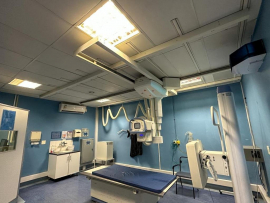
Sebokeng Hospital in Gauteng made history this past week when it performed its first brain surgeries on two patients, who have been suffering from subdural haematoma (bleeding in the brain).
The Gauteng Health Department said this was a major milestone in over 40 years of the hospital’s existence, which comes after the recent establishment of a neurosurgery unit at the hospital.
Previously, the provincial Health Department said, Sebokeng Hospital referred patients in need of brain surgery to Chris Hani Baragwanath Academic Hospital (CHBAH).
“The establishment of a neurosurgery unit will see the reduction of the high prevalence of mortality and morbidity of traumatic brain injury patients in the Sedibeng District.”
Gauteng MEC for Health and Wellness, Nomantu Nkomo-Ralehoko, congratulated the team, saying the surgery bears evidence to the support given by the provincial department to capacitate its centres of excellence by ensuring that health facilities have the right skills and equipment to render services to the public.
“As part of reclaiming the jewel of the Gauteng public health system, one of our key focus areas is to ensure that our facilities function optimally and that infrastructure challenges are addressed as this has a direct bearing on positive health outcomes,” explained the MEC.
The Acting Chief Executive Officer of the hospital, Dr Fhatuwani Mbara, said many patients who presented at the facility with Traumatic Brain Injury (TBI) were demising due to a lack of immediate neurosurgical interventions.
“TBI patients were occupying ICU beds for a prolonged duration with no definite management plan because a majority of the patients require different types of operations ranging from skull, brain and spine surgeries.
“The newly established unit and the highly skilled team we have will ensure that we reduce head injury-related deaths that are sustained by our patients, especially men of younger age groups.”
The first patient was a man who experienced weakness on the right side of his body and was unable to walk or talk.
The neurosurgery team did a craniotomy on him, stopped the bleeding and removed the blood clot. The operation took two hours to perform.
Meanwhile, the second patient is a young man who was injured three months ago and had a subdural haematoma.
“A craniotomy was also done on him and the clot was removed, however, his brain was severely swollen due to the injury. The team did a cranioplasty to protect the brain from potential physical harm.”
Cranioplasty is a surgical operation on the repairing of cranial defects caused by previous injuries or operations.
The two patients, according to the provincial department, have recovered well and were discharged this past weekend to spend time with their loved ones.
Cigarette smuggler arrested at Groblersbrug border

The South African Police Service (SAPS) Commissioner in Limpopo, Lieutenant-General Thembi Hadebe, has applauded members of the Groblersbrug Border Post for their alertness and commitment, which led to the arrest of an alleged cigarette smuggler.
This comes after the team on Sunday confiscated two heavy-duty trucks, fully loaded with illicit cigarettes.
SAPS said the two trucks were on the border of Groblersbrug, waiting to enter South Africa from Botswana, when members on duty became suspicious and conducted a search on the two trucks.
Groblersbrug is the border post on the South African side between South Africa and Botswana.
“They ultimately found cigarettes loaded in the trucks,” the statement read, adding that the trucks had been fully loaded with illicit cigarettes worth over R1.4 million.
“One of the two truck drivers was arrested on the spot, while the other one fled the scene on foot,” SAPS said.
The arrested suspect is expected to appear before Phalala Magistrate’s Court today to face charges of smuggling illicit cigarettes.
Cricket player found guilty of match-fixing
Former Bizhub Lions cricket player, Jean Symes, has been found guilty of participating in match-fixing for the domestic Ram Slam T20 Cricket Challenge.
This comes after the Anti-Corruption officer at Cricket SA received information from a whistle-blower about alleged match-fixing planned for the 2015/2016 domestic Ram Slam T20 Cricket Challenge.
“The matter was brought to the attention of the Hawks Serious Corruption Investigation team based in Pretoria and an investigation was conducted. The investigation revealed that a former Protea cricket player, Gulam Bodi, was approached by bookmakers from India to identify and recruit cricket players to participate in the scheme.
“Bodi also approached Symes, who accepted a gratification to the equivalent of US $2 500 (or approximately R30 000) to participate in the scheme,” the Hawks said.
The thirty-seven-year old has been sentenced to four years imprisonment, wholly suspended for five years on condition that the accused is not convicted of committing a similar offence in terms of Prevention of Corrupt Activities Act (PRECCA) during the period of suspension.
Symes was sentenced in the Pretoria Specialised Commercial Crime Court last month, where he faced charges of corruption in terms of PRECCA.
Meanwhile, Pumelela Matshikwe (37) was sentenced for the same offence by the same court on 10 June 2022.
This was after he admitted to having received a total of R50 000 enticement to participate in match-fixing during the said tournament. He also received a five-year sentence.
The investigation, led by Cricket South Africa (CSA), implicated the cricketers for their role in the conspiracy. They were banned for a period of between seven and 20 years by the International Cricket Council (ICC).
“Bodi was the first to be convicted in this case to five years imprisonment in October 2019 after he admitted to charges of attempting to fix matches in the same series. Bodi acted as an intermediary for international betting syndicates, and approaching certain players with a view to engaging in fixing activities during the competition,” the Hawks said.
Legal Aid SA to reach more South Africans

Legal Aid South Africa (Legal Aid SA) has revised its means test in order to cater to more South Africans who need legal assistance but cannot necessarily afford it.
“The Legal Aid South Africa Means Test, used to determine if applicants qualify for legal aid, has been revised upwards to cater for increases in the Consumer Price Index. This will enable access to legal services to a wider group of people.
“In criminal cases, children continue to automatically qualify for legal aid and do not have to take the Means Test. If it is a civil case, the family of the child will need to take and pass the Means Test,” a Legal Aid SA statement read.
The new thresholds have been implemented and are as follows:
- Applications for legal aid in criminal or civil cases – applicants must earn less than R8 200 per month.
- Applications for legal aid in civil cases where the applicant is a member of a household – applicants must earn less than R9 000 per month.
- If an applicant owns movable assets, they must not be worth more than R151 700.
- If an applicant owns immovable assets, they must not be worth more than R711 700.
“Legal Aid SA looks forward to championing the rights of even more persons to access justice through the provision of independent, accessible and quality legal aid services in criminal and civil legal matters, at no cost,” the statement read.
1 in 6 people globally affected by infertility – WHO

According to a new report published by the World Health Organisation (WHO), large numbers of people are affected by infertility in their lifetime.
Data show that around 17.5% of the adult population – roughly 1 in 6 worldwide – experience infertility, which is defined as failure to achieve a pregnancy after 12 months or more of regular unprotected sexual intercourse.
The report found that the prevalence of infertility, which is a disease of the male or female reproductive system, is common between regions, indicating that this is a major health challenge globally.
Statistics indicate that lifetime prevalence was 17.8% in high-income countries and 16.5% in low- and middle-income countries.
“The report reveals an important truth – infertility does not discriminate.
“The sheer proportion of people affected shows the need to widen access to fertility care and ensure this issue is no longer sidelined in health research and policy so that safe, effective, and affordable ways to attain parenthood are available for those who seek it,” said WHO Director-General, Dr Tedros Adhanom Ghebreyesus.
The agency believes there is an urgent need to increase access to affordable, high-quality fertility care for those in need.
Despite the magnitude of the issue, solutions for the prevention, diagnosis and treatment of infertility such as in vitro fertilisation (IVF) remain underfunded and inaccessible to many due to high costs, social stigma and limited availability.
According to WHO, in most countries, fertility treatments are largely funded out of pocket, while people in the poorest countries spend most of their income on fertility care compared to people in wealthier countries.
“Millions of people face catastrophic healthcare costs after seeking infertility treatment, making this a major equity issue and all too often, a medical poverty trap for those affected,” said Director of Sexual and Reproductive Health and Research at WHO, Dr Pascale Allotey.
“Better policies and public financing can significantly improve access to treatment and protect poorer households from falling into poverty as a result,” said WHO.
While the new report shows convincing evidence of the high global prevalence of infertility, it highlights a persistent lack of data in many countries and some regions.
The WHO has since called for greater availability of national data on infertility disaggregated by age and causes to help with quantifying infertility, as well as knowing who needs fertility care and how risks can be reduced.
The study provides insight into global and regional infertility prevalence by analysing all relevant studies from 1990 to 2021, taking into account different estimation approaches used.
The search identified 12 241 records of potentially relevant studies across the world, which led to 133 studies that were included in the analysis.
Government concerned over locally acquired indigenous cholera cases

The Department of Health has expressed concern at the increasing number of locally acquired indigenous cholera cases following the four new cholera cases that were recorded over the last week in Gauteng.
“Whilst there is an ongoing risk for imported cases following travel from other African countries currently experiencing cholera outbreaks (especially Malawi, Mozambique, Zambia and Zimbabwe), the increasing number of locally-acquired indigenous cases is very concerning,” the department said on Thursday.
All the new cholera cases have been classified as indigenous cases; none reported recent travel (international or local) and there was no evidence of a direct link to imported cases.
“It is critical that healthcare workers and laboratorians consider and test for cholera in persons with acute watery diarrhoea, even in the absence of a travel history or a link to known cases.
“While this is especially important in Gauteng Province where local transmission of cholera has been established in at least two districts, the other provinces remain at risk for imported cases and subsequent local transmission and must remain vigilant,” the department said.
The Department of Health last updated their cholera statistics on 28 February 2023.
“Three of the new cases are in the City of Johannesburg and are adults who participated in the same traditional healing ritual. One case is in Ekhurhuleni of a 10-year-old child with no history of travel and no apparent links to other cases. All new cases are recovering,” the department said.
In total 10 confirmed cholera cases including one death has been reported since 5 February 2023.
All cases are in Gauteng Province; no confirmed cases have been reported in other provinces. The cases range in age from 10 to 50 years.
“In eight cases, Vibrio cholerae was isolated from stool or rectal swab specimens in and further characterised as toxigenic Vibrio cholerae O1 serotype Ogawa; two cases were negative on culture and diagnosed by PCR tests. All isolates have tested susceptible to ciprofloxacin and azithromycin.
“The first three cases in this outbreak were imported or import-related cases following travel to Malawi. All subsequent cases acquired infection locally and are classified as indigenous cases.
“The indigenous cases are from two districts in Gauteng Province (City of Johannesburg and Ekhurhuleni). Some cases reported exposure to, or consumption of, untreated water from the Jukskei and Klip rivers and these are being investigated as possible sources of infection,” the department said.
All healthcare workers must consider cholera in any person with (or dying from) acute watery diarrhoea. For cases of acute watery diarrhoea:
- Collect a stool or rectal swab specimen and request culture for cholera (in addition to other microbiological tests etc. as indicated). Where possible, collect specimens before antibiotic treatment is given. Guidance on the collection of specimens can be found here (https://www.nicd.ac.za/wp-content/uploads/2023/01/Guidelines-for-specime…).
- Notify the case as suspected cholera by completing a Notifiable Medical Conditions case notification form. Do this immediately; do not wait for laboratory results.
Detailed guidance for cholera diagnosis and management can be found on https://www.nicd.ac.za/diseases-a-z-index/cholera/.
Temporary Manager appointed for Mangaung prison
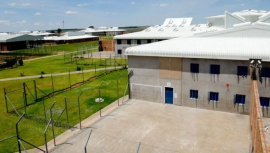
Following the daring escape of convicted murderer and rapist, Thabo Bester, from the Mangaung Correctional Centre in the Free State, Correctional Services National Commissioner, Makgothi Thobakgale, has announced the appointment of a Temporary Manager for the facility.
Patrick Ali Mashabathakga has been named as the Temporary Manager for the facility with immediate effect.
G4S is the contractor of the privately run Mangaung maximum-security prison, where Bester was serving his sentence.
Thobakgale said Mashabathakga is an official from the Department of Correctional Services. He was appointed to the post of Temporary Manager according to the prescripts of the Correctional Services Act.
Addressing media at Mangaung prison on Thursday morning, Thobakgale said the department has invoked section 112 of the Correctional Services Act, read with clause 55 of the Concession Contract.
“This is a necessary remedy following this embarrassing incident, which has undermined the authority of the State. The contractor (G4S) has been informed of the decision.
“The findings of the report [on Thabo Bester’s prison escape] points to the fact that the Director of Mangaung Correctional Centre has lost effective control of the facility, and the Correctional Services Act does provide for a mechanism to restore safety and security by taking control of the correctional centre by means of appointing a Temporary Manager,” Thobakgale said.
Thobakgale said the Temporary Manager will perform the functions of the Director.
“The contractor has been duly informed of this decision. Mr Mashabathakga will be supported by other officials that I have appointed in order to ensure that the Mangaung correctional facility is able to render the required services without experiencing shortcomings.
“Restoring control and prudent management systems are key priorities in the effective running of a correctional facility.
“Critical to this is the enforcement of standard operating procedures where rules and regulations are aligned towards humane treatment, safety and security of inmates, officials and service providers,” Thobakgale said.
Thobakgale explained that it is necessary that an intervention of this nature be undertaken due to a number of security breaches and other disturbing practices identified by the investigation report on Thabo Bester.
“When compounded with the post-mortem and DNA sequencing results, it becomes vividly clear that as Correctional Services, we are dealing with a well calculated and organised escape debacle,” Thobakgale said.
He said the South African Police Service is continuing with investigations with regard to Bester’s escape.
“Thabo Bester was assisted to escape from lawful custody on 3 May 2022, yet the contractor maintains that he died in his cell. This is contrary to overwhelming scientific evidence available,” Thobakgale said.
Thobakgale said a private vehicle was allowed inside the facility without a gate pass on the day of the escape, possibly carrying an unknown body that was burnt beyond recognition in cell 35.
“Tampering with surveillance cameras points to a failed monitoring system deliberately orchestrated to conceal crucial evidence and individuals who aided Bester to escape.
“This is also a failure to guarantee safe custody of inmates and a breach in terms of the responsibilities allocated to the contractor,” Thobakgale said.
Bester was thought to have died in his prison cell back in 2022, but it was confirmed he escaped from Mangaung prison last year.
SA awaits update on Gupta brother’s extradition application

An urgent meeting has been requested between the South African and United Arab Emirates’ central authorities as well as the Minister of Justice and Correctional Services Ronald Lamola and his counterpart in the UAE – to get an update on the status of an extradition application pertaining to Atul Gupta and Rajesh Gupta.
The brothers were arrested in the UAE last year. They are wanted by the South African authorities to answer to charges of fraud, corruption and money laundering.
In a statement on Thursday, the Ministry of Justice and Correctional Services said it is waiting for an update on the status of its extradition application pertaining to Atul and Rajesh Gupta from the UAE.
Justice and Correctional Services Minister Lamola expressed concern that following a visit by the Central Authority to the United Arab Emirates to ensure that the application meets the requirements of the UAE authorities, there has not been an update on the first court appearance of the fugitives to determine whether there will be a hearing on the application for extradition.
“To date, the Central Authority has made various enquiries, the latest request is an urgent meeting between the two central authorities and the Minister of Justice and Correctional Services and his counterpart in the United Arab Emirates,” said the Ministry.
The Ministry is pursuing this matter via the diplomatic channels pursuant to the extradition treaty between the two countries.
The brothers are wanted in South Africa in relation to the R25 million Nulane Investment fraud and money laundering case.
The case relates to a procurement fraud involving R24.9 million, paid between November 2011 and April 2012 by the Free State Department of Agriculture (FSDoA) to Nulane Investment 204 (PTY) LTD, a company owned and controlled by Iqbal Sharma.
From there, the funds were diverted to Islandsite Investments 180 (Pty) Ltd (Islandsite), a company owned and controlled by the Gupta family.
The R24.9 million was purportedly paid to Nulane to conduct a feasibility study for the Free State Province’s flagship Mohoma Mobung project, on the basis that Nulane had unique skills to perform the work.
The group is charged together with three companies, Nulane Investment 204 (Pty) Ltd, Wone Management (PTY) LTD, Pragat Investment (Pty) LTD, Islandsite Investments Pty Ltd, the National Prosecuting Authority said at the time.
The other accused in the case are former government and state entity officials, former Transnet board member Iqbal Sharma, former Free State head of Department for Rural Development Peter Thabethe, former head of FSDoA Limakatso Moorosi, former FSDoA Chief Financial Officer, Seipati Dhlamini and Nulane Investment employee Dinesh Patel.
Hawks conduct operations at Bedfordview house, offices

The Hawks’ Serious Corruption Investigation team conducted simultaneous search and seizure operations at a house in Bedfordview and offices in Germiston and Edenvale on Wednesday morning.
According to the police, the action is part of the ongoing investigation into alleged tender irregularities that resulted in approximately one billion rand being siphoned from the Gauteng Department of Health.
It also follows the operation that was executed at the Tembisa Hospital premises towards the end of 2022.
“It is as a result of tenders attached to the Tembisa Hospital from around 2016 to early 2022. Over 220 entities and various individuals are subjects of an ongoing investigation in respect of numerous allegations.
“This include schemes that reportedly thrived in infringement of the Public Finance Management Act (PFMA). These were made possible through tender manipulation, kickbacks, inflated prices and or duplicated invoices amongst other contraventions,” explained the police in a statement.
Various electronic gadgets as well as documentary proof have been seized for further investigation.
No arrests have been effected at this stage pending further investigation.
Khoza hands over high-tech Braille machine to Pietermaritzburg organisation

As part of ensuring that no member of society is left behind in the Fourth Industrial Revolution (4IR), KwaZulu-Natal Social Development MEC, Nonhlanhla Khoza, has donated a specialised tool to Zizameleni Action Group, which is based in Pietermaritzburg.
Khoza officially handed over a BrailleNote Touch Plus 32 tablet and notetaker, worth R100 000, to help the organisation to develop the visually impaired people it serves.
“We are very happy that after we had made a commitment to help the organisation with such a tool, we were finally able to deliver. This is how we are known as the Department of Social Development. We do not make unfulfilled promises because we are committed to servicing disabled people and ensuring that they have equal opportunities to participate in the Fourth Industrial Revolution,” Khoza said.
Khoza said the donation of the BrailleNote Touch Plus 32 is just one way in which government ensures that it is working towards the betterment of life for all.
“We believe that by providing access to innovative technologies, we can empower disabled individuals to lead fulfilling lives and contribute to the development of our province and country. The Department of Social Development is proud to hand over this important donation of a Braille Machine Plus to make a significant change in the lives of the beneficiaries,” the MEC said.
Khoza said the machine will assist members of the organisation who are visually impaired to read and write with ease.
The BrailleNote Touch Plus is an innovative tool that converts text into Braille, allowing visually impaired individuals to read and write using this tactile system.
The device is essential in ensuring that visually impaired individuals have access to information and can communicate effectively.
Khoza also commended Zizameleni Action Group leader, Nelson Ngidi, for his bravery to approach her with the request to buy the machine to benefit over 30 people the organisation serves in the uMgungundlovu District.
She said the department recognises the daily challenges faced by individuals who are visually impaired, and they are committed to ensuring that all individuals in the province, regardless of their abilities, have equal opportunities to lead fulfilling lives.
“The donation of this Braille Machine is just one of the ways in which we are working to make this a reality. We are confident that the tool will help make a positive difference in the lives of its members [and] we encourage other organisations to follow our lead and support the visually impaired community.”
Moreover, Khoza said she handed over the machine in honour of the late Transport and Community Safety MEC, Bheki Ntuli and late Ukhozi FM Current Affairs Anchor, Bongani Mavuso.
“Mavuso had invited us in his show, Ezangempelasonto, with MEC Ntuli and the disability sector during the commemoration of the International Day of Persons with Disabilities, which we also celebrated as National Disability Rights Awareness Day when Zizameleni Action Group made a request for the machine.
“We honour them today [because] the machine is handed over, and we [had] made a commitment to help disabled people together,” the MEC said.
Ngidi expressed his heartfelt appreciation for the department’s gesture.
“We want to thank the MEC for helping us to get this machine. We have tried over the years to get such machines and different people always indicate that they have no money. We are grateful that MEC Khoza became the first person to respond positively to the request and provided us with this high-tech machine to change our lives,” an elated Ngidi said.