
NPA official, son convicted for unlawful possession of top-secret information

A National Prosecuting Authority (NPA) assistant director and her son (28), have been convicted by the Pretoria Magistrates’ Court for unlawfully being in possession of top-secret information.
Jacobeth Lepinka (52) and her son, Kedifentse (28), were convicted on Friday and will be sentenced on 16 May.
National Hawks spokesperson Thandi Mbambo said: “In 2014, NPA discovered that Lepinka took the laptop with classified information to her place of residence without authorisation.
“A case of theft was registered and the incident reported to the Hawks’ Head Office based Serious Corruption Investigation team for further handling. The investigation commenced and led the team to the laptop that was utilised by Lepinka’s son who claimed to own the device.”
Mbambo said subsequent to a lengthy investigation, the accused were summoned to court where they were tried.
“Jacobeth was found guilty on charges of fraud, unauthorised access to information and unauthorised disclosure of information whereas Kedifentse was convicted for unauthorised access to information,” she said.
Nkadimeng to assess flood damage in Mpumalanga

Cooperative Governance and Traditional Affairs (CoGTA) Deputy Minister, Thembi Nkadimeng, will this week assess the extent of damage caused by rains that ravaged parts Mpumalanga.
The province, like other parts of the country, over the past week experienced persistent heavy rains that left a trail of destruction.
In a statement, the department said inclement weather destroyed properties and infrastructure such as roads, bridges and other crossings in a number of areas.
“The Deputy Minister will join disaster management teams that are providing the much needed assistance to the affected communities.”
With the national state of disaster declared, the National Disaster Management Centre (NDMC) continues to coordinate with all Provincial Disaster Teams to mitigate the impact.
This as government declared a National State of Disaster to enable an intensive, coordinated response to the impact of floods that have affected Mpumalanga, the Eastern Cape, Gauteng, KwaZulu-Natal, Limpopo, the Northern Cape and North West provinces.
The declaration, made in terms of the Disaster Management Act of 2002, was gazetted by CoGTA Minister, Dr Nkosazana Dlamini Zuma.
The Deputy Minister will assess the extent and impact of the damages and further reinforce relief measures for affected communities.
“As a caring government, we are continually calling for the heightening of the risk caused by floods,” said the department.
Communities along Vaal urged to move to high lying areas
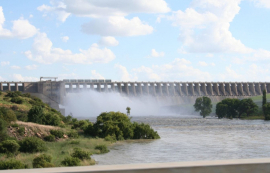
The Department of Water and Sanitation has urged all communities along the Vaal Dam and Orange River to consider evacuating and move to high lying areas as water levels rise.
This as 12 flood gates were opened at the Vaal Dam, and outflow at the Bloemhof Dam has been increased to 3000 cubic metres per second.
“All residents of settlements (and in towns) along the banks of the Lower Vaal and Lower Orange Rivers should consider evacuating or moving to higher places that are at least above the 1 in 20- year flood line (a level at which people would likely be safer to be reached by water emanating from the releases).
“These communities should refer to municipal development plans, Local Authorities and Disaster Management Agencies for locations of these flood lines. The water release increases are necessitated by the continuous and intense rainfall that is causing rivers to overflow and dams to spill,” said the department in a statement.
The department appealed to all communities along the Vaal and Orange Rivers, especially those along the banks of lower Vaal and Lower Orange Rivers to remain vigilant of possible flooding and to consider evacuating and moving to high lying areas as water levels rise.
The department also urged farmers to remove livestock, movable properties and equipment out and away from the riverbanks. It further urged the general community to avoid any activity that may put their lives in harm.
“The Vaal and Orange River System is experiencing rapid rising water levels due to the heavy rains and the department continues to assess and implement measures to mitigate effects of these floods on its infrastructure and guarantee full capacity on its storage reservoirs after the rainfall season.”
To acquire reliable information about prevailing flooding status, the department said it has put in place flood monitoring and forecasting systems that provides real-time data on rainfall, river and dam levels.
“These data are analysed continuously to enable the department to determine the appropriate releases from each dam”.
Since rainfall and floods are a natural phenomenon and therefore control of the events may be limited, the department advises against putting essential services and human settlements within parts of the floodplains where there is likelihood of frequent flooding that is within a 1 in 100-year flood line.
Government will continue to provide housing

Minister of Human Settlements Mmamoloko Kubayi says despite challenges including the mounting backlog, government remains “unshaken” in its determination to provide decent housing for the poor, the elderly and the vulnerable.
Kubayi was delivering her speech at the debate of the State of the Nation Address (SONA) in Parliament on Wednesday.
“Our guiding principle is our belief that all of us regardless of race, gender and creed, deserve a decent shelter and comfort. It is this principle, together with the constitutional injunction on Section 26 that informs the housing policies of the ANC-led government.
“The poor, the elderly and the vulnerable are the priority target of our subsidized housing programme. The housing backlog is huge and the pace of provision of new houses can be greatly improved. However, our determination to provide decent houses remains unshaken,” she said.
Kubayi said one of the “serious” challenges the department is facing is the housing for the missing middle who “earn too much to qualify for fully subsidised homes” but also do not qualify for financing.
“A revised First-Home-Finance scheme, formerly known as the Help-Me-Buy-A-Home program was revised in this financial year, amongst others, to allow for the funding of households who hold “Permission-To-Occupy” certificates in communal land.
“This is particularly important in relation to the extension of credit and funding to households in rural areas. It will allow the ‘missing middle’ to start acquiring economic assets without which they struggle to meaningfully participate in the economy,” she said.
The Minister emphasised that added to this, the department has acquired buildings in Cape Town, Johannesburg and Kimberley for social housing with sites in the latter two having a potential of at least 1200 units.
Other social housing projects that are expected to be launched in the coming weeks include:
- The Tshwane-Marabastad project which has a total of 1200 units.
- The Mohlakeng Project with a total of 1020 units in Gauteng’s West Rand.
- The Hope City Project which has 114 units located in Mpumalanga’s Nkangala Municipality.
- The Nelson Mandela Bay Municipality based John Street Project with 385 units.
- The Maitland Project Cape Town with a total of 204 units that will be completed by the end of March 2023.
Furthermore, she said the Department of Public Works and Infrastructure has already earmarked some 14 000 hectares (ha) of land and 32 land parcels measuring some 10 350ha for human settlements.
The land parcels are expected to bring some 64 000 housing opportunities.
Kubayi highlighted that government’s efforts to bring housing to those who are in need are being undermined by “serious pushback and resistance”.
“I am speaking here of a group in the urban rich that we can call ‘not-in-my-neighbourhood’. These are well-resourced groups whose sole purpose is to ensure that the poor and the working class families remain in the outskirts of our cities. This group is motivated by a mixture of racism and a disdain for the poor and the working class.
“They utilise all sorts of tricks to resist, including the courts causing long delays for these families to receive shelter. All freedom loving South Africans irrespective of race and class need to stand up to these bullies.
“Ours is a determination and commitment to ensure that there is housing, security and comfort for all. We shall not fail our people,” she said.
Government is expediting release of title deeds
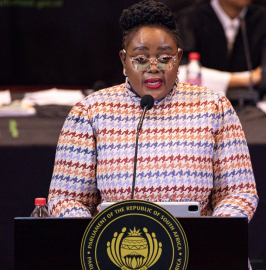
Minister of Human Settlements Mmamoloko Kubayi says government is fast tracking the release of title deeds for subsidised houses “as an important instrument of economic empowerment”.
Kubayi was speaking during Parliament’s debate on the State of the Nation Address (SONA) delivered by President Cyril Ramaphosa last week.
Currently, the backlog stands at some one million houses – an estimated R242 billion in assets.
“Working together with Operation Vulindlela, the Department of Human Settlements will expedite the provision of title deeds for subsidized houses.
“Over and above this, we are working around the clock to unblock the title deeds issuing across provinces. We are working with the communities of Mawiga in Gauteng to unlock 14 000 title deeds of houses that they were never allowed to own by the Apartheid government.
“We have established a steering committee with the community to ensure accountability and transparency of the work done,” she said at Wednesday’s debate.
In relation to tittle deeds for informal settlements, the Minister said the department is working to upgrade and bring much needed services to South Africa’s 2700 informal settlements through the provision of water, electricity and sanitation.
“When an informal settlement is upgraded, it means it has gone through the process of formalisation, such that title deeds can be issued for individual stands. In the last financial year, about 24 671 stands were created through the informal upgrading process,” she said.
Kubayi explained that upgrading these informal settlements also allows government to respond more efficiently to disasters in those areas.
“With climate change, natural disasters are becoming more frequent and most of our infrastructure was not designed to be resilient. In the past five days, our country has experienced devastating floods in KwaZulu-Natal, Eastern Cape, Limpopo and Mpumalanga.
“In the past few days, we have also seen numerous fires here in the Western Cape, especially in informal settlements.
“For an effective response to these disasters, we need land, we need South Africans to embrace each other in integrated communities and political parties that don’t play politics at a time when families are homeless, vulnerable and distressed.
“Going forward, we also have begun to reconceptualise how we develop human settlements so that we can incorporate climate change resilience in the infrastructure we provide,” said the Minister.
National School Safety Framework remains a strategic response to violence, bullying in schools
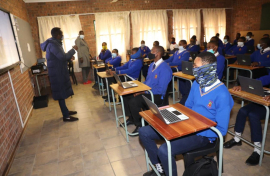
Basic Education Minister Angie Motshekga says the quality of education can only be achieved if learners and teachers are safe and healthy and if schools are free of violence, abuse and harm.
The Minster reflected on President Ramaphosa’s call during the Basic Education Lekgotla for the sector to institutionalise Care and Support for Teaching and Learning (CSTL) as a tool to improve learner outcomes.
The Minister was speaking during a Parliamentary Debate of President Cyril Ramaphosa’s State of the Nation Address (SONA) on Wednesday.
Addressing the social ills in schools, such as bullying, gender-based violence (GBV), child pregnancy, alcohol, and drug peddling, Minister Motshekga said that the National School Safety Framework remains as a strategic response.
“Our schools must be safe, weapons-free, substance-free spaces for learners and teachers, where corporal punishment, sexual abuse, gender-based violence, homophobia, racism, substance abuse and bullying are not tolerated.
“The National School Safety Framework remains our strategic response to violence, bullying and abuse in schools,” she said.
The Framework calls on all stakeholders in schools – management, teachers, unions, parents, learners, and communities to work together to make schools safe and drug-free spaces, where all learners can learn and thrive.
The Minister said the department will continue to work closely with the South African Police Services and community organisations to improve safety in all schools.
She highlighted that adolescent girls and young women remain the most vulnerable cohort in our schools and in society.
Motshekga added that girls face complex and serious challenges, including HIV/AIDS, gender-based violence, rape, abuse, and early and unintended pregnancy.
“Whilst we have significantly reduced adolescent fertility rates over the last few decades, the numbers of early and unintended pregnancies amongst adolescent girls and young women, remain unacceptably high.
“The consequences of early pregnancy to society, and the lives of young women and girls, are often devastating. About a third of girls, who fall pregnant, do not return to school; and are then vulnerable to further pregnancies; they have compromised health outcomes and higher mortality rates during childbirth; and their lack of access to education, leads to the creation of poverty traps for families and communities,” the Minister said.
She emphasised that the DBE, working with other government departments and partners, will continue to work and support young women and girls in schools.
The department will also continue to strengthen the implementation of Comprehensive Sexuality Education in all schools across the country.
The Minister said it was clear that the education system cannot survive without the direct involvement of all communities of trust, not only those who are part of the Sector, but everyone.
“There is no doubt that the Basic Education system has begun to reach the desired stability; which is healthy for a large and important system as ours. The unquestionable resilience our school community has shown, against such a devastating pandemic, the persistent loadshedding, and sporadic service delivery protests, cannot go by unnoticed,” she said.
Motshekga added that the Class of 2022 has clearly demonstrated that with all requisite support and intervention programmes, they can make it.
Closing the infrastructure gap – Progress and Challenges
Minister Mothsekga said the upgrading and maintenance of school infrastructure remain a key priority.
“For this reason, we are looking at different ways of dealing with this serious challenge which amongst others, includes changing the framework for the Education Infrastructure Grant, the delivery model for different types of structures, among others.
“We will be giving a dedicated report back on infrustructure in education, because infrastructure delivery has become one of our most seriously challenging area,” she said.
The DBE, working together with its provincial counterparts, has built 315 new schools; completed water supply projects at 1 259 schools and electricity supply projects at 373 schools.
With regard to sanitation, 2 500 schools, have been supplied with age-appropriate sanitation facilities through the Sanitation Appropriate for Education (SAFE) programme.
“But despite all these activities, just to deal with overcrowding only and not maintenance, repairs, renovations required in our schools, by last December we had estimated an urgent need for additional classrooms.
“We would also agree that class size is another important determent for quality teaching and learning; and overcrowding just simply undermines this process,” the Minister said.
Process to devise Basic Income Support underway

The design of a Basic Income Support should resonate with the fiscal space while supporting its intended social outcomes and future-targeted policy objectives, says Social Development Minister Lindiwe Zulu.
Speaking during a Parliamentary debate of President Cyril Ramaphosa’s State of the Nation Address (SONA) on Wednesday, Zulu said that the Social Development portfolio is in the process of devising a Basic Income Support.
During his State of the Nation Address last week, President Ramaphosa announced that work is underway to develop a mechanism for a targeted Basic Income Support (BIS) for the most vulnerable, within the country’s fiscal constraints.
“Owing to the rising cost of living, and with the view to cushion the most vulnerable among South Africans from the effects of known and novel risks alike, the Social Development portfolio is in the process of devising a Basic Income Support.
“If ours were not a society and economy that were structured to benefit the absolute few, there would be fewer reasons necessitating this intervention,” Zulu said.
Zulu highlighted that last year the Minister of Finance, Enoch Godongwana, informed the country that government will be spending R3.33 trillion on the social wage over a period of three years.
“While we are entering the second year of the three, we should particularly be mindful that this allocation is targeted at leaving no one behind by supporting vulnerable populations as well as low-income households,” she said.
This was government’s social wage intervention to ensure that the greatest number of South Africans are receiving public services and that, as much as possible, the cost of living that the vulnerable and needy in particular would have incurred is materially reduced.
R350 SRD Grant
The Minister said that the continued provision of the COVID-19 Social Relief of Distress (SRD) grant to a growing number of South Africans on a monthly basis is living proof that government stands ready to protect its citizens against economic, health, social, climate change and similar shocks.
Notwithstanding the sharp economic growth slowdown globally, the Minister said the sixth administration continues to prioritise the provision of all categories of the social wage.
“The responsiveness of our government to novel challenges is courageously and visibly forthcoming while its long-standing commitments to continually pay the nearly 19 million disability, foster care and child support grants to eligible South Africans is unfaltering.
“This government considers the dignity of each South African as indispensable. For this reason, all our efforts are targeted at realising a dignified life,” Zulu said.
The Department of Social Development continues to support over twenty thousand non-profit organisations annually with more than R8.2 billion. In return, these social partners become the extension of the State’s capacity and attend to varied social challenges in communities.
Tackling GBV, substance abuse
The Minister said that added to this coordinated work is the contribution of traditional authorities to targeted programmes such as the fight against gender-based violence and femicide and substance abuse and the promotion of strong family units.
She said that early suggestions from these processes indicate that communities wish for their members to live in a violent-free society wherein they can meaningfully partake in the economy.
“Viewed from the Social Development vantage point, the epicenter of an inclusive and growing economy and common prosperity are resilient families and communities. Therefore, strong families are indispensable to a productive and inclusive South African society.
“In the quest to forge the most formidable defence against social ills and leakages that are caused by a weakened social fabric, the Social Development portfolio continues to invest in resilient families.”
Economic Sectors and Employment
In the current year, the Social Development portfolio will work together with departments that carry out the mandates of Economic Sectors and Employment as well as private sector partners towards defining a framework for the absorption of employable youth who are receiving social grants on behalf of their grant-eligible children.
“This should particularly set these grant-receiving youth on an economically-liberating and dignifying trajectory.
“Noting that nearly all of the young people who receive grants on behalf of children are young women, it is imperative that these be meaningfully empowered to improve their dignity and remove most of the socially constructed vulnerabilities that bedevil women,” Minister Zulu said.
She said that her discussion with Basic Education Minister Angie Motshekga also entails programmatically devising sustainable solutions to deep-seated social challenges such as child pregnancies, absent fathers, etc.
“In the quest to alleviate the load on the fiscus, part of this population can be gainfully-employed whereas another can be self-employed through entrepreneurship support programmes that are available in the public and private sector.”
Condolences for Limpopo bus crash victims

Cabinet has sent it condolences to the families of the people who died recently when a bus collided with a cash-in-transit vehicle on the N1 highway in Limpopo.
“Cabinet wished those injured in the accident a speedy recovery,” said Minister in the Presidency Mondli Gungubele on Thursday.
Briefing media following Wednesday’s Cabinet meeting, Gungubele said Cabinet remains concerned at the extent of the road carnage seen across the country.
“Government will be exploring new laws to curb truck crashes, one of which includes moving cargo from road to rail in the hope that this would take pressure off of road freight.
“Cabinet appeals to all road users to obey the rules of the road by being vigilant, considerate and patient towards other road users. Drivers under the influence of alcohol or drugs as well as reckless and negligent driving, including speeding, are responsible for most road accidents,” Cabinet said.
Meanwhile, President Cyril Ramaphosa also sent his condolences to the families of those who died in this week’s accident.
“As compatriots, we are deeply saddened when we experience such a loss of life on our roads. Incidents like this impact severely on families who lose loved ones, as well survivors or witnesses who are affected physically or psychologically when such tragedy happens.
“Incidents of this kind also have economic consequences for the people involved and for the businesses they may operate or in which they are employed. We must all do what we can to travel in safety, while we treat our roads as a shared amenity, which they are,” the President said.
It had been reported that 21 people perished and 68 others were injured in the accident.
On Tuesday, the Limpopo MEC for Transport and Community Safety, Florence Radzilani, expressed shock and sadness at the news of the bus accident, which happened on the N1-29 stretch, next to the HF Verwoerd Tunnel.
Law enforcement taking action against corrupt individuals – Lamola
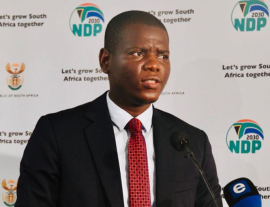
Minister of Justice and Constitutional Development, Ronald Lamola, says law enforcement agencies are taking action against those who committed corruption during the COVID-19 pandemic and those who looted Eskom and corrupted SARS during the years of state capture.
The Minister was speaking during the State of the Nation Address (SONA) debate in Parliament on Wednesday.
“It is public knowledge that people have been arrested, monies have been recovered for the theft on COVID-19. Through the SIU, money has been recovered that was [stolen] during COVID-19 and this government is continuing to work on building and strengthening the NPA.
Honing in on two institutions – Eskom and the South African Revenue Service (SARS) – which were looted and weakened during the height of State Capture, Lamola said the long arm of the law is now reaching those who were architects of the institutions’ dismantling.
“The two institutions, [SARS and Eskom] … were not broken down by cadre deployment, they were broken down by systematic corruption and not just by being led by black people. It was corrupt individuals.
“Those officials…we will allow the processes of the law to take its place with all people who have been arrested for the corruption at Eskom. Those individuals will be held to account, a free and a fair trial will ensue,” he said.
Concerning Gender based violence (GBV) and femicide, Lamola rebuffed assertions made during the SONA debate earlier in the day that law enforcement is not taking action against perptrators.
“On GBV, [there is a] 74% conviction rate across the country. Everyday our courts are convicting someone, giving them high sentences on a daily basis and this…is reality. [There are] 396 convictions from 420 cases, five additional [Thuthuzela Care Centre] sites were established from the 2021/2022 financial year bringing the total to 60.
“During the reporting period, 34 456 matters were reported to the Thuthuzela Care Centres. A conviction rate of 76%. So it is not true that there is no work that is being done. Indeed [GBV] continues to be a challenge but…this is a matter that we must all work together to resolve as a society. We must work to ensure that we eradicate all forms of gender based violence,” he said.
Turning to the economy, the Minister reminded Members of Parliament of the devastation that the COVID-19 pandemic wrought and continues to bring on South Africa’s economy.
He emphasised that government’s Economic Reconstruction and Recovery Plan (ERRP) is already starting to bear fruit.
“It is not the state of disaster that led to unemployment. It was the pandemic of COVID-19…that affected a number of jobs…and all the issues that today led to this country struggling economically.
“We are now working to rebuild the economy and we are back to the pre-COVID-19 economic growth statistics. What we need is to build from there and we can do so if we resolve the energy crisis…we will be able to resolve the economic challenges of our country, the unemployment challenges and the high crime rate,” he said.
The Minister told the debate that government will continue to work towards resolving the challenges that are facing the country, guided by the direction given by President Ramaphosa during the SONA.
“We will continue, through the guiding SONA that the president has delivered, to resolve the challenges of electricity, to continue to resolve the challenges of water provision, to continue to resolve the challenges of unemployment [and] to continue to resolve the challenges of [gender based violence and femicide,” Lamola said.
Government is addressing Enoch Mgijima Municipality challenges

Cabinet has assured residents of the Enoch Mgijima Local Municipality that a decision on how to address the municipality’s current challenges will be communicated soon.
Cabinet made the pronouncement at its meeting on Wednesday, said Minister in the Presidency Mondli Gungubele during a media briefing on Thursday.
At the meeting, Cooperative Governance and Traditional Affairs Minister Nkosazana Dlamini Zuma and Finance Minister Enoch Godongwana briefed Cabinet on recent consultative engagements held with key role players and stakeholders in the municipality.
In April last year, Cabinet approved an intervention in the municipality in terms of Section 139(7) of the Constitution of the Republic of South Africa of 1996, read together with Section 150 of the Municipal Finance Management Act, 2003 (Act 56 of 2003).
“The Enoch Mgijima Municipality had been experiencing significant financial and service delivery failures for a long time before the intervention,” said Gungubele.
Last week Dlamini Zuma visited the municipality and has committed to work with all relevant stakeholders in the troubled council to address the community’s concerns, including calls for its dissolution.
According to a report tabled before Parliament last year, a financial recovery plan was developed for the municipality, but the implementation thereof did not yield the desired results. The previous municipal council failed to play its oversight role.
Parliament in September heard that that municipality’s financial crisis was persistent, with material breach of its obligations to provide basic services. It also failed to honour its financial commitments, a state of affairs that necessitated national government intervention.