
Over 41 000 health care workers inoculated
The Department of Health says 41 809 health care workers have been vaccinated against COVID-19 under the Sisonke Protocol.
South Africa kick-started its first phase of the vaccination rollout programme using the Johnson & Johnson vaccine earlier in February. Government has secured 500 000 doses to vaccinate health workers.
Meanwhile, a total of 1862 new cases of COVID-19 have been reported in South Africa. The cumulative number of COVID-19 cases in South Africa is 1 507 448.
The cumulative total of tests conducted to date is 8 967 460 with 34 510 new tests recorded since the last report.
“Regrettably, we report a further 110 COVID-19 related deaths. This brings the total to 49 523 deaths. We convey our condolences to the loved ones of the departed and thank the health care workers who treated the deceased patients,” said Health Minister Zweli Mkhize.
The North West and Limpopo recorded zero deaths, while the Eastern Cape reported 5, Free State 61, Gauteng 12, KwaZulu Natal 7, Mpumalanga 7, Northern Cape 1 and Western Cape 17.
The recoveries now stand at 1 422 622, representing a recovery rate of 94%.
SARS sets up new unit for wealthy taxpayers
The South African Revenue Service has announced the formation of a High Wealth Individual (HWI) Taxpayer Segment, which will focus on wealthy taxpayers with complex financial arrangements.
“For SARS to continue to provide a customised and seamless service to various categories of taxpayers, we are establishing a separate unit to focus on individual taxpayers with wealth and complex financial arrangements,” said SARS.
Making the announcement in a statement on Wednesday, the revenue service said the unit will initially be co-located within the Large Business & International Taxpayer Segment (LB&I).
SARS said it is committed to its strategic intent to develop and administer a tax and customs system based on voluntary compliance.
SARS believes that most taxpayers want to fulfil their legal obligations voluntarily.
“In this regard, SARS provides clarity and certainty to taxpayers to fulfil these obligations, and works diligently to make it easy and seamless to transact with the organisation. Equally important for SARS is to make it hard and costly for those taxpayers who do not comply.”
With regards to the new unit, SARS said it will be offering a differentiated service, “as we do with other tax types, to the individuals with significant wealth often derived from multiple sources other than a salary, and who employ complex, and often offshore, financial arrangements”.
“We believe that statements of assets and liabilities often say more about their financial affairs than statements of income,” SARS said.
Voluntary compliance
The revenue service has embarked on a journey to foster a culture of voluntary compliance.
“Consequently, we have been paying particular attention to taxpayers with undeclared offshore holdings to optimise compliance. As an early adopter of the international standard for the Automatic Exchange of Financial Account Information, SARS has at its disposal information relating to offshore account holdings of South African taxpayers, some which seems not to have been declared.”
Information in SARS’ possession shows possible non-compliance by a number of these taxpayers.
In 2016/17, taxpayers were given the opportunity to regularise their tax affairs to account for their offshore holdings through the Special Voluntary Disclosure Programme (SVDP).
Taxpayers also had the opportunity to do so through the ongoing Voluntary Disclosure Programme (VDP) under the Tax Administration Act, 2011.
Some taxpayers took advantage of this. However, despite the window of opportunity to regularise their tax affairs, some taxpayers chose not to do so.
“The information that SARS has received comes from 87 jurisdictions across the world, detailing the offshore financial holdings of South African taxpayers. We intend to undertake a careful review of the information and audit it, where necessary.”
SARS will be writing to the affected taxpayers to request information about their offshore holdings.
Taxpayers who want to regularise their tax affairs are still able to do so through the ongoing VDP, which offers more favourable terms for an assessment (in terms of penalty amount).
“SARS therefore encourages taxpayers with undisclosed assets to take advantage of the VDP process. Taxpayers are reminded that failure to do so may result in administrative or even criminal action being taken against them,” it said.
Meanwhile, a dedicated email address – HWI@sars.gov.za – has been set up to manage responses from affected taxpayers and adopt a consistent approach.
Affected taxpayers who wish to make use of the ongoing VDP and taxpayers who have not yet been contacted are advised to contact the VDP Unit directly at VDP@sars.gov.za.
Makhura calls for urgent roll out of vaccination
As the winter season approaches, bringing with it the possibility of a third wave, Gauteng Premier David Makhura has called for the urgent roll out of the COVID-19 vaccination programme.
In Gauteng alone, over 400 000 people contracted Coronavirus, while almost 10 000 succumbed to the respiratory disease.
“… Vaccines constitute the decisive weapon against pandemics. The vaccination plan has to be rolled out urgently and massively to save lives and enabled the economy to recover fully,” said Makhura on Tuesday when delivering the State of the Province Address.
The Premier told members of the legislature that the province intends to vaccinate 67% (10.4 million people) of Gauteng’s population.
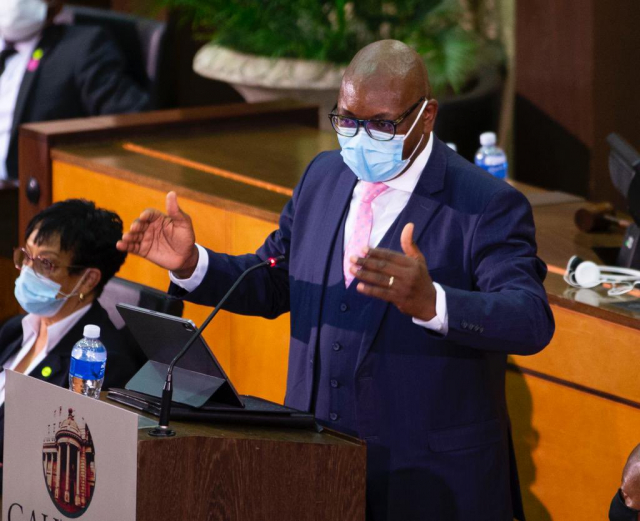
“We call on the people of our province to get ready to vaccinate in large numbers. Vaccines save lives.”
To date, 5 214 healthcare workers in Gauteng have already received their Johnson & Johnson shot since the programme was rolled out last week at Chris Hani Baragwanath and Steve Biko Academic hospitals.
The province is planning to vaccinate 215 101 healthcare workers in phase one of the vaccine rollout plan.
Phase two will focus on 7 372 924 essential workers and vulnerable sections of the population, such as the elderly and people with comorbidities.
The last phase will concentrate on 2 789 427 vaccinations for the rest of the population over 18 years.
Makhura said more than 150 vaccination sites have been identified at primary healthcare centres and vaccinators have been trained across the province.
The Premier has also paid tribute to the healthcare professionals who have worked tirelessly to save lives.
He commended thousands of essential workers such as the police, security officers, public servants, the military, agricultural workers, energy workers and workers in retail shops, who have kept the country going during the pandemic.
Health infrastructure capacity
Gauteng expanded the capacity of the public healthcare system with 4 265 new functional beds, while 4 992 posts were created and filled between April 2020 and January 2021.
The province is planning to add 1 425 more beds and staff from the start of the new financial year.
“This is a significant long-term investment that will outlive the COVID-19 pandemic. What is important is to improve patient care, clinical outcomes, meet the ideal clinic standards and prepare the health care system for the National Health Insurance,” said Makhura.
PPE corruption
Makhura assured that action is being taken over the personal protective equipment scandal unveiled by the Auditor-General and the Special Investigating Unit.
He believes the allegations of corruption constitute a serious dent to efforts made in the past five years towards clean governance and restoring integrity.
“We must and we will set an example with all those involved in malfeasance, both in the public and private sector,” he said, adding that the State should recover the money.
Food security
The COVID-19 pandemic has brought home the stark reality that 19% (three million) of Gauteng residents are unable to meet their daily nutritional needs.
“The food security intervention was one of the most successful in our COVID-19 response,” said Makhura.
Between April 2020 and December 2020, the province provided more than 650 856 households with food relief, reaching over 3.2 million Gauteng citizens.
“This is the biggest food security effort ever undertaken by the government,” the Premier said, noting the role of the private sector and non-profit organisations in supporting an additional one million residents.
In addition, the COVID-19 income relief grant for the unemployed reached more than 600 000 unemployed people in the province.
A total of 2 344 homeless people were provided with shelter, three meals daily psychosocial support, medical assessments, and treatment for substance abuse.
More than 1.3 million girl children have benefited from the Dignity Programme.”
Going forward, Makhura said Gauteng will intensify work to combat urban poverty, hunger and homelessness.
“We are supporting the creation of community and household food gardens to ensure that the three million food-insecure people participate in growing food for themselves so that no one goes to bed hungry.”
The Premier said he is advocating for urban agriculture as a key sector for employment, entrepreneurship and food security.
Unemployment rises to 32.5%
South Africa’s unemployment rate rose to 32.5% in the last three months of 2020, Statistician-General Risenga Maluleke has revealed.
The increase presents a 1.7 percentage point increase from the third quarter of 2020.
Despite the grim picture painted in the fourth quarter (Q4) Labour Force Survey, released on Tuesday, Stats SA said the Quarter 4 results 2020 show that the number of employed persons increased by 333 000 to 15 million.
During this period, the number of unemployed persons increased by 701 000 to 7.2 million compared to Quarter 3:2020, resulting in an increase of 1 million (up by 4.9%).
During the quarter, the number of discouraged work-seekers increased by 235 000 (8.7%), while the number of people not economically active for reasons other than discouragement decreased by 1.1 million (7.4%) between the two quarters, resulting in a net decrease of 890 000 in the not economically active population.
The QLFS said the movement was proportionately more towards the unemployed than for the employed, which resulted in a significant increase of 1.7 percentage points in the official unemployment rate to 32.5% – the highest since the start of the QLFS in 2008.
“The unemployment rate according to the expanded definition of unemployment decreased by 0.5 of a percentage point to 42.6% in Quarter 4: 2020 compared to Quarter 3: 2020,” reads the report.
Despite this, employment increased in all sectors in the quarter.
“Formal sector employment increased by 189 000 (1.8%); informal sector employment by 65 000 (2.6%); private households by 76 000 (6.8%), and employment in agriculture increased by 2 000 (0.3%). Employment increased in all industries, except finance and mining. The industries which gained the most jobs were community and social services (170 000) and construction (86 000),” said Maluleke.
Compared to Quarter 4: 2019, employment contracted in all industries.
Stats SA said most job losses were observed in finance (256 000), community and social services (241 000) and manufacturing (230 000).
Additional questions were included in the Quarter 4:2020 questionnaire, as with Quarter 2 and 3 of 2020, to capture changes brought about by the national lockdown.
The national statistics agency said results indicate that of the 15.0 million persons who were employed in Quarter 4: 2020, almost eight out of ten people (78.3%) were expected to work during the national lockdown by the companies/organisations they work for.
“Those who actually worked were predominately men in most industries, except in the community and social services sector and private households, where the majority were women,” said Stats SA.
The report further notes that about nine out of ten people employed within the construction industry who worked during the lockdown were men. Those who were expected to work in the reference week during the national lockdown but could not do any work during that period indicated the national lockdown as the main reason for not actually working (66.0%).
Compared to the third quarter of 2020, where 10.9% indicated that they worked from home, this proportion declined to 8.0% in the 4th quarter of 2020.
Working from home was more prevalent in Gauteng and the Western Cape and among professionals and managers. The majority of those in employment continued to receive pay during the lockdown. However, those with lower levels of education were more likely to receive reduced salaries than those with higher levels of education.
Class of 2020: Scholars of courage
President Cyril Ramaphosa has paid tribute to the matriculants who sat for the National Senior Certificate (NSC) in 2020 as scholars of courage.
“In the face of great difficulties brought about by the COVID-19 pandemic, our learners have been resilient, they have done themselves, their families and their country proud,” President Ramaphosa said.
The matric results were announced on Monday, 22 February 2021, by the Department of Basic Education (DBE).
President Ramaphosa said last year’s matriculants had to prepare for the crucial exam under challenging and highly pressured conditions, necessitating adjustment to the lockdown restrictions as well as extra work and effort.
The President thanked the country’s educators, teacher unions, school staff and parents for their support to the matriculants throughout the school year.
“This support our young people received made all the difference, making it possible for the crucial final year of schooling to be salvaged,” President Ramaphosa said.
The President applauds the 75.8 percent pass rate among female matriculants, as this lays an important foundation for the empowerment of young women in the country.
The President added that the matriculants who sat for the exam in 2020 were inheritors of the mantle of the brave generation of 1976.
Paying tribute to the Class of 2020, President Ramaphosa recalled Tebogo ‘Tsietsi’ Mashinini who at a meeting in Soweto just days before the fateful protest in 1976 delivered a speech to reassure the anxious students.
“Against the greatest of odds our matriculants persevered to write their exams last year as Tsietsi said that day, let us indeed honour the charge they made,” President Ramaphosa said.
The President called on matriculants who did not pass the exam to take advantage of supplementary exams, the DBE’s Second Chance programme and other support mechanisms.
Teachers’ unions commend 2020 Matric results
The South African Democratic Teachers’ Union (SADTU) says the Matric 2020 class deserves the outmost praise for enduring the most challenging year.
SADTU made the remarks following the release of the 2020 National Senior Certificate (NSC) results by Basic Education Minister, Angie Motshekga, on Monday.
The Class of 2020 registered an overall pass rate of 76.2%, a 5.1% drop from the record pass of 81.3% achieved by the class of 2019.
The union welcomed the 2020 NSC results, noting that the decline in the pass rate does not come as a surprise following the disruptions experienced in 2020, due to the COVID-19 pandemic.
“SADTU commends all the stakeholders, especially the teachers and learners who gave their all to prepare and write this crucial examination under difficult conditions.
“We are, however, aware that some learners withdrew from their studies and therefore did not write the examination due COVID-19 fears,” said SADTU General Secretary, Mugwena Maluleke.
Maluleke commended rural, township and no-fee paying schools for attaining the most quality passes, which is no a continuing trend.
“These schools that suffer due to lack of resources were the hardest hit by COVID-19, as they had little or no access to blended learning opportunities and therefore could not continue learning from home during the lockdown.
“When schools eventually opened, learners from these schools could not easily adjust to the new COVID-19 environment, as their schools could not meet all the COVID-19 protocols,” Maluleke said.
Maluleke said the good performance of these schools come at a huge cost.
“Teachers had to conduct catch up lessons over weekends, holidays, early mornings and late afternoons to teach and prepare the matric class for these examinations. However, going the extra mile has become a norm for teachers and learners in these schools, as they have to compensate for the inadequate resources they have.
“The current post provisioning model puts learners in poorer communities at a disadvantage. We therefore call for an equitable funding formula so that we can see poorer schools receiving more resources. Individual school needs should be taken into account when budgeting,” the General Secretary said.
Decline in critical subjects
Meanwhile, SADTU has raised concerns with the continuous decline in the number of learners who take critical subjects like Mathematics, Physical Science and Life Sciences.
“As numbers decrease, we are equally disappointed with the low pass rate in these subjects. We believe this situation could be turned around if the department increased investment in the foundation phase and early childhood development phases.
“We reiterate our call for the results not to be made a contest among the provinces. The uneven performance among the provinces has nothing to do with the learners and the quality of teaching, but has to do with the uneven distribution of resources,” Maluleke said.
He called on the learners who did not make it not to give up but to embrace the situation “They managed to reach Grade12 and this should motivate them to register for the Second Chance programme.”
Triumph in the face of adversity
Also welcoming the results, the National Professional Teachers’ Organisation of South Africa (NAPTOSA) said achieving a pass rate of 76.2% in the face of the adversity Grade 12 learners experienced in 2020 is beyond expectation.
“NAPTOSA congratulates each matriculant who was successful in the 2020 examination. Dedication, resilience and hard work once again proved to be the elements of success.
“Compliments are also extended to the DBE and Provincial Education Departments (PEDs) on the successful management and completion of the 2020 NSC examination.
“Circumstances in 2020 did not favour the departments. To achieve the lowest rate of exam absenteeism in years in these circumstances is quite an achievement, especially considering that 74 165 candidates more wrote the 2020 NSC examination,” NAPTOSA President, Nkosipendule Ntantala said.
NAPTOSA also echoed SADTU’S concern regarding the drop in learners taking Mathematics.
“One area of the NSC results that is disconcerting is the drop of more than 15 000 candidates who enrolled for pure Mathematics. NAPTOSA believes too many learners are allowed to stop taking pure Mathematics in Grade 10 in favour of Mathematical Literacy.
“Is this about schools and PEDs chasing the 100% pass rate? What then about the life chances of these learners or even the future needs of the country? It is important that learners be given the maximum assistance to continue taking pure Mathematics in Grade 12,” Ntantala said.
SA records 792 new COVID-19 cases
South Africa’s COVID-19 daily infections continue to drop, with 792 new cases logged on Monday.
Health Minister, Dr Zweli Mkhize, expressed his condolences to the families of the 97 people who lost their lives to Coronavirus in the last 24 hours.
Of the latest fatalities, 30 are from Free State, 22 from the Western Cape and 15 from Gauteng.
The Northern Cape and KwaZulu-Natal each recorded eight fatalities, and seven each in the Eastern Cape and Mpumalanga.
This pushes the death toll to 49 150, while the cumulative number of cases has peaked to 1 504 588 since the outbreak.
According to the Minister, the country is now home to 41 872 active cases.
KwaZulu-Natal currently has 14 662 infected patients, followed by the Free State with 7 008 and 6 988 in the Western Cape.
In addition, there are 4 016 active cases in Gauteng, 3 483 in the North West, 2 793 in the Northern Cape, 1 272 in Mpumalanga, 1 106 in Limpopo and 544 in the Eastern Cape.
“Our recoveries now stand at 1 413 566, representing a recovery rate of 93.9%,” said Mkhize.
The information is based on the 8 907 857 tests conducted, 15 342 of which were recorded since the last report.
The Minister said the number of healthcare workers vaccinated under the Sisonke Programme has risen to 23 059 as of 22 February 2021.
Globally, the World Health Organisation is reporting 111 102 016 confirmed cases of COVID-19, including 2 462 911 deaths.
Toll tariffs to increase by 3.39%
Transport Minister Fikile Mbalula has approved the 2021 toll tariffs as recommended by the South African National Roads Agency SOC Limited (SANRAL).
Toll tariffs on South Africa’s national roads will be adjusted on 1 March 2021 by 3.39%.
“The toll tariff amounts are adjusted by the annual Consumer Price Index (CPI) inflation rate and therefore remain the same in real terms and are effectively not increased above the base date toll tariff from when the toll was initially implemented. For SANRAL operated toll routes, the applicable CPI is calculated as the average of annual CPI increases for the months from November to October each year,” said SANRAL General Manager for Communications Vusi Mona.
Mona said for the calculation of the March 2021 toll tariffs, the average of the November 2019 to October 2020 monthly year-on-year CPI was obtained from Statistics South Africa (Stats SA) and is calculated to be 3.39%.
The adjustments were gazetted on 11 February 2021. For details on the applicable tariffs, motorists can refer to the Government Gazettes numbers 44145, 44146, 44147 and 44149.
“Discounts offered at specific toll plazas for frequent users, as well as qualifying local users still apply. Application for discounts can be made at the various toll plaza offices nationwide,” SANRAL said.
Through SANRAL, the Department of Transport uses tolling selectively to implement major road infrastructure projects and ensure seamless mobility of vehicles on the national road network.
The SANRAL toll road network represents 13.3% of the 22,253km SANRAL national road network and only 5% of the total South African road network.
“Toll roads allow for the borrowing of capital to develop road infrastructure when it is required, rather than having to wait until funds are available from an already strained fiscus. Toll monies are used to maintain, operate and improve toll roads, as well as to service debt incurred to implement a toll road project.
“The cost in the event of delayed maintenance on roads can be up to 18 times higher than it would have been if routine preventative maintenance was undertaken. Tolls are paid only by those that make use of the specific toll road,” SANRAL said.
Role-players consulted on National Minimum Wage adjustment
Employment and Labour Minister Thulas Nxesi has reiterated that the adjustment of the National Minimum Wage rate was the outcome of an extensive consultation process.
The Minister on Monday made the comment in response to the outcry on the newly adjusted National Minimum Wage (NMW) rates.
The department last week announced that the NMW increased to R21.69 per hour from R20.76 from March.
The minimum wage is a tool to ensure that vulnerable workers do not fall below the poverty line and it is designed to reduce inequality and huge disparities in income in the national labour market.
“As we have pointed out before, the minimum wage is really what it says it is. But it is not based on thumb-suck but a well thought out process that allows all the interested parties to have a voice.
I have noted with concern the objections from some stakeholders on the adjustment of the NMW and recognise the reality that the COVID-19 pandemic has had a harsh impact on most employers,” said the Minister.
Nxesi said the NMW Act however accordingly permits employers that are genuinely unable to pay the proposed adjustment to utilise the exemptions procedures in order to be exempted from the NMW.
In amending the minimum wage this year, the department said the Minister had considered all legal requirements, the report of the commission as well as different inputs from stakeholders. This, reads the statement, was based on these and the results of the initial research undertaken on the impact of the introduction of the national minimum wage.
With regards to the inputs received in response to the notice published by the NMW Commission on its recommendations, stakeholders were divided in their recommendations.
Some supported the recommended adjustments, arguing for an above inflation increase as well as immediate equalisation of the domestic and worker sectors.
“Indeed some stakeholders were against the recommended adjustment based on impact that it will have on employment/ unemployment, low economic growth, the impact that COVID-19 has had on the operations of businesses as well as the high production costs for farmers who will have to bear the brunt of the increase,” said Nxesi.
Research conducted by the Development Policy Research Unit (DPRU) at the University of Cape Town and the University of Johannesburg’s Centre for Social Development in Africa (CSDA), found that there has been no negative impact on employment as a result of the introduction of the national minimum wage.
However, they said the reason for that could be due to employers already adjusting almost two years prior to implementation.
Also, research found that the introduction of the national minimum wage led to a statistically significant increase but smaller than expected improvement in wages for the workers it covers and generally there was broad compliance in agriculture, with slightly lower levels in domestic work. Unfortunately, employees considered that the minimum wage for farm and domestic workers was too low.
“The domestic worker sector on the other hand, judging by the findings of the Quarterly Labour Force Survey was severely impacted by the initial levels of lockdown and therefore the recommendation was to increase the minimum wage to 88% of the national minimum wage which translates to R19.09 per hour as of 1 March 2021,” said the Minister.
“Mastermind” behind Tshegofatso Pule’s murder in court
The alleged mastermind behind the murder of Tshegofatso Pule appeared at the Roodepoort Magistrate’s Court earlier today.
Ntuthuko Ntokozo Shoba, who was Pule’s boyfriend and the father of their unborn child, faces charges of murder, conspiracy to commit murder and defeating the ends of justice.
According to the National Prosecuting Authority (NPA), the 32-year-old was arrested after a guilty plea by Muzikayise Malephane who has turned state witness.
Malephane told the court that Shoba allegedly “contracted” him to commit the murder.
The South Gauteng High Court sentenced him to 20 years imprisonment for murder on Friday last week.
“The agreement was on condition that he will testify in the state’s case against Shoba,” NPA explained.
According to Malephane’s testimony, Shoba hired him to take Pule’s life and offered him R70 000.
“He further explained that Shoba had wanted Pule dead as she was pregnant with his child and he did not want his wife to find out about the pregnancy,” the NPA said.
Malephane also revealed that the initial plan was to hang Pule from a bridge in Maraisburg and take her phone to write a suicide message on her WhatsApp status.
“Malephane detailed that the first attempt on Pule’s life failed after she never pitched up for a job interview at a restaurant next to Gold Reef City, where Shoba had arranged for Malephane to pick her up.”
However, on 4 June 2020, Shoba informed Malephane that Pule would be visiting his place and that he would call him to collect her.
“After receiving the call from Shoba, he collected Pule and drove to Noordgesig where he shot Pule and drove to Durban Deep in Roodepoort to hang her on a tree.”
Pule, who was eight months pregnant, was discovered on 8 June 2020 and Malephane was arrested on 15 June 2020.
He was charged with murder, obstructing the ends of justice and unlawful possession of a firearm and ammunition.
Shoba was remanded in custody and is expected back in court on 1 March 2021 for a formal bail hearing.