
Former First Lady’s murderer granted parole
The murderer of former First Lady Marike de Klerk has been granted parole by the Department of Correctional Services (DCS) and will be released from prison at the end of August.
De Klerk was the ex-wife of former President FW de Klerk.
Luyanda Mboniswa brutally murdered Marike de Klerk in 2001 in what is believed to be a botched robbery at her Cape Town home.
He was sentenced to life imprisonment in 2003 and spent at least 20 years in jail for murder, robbery with aggravating circumstances and housebreaking.
DCS spokesperson, Singabakho Nxumalo, explained the conditions that Mboniswa will have to comply with while on parole.
“Mboniswa will be admitted into the system of community corrections, whereby he is expected to comply with a specific set of parole conditions for the rest of his natural life. He will be assigned a monitoring official to render supervision duties.
“Normal parole conditions will apply, such as being restricted to his magisterial district. He is also not allowed to have contact with the family of the victim and shall not change his residential address without informing the monitoring official.
“To be emphasised, parole placement forms part of the total rehabilitation programme in correcting the offending behaviour and may include continuation of programmes in the system of community corrections,” Nxumalo said.
He explained that the decision to grant parole was done in compliance with the law.
“In compliance with the Correctional Services Act 111 of 1998, Mboniswa was considered for parole placement having served the minimum required time. The parole placement process started from the preparation of the profile by the Case Management Committee (CMC) and consideration by the Correctional Supervision and Parole Board (CSPB).
“The National Council for Correctional Services (NCCS) also dealt with the profile before its submission to the Minister of Justice and Correctional Services for a decision. The Minister is empowered by Section 78 of the Correctional Services Act 111 of 1998 to make a determination on those sentenced to life,” Nxumlalo said.
SIU files leave to appeal in Telkom case

The Special Investigating Unit (SIU) is expected to file an application for leave to appeal a High Court judgement which deemed its authorisation to investigate the affairs of Telkom as invalid.
The judgement was delivered last month after the unit was authorised through a proclamation by President Cyril Ramaphosa to investigate allegations of “serious maladministration, malpractice, and possible corruption” at the telecommunications company.
“The High Court found that Telkom is not a state institution and therefore, the SIU could not investigate allegations of serious maladministration, malpractice, and possible corruption in the affairs of Telkom.
“After consulting with our legal team, the SIU is of the opinion that there is reason for an appeal,” the SIU said.
The unit insists that the court must “give a fuller picture of what constitutes a state institution as this can set a legal precedent” on which institutions it can investigate.
Currently, government directly holds a 40.5% shareholding in Telkom with a further 15.3% shareholding through the Public Investment Corporation.
“It is important that the issue of the “state institution” must be decided and settled. If this is not clarified, it may create an unwelcome precedent that some public institutions may inadvertently be shielded from investigation by the SIU,” the unit concluded.
Convicted sex trafficker and child rapist Gerhard Ackerman sentenced to life imprisonment
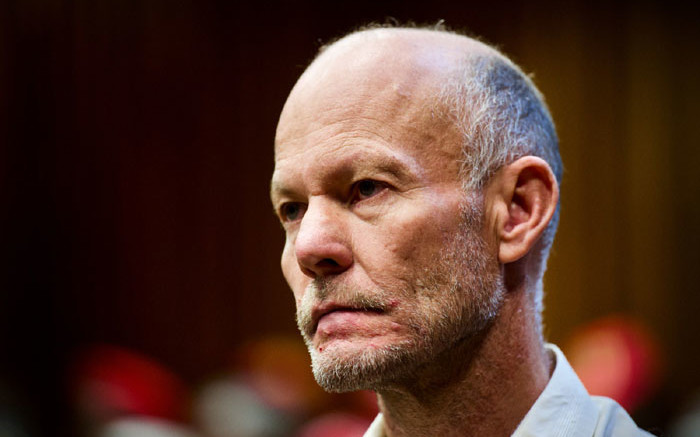
Convicted sex trafficker and child rapist Gerhard Ackerman has been handed 12 life sentences for crimes related to the sex abuse ring he ran in Johannesburg.
Ackerman appeared in the Gauteng High Court in Johannesburg on Monday, where Judge Mohamed Ismail sentenced him for the more than 700 charges he had been found guilty of.
The life sentences were imposed for each of the rape and human trafficking counts, including the rape of minors.
Ismail said Ackerman was a “plainly evil man” who lured children and opened them up to abuse from other men for his own benefit.
Ackerman was found guilty of:
Human trafficking
Sexual exploitation of minors
Hundreds of counts of possession of child pornography
Creating child pornography
Sexual grooming of minors
Exposing himself to children
Most of the crimes Ackerman committed related to his possession of child porn and the child sex abuse ring he masterminded with the help of well-known advocate and acting judge, Paul Kennedy.
Kennedy was arrested and charged alongside Ackerman but died to suicide before the trial started.
In his judgment, Ismail said Kennedy had killed himself because he realised his days were numbered when he was arrested.
In running the child sex abuse ring, Ackerman would find young teenage boys from poor and troubled families on social media. Most of the boys were between the ages of 14 and 16.
He would then gain their trust and offer them work at his “massage parlour,” which was effectively a front for his sex abuse business.
After convincing the boys to work as masseurs, Ackerman trafficked them to the brothel and harboured them.
The boys were then sexually groomed and sold for sexual services to a large list of clients.
South Africa’s former president Jacob Zuma pardoned after ‘special remission’
South Africa’s president Cyril Ramaphosa has approved a pardon for his predecessor Jacob Zuma as part of a “special remission” that also released thousands of other prisoners, the latest twist in a legal case that has tested the rule of law in Africa’s most industrialised economy.
The former president, 81, was handed a 15-month prison sentence in 2021 for defying an investigation into systematic corruption of state institutions during his rule, but was later released on medical grounds.
Zuma briefly returned to a prison in the state of KwaZulu-Natal on Friday but was released hours later under a scheme whereby Ramaphosa “approved the remission of non-violent offenders in South Africa”, the country’s department of correctional services said.
Ramaphosa granted the special remission pardon to almost 10,000 prisoners because of prison overcrowding, and the need to protect inmates from health risks and a “surge in gangsterism”, the department added.
But critics noted how the block pardon came just as South Africa’s prison service was due to decide on whether Zuma should return to jail, after the country’s highest court last month upheld a ruling that the correctional department had wrongly granted him medical parole in 2021.
The Zuma sentencing saga has shone a light on the rule of law in South Africa and Ramaphosa’s promises to arrest the country’s decline after the rot known to South Africans as the years of “state capture”.
An inquiry into the scandal, in which the powerful Gupta business family was accused of using a friendship with the former president to loot the state, concluded last year that Zuma “readily opened the doors” to graft. Zuma and the Guptas deny any wrongdoing.
Opposition figures condemned the pardon for Zuma, and the unusual circumstances in which it was done.
John Steenhuisen, Democratic Alliance leader, said Ramaphosa’s government had “once again weaseled out of standing up for the rule of law and the constitution, and chosen through a cynical and manipulative move to set Jacob Zuma free”. Herman Mashaba, leader of the ActionSA party, said the decision made “a mockery of the criminal justice system”.
Nicole Fritz, executive director of the Helen Suzman Foundation, a legal watchdog, said South African authorities had found a way “to ensure that Zuma doesn’t return to a jail cell”.
But she also said it was an exceptional case, involving a relatively rare prison sentence for contempt of court and wrongful medical parole. “It was an incredibly difficult and complex situation, and I don’t think many democracies handle accountability for former leaders well,” she added.
South Africa’s constitutional court had originally found Zuma in contempt for defying its orders to appear before an inquiry into the looting of state resources during his nine years in power.
Last month’s decision meant that this sentence legally still stood but that the prison service could decide whether his period of parole could count towards time served or whether he should be re-incarcerated.
Makgothi Thobakgale, head of the prison service, said Zuma’s brief return to prison on Friday meant that his department had complied with the court rulings and that granting of the pardon was a separate process.
Zuma surrendered himself to police in 2021 but his supporters unleashed South Africa’s worst-ever bout of post-apartheid violence and unrest in response.
Looting and attacks on infrastructure in the heart of the South African economy in KwaZulu-Natal, Zuma’s power base, and Gauteng, the country’s industrial hub, killed more than 300 people and wrecked scores of businesses.
A military deployment eventually suppressed what Ramaphosa called an attempted insurrection. Zuma was paroled months later.
Zuma lost the presidency and a power battle in the ruling African National Congress as far back as 2018, but analysts have said that the ANC fears both a repeat of the July 2021 violence, which amounted to a civil war within the movement, and losing KwaZulu-Natal in national elections next year.
The party is facing a battle to retain the majority it has held since the first democratic elections in 1994 and polls have indicated that it could lose the significant population centres of both KwaZulu-Natal and Gauteng.
Over the years South African presidents have occasionally used powers under the country’s constitution to remit sentences, including Ramaphosa previously in 2019 and Zuma in 2012.
Premier League
The Premier League (legal name: The Football Association Premier League Limited) is the highest level of the English football league system. Contested by 20 clubs, it operates on a system of promotion and relegation with the English Football League (EFL). Seasons typically run from August to May with each team playing 38 matches against all other teams both home and away.[1] Most games are played on Saturday and Sunday afternoons, with occasional weekday evening fixtures.[2]
The competition was founded as the FA Premier League on 20 February 1992 following the decision of First Division (top-tier league from 1888 until 1992) clubs to break away from the English Football League. However, teams may still be relegated into and promoted from the EFL Championship. The Premier League takes advantage of a lucrative television rights sale to Sky:[3] from 2019 to 2020, accumulated television rights were worth around £3.1 billion a year, with Sky and BT Group securing the domestic rights to broadcast 128 and 32 games respectively.[4][5] The Premier League is a corporation where chief executive Richard Masters is responsible for its management, with member clubs acting as shareholders.[6] Clubs were apportioned central payment revenues of £2.4 billion in 2016–17, with a further £343 million in solidarity payments to EFL clubs.[7]
The Premier League is the most-watched sports league in the world, broadcast in 212 territories to 643 million homes and a potential TV audience of 4.7 billion people.[8][9] For the 2018–19 season, the average Premier League match attendance was at 38,181,[10] second to the German Bundesliga‘s 43,500,[11] while aggregated attendance across all matches was the highest of any association football league at 14,508,981,[12] and most stadium occupancies are near capacity.[13] As of 2023, the Premier League is ranked first in the UEFA coefficient rankings based on performances in European competitions over the past five seasons, ahead of Spain’s La Liga.[14] The English top-flight has produced the second-highest number of European Cup / UEFA Champions League titles, with a record six English clubs having won fifteen European championships in total.[15]
Fifty-one clubs have competed since the inception of the Premier League in 1992: forty-nine English and two Welsh clubs. Seven of them have won the title: Manchester United (13), Manchester City (7), Chelsea (5), Arsenal (3), Blackburn Rovers (1), Leicester City (1) and Liverpool (1).[16] Only two of them have won three titles in a row (Manchester United – twice – and Manchester City), while only six clubs have avoided relegation: Arsenal, Chelsea, Everton, Liverpool, Manchester United and Tottenham.[17]
Miss South Africa 2023

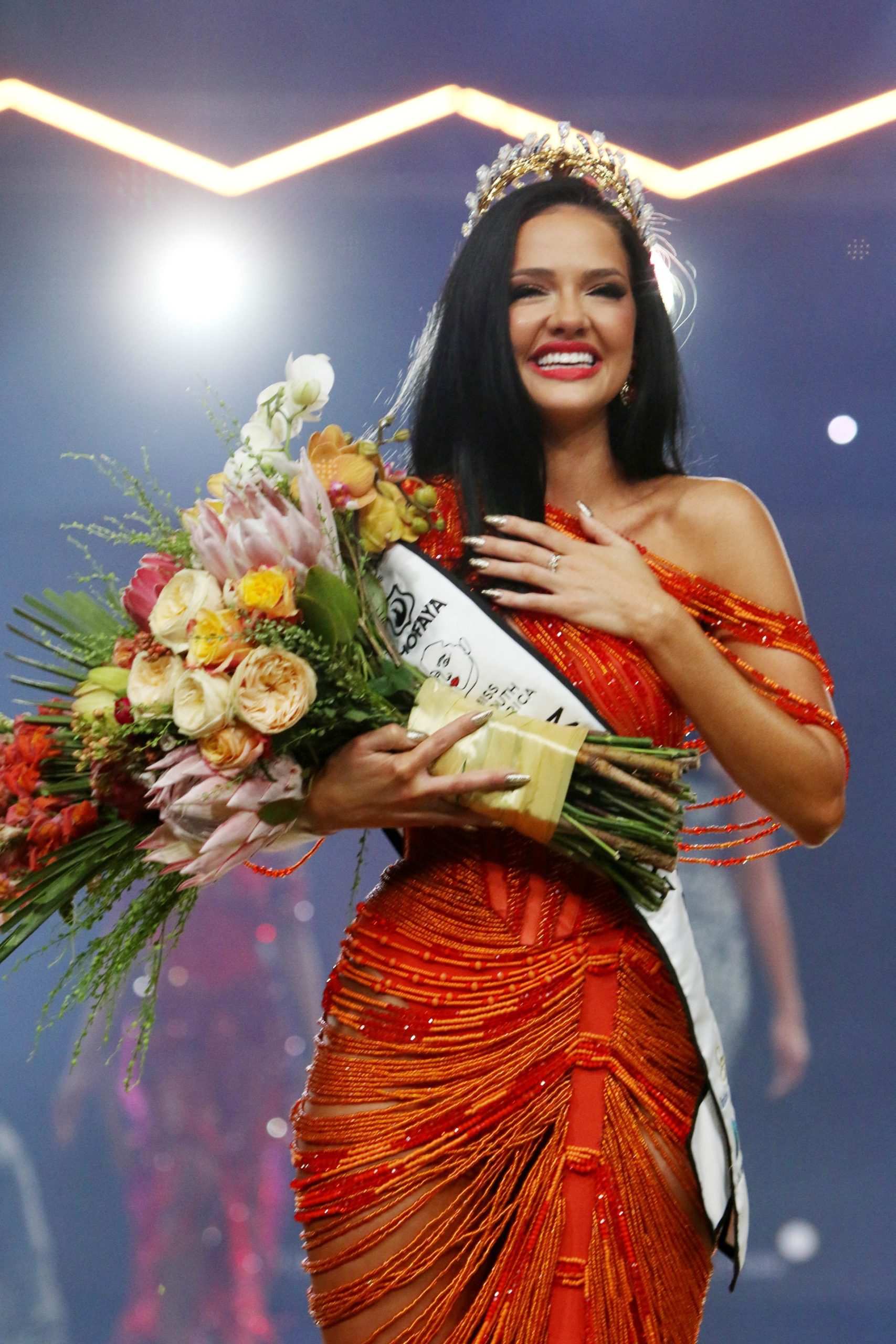
An ecstatic Natasha Joubert from Tshwane has been crowned Miss South Africa 2023 at the spectacular pageant finale held at the SunBet Arena at Time Square in Pretoria on Sunday night.
Joubert (26) is a BCom Marketing Management graduate and is the owner and fashion designer of Natalia Jefferys, a company she started when she was 19.
Runner-up was Johannesburg’s Bryoni Govender who was also the Motherkind fitness award winner.

An emotional and overwhelmed Joubert said she was truly humbled and grateful to win the title and to be the first to wear the glittering new Mowana (“Tree of Life”) crown from Nungu Diamonds.
RELATED: New Miss South Africa crown
She received R1 million in cash in a prize and sponsorship package that includes the use of a serviced apartment at the lavish Brookfield at Royal in Kensington – developed by Tricolt – for the year of her reign. She will also get to drive a Mercedes-Benz GLC as well as go on a trip to Paris sponsored by L’Oreal.
In her acceptance speech Joubert, a firm favourite among the crowd watching the pageant, said: “I am incredibly honoured and humbled to be crowned Miss South Africa 2023. As I step into this new role, I am filled with a sense of responsibility to make a positive difference in the world around me. I believe that success is not just about personal accomplishments, but about the opportunities we have to give back and uplift those around us. I will strive to be a source of inspiration and support for others, just as I have been supported on my journey now and before.
“This moment is the epitome of a full circle moment for me. A dream that started 11 years ago – and which three years ago did come to fruition after proudly representing my country on an international stage at Miss Universe at Miss Universe South Africa – has today become a reality. It took a lot of hard work, grit, self-confidence and support to keep my dream alive and to keep on believing in the beauty of second chances. It is a journey that I will forever be grateful for which moulded and shaped me into the woman I am today.
“I pledge to use this platform to advocate for the causes close to my heart and to be a source of inspiration for others. Entrepreneurship lies at the heart of innovation and economic growth. It is the driving force that propels nations forward, creating jobs, nurturing creativity, and fostering a spirit of resilience.
“I will also commit to cultivating an environment where entrepreneurial spirits can thrive. It pains me to know that more than half of South Africa’s youth lack the financial means to pursue their dreams. I was fortunate to receive a bursary that enabled me to continue my education, and I have been proactive in giving back. Not waiting for a crown on my head, I’ve been working to make a difference,” she revealed.
The winner of the special Crown Chaser of the season award, as voted for by the public, was Lungo Katete.
Says Stephanie Weil, CEO of the Miss South Africa Organisation: “Huge congratulations to Natasha, our newly crowned Miss South Africa 2023. A worthy winner, she embodies the Miss South Africa Organisation’s vision that if you can dream it you can achieve it and that just one person can make a big difference. May this year’s winner inspire a nation. We can’t wait to see what she achieves. And well done to runner-up Bryoni and the other five finalists who gave it their all on the evening. We truly had a strong group of women vying for the crown this year, a testament to the importance and value that the Miss South Africa title has come to stand for.”
Google Doodle Celebrates the Legacy of Fatima Meer
Google Doodle celebrates Durban born, South African, Fatima Meer with a Doodle. Fatima was born on 12 August 1928. She was the 2nd of 9 children and obtained a Bachelors and a Masters degree in sociology from the Universities of Witwatersrand and Natal. Throughout her life she authored over 40 books.
She later served as a professor at the University of Natal from 1956 to 1988, where she was the first woman of color to be in the role at a designated-white South African University.
Living for a Cause
Fatima’s passion for change and equality showed early on her life. While she was a students at Durban Indian Girls’ high school, she facilitated and led the Student Passive Resistance Committee with the purpose of supporting the Indian community’s Passive Resistance Campaign against new legislation. The campaign aimed to limit the land rights of Indians in South Africa.
Notable Political Activities
A few of Fatima’s notable political activities and achievements include her involvement in founding the Durban and District Women’s League in 1949 – the first women’s organization that included Indian and African members.
Furthermore, she was amongst those banned under the new Suppression of Communism Act for three years in 1952 and confined to Durban. This stopped her from attending public gatherings and she was banned from publishing her work.
Founder of the Federation of South African Women
In 1955, Fatima became the founding member of the Federation of South African Women (FEDSAW), responsible for organizing the famous Anti-Pass March on the Union Buildings in Pretoria in 1956 and in 1975 she was banned again for five years. She was arrested in 1976 and imprisoned for 6 months.
Her passion for education was demonstrated when she started the Phambili High School for African students in 198 and the Khanyisa School Project as a bridging programme for African children from rural areas in 1993.
Fatima also founded the Khanya Women’s Skills Training Centre in 1996, training over 150 African women every year in pattern-cutting, sewing, business management and adult literacy.
In 1994 at the rise of democracy in South Africa, Fatima declined having a seat in the parliament, choosing to work with civil-society organisations that aimed at helping the poor and leading thought around interracial understanding.
A Beacon of Hope for Women
Fatima was also the founding member of Jubilee South Africa, part of the Jubilee 2000 movement, which campaigned for the cancellation of the debts of developing countries. In addition to all these many accomplishments Fatima was also a family woman.
She was married to a Ismail C. Meer, a prominent leader in South Africa’s Indian community and was closely connect to the Mandela family.
In a note from her family her daughter wrote: “Our mother is well known for the fearless way in which she engaged in the struggle against apartheid. Despite being banned in the 1950s, imprisoned by the apartheid government in 1976, and having her home petrol bombed in 1977 and 1985, she was undeterred in her resistance against the injustices of apartheid.”
Her legacy remains and she will long be remembered as a pioneer in women’s rights as well as fighting for equality under the apartheid regime and beyond.
Lindiwe Zulu accused of nepotism, union demands dismissal amid appointment controversy

Minister Zulu faces nepotism claims after attempting to appoint close ally Mchunu as director-general, triggering objections and union demands. Mchunu previously served as Zulu’s chief of staff during her tenure as Small Business Development Minister.
reported that controversy around the proposed appointment stems from Zulu’s alleged adjustment of the appointment criteria to favour Mchunu, who didn’t quite meet the requirements. Nehawu recently penned a letter to President Cyril Ramaphosa calling for Zulu’s immediate dismissal in response to the allegations.
Zille suggests ‘ANC will die like National Party’, tells DA Gauteng congress ‘racism is red’ “We were remiss in not preventing a drift from the compass of integrity that inspired the generation whose mission was to achieve a democratic and inclusive society,” he added. headtopics.com
Mbalula – ANC should have acted faster and decisively to stop corruption Zulu’s second in command, deputy Minister Hendrietta Bogopane-Zulu also wrote to both the department and Cabinet, expressing her disapproval.
Court finds traffic officer guilty for soliciting a R200 bribe

The Mokopane Magistrate Court has found a Mokopane traffic officer guilty for soliciting a R200 bribe from an under-cover agent.
Vincent Madiga recently appeared in court on corruption charges after he was arrested in May 2019 along the N1 in the Limpopo province.
“During the court proceedings audio and video evidence was provided. Upon completion of the proceedings, the court concluded that the state had proved its case beyond reasonable doubt, therefore finding Madiga guilty on all charges laid against him.
“This was despite the defence challenging the constitutionality of the video evidence. The matter was postponed to 29 September 2023 for pre-sentencing procedures,” the Road Traffic Management Corporation (RTMC) said on Monday.
The RTMC has called on citizens to report suspected acts of fraud, corruption, and malfeasance to ntacu@rtmc.co.za or by WhatsApp to 083 293 7989.
KZN police launch manhunt for four murder suspects
Police in KwaZulu-Natal have launched a massive manhunt for at least four armed men who are suspected to be behind a mass shooting which left six people dead and one critically injured at Q Section in Umlazi on Friday night.
Information at this stage suggests that the four suspects stormed into a house just before midnight and shot two people who were inside the house. One person was shot inside a backroom, whilst the fourth person was shot next to the outside toilet. He was also found with burn wounds.
The same suspects reportedly proceeded to an informal settlement a few metres away from the first scene and shot three people inside a shack. Two were certified dead at the scene and the other one was rushed to hospital with gunshot wounds.
A preliminary investigation has revealed that one of the suspects, who was leading the other three, demanded his identity document from the victims before shooting them.
It is believed that he was implicated and is wanted by police for another murder, in which he allegedly dropped his identity document accidentally. Reports indicate that he believed that one of the deceased was in possession of his identity document.
Three of the suspects have been identified and a 72-hour mobilisation of maximum resources has been activated in search of the suspects.
Police are appealing to anyone who might have information regarding the whereabouts of the suspects to contact the nearest police or call Crime Stop number 08600 10111 or alert the police via the MySAPS App.