
Government launches loan to invest in solar equipment

The National Treasury has launched the Energy Bounce Back Loan Guarantee Scheme (EBB) – an initiative aimed at alleviating the impact of continuing difficulties resulting from unreliable power supply for small businesses and households.
This follows President Cyril Ramaphosa’s commitment in his 2023 State of the Nation Address to adjust the bounce-back loan scheme (BBS) to enable small businesses to invest in solar equipment. Minister of Finance Enoch Godongwana has provided detail on the adjustment of the Bounce-Back Loan Scheme.
“The EBB aims to generate 1000MW in additional generation capacity as well as facilitate resilience to loadshedding for micro and informal businesses. Resilience measures include power storage assets without generating capacity, like batteries and inverters. The EBB is a complementary intervention to the tax measures announced in the 2023 Budget Speech. Applicants may therefore apply for both tax and EBB measures,” the National Treasury said on Tuesday.
Pricing of the loans will be capped at the repo rate (at the commencement of the loan) plus a maximum of 6%.
Households and Small and Medium Enterprises (SME’s) will have the option of approaching any participating bank. Participating banks, Development Finance Institutions and non-bank SME finance providers will compete subject to the product terms, conditions, and pricing cap. The EBB will be available until 30 August 2024.
To facilitate investments, government will, through a government guarantee administered by the South African Reserve Bank, assume the initial losses (20%) with finance providers assuming the risk for remaining losses for SME’s and households’ rooftop photovoltaic solar investments (rooftop solar). The EBB will operate through three mechanisms.
The loan guarantee for rooftop solar for SMEs and households’ investment facilitates loans to SMEs and households for investments related to rooftop solar generated energy.
This investment includes solar panels, batteries, inverters, and other installation related costs.
Loan guarantee for rooftop solar for Energy Service Companies (ESCOs) facilitates loans to ESCOs who provide leasing, instalment sale, and power purchase contracts to SMEs and households.
“This mechanism will allow businesses and households to switch to ESCO service providers for more reliable and cleaner energy without the need for loans to finance the full upfront costs of rooftop solar equipment themselves.
Support from the EBB, which will be provided to the ESCOs to enable them to scale up and expand leasing services to households and small businesses, will require ESCOs to assess the individual need of households or businesses, the implementation of a suitable solution, and the conclusion of a leasing, instalment sale, and power purchase contract between the ESCO and applicant,” National Treasury said.
Working capital loans for businesses in rooftop solar supply chain will facilitate working capital loans for those businesses that supply rooftop solar to meet increased demand.
“This mechanism will increase the supply of rooftop solar solutions allowing businesses to source rooftop solar equipment with minimum delays.
“An additional mechanism will be concluded with the Industrial Development Corporation (IDC) to facilitate new ESCO entrants, as well as scale up existing ESCO’s through a mezzanine finance instrument.
“The IDC and National Treasury will provide details of this instrument once concluded. Participation in the EBB will be facilitated through commercial banks on an opt-in basis. Non-bank finance providers, including wholesale retailers who provide lending products to SMEs for EBB eligible related loans, can access the scheme through participating commercial banks,” National Treasury said.
Participation through commercial banks will be subject to basic requirements, such as tax compliance and adherence to other legal and regulatory requirements.
Any business borrowing under the EBB will be expected to meet the participating bank’s specific requirements, be registered with the Companies and Intellectual Property Commission or be registered for Value Added Tax in terms of the Value Added Tax Act, 89 of 1991 with the South African Revenue Service.
Eligible businesses must have a maximum turnover of R300 million. DFI’s and non-bank lenders, which include wholesale retailers offering credit products servicing informal traders, can also access the scheme through a commercial bank up to a maximum of R300 million per entity.
The maximum amount a business can borrow is R10 million. Businesses can also borrow a maximum of R30 000 through the scheme, for resilience measures.
This is to enable access for micro, informal businesses that may require portable batteries or similar equipment to these assets.
For households, a maximum loan amount, for the purchasing of rooftop solar, will be R300 000 per household.
For the leasing mechanism, prospective customers would also need to comply with the requirements set out by participating banks and the ESCO providing the leasing service.
Businesses in the rooftop solar supply chain, those importing batteries, investors and panels will be able to borrow up to R100 million for working capital to ensure that wait times are reduced. Installers can borrow a maximum of R100 million.
Winde counting the cost of Cape Town’s taxi strike
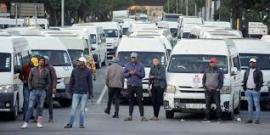
Western Cape Premier Alan Winde says the provincial government remains gravely concerned at the devastating impact caused by the strike called by the South African National Taxi Council (Santaco) in the province.
This comes after six Golden Arrow buses were torched due to arson attacks since the taxi strike on Thursday, 3 August 2023.
This has forced the company to terminate its bus services in Khayelitsha, Nyanga, Philippi East, Langa, and Mfuleni, while many roads remain closed.
The Golden Arrow has since secured a court order on Sunday against Santaco to stop intimidating, harassing, threatening, or interfering with Golden Arrow, its employees, and passengers.
“I am appalled at the scale of violence that has not only dealt a severe blow to our economy and critical services but has also delegitimised and damaged Western Cape’s Santaco cause.
“This violence and damage to property has continued this morning. I will be holding a special Cabinet meeting this morning with key leadership from the City of Cape Town to assess what further steps need to be taken and the impact on services,” he said on Monday.
The Premier has again called for taxi leaders affiliated with the council to intensify all efforts to de-escalate the violence and urgently find a resolution to the dispute.
He added, “All sides, more especially residents and commuters, are being harmed by this stay away. We must find common ground now.”
Western Cape MEC for Mobility, Ricardo Mackenzie, said the province is concerned that the strike continues even after urgent engagements throughout the weekend.
“The withdrawal of minibus taxi services since Thursday has had a devastating impact. As the provincial government we are working extremely hard to resolve ongoing issues in the industry and establish new terms of engagement that will ensure the safety of commuters and road users.”
The provincial government said the impact on provincial government and municipal services has been profound.
Because of the strike, the province said 287 420 learners have not been able to attend school across the province since the sudden stay-away was called.
In addition, more than 9 000 teachers and staff were also prevented from going to work.
Meanwhile, the past Saturday’s matric extra classes had to be canceled, impacting 14 000 learners.
According to the Western Cape, many healthcare facilities have been forced to operate at reduced capacity.
These include Tygerberg, Red Cross, and Groote Schuur hospitals and the community health centres and clinics.
While Tygerberg and Salt River forensic pathology services are operational, the province said the response to scenes would be delayed in red zones, as this will also only occur under the protection of law enforcement escorts.
In addition, many Western Cape Department of Social Development staff will have to work from home, due to the volatility of the situation.
The department will also have to temporarily close its offices in several areas.
The Premier said: “This situation is untenable and unacceptable. Our residents cannot be forced to endure this lawlessness. All parties must return to negotiations”.
MEC for Police Oversight and Community Safety, Reagen Allen, has condemned the burning and damage to all property, particularly safety-related resources.
“Contingency plans have been adopted to ensure that the burning of the law enforcement vehicles in Delft will have no operational impact on the deployment of Law Enforcement Advancement (LEAP) officers in the area.”
LEAP, according to the provincial government, is fully operational and part of interventions where required across Cape Town in particular.
Red-zoned areas remain volatile. All law enforcement agencies are deployed across these communities and at strategic points.
Police dealing with incidents of public violence
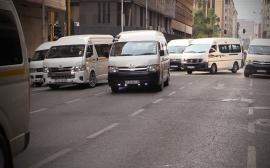
The South African Police Service (SAPS) says integrated police deployments are currently dealing with incidents of public violence which erupted this morning in the Nyanga area as the looming taxi strike is yet to come to an end.
Roads in and around Nyanga and the Cape Town International Airport have been affected and traffic is severely backed up on the N2.
Incidents of busses torched in Borcherds Quarry Road are under investigation, and as yet, no injuries have been reported to SAPS.
“Our members will remain on high alert and deployed in numbers to ensure the safety of the public and to maintain law and order,” police said in a statement.
“We encourage any person who has been affected by an act of criminality to report the matter to SAPS immediately, so that an investigation can be initiated.”
The public is urged to be vigilant and to apply safety measures to avoid being caught off-guard during the taxi strike.
The Western Cape taxi strike continues after talks failed to reach an agreement.
The meeting was between Santaco taxi industry leaders, the Western Cape government and the City of Cape Town.
Centre to the taxi industry’s unhappiness is the ongoing seizure of minibuses.
President Ramaphosa welcomes NDP report
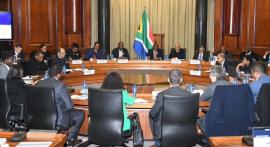
President Cyril Ramaphosa has welcomed the review report of the National Development Plan (NDP) presented by the National Planning Commission (NPC) on Tuesday, at the Union Buildings, in Tshwane.
The NPC briefed the President about their findings having reviewed the country’s progress against the objectives and targets of the National Development Plan: Vision 2030 (NDP) in the past decade.
President Ramaphosa said that the 10 Year Review of the NDP will help in identifying the underlying challenges that hinder the state and its social partners from achieving greater progress effectively.
“The 10 Year Review of the NDP will assist us in identifying the systemic issues that limit the effectiveness of the state and its social partners in making greater progress. We need to be able to plan better, to integrate and coordinate the work of different departments and institutions, and to ensure that we are using our limited resources most effectively.
“It is important that the State has the capacity to meet its developmental responsibilities, that it is appropriately structured that has the right people in the right places with the appropriate skills and ethos,” President Ramaphosa said.
President Ramaphosa committed his administration’s support to the commission and to ensure that the proposals presented are incorporated into government across all departments and spheres.
The President further underscored the importance of strong leadership and partnership with labour, civil society, communities and business in effecting the envisaged change.
The NDP, which was drafted by the first Commission in the 2010-2012 period and adopted by all parties represented in Parliament in 2012, is the long-term plan for national development. It provides guidance for all Government policy formulation and implementation.
In this regard, government uses the Medium-Term Strategic Framework in order to implement the NDP in a structured manner, across Government departments and spheres. It is also used to mobilise all South Africans to take ownership of the country’s long-term plan, its objectives, and targets.
One of the main findings made in the Ten-Year Review of the NPC was that the economy was not only failing to grow at the rate required for the objectives of NDP to materialise, but the economy was also not structured to serve the interests of all South Africans, resulting in poverty and inequality remaining extremely high and persistent.
The report further stated that the economic, social, and spatial legacies of apartheid, inappropriate economic policies that prevent redistribution, and the hollowing out of state capacity during the state capture years continue to undermine both South Africa’s competitiveness and the potential of its people.
The review recommended that planning be institutionalised and made a cross-cutting imperative across the state and government sector to enable the country to make the necessary progress towards the attainment of the NDP goals and targets.
“We need to embark on a course of action to get the country back on the developmental path envisaged by the Plan and place more focus on resolving key issues related to the provision of energy, addressing infrastructure backlogs including transport and freight, building state capacity, and addressing the apartheid spatial legacies,” Prof Tinyiko Maluleke, Deputy Chairperson of the Commission said.
Minister in The Presidency responsible for Planning, Monitoring, and Evaluation and Chairperson of the Commission, Maropene Ramokgopa, said that although the country has faced various difficulties, it is crucial that the primary focus remains on achieving the goals of the NDP.
“Despite the challenges experienced, the objectives of eliminating poverty, and reducing unemployment and inequality, which are the overarching goals of the NDP, should and must remain the country’s priority if it is to uplift the conditions of its people,” Ramokgopa said.
The NPC is an independent planning body, comprising a diverse group of experts in various fields, appointed by the President to advise government on the country’s long-term development as contained in the National Development Plan.
SIU to investigate maladministration allegations at KZN premier’s office

The Special Investigating Unit will probe allegations of maladministration in the Office of the Premier of KwaZulu-Natal related to the appointment of a consultant to support the province’s six priority programmes.
The unit was authorised to investigate the office by a proclamation signed by President Cyril Ramaphosa.
“The investigation will also look to see if there was any unauthorised, irregular, or fruitless and wasteful expenditure incurred by the Office of the Premier in KZN, or losses suffered by the Provincial Office or the State.
“Furthermore, the SIU will seek to establish whether there was any irregular, improper or unlawful conduct by the contractors, employees, or officials of the Office of the Premier and the suppliers, service providers, or any other person or entity,” the unit said.
The SIU said the investigation will cover the period between April 2007 and 29 July 2023.
“In addition to investigating maladministration and malpractice, the SIU will also identify failures, and will also make systematic recommendations to improve measures to prevent future losses.
“The SIU is empowered to institute civil action in the High Court or a Special Tribunal in its name, to correct any wrongdoing uncovered during its investigations caused by acts of corruption, fraud, or maladministration. In line with the Special Investigating Units and Special Tribunals Act 74 of 1996, the SIU will refer any evidence pointing to criminal conduct it uncovers to the National Prosecuting Authority (NPA) for further action,” the SIU said.
Employers rallied to hire people with disabilities
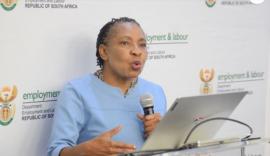
The chairperson of the Commission for Employment Equity (CEE), Tabea Kabinde, has lamented the slow pace of transformation in the workplace for designated groups, especially for people with disabilities.
Kabinde was addressing the Employment Equity roadshow in Pretoria on Wednesday.
Conducted under the theme, ‘Real transformation makes business sense’, the Employment Equity roadshows by the Department of Employment and Labour, in collaboration with the Commission for Conciliation, Mediation and Arbitration (CCMA), create awareness on the recently promulgated EE amendments, sector targets and regulations.
The workshops further aim to deal with the impact of EE in the labour market by sharing the results of the 23rd CEE Annual Report.
“Out of 27 532 reports received, covering a total of 7 215 960 employees, only 1.2% are persons with disabilities. We are now stretching it to only 2% as a proposed target. Please do not overlook people with disabilities,” Kabinde said.
The chairperson told the gathering that while there are employers who are transforming their workplaces in terms of hiring people with disabilities, very few go beyond the 1.2%. She said there must be a demonstrable commitment to employ those with disabilities.
Kabinde said anyone can have disabilities due to an accident or illness and “this does not mean the end”.
On the issue of sector targets, the CEE chairperson told the meeting that a lot of noise in the media is created by misunderstandings.
“When we start fighting, we forget that we are talking about the Economically Active Population (EAP). The EAP focuses only on people who are working, looking for work and are employable,” she said.
She told the workshop that it cannot be that a group with a small EAP continues to occupy top management level posts, whereas racial groups with a higher percentage of the EAP occupy a small fraction of top management posts.
Part of the session was also spent on a demonstration of the online EE system with the incorporated amendments to reporting on the system and how certificates of compliance will be generated.
There was also a presentation of the CCMA’s case law related to EE, professionally done by a Commissioner from the CCMA.
The national series workshops/roadshows started on 18 July and will conclude on 29 August 2023. The remaining August workshops are as follows:
Gauteng
• Johannesburg (2 August 2023)
Mpumalanga
• Witbank (Emalahleni) – (15 August 2023)
• Nelspruit (Mbombela) – (16 August 2023)
Western Cape
• George (15 August 2023)
• Cape Town (16 August 2023)
Eastern Cape
• Gqeberha (22 August 2023)
• East London (23 August 2023)
• Mthatha (24 August 2023)
Free State
• Welkom (22 August 2023)
• Bloemfontein (23 August 2023)
KwaZulu-Natal
• Durban (29 August 2023)
The EE workshops are targeted at employers or heads of organisations, academics, senior managers, consultative forum members, human resource practitioners, trade unions, employees and other interested stakeholders.
SIU appoints top legal eye as Chief Legal Counsel
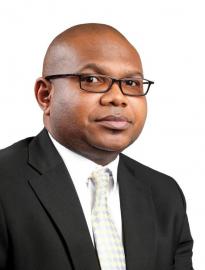
Former SABC Group Executive for Legal Governance and Regulatory, Advocate Ntuthuzelo Vanara, has been appointed as the Special Investigating Unit’s (SIU) Chief Legal Counsel.
The unit said Vanara’s appointment is in line with strengthening its “implementing business process improvements that are result driven”.
“The strategy places emphasis on the positive impact of the SIU work, improving turnaround time of investigations, reaching expected legal outcomes, and ensuring the implementation of SIU investigation outcomes and consequence management,” the SIU said.
Vanara has legal expertise spanning over two decades, including his work at the public broadcaster.
“He has also worked at the Parliament of the Republic of South Africa as Acting Registrar of Members’ Interest, Chief Director: Legal Advisor and has occupied other legal positions. He holds a B. Proc through Vista University, LLB and LLM through the University of the Free State.
“The SIU looks forward to Advocate Vanara leading our legal team and strengthening our Civil Litigation Division to achieve even greater milestones,” the unit said.
Rhino killings decrease by 11%
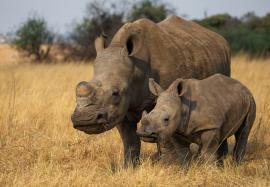
In the first six months of this year, 231 rhinos were killed in South Africa, representing an 11% decrease when compared to the same period last year.
This represents a decline of 28 animals killed for their horn.
Addressing a media briefing on Tuesday, Minister of Forestry, Fisheries and the Environment, Barbara Creecy, said during this period poaching trends also continued to show a move away from the Kruger National Park to provincial and private reserves.
“Forty-two rhinos were poached in the Kruger National Park and 143 in KwaZulu-Natal province from January to June 2023. Forty-six of the rhinos killed were in privately-owned nature reserves and 143 in provincially-owned reserves,” the Minister said in Pretoria.
Due to the demand for rhino horn remaining a constant threat to rhino populations, collaboration between the law enforcement agencies supported by private security remained key.
An important development in strengthening the collaboration between law enforcement to effectively address the organised nature of rhino poaching and wildlife trafficking is Cabinet’s approval National Integrated Strategy to Combat Wildlife Trafficking (NISCWT) in May this year.
“This strategy aims to break the illicit value chain of wildlife trafficking in South Africa and beyond its borders. It represents a commitment by government to direct law enforcement ability and effort and mobilise society support to address the threat wildlife tracking poses to national security and the country’s rich biodiversity.
“Although currently our main focus is rhino, the strategy also aims to address the illegal trade in, and poaching of, other species that are threatened by trafficking syndicates, like abalone,” Creecy said.
Joint initiatives pay dividends
In the first six months of this year efforts by both the South African Police Service (SAPS) and the National Prosecuting Authority (NPA) have led to the conviction of 31 offenders.
The majority of sentences were custodial. In Skukuza, one suspect found guilty of killing three rhino and possession of unlawful arms and ammunition was sentenced to an effective 32 year imprisonment.
In another matter, three accused, found driving in Kruger National Park with five rhino horns hidden in the vehicle, a hunting rifle with a silencer, ammunition and knives, were convicted for the killing of three rhinos in the park, possession of unlawful firearms and ammunition, possession of dangerous weapons and trespassing.
Accused one and two were sentenced to 34 years imprisonment, while accused 3 was sentenced to 39 years imprisonment.
In Limpopo, an accused individual was sentenced on a charge of murder, killing of two rhinos, unlicenced firearm and ammunition to an effective sentence of 24 years imprisonment.
In the Eastern Cape, six accused were convicted on charges of conspiracy to commit rhino poaching, notably no rhinos were killed, and the possession of unlicenced firearm and ammunition and effectively sentenced to imprisonment ranging from 16 to 20 years.
“The role of rangers in supporting the prosecution and sentencing of those arrested for wildlife crimes committed in the Kruger cannot be underestimated.
“There is strong collaboration between the SAPS forensic teams and South African National Parks (SANParks) Environmental and Corporate Investigations (ECI) when attending crime scenes to ensure the collection of vital evidence to link suspects to the crime scenes. It is also done to ensure minimum contamination of the crime scene.
“During the meeting held earlier this year with the Director of Public Prosecutions’ Environmental Working Group we discussed the challenge relating to the opposing of bail due to the fact that rhino poaching is not listed as a scheduled offence.
“Research is being conducted to propose, if viable, legislative amendments to address this challenge,” the Minister said.
Creecy said it was unfortunate that rhino poachers have continued to target the Hluhluwe/iMfolozi game reserve in KwaZulu-Natal where Ezemvelo KZN Wildlife, supported by the Department of Forestry, Fisheries and the Environment and iSimangaliso Wetland Park, continue to implement a number of measures to combat rhino poaching.
Among these has been the establishment of a Tactical Operations Joint Control Centre which now facilitates the SAPS deployments to Hluhluwe/iMfolozi Park (HiP).
The department has made available R40 million for the repair and replacement of the boundary fence around the Hluhluwe/iMfolozi game reserve, which is regularly breached and through which wild animals can escape to nearby communities.
The National Prosecuting Authority has designated a prosecutor to facilitate rhino cases in KwaZulu-Natal and cases have been prioritised and identified to be expedited through the court processes.
Criminal syndicates
In response to a range of studies that point out collusion between ranger services and criminal syndicates, the Kruger National Park has developed a holistic Ranger Services – Integrity Management Plan.
“This plan aims to improve ranger morale and resilience to corruption by providing services that enhance ranger health and well-being, provide training and counselling, offer a range of financial management services and debt management.
“The Ranger Service has also enlisted the Association of Savings and Investment South Africa (ASISA) Foundation to provide specialised financial literacy training for all field rangers. This was attended by 334 employees,” the Minister said.
SANParks has also established an integrity testing system – a polygraph policy – for new recruits and to support anti-corruption investigations.
To ensure the safe passage of tourists, SANParks has joined a task team championed by the Deputy Minister of Tourism, Fish Mahlalela, in collaboration with the traditional leaders of adjoining communities, the SAPS and private security companies to ensure constant patrols along the identified hotspots en route to the Kruger National Park.
“South Africa’s national parks are situated in areas of extreme poverty and are surrounded by many vulnerable communities.
“In order to ensure that communities on the outskirts of parks benefit from tourism and thus help to keep tourists safe, SANParks has held a number of stakeholder engagements with entrepreneurs in the past four years with regard to the provision of goods and services to our national parks.
“In addition, through Working for Water, Ecosystems and Wetlands programmes, we have created 33 222 work opportunities for communities living on the outskirts of our national parks,” the Minister said.
Police to restore law and order in Riverlea
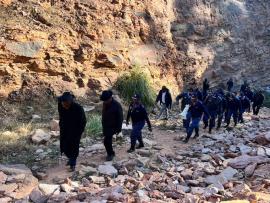
Police Minister, General Bheki Cele, has assured the community of Riverlea that police are mobilising all their resources and specialised units to restore law and order in the area.
On Monday, Cele led a high level delegation of senior police officers to the area to assess the local police’s responses to illegal mining in the area and other crime challenges raised by the community.
Cele engaged with community leaders and locals in the area and assured them that police are constantly devising strategies and operational plans to combat illegal mining operations in various provinces.
Between 1 April 2022 and 31 March 2023, 1 199 illegal miners were arrested, including 100 South Africans, 1 24 Zimbabweans, 232 Basotho nationals from Lesotho and 79 Mozambicans.
A total of R1.8 million, 9 991 rounds of ammunition and various vehicles and machinery used in mining were seized, amongst other items.
Cele said specialised units will be deployed to the area.
“These specialised units are being brought in to ensure we apprehend these illegal miners and put a stop to these illegal operations.
“Our focus is to ensure law and order is restored in this area. We cannot have a situation where communities live in fear. We are going to deal decisively with these criminals,” said Cele.
Since May 2022, the South African Police Service (SAPS) ensured the establishment of the Economic Infrastructure Task Teams (EITT). Twenty teams have been set up in hotspot areas to combat illegal mining, prevent damage to critical and essential infrastructure, as well as extortion on construction sites.
SA records preliminary trade balance deficit of R3.5bn

The South African Revenue Service (SARS) says South Africa recorded a preliminary trade balance deficit of R3.5 billion in June 2023.
According to SARS, the deficit is attributable to exports of R167.6 billion and imports of R171.1 billion, inclusive of trade with Botswana, Eswatini, Lesotho and Namibia (BELN).
“The year-to-date (1 January to 30 June 2023) preliminary trade balance surplus of R5.6 billion is a deterioration from the R129.6 billion trade balance surplus for the comparable period in 2022,” SARS said in a statement.
Year-on-year export flows for June 2023 were R167.6 billion, which were 8.3% lower compared to R182.9 billion for June 2022, whilst import flows were 6.5% higher, having increased from R160.7 billion in June 2022 to R171.1 billion in the current period.
“On a month-to-month basis, exports decreased by R15.8 billion (8.6%) from R183.4 billion to R167.6 billion between May and June 2023, whereas imports decreased by R2.7 billion (1.6%) from R173.9 billion to R171.1 billion over the same period.
“Export flows decreased in June, driven by iron ores and concentrates, vehicles for goods and vehicles for passengers.
“The value of imports decreased on the back of a decrease in importation of crude oils, telephone sets and unused postage stamps,” SARS said.
Due to ongoing vouchers of correction (VOC), the preliminary trade balance surplus of R10.2 billion announced for May 2023 was revised downwards by R600 million, with the final number at R9.6 billion.
Trade data, excluding BELN for June 2023, recorded a preliminary trade balance deficit of R14.7 billion, with export flows at R151.6 billion and import flows at R166.3 billion.
The preliminary cumulative trade balance deficit for 2023 was R54.4 billion compared to R72.6 billion trade balance surplus during 2022.
Between May and June 2023, exports decreased by R15.7 billion (9.4%), whilst imports decreased by R2.4 billion (1.4%) over the same period.