
‘Tangible progress’ in implementation of State Capture Commission recommendations
President Cyril Ramaphosa says “significant progress” has been made to implement government’s plan in relation to the recommendations set out by the State Capture Commission.
The President was addressing the nation through his weekly newsletter on the eve of the second anniversary of the final public hearing of the commission.
Some 205 investigative and prosecutorial recommendations were given by the commission.
“To undertake this huge amount of work, the National Prosecuting Authority (NPA) and the Hawks set up an Integrated Task Force to coordinate investigations and prosecutions. There are currently nine cases in court, involving 41 accused people and 12 companies.
“Significant progress has also been made in recovering the proceeds of crime. Freezing orders to the value of R13 billion have been granted to the NPA. A total of R5.4 billion has been traced and returned to the State. The South African Revenue Service has collected unpaid taxes as a result of evidence before the State Capture Commission,” he said.
President Ramaphosa added that “far reaching legislative and institutional changes to reduce the potential of corruption” are also being undertaken.
“Eight of the 14 new laws or legislative amendments identified in our implementation plan have been approved by Cabinet and tabled in Parliament. These address areas such as public procurement, the involvement of politicians in administrative matters, the conduct of public servants, the intelligence services, money laundering and electoral reforms.
“A further six draft laws are in the process of public consultation with stakeholders. Further research is being done on some of the recommendations of the Commission, such as making the abuse of political power a criminal offence,” he said.
Furthermore, the draft Public Procurement Bill and State-Owned Enterprises (SOEs) bills are also in the pipeline to increase transparency in procurement processes, and how boards and executives at SOEs are appointed.
To deal with corruption, the State Capture Commission recommended that additional anti-corruption bodies be formed and according to the President, part of that work “is being led by the National Anti-Corruption Advisory Council, which is working across society to build ethical values and mobilise the nation against corruption”.
Whistle blowers
President Ramaphosa thanked the individuals who exposed State capture at the commission and through other means.
“Corruption is one of the greatest challenges our country confronts as we strive to improve the lives of all our people. State capture is one of the worst forms of corruption our country has experienced in recent times. State capture was the orchestrated theft of billions of rand through the capture of state institutions.
“Our country is grateful to the actions of many South Africans who, acting as individuals and through various organisations across society, exposed state capture and in many ways ensured that decisive steps are taken to end it,” he said.
The President emphasised the importance of having whistle blowers who bravely – and sometimes to their own detriment – revealed wrongdoing.
He added that government is working to ensure that whistle blowers are protected.
“While many people contributed to exposing and ending State Capture, the role of whistle blowers was particularly important. Many of the people who revealed wrongdoing suffered victimisation and hardship due to their courageous actions.
“We have put forward clear and effective recommendations on whistle blower protection and incentives. These recommendations propose a range of measures, such as criminalising threats against whistle blowers, creating a fund for whistle blowers dismissed because of their disclosures, and providing State protection for whistle blowers and their families where necessary,” he said.
The President reiterated that government is persevering in its commitment to rid the country of corruption and cut off the tentacles of State Capture.
“In the coming months, many of the processes underway will be completed and much more progress will be recorded.
“While tangible progress is being made, it is clear to me that we will only be able to put state capture firmly behind us if all South Africans work together to rid our society of corruption in all its forms,” President Ramaphosa concluded.
Minister welcomes end of Cape Town taxi strike
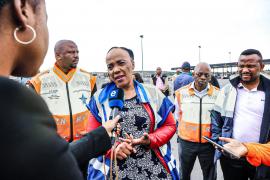
Transport Minister Sindisiwe Chikunga has expressed her sincere appreciation for the resolution of the recent taxi strike in Cape Town.
In a statement on Friday, the Minister congratulated all parties involved for reconvening and reaching an amicable solution that allows for the resumption of normal taxi operations within the city.
As the Minister responsible for transport, it is her duty to uphold the law and ensure the smooth functioning of public transportation systems.
She has commended the commitment shown by all stakeholders in working towards a resolution that aligns with the legal framework governing the industry.
While the strike has ended, the Minister emphasised that the talks that led to the resolution have set a 14-day turnaround time for further discussions.
The Minister will closely monitor these talks to ensure that the agreed upon solutions are implemented effectively and in a timely manner.
“The Minister and government deeply regret the adverse effects the strike has had on learners, workers and all those affected in Cape Town and its surrounding areas. The disruption caused by the impasse has had a negative impact on the local economy, and the Minister acknowledges the challenges faced by individuals who rely on public transportation for their daily activities.
“Tragically, the strike has also resulted in the loss of life. Minister Chikunga urges law enforcement agencies to conduct a thorough investigation into these incidents and bring the perpetrators to justice. She extends her heartfelt condolences to the families and loved ones of those who have lost their lives during this period of unrest.
“The Minister’s primary concern is the safe transportation of commuters and visitors in and around Cape Town,” the Ministry of Transport said in a statement.
She called for a cessation of hostilities among the various stakeholders involved and urged them to engage in constructive dialogue to resolve any outstanding issues.
“In the coming days, Minister Chikunga will convene a media briefing to provide further updates on the situation and measures being taken to prevent future disruptions. The date and time of the briefing will be communicated shortly to ensure that the public and media are adequately informed.
“The Minister remains committed to ensuring a safe and efficient public transportation system for all, and she encourages all parties to work together to achieve this goal,” the Ministry of Transport said.
DPE affirms commitment to restructuring Eskom

Government is fully committed to the implementation of the Eskom roadmap and the state retaining 100% control of the three separate entities – Generation, Transmission and Distribution, said the Department of Public Enterprises (DPE).
“The DPE is hereby correcting the misinterpretation and mischievous propaganda arising from a technical letter sent to the Eskom Board,” it said in a statement on Thursday.
The department reminded citizens that the intention to restructure Eskom was first pronounced by President Cyril Ramaphosa’s 2019 State of the Nation Address (SONA) when he mandated the process to transform the structure of the electricity industry to better serve the needs of the country.
The President announced the process of establishing three separate entities – Generation, Transmission and Distribution – under Eskom Holdings.
“The implementation of the Eskom roadmap and current legislation before Parliament will result in a restructured electricity industry.”
Globally, the energy sector is rapidly changing due to new technologies, transforming customer behaviours and climate change policies.
“Eskom’s current structure is no longer suitable to meet the country’s energy needs.”
According to the department, Eskom Holdings currently owns all Generation, Transmission and Distribution assets, of which these assets belong to the state.
“The reform of Eskom requires the ‘restructuring of Eskom’. This means establishing three separate companies housing Generation, Transmission and Distribution businesses – 100% owned by the state,” the statement read.
“To implement the above, corresponding assets need to be transferred from Eskom Holdings to each of the new companies.”
The department said this requires approval in terms of the Public Finance Management Act (PFMA) Section 54 (2), (c) and (d).
In terms of this section, the department said the consent of both Ministers of Finance and Public Enterprises is required for the transfer of these assets into the newly established distribution company.
“The letter to the Board contains the consent of the Minister of Public Enterprises for the transfer of assets from the holding company to the newly established distribution company. Further work still needs to be done and agreed upon in relation to the business and the financial model of the newly established distribution company.”
The department believes that the restructuring process is a crucial part of ensuring energy security in the future for all South Africans.
“The DPE and government are fully committed to the implementation of the roadmap and to retaining 100% control of these entities.
“The public needs to be mindful that there are many vested interests who seem to be intent on undermining energy security and the restructuring process – both of which will be disadvantaging 60 million people.
“This is through misinformation and deliberate distortions aimed at undermining public confidence in the process. This is not in South Africa’s interest,” it said.
Home Affairs opens three offices this Saturday
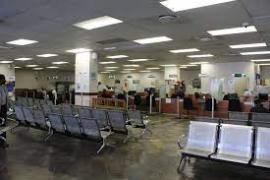
The Department of Home Affairs is continuing to open selected offices on Saturdays to increase access to services mainly for clients who are unable to visit their offices on weekdays.
The extended service is applicable to certain offices and this Saturday 12 August 2023, the following offices will be open from 8am to 1pm:
- the new Home Affairs Menlyn (Menlyn Park Shopping Centre, Pretoria, Gauteng);
- Mmabatho Office (Motswedi House, Dr James Moroka Dr, Montshiwa Unit 2, North West)
- and Mankwe Office (3, Mogwase Complex, Station Road, Mogwase, North West).
The Department will communicate when other offices will be open on the various Saturdays.
“We encourage clients to take advantage of the extended hours on Saturdays to collect documents they have applied for,” the department said.
Call for domestic employees injured on duty to claim benefits

The Department of Employment and Labour has encouraged domestic employees who were injured or contracted occupational diseases while on duty from 27 April 1994 to come forward and claim their benefits.
This follows the corrective legislative measures to amend the Compensation for Occupational Injuries and Diseases Act, No 130 of 1993 (COIDA) legislation to include domestic employees.
The corrective legislative measures were undertaken due to the 2020 Constitutional Court order, which declared section 1(xix) (v) of the COIDA invalid, with immediate and retrospective effect to 27 April 1994.
“We are encouraging all our stakeholders to inform their family and friends who might have been injured or contracted occupational diseases from 27 April 1994 to come forth and claim for their benefits.
“We are encouraging employers to not pre-judge a claim but rather submit it to the [Compensation] Fund so that we can make our own discretion,” Department of Employment and Labour Deputy Director of employer registrations and compliance Jan Madiega said on Thursday.
He was addressing the Compensation Fund Roundtable Stakeholder Engagement session held at Bolivia Lodge in Polokwane, Limpopo.
Right to claim
Madiega said a right to claim in terms of the Act shall lapse if the accident that happened or the disease that commenced on or after 27 April 1994 is not brought to the attention of the Commissioner or of the employer or mutual association concerned, as the case may be within 36 months from the date of signature on the amendment Act 10 of 2022.
All employers of private domestic employees are obliged to register with the Compensation Fund, submit the Return of Earnings (ROE’s) and make payments.
Those who had employees prior to 19 November 2020 will be required to indicate as such, however the Fund will regard their commencement date as 19/11/2020 unless claim liability is accepted for years prior.
“If the person gets injured, and it is found that you are employing an illegal foreign national you will be prosecuted for harbouring an illegal immigrant in your household. However, whether the domestic employee is a foreign national that is immaterial. As an employer, you have a duty to register your domestic employees. The Fund upon receiving a claim will request for relevant documents,” Madiega said.
As per amendments in the COID Act 10 of 2022, failure to register employees, pay and submit the ROE’s within a reasonable period will result in a penalty of 10% of actual or estimated annual earnings.
In addition, an employer who fails to pay a penalty or instalment is liable to a penalty of 10% of actual or estimated annual earnings.
Inspectors
According to Compensation Fund Legal Services, Irish Lephoto, the amended Act gives powers to the Commissioner to appoint inspectors to enforce compliance to the Act.
These inspectors will be provided with a signed certificate confirming that they are inspectors and the certificate shall state which legislation they are monitoring or enforcing.
“The inspectors may enter a home or other workplace with the consent of the owner or occupier. The Labour Court may authorise entry upon the application by the inspector and if practicable, the employer and trade must be notified of the inspection and the reason thereof.
“The changes in the amendment act will affect everyone and change the way we do business. All workers have a right to social security, which is our priority. The inclusion of domestic employees in the Act is very crucial to all of us hence we are taking steps to enforce compliance,” Lephoto said.
The Compensation Fund was established in terms of section 15 of the Compensation for Occupational Injuries and Diseases Act as amended.
The main objective of the Act is to provide compensation for disablement caused by occupational injuries or diseases sustained or contracted by employees or for death resulting from such injuries or diseases and provide for matters connected therewith.
Former President Jacob Zuma granted ‘special remission’
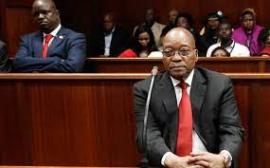
The department of Correctional Services has confirmed that former President Jacob Zuma reported to the Estcourt Correctional Centre on Friday morning and has since been released after being granted a “special remission”.
The National Commissioner, Makgothi Samuel Thobakgale, revealed his decision this morning during a joint media briefing with Justice and Correctional Services Minister Ronald Lamola.
“As the National Commissioner of the Department of Correctional Services, I have exercised my discretion as per the SCA [Supreme Court of Appeal] judgement, in deciding whether or not to take into account the period served under Community Corrections by the former President, Mr Jacob Zuma.”
This comes after the SCA found that the National Commissioner’s decision to place the former Statesman on medical parole was unlawful and unconstitutional and that he had to complete his sentence.
The Constitutional Court sentenced Zuma to 15 months imprisonment in July 2021 and only served two months after he ignored a court order to testify at a State Capture inquiry looking into a web of corruption during his Presidency.
“In compliance with the SCA judgement, Mr Zuma did report back at Estcourt Correctional Centre this morning. A consideration has been made as per legislation, including processes that were already unfolding in the management of correctional services,” said Thobakgale.
“The administrative procedures have ensued and Mr Zuma has been processed accordingly.”
Thobakgale told the media that although both the SCA and the High Court considered the Commissioner’s decision as unlawful, Zuma was not discharged, but placed under community corrections where he continued serving his sentence, under strict conditions.
“Parole in South Africa is a form of punishment which is served by an inmate within the system of community corrections in terms of Chapter VI of the Correctional Services Act of 1998,” he explained.
“When Mr Zuma left a medical hospital upon placement on medical parole, he was continuously under community corrections serving his sentence. He was never a free man with effect from 8 July 2021.”
Meanwhile, Lamola announced that President Cyril Ramaphosa has approved the remission of non-violent offenders in South Africa.
“Obviously, a question will arise whether former President Jacob Zuma will benefit from this decision or not. Indeed, he’s one of the beneficiaries as a low-risk offender.”
According to the Minister, there are 212 286 inmates, including 9 351 foreign nationals, across the country’s 243 correctional centres and 218 community centres.
“Unfortunately, the current occupancy rate is 143%, with the overcrowding rate at 43.06%.
“The recent loss of 3 024 beds at Kutama Sinthumule due to fire means that overcrowding will increase by 4%, raising the overcrowding rate to 47.06% and in turn the occupancy rate will increase 147%.”
Lamola told the media this poses a direct threat to inmate health, security, and management, and it could lead to a surge in gangsterism.
“More importantly, it hampers the department’s ability to provide development and rehabilitation programmes.”
The Minister has described the remission of sentences as a crucial aspect of the country’s justice system.
“However, it’s important to note that certain offenders, such as those convicted of sexual offences, tampering with essential infrastructure, serving life sentences, and being declared dangerous criminals, are excluded from this criterion of this special remission.”
Despite this, he said low-risk offenders in these categories may still be eligible for a 12-month remission.
Meanwhile, those convicted of non-violent and nonsexual crimes will be eligible for up to 24 months of remission after completing the pre-release programme and risk assessment.
He said the decision will result in the deportation of 3 064 foreign nationals serving short-term sentences under the guidance of the Department of Home Affairs.
Additionally, he emphasised that it will alleviate overcrowding by releasing approximately 9 488 prisoners and a further 15 000 inmates who are currently under correctional supervision and parole.
“The exercise of exploring special remission commenced on 24 April 2023 when we lost approximately 1 112 bed spaces due to dilapidation in most of our centres.”
Digital literacy programme to provide training to Eastern Cape communities
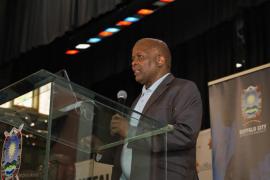
Communities in the Eastern Cape are set to benefit from a digital literacy programme, which will provide digital skills training.
Launched by the Minister of Communications and Digital Technologies Mondli Gungubele, this initiative is aimed at reducing the digital divide in communities.
“The intention is to extend it to as many municipalities as possible. It also offers an entry point towards higher order skills that are so much needed for entrepreneurial or work opportunities.
“In the absence of such understanding, it is difficult to devise relevant and appropriate digital skills interventions and support strategies for meaningful outcomes,” the Minister said on Thursday in the Buffalo City Metro.
When he delivered his remarks, the Minister noted studies that indicate that more technology advances introduced into society, the more widespread and pervasive the digital divide.
According to a 2022 World Bank report, the digital divide is a stark reality in South Africa, affecting all generations.
“It is a striking symptom of socioeconomic challenges associated with being the most economically unequal country in the world. Therefore, the discourse on digital inclusion has broadened to consider additional critical factors for ensuring digital equality. Digital inclusion is as such more complex.
“The digital inclusion requires access to learning with age-friendly design and relevant, ethical and safe for digital environments that are at play. What is also required is an informed understanding of skills needs towards the use of emerging technologies,” the Minister said.
He said digital literacy should be delivered in a strategic manner to target the different age groups, genders, and people in different socio-economic positions.
“It is therefore critical that our approach consider challenges such as language and cultural realities when the training is done for them. We should continue to ensure that digital inclusion is not inclusion without women.
“We should also find ways to effectively and strategically use digital technologies to Gender Based Violence and Femicide ((GBVF) in South Africa and the world,” the Minister said.
The Digital Ambassadors initiative provides digital skills training to members of the community, especially focusing on locally relevant digital content and services.
It will improve the skills, capacity, and employment prospects of beneficiaries.
“It will further demonstrate the worth of utilizing modern technology to the broader communities. We therefore call on members of the society, in particular young people of Mdantsane, Duncan Village, King Williams Town and East London and the Eastern Cape to join this digital revolution and involve themselves in these initiatives by enrolling with National Electronic Media Institute of South Africa (NEMISA) and take part.
SIU welcomes action taken against Tembisa Hospital officials
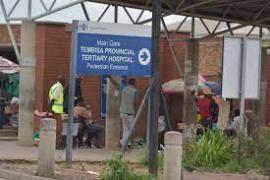
The Special Investigating Unit (SIU) has welcomed the disciplinary action taken against Tembisa Provincial Tertiary Hospital officials based on findings and recommendations made by the SIU.
This comes after the Gauteng Department of Health earlier this week announced that it has suspended six of the nine officials that were sighted in the SIU’s report.
In a statement on Thursday, the SIU noted that while the Deputy Director for Supply Chain has since retired, a Chief Physiotherapist has resigned, and a sessional Medical Officer has since stopped working at the facility.
The disciplinary action comes after the SIU entered into a secondment agreement with the Gauteng Provincial Government to investigate allegations of corruption, fraud and maladministration in matters pertaining to supply chain management processes at Tembisa Hospital under the Gauteng Department of Health.
The SIU handed over a preliminary investigation report to the Premier of Gauteng in December 2022. Based on the findings of the report, the SIU has since motivated for a proclamation to further investigate supply chain management at the Tembisa Hospital.
“Once the proclamation is signed and gazetted, and the SIU investigation findings points to undue benefit, the SIU will pursue officials who resign in the face of an investigation or disciplinary action by freezing their pension benefits and institute civil litigation to recover financial losses suffered by state institutions.
“In addition to investigating corruption, maladministration and malpractice, the SIU also identifies systematic failures, and makes recommendations to improve measures to prevent future losses,” the SIU said.
The SIU is empowered to institute civil action in the High Court or a Special Tribunal in its name, to correct any wrongdoing uncovered during its investigations caused by acts of corruption, fraud, or maladministration.
In line with the Special Investigating Units and Special Tribunals Act 74 of 1996, the SIU refers any evidence pointing to criminal conduct to the National Prosecuting Authority (NPA) for further action.
SA universities at risk of losing 10% of academics as they near retirement
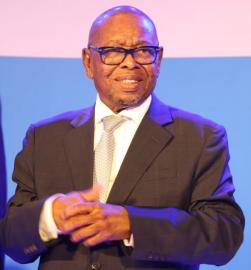
Higher Education, Science and Innovation Minister, Dr Blade Nzimande, has cast the spotlight on investing in young scholars, as a number of academics in public universities are nearing retirement.
Citing the 2023 Science, Technology and Innovation (STI) Indicators Report, Nzimande noted that the proportion of staff over the age of 60 increased from 7.3% in 2011 to 10.4% in 2020.
“This trend implies that public universities will lose about 10% of permanent staff with doctoral qualifications due to retirement within the next five years,” he said on Thursday.
The report found that the percentage of staff aged 20 to 29 declined from 7.9% in 2011 to 5.8% in 2020.
“Although there is an increase in the proportion of staff aged 30 to 39, this increase is lower than that of staff aged over 60. Therefore, there is a need to intensify support to young academic staff through instruments such as the New Generation of Academics Programme,” Nzimande said.
He was speaking at the launch of the annual STI Report in Pretoria.
Commissioned by the National Advisory Council on Innovation (NACI), the report examines investment in research, development and innovation, STI human resources, innovation in manufacturing, digital competitiveness, and the distribution of research and development (R&D) in provinces.
NACI is a leading advisory body to government on science, technology and innovation, and provides evidence-based advice to the Minister.
Because of the department’s various programmes aimed at developing future generations of academics and building staff capacity, Nzimande said the gender gap among academic employees is gradually closing.
“The proportions of male and female researchers are approaching parity,” the Minister said.
However, he noted that the proportion of staff in science, technology, engineering and mathematics (STEM) fields has remained consistent over time.
“This finding is, on reflection, not surprising.
“South African academics, once appointed on a permanent basis, cannot easily be replaced. Given that the typical academic career is around 40 years, universities have often been compared to large tankers, which change course slowly, and with difficulty.”
For the percentage of staff in the STEM fields to increase in relation to non-STEM employees, the Minister believes it would require many universities to change their organisational design, creating more medical schools, engineering faculties, and larger science faculties.
He told delegates that the establishment of the new University of Science and Technology in Ekurhuleni, Gauteng, is an example of the type of intervention that is required.
“The goal of increasing the numbers of graduates in science, engineering and technology (SET) has been stated and repeated in multiple national policy documents since 1994.
“Despite various initiatives over the years to increase the output of SET graduates, the percentage of SET graduates, as a proportion of all graduates, has remained unchanged over the past 12 years.”
On a positive note, indicators show some growth in black doctoral graduates in STEM fields, constituting an increase of about one-third of all doctoral graduates in 2010 to 44% in 2020.
Nzimande said the university would play a leading role in enhancing the growth of critical skills in the STEM fields needed to create jobs, boost the economy, and improve the lives of citizens.
“One manifestation of the multiple crises of social reproduction is that of gender-based violence and the subordinate position of women in society generally.
“The interrelated crises of unemployment, poverty, inequality, and social reproduction also manifest in high incidents of criminality and different forms of violence afflicting many of our communities.”
South African scientists, Nzimande said, have increased their research collaborations with other countries.
He noted that about 20% of the country’s population was counted as “extremely poor” in 2021.
Nzimande is of the view that the STI, with the country’s policy agenda, will require developing solutions to these socio-economic challenges.
“I can assure you today that through our new ten-year plan for STI, we will respond to these challenges.”
Cabinet has zero tolerance for violation of traffic laws

Cabinet has directed the Minister of Transport, Sindisiwe Chikunga, to ensure that any taxi operating in contradiction with the laws of the Republic is removed from the road.
This follows the ongoing impasse between the SA National Taxi Council (SANTACO) Western Cape and the City of Cape Town, which has escalated into a violent strike due to the impounding of taxi vehicles by the City of Cape Town.
While Cabinet noted that there have been no violent incidents in the last 48 hours, Minister in The Presidency, Khumbudzo Ntshavheni, said Cabinet condemned the violence and anarchy in Cape Town.
Cabinet also called on SANTACO to ensure that its protest action is peaceful and does not interfere with the rights of others.
“Members of the South African Police Service and other law-enforcement agencies have been directed to ensure the violent situation is under control to allow residents safe movement to school, work and their normal daily activities.
“Cabinet was also briefed about the City of Cape Town’s imposing of taxi operating conditions which are at variance with both the National Road Traffic, 1996 (Act 93 of 1996) and the National Land Transport Act, 2009 (Act 5 of 2009), which regulate traffic offences and the applicable penalties, including the impounding of vehicles,” Ntshavheni said on Thursday.
She was briefing media in Pretoria on the outcomes of a Cabinet meeting that was held on Tuesday.