Lady R executive summary report released

The executive summary of the independent panel’s investigation into the December 2022 docking of the Lady R vessel at Simonstown has been released.
The Presidency on Tuesday evening said that due to the classified nature of the evidence that informed the report, “government will not publicly engage further on the substance of the report”.
The vessel’s docking gave rise to public controversy, when now debunked allegations suggested that South Africa had loaded weapons onto the ship bound for Russia to assist in that country’s current conflict with Ukraine.
In the executive summary, the panel – led by Judge Phineas Mojapelo – explained that cargo was only offloaded from the vessel.
“The details of the equipment offloaded and its intended use were made known to the panel. In light of this classified information, the panel accepted the reasons provided for the decision to offload the equipment at night.
“This, as well as the nature and purpose of the equipment, are aspects which may need to be considered when the President decides what may be published.
“Despite some rumours that some equipment or arms were loaded on the Lady R, the panel found no evidence to substantiate those claims. Available evidence only confirmed the offloading and that there was nothing loaded,” the summary reads.
The executive summary is available for download here https://www.presidency.gov.za/download/file/fid/2862.
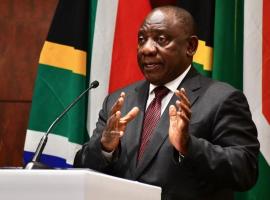
During his address to the nation on Sunday, President Cyril Ramaphosa highlighted that the allegations had done damage to South Africa’s image.
“In recent months, statements from several quarters have used these allegations to call into question South Africa’s commitment to its position on the Russia-Ukraine conflict. The allegations levelled against our country had a damaging effect on our currency, economy and our standing in the world. In fact, it tarnished our image as a country.
“When all matters are considered, none of the allegations made about the supply of weapons to Russia have been proven to be true, and none of the persons who made these allegations could provide any evidence to support the claims that had been levelled against our country,” he said.
SARS Commissioner calls for tax administrators to be excluded from budget cuts

South African Revenue Service (SARS) Commissioner Edward Kieswetter has called on National Treasuries to exclude tax administrations from across-the-board austerity measures, as it poses a threat to innovation, fiscal integrity and sovereignty.
“Once you suspend funding, the end result will always be the suspension of innovation and regression against the progress of other administrations. This goes against the intrinsic value of digitalisation in improving tax compliance and detecting tax non-compliance,” Kieswetter said on Tuesday in Cape Town.
He was addressing the 2nd Network of Tax Organisation (NTO) Technical Conference, which took place under the theme: ‘Digitalisation of Tax Administrations and Contemporary Issues’.
“As more financial transactions are taking place digitally, more third party data sources are shared with tax administrations, and central bank digital currencies are emerging, the importance of digitalisation and consequently the use of data science, and artificial intelligence have become central to revenue collection, compliance and trade facilitation.
“So, in short, whenever budget cuts are required, National Treasuries – Budget Offices are advised to avoid across-the-board cuts and ensure a more prudent approach to invest to build enabling and productive economic capacity, create employment, and thus expand the tax base.
“This secures fiscal integrity and sovereignty in the long run. Tax administrations should be excluded from across-the-board austerity measures. The investment in digitalisation should not be disrupted. The cost of recovery is simply too high in every respect,” Kieswetter said.
He said the COVID-19 pandemic accelerated the modernisation and digitisation of work at SARS.
“COVID-19 inadvertently took us to the drawing board to think from first principles, and very quickly accelerated our response towards reprioritising our technology investment to enable our employees to work during the hard lockdown and to allow taxpayers to continue to fulfil their tax obligations,” the Commissioner said.
Although SARS has made progress, he explained that much more still needs to be done, as the revenue service is behind in its digitalisation journey.
“I want to pause here and focus on one element as a critical enabler of the digitalisation journey – and that relates to funding. Before State capture, SARS was a leader in digital modernisation for many years.
“However, partly due to financial constraints, but also a short-term approach, budgets were then frozen for a number of years and SARS fell behind in driving technological innovation. We have now managed to restore some additional funds to continue our modernisation, but we are still substantially underfunded to move at the necessary speed in an environment that is changing exponentially, business models are being disrupted, and tax crime proliferating at an alarming rate,” he said.
SARS faces the challenge of not only having to play catch-up after many years of underinvestment, but also of accelerating modernisation simply to remain relevant.
“We are at a point where we can again focus on innovation. The important lesson here is that the digitalisation journey is not a finite project, but a new way of being. It is an ongoing journey. Once you suspend funding, the end result will always be the suspension of innovation and regression against the progress of other administrations,” the Commissioner said.
South Africa’s GDP grows by 0.6%

Stats SA has announced that South African real Gross Domestic Product (GDP) expanded by 0.6% in the second quarter of 2023, which measured is from April to June.
Six industries on the supply side of the economy grew in the second quarter, with manufacturing and finance driving much of the upward momentum.
“On the demand side, the country benefitted from a sharp rise in investments in machinery and equipment, which included products related to renewable energy. Despite a decline in the overall household consumption, consumers continued to spend more on restaurants and hotels,” Stats SA said on Tuesday.
The GDP growth in the second quarter follows a 0.4% rise in the first quarter.
“Manufacturing production expanded by 2.2%, mainly pushed higher by petroleum, chemical products, rubber and plastic products. Manufacturers in metals, metal products, machinery and equipment also recorded a good quarter, driven in part by increased demand for crude steel.
“Increased investment in South Africa’s automotive sector helped lift the production of transport equipment and motor vehicles. The finance industry edged higher by 0.7%, boosted by financial intermediation, insurance and real estate services,” Stats SA said.
After two consecutive quarters of decline, South Africa’s agriculture sector recorded a positive performance with a 4.2% rise in output, which was driven by increases in the production of field crops and horticulture products.
“Favourable weather conditions, increased cultivation and a rise in export demand provided further support. Mining looked good too, posting a second straight quarter of growth. Platinum group metals, gold, minerals classified in the category ‘other metallic minerals’ and coal helped lift the industry.
“The personal services industry was positive on the back of higher growth in education and health. The rise in general government services was mainly due to an increase in staff numbers.
“Not all industries had a good second quarter. After 18 months of consistent growth, the transport, storage and communication industry stumbled, declining by 1.9%. Transport support services were lacklustre and there were declines in land freight and road passenger transport,” Stats SA said.
The trade industry was down on the back of weaker retail and wholesale figures.
The overall decline was partially offset by increased activities in the motor trade, tourist accommodation and restaurant, catering and fast-food sectors.
“After holding its head above water for nine months, the construction industry lost steam in the second quarter. A decline in economic activity related to non-residential and residential buildings pulled the industry lower. There was a small uptick in construction works, but this was not enough to lift the industry into positive territory,” Stats SA said.
Investments in machinery and equipment
Stats SA noted that a sharp rise in investments in imported machinery and equipment – mostly for electricity infrastructure – drove gross fixed capital formation higher.
“This was supported by an increase in sales of locally produced electric motors, generators and special purpose machinery. The demand for machinery and equipment contributed to the 3.3% rise in imports. Imported products included those related to renewable energy, batteries, vegetable products, artificial resins and plastics, base metals and articles of base metals, and animal and vegetable fats and oils.
“South African exports edged higher by 0.9%, driven by increased trade in chemical products; prepared foodstuffs, beverages and tobacco; vehicles and transport equipment; mineral products and machinery and electrical equipment.
“Household consumption decreased in the second quarter as consumers cut back on a variety of goods and services. Despite the overall decline, households continued to increase their spending on restaurants and hotels, representing a seventh consecutive quarter of growth for this category,” Stats SA said.
Gauteng Dept of Transport making inroads

Gauteng MEC for Transport and Logistics, Kedibone Diale-Tlabela, has reflected on the strides the Department has made during the 2022/23 financial year.
Tabling of the 2022/23 annual report, the MEC said the Department has been bestowed with the most improved Department in the Province on Audit Outcomes for the year under review.
“Our fleet management entity g-Fleet was also recognised for improvements in audit outcomes, while our Gautrain Management Agency maintained its clean audit outcome. All this is the testament to our clear strategy and efforts by our officials to transform this department into a capable arm of the state that is fit to deliver services to the people of our province efficiently and without wastage,” Diale-Tlabela said on Thursday.
In the Department’s pursuit of economic revival, it embarked on significant infrastructure projects, including the rehabilitation of key roads such as P39/1 and P156/3.
These endeavours have not only contributed to economic resurgence but have also ignited the flames of job creation and community empowerment.
“We recognised the pressing need to address unemployment head-on, a consequence of the pandemic’s impact. To this end, we harnessed the power of the Expanded Public Works Programme (EPWP), launching initiatives like the COVID-19 Transport Cadet Programme and the Departmental Internship Programme. Through these efforts, we have not only provided employment opportunities but have also nurtured skill development, particularly among our youth, women, and persons with disabilities,” the MEC said.
She affirmed that safety has remained paramount in the Department’s endeavours.
“The establishment of impound facilities, the introduction of the Public Transport Arbitration Office, and the implementation of a new Vehicle Number Plate System showcase our resolute commitment to combating crime and ensuring the well-being of all who utilize our transportation systems.
“I am immensely proud to highlight that despite challenges such as cash flow issues, community stoppages, and disruptions from external factors like load shedding, our Department has demonstrated strategic acumen, fostering engagements with stakeholders and forming partnerships within our communities. These interventions have enabled us to navigate these challenges effectively and emerge stronger,” the MEC said.
She said through efficient revenue collection, tariff reviews, and collaborative efforts with stakeholders, the department has achieved financial resilience and this has allowed the Department to maintain a robust revenue contribution to the provincial government.
“This, in turn, strengthens our capacity to continue uplifting our beloved province. The Department of Roads and Transport in Gauteng stands as a beacon of resilience, adaptability, and dedication. Our initiatives have aligned seamlessly with the province’s priorities, resulting in tangible contributions to economic growth, job creation, and public safety.
“Our achievements in infrastructure development, smart mobility solutions, and revenue generation reflect our unyielding commitment to the well-being and prosperity of our citizens,” the MEC said.
Cabinet approves action plan on food prices

Cabinet has directed the Economic Cluster to put in place an action plan on food prices, food security and access to food.
“Cabinet has approved that the Economic Cluster must put in place an action plan on food prices, food secur[rity] and access to food,” Minister in the Presidency Khumbudzo Ntshavheni said.
Briefing the media on Thursday, Ntshavheni said the Competition Commission has been monitoring essential food prices pursuant to price gouging concerns raised since the declaration of the State of Disaster in March 2020.
She said that the continuation of essential food price monitoring is motivated by the need to ensure affordable and accessible essential food products for consumers.
“The Commission has noted the ‘rocket and feather’ effect, where prices are quick to rise often in excess of cost increases and slow to fall once cost pressures decline. It has also flagged the concentrated nature of the food and retail markets as a concerning contributing factor.”
At the briefing held in Pretoria, the Minister said that Cabinet has noted the Commission’s recommended measures including market inquiries to address structural features in the market that lead to high food prices and low levels of competition.
Cabinet notes continued improvement in electricity availability

The Cabinet continues to receive an update on the electricity situation in the country and notes reports of the continued improvement in electricity availability.
This is according to the Minister in the Presidency, Khumbudzo Ntshavheni, who was briefing the media on the outcomes of the Cabinet meeting held on Wednesday.
“Although the last few days had recorded an increase in the load shedding stages to Stage 4, the situation has since improved with the return of units to generation and Eskom continues to taper down the load shedding stages,” Ntshavheni said on Thursday.
The state-owned power entity announced this morning that load shedding would jump to Stage 4 as more generating units failed last night.
Minister Ntshavheni also spoke about the communities that have no electricity due to power outages and not load shedding.
These power outages, the Minister said, are caused by system overload due to illegal connections, theft or vandalism of sub-stations and transformers, and vandalism of distribution lines.
The affected communities include parts of Soweto, Tembisa, KwaThema, Komane, Taung and Ditsobotla.
Ntshavheni announced that the Ministers of Electricity and Cooperative Governance and Traditional Affairs have since commenced with a programme to engage with the affected communities to agree on measures to replace damaged infrastructure.
However, the Minister said this would be linked with the prohibition of illegal connections, community partnerships in the protection of electricity infrastructure, and payment for electricity services.
“South Africa’s agreement with the Chinese companies, on recently signed agreements, will play a significant role in introducing electricity infrastructure with self-preservation capability.”
Western Cape Provincial Powers Bill
In addition, Ntshavheni said the Executive has also been briefed about the “unconstitutional” draft Western Cape Provincial Powers Bill.
The Bill creates a framework for the province to fully assert its existing constitutional and legislative powers and to get more powers delegated from the national government.
“The Draft Bill violates the provisions of Schedules 4 and 5 of the Constitution that set out powers and functions including concurrent powers of both the provincial and national executives.”
“Cabinet has noted that this draft Bill is an attempt to revert to the Democratic Party’s, forerunner to the Democratic Alliance preferred federal approach that seeks to undermine a united and inclusive South Africa,” the Minister explained.
In addition, she said the Draft Bill ignores the exclusion from access to services of the large Black communities of Khayelitsha, Gugulethu, Nyanga, Langa, the Cape Flats, Delft, and Central Line, among others.
“Cabinet has mandated the Ministers of Justice and CoGTA to enter into discussions with the Western Cape provincial government in line with the relevant dispute resolution mechanisms as provided for in section 146 of the Constitution and the applicable intergovernmental framework.”
Cabinet welcomes employment gains

Cabinet has welcomed the Quarterly Labour Force Survey results which show a slight decrease in the unemployment rate from 32.9% in the first quarter to 32.6% in the second quarter of 2023.
Briefing the media on the outcomes of a Cabinet meeting held on Wednesday, Minister in the Presidency Khumbudzo Ntshavheni said Cabinet is pleased with the 154 000 new jobs created in the second quarter, taking the number of employed persons to 16.3 million.
This as Statistics South Africa (Stats SA) recently released the Quarterly Labour Force Survey (QLFS) data.
“This is the seventh quarter of consecutive gains in employment inching South Africa closer to the pre-COVID-19 pandemic employment figure of 16.4 million.
“Cabinet has also noted the green shoots with the reduction of youth unemployment by 131,000 and an increase of 105,000 in the number of employed youth to 5.7 million,” the Minister said on Thursday.
Consumer Price Inflation (CPI)
Meanwhile, Cabinet further welcomed Stats SA data that showed that the annual Consumer Price Inflation (CPI) slowed to 4.7% in July 2023, from 5.4% in June 2023.
The annual inflation rate for goods was 5.5% for July 2023 from 6.3% in June 2023, whereas the inflation rate for services was 4.0% down from 4.5% in the same period.
Agro-Energy Fund
Meanwhile, Ntshavheni said Cabinet has noted the launch of a R1,21 billion Agro-Energy Fund.
The fund aims to support the agriculture and agribusiness sector to install alternative energy sources and continue with food, fibre and beverages production.
The fund was launched by the Department of Agriculture, Land Reform and Rural Development, collaboratively with the Land Bank earlier this week.
“The sector is one of the intensive energy users and critical for the stability of South Africa’s food security, export earnings and employment, thus making this government intervention vital to ensure sustainability.
“The Fund is inclusive and will support farming businesses of all scales in a blended finance approach, with the Land Bank managing the fund. The fund will also include all agriculture and agribusiness activities that are energy intensive,” Cabinet said.
President Ramaphosa meets with SOE chairpersons and CEOs

Implementing reforms will serve to enhance the ability of State Owned Enterprises (SOEs) not only to adapt to industry developments but also to serve South Africans into the future.
This is according to President Cyril Ramaphosa who met with chairpersons and chief executives of SOEs on Tuesday.
“It is quite clear that the success of our economic recovery relies on the effective functioning of state-owned entities. We are implementing reforms to ensure that SOEs are able to adapt to new economic conditions, including rapid developments in technology, their respective operating environments and changing global trends, and to serve the country well into the future,” President Ramaphosa said.
In a statement, the Presidency said the meeting sought to “discuss the implementation of measures to stabilise their financial and operational performance and harness their economic potential”.
“Government has, since 2018, embarked on a process of reform to address the legacy of state capture in SOEs, including through the appointment of capable leadership, the recovery of stolen assets and the pursuit of those responsible for perpetrating acts of corruption.
“In addition, as part of Operation Vulindlela, fundamental reforms are being implemented in the energy, logistics and water sectors to address structural challenges and reposition SOEs for the future.
“President Ramaphosa called on the management and boards of SOEs to accelerate this reform agenda and fulfil their developmental mandate. He emphasised the importance of SOEs, as strategic national assets, in driving inclusive growth, investing in infrastructure, and creating jobs. President Ramaphosa will continue to prioritise the turnaround of South Africa’s SOEs in order to drive economic growth and transformation,” the statement read.
Also at the meeting, the Presidential State Owned Enterprises Council tabled a report while the National Treasury presented an update on its review of the procurement system of SOEs.
“Since its establishment, the Council has undertaken in-depth analyses at 21 SOEs to inform its recommendations. It has proposed changes to the governance framework and shareholder ownership model to enhance oversight, separate the ownership, policy and regulatory functions of the state, and leverage the combined balance sheet of SOEs.
“In addition, the National Treasury provided an update on its review of the procurement system to implement the recommendations of the Commission of Inquiry into State Capture while enabling SOEs to operate in an efficient and competitive manner. Legislative and regulatory reforms are underway to strike an effective balance between preventing corruption and abuse and allowing innovation, agility and responsiveness in procurement,” the Presidency said.
High Court sets aside multi-million Rand prisons renovation contract

The Special Investigating Unit (SIU) has welcomed a High Court judgment setting aside the decision of the Department of Correctional Services (DCS) to appoint a company for project management and assessment services related to the renovation of certain prisons during 2014.
According to the SIU, the department appointed Masetlaoka Scott Wilson to:
- Act as a project manager for the renovation of three prisons and replacement of other facilities, at a project management fee amounting to approximately R144 505 417.76.
- Conduct assessments in terms of the Government Immovable Asset Management Act, 2007 (Act No. 19 of 2007) in respect of 221 prisons to the value of approximately R464 100 000.00.
“In January 2014 and in order to avoid returning unspent money of approximately R812 million to the National Treasury shortly before the end of the relevant financial year, DCS took a decision to participate in a contract between MSW, a project management consortium, and the Department of Higher Education and Training (DHET).
“The High Court found that the relevant decision(s) and resulting agreement(s)/contract(s) was/were inconsistent with the Constitution, as it was not fair, transparent, equitable, competitive, and cost effective, and therefore unlawful.
“The SIU welcomes the order of the High Court as it demonstrates the continued implementation of its investigation outcomes and consequence management, and efforts to recover financial losses suffered by the State due to negligence or corruption,” the SIU said.
The corruption busting unit said the decision of “what would constitute just, and equitable relief was referred by the High Court for trial”.
Mahlobo calls for professionalism in water sector

Water and Sanitation Deputy Minister David Mahlobo has called for a culture of work, service and professionalism within the public sector and key stakeholders.
Mahlobo made the remarks during the Emfuleni Section 63 Support Stakeholder Meeting held at Vereeniging, Gauteng, on Friday.
The meeting, which was attended by Emfuleni Local Municipality Mayor Sipho Radebe and stakeholders from various structures representing business and civil society within the Sedibeng District Municipality, aimed to provide an update on the progress made on the Emfuleni Section 63 Interventions, and the planned work leading up to the commissioning of pump station 5, which has a capacity of 150 mega litres a day.
In 2021, Minister Senzo Mchunu invoked and placed Emfuleni Local Municipality under Section 63 of the Water Services Act and took over water and sanitation services following the municipality’s failure to manage its water and sanitation services, which resulted in sewer spillages in communities and into the Vaal River, polluting the raw water source.
The objective of the Section 63 interventions is to address sewerage spillage in the Sedibeng District’s Emfuleni and Midvaal, as a result of lack of maintenance and aging infrastructure, and demand that is higher than waste water treatment capacity.
Rand Water was appointed as an implementing agent to deliver an effective solution that will eradicate pollution in the river and its tributaries, and address water and sanitation service delivery challenges, inhibiting both social and economic development in the region.
Mahlobo was appointed by Mchunu to chair the Political Stakeholder Committee of the project in the region to keep all stakeholders abreast of the progress in the implementation of the intervention.
Mahlobo noted the overwhelming progress on the work that has been done to address spillages, and urged the department and other water sector stakeholders to improve their work ethic, service delivery, and professionalism, stressing the significance of regular information sharing to demonstrate the progress being made, and to foster patience among the public.
He said this approach will ensure that stakeholders are well-informed about the ongoing developments, and can collaboratively address any challenges that arise.
The Deputy Minister also emphasised the importance of transparency in water management.
“The sharing of information plays a crucial role in informing the public about the measures implemented to enhance the provision of adequate water services. It also allows for clarification on the progress made in various water projects.
“This, in turn, helps to build trust and confidence within the public. Additionally, transparency holds all stakeholders accountable for their actions, thus enhancing good governance within the water sector,” Mahlobo said.
The Deputy Minister also highlighted a need for collaborative efforts with the private sector to succeed.
He said, it is through the collective efforts of the department, including stakeholders, and the public, that meaningful change can occur.
“By cultivating a culture of work, service, and professionalism, the water and sanitation sector can address existing challenges and pave the way for a future marked by sustainable and equitable access to water resources,” the Deputy Minister said.
A number of stakeholders also expressed their gratitude towards progress made by the intervention, adding that it has been evident that the Emfuleni Section 63 worked extremely well and that more opportunities must be availed for women.
Significant progress in water-related projects
The Rand Water, which is responsible for supplying potable water to the Gauteng Province, highlighted significant progress in various water-related projects.
In its reports, the utility noted that the refurbishment of pump station 2 is currently at 80% completion with pump station 9, which has reached 50% completion.
The utility also highlighted that the gravity main to pump station 2 is halfway through its renovation, while pump station 10 is nearing completion at 95%.
Another progress noted was the successful completion of the collapsed sewer pipeline at Union Street in Vereeniging, which is 100% completed.
Mahlobo concluded the meeting by directing the Department of Water and Sanitation Provincial Head for Gauteng, Justice Maluleke and his team to ensure that real issues are captured and site visits take place at the specific areas and feedback given.