Government provides infrastructure to aid internet connectivity

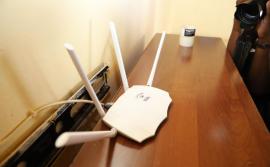
Government has rolled out infrastructure for internet connectivity in four villages of Mount Ayliff in the Eastern Cape, allowing households to access the internet at cheaper rates.
“For R249 per month, a subscribing household has unlimited access to robust internet. The project has realised cheaper data costs as low as R5 per one gig for a day,” the Department of Communications and Digital Technologies said on Monday.
This initiative is part of Government’s flagship programme SA Connect, which seeks to bridge the digital divide by connecting government institutions and providing Wi-Fi access to communities across the country with the target to achieve 80% internet connectivity for the population by the end of the 2024/25 financial year.
The aim of the project is to improve broadband penetration, reduce broadband prices and drive economic growth.
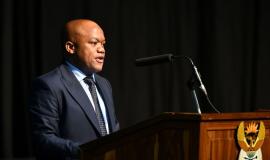
“The rollout of this project nullifies the vastness (geographic distance) of the district as well as the rural-urban divide as villagers no longer need to make long distance trips to towns to access services such as banking, education, e-commerce, etc. as well as various government services,” Minister of Communications and Digital Technologies Mondli Gungubele said.
The Sentech tower situated at Simakamaka Mountain is providing a clear line of sight to the four villages and anchors the internet connectivity.
It has provided employment opportunities to a total of 120 skilled professionals and semi-skilled labour force and contributed immensely to the general economic upliftment of the area.
“It is envisaged that the overall Wi-Fi access to communities will result in excess over 75 small to medium sized companies offering employment opportunities to 4 505 skilled professionals and semi-skilled labour force,” the department said.
The Minister launched phase two of the SA Connect Project on 04 November 2023.
The Mount Ayliff segment of the project has exceeded the 500 households it originally intended to connect and is currently oversubscribed with many more potential subscribers still requesting the service.
The department will launch other pilots of phase two of SA Connect in Harry Gwala Municipality in KwaZulu-Natal as well as the Modimolle Local Municipality, Waterberg District in Limpopo in the next coming weeks.
Overall, connectivity will be rolled out in 16 districts by March 2024.
Zikalala woos infrastructure investors in the UK

Public Works and Infrastructure Minister Sihle Zikalala is on an official working visit in the United Kingdom, where he will engage strategic finance stakeholders and conduct important bilaterals with his ministerial counterparts on driving further investment into South Africa’s infrastructure project pipeline.
Zikalala will be in the United Kingdom till Friday.
While in the UK, the Minister will deliver a keynote address at the Global Trade Review Africa in London on Wednesday, as well as attend the opening of Parliament, at the invitation of Hon. Sir Lindsay Hoyle MP, Speaker of the House of Commons.
The South African government has unveiled and gazetted a project pipeline of over 70 projects in the sectors of energy, water, digital infrastructure, transport, human settlements and agriculture.
Zikalala, who is joined by a delegation from Infrastructure South Africa (ISA), will seek to pivot investment-ready infrastructure projects and further strengthen relations with the UK government to ensure sustainable collaboration in the infrastructure eco-system.
Minister Zikalala is hosted by the UK Prime Minister’s trade envoy to South Africa, Andrew Selous and will conduct bilaterals with the Minister of the Foreign, Commonwealth and Development Office, Andrew Mitchell, and the Minister of State in the Department for Business Trade, the Earl of Minto.
Zikalala and his delegation will round off the visit with a site visit to Kings Cross and bilateral engagements with the Infrastructure and Projects Authority.
Zikalala will thereafter proceed to the Afrexim Bank Intra Africa Trade Fair in Cairo, Egypt, where he will focus on accelerating business and economic growth across Africa.
This, according to his department, will be a platform that will also be utilised to showcase and market Strategic Infrastructure Projects (SIPs).
This forum will involve senior executives from governments, major banks, companies and NGOs from across Africa and beyond.
Limpopo Premier to hand over ambulances to Sekhukhune district

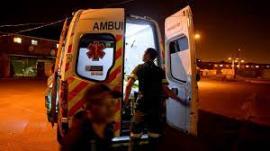
Limpopo Premier Chupu Stanley Mathabatha is expected to hand over 35 brand new ambulances to the Emergency Medical Services (EMS) at district municipality offices in the Sekhukhune District.
The new fleet of EMS vehicles is a major step in the department’s ongoing commitment to enhancing healthcare services for all residents in the province.
The handover is a pivotal moment aligning with the goal set by Health MEC, Dr Phophi Ramathuba (during the 2023/24 budget speech) of providing a total of 500 new ambulances.
In recent months, 105 new ambulances have been commissioned and allocated to EMS stations across the province.
Other districts and EMS stations are in the queue to receive new ambulances in the upcoming tranches.
Mathabatha emphasised the crucial role of ambulance services in delivering timely medical care to patients, ensuring immediate attention, providing vital first aid, stabilising patients and preventing the deterioration of their condition.
“Improving our ability to respond swiftly to emergency situations is our top priority,” said Mathabatha.
AGOA benefits extend beyond trade

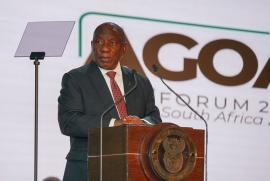
Economies in Sub-Saharan countries stand to benefit far more from the African Growth and Opportunity Act (AGOA) than notable trade statistics, says President Cyril Ramaphosa.
“AGOA enhances the diversification of African economies, enabling them to export value-added products. By enabling African countries to have preferential access to the US market, this opportunity incentivises African countries to develop and export value-added goods and services. This does and will continue to reduce Africa’s dependence on primary commodities and enhance its ability to participate in global value chains.
“Another important element of AGOA is that it has a capacity-building and technical assistance component that supports African countries in meeting the requirements for accessing the US market. This assistance helps improve Africa’s competitiveness by enhancing skills, knowledge and infrastructure, enabling African businesses to meet international standards,” the President said in his weekly newsletter on Monday.
The newsletter was released on the back of South Africa hosting the 20th AGOA Forum in Johannesburg, which concluded on Saturday.
AGOA is an initiative of the United States of America aimed at giving duty-free market access for producers in eligible countries in sub-Saharan Africa.
President Ramaphosa further explained how some economies’ development can be enhanced through AGOA.
“If extended beyond 2025 for a sufficiently long period, and if used more effectively, AGOA can contribute significantly to the further diversification of African economies. It could enable countries to produce a wider range of products using the abundant minerals, metals and agricultural produce. The extension of AGOA could also encourage the further development of value chains across different countries.
“We have already seen this happening in South Africa’s automotive industry, for example. Local automotive companies source leather car seats from Lesotho, wiring harnesses from Botswana, copper wiring from Zambia, steering wheel components from Tunisia and rubber from Côte d’Ivoire, Nigeria, Malawi, Ghana and Cameroon. The vehicles are finally fully manufactured in South Africa, then exported to the US duty-free under AGOA.
“This is a great example of the resources and industrial capabilities of different African countries being brought together to produce finished goods that can be sold beyond our shores. This is contributing to the creation of jobs both in South Africa and in other African countries, and raising foreign exchange earnings,” he said.
Regional integration
President Ramaphosa said AGOA can be a catalyst for further economic integration between countries.
“Africa has been advocating for the integration of continental economies for a long time. AGOA encourages regional integration among African countries. To fully benefit from AGOA, countries are finding that it is far better to work together to increase production capacities, harmonise standards and develop regional value chains.
“This is demonstrated by the experience of 10 countries, including South Africa, in the production of motor vehicles exported to the US. This promotes cooperation, economic integration and the growth of larger regional markets within Africa,” he said.
Local perspective
The President honed in on some of the benefits that South Africa already garners from AGOA.
“While [AGOA] may seem to many in our country to be a rather distant, even obscure topic, AGOA is an important instrument for growing and transforming our economy. The benefits of AGOA are felt in the lives of our people through increased economic activity and the jobs that such activity created.
“South Africa benefits a great deal from AGOA. Our country is the United States’ largest trading partner in Africa. The US exports more goods to South Africa and imports more goods from South Africa than any other African country. According to US Census Bureau data from 2020, South Africa was the largest destination for US foreign direct investment among AGOA eligible countries,” he said.
President Ramaphosa emphasised that South Africa attaches great significance to its relationship with its American counterpart.
“South Africa greatly values its bilateral relationship with the US, one of our largest trading partners, with whom we enjoy relations that extend well beyond trade.
“We look forward to further engagement around the reauthorisation of AGOA at a time when its benefits continue to support our quest for economic growth, job creation and inclusive, sustainable development,” President Ramaphosa said.
Government activities for the week, 6 November – 10 November 2023

On Monday, 6 November, the Minister in the Presidency, Khumbudzo Ntshavheni, briefs media in Pretoria on the outcomes of the Cabinet meeting held on Wednesday, 1 November.
From Monday, 6 November, the Minister in the Presidency responsible for Electricity, Dr Kgosientsho Ramokgopa, is expected to embark on a series of follow-up visits to Eskom power stations. The follow-up visits will begin at Arnot and Hendrina power stations in Mpumalanga on Monday, 6 November. On Wednesday, 8 November, the Minister Ramokgopa will visit Kriel and Matla power stations in Mpumalanga. On Thursday, 9 November, he will visit Camden power station in Mpumalanga.
On Monday, 6 November, the Minister of International Relations and Cooperation, Dr Naledi Pandor, hosts the Minister of Foreign Affairs of the Ukraine, Dmytro Kubela, for political consultations.
On Monday, 6 November, the Deputy Minister of Transport, Lisa Mangcu will lead a clean-up and awareness campaign at the Rand West City Local Municipality in Randfontein.
From Monday, 6 November to Tuesday, 7 November, the Department of Women, Youth and Persons with Disabilities (DWYPD) and the Office of the Premier of KwaZulu-Natal embark on a service delivery drive to address psychosocial challenges that women, youth and persons with disabilities are confronted with in Kwa-Nongoma.
On Tuesday, 7 November, the Minister of Forestry, Fisheries and the Environment, Barbara Creecy, will host a consultative stakeholder engagement meeting on South Africa’s negotiating position ahead of the third Intergovernmental Negotiating Committee (INC3), which is scheduled to take place in Nairobi, Kenya from 13 – 19 November 2023.
From Tuesday, 7 November to Thursday, 9 November, the Department of Employment and Labour will host a three-day Occupational Health and Safety Conference in Durban, KwaZulu-Natal.
From Wednesday, 8 November to Thursday, 9 November, the Anti-Corruption Dialogue will be held in Ekurhuleni, Gauteng.
On Thursday, 9 November, the Electoral Commission will present the Atlas of Results for National and Provincial Elections to Parliament.
Disability rights awareness: Making access a lived reality

By Nomonde Mnukwa
Since the dawn of our democracy, one of our nation’s priorities have been increasing accessibility for everyone, especially vulnerable groups such as persons with disabilities.
Today, in a democratic South Africa, the rights of persons with disabilities are protected, promoted and advanced through legislation and the Constitution, which leaves no room for discrimination on any grounds.
While our laws and policies have been enacted to promote people with disabilities, they should not be viewed by the private and public sector simply as a compliance issue.
Equality for people with disabilities must become a lived reality to enable a societal shift that will ensure people with disabilities fully contribute to the country’s socio-economic growth and development.
As we mark National Disability Rights Awareness Month from 3 November to 3 December, it is a time for introspection on how we can advance the rights of persons with disabilities and ensure that people with disabilities are fully integrated in every area of our society.
Government remains unwavering in its commitment to uplift and improve the lives of disabled people. To facilitate the full participation of people with disabilities, public spaces are being equipped according to the needs of those with disabilities, for example wheel chair-friendly environments.
These spaces improves the quality of life for people with disabilities by enabling their participation and improving accessibility. This supports social cohesion priorities of government and promotes the rights of disabled people.
The recent recognition of South African Sign Language (SASL) as the 12th official language is an important step towards the realisation of the rights of persons who are deaf or hard of hearing.
Through the enactment of the SASL, the language needs of people with hearing impairments are met, helping increase their access to economic and learning opportunities. Moreover, it ensures they have equal protection and benefit under the law.
Learning for children with hearing difficulties is being facilitated through the use of sign language in teaching and learning by the Department of Basic Education. This initiative is helping empower and equip these children to develop their lives beyond their circumstances.
Government is working towards creating economic opportunities for people living with disabilities to enable them to actively participate in the economy and provide for themselves and families. These economic opportunities also give them a sense of fulfilment.
The Department of Women, Youth and Persons with Disabilities together with the Department of Agriculture, Land Reform and Rural Development have collaborated to accelerate inclusion for women, youth and persons with disability in the agricultural sector.
The SASSA disability grant enables over 1 million people with disabilities to live integrated lives in communities.
Whilst government strives to improve access for people with disabilities, we urge organisations, Non-Profit Organisations and civil society to work with us in creating an enabling environment for people with disabilities.
These include spaces with wheel chair ramps, assistive devices, incorporating sign language facilitators for deaf people and braille materials for the blind.
Everyone can lend a helping hand to make a difference in the lives of people with disabilities. It can be through helping a disabled person cross the road, volunteering at shelters or learning sign language.
Our actions are inspired by our former President Nelson Mandela who advocated for the rights of disabled persons. Madiba said: “The new South Africa we are building should be accessible and open to everyone… Only then will the rights of the disabled to equal opportunities become a reality”
While we have come a long way in breaking some barriers of access and entry for people with disabilities, more needs to be done to move disability issues into the mainstream. Together we can further advance our democracy by improving access for everyone, especially vulnerable groups such as persons with disabilities.
*Mnukwa is the Acting Director-General for the Government Communication and Information System (GCIS)
Mashatile commits to deepen trade with China, increase value-added products

Deputy President Paul Mashatile says South Africa will continue to explore various avenues of strengthening and deepening long-standing economic, trade and people-to-people relations with China.
“By advancing more South African value-added products from a top 10 category to an exponential top 100 products, we are confident that we are making progress in our bilateral trade,” he said on Sunday.
The Deputy President was speaking during his open remarks at the 6th China International Import Expo (CIIE) in Shanghai.
“We commend the Chinese government’s efforts to continuously host the CIIE, thereby opening this market to the world, and to Africa in particular.”
Mashatile described the expo as a unique platform that provides companies around the world the opportunity to showcase their products and services, and expand their network.
It is also a platform to conclude trade deals, while companies learn about the culture of doing business with Chinese enterprises and get first-hand information on compliance and adherence to Chinese protocols.
The country’s second-in-command said South Africa has optimised the space accorded to it at the Country Pavilion for Trade and Investment, where 25 South African entities — comprising provincial trade and investment agencies, export councils and other manufacturers — have been supported to exhibit at this premier location.
“We have also secured additional space at the Enterprise and Business Fair. A further 11 business enterprises are showcasing the best of South Africa’s agricultural produce and agro-processing products,” Mashatile said.
The stalls include value-added products in the diverse sectors of creative industries, medical equipment, clothing and textiles, cosmetics, metals, mining and engineering services, manufacturing, and aerospace and defence technologies.
“We are confident that the group of businesspeople that we have supported to participate in the multi-sectoral expo will not only find markets for their products through the business-to-business meetings, but they will also identify opportunities for joint trade and investment ventures,” Mashatile said.
South Africa’s participation, he said, is taking place on the back of three significant events, including the BRICS Summit hosted in Johannesburg in August.
BRICS is a bloc of emerging economies that includes Brazil, Russia, India, China and South Africa.
“At this summit, our two countries, together with the other founding BRICS partners, agreed to expand the membership for greater global influence and impact,” the Deputy President said.
The other events include the Procurement Mission led by the Chinese Minister of Commerce Wang Wentao, which resulted in purchase agreements for South African products of about US$2.2 billion, and the Bi-National Commission held this month, which was co-chaired by Mashatile and Vice President Han Zheng.
Tourism announces opening of application process for TEF

The Department of Tourism, together with the Small Enterprise Finance Agency (Sefa) – an agency within the Department of Small Business Development, has announced the opening of the application process for the Tourism Equity Fund (TEF) on Monday, 06 November 2023.
“Following Cabinet’s approval in September 2023 for the revised TEF to be implemented, we are delighted to announce that the Request for Proposals for funding from the TEF is now open to businesses,” the Department of Tourism said in a statement.
The R1.2 billion TEF aims to increase growth and transformation, and stimulate more inclusive participation in the tourism sector in line with the targets of the Tourism B-BBEE Sector Codes.
The TEF is intended to address the funding challenges faced by Qualifying Small Enterprises and Emerging Micro Enterprises in the tourism sector.
The TEF will be implemented by:
- Assessing and scoring applications against jobs to be sustained and/or jobs to be created, location and geographic spread, and targeted groups (youth, women, and people with disabilities).
- Department of Tourism and Sefa in partnership with banking and/or financial institutions in the Republic of South Africa, which includes, amongst others, banks and developmental finance institutions that will offer affordable and tailor-made financial solutions, in an attempt to close funding gaps in the market, through the provision of a blended finance solution.
- Disbursing a total of 80% of the TEF funds to existing Small Medium and Micro Enterprises in the market to enable these businesses to grow. The remaining allocation of 20% of the funds will be disbursed to new businesses.
“Sefa will implement, execute and manage the Fund through a Fund Management Agreement signed with the Department of Tourism. The Department will support and monitor the implementation of the TEF on a monthly basis,” the department said.
The TEF places significant emphasis on providing support to tourism enterprises that meet the qualifying criteria, including a minimum of 30% Black ownership either before or after the financial support.
The TEF is exclusively dedicated to investing in various sub-sectors within the tourism industry as prescribed in the Tourism B-BBEE Sector Codes.
The department said it is committed to enhancing transformation in the tourism sector and the TEF aims to contribute towards achieving transformation goals in this important sector of the economy.
“The funding structure comprises grant funding, and debt financing, to meet the distinct needs of tourism enterprises that are either seeking equity acquisition, investment in new developments, or expansion of their existing businesses,” Tourism Minister Patricia de Lille said.
The TEF is backed by public-private partnerships which support the participation of private, commercial, and non-commercial banks, and various developmental funding institutions.
“The collaboration between public and private entities serves as a notable example of successful cooperation in advancing a more inclusive and prosperous tourism sector.
“The Department of Tourism remains committed to advancing the transformation agenda through creating equitable opportunities to realise an inclusive and revived tourism economy,” de Lille said.
With consideration of Regulation Gazette No 11067, Volume 697, No 49018 published on 25 July 2023, withdrawing Regulation Gazette No 11241, Volume 668 of 19 February 2021. No 44172, all applicants (including previous applicants) are encouraged to submit new applications that will align with the new qualifying criteria of TEF.
For more information on the Tourism Equity Fund and the application process visit: https://www.tourism.gov.za/CurrentProjects/Tourism_Equity_Fund/Pages/Tourism_Equity_Fund.aspx
Measures in place to ensure safe and secure AGOA

The National Joint Operational and Intelligence Structure (NatJOINTS) has put measures in place to ensure the 20th African Growth and Opportunity Act (AGOA) Forum takes place in a safe and secure environment.
NatJOINTS includes various government departments led by the South African Police Service (SAPS), South African National Defence Force (SANDF) and the State Security Agency (SSA).
Police spokesperson, Brigadier Athlenda Mathe, said a safety and security operational plan is already being enforced, with all critical role players already on the ground to execute their various responsibilities, as per their mandate.
Mathe said police visibility has been heightened in and around the Johannesburg Expo Centre, with the aim of preventing and combating any form of opportunistic crime, before, during and post the event.
She emphasised that only those in possession of accreditation to attend will be allowed near the venue and restricted areas.
“Those found with fraudulent accreditation will face the full might of the law. Lost cards must be immediately reported to the South African Police Service. It is a serious offence to exchange cards amongst colleagues.
“Residents of Johannesburg and those who are operating businesses within the vicinity of the Johannesburg Expo Centre are advised about road closures for the duration of the event,” Mathe explained.
The affected intersections in the Nasrec precinct as reported by Johannesburg Metropolitan Police Department (JMPD) include:
• Nasrec Road and Recreation Road;
• Nasrec Road and Randshow Road;
• Randshow Road and Commerce Street;
• Nasrec Road and Landbou Road;
• Golden Highway Road and Randshow Road;
• Ring 1 and Ring 2;
• Golden Highway and Stadium Road and
• Nasrec Road and Stadium Road.
NATJOINTS assured all dignitaries, attendees and spectators that multidisciplinary and integrated teams are already on the ground and are ready to deliver a safe and secure event.
SARS welcomes MTBPS revenue revision

The South African Revenue Service (SARS) has welcomed the tabling of the Medium Term Budget Policy Statement (MTBPS), despite the statement’s downward revision of revenue collection by some R56.8 billion.
The MTBPS was tabled by Finance Minister Enoch Godongwana in Parliament on Wednesday.
“SARS has continued with its core functions of collecting all that is due to the fiscus. During the first half of the current fiscal year, we have collected gross revenue totalling R1 016.3 billion, growing by 4.5% and recording a surplus of R1.0 billion against the Budget 2023 estimate.
“This performance is on the back of strong gross collections from VAT, Fuel Levy and PIT [Personal Income Tax], partially offset by lower gross collections from CIT [Corporate Income Tax], as company profits remain under pressure. Without our assistance, the fiscal framework would have been under greater pressure.
“This is a good news story and offers hope in a currently challenging environment. Through focused commitment, SARS has paid back to the economy through refunds for the first six months of the current fiscal year an amount totalling R212.2 billion, higher by R24.6 billion over the prior year and higher than the Budget 2023 estimate by R30.1 billion,” the revenue service said in a statement.
The 2023 main budget had projected collections would reach some R1.78 trillion but that has now been revised down to R1.73 trillion.
“Income and profits in the broader economy have been adversely affected from what was anticipated at the 2023 February Budget. Provisional corporate income tax collections, from especially the mining sector, have reduced at the end of the June 2023 and led to a larger than expected deficit against the 2023 Budget estimate.
“Nevertheless, higher-than-estimated profitability in the finance sector (amongst others) supported provisional corporate income tax and dividends tax collections. Main sector performance that showed growth includes – Finance 7.8% from employment and vesting of shares, Community 6.8% from annual salary increases (mainly Government) and Wholesale 6.2%, mainly from retail and vehicles,” SARS said.
The revenue service highlighted that net tax revenue performance is “impacted adversely” by local and global challenges.
“A slowdown in mining production is down 55% due to lower demand of coal. This is compounded by disruptions to and underinvestment in freight and logistics networks, which erode the competitiveness of the South African economy. The intermittent and inadequate electricity supply remains the most immediate and significant constraint to production, investment, and employment.
“Rising inflation rates constrained household spending by raising the cost of living. Global growth slowed further in recent months. Central banks are countering the effects of high inflation by implementing restrictive monetary policies for longer than anticipated which negatively impact on all developing countries. Several global risks remain, including the increase in geo-political tensions, resulting in the need for stronger domestic demand to support economic growth,” SARS said.
The revenue service added that Gross Compliance Revenue yielded some R118.4 billion.
Key focus areas in this regard include:
- R11.9 billion from revised assessments flowing from the verification of 1.12 million returns, up Y/Y up by R5 billion (70%).
- Almost R40 billion that was secured from resolving more than 440k debt collection cases, up Y/Y R4 billion (±12%).
- R2.3 billion secured from 121 illicit investigations and 181 state capture cases in progress, 27 cases handed to the NPA.
Fraudulent claims
SARS highlighted that fraudulent refund claims remain a concern for the tax collector.
“At R172.1 billion, VAT refund payments contribute 81% to the overall outflows, growing against last year by R21.5 billion. 84% of all VAT Refunds are paid within 21 days, up from 77% last year. However, like all other revenue agencies, impermissible and fraudulent refunds remain a concern in this year, SARS prevented R45 billion from being paid out.
“Equally important is that we have prevented R45 billion from being paid out following verification activities that were enabled by Artificial Intelligence. Impermissible and fraudulent refunds remain a concern, and we must deal with this phenomenon,” the tax collector said.
SARS Commissioner Edward Kieswetter encouraged South Africans to do the right thing and pay what is due to the tax authority.
“The historic win by the Springboks on Saturday communicates an important yet simple message – that every single point makes a massive difference between winning and losing. While the odds were stacked heavily against the Springboks, it took superhuman efforts individually and collectively to contribute to what at times look like an impossible victory.
“It is therefore incumbent upon all of us as South Africans to play by the rules like the Springboks and never give up until the final whistle blows,” Kieswetter said.