Calls for SITA, union to resolve wage deadlock

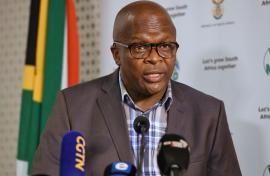
Minister of Communications and Digital Technologies Mondli Gungubele has called on the union representing State Information Technology Agency (SITA) workers and the department to find an amicable resolution to the deadlocked wage negotiations.
Earlier this week, members of the Public Servants Association (PSA) announced their strike action when wage negotiations had hit a dead end.
“The Department of Communications and Digital Technologies has been alerted by SITA of the deadlock with negotiations and the subsequent protest action. The department acknowledges the rights of employees to embark on such action.
“Although the department has noted calls for the Minister to intervene, it is important to note that this is a labour matter between the PSA representing the employees and SITA as employer, where the department cannot interfere. Minister Gungubele is, however, calling upon both parties to find a speedy and amicable resolution to ensure that service delivery is not negatively affected,” the Minister said on Tuesday.
The department has been assured by SITA that plans are in place to ensure that key operations of the agency will be protected from any negative impact by this protest action.
SASSA takes services to rural Marapyane

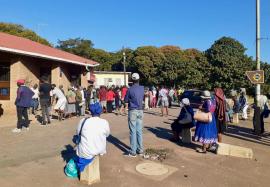
In an effort to deal with the high level of unemployment in the area, the South African Social Security Agency (SASSA) in Mpumalanga will today take its services to the Marapyane community located within the Nkangala District.
According to SASSA, most of the communities in the area and the surroundings are dependent on social grants for survival.
The agency said their services will be offered during the Integrated Community Registration Outreach (ICROP).
“Communities will have full access to all SASSA services and get an opportunity to apply for social grants. Beneficiaries who wish to change the payment method to their banks of choice will be assisted on the spot. All spheres of government, relevant stakeholders and financial institutions will be available to offer their services,” SASSA said.
The agency explained that it was taking its services to Marapyane because there is a temporal service point that operates from Monday to Friday, 09:00 – 15:00.
This service point provides services to five out of 31 wards with a total of 17 villages within a 30km radius.
“As a result, the local office saw the need to conduct an ICROP with the intention of to reducing the intake backlog, overcrowding and long traveling distances by clients to other nearby SASSA offices,” the agency said.
For more information clients can contact the toll free number during working days/hours on 0800 60 10 11, or Whatsapp 082 046 8553.
Safeguarding the future of those who teach

While one may no longer remember the name of the classroom teacher’s pet, chances are that one will never forget the name of that special teacher who changed the course of one’s life.
While we grow up to leave our school tomfooleries behind, teachers continue to leave an indelible mark in the lives of pupils.
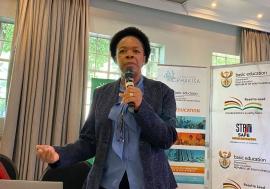
“Passionate teachers often inspire and motivate their students. Passion for the subject matter and a genuine interest in the well-being of students can greatly impact the effectiveness of teaching,” said acting Chief Director of Education Human Resource Development at the Department of Basic Education, Lala Maje.
While teachers work hard to shape learners into the adults of tomorrow, who is helping newly qualified teachers to transition into the classroom environment?
This is where the Department of Basic Education’s (DBE) New Teacher Induction Programme (NTIP) comes in.
The programme is intended to support new teachers who are placed in schools within their first two years of permanent employment.
“NTIP is a programme that introduces the new teacher to the teaching profession, to the resources available, to the support that the DBE and all stakeholders avail to the teachers,” said Maje.
Teachers have to register on the learning management system for the programme. The one-year programme comprises seven modules that are linked to the Professional Teaching Standards.
The Professional Teaching Standards and the Ethical Teaching Standards forms the basis of teaching being a profession and that is managed and guided by the South African Council of Educators (SACE).
A teacher must register with SACE before they can practice in schools.
The programme also supports SACE in ensuring that Professional Teaching Standards and the code of ethics are infused in the daily life of teachers,” said Maje.
The induction is based on four pillars namely mentoring, training, professional development and peer support.
The programme was set up after the Teacher Education Summit held by the DBE and the Department of Higher Education and Training in 2009.
Since its inception in 2017, the partnership between the DBE and Flemish Association for Development Cooperation and Technical Assistance (VVOB) has enabled the development of material and programmes which led to the 2020 school calendar year pilot of the programme.
The DBE has also worked with provincial education departments and partnered with the SACE, JET Education Services, the North-West University and the University of Witwatersrand to develop the programme for all new teachers that join the teaching profession.
Support
New teachers are also provided with mentors that are identified by their respective schools.
Feedback received is that teachers are appreciative of the support provided by the programme.
“The teachers find that the topics covered assist them to deal with a number of issues, classroom management, discipline in school and classrooms, diversity management, inclusive teaching, as well as work and life balance, to mention but a few. Teachers want the programme, it provides real life practical experience and examples,” said Maje.
She added that while all the provinces have been supporting new teachers, this was not standardised.
“All provinces have been supporting new teachers; it was just not standardised at national. The support was in the form of workshops on curriculum, on general human resource matters, many webinars on teacher wellbeing and wellness.
“There was no national programme that a teacher can register and complete with evidence that indeed the new teacher underwent an induction programme. The DBE then partnered with VVOB to design a thoroughly researched programme and make it available for new teachers for free.”
Progress
The programme is being implemented on a phased in approach.
“Since the 2020 pilot, there was a round table in March 2023 where a decision was [taken] that the programme be phased in in four provinces [namely the] Free State, North West, KwaZulu-Natal and the Western Cape.
“The other five provinces are implementing however not under the tight monitoring of DBE. This is allowing them to be fully ready when we implement in their provinces in 2024,” she explained.
She added that the provincial education departments are part of the interprovincial meetings that DBE holds with the nine provinces on a monthly basis.
“It should also be noted that all provinces are supporting new teachers. The difference with the model brought by the DBE is [a] common standard across all provincial education departments, as well as the fact that the NTIP model has four pillars.”
Teachers’ Month
In South Africa October is Teachers’ Month and on 5 October, the country joined the world in commemorating World Teachers’ Day.
The day which is commemorated annually, aims to raise awareness, understanding and appreciation for the vital contribution that teachers make to education and development across the globe.
The day has been declared jointly by the International Labour Organization (ILO) and the United Nations Educational, Scientific and Cultural Organization (UNESCO) to celebrate the critical work that teachers do.
At the National Teachers’ Awards, held on World Teachers’ Day, the South African government reaffirmed its commitment to reinforcing teacher support and prioritising the professional growth of those who are the key drivers of basic education.
“Such a posture is critical in that it boosts their personal prowess and propels our schools towards unparalleled achievements. The wellness of all public servants in the Department of Basic Education must as such remain a priority,” Deputy President Paul Mashatile said at the 23rd edition of the awards.
The awards honour teachers who have demonstrated exceptional performance and commitment in different areas of their work.
Recognition and experience
Maje who was a teacher herself, said recognition for teachers is essential not only for morale but also for attracting and retaining talented individuals in the teaching profession.
“When teachers feel valued and supported, they are more likely to be motivated, innovative, and dedicated to their students’ success.”
Speaking at a media briefing earlier this month, Basic Education Minister Angie Motshekga said that education plays a critical role in providing the country with critical skills that will enable economic growth while also fighting poverty and unemployment.
“Teachers are at the centre of this critical imperative. UNESCO repeatedly stated that the quality of any education system is as good as the quality of its teachers. The continuous improvements that we have experienced within our education system broadly and in our schooling in particular is largely due to the efforts and sacrifices of our teachers,” said the Minister.
The Minister said while the education system is experiencing severe challenges including backlogs in infrastructure development, overcrowding and shortage of other educational resources, “it is our teachers who have made the center to hold.”
Maje said efforts to enhance the recognition of teachers often involve a combination of policy changes, increased investment in education, and societal shifts in perception. She also referred to the Integrated Strategic Planning Framework for Teacher Education and Development. The primary outcome of the plan is to improve the quality of teacher education and development in order to improve the quality of teachers and teaching.
Planning and organising things in time are some of the lessons Maje has learned over the course of the years as a teacher.
She also notes “the knowledge that as a teacher you determine the future of the country with the content that you offer to the young minds.” She further adds that “the limitations of the teacher can be detrimental to development of the young mind.”
It is also important for teachers to keep learning all the time since knowledge is evolving and for them to be active participants in the matters of their respective communities.
Maje also called on teachers to take care of themselves.
“Achieving a work-life balance is an ongoing challenge for many teachers. Learning to prioritise self-care and maintaining a healthy balance between personal and professional life is important for sustained success in the field.”
While learner support is a critical ingredient for success, support for future unforgettable teachers is equally as important.
Social Development hands over uniforms to learners in Majuba District

Social Development Deputy Minister Hendrietta Bogopane-Zulu, who is also the District Development Model (DDM) champion of Amajuba, has handed over school uniforms to 128 learners from 25 schools in the district.
The handover took place on Monday at Christ the King Catholic Church in Madadeni, Newcastle.
Bogopane-Zulu encouraged the learners to stay in school in order to break the cycle of poverty through education. She emphasised that where one comes from does not necessarily dictate where they are going.
“Don’t let your current situation at home make you think you will not succeed,” Bogopane-Zulu said.
Each of the 128 learners received two vests, three undergarments, three pairs of socks, a tracksuit set, shirts, a jersey, a pair of shoes, two trousers, a tie, a skirt or tunic for girls and a belt for boys.
The month of October is Social Development Month (SDM), which is celebrated annually to mark the nation’s commitment to caring for the most vulnerable in society. This year, Social Development Month is commemorated under the theme: “Working together to eradicate poverty and other social ills”.
In line with theme, Bogopane-Zulu, in partnership with PETCO and Mpilenhle Recycling, will formalise the sectors of waste pickers and sorters.
The department designs and implements integrated development programmes aimed at community mobilisation and community development through social facilitation to raise human potential in communities.
“The department’s strategy is aimed at rooting out the causes of poverty and improving the livelihoods of poor households and communities, which is anchored on the principle that people are the drivers of their own development.
“Meaningful community development strategies should be geared toward overcoming poverty and promoting human development in all its dimensions by creating a space for communities to participate and influence decisions that affect their lives,” the department said.
The Deputy Minister will today visit the Madadeni landfill site to implement a plan to include ablution and recreation facilities.
President Ramaphosa: Panel findings on Lady R were “completely rational”

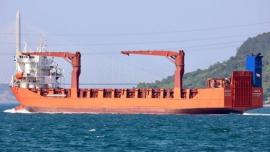
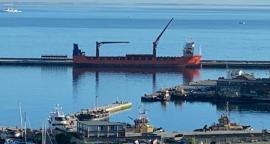
President Cyril Ramaphosa has told the National Council of Provinces that he is confident that the independent panel — which was appointed to investigate the circumstances surrounding the docking of the Lady R vessel in Simonstown in December 2022 — made rational findings.
The President was answering oral questions in the National Council of Provinces (NCOP) on Thursday.
“I have no reason to believe the findings of the panel were irrational. In fact, I believe the findings of the panel were completely rational. As one went through the report, I could find no irrationality. The panel made no finding of involvement of clandestine parties or illegal transactions,” President Ramaphosa said.
President Ramaphosa appointed the panel to investigate claims that South Africa may have exported weaponry and ammunition to Russia, which invaded Ukraine in February last year and is accused of various war crimes.
The panel found no evidence that South Africa sent weapons to Russia.
The President said that the independent panel was led by a respected retired Judge and two prominent and respected legal minds.
“The extent of the work undertaken and the information the panel sought, obtained and analysed gives me full confidence in the contents of their report.
“The panel made no finding of involvement by ‘clandestine parties’ or illegal transactions, and no evidence has been presented to contradict the panel’s findings.
“The contents of the shipment carried on the Lady R are kept secret so as not to compromise the work or the safety of our security forces. I have no intention of compromising this under any circumstances,” the President said.
The President highlighted that Section 23 of the National Conventional Arms Control Act makes it clear that information on the quantity of items is shared with Parliament on a confidential basis.
“Nothing in the Act requires disclosure on the intended use of the controlled items. In fact, the Act expressly states that: ‘Information concerning the technical specifications of controlled items may be omitted from a report contemplated in this section in order to protect military and commercial secrets’, ” the President said.
He said the work of the National Conventional Arms Control is critical in ensuring that the country abides by its international obligations in relation to the transfer and trade in controlled items, and that “it continues to do this critical work, as provided for in its founding legislation and the relevant United Nations conventions”.
President Ramaphosa said the protection of information related to its work is clearly provided for in the Act and is just as important to its mandate and to national security.
President Ramaphosa said government will continue to respect the requirements of the law and its responsibility to safeguard the security of the nation.
Women’s empowerment a firm priority

Although there has been improvement in women’s empowerment since the dawn of democracy, there is a need for improvement in the gender responsiveness of all national departments.
This is according to President Cyril Ramaphosa who was appearing at the National Council of Provinces for a Questions for Oral Reply session.
“The Department of Women, Youth and Persons with Disabilities analyses the draft Annual Performance Plans of various departments each year to assess their responsiveness to gender considerations. The findings indicate gradual improvement since the adoption of the framework in 2019.
“However, the average overall gender responsiveness score for all national departments is at 54 percent, indicating that there is a need for improvement in many departmental programmes, projects and budgets.
“Evaluations of the implementation of the Gender Responsive Planning Budgeting, Monitoring, Evaluation and Auditing Framework have shown improvements in mainstreaming since the framework’s adoption, but progress has not been as fast as desired,” he said.
The President insisted that government is committed to intensifying efforts to afford women more opportunities.
He added, however, that effective political and administrative leadership is crucial to ensuring sustainable and substantive gender mainstreaming across government.
“Several policies and initiatives have been put in place to increase women’s access to finance to promote economic empowerment. Numerous financial institutions and funds have been established to help black South Africans obtain access to loans, some of which have specifically targeted women.
“To support our goal of directing at least 40 percent of procurement in the public sector towards women-owned businesses, the Women’s Economic Empowerment Programme has been training women-owned business across several provinces. At least 6 290 women business owners have been trained on doing business with government, compliance and governance matters.
“Key government departments have integrated gender-responsive procurement in their demand plans and report on this monthly. However, these numbers are still low. Procurement from women-owned enterprises currently stands at 11 percent across the public sector,” he said.
Turning to the challenges women entrepreneurs face – including lack of access to support and gender discrimination – the President said government and the private sector have come together to address these through the establishment of the Women’s Economic Assembly.
“Since its launch in October 2021, the Women Economic Assembly has encouraged industry leaders to set gender transformation targets in each industry, implement existing commitments and increase procurement opportunities for women-owned businesses.
“Through the Women Economic Assembly, billions of Rands have been committed by private sector business to facilitate women’s participation through enterprise development, earmarked funding and supplier off-take agreements.
“All of these efforts, both in government and in the private sector, are seeing progress in gender mainstreaming and the economic empowerment of women. However, there is still much further to go and much work to be done,” President Ramaphosa said.
Progress made in combatting “economic sabotage” – President

Thousands of arrests related to the damage of essential and critical infrastructure have been made since June last year, with a further 70 people arrested in relation to extortion at construction sites.
This was revealed by President Cyril Ramaphosa during the Questions for Oral Reply session held at the National Council of Provinces on Thursday.
The President said that in an effort to combat economic sabotage some 20 Economic Infrastructure Task Teams have been established through the SA Police Service.
“A total of 946 personnel have been allocated to the 20 Economic Infrastructure Task Teams from existing structures within each province, district and station. They are experienced and knowledgeable personnel within their respective functional environments.
“The Task Teams integrate processes, resources and intelligence across all of the operational environments of the SAPS under a single command. This is to enable them to successfully combat essential infrastructure crimes, illicit mining and extortion within the construction sector.
“The Task Teams incorporate personnel from SAPS divisions such as Crime Intelligence, Visible Policing and Operations, and Detective and Forensic Services, as well as the Directorate for Priority Crime Investigation,” he said.
President Ramaphosa said an operational budget of R20 million has been “ring-fenced and allocated for the implementation of the Economic Infrastructure Task Teams during the 2022/2023 financial year and a further R17 million for the 2023/2024 financial year”.
“Between their establishment in June last year and the end of June this year, the Task Teams have made over 4 000 arrests with respect to the damage of essential and critical infrastructure.
“They have also arrested over 70 people with respect to extortion at construction sites and made over 3 000 arrests for illegal mining. The Task Teams have confiscated significant quantities of copper cable, rail tracks and other metals,” President Ramaphosa said.
He bemoaned the damage that the destruction of infrastructure has on the South African economy.
“The sabotage of our infrastructure and our economy continues to pose a great threat to the country’s development. However, through the work of the Economic Infrastructure Task Teams, together with partners in the state and the private sector, we are making progress in combating these crimes,” President Ramaphosa said.
Launch of BMA a step in the right direction in securing South Africa’s borders

By Dr Michael Masiapato, PhD.
The Musina heat of 37°C gathered thousands of attendees to witness the historic launch of the Border Management Authority (BMA).
The Border Management Authority aims to ensure that South African borders are less porous and more efficient in facilitation of trade as well as ensuring the legitimate movement of goods and people. South Africa has 72 ports of entry comprising of 53 land ports, 10 aviation or international airports and 9 marine (sea) ports. Over and above managing the 72 ports of entry, we are managing the vulnerable segments of our border lines and community crossing points.
The initial multi-departmental approach we had for the past 29 years was a major challenge, where a number of Departments were operating at the borders. You had the Department of Home Affairs doing immigration; the Department of Forestry, Fisheries and the Environment doing biosecurity functions, the Department of Agriculture doing agriculture functions and also the Department of Health responsible for port health functions. In the previous years we had independent managers of those four departments operating at the ports and reporting back to their various departments. This was over and above the operations of the South African Revenue Services (SARS) facilitating port customs, the South African National Defence Force (SANDF) and the South African Police Service (SAPS) responsible for border policing functions.
There was a necessity to bring a border management model where these port functions of the four Departments are integrated. The model involved the port related functions exiting those Departments and reporting to the Border Management Authority under one command. The need for an integrated and co-ordinated border management was in accordance with the Constitution, international and domestic law, in order to contribute to the socio-economic development of the Republic.
In order to empower the BMA to be effective, it was then created as a law enforcement authority, which became the third armed service in South Africa after SANDF and SAPS. The mandate of the BMA is clear in ensuring the prevention of smuggling and trafficking of human beings and goods; preventing illegal cross-border movement; contributing to the protection of the Republic’s environmental and natural resources; and protecting the Republic from harmful and infectious diseases, pests and substances. In July 2022, the first 221 officers were deployed as BMA Border Guards at vulnerable segments of the border line, including the informal community crossing points. Its formal establishment and assumption of its status as an autonomous schedule 3 (A) public entity was conferred on 1 April 2023. This being one of the most important authorities, it was necessary for President Cyril Ramaphosa, as Commander-in-Chief of the South Africa’s armed forces to preside over the launch of the Border Management Authority.
Subsequent to that, and additional 400 BMA Border Guards including 50 Coast guards are being recruited to ensure that the entity is effective and efficient at all border posts. In order to maintain the BMA integrity and based on the many corruption challenges that were faced in the past, section 13 of the BMA Act requires that all border management officials be fully vetted and regular lifestyle audits to be conducted.
To assist with technological support on Border Management operations, the Minister of Home Affairs, Dr Aaron Motsoaledi recently announced the issuing of the Request for Proposal to the market for the redesigning and redevelopment of our top six busiest ports of entry. The primary intention is to ensure the realisation of regional economic integration in the SADC region, while facilitating the realisation of African Continental Free Trade Area. The re-developed ports of entry will result in the efficient cross-border management of movement of people, goods and services, improved revenue collection and preventing harmful imports and exports.
The six earmarked ports of entry are:
- Beitbridge – Zimbabwe
- Lebombo – Mozambique
- Maseru Bridge – Lesotho
- Ficksburg – Lesotho
- Kopfontein – Botswana
- Oshoek – Eswatini
These ports were earmarked in order to address the congestion, based on being the largest and busiest by traffic volume.
The re-designing project is expected to create an estimated 38 000 jobs in areas around the six designated ports of entry.
The BMA is a vital link in our efforts to harness the benefits of the African Continental Free Trade Area. Despite serious challenges faced before, the BMA will provide a sustainable solution to the structural challenges of border security, control and coordination. It is intended that this new approach will adapt and respond effectively to the challenges, threats and opportunities that exist in the Border environment whilst safe-guarding South Africa’s borders and meeting the country’s national, regional and global development responsibilities and human rights imperatives.
* Dr Michael Masiapato is the Commissioner and CEO of the Border Management Authority.
President extends condolences to victims of the Israeli-Palestinian conflict

President Cyril Ramaphosa has extended his condolences to all victims of the Israeli-Palestinian conflict and says South Africa stands ready to share its experience in mediation and conflict resolution.
“South Africa stands ready to work with the international community and to share our experience in mediation and conflict resolution as we have done on the continent and around the world,” President Ramaphosa said in a statement.
This follows an escalation of hostilities on Saturday that has left about 2000 people dead, 160 000 displaced and 7000 injured.
The President has also called for the immediate and unconditional opening of humanitarian corridors.
“Our thoughts are with all the victims’ families and loved ones during this perilous period of fighting. We remain gravely concerned at the devastating escalation in the Israeli-Palestinian conflict and the atrocities committed against civilian populations.
“We call for the immediate cessation of violence and the exercise of restraint. It is vital that all those who require urgent humanitarian assistance are provided with the basic life supporting necessities and that human suffering is ameliorated,” President Ramaphosa said.
The President further urged the international community to accelerate its support to an inclusive process towards a lasting and durable peace that produces a viable Palestinian State, existing in peace alongside Israel, within the 1967 internationally recognised borders with East Jerusalem as its capital.
AfCFTA to lead to diversification of exports

The successful implementation of the African Continental Free Trade Area (AfCFTA) is expected to lead to diversification of exports and increased productive capacity.
This is according to the Director of African Union and Africa Multilateral Economic Relations at the Department of Trade, Industry and Competition (dtic), Claudia Furriel.
Furriel was unpacking the AfCFTA Agreement at a webinar hosted by the dtic intended to engage the chemicals, cosmetics, plastics, and pharmaceutical sectors, as well as industry agencies, associations, and export councils including their members, on the benefits of exporting under the AfCFTA.
“The successful implementation of AfCFTA is expected to lead to diversification of exports, increased productive capacity, acceleration of growth, increased investment, increased employment opportunities and incomes and most importantly broaden economic inclusion,” Furrel said.
“According to the World Bank, the AfCFTA will boost regional income by 7% or $450 billion, speed up wage growth for women, and lift 30 million people out of extreme poverty by 2035,” she said.
While outlining steps to address challenges that are facing the successful implementation of the AfCFTA, Furriel emphasised that an investment-led trade approach was key.
She said trade integration and liberalisation must be accompanied by programmes to support African industrialisation, regional value chains and infrastructure development.
She added that continued engagement with the Southern African Customs Union (SACU) and other AfCFTA members on rules of origin that will support Africa’s industrialisation objectives is vital to the successful implementation of the AfCFTA.
The Scientific Director at L’oreal South Africa, Dershana Jackison, described the AfCFTA as a key business, regulatory and policy instrument that will shape the cosmetic market of the future.
She urged industry players and trade associations to actively participate in its implementation and for government to ensure that the cosmetic sector is prioritised.
Jackison noted that standards harmonisation and technical regulatory convergence for the continent were important as they would dictate market control and access to currently untapped African markets.
But for this to happen, she said the industry players through trade associations and government must influence and contribute to the direction they take.
“It is estimated that the AfCFTA has a potential to boost intra-Africa trade by 52.3% by eliminating import duties and to double this trade if non-tariff barriers are reduced. Access to African markets through the AfCFTA is expected to expand the size of Africa’s economy to US$29 trillion by 2050. This offers huge opportunities for the cosmetic sector,” Jackison said.
According to the Senior Manager of Analytical and Material Sciences at the National Metrology Institute of South Africa (NMISA), Dr Maria Fernandes-Whaley, NMISA’s efforts in the essential oils industry offer tangible benefits to South African businesses in the chemicals, cosmetics and related sectors, aligning with the AfCFTA’s goals of enhancing intra-African trade and economic growth.
“The recent launch of the first accredited testing service for essential oils in Southern Africa by NMISA holds tremendous promise for not only the essential oils industry but also for various sectors, including chemicals and cosmetics, under the AfCFTA,” Fernandes-Whaley said.
Fernandes-Whaley said NMISA’s accreditation to the international standard ISO/IEC 17025 carries significant implications for South African industries, particularly those in the chemicals and cosmetics sectors.
She said one of the key advantages offered by NMISA’s accredited testing service is the international recognition of test reports and certificates of analysis for essential oils.
“This recognition eliminates the need for further testing when South African companies export their products, which can be a cumbersome and costly process. As a result, producers in Southern Africa, including those in the cosmetics sector, will gain a competitive edge by enhancing the credibility and quality assurance of their products on the international market,” Dr Fernandes-Whaley said.
The dtic has embarked on provincial awareness workshops which provided a platform for information sharing with the private sector on the benefits offered under the agreement.
The workshops were also used to also identify South African companies in various provinces in the targeted sector masterplans and other priority sectors that have the capacity to export to the rest of the continent.
More workshops focusing on different sectors are being organized, the department said.