
Disability grant applicants can lodge an appeal – SASSA
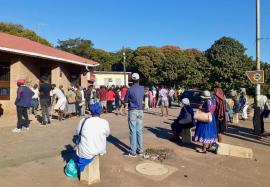
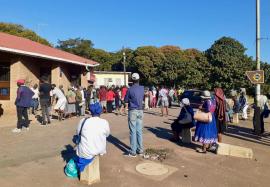
Disability grant applicants have been encouraged to lodge an appeal if their application is not approved.
“The appeal must be lodged within 30 days after receiving a rejection letter and the process of reviewing the appeal also takes 30 days. If the applicant does not understand the rejection reasons they have a right to ask SASSA officials to provide clarity,” the South African Social Security Agency (SASSA) said in a statement.
“All approved disability grant beneficiaries receives an increased R2 090 monthly by the Minister of Treasury October 2023, due to budget review,” the agency said.
SASSA explained that the applicant must note that SASSA works together with the professional medical contracted doctors who are ensuring that qualifying applicants gets the disability grant.
SASSA medical contracted doctors work under the supervision, approved regulations and guidelines by SASSA and the department of Health.
“It is only a SASSA medical contracted doctor that can conduct the assessment and submit a report to SASSA which determines whether the applicant qualify for a temporary or permanent disability grant. The assessment report is based on the information presented to the doctor and physical assessment also is conducted,” the agency said.
The applicant must meet the following requirements:
- be a South African citizen; permanent resident or refugee permanently residing in South Africa.
- be 18 to 59 years of age;
- undergo a medical or functional assessment confirming disability and;
- provide clinical information or referral form confirming disability;
- provide a referral form duly completed by a treating facility or practitioner if previously rejected on medical grounds;
- the applicant and spouse must be subjected to the Means Test;
- not be maintained or cared for in a State-funded institution;
- not be in receipt of another social grant in respect of himself or herself;
- submit a 13-digit barcoded identity document or the smart ID card for self and spouse. In the absence of an ID or a birth certificate, an alternative identification prescribed by SASSA will be acceptable.
For more information applicants are advised to contact the toll free number during working days/hours on Monday – Friday 0800 60 10 11/013 754 9428/9363 and WhatsApp on 082 046 8553.
SA in numbers
78% – the percentage of households in formal dwellings in 2011, which rose to 89% in 2022.
89% – the percentage of households in formal dwellings in 2022, which rose from 78% in 2011.
3 – years since government embarked on the Economic Reconstruction and Recovery Plan, by 30 October 2023.
More than 2 million – jobs lost due to the negative economic effects of the Coronavirus pandemic.
2 million – the increase in the number of people with jobs over the last two years, bringing the level of employment close to its pre-pandemic level.
R350 – the value of the Social Relief of Distress Grant introduced by government in 2020 to keep millions of people out of poverty, and continues to provide much-needed support for those who are unemployed.
Over 1.2 million – employment opportunities created by the Presidential Employment Stimulus since its establishment, representing the largest expansion of public employment in South Africa’s history.
Over 4 million – young people registered on the SAYouth online platform, by 30 October 2023.
More than 1 million – young people registered on the SAYouth online platform, who have been able to access opportunities for learning and earning, by 30 October 2023.
26 – commuter rail corridors, out of 40, whose operations had been restored by the Passenger Rail Agency of South Africa, by 30 October 2023.
R50 billion – the amount to be spent over the next three years to modernise South Africa’s passenger rail network.
R17 billion – the value of the investment into the Mzimvubu Water Project in the Eastern Cape.
Over 12 000 – megawatts of confirmed projects in development as part of regulatory reforms government has initiated to enable a massive increase in private investment in electricity generation.
Over 4 500 – megawatts of installed rooftop solar that have more than doubled in the last year following the introduction of tax incentives and financing mechanisms.
20 – Economic Infrastructure Task Teams established by the South African Police Service throughout the country to protect critical infrastructure and tackle the “construction mafia”.
880 – members of the South African National Defence Force to be employed to support the police in combating criminal activity that targets critical economic infrastructure.
Over 3 000 – people arrested for illegal mining.
34 – State capture and corruption cases taken to court by the National Prosecuting Authority’s Investigating Directorate over the last four years, involving 205 accused persons.
205 – accused persons involved in 34 State capture and corruption cases taken to court by the National Prosecuting Authority’s Investigating Directorate over the last four years.
R14 billion – the value of freezing orders granted to the Asset Forfeiture Unit for State capture related cases.
Around R5.4 billion – the value of money recovered by the Asset Forfeiture Unit and returned to the State, by 30 October 2023.
18 cents – the amount for every rand that government collects in revenue that goes towards servicing South Africa’s national debt.
Over 6 months – the period during which government will accelerate the implementation of economic reforms.
4 – the number of times the Springboks became the world champions since the advent of democracy in South Africa in 1994.
15 December – the Friday in December 2023 that President Cyril Ramaphosa has declared a public holiday in celebration of the Springboks’ momentous achievement and the achievements of all other sportsmen and sportswomen – and as a tribute to the resolve of the united nation. It is a day of hope, celebration and unity.
Permits to change the lives of farmers
By Gabi Khumalo
A group of farmers have dispelled the myth that government initiatives seldom have an impact on the lives of ordinary, real people.
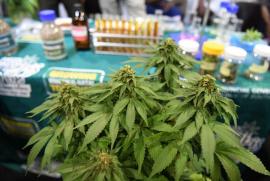
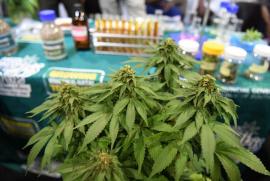
Recently, 664 hemp and cannabis farmers who are on the KwaZulu-Natal Agriculture and Rural Development (DARD) database, received permits which grants them authorisation to cultivate, store and transport content with a Tetrahydrocannabinol (THC) of not more than 0.2%.
THC is the major psychoactive component and one of the 113 cannabinoids recognised in cannabis.
What does the handing over of the permits mean you ask? It means that the permits, handed over at a provincial Cannabis Expo and Conference, held at Okhahlamba Sports Complex in Bergville, will enable the farmers to have access to cutting edge technology through the Analytical Lab based at Cedara in uMgungundlovu District Municipality, near Pietermaritzburg.
To grow the local sector, the MECs of the provincial Departments of Agriculture and Rural Development (DARD) and Economic Development, Tourism and Environmental Affairs (EDTEA) invited captains of industry, including experts, academics, Amakhosi and local growers to a two-day expo and conference to share ideas that will grow the sector to its full potential.
Held under the theme: “One love, one heart,” the event provided a platform for local cannabis and hemp farmers, and others with an interest in the sector to engage with business and academia.
Among the issues under discussion were that of regulations, registration, production, agro processing and exports.
Local business who will be providing services to permit recipients were also granted R300 000 each. Services include processing, erecting tunnels and providing lab equipment, packaging, testing, and finding a market for farmers.
Masterplan
The first citizen of the province, Premier Nomusa Dube-Ncube said the expo and conference will be etched in the minds of the people, as the starting point of a “new era for the cannabis sector in the province.”
Dube-Ncube noted that many milestones had been achieved through the KZN Cannabis Masterplan.
“Through DARD we have set aside an amount of R47 million for cannabis research. We have allocated R10 million to assist farmers in cannabis production and hemp permit application.
“We have facilitated an investment commitment of R120 million and we have participated in the Cannabis and Hemp Phakisa Action Lab in order to secure much-needed policy coherence and to ensure closer collaboration amongst government entities,” she explained.
This as pilot projects targeting commercial growers are ongoing, and the province has supported several investment leads, which were in the process of rolling out district-based capacity building programmes under the umbrella of the proposed KZN Cannabis Association.
Reaping the rewards
EDTEA MEC Siboniso Duma said, the expo had been a success and that the work by both EDTEA and DARD was just beginning.
“We want our farmers to be the champions of the cannabis sector and we want them to be able to speak for themselves. We are giving them an assignment to come closer to us because what we have started together, will change people’s lives,” Duma said.
Meanwhile, DARD MEC Super Zuma said the province has worked steadfastly and the time to unlock the province’s prosperity through the hemp and cannabis sector, had now arrived.
“We have ensured a smooth process for our hemp permit holders and we covered all their costs. We are winning the fight to alleviate poverty and unemployment and we are extremely proud of the ongoing collaborative work that continues behind the scenes, and I must say all our collaborative efforts have yielded fruit,” Zuma said.
Permit recipient from the Umzinyathi District Municipality, Sphelele Shezi, said this was the beginning of great things for her small business of hair products, noting that the success of the products relies on hemp seed oil.
“I applied for my permit in July because I want to start extracting oil to use in our hairspray. We also manufacture shea butter which will soon be hemp infused.
“This permit will allow my business to grow and I have a vision of owning a manufacturing plant which will open up job opportunities,” Shezi said.
The owner of Old Grey Distillery–which manufactures cannabis infused beverages in Johannesburg– Derek Collard, said his business has received great exposure at the expo.
“The expo has been superb. We started our business when cannabis became legal and we started experimenting with different cannabis infused gin flavours. We have met incredible contacts that we will be supplying. There are business opportunities as well as local growers that we could potentially partner with,” Collard said.
Nonhlanhla Qhoboshiyane, a hemp and cannabis farmer from Durban, who was introduced to the plants after falling ill, said she was grateful for the opportunity to be part of the informative expo.
“My interest started in 2016 when my husband and I were diagnosed with cancer. We used hemp oil and we would make cannabis leaf tea to help with the pain.
“These plants are from the Lord, created to bring about economic recovery in South Africa, there should be no stigma attached to them. The rural economy will grow because of hemp and cannabis,” she said.
Investment
In the 2023 State of the Nation Address (SONA), President Cyril Ramaphosa reiterated government’s commitment made in 2022 to unlock investment in the hemp and cannabis sector.
During the Phakisa Action Lab gathering held in June 2023, the President said the cannabis and hemp sector is one of 14 priority sectors that have been defined in government’s Country Investment Strategy as holding significant potential to secure investment, job creation and support for sustainable rural livelihoods, in recognition of people’s rights.
“I am confident that the collaborative commitment to work together which characterises our society, will find expression in the Hemp and Cannabis Phakisa, leading to immediate short term regulatory reform, the adoption of a set of foundational policy principles to achieve longer term legislative reform and a detailed plan to achieve inclusive growth and investment,” the President said at the time.
Participants at the Action Lab collectively agreed on the regulatory reforms required to better enable the development of the hemp and cannabis sector.
The reforms will unlock the potential of cannabis in African traditional medicine; pharmaceutical and complementary medicines; and multiple industrial applications.
The regulatory reforms agreed to include reviewing the schedules to the Medicines Act to further enable cannabis grown for non-medicinal uses, including industrial purposes.
The Phakisa Action Lab further resolved to explore mechanisms to fast-track the removal of cannabis from the Drugs Act.
This will be a historic achievement through which the cultivation of non-medicinal cannabis will be legal under the terms and conditions of the Plant Improvement Act, which falls under DALRRD.
The development of the hemp and cannabis industry has so far seen the issuing of 83 cannabis licences, four manufacturing licences and 30 research permits by the South African Health Products Regulatory Authority (SAHPRA) since 2022. The authority is an entity of the Department of Health
The Department of Agriculture, Land Reform and Rural Development has also issued 371 hemp permits, which has enabled significant investment, employment creation, the application of technology, intellectual property development and exports to highly competitive global markets.
And that is no smoke and mirrors story.
Workshop to empower innovators gets underway
Small businesses, innovators and other role players in the intellectual property space will benefit from a specialised workshop that will help them tackle commercialisation challenges in the national system of innovation.
The advanced workshop on intellectual property commercialisation which kicks off today is taking place under the auspices of the Swiss-South African Intellectual Property project.
The project, according to the Department of Science and Innovation (DSI), is a collaborative venture between South Africa and Switzerland that aims to promote the use and protection of intellectual property rights.
The Department of Trade, Industry and Competition and its entity, the Companies and Intellectual Property Commission, are also participating in the project.
Meanwhile, the National Intellectual Property Management Office (NIPMO) will implement the DSI’s intellectual property programme.
The three-day workshop, which is scheduled to conclude on 2 November in Stellenbosch in the Western Cape, will include lectures, panel discussions and group discussions.
It will also focus on small, medium and micro enterprises, innovators, and anyone with an interest in intellectual property commercialisation in their innovation journey.
City Power to take over load shedding operations in supply areas
City Power is expected to take over control of the load shedding operations for most of the areas it supplies effective from Monday, 6 November 2023.
This is according to a joint statement released by City Power and power utility Eskom.
“This undertaking will bring changes to the load shedding blocks which will affect the schedule in areas load shed by City Power in Johannesburg and Eskom across Gauteng.”
The statement noted that areas that are load shed by City Power will remain on a two-hour schedule even during Stages 5 and above of load shedding.
“The two entities are both committed to ensuring that the security of supply is not compromised, and the obligations as outlined in NRS 048-9:2019 are followed and complied with as per distribution licensing conditions to protect the integrity and stability of the national grid even with the effected changes,” the statement read.
Areas which will continue to be load shed by Eskom are: Tshepisong, Lufhereng (Roodepoort), Hoogland, Maroeladal, Morningside, Riverclub, Dainfern, Bloubosrand, Waterford Estate, Riverbend, Kyasands, Bellairspark (Randburg), Halfway House, Halfway Gardens, Vorna Valley, Willowway (Midrand) and Marlboro Transit Camp (Alexandra).
“The two entities will keep exploring technical solutions that will enable City Power to take over the load shedding operations of its remaining customers. City Power has its processes, systems, and technical capacity in place to take over the added load shedding operations as part of the new schedule.
“The revised blocks and schedules will be available for the City Power and Eskom customers on 6 November 2023 on their websites. City Power customers are urged to contact the utility directly for the revised load shedding schedule,” the statement read.
For the revised schedules, customers can also visit www.citypower.co.za and Eskom customers can view their schedule at www.eskom.co.za
“City Power and Eskom will continue to partner and collaborate with the communities and stakeholders to ensure that electricity is delivered to all customers, as we know that electricity remains an essential service,” the statement concluded.
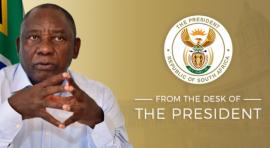
Springboks win is a symbol of SA’s journey to nationhood
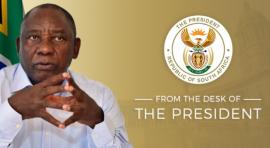
The Springboks’ nail biting victory over New Zealand carries far greater meaning and symbolism for South Africans than just a sporting achievement.
This is according to President Cyril Ramaphosa through his weekly newsletter on Monday.
The President described the win as historic at the Stade de France over the weekend and a reflection of South Africa’s own democratic journey.
“When South Africa first competed in the Rugby World Cup in 1995, our democracy was just a year old. Back then, there was just one black player on the team, the legendary Chester Williams. Of the squad that played in the past weekend’s final, just short of half were black players, including the team captain, Siya Kolisi.
“The journey of the Springboks to the historic victory in the 2023 Rugby World Cup is as much about our journey towards nationhood as it is about sporting excellence. It is as much about our quest to ensure that representation in all facets of public life, including sport, stands as a potent symbol of the cherished values upon which this country was founded,” he said.
President Ramaphosa said the fervent support for the ’Boks coming from all races and cultures shows that the team – whose history has been closely linked with the brutal Apartheid government – is embraced by South Africans everywhere.
“The fervent, colourful and touching displays of national pride from South Africans both at home and abroad during this tournament, show that perhaps as never before, the Springboks have well and truly been embraced by all races as their own.
“The viral clip of Springboks winger Makazole Mapimpi being cheered on by customers and store staff whilst out grocery shopping, and that of Eben ‘Elizabedi’ Etzebeth and RG Snyman dancing with South African fans near the Eiffel Tower in Paris are among my personal favourites.
“Witnessing so many South Africans don the national team’s colours and profess their support online and on other platforms speaks to the deep love for our country and to our ability to pull together even when the going gets tough,” he said.
The President reflected that South Africa’s “nationhood” has grown despite obstacles and uncertainty.
“At times such as this, when our country faces many problems that at times cause our spirits to flag, we are reminded that our South Africanness, our sense of community and belonging, and our very nationhood did not evolve overnight.
“It has taken considerable time to forge, and at times faced obstacles that threw us into uncertainty and doubt. But if the story of the transformation of South African rugby, a sport that was once the bastion of racial supremacy, is anything to go by – our country will continue to reap the benefits of change if we remain united and if we stay the course,” the President said.
He acknowledged that the country faces problems that “cannot be forgotten or wished away by a fleeting moment such as a sporting victory” but highlighted that the victory has united the country.
“It is our hope that it must also serve to inspire the younger generation to derive important life lessons about perseverance, teamwork, discipline and leadership. The interview that Siya Kolisi gave shortly after the team’s win on Saturday will be remembered as one of the most poignant and meaningful from a sports person in our country.
“He spoke about the different backgrounds of the team members and the difficulties they have had to overcome to reach this pinnacle of sporting achievement. You have to be South African to see, feel and experience the things we do,” he said.
“This Springbok squad is one of the best rugby teams in the history of the sport. But they are far more than that. They are also great ambassadors for our country and for the values that continue to drive our efforts to build a united, more equal and prosperous nation,” the President concluded.
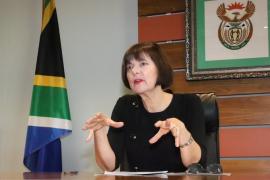
Climate finance remains a key issue: Creecy
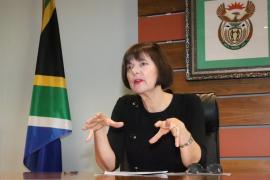
Minister of Forestry, Fisheries and the Environment, Barbara Creecy, has expressed concern that developing nations have continually called for more support for the financing of the fight against climate change, yet the funding targets pledged by developed countries are still not being met.
“At the 28th session of the Conference of the Parties (COP28), there will be a renewed call for a scaled-up and predictable goal for climate finance. The deadline for agreeing upon this goal is 2024, and the success of this COP, and perhaps future climate talks, will depend on the outcome,” Creecy said on Thursday.
She was addressing the National Stakeholder consultations on the UN Framework Convention on Climate Change (UNFCCC) COP 28.
“Whilst the establishment of a global fund for loss and damage is indeed a milestone, the difficult task of working out the details of the fund – how it will be financed, where finance will come from, and the form of such finance – will be one of key agenda items in Dubai.
“As with all COPs, finance will remain a key issue. COP 28 therefore takes place in a context where we cannot simply congratulate ourselves for the apparent progress we have made whilst key issues still need to be addressed,” the Minister said.
COP28 to the UNFCCC will be held at Expo City, Dubai in the United Arab Emirates (UAE) from 30 November – 12 December 2023.
“At COP 27, South Africa and the Africa Group put forward the proposal to include the special needs and circumstances of the continent on the conference agenda, but this did not enjoy consensus. This proposal will be made again at COP 28.
“Acknowledging the special circumstances of the African continent will be an important step in upholding the principle of differentiated responsibility, and would recognise the continent’s vulnerability to climate change, but also the need for mitigation and adaptation support,” the Minister said.
She said the first Global Stocktake (GST) will be completed at COP28, where the world will take stock of the collective progress since adopting the Paris Agreement, and make recommendations where implementation of the Agreement is not on course to achieve its long-term goals.
“We already know we are not on track, based on the detailed evidence presented by Parties and other stakeholders during the technical dialogues of the GST over the last year. The outcome of the GST will be the central outcome of COP28, and this outcome must increase collective action on mitigation, adaptation, loss and damage and the provision of support to developing countries to achieve this, commensurate with the challenges we face,” Creecy said.
She noted that the technical phase of the GST (in a series of technical dialogues) has made clear that, while action is proceeding under the Paris Agreement, much more is needed now on all fronts.
“The world is far better off than it would have been without the Paris Agreement and multilateral cooperation, but we are not on track to achieve the global goals we agreed to in Paris in 2015.
“The discussions on the outcome of the GST have started, and focus on key political messages, and more importantly, multilateral and national measures that need to be put in place to accelerate our journey towards a more sustainable and equitable world.
“As the co-facilitator of the consultations on the outcome of the political phase of the GST, together with Demark, South Africa is supporting the incoming Emirati COP Presidency to help identify areas of convergence and divergence between Parties in the run-up to and during COP28,” the Minister said.
She said at the past three COPs, the South African delegation has joined delegations from other developing countries in calling for a clear adaptation work programme with clear targets for building the resilience of developing countries and clear financial mechanisms to achieve this.
“To date there has been little or no progress on this matter,” the Minister said.
SA fully committed to addressing climate change
Creecy affirmed South Africa is commitment to addressing climate change based on science, equity and in the context of sustainable development.
“Hence, our updated Nationally determined contributions (NDCs) seek to balance the three structural components of mitigation, adaptation and the need for international support for implementation.
“Our Climate Change Bill, which was adopted by the National Assembly on Tuesday, will lay a strong legal basis for climate action, and the regulatory framework for the whole of government, business, organised labour and civil society to implement our country’s climate commitments,” the Minister said.
She said COP28 provides a key platform for broader conversations, including:
- How developing countries in Africa can take advantage of their abundant renewable resources and strategic minerals to build shared prosperity and sustainable development on the continent;
- The threat to sustainable development posed by unilateral trade measures imposed outside the Paris Agreement and in violation of its key principles, and
- The pressing need for transformation of the global financial architecture to make the global financial system fit for purpose, in assisting countries to combat climate change and achieve their sustainable development goals.
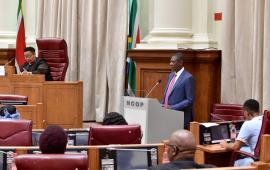
Mashatile dismisses notion that cadre deployment is linked to municipal service delivery challenges
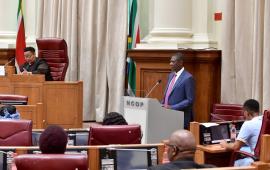
Deputy President Paul Mashatile has told the National Council of Provinces (NCOP) that government has no cadre deployment policy, legislation or procedure.
“Nonetheless, the ANC established a cadre development and deployment process after the democratic breakthrough in order to safeguard democracy and good governance, while assuring rapid and purposeful transformation,” he said on Thursday.
The Deputy President was responding to a question in Parliament about whether cadre deployment has led to a lack of service delivery, as many officials in municipalities are unqualified to undertake the necessary infrastructure maintenance, leading to excessive sewer spillages.
Mashatile explained that the logic behind establishing a cadre development and deployment process is to ensure that the most suitable practices are used in recruitment and prioritising the appropriate placement of skills, especially during the transition period and beyond.
“The process of appointing Mayors, Speakers and Exco Members in municipalities is led by the African National Congress. It is, therefore, incorrect to link cadre deployment with service delivery challenges faced by our municipalities.”
In addition, Mashatile said government is committed to professionalising the public service.
In 2022, the State adopted a National Framework towards the Professionalisation of the Public Sector.
“In our view, the professionalisation of the public sector requires a non-partisan approach, which embraces the merit principles in all staffing practices in the public sector.
“For this to be realised, the public sector must be non-partisan by insulating it from the politics of political parties. This is important for the bureaucracy to continue to implement its political mandate loyally and diligently, as set by voters and the governing party or parties, yet refrain from being a political actor itself.”
He said the ruling party has always argued for the professionalisation of public service, including the development and adoption of the Public Service Act.
the Public Service Act, he stressed, demands a credible process, panel-driven interview, verification of qualification and contestable outcome.
“We remain committed to building a patriotic, professional public service with the necessary technical knowledge to deliver services for the people.”
Deputy President Mashatile reiterated that the challenges facing local government are multi-dimensional and primarily rooted in poor governance, weak institutional capacity, poor financial management, and political instability.
Shifting his focus to the Theba Chweu issue in Mpumalanga, he said the local municipality has acknowledged challenges with their Water Waste Treatment Plant (WWTP), which causes continuous sewer spillages.
“However, progress has been reported towards addressing this challenge,” he said, adding that the refurbishment and upgrade of the Lydenburg WWTW is underway.
He told the Members of Parliament that the project is funded by the Department of Water and Sanitation and Ehlanzeni District Municipality as the implementing agent.
“As a government, we now have a fully-fledged war room on service delivery focusing on a package of interventions that are aimed at accelerating the stabilisation of local government, focusing on addressing water and energy challenges.”
Government is also fast-tracking the processing of the South African National Water Resources Infrastructure Agency Bill, 2023, which is intended to establish the National Water Resources Infrastructure Agency that will improve the management of bulk water infrastructure in South Africa.
Agriculture
In addition, he stated that government was steadfast in accelerating land reform and rural development, while agricultural support remains top of the agenda.
He touched on the Department of Agriculture, Land Reform and Rural Development’s R2.15 billion budget to assist farmers with production inputs and the revitalisation of an enabling agricultural infrastructure under the rural infrastructure development sub-programme.
In addition, he said the department will implement 83 infrastructure development projects in farmer production support units, fencing and animal handling facilities in the 2023/24 financial year.
“We are implementing the re-vitalisation programme of agricultural infrastructure because it is a critical intervention towards improving agricultural production and food security.”
He believes that beneficiaries of the land reform programme should become active players in the economy.
“This is evident in the River Valley Catalytic Programme, which focuses on irrigation and water infrastructure for agricultural production through irrigation schemes, construction and rehabilitation of rural and farm access roads to markets.”
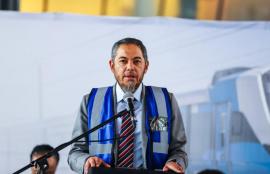
PRASA to spend R50 billion modernising rail network
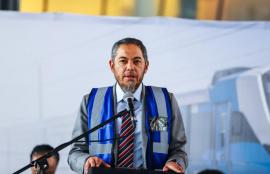
The Passenger Rail Agency of South Africa (PRASA) is set to increase its capital spending over the Medium Term Expenditure Framework (MTEF) with a budget of over R50 billion for rolling stock and infrastructure investments.
“We have increased our capital spending due to the reopening of some of the key corridors. Now we plan on spending R50 billion from this financial year and over the next three years to support the modernisation of the passenger rail network and the implementation of our turnaround plans,” PRASA Group CEO Hishaam Emeran said.
He made these remarks during the Southern African Railway Association’s two-day conference in Johannesburg on Tuesday.
“We are making significant strides in recovering the passenger rail network. To date, 26 corridors of the 40 corridors have been recovered, with over 19 million passengers using the services to date. Just on the corridor recovery we have spent R3.6 billion to date in this financial year, with more than 6 000 jobs created.
“This investment will go a long way in contributing to the growth of the economy. We are not just rebuilding the passenger rail network; we are modernising the entire network. This is an ambitious and bold plan, and we intend to use the allocated budget to turn this vision into a reality,” Emeran said.
Projects under PRASA’s ambitious capital programme for the next three years include the rolling stock modernisation programme; depot modernisation programme; walling, station modernisation programme; perway infrastructure; electrical infrastructure; signalling and telecommunications and digitisation of our systems.
He said measures have been put in place to ensure PRASA increases its capital spend, including addressing challenges within supply chain management and capital projects capacity challenges.
“Where we have recovered the passenger rail services, we have introduced the new Electric Motor Units (EMUs), otherwise known as Isitimela Sabantu. The trains that we are introducing are high-tech that come with CCTV cameras, automatic doors, air-conditioning, and high-tech safety measures, designed with the safety of commuters in mind.
“These trains are manufactured here in South Africa, in Springs, Gauteng, by Gibela. Our depot modernisation programme will include the installation of intelligent fencing at the various rolling stock depots and staging yards, incorporating CCTV as well as integrated security systems to replace the existing fencing,” Emeran said.
In addition, PRASA is revitalising the signalling system, bringing in modern telecommunications in line with the European Train Control System ushering a new era in signalling safety.
“Work has started in KwaZulu-Natal and the Western Cape to resignal the passenger rail network to ensure the safe passage of the trains and increasing the frequency of our services. These projects are all part of our ambitious capital programme where we intend to invest in the economy,” he said.
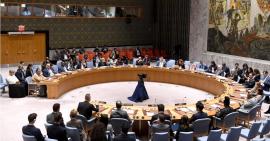
Pandor advocates for more women to be part of peace negotiations
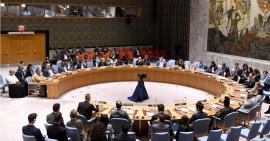
Peace agreements are more sustainable when women are at the table, says International Relations and Cooperation Minister, Dr Naledi Pandor.
“It is, therefore, disheartening to note that the percentage of women in peace negotiations today stands at a measly 19% in UN-led processes, down from 23% in 2020,” said Pandor on Wednesday.
She was speaking during the open debate of the United Nations Security Council (UNSC) on Women, Peace and Security (WPS).
As the UN gears up for the 25th anniversary of resolution 1325, Pandor believes that enhanced international efforts are needed to focus on commitments made in advancing women’s participation in all peace processes.
“We made the same call in 2019 when this Council unanimously adopted resolution 2493, as proposed by South Africa.”
The Minister said the UN Secretary-General report points to several concrete actions that Member States can take to reverse the trend of the declining number of women representation in peace negotiations, which South Africa is in agreement with.
However, Pandor noted that the current global security environment may contribute to the reversal of progress in the implementation of the WPS agenda.
“We, therefore, re-emphasise our call for urgent action to secure peace in the Israel-Gaza war, conflicts on the African continent and Russia-Ukraine conflict.
“In this context, it is alarming that the number of women and girls living in conflict-affected settings has increased by 50% in 2022 compared to 2017 owing to the increasing number of armed conflicts since then.”
South Africa, according to Pandor, initiated the Gertrude Shope Annual Dialogue Forum in 2015 and the Women Mediators Network to train cohorts of African women negotiators and peace monitors.
The training has made an immense contribution to drawing women in communities together and is setting targets for women’s direct participation in delegations and negotiating teams. “This initiative has shown how empowered women can contribute to peace and stability and support other women living in vulnerable conditions.”
She told the Member States that South Africa continues to contribute to training and capacity building for women in peace processes at continental and local levels.
“Some of the trainees are now members of various peacebuilding initiatives in their respective countries,” she said.
Pandor expressed her appreciation to partners including the African Women Leaders Network, FemWise Africa, the African Union’s platform for women mediators and the Norway government.
“In the same vein, we commend the efforts of the Secretary-General as articulated in the Action for Peacekeeping Initiative Plus and the Uniformed Gender Parity Strategy, which continue to positively advance the WPS agenda.”
She also noted South Africa’s contribution in championing female peacekeepers and making a difference on the ground.
Pandor paid tribute to the dedicated women who have been deployed in different missions across Africa. These include Major Felicia Thobeka Mswane, Lieutenant Colonel Martha Masango, Major Seitebatso Pearl Block, and Lieutenant Colonel Fhulufheto Kouter.
The Minister recognised the fundamental role played by civil society organisations in the search for sustainable peace in the Middle East amid the Israel-Palestine war.
She gave a special mention to Women of the Sun of Palestine and Women Wage Peace of Israel who are urging parties to engage in dialogue and diplomacy to reach a just, comprehensive, and sustainable peace.
“This is an example of positive activism and inspirational leadership by women striving to find a solution in the context of the continued occupation of Palestine.
“We encourage these women to continue with their solidarity amid adversity and the deepening political and security crisis.”