Tax Ombud engages taxpayers at Fourways Mall

Taxpayers who require assistance with tax matters have been encouraged to visit the Fourways Mall today as the Tax Ombud is there to assist people who have tax complaints against the South African Revenue Service (SARS).
“We are at the Fourways Mall promoting awareness about the free and impartial services we provide to taxpayers with tax complaints against SARS. Being at the mall is part of our concerted efforts to take our services to the doorsteps of communities nationwide,” Tax Ombud Yanga Mputa said on Friday.
The Ombud has been providing status updates on existing tax complaints, but most importantly, help those who want to lodge new complaints.
“The response from taxpayers, tax practitioners and businesses since we have been here has been amazing, and this shows the need for us to go to our communities and empower the public about the much-needed service we provide to those needing assistance,” Mputa said.
Taxpayers have been benefitting from the Tax Ombud’s initiative to take services to the doorsteps of communities since Tuesday, 22 August 2023. The campaign at Fourways Mall ends on Monday, 28 August 2023.
She said that while the Office of the Tax Ombud plans to increase its footprint (it currently has a single office in Menlyn, Pretoria), visiting communities and increasing face-to-face engagements with stakeholders will remain a priority.
“Although we have embraced digitisation enabling taxpayers to lodge complaints and engage with us from anywhere in the country, we also acknowledge the desire for that personal face-to-face engagement from our stakeholders, as well as that some have not embraced technology,” Mputa said.
She encouraged taxpayers to visit the Fourways Mall food court for assistance.
“Our team of operational, legal and communications specialists are ready to answer your tax questions and assist with tax complaints. The Office of the Tax Ombud senior leadership, including the CEO Professor Thabo Legwaila, is also providing full support to our team at the mall. I will also be at the mall on Saturday, 26 August 2023, to assist and provide support,” Mputa said.
She reiterated that the Office of the Tax Ombud is committed to promoting and protecting taxpayer rights but will not assist taxpayers in dodging their tax obligations.
“We have access to the SARS system and can independently verify any information received from taxpayers, which is very important to ensure our impartiality when dealing with complaints,” Mputa said.
The visit to the mall is part of the Making Taxpayers’ Rights Matter educational campaign launched on 1 August 2023 by the Tax Ombud.
Delays in payment of tax refunds and identity theft are some of the typical taxpayer complaints received at the mall.
PRASA introduces new Electric Motor Units on the KwaMashu to Durban corridor

The Passenger Rail Agency of South Africa (PRASA) has reached another milestone with the approval to run a commercial service with the new Electric Motor Units on the KwaMashu to Durban corridor.
With this service, commuters on the KwaMashu Corridor can look forward to the built-in safety features that come with the new trains such as on-board CCTV cameras, an anti- crash system, wider doors that allow for easy entry and exit and air-conditioning.
The Voice Alert and Information Display Systems will ensure that commuters get off at the right destination.
In a statement on Friday, PRASA announced that following a No-Objection certificate from the Railway Safety Regulator RSR), the new, blue and white modern trains, popularly known as Isitimela Sabantu, will be running on the KwaMashu Corridor between Dalbridge and Bridge City from Friday, 25 August 2023 during off-peak.
The blue and white trains are already running on the Southern Corridor between Durban and Umbogintwini and Durban to Cato Ridge lines.
“The phased rollout of the Electric Motor Units on the recovered corridors is part of PRASA’s wider strategy to modernize and improve passenger rail services across South Africa and make rail a safe, reliable, and affordable mode of transport.
“These trains are the most advanced passenger trains in the country and they significantly improve the passenger experience,” PRASA Group CEO Hishaam Emeran said.
Peak services on the KwaMashu Corridor with the new trains will be announced soon, subject to RSR approval.
Plans are also underway to recover the Durban to Crossmoor and Durban to Pinelands services in this financial year.
Chinese donation to aid in load shedding

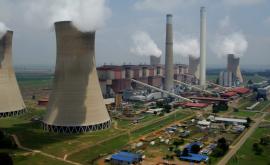
At least 500 public facilities around the country are set to benefit from a donation from China which will allow them to have uninterrupted alternative power supply and shield them from the effects of load shedding.
The donation includes generators, power supply vehicles and off grid PV energy storage supply systems.
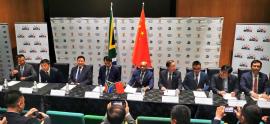
This was announced by Minister in the Presidency for Electricity, Dr Kgosientsho Ramokgopa, during the signing of a Memorandum of Cooperation (MoC) with eight Chinese entities.
The signing ceremony was held on the side lines of the BRICS Summit, currently underway in Johannesburg.
“Yesterday we exchanged letters in relation to the technical equipment that will be assisting us to provide sustainable electricity to some of the major public installations like clinics, hospitals and police stations. We are going to get 552 of those units [and] 450 of them are already on the way.
“It means that over 500 public facilities…are now going to have access to uninterrupted alternative power supply and thank you to the Chinese for the generous contribution. [The equipment] range from 6kw up to 200kw [and] 200kw can support a clinic and a medium sized hospital so this is true relief to the South African people,” he said.
The South African government has already moved to exclude some 76 hospitals from load shedding with work underway to shield at least 46 others from rolling power cuts being implemented in the country.
Cooperation between countries
On the MoC signed by the parties, the Minister explained that the Chinese entities have valuable experience and technology that can assist Eskom and by extension, the country.
The MoC was entered into by Ramokgopa on behalf of the South African government and Chinese entities:
- State Grid Corporation of China
- China-Africa Development Fund
- China Energy International Group
- China General Nuclear Power Corporation
- China National Electric Engineering Company, Ltd
- Huawei Technologies Co Ltd
- TBEA CO., LTD.
- Global Energy Interconnection Development and Cooperation Organisation
“They have experienced a similar problem that we are experiencing now. Second, they’ve got the biggest coal generation capacity of any country in the world. They’ve got the biggest installed renewable energy capacity of any country in the world…about 688GW.
“The amount of renewables they have is twelve times the size of Eskom. They are sitting on extensive amounts of liquidity. We can tap into that financing which is concessional and cheaper than any other. They [also] have the biggest installed capacity of nuclear of any country in the world.
“Even before today, almost all of them have been helping us on the generation side and have already generated a number of reports on how best we can improve the issues of performance of the coal fired powered stations and also reduce the emissions levels, on how to reduce the technical losses on the grid and also on the transmission side and what is required in relation to planning and accommodating new renewables on the grid,” he said.
Load shedding
Turning to questions on whether this agreement will remove load shedding, the Minister remained coy.
“When I came into office, the President [Cyril Ramaphosa] said we are short of 6000MW. Since March when we were appointed, we have added 4000MW. At Tutuka there’s a potential…there’s three units that must come on stream, they’ll give us 1680MW. We are going to fire one unit at Kusile in October, 800MW. We are going to fire three units…we are getting 2400MW. That…gives you 8940MW or so.
“But we have not resolved load shedding. The first phase is to make sure that what we are going through is eliminated and I am telling you, we are going to get those megawatts. We must build sufficient capacity to allow the economy of the country to grow at the desired rate and the rate of growth of new generation capacity must surpass the rate of economic growth,” he said.
Young people call for establishment of BRICS Youth Council

Making their voices heard at the 15th BRICS Summit, young people across the member states have called for the establishment of a BRICS Youth Council.
Addressing the summit currently underway in Johannesburg on Wednesday, National Youth Development Agency (NYDA) Chairperson Asanda Luwaca said the recent 9th BRICS (Brazil, Russia, India China, and South Africa) Youth Summit reached a consensus on the establishment of a Youth Council.
“This will allow us to ensure deeper and stronger collaborations among young people. We thus implore that this summit endorse our proposal for the establishment for the BRICS Youth Council in its final declaration in ensuring that new pathways for positive change and innovation can be realised.
“In doing so, it will further ensure that no young person among the BRICS member states gets left behind. Young people in their collective believe that youth are the present and the future. Our interaction as BRICS member states cannot and should not be limited to an annual summit,” Luwaca said.
Taking place under the theme: “BRICS and Africa: Partnership for mutually accelerated growth, sustainable development and inclusive multilateralism”, the summit is being attended by the leaders of Brazil, India, China, as well as South Africa, as the host.
Noting that young people make up the larger proportion of the population of each of the BRICS countries, Luwaca emphasised that the voices and views of the youth are critical as nations forge a post-pandemic society at the highest making forums.
“We believe that the BRICS countries in general and youth in particular should use their collective strengths to prioritise the development paradigm, using as a guiding principle for our work as we continue the intra BRICS cooperation across areas such as trade, education, skills development and training, economic participation and transformation, health and well-being and social cohesion.
“At our 9th Youth Summit, we presented the draft framework for the establishment of a BRICS Youth Council, which will become the coordination body for youth development between BRICS member countries and will join formations such as the BRICS Business Council, BRICS Women’s Alliance and the new Development Bank,” she said.
Last month, the NYDA hosted the 9th BRICS Youth Summit and the Meeting of Ministers responsible for Youth Affairs, under the theme: “BRICS and Africa: Partnership for Mutually Accelerated Growth, Sustainable Development and Inclusive Multilateralism”.
The BRICS Youth Summit is a platform for dialogue for delegates from member states, striving for the promotion of peace, security, development in a multi-polar inter-dependent and increasingly complex, globalizing world.
The objectives of the summit are to bring together youth participants, affording them an opportunity to share ideas and work on a concrete Action Plan for co-operation in economic, humanitarian, mass media, and science sphere.
This year, South Africa as the head of BRICS directed the summit to focus on discussions that aim to encourage young leaders among BRICS nations to actively participate in addressing the most significant global challenges, economic, social issues, and contribute to the developmental agenda.
It further called for a focus on constructive engagements on issues relating to youth empowerment, the advancement of youth development and in creating a conducive environment where youth will devise a path to a brighter and better future.
The Youth Summit preceded the BRICS Ministers responsible for Youth Affairs meeting, which was attended by the Youth Ministers; Heads of Executive Authorities for Youth; Senior Government Officials; and youth.
The outcomes of the BRICS Youth Summit will be presented to the Ministers’ Meeting for decision-making and adoption of the presentations and resolutions made by delegates from the summit.
Innovation key to thriving in a changing world, says Minister Patel

Business as usual is no longer an option, and the ability to innovate and adapt in a world characterised by volatility and fractiousness is the key to thriving, says Trade, Industry and Competition Minister, Ebrahim Patel.
“Today, the world is more polarised, climate change is more pressing and the speed of technological innovation is increasing rapidly.
“These trends in turn are reshaping our economies and societies in more profound ways than many could project,” Patel said on Tuesday.
The Minister officially opened the BRICS Business Forum as South Africa hosts the leaders of Brazil, Russia, India and China at the 15th BRICS Summit.
The event, which kicked off on Tuesday, will wrap up on Thursday. The summit brings together 1 200 delegates from South Africa, Brazil, Russia, India, China, and several African nations.
Patel used the platform to draw attention to the collective economic might of the BRICS nations, which together account for over a quarter of the world’s economic output.
Highlighting South Africa’s remarkable achievements in exports, Patel acknowledged the large contingent of exporting firms, noting that South Africa exported goods worth R2 trillion last year, constituting nearly one third of the nation’s gross domestic product.
He praised the establishment of significant institutions like the New Development Bank, emphasising the importance of networks for policy exchanges and knowledge-sharing.
He underscored the BRICS countries’ commitment to a worldview founded on the right to develop independently without relying on others.
Acknowledging the transformative power of industrialisation, trade and technological development, Patel hailed the African Continental Free Trade Area, which unites 54 nations and offers a platform to spur African industrialisation and innovation.
He stressed that Africa is no longer just a raw material supplier but an “emerging force of innovation and industrialisation in the global arena”.
He called on the BRICS Business Forum to explore how companies and firms in BRICS economies can grow and prosper through collaboration and partnership.
He urged investment and trade practices that support the industrialisation and welfare enhancement of developing nations.
This forum meeting, Patel said, provides the framework for forging valuable business-to-business partnerships and contributing to the world’s shared prosperity.
Notable figures such as Dilma Rousseff, the President of the New Development Bank; Fernando Haddad, the Minister of Finance of Brazil; Mozambican Industry and Commerce Minister Silvino Augusto José Moreno, and the leaders of the respective BRICS Business Council Chapters attended the meeting.
SA records a decrease in murder rate

Police Minister Bheki Cele says while there are still unacceptably high crime levels, violent crime levels are starting to show a decrease.
“We have analysed these recent figures and this Ministry remains persuaded, that the decision to aggressively and strategically confront crime, was the right one,” Cele said at a media briefing to announce the first quarter of the 2023/2024 crime statistics.
He said the statistics give a sober assessment of the state of crime in the country and the progress made by law enforcement to safeguard the nation and its people.
Cele said for the first time since the COVID-19 pandemic in 2020, the murder rate had declined in a single quarter.
Between April and June this year, police recorded 6 228 counts of murder. This was 196 less people killed compared to the same time last year. Out of the 6 228 people killed during April to June, 1 188 were women and children.
Apart from Mpumalanga and the Northern Cape, all provinces recorded decreases for murder in this quarter.
The Northern Cape recorded a 11.1% increase in murders, while double-digit percentage declines were noted in the Limpopo and North West provinces. Murders for April to June 2023 in those two provinces dropped by 10.0% and 11.5% respectively.
Apart from the drop in murder counts, notable decreases in other crime categories have also been observed during April to June this year.
These include decreases in sexual offences by 1.9%, trio crimes (car hijackings, house robberies and business robberies) declined by 5.2%.
Meanwhile, property-related crimes decreased by 4.5% and contact related crimes decreased by 1.6%.
Further declines have also been noted in rape and sexual assault counts reported to the police, in the three months of reporting. These crime categories recorded 2.8% and 3.8% decreases respectively.
“All property related crimes such as burglaries residential, burglary non-residential, stock theft, theft of motor vehicles and theft out of motor vehicles recorded significant declines.”
The Minister was pleased with the decline in contact-related crimes, particularly common and street robberies as well as hijackings which declined by 6.4%.
“There were over 1000 less counts of car jackings and robberies at non-residential areas in the three months of reporting. However, it does remain concerning that robberies at people’s homes are still stubbornly high.
“We must strengthen policing efforts and work closer with the private security sector and community patrollers to prevent such home invasions where people are meant to be the safest,” Cele said at the briefing held in Pretoria on Friday.
Despite the reduction, police together with society must do more to protect the country’s women and children.
“The crime figures show that the majority of sexual assaults are still taking place between people that are familiar with each other. Sexual assaults are taking place in the homes of victims and perpetrators,” Cele said.
China in favour of BRICS expansion ahead of Summit

The upcoming BRICS Summit will usher new steps towards expanding the membership of BRICS countries, says Chinese Ambassador to South Africa Chen Xiaodong.
Xiaodong confirmed on Friday that Chinese President Xi Jinping will be attending the upcoming 15th BRICS Summit, which will get underway next week.
The BRICS grouping of major emerging economies – Brazil, India, China, South Africa and Russia, is holding its 15th summit at the Sandton Convention Centre in Johannesburg from 22-24 August 2023 under the Chairship of South Africa.
He told the media that China was actively pushing for the strengthening of partnerships with other nations.
“As the world faces rising exclusiveness and protectionism, President Xi Jinping pointed out that BRICS is not an exclusive club or small circle, but a big family of good partners that is based on mutual assistance for a win-win cooperation.”
This is after, according to the ambassador, the BRICS leaders reached a consensus on the bloc’s expansion.
“The leaders supported discussions on the criteria and procedure for expansion.”
The ambassador said the international community voted in strong favour of BRICS cooperation, countries that have formally applied to join the five-country bloc.
“BRICS expansion has become the top trending issue at the moment. Expansion is key to enhancing [the] BRICS mechanism’s vitality. I believe that this year’s summit will witness a new and solid step on this front,” he stressed.
Cooperation
He also touched on BRICS cooperation, which he is of the view that this year’s summit will send signals for solidarity and its commitment to make the world a better place.
“Over the past 17 years, BRICS countries have focused on shared development. BRICS continues to advance cooperation in areas such as trade and investment, energy and resources, as well as finance and monetary matters.”
In addition, they are looking to grow in other areas. These include supply chain, logistics, agriculture, food security, local settlement and cross-border payment, vaccines and public health.
“President Xi Jinping put forward four major goals of building an integrated big market, ensuring sound circulation and transport connectivity at all levels and strengthening cultural exchanges for BRICS.”
He told the media that the leaders would also draw a sharp focus on the youth and people with disabilities.
State Visit
According to a Presidency media advisory, South African President Cyril Ramaphosa is expected to host President Xi on a State Visit on Tuesday, 22 August 2023, at the Union Buildings in Pretoria.
The ambassador said it would be his President’s fourth Official Visit to South Africa after five years.
He described the visit as significant as China and South Africa celebrate 25 years of diplomatic relations this year.
He told the guests that both countries had built a “comrade plus brothers special bond”.
The ambassador also reflected on the partnership that the two nations enjoy.
“China-South Africa ties have set a fine example for China-Africa relations and South-South cooperation.”
Xiaodong said under Presidents Xi and Ramaphosa, the Comprehensive Strategic Partnership has moved to greater heights.
“On the political front, the two countries have strong mutual respect and trust. We firmly support each other on issues of our respective core interest and major concerns.”
In addition, he said on the economic and trade front, the relationship is mutually beneficial.
During the State Visit, he said both Presidents would have wide-ranging and in-depth exchanges on China-South Africa and China-Africa relations, BRICS cooperation, and international and regional issues of common interest.
They are also expected to witness the signing of bilateral cooperation documents and hold a press briefing.
The two Heads of State will also co-chair the China-Africa Leaders’ Dialogue.
“All eyes will be on how stronger BRICS cooperation, China-South Africa relations and China-Africa relations will continue to contribute to regional and global peace and development.”
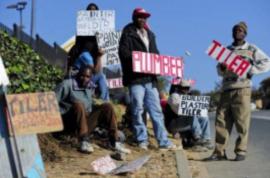
Government pays out more than R330m to Marikana victims

Government has paid more than R330 million in claims related to the Marikana tragedy.
This was revealed by Solicitor-General Fhedzisani Pandelani during a media briefing on Thursday.
Claims payments have been disbursed to claimants through their legal representatives, including the Wits Law Clinic, as well as the Socio Economic Rights Institute of South Africa (SERI).
The tragedy occurred in 2011 at the North West town when police officials shot and killed some 34 miners during a labour-related strike at Lonmin Mine.
Some 78 others were injured, with a further 10 people – including law enforcement officials – dying in clashes before the tragedy.
“The Marikana incident of 16 August 2012 is a painful and significant and solemn chapter in our nation’s history. It is something that we cannot downplay because people are still impacted emotionally and it casts a sombre shadow over the tragic clash between striking miners and law enforcement, resulting in multiple fatalities.
“As a result of which, we, as government lawyers, are now seized with having to meet the lawful demands that have been lodged with us. These funds have served to address a spectrum of claims that relate to legal consideration stemming from the Marikana incident,” Pandelani said.
In relation to the 10 people who died in earlier clashes, Pandelani said that no claim has been laid against government.
“There is always a narrative of confining the fatalities to only 34 individuals. In our book, it’s actually 34 plus another 10 who are never accounted for. We also need to take that into account. In relation to the 10 who died before the other miners, we’ve got no claim that has been lodged against government.
“The other 10 people who died, there was no causation on the death itself that was attributable to government or the State. Their settlements might have been settled by other individuals,” Pandelani said.
Constitutional damages
Turning to the potential constitutional law damages that may be lodged against the state, Pandelani said the Solicitor-General’s office currently does not have the mandate to deal with those matters.
He said upon instruction to do so, “it is an issue that we are prepared to explore”.
“Where a new concept… is introduced, such as constitutional litigation, which was not existing at the time of incident, you find a situation where you are applying the law retrospectively. We need to get instructions from the South African Police Service and everybody else.
“We are having to deal with the… concept of constitutional litigation. Why was it not pleaded as and when the matters started? And as creatures of instruction, where do you then derive the powers to settle on an aspect using taxpayers’ money on an issue which has not been ventilated in court? Until and unless there are new developments and there is cogent argument that is presented before any court of law about any novel or new issue that arises out of the Marikana litigation, I think we have done enough.
“Remarkable strides have been realised in the strategic orchestration and harmonisation of the Marikana litigation. The resolution of numerous claims stands as a testament to our unwavering commitment to justice and due process,” he said.
Call to support women

Former Deputy President, Dr Phumzile Mlambo-Ngcuka, is convinced that there’s a special place in hell for women who do not support other women.
“I can tell you without fear of contradiction, there is a special place in hell for women who don’t support women!”
The bold assertion was recently received with chuckles, hand claps and no doubt a silent “Amen” from the participants attending a National School of Government (NSG) masterclass event.
The NSG is mandated with the responsibility of ensuring that public servants comply with the provisions of established legislation, regulations and systems, and can exercise proper discretion and innovation in solving routine and complex delivery problems.
At a time when the country is commemorating Women’s Month, Mlambo-Ngcuka said sisterhood is an important ingredient in the empowerment of women.
She said that often women are the ones who leave other women behind in society.
“So we depend on you to make sure that you pay particular attention to women in society…. Your empowerment is an empowerment of the rest of the women. Sisterhood has to be one of your biggest and most important priorities,” she declared.
Mlambo-Ngcuka called on women in the public service to support “other women that you see in the streets and everywhere in the country that need support from you.”
She also stressed the importance of paying attention to the country’s younger women.
“It has to kill us when we hear that children in Grade 4 who are 10 years old cannot read… finding a plan to rescue that rests on you. This is where you show that you care about other women if we hear that girls in schools are getting pregnant … how do I use my advantage of being in the leadership of the public service to intervene in order to make sure that we address this?”
The former Deputy President was referring to the Progress in International Reading Literacy Study, which has shown that many Grade 4 pupils cannot read for meaning, something which government has committed to resolve.
Cabinet has called on South Africans to use Women’s Month which is commemorated annually in August, not only to honour women who fought for the country’s freedom, but also to play their part in building a society that supports women empowerment and guarantees the safety of women and children.
This year, Women’s Month is being commemorated under the theme: “Accelerating socio-economic opportunities for empowerment of women” to pay tribute to the more than 20 000 women who marched to the Union Buildings in 1956 to protest against the oppressive pass laws of the apartheid government.
The former chair of Parliament’s Public Service Committee reflected on working with the then Public Service and Administration Minister, Zola Skweyiya. The committee worked with the Minister in reconfiguring the new public service after following the dawn of democracy in 1994.
Gender representation
Government at the time came up with the Batho Pele policy of which September 2022 marked 25 years since South Africa adopted the Batho Pele (putting people first) Principles and the White Paper on Transforming Public Service Delivery.
Batho Pele is an inclusive concept that refers to all government policies, strategies and programmes aimed at transforming public service delivery.
She recalled how Skweyiya was “very emphatic” that the policy must reflect “equity in the system so that the citizen that is least served … who always falls between the cracks must feel thatgovernment sees them.
“And obviously women were high on that agenda. We wanted Batho Pele to address the issue of gender representation in the civil service but also the civil servant sensitivity about the gender discrimination of women in the society they are employed to serve,” she explained.
While women have gone on to attain much over the years, Mlambo-Ngcuka said the achievements of women must be celebrated and to “never forget the work that still awaits us.”
“Our work is not yet done – there is still much more that we still need to do,” said the former Executive Director of United Nations Women.
Mlambo-Ngcuka referred to the strides made by the SPAR Proteas netball women’s team and Banyana Banyana who made the country proud at their respective World Cup tournaments recently.
Mentorship
Having served the public service in various roles including that of Minister of Minerals and Energy, she stressed the sector’s importance saying it is the “backbone of government”. She highlighted that while women were continuing to break barriers, they should also mentor others.
“Because there is no point if we are breaking the glass ceiling for yourselves when you’re not doing anything for the rest of society. We have to do these things simultaneously.”
“… So lifting as you climb has to be your mantra and the nice thing about mentorship is that it’s not hard, it has to come from here,” she said as she pointed towards her heart.
In his Women’s Day address, President Cyril Ramaphosa encouraged all sectors of society to advance and improve the lives of the women and girls of South Africa.
“We must mobilise all of society to support the women of our country on their road to empowerment and the improvement of their lives. As government, we are irrevocably committed to continuing the process of advancing and improving the lives of the women and girls of South Africa,” he said.
While it is said that a woman’s work is never done, we all can lend a hand in ensuring that hell freezes over to advance the interests of all women.
South Africa records employment gains in Quarter 2

At least 150 000 more people were employed in South Africa during the second quarter of the year as compared to the first – resulting in a minor decrease in the unemployment rate by some 0.3%.
This is according to the Quarterly Labour Force Survey (QLFS) released by Statistics South Africa (Stats SA) today.
Furthermore, the number of unemployed people fell by at least 11 000.
“Additionally…the discouraged work seekers decreased by 94 000 in the second quarter of 2023 compared to the first quarter of 2023 resulting in a net decrease of 1 000 in the not economically active population.
“The above changes in employment and unemployment resulted in the official unemployment rate decreasing by 0.3 of a percentage point from 32.9% in the first quarter of 2023 to 32.6% in the second quarter of 2023.
“The unemployment rate according to the expanded definition decreased by 0.3 of a percentage point to 42.1% in Q2:2023 compared to Q1:2023,” the institution said.
Employment in the formal sector increased by some 143 000 during the same period with informal sector employment decreasing by 33 000.
“Construction [104 000], trade [92 000], and community and social services [63 000] recorded the largest employment gains. While employment losses were recorded in manufacturing [96 000], finance [68 000], transport [7 000] and utilities [6 000],” Stats SA said.
Despite an increase in the number of youth employed during that period, the institution said youth remain “vulnerable” to unemployment.
“The youth remain vulnerable in the labour market, with the second quarter of 2023 results showing that the total number of unemployed youth [between 15 and 34 years old] decreased by 131 000 to 4.7 million while there was an increase of 105 000 in the number of employed youth to 5.7 million during the same period.
“This resulted in a decrease in youth unemployment rate by 1.1 percentage points to 45.3% in Q2:2023,” Stats SA said.
The institution highlighted the sectors where the most gains were made in the provinces.
“Limpopo [up by 80 000], Western Cape [up by 54 000] and KwaZulu-Natal [up by 48 000] recorded the largest employment increases in Q2:2023.
“Employment losses were recorded in Free State [down by 59 000] and Northern Cape [down by 17 000] during the same period,” Stats SA said.