New online service a milestone for Justice Department

The newly launched Masters’ Deceased Estate Online Registration System is a milestone for how the Masters’ office renders services to the public.
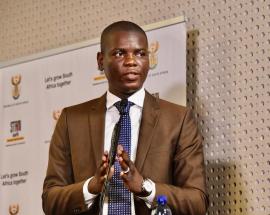
This is according to Justice and Correctional Services Minister Ronald Lamola, who was addressing the launch of the system on Tuesday.
“This system will be a catalyst to changing this environment…. modernising it, digitising it, and making it accessible to members of the public and also all the professional bodies that operate in the space of the Master’s [office] services,” he said.
The new online system will, amongst others, allow members of the public to register deceased estates either in the comfort of their homes, offices or anywhere in the world, without having to visit a Master’s office (except with the lodgement of original wills). Online registrations will also speed up the registration process and ensure quicker availability of the details/particulars of the beneficiaries and trustees.
With the electronic booking of appointments — where a client needs to physically visit a Master’s office — the client will be able to choose a suitable date and time slot for their appointment.
Lamola said the system will also protect clients from fraudulent activities.
“We are also aware of the challenges that you as stakeholders have also suffered not only in terms of accessing our services but also in terms of the manipulators of the system… such as fraudulent letters of authority and so forth. Already, the risks have been mitigated and we believe that if we all follow those systems, we’ll be able to guard against further fraudulent activities by unscrupulous players out there.
“We hope that the LPC [Legal Practice Council] will play its role on the unscrupulous attorneys who also sometimes take their chances and also hopefully the accounting profession will do the same with the accountants who also sometimes take… advantage of the unsuspecting members of the public,” he said.
Lamola said that the digitisation of services of the Master’s office is the beginning of a migration of most of the department’s services.
“It has been a long journey for the department to reach this milestone but we are very excited that we have reached it and there is a foundation that has been laid in terms of digitising and modernising the entire justice system.
“So what you see today is part of our vision not only for the Master’s office but also in terms of online maintenance, in terms of liquidations… and all the services that the Master’s provide [and] also the courts… We have already seen court online, cases online and the various platforms that the department is trying infuse to modernise the entire administration of the justice system,” he said.
New Border Management Authority a boost for SA’s security and development

President Cyril Ramaphosa has used his weekly newsletter to the nation to highlight the importance of the New Border Management Authority (BMA) in boosting the country’s security and development.
The President said that the establishment of the BMA is a significant step towards safer communities, better law enforcement and the growth of the economy through greater trade with the country’s neighbours.
President Ramaphosa emphasised that ensuring the borders are well-managed and well-protected is key to the security and development of the country.
“Maintaining the integrity of our country’s borders is key if we are to realise the aspiration of every South African to live in peace and harmony with ourselves and our neighbours.
“It is a daunting undertaking. Our land border is over 4 800 km long and is shared with six countries. We have 53 land ports of entry, 11 international airports and eight sea ports.
“The launch last week of the country’s first integrated, unified Border Management Authority (BMA) is therefore a milestone in the necessary effort to secure our borders,” the President said.
Turning to the challenges faced on our borders, the President said that they are both historical and contemporary.
He highlighted that the apartheid regime flagrantly disregarded the sovereignty of neighbouring countries to conduct illegal cross-border raids.
He added that “it abused immigration measures to harass its opponents, and enforced hated policies like influx control and the exploitation of labour from the region.”
President Ramaphosa told the nation that it then became the priority of the democratic government elected in 1994 to progressively reform the border management and migration regime, not just in the interests of economic growth and development, but also so that these reforms should reflect the broader values of the new state.
“The democratic government has worked to uphold the right of citizens to freedom of movement and residence, as well as the rights of refugees and asylum-seekers under international conventions.
“It also sought to deepen trade and investment between South Africa and other Southern African countries, and contribute to the political and economic integration of the African continent,” he said.
Over time, however, he said, the complexities of border management have resulted in an uncoordinated approach by the various authorities.
He highlighted that one of the challenges has been the sheer number of government departments and entities involved in this work. This includes the absence of a central authority which led to fragmentation of efforts and made it difficult to enforce accountability. This in turn rendered the country’s borders vulnerable.
The UN Office on Drugs and Crime has noted that South Africa has become an important transit route for organised criminal networks involved in human trafficking, drugs and small arms smuggling and various other forms of cross-border crime.
It has also noted that as the economic powerhouse of the region, South Africa continues to attract economic migrants who are undocumented, especially from the SADC region.
The President said that the proliferation of cross-border crime, illicit trade and illegal migration as a result of porous borders presents a serious threat to national security and the economy. He added that it also places strain on already stretched resources and public services, and fuels social instability.
“We have in recent times seen anti-foreigner sentiment resulting in acts of violence and harassment. As a country, we must condemn without reservation all acts of violence against foreign nationals, regardless of their immigration status, and work together to prevent such acts.
“At the same time, we must recognise that South Africans are justifiably concerned about illegal migration. Like any sovereign nation, we have the right to guarantee the integrity of our borders and provide that all who reside in our borders have a legal right to be here.
“Those who have sought refuge in South Africa or wish to live and work here are subject to immigration regulations and must adhere to the country’s laws,” the President said.
The Border Management Authority is tasked with ensuring that the country’s immigration laws are enforced, and that the borders are well-protected and ports of entry well-managed.
The new authority is now the third armed service in South Africa after the South African National Defence Force (SANDF) and the South African Police Service (SAPS).
The first officers of the new BMA border guard were deployed in July this year at vulnerable segments of the border, including at informal crossings.
Although they will be conducting border law enforcement functions, including access control, the SANDF remains responsible for border protection and safeguarding.
With this new structure in place, President Ramaphosa said the country will also be able to better prevent the illegal importation and exit of goods, curb illegal migration and human smuggling, and combat cross-border crime.
The BMA will take on the work of several other departments and agencies and is already working with the South African Revenue Service, SAPS and SANDF to integrate border management functions.
DWS withdraws government waterworks draft regulations

The Department of Water and Sanitation (DWS) has announced the withdrawal of the proposed regulations relating to access and use of government waterworks and surrounding State-owned land for recreational purposes.
The draft regulations were published in the Government Gazette on 24 March 2023, for a second round of public comments to solicit inputs from various stakeholders and members of the public who have interests in accessing and using the departmental infrastructures for recreational purposes.
“The draft regulations were withdrawn after considering the public comments received during public consultations as well as from written comments. Newly proposed regulations will be reissued once the reviewing process is concluded,” the department said in a statement.
Human Settlements launches Title Deeds Friday

Human Settlements Minister, Mmamoloko Kubayi, has called on public servants and representatives – together with the relevant institutions – to work around the clock to fast track the processing and issuing of title deeds to the rightful beneficiaries.
Kubayi made the call at the handing over of title deeds at Mabopane Sports Complex in Tshwane on Friday.
The event formed part of the launch of Title Deeds Friday campaign aimed at mobilising beneficiaries of government-subsidised homes — Breaking New Ground (BNG) — to collect their title deeds at municipal offices.
Kubayi, who was accompanied by Deputy Minister Pam Tshwete; Tshwane Member of the Mayoral Committee (MMC) for Human Settlements, Ofentse Madzabatela, and local councillors handed over title deeds to some community members of Mabopane, Winterveld and Ga-Rankuwa (MAWIGA), north of Tshwane.
The community members of MAWIGA have been advocating to be recognised as the rightful owners of houses located around Ga-Rankuwa, Mabopane, Kudube and Winterveldt.
The Minister declared MAWIGA a Ministerial Project and established a committee with the community to resolve the ownership and transfer for 8 000 uncontested properties held by the City of Tshwane.
The over 14 000 properties, including contested ones, date back to pre-1994.
During the event, Kubayi provided feedback to the community on the roll-out status. She said a phased approach has been adopted to avoid keeping communities waiting due to red tape and intergovernmental disputes.
Kubayi said government has declared war on the title deeds backlog, particularly as President Cyril Ramaphosa has emphasised the need to get rid of red tape within the State.
“We are deliberately launching this campaign here in MAWIGA to re-emphasise our message that as a government, we have heard the cries of this community and others, who are yet to receive their title deeds. Every parent deserves to know that his or her children have a place to call home.
“These title deeds are legal documents that assure you these properties are yours. Today, you can be at peace that the houses you have lived in and raised your families in over the years are yours and are valuable assets to hand over to future generations,” Kubayi said.
She said the handing over of title deeds is also a testament that “when government partners with community members, nothing is impossible to achieve”.
The MAWIGA Ministerial Project was declared in 2022, with a committee established and tasked with the responsibility of facilitating the transfer of uncontested properties to the rightful owners.
Kubayi said government is using MAWIGA to showcase the importance of working together with the community to resolve their challenges.
Speaking on behalf of the community, Moota Mfulwane, said they are happy that finally, working together with government, they made some breakthroughs.
“Although some of those who were also waiting for this day have since unfortunately passed on, we are hoping as a community that the targeted handover of 14 000 title deeds will be realised,” Mfulwane said.
Meanwhile, the Ministry has undertaken to convene an urgent meeting with municipalities to unlock existing bottlenecks.
Kubayi said interventions are required, working with all three spheres of government, including the urgent establishment of townships to pave the way for the registration of title deeds.
The Minster made a call to all councillors to champion the Title Deeds Friday campaign by working with municipal officials to issue all title deeds on hand.
Investment pledge creates 3000 jobs

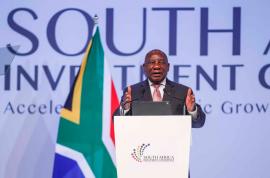
The roll out of the investment of R500 million pledged by SA Taxi at the fifth South African Investment Conference hosted by President Cyril Ramaphosa in Johannesburg in April this year is gaining momentum and has already created more than 3 000 jobs.
The investment was announced as one of the pledges worth billions of rands that contributed to bringing the total value of investment pledges over a five-year investment mobilisation period to R1.51 trillion, thereby exceeding the initial target of R1.2 trillion set by President Ramaphosa.
Chief Government and Industry Officer at SA Taxi Holdings, Matsidikanye Moswane, said more than R350 million of the funding that was provided by the developmental credit provider, Transflow, has already been spent.
“The investment is being used to enable financial inclusion by extending developmental credit to small and medium enterprises (SMEs) that may otherwise not have access to credit from traditional financiers,” Moswane said.
“By providing debt funding through Transflow, the Development Bank of Southern Africa (DBSA) is empowering under-serviced and emerging SMEs to build their businesses, which in turn creates further direct and indirect employment opportunities. To date this has helped create 1 620 direct jobs and 2 700 indirect jobs,” he said.
Moswane said the SA Taxi, whose headquarters are based in Midrand, Gauteng, but has a national customer base, finances entrepreneurs who operate minibus taxis that may not otherwise have access to credit from traditional banks, contributing to job creation, and enabling and improving the safety of public transport in South Africa.
“SA Taxi is an independently owned commercial business. It is the first financial service provider to focus solely on the taxi industry. We make a vital contribution to a market sector that has a stimulating effect on the national economy at many different levels.
“Each taxi creates 1.8 new jobs related to the industry. We focus exclusively on building entrepreneurs through the medium of the taxi industry which comprises an estimated 250 000 taxis that are on the roads in South Africa,” Moswane said.
He said SA Taxi has to source the money it lends to its clients from foreign and domestic direct investment.
President Ramaphosa to officially launch the BMA

President Cyril Ramaphosa will on Thursday preside over the launch of the Border Management Authority (BMA) in Musina, Limpopo.
The launch of the BMA follows its formal establishment and assumption of its status as a schedule 3 (A) public entity on 1 April 2023.
The establishment of the BMA means that South Africa now has an integrated border management platform, with a single command and control with which to support the attainment of secure borders, safe travel and trade.
As part of the launch, President Ramaphosa will receive President Emmerson Mnangagwa of the Republic of Zimbabwe to hold official talks and undertake a guided tour of the Beitbridge border, supported by members of the Inter-Ministerial Coordinating Committee (IMCC) on the BMA.
The President will then proceed to officiate the launch of the BMA at the Musina Show Grounds and also handover a Sword to the Commissioner of the BMA to delegate the powers to lead the third law enforcement authority in the Republic.
The BMA has, since its inception, recorded successes, amongst them intercepting stolen vehicles.
In June 2013, Cabinet made the decision to establish a Border Management Agency under the guidance of the DHA.
The decision was taken in recognition of the National Intelligence Co-ordinating Committee (NICOC) 2012 Feasibility Study, which had highlighted weaknesses in border management.
The authority will be responsible for the execution of frontline border law enforcement functions related to, inter alia, port health, immigration control, access control, biosecurity, food safety and phyto-sanitary control, land border infrastructure development and maintenance, and border information and risk management.
It is intended that the BMA will adapt and respond effectively to the challenges, threats and opportunities that exist in the border environment whilst safe-guarding South Africa’s borders and meeting the country’s national, regional and global developmental responsibilities and human rights imperatives.
Creecy issues Hake Deep-Sea Trawl Sector appeal decisions

Minister of Forestry, Fisheries and the Environment, Barbara Creecy, has issued her appeal decisions related to the Hake Deep-Sea Trawl Sector, in terms of the Fishing Rights Allocation Process 2020/2021 (FRAP 2021).
In a statement on Wednesday, the Minister explained that at the forefront of her consideration of the Hake Deep-Sea Trawl appeals was the need to transform the commercial sector, while maintaining the stability of the sector.
“In so doing, I was required to balance the need to admit new entrants into the sector with the need to achieve an equitable redistribution of the Total Allowable Catch. I was also mindful of the need to promote medium to smaller entities,” Creecy said.
The General Published Reasons for the Appeal Decisions in the Hake Deep-Sea Trawl Sector: 2021/2022 will be published on the department’s website.
Appellants will also be provided with the outcome of their individual appeal decisions in due course.
Rights holders are to access the FRAP Online Portal for their grant of right letters, which also will be uploaded shortly.
The Department of Forestry, Fisheries and the Environment has revised the timelines for the processing, administration and finalisation of the remaining appeals relating to the FRAP 2021/2022 process, such that the Department will endeavour to finalise the Hake Longline Appeals (280 appeals) by 27 October, the Sardine Appeals (169 appeals) by 25 November 2023 and the Anchovy Appeals (230 appeals) by 30 November 2023.
“The deferral of the timelines for finalisation of the remaining sectors is necessary to ensure that I arrive at the correct decision on all appeals. The deferral will not prejudice any of the appellants and right holders in the remaining sectors, because I will have finalised and issued my appeal decisions in these sectors prior to the commencement of the next fishing seasons in January 2024,” Creecy said.
The link to access the appeals decision can be found on: https://www.dffe.gov.za/sites/default/files/legislations/appeals/1oct2023gpr_hakedeepseetrawl.pdf.
No glitches expected with October grant payment cycle, says Mpumalanga SASSA

The South African Social Security Agency (SASSA) in Mpumalanga has issued a statement assuring social grant beneficiaries of a smooth transaction during the October payment cycle.
This comes after the technical glitches experienced last month, affecting grant recipients across the country.
According to SASSA, the elderly will receive their money on 3 October, those living with disabilities on 4 October, while payment of children grants categories will get theirs from 5 October.
“Social grant beneficiaries have a right to choose a method of payment of their choice, freely. The forms to make a choice are available at the nearest SASSA offices.”
Meanwhile, SASSA staff will be in most South African Post Office (SAPO) outlets and other payment platforms to monitor the payment and aim to assist beneficiaries with enquiries.
“The monitoring will be conducted for the first three payment days and they will assist any beneficiary that may be experiencing system payment-related challenges or non-payment due to failed bank verification and/or pending bank verification.
“In the eventuality of an unexpected non-payment [this] will be escalated to Postbank if related to a system glitch, and be sorted out as quickly as possible,” the agency explained.
Beneficiaries are also reminded to check their contact details to ensure that they are still correct.
For more information, contact the toll-free number on 0800 60 10 11 or 013 754 9428/9363 from 07:30 to 16:00 during weekdays (Monday to Friday).
District contacts are as follows: Ehlanzeni 013 799 7063/65; Bushbuckridge 013 799 7010/11; Gert-Sibande 017 801 1794 and Nkangala 013 285 0648.
Transnet GCE and CFO resign

Transnet Group Chief Executive (GCE) Portia Derby and Group Chief Financial Officer (CFO), Nonkululeko Dlamini, have resigned from their positions at the state-owned freight and logistics company.
Derby’s last day at the company is expected to be at the end of this month (October) while Dlamini’s last day was at the end of September.
Transnet board chairperson Andile Sangqu said: “On behalf of the Board, I want to take this opportunity to convey to Portia and Nonkululeko our best wishes and to express our gratitude for their dedication, selflessness and hard work in serving the company during this critical time in its history”.
In a statement, Transet announced that Chief Executive of Transnet Pipelines, Michelle Phillips, is expected to be Acting GCE from 1 November while Hlengiwe Makhathini will act as Group CFO.
The statement reflected on Derby’s tenure as GCE since her appointment in February 2020 and the challenges that have beset it since.
“Ms Derby…has steered the company through an extremely challenging period, following on the setting aside of the 1064 locomotive contract which has created a significant binding constraint for Transnet that remains to this day.
“Furthermore, the period of the current executives’ tenure was impacted by the global COVID-19 pandemic, immediately thereafter the looting, the hacking of the ICT system, the floods in KwaZulu-Natal and the strike towards the end of 2022, all of which have adversely impacted Transnet. The floods in particular required a significant capital outflow to return to service the critical Container Corridor between Johannesburg and Durban,” the statement read.
Transnet added that Derby has borne responsibility for “driving the introduction of restorative governance measures and stabilising the company following the years of State Capture”.
“During her tenure she worked with the team in Transnet to introduce a private partner for Transnet Port Terminals into the container terminal space, the first of its kind, including working with key stakeholders in introducing reforms, aligned with Government policy, which aim to turn the organisation around, restructure the rail sector particularly, and enable the growth of the freight logistics system,” the statement read.
Cabinet approves Draft Water Services Amendment Bill

Cabinet has approved the publication of the Water Services Amendment Bill for public comment.
The Bill aims to strengthen accountability for water service providers and to introduce transparency.
“The amendments to the Water Services Act will ensure that water service providers deliver high quality water as part of their licensing conditions.
“The amendments will also address weakness that have been identified in the water services sector, and these include conflict with water services providers being both providers and regulators. The Bill sets minimum standards for the functioning of Water Services Providers, which must be enforced by Water Services Authorities,” Cabinet said.
Draft National Water Amendment Bill
Cabinet has also approved the publication of the draft National Water Amendment Bill for public comment. The Bill amends the National Water Act (Act 36 of 1998).
“These amendments will improve regulations and will ensure that the country’s water resources are well managed, protected and conserved. Once the amendments are implemented, there will be equitable allocation of water to all citizens of the country,” Cabinet said.
The Bill also makes proposals to eliminate the imbalances of the past relating to water allocation and makes provisions for effective and quicker internal dispute resolution mechanisms.
SABC Bill 2023
Cabinet has approved the submission of the SABC Bill, 2023 to Parliament.
Cabinet initially approved the Bill in 2022, however, the Office of the Chief State Law Advisor subsequently made suggestions on certain provisions of the Bill in order to align it with the constitution.
“Once passed into law, the Bill will result in the repeal of the current Broadcasting Act (Act 4 of 1999). The amendments will strengthen the efficiency of the operations of the public broadcaster. The Bill further proposes reforms in the SABC’s funding model and the TV licensing system,” Cabinet said.
The Bill encourages the SABC to align its broadcasting services with the democratic values of the Constitution and to enhance its mandate to serve citizens better.