DWS works to finalise Catchment Management Agencies

The Department of Water and Sanitation is in the process of finalising the establishment of the Catchment Management Agencies (CMAs).
The establishment of CMAs is in line with the provisions of the National Water Act, 1998 (Act No. 36 of 1998) (NWA) and the National Water Policy for South Africa.
The purpose of Catchment Management Agencies is to enhance decentralised decision-making and to involve stakeholders in managing water resources, in an integrated manner, at a local level.
Water and Sanitation Minister, Senzo Mchunu, has finalised the appointment of Board Members of the Pongolo – Umzimkhulu and the Vaal Orange Catchment Management Agency, which was concurred by Cabinet on 15 November 2023.
The appointed Board Members for Pongolo – uMzimkhulu Catchment Management Agency include Dr Thava Kelly (Chairperson), Sibusiso Makhanya (Deputy Chairperson), Hlengiwe Ndlovu, Bhekumuzi Gumbi, Dr Lembi William Mngoma, Snenhlanhla Mngadi, Professor Purshottama Reddy, Mdandla Myeni, and Nokuthula Khanyile.
The appointed Board Members for the Vaal Orange Catchment Management Agency include, Desmond Solomon Fransman (Chairperson), Tsakane Zwane (Deputy Chairperson), Hubert Thompson, Nontuthuzelo Njeza, Nakana Masoka, Ponatshego Mothibi, Doris Dondur, Dichikane Mashego, and Louis Van Oudtshoom.
The department said the boards, as the accounting authority, will operationalise the CMAs which will include, developing the catchment management strategy, effective participation of stakeholders and management of water resources in the water management area.
“In addition, the CMA will be more responsive to water user needs and speedy decision making around water resources management and create a customer focused culture for water resources management which creates accountability at a local level for water resources management.
The department congratulated the new board members, and wished them well in their endeavours.
South Africa signs loan agreements to support Just Energy Transition

National Treasury has announced that South Africa has signed bilateral loan agreements with the World Bank, German state-owned development and investment bank Kreditanstalt für Wiederaufbau (KfW) and the African Development Bank (AfDB) to support South Africa’s Just Energy Transition.
The concessional financing includes a loan of some $1 billion from the World Bank, some €500 million from KfW and a further $300 million from the AfDB.
“The loans provided by [KfW] and the [AfDB] follow their partnership with the World Bank on the second Development Policy Operation DPO to support South Africa’s commitment to the just transition for a low-carbon and resilient economy. These are sovereign loans provided directly to the National Treasury for general budget expenditure purposes.
“The financing facilities from the three development institutions are in line with the National Treasury’s funding strategy to diversify its funding mix for international borrowing and access concessional financing instruments offered by the development partners to support government’s key reforms under climate change and the electricity sector.
“These facilities also enable the National Treasury to raise funding at very affordable rates which help to reduce the government public debt,” Treasury said in a statement.
The department expressed its gratitude to the three institutions.
“These agreements signify and reinforce the excellent collaborative efforts between the Government of Germany, World Bank and AfDB and our government, that has ensured the successful conclusion of the loans,” the statement concluded.
NSFAS opens bursary application for 2024 academic year

Higher Education and Training Minister, Dr Blade Nzimande, has urged all learners who wish to enter the post-school system and students, who do not have financial assistance to continue their studies, to submit their applications for 2024 funding.
Nzimande made the call as the National Student Financial Aid Scheme (NSFAS) officially opened the bursary application season for the 2024 academic year.
The bursary application season, which opened on 21 November 2023, will close on 31 January 2024.
Nzimande said the reason for opening the applications period now is that NSFAS was awaiting South African Revenue Service (SARS) completion of the tax period, which is important to enable NSFAS to have the necessary and updated information available during the application season.
“Furthermore, this is done to afford the beneficiaries shorter turnaround times for decision making which is aligned to NSFAS financial eligibility assessment which requires updated SARS information,” Nzimande explained.
Nzimande urged all students who wish to study in any of the public universities and Technical Vocational Education and Training (TVET) colleges to apply timeously and not to wait until the last day.
Nzimande emphasised that students do not have to wait for matric in order to apply for NSFAS.
The Minister reiterated that NSFAS is mandated to make funding available to poor and working-class families, and in adhering to this mandate, the scheme will continue to make immediate funding decisions for South African Social Security Agency (SASSA) First Time Entering (FTEN) students.
As part of improving the services to students, Nzimande said this application period, there will be no supporting documents required at time of application.
“The reason for this is due to our improve third party relations, including SASSA, SARS and the Department of Home Affairs. They will be providing NSFAS with information to verify what the student would have declared in the application.
“The only time supporting documents will be required, is when prompted by NSFAS in case where they cannot verify the parental relationship. Communication will be sent directly by NSFAS to a student to initiate this process,” Nzimande explained.
In the case where a student is submitting an appeal, documents required will be based on the NSFAS declaration form available on the NSFAS website.
In addition, disabled students will be required to submit the disability annexure form, as they are assessed at R600 000 threshold.
“All these improvements will ensure that funding decisions are confirmed timeously,” the Minister said.
The Minister also urged students to provide accurate information, particularly parental information, when applying so that when validations occur with Home Affairs, students can be funded timeously.
He said NSFAS will reject or request additional supporting documentation, where validations with third parties have failed, and all the first-time applicants will be able to appeal, as soon as they are rejected.
However, the Minister noted that the returning students and continuing students will only be able to appeal from the end of November, as NSFAS is still improving the processes so that students have multiple reject reasons and appeal at once, instead of the current process where they have been rejected at different points in the funding value chain.
Nzimande added that the scheme continues to improve its controls in ensuring that those who do not qualify do not access the funding, noting this is done in collaboration with other public entities, including SARS and the Department of Home Affairs.
In preparation for the 2024 funding cycle, NSFAS has already engaged the Department of Basic Education and a number of students who are in matric are SASSA beneficiaries.
Nzimande reminded the students that applying does not mean the applicants have been confirmed for funding.
“You still need to be registered first, in a public university or TVET College for a funded qualification to be confirmed.”
Among the new features for the 2024 application period include the NSFAS mobile application which will be rolled out initially for iPhone operating system (IOs), Android, and in due course of HUAWEI devices.
The student app will include a biometric capability, which will be rolled out later in the year.
The entity is also planning to roll out a strategy that would improve its query handling processes.
“The intention is to provide additional services on the WhatsApp functionality, USSD, and introduce additional solutions such as chatbots. The introduction of these applications will enable students to receive responses directly and reduce the reliance on calls,” Nzimande said.
Footballers urged to plan for future

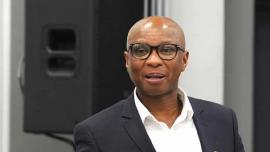
With football being a relatively short career, Minister of Sport, Arts and Culture Minister Zizi Kodwa has encouraged athletes to learn the business of football and its supporting eco systems while still active in their playing careers so they can participate in the industry.
Addressing the International Federation of Professional Footballers (FIFPRO) General Assembly in Cape Town on Tuesday, the Minister expressed concerns about what happens to footballers when they retire from playing.
“Some players may face challenges during the transition from a playing career to a post-playing career, and there is an increasing recognition of the importance of supporting athletes in this transition phase.
“This is where the role of FIFPRO becomes important. Your members need to be empowered; therefore, capacity building should be high in your list of priorities. It should not be by coincidence rather it must be a deliberate and guided process.
“We have seen examples of some top clubs around the world bringing in former players to their coaching and management structures. This is how we have seen former players emerge as top coaches. Yet, many players retire and have nowhere to turn to,” the Minister said.
He emphasised the importance of finding ways for former players, especially those outside the capital centres of football in Europe and Asia, to make a living and to contribute to the sport when their playing careers are over.
“Many former players transition into coaching or management roles within the world of football. They may become youth coaches, assistant coaches, or even head coaches at various levels. Some also take on administrative roles within football clubs or organizations.
“Several retired football players find success in the media industry. They become analysts or commentators for television and radio broadcasts, providing insights and commentary on games and events.
“Some also contribute to print or online publications as sports writers, bloggers, or content creators, sharing their perspectives and experiences in written form. A few players venture into entrepreneurship, starting their own businesses or investing in various ventures,” the Minister said.
Racism in football continues to be a challenge
The Minister called on FIFPRO to think about how it can contribute to uprooting racism in football following a report noting that racism is the most reported form of discrimination reported.
“Players, coaches, officials, and fans continue to be abused because of the colour of their skin. Despite interventions by football authorities, this abuse is continuing, meaning more should be done.
Kick It Out, the organisation dedicated to stamping out discrimination in football, states that in the 2022 – 2023 season, it received 1 007 reports of discriminatory behaviour in football from grassroots level, professional level, and across social media.
“This is a 65 percent increase in incidents reported to the organisation in the 2021 – 2022 season. Kick It Out found that racism is the most reported form of discrimination reported, accounting for nearly half (49 percent) of all cases reported.
“Kick It Out also observed increasing reports of online abuse. The Federation Internationale de Football Association (FIFA) reports that during the 2022 Men’s World Cup, almost 20 000 abusive social media posts were aimed at players, coaches, and officials. Kick It Out has also observed increasing reports of sexist behaviour or misogyny. If anything, Sport should contribute towards Social Cohesion instead of being a source of division,” the Minister said.
Kick It Out was established to fight racism in football in 1993. Then in 1997, it expanded its mandate to tackle all forms of discrimination.
PRASA initiative offers commuters fare discounts

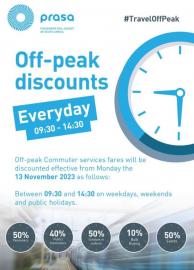
The Passenger Rail Agency of South Africa (PRASA) has introduced the #TravelOffPeak campaign, an initiative aimed at promoting travel during off-peak by providing attractive fare discounts to commuters.
“Recognising the importance of promoting reliable transit not only during the weekday rush hours but off-peak too, PRASA is pleased to offer various off-peak discounts across all its operational routes starting from 13 November 2023.”
PRASA GCEO Hishaam Emeran explained that the initiative is part of the organisation’s commitment to encourage the public to use Metrorail services not only during peak hours but also during off-peak periods.
“This is a significant step towards enhancing the commuter experience and saving commuters money by paying lower fares. By choosing to travel during off-peak, commuters will not only enjoy a quieter and relaxed journey but contribute to a more evenly distributed and efficient use of our transportation infrastructure,” Emeran said.
Fares are discounted as follows:
- Pensioners: 50% discount during off-peak.
- General public/commuters: 40% discount during off-peak.
- Scholars in uniform: 50% anytime of the day.
- Bulk purchase: 10% discount on bulk buying.
- Events or promotions (schools or groups): 50% discount for groups travelling together.
These off-peak discounts are applicable between 09h30 and 14h30 weekdays, and during weekends and public holidays.
“PRASA wishes to remind commuters to check their eligibility for discounted fares ahead of their journey. All tickets will be valid on the day of purchase and at off-peak hours.
“It is crucial to note that these tickets should not be used during peak hours, except for scholars in school uniforms, whose tickets remain valid for the entire day.
“PRASA invites commuters to #TravelOffPeak and save while enjoying a more comfortable and cost-effective travel experience to their various destinations,” the agency said.
Spheres of government called to enhance service delivery

Water and Sanitation Deputy Minister David Mahlobo has called on all spheres of government to fast-track service delivery to communities to realise a better life for all.
Mahlobo made the call during the District Development Model (DDM) Social Compact Imbizo, held at the Phuthadithjaba Multi-Purpose Centre in the Free State on Friday.
He cited the recently released South African National Census statistics as a clear indicator that the population of the country is increasing, therefore efforts need to be doubled to meet the increasing needs of communities.
“Statistics South Africa says we have provided more than 90% of the population with water. While we can say we have made strides in this regard, we know that we have not reached everyone as we should and we need to reach out to them as well, because it is our mandate and it is their constitutional right to be supplied with water,” Mahlobo said.
As a solution, the department is assisting municipalities to build new infrastructure, refurbish and upgrade the existing ones, to meet the demand for water, while reducing water loses because of aging infrastructure.
Through its Regional Bulk Infrastructure Grant (RBIG) and Water Services Infrastructure Grant (WSIG) programme, the department funds municipalities for water infrastructure.
“In Maluti-A-Phofung, we have intervened when there were water challenges through our RBIG programme and allocated R176 million in the 2022/2023 financial and R154 million this financial year for water projects.
“Further to this, through our WSIG programme, we have allocated R127 million from 2022/2023 until 2024/2025 for drilling of boreholes in Intabazwe, Mokgolokweng sewer pumpstations and Mokgolokweng bulk and sewer networks,” Mahlobo said.
The Deputy Minister noted that for the first time the communities of Maluti-A-Phofung have finally received water from Sterkfontein Dam which, he said, was “something that seemed like a pipe dream”.
He added that the communities in the area will benefit from the Lesotho Highlands Water Project once it is completed.
Among the work in progress for intervention in Maluti-A-Phofung area, includes the following projects:
• Upgrading of Sterkfontein Water Treatment Works
• Refurbishment and Upgrading of the Fika Patso Water Purification Plant
• Upgrading of the Intabazwe Rising Main
• Bulk water supply to Tshiamo and Makgolokweng
• Upgrading of the supply to Phuthaditjhaba and CBD area
• Refurbishment of the Elands Waste Water Treatment Work
• Upgrading of the Kestell Waste Water Treatment Works
• Refurbishment of the Makwane Waste Water Treatment Works
• Refurbishment of the Moeding Waste Water Treatment Works
• Upgrading of the Phuthaditjhaba Waste Water Treatment Works
• Upgrading of the Tshiame Waste Water Treatment Works
• Upgrading of the Wilge Waste Water Treatment Works
• Drilling of boreholes in Intabazwe
• Improving water revenue and reducing non-revenue water
An allocation for infrastructure development has also been made for this financial year to municipalities under Thabo Mofutsanyana District, including R100 million for Setsoto, R83 million for Nketoana and R60 million for Dihlabeng.
The imbizo, which was attended by Deputy Ministers in the Presidency, DDM Champion in the district Nomasonto Motaung and Pinky Kekana, Free State Premier Mxolisi Dukwana, and Thabo Mofutsanyaba District Executive Mayor Connie Msibi, among others, also discussed the development of a social compact through the DDM approach and how to make a social compact towards improving service delivery in communities.
The imbizo also reviewed the progress of the Thabo Mofutsanyane District Social Compact, reviewed partnerships and devised means to strengthen them.
It further looked at water and sanitation services in the area, as drivers of socio-economic development.
SA remains the preferred investment destination in Africa

President Cyril Ramaphosa has emphasised that South Africa remains one of the preferred investment destinations and is an important gateway for markets and other business opportunities throughout the continent.
The President was delivering remarks at the Procter & Gamble Plant launch in Kempton Park, in Ekurhuleni, Gauteng.
“As a clear demonstration of the value of trade between African countries, Procter & Gamble currently exports from South Africa to Namibia, Swaziland, Mozambique and Botswana. We understand that the company is set to supply the African continent from South Africa through the implementation of the African Continental Free Trade Area.
“The African Continental Free Trade Area will unlock opportunities for the development of export markets, enhance industrial bases and regional value chains.
“We expect the continental free trade area to reduce the cost and improve the ease of doing business in Africa,” he said, adding that government wants to make the movement of products, processes and people seamless as companies increase their footprint on the continent.
Over the years, P&G has been a valuable partner to the South African government through the South Africa Investment Conference (SAIC), continually announcing new investments.
Procter & Gamble stands behind many brands that are household names in South Africa, such as Vicks, Old Spice, Gillette, Oral B and Pampers, amongst others, and has a strong manufacturing footprint in the country.
The company has been in Africa for over 50 years. It has manufacturing operations in South Africa, Nigeria, Kenya, Egypt and Morocco, and has distributor operations in over 45 countries.
The President said that it has been greatly encouraging to see the company’s response to South Africa’s ambitious investment drive and the investment commitments made by the company at the five South Africa Investment Conferences that we have held since 2018.
“It is a pleasure being here today with all of you to launch this state-of-the-art production line of Pampers Premium Care. The timing of this launch is very opportune.
“South Africa has just hosted the 20th AGOA Forum. It was an opportunity to showcase the capabilities of the African continent to the United States, the world’s largest consumer market. I was pleased to see that leading companies that have an established presence on our continent, like Procter & Gamble, were represented,” he said.
The launch of Tuesday’s production line is the latest in a number of projects that have given effect to Procter & Gamble’s investment pledges.
Through these and other investments, Procter & Gamble is contributing to the reindustrialisation of South Africa’s economy.
“To drive growth that is sustainable and inclusive, we are working to expand and diversify our manufacturing base, and improve its competitiveness and dynamism,” he said.
The President noted that disruptions to global supply chains caused by COVID-19 lockdowns have highlighted the imperative for companies all over the world to diversify their sources of supply.
Investment
“Just as we have seen the benefits of nearshoring and localisation for South African manufacturers, we can appreciate its value to broader global supply stability.
“South Africa is an investment destination with significant untapped potential. We have the ability to attract higher levels of investment and we look forward to working with Procter & Gamble on its future pipeline of investments,” he said.
While investment decisions often take several years to reach fruition, the President said that the investment commitments made to date have already resulted in substantial investment into the productive economy and have created jobs.
He highlighted that Procter & Gamble has heeded government’s call and has sought to increase the participation of small South African businesses in its value chains.
“We are encouraged by the company’s commitment to sourcing local materials, reducing waste, promoting skills development and creating more roles for women in the company.
“We welcome the work the company has undertaken alongside government departments in expanding access to menstrual hygiene products and supporting Early Childhood Development centres.
“We see these partnerships as a testament to the continued commitment of Procter & Gamble to South Africa and the African continent,” the President said.
The President emphasised that government will continue to support Procter & Gamble to increase its footprint through local sourcing and to contribute to job creation, technological development and sustainability.
He congratulated the Procter & Gamble team, from the shop floor to the senior executives, on the launch of this production line.
The President further congratulated the team for the continuous stream of investments being made to increase the company’s footprint on the continent.
“Through the launch of this production line, Procter & Gamble is making a worthy contribution towards our vision of African producers supplying quality goods to African markets.
“This is the vision of a continent that is emerging as the next frontier of global production, meeting the needs of its own people and the peoples of the world,” he said.
SARS receives 7 million personal income tax returns

The South African Revenue Service (SARS) has received seven million non-provisional returns from compliant taxpayers, who have fulfilled their legal obligations by filing their personal income tax (PIT) returns by the end of the Filing Season.
SARS has received a total of seven million returns from non-provisional taxpayers, compared to six million last year.
SARS said 88% of returns were processed online via the eFiling and MobiApp platforms; 93% of returns were processed in five seconds; 79% of refunds were processed in 72 hours, and more than R29 billion has already been paid in refunds.
SARS has also thanked taxpayers who made outstanding payments that were due.
“SARS Auto-Assessment is also gaining traction with four million taxpayers receiving assessments already calculated in the current year, up from three million the previous year.
“The rapid development of data science, algorithms, machine learning and the various third-party data sources has enabled SARS to provide taxpayers with a smooth and seamless service experience.
“While these digital platforms have been used to give the best service to compliant taxpayers, it has also allowed SARS to identify categories of non-compliant taxpayers,” SARS said on Tuesday.
SARS has seen an increase in the levels of compliance; however, it remains concerned about non-compliant taxpayers who have not submitted a return as required.
SARS has identified the following in relation to non-compliant taxpayers:
- Registered taxpayers who have not, for whatever reason, filed a return;
- Taxpayers who have not made a payment where it was due;
- Taxpayers who are not registered as taxpayers, despite being economically active; and
- Taxpayers who may in the past not have been required to file, but receive income from employment, investments, rental, or other income; certain taxpayers may also have received shares or have active business interests that push them above the income threshold, which means they have to file.
“Non-compliant taxpayers are reminded that they do face legal consequences for failing to register, file a return and/or make payments where applicable.
“These taxpayers are urged to regularise their tax matters as a matter of urgency and are encouraged to approach the Voluntary Disclosure (VDP) unit before SARS contacts them.
“If such a taxpayer’s VDP application reaches SARS after SARS has contacted them, the VDP option falls away and their applications will not be accepted. SARS is willing and ready to assist taxpayers who want to be compliant. Where taxpayers wilfully and intentionally ignore their legal obligations, SARS will act sternly,” SARS said.
SARS Commissioner Edward Kieswetter expressed his appreciation to compliant taxpayers who have discharged their legal obligations.
“Some taxpayers are intentionally non-compliant by making false declarations to SARS or plainly ignoring their legal obligations. Those who engage in such conduct must know that what they are doing is in fact not only a civil offence, but also a criminal offence, which will be met with the proportionate response. The courts have confirmed that SARS is acting lawfully by confronting non-compliance,” Kieswetter said.
President Ramaphosa appoints Judges to High Court Divisions

President Cyril Ramaphosa has appointed Judges to the Supreme Court of Appeal, the Gauteng Division of the High Court and the KwaZulu-Natal Division of the High Court.
The President appointed the following Judges in terms of Section 174(6) of the Constitution of the Republic of South Africa, 1996, and on the advice of the Judicial Service Commission:
(i) Madam Justice Fayeeza Kathree-Setiloane as a Judge of the Supreme Court of Appeal, with effect from 01 December 2023, in an existing vacancy;
(ii) Madam Justice Anna Maleshane Kgoele as a Judge of the Supreme Court of Appeal, with effect from 01 December 2023, in an existing vacancy;
(iii) Adv Soraya Khatija Hassim SC as a Judge of the Gauteng Division of the High Court, with effect from 01 January 2024, in an existing vacancy;
(iv) Adv Omphemetse Mooki SC as a Judge of the Gauteng Division of the High Court, with effect from 01 January 2024, in an existing vacancy;
(v) Adv Jacobus Johannes Strijdom SC as a Judge of the Gauteng Division of the High Court, with effect from 01 January 2024, in an existing vacancy;
(vi) Adv Brad Christopher Wanless SC as a Judge of the Gauteng Division of the High Court, with effect from 01 January 2024, in an existing vacancy; and
(vii) Prof Mbuzeni Johnson Mathenjwa as a Judge of the KwaZulu-Natal Division of the High Court, with effect from 01 November 2023 in an existing vacancy.
Furthermore, President Ramaphosa has appointed Justice Mogomotsi Edwin Molahlehi as Deputy Judge President of the Labour and Labour Appeal Courts with effect from 1 November 2023 in an existing vacancy.
The appointment of Justice Molahlehi was done in terms of Section 153 (1)(b) of the Labour Relations Act, 1995 (Act 66 of 1995), acting on the advice of NEDLAC and the Judicial Service Commission and after consultation with the Minister of Justice and the Judge President of the Labour Court.
In terms of Section 169(1) of the Labour Relations Act, 1995 (Act 66 of 1995), acting on the advice of NEDLAC and the Judicial Service Commission and after consultation with the Minister of Justice and the Judge President of the Labour Appeal Court, President Ramaphosa has appointed:
(i) Madam Justice Madeline Portia Nompi Nkutha-Nkontwana as a Judge of the Labour Appeal Court with effect from 01 January 2024, in an existing vacancy;
(ii) Madam Justice Katherine Mary Savage as a Judge of the Labour Appeal Court with effect from 01 January 2024, in an existing vacancy; and
(iii) Mr Justice André Johann Van Niekerk with effect from 01 January 2024, in an existing vacancy.
Additionally, President Ramaphosa has, in terms of Section 153(4) of the Labour Relations Act, 1995 (Act 66 of 1995), acting on the advice of NEDLAC and the Judicial Service Commission and after consultation with the Minister of Justice and the Judge President of the Labour Court, appointed the following judges:
(i) Adv Kelsey Allen-Yaman as a Judge of the Labour Court with effect from 1 December 2023, in an existing vacancy;
(ii) Mr Reynaud Neil Daniels as a Judge of the Labour Court with effect from 01 January 2024, in an existing vacancy; and
(iii) Mr Molatelo Robert Makhura as a Judge of the Labour Court with effect from 1 January 2024, in an existing vacancy.
“These appointments will ensure continuity in the administration of justice at all levels and centres of the judiciary.
“President Ramaphosa wishes the newly appointed justices well as they take up their new roles in upholding the rule of law in the country,” the Presidency said in a statement.
Transport Minister safe after robbery incident

The Department of Transport has confirmed reports of an unfortunate incident involving Transport Minister Sindisiwe Chikunga between the N3 Vosloorus and Heidelberg.
“The tyres of the Minister’s car were punctured by spikes, bringing the car to a stop, enabling the criminals to rob the occupants of valuables,” the department said on Tuesday.
This incident took place in the early hours of Monday morning when the Minister was en route to Pretoria.
“Both the Minister and her dedicated South African Police Service (SAPS) protection team emerged from this incident unharmed and safe. Minister Chikunga remains committed to fulfilling her government responsibilities and is deeply grateful for the overwhelming support she has received from her fellow government colleagues and the people of South Africa,” the department said.
The department is unable to provide further details as this is an ongoing police investigation.