

Government welcomes Rooibos tariff reduction decision

Government has welcomed the decision by the People’s Republic of China to substantially reduce tariff rates on imports of South African Rooibos tea.
“China, the world’s largest tea-market, previously had tariffs ranging from 15% to 30% on rooibos tea. This has now been reduced to 6%,” said the Department of Trade, Industry and Competition (dtic) in a statement.
The move is with effect from 1 January 2024.
It added that Rooibos tea is a unique South African tea that has gained a strong foothold in global markets with hundreds of millions of rands of annual exports in 2022.
South Africa led efforts at the World Customs Organization (WCO) for a specific tariff code applicable only for rooibos tea.
In August 2023, South Africa’s Minister of Trade, Industry and Competition Ebrahim Patel raised the tariff duties on rooibos tea with his counterpart, the Chinese Minister of Commerce, Wang Wentao, during the eighth meeting of the China-South Africa Joint Economic and Trade Commission.
He requested that China considers a request to reclassify Rooibos tea and to reduce the duties.
Following further consideration from the Chinese side, the Customs Tariff Commission of the State Council of China advised it will be adopting the new tariff code of the WCO to categorise Rooibos tea under tariff code HS 1211.90.39 with an import tariff rate of 6%.
“According to the Rooibos Council of South Africa, approximately 20 000 tons of Rooibos is produced in South Africa every year generating employment for more than 5 000 people. China featured as the seventh largest recipient market in 2023 for South African Rooibos out of a total of 45 countries currently importing Rooibos tea,” said the department.
Minister Patel welcomed the decision by the Customs Tariff Commission of the State Council of China.
Commenting on the decision, he said: “Our Rooibos tea is refreshing, delicious and healthy. This decision will enable more South African Rooibos tea to be available to Chinese tea-drinkers, creating more jobs in South Africa. Rooibos exporters can now ramp up their exports of tea to China!”.
“China is currently South Africa’s largest global trading partner, with Chinese customs reporting two-way trade of more than R900 billion. We look forward to continuing our engagements with our Chinese counterparts as we seek to shift our exports from mainly minerals to a greater basket of value-added agricultural and industrial products.
“I wish to commend Minister [of Agriculture, Land Reform and Rural Development] Thoko Didiza and her team for the close collaboration and hard work to get this decision finalised,” Minister Patel said.
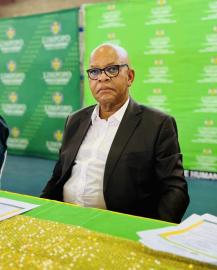
Limpopo Premier condemns gender-based violence
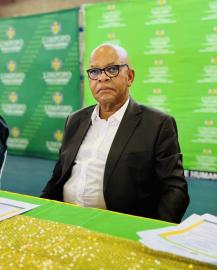
Limpopo Premier Chupu Stanley Mathabatha has strongly condemned all forms of violence against humanity, especially women and children.
This is after the province reported an increase in incidents of violence in the past few days.
“These inhumane acts seem to have continued to rise in the province, especially during the 2023 festive season. The province is mourning the deaths of women, children, and men whose precious lives were mercilessly cut short,” said the Premier in a statement.
The recent spine-chilling incidents involve the gruesome discovery of the body of an 18-year-old girl on Monday, who was murdered in an abandoned house at Mokomene, Ga-Thoka village, under the Botlokwa policing precinct.
The Provincial Commissioner of Police in Limpopo, Lieutenant General Thembi Hadebe, has since appealed to the community to provide valuable information to assist the police with its investigation.
According to the South African Police Service (SAPS), their members received a complaint about the lifeless body of a woman at an abandoned house and rushed to the scene.
“Upon arrival, they found the body of the woman in an advanced state of decomposition. The deceased’s identity will be released in due course as the investigation is still in its preliminary stages,” the SAPS statement read, adding that the motive behind the gruesome act has not yet been established.
The Premier’s Office also raised concerns about the heartless murder of Dr Johannes Mehlape, who was the Department of Education Circuit Manager of the Lebopo Office in the Capricorn District.
According to reports, Mehlape was gunned down at his home during an alleged robbery on 28 December 2023 at night after two unknown suspects accosted the victim and his two children.
“Enough is enough; we cannot let our lives continue to be cut short in this manner. I implore all to work with the police and other law enforcement agencies to ensure that perpetrators of these atrocities are arrested.
“Let us join hands in combating these barbaric acts and uproot them in our communities,” Mathabatha stressed.
He has since urged residents not to look away, but to report crime.

Borrow money wisely this January, National Credit Regulator advises

January can be a difficult month, especially for those who did not budget and/or spend wisely over the festive season.
According to the National Credit Regulator (NCR), many people are paid earlier in December and they wait long until the next payday in January.
“This long wait leads to very empty pockets and many unpaid bills, as these consumers start the year on a tough note. Consequently, many are being forced into taking excessive credit as the only option to pay for necessities like rent or mortgage, food, school fees, stationery and so on,” the regulator said.
The NCR’s Education and Communications Manager, Poppy Kweyama, said in addition to the high cost of living, consumers might need to borrow excessively at this time of the year because of poor budgeting and last year’s reckless spending.
Citing the NCR’s statistics for the quarter ended September 2023, Kweyama said there has been an increase quarter-on-quarter of impaired accounts.
To avoid an impaired credit record, consumers are advised to borrow wisely and responsibly and restrict credit to only what is necessary.
She added that during this time of the year, some consumers are desperate for financial assistance and may take out loans recklessly, even from unscrupulous credit providers.
The NCR has implored consumers who find themselves in this situation to be credit-smart and avoid resorting to unregistered credit providers.
She advised consumers to borrow only from registered credit providers and only as much as they need and only when they need to.
According to the expert, it is also crucial to plan how to repay the loans, and most importantly determine whether they can afford the repayments.
The NCR also encourages consumers to understand their credit agreements and the terms and conditions (Ts and Cs) before signing.
“Don’t sign if you don’t understand the Ts and Cs. Always ask for clarity and never pay an upfront fee.
“Never leave your ID or bank card with a credit provider in exchange for a loan. Not only is this practice illegal, but remember, to register and exercise your vote in the 2024 elections, you need to have your ID,” Kweyama cautioned.
Credit is expensive, said the NCR, and it advised people to familiarise themselves with the fees associated with the credit.
According to the National Credit Act (NCA), consumers can only be charged the following fees when taking up credit:
• Initiation fees – This is a fee that a credit provider charges a consumer for entering into a credit agreement. The credit provider must give the consumer an option of paying this fee separately and once off. In doing so, no interest may be charged on the fee. Initiation fees are regulated by the NCA. Standard initiation fees for credit facilities, short term credit transactions and unsecured credit transactions, per the NCA, is R165 per credit agreement plus 10% of the amount over R1 000 but the maximum initiation fee should not exceed R1 050.
• Interest rate – Interest is the amount that a credit provider charges a consumer on the outstanding balance of a credit agreement and is regulated by the NCA.
• Service fees – The fee that a credit provider charges for servicing and administering or maintaining the credit agreement. The credit provider can charge this fee monthly. Service fees can also be charged per transaction. The maximum monthly service fee under Section 105 of the NCA is R60.
• Credit Life Insurance – This is insurance which can be required by the credit provider when a consumer applies for credit. The insurance covers the debt due to the credit provider in certain cases such as retrenchment, disability or even death of the consumer. The insurance cover taken may not exceed the outstanding obligation to the credit provider.
• Other costs will depend on what you are purchasing as the consumer such as delivery costs.

Public comments on White Paper on Citizenship, Migration and Refugee Protection extended

Home Affairs Minister, Dr Aaron Motsoaledi, on Tuesday announced the extension of the closing date for the submission of public comments on the White Paper on Citizenship, Immigration and Refugee Protection.
Comments on the White Paper have now been extended to 31 January 2024 from 19 January 2024.
The announcement is contained in Gazette No 49976, published on 8 January 2024.
“The department has received substantial public comments. The extension of the closing date follows requests received from various organisations and individuals for additional time due to the December holidays,” the department said.
In November last year, Cabinet announced that it had approved the publication of the White Paper on Citizenship, Immigration and Refugee Protection for public comment.
“The draft policy aims to provide a framework to guide the granting of residency and citizenship to foreign nationals, as well as the protection of refugees and asylum seekers in South Africa, cognisant of the Republic’s national security interests and in compliance with international agreements and protocols on migration that South Africa is a party to,” Minister in the Presidency, Khumbudzo Ntshavheni said at that time.
According to the department, the White Paper and the explanatory memorandum can be downloaded at www.dha.gov.za.
Written submissions should be addressed to the Chief Director of Strategy and Institutional Performance and may be forwarded to the department.
The submissions can be delivered by hand to the Department of Home Affairs, 230 Johannes Ramokhoase Street, Hallmark Building, Pretoria, for the attention of Mr Sihle Mthiyane.
They can also be mailed to the department at Private Bag X114, Pretoria, 0001 or emailed to whitepaper@dha.gov.za.
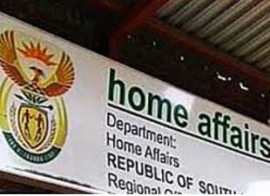
Home Affairs services temporarily unavailable
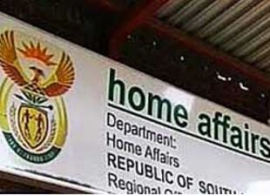
The Department of Home Affairs has issued an alert to citizens that its services are not available at the moment due to a technical problem on the State Information Technology Agency (SITA) mainframe which affects access to the National Population Register (NPR).
“We have contacted SITA [State Information Technology Agency[ and have been assured that its technicians and engineers are attending to the matter. We hope that this will not take long to be resolved,” said the department in a statement.
The department said it will provide further updates.
“The department apologises to citizens and clients for the inconvenience caused,” it said.
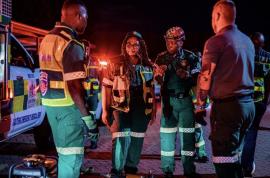
MEC commends Gauteng EMS festive season response
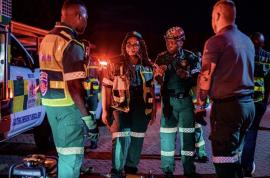
Gauteng MEC for Health and Wellness, Nomantu Nkomo-Ralehoko, has expressed satisfaction with how the Gauteng Emergency Medical Service (EMS) responded to emergencies during the festive period.
The MEC joined EMS personnel on the ground on New Year’s Eve, as they responded to emergency calls as part of the Safer Festive Season campaign.
Nkomo-Ralehoko said the work done by the Gauteng EMS, who are also known as the Green Angels, during the festive period demonstrated that the resources the Gauteng Department of Health has invested both in personnel and equipment are being put to good use.
The operation kicked off at the EMS Communication Centre in Midrand, where MEC Nkomo-Ralehoko joined the dedicated team of call centre operators to respond to incoming emergency calls to ensure prompt and efficient responses to save the lives of those in distress.
During the critical period between 6:00 AM on Sunday, 31 December 2023, and 6:00 AM on 1 January 2024, the Gauteng Emergency Communication Centre recorded a total of 1 914 calls. These calls included various incidents such as accidents, medical emergencies, suicide, trauma cases, and others,” said the Gauteng Department of Health in a statement on Tuesday.
The breakdown of calls is as follows:
– Accidents (motor vehicle, motor bike, pedestrians, etc.): 102 calls.
– Medical emergencies (maternity, asthma attack, epilepsy, heart attack, collapse, etc.): 898 calls.
– Suicide-related (poisoning, hanging, overdose, etc.): 42 calls.
– Trauma cases (assault, gunshot, burns, etc.): 468 calls.
“Comparing this data to the previous year, we have observed a minimal decline in call volumes. Around the same period in 2022/23, the Emergency Communication Centre recorded 1 929 calls (105 accidents, 862 medical, 53 suicide/attempts and 482 trauma cases).
“The statistics of emergency cases attended to between 15 December to 1 January in 2022/23 and 2023/24 cycles show that most of the calls were medical related, followed by trauma cases, accidents and suicide related calls.”
There has been a decline in medical related cases from 18 121 to 16 876, while trauma related cases have increased from 5 795 to 6 000.
There is also a slightly positive decline in suicide-related cases from 771 to 702. There was a slight increase in accident-related cases from 1 676 to 1 682.
The Gauteng Emergency Medical Services remains committed to its mission of saving lives and providing quality emergency medical care to the people of Gauteng.
“I want to commend our dedicated healthcare workers across the Gauteng health system, who have been working tirelessly during this busy period. Their dedication and professionalism is commendable,” said the MEC.
Nkomo-Ralehoko further expressed appreciation to the residents of Gauteng and those visiting the province for their continued cooperation and patience. She pleaded with them to make use of primary health facilities and only call the Emergency Communication Centre for actual medical and trauma emergencies, as this will greatly improve responses to those in distress.
“The statistics could be improved upon drastically if people were to act more responsibly and with consideration of others,” she said.

SANRAL to inject billions into construction industry in 2024

The South African National Roads Agency (SANRAL) has started adjudicating tenders worth R6.43 billion that will be awarded early in 2024 to boost the construction industry.
SANRAL’s Chief Executive Officer (CEO), Reginald Demana, said the 77 tenders for various road construction projects were advertised at the end of November 2023 under the road agency’s Interim Preferential Procurement Policy (PPP) and submission closed on 14 December.
“SANRAL is currently adjudicating 77 tenders which will give the construction industry a good start in the New Year, helping to create thousands of jobs and inject billions of rands into the economy.
“While the rest of South Africa is winding down for the festive season, SANRAL is working hard to get South Africa’s construction industry off to a flying start in the New Year. The fact that our officials are working through the holidays to adjudicate these tenders is an indication of our commitment to fulfilling the promises we made to the South African public and it shows that we are getting back to business as soon as possible.
“We understand the role that construction and infrastructure development plays in the construction industry and we are determined to overcome the disruptions which resulted from court challenges to our PPP adopted in May 2023.
“We are squarely focussed on developing, maintaining and improving the national road network in line with our mandate from government,” Demana said on Wednesday.
After several court challenges launched by construction companies, SANRAL announced on 24 October that it was withdrawing the PPP adopted in May 2023 and embarked on a countrywide consultation process with interested and affected parties to adopt an interim PPP.
The 77 tenders, which are currently being adjudicated, were advertised in line with the interim policy.
Demana stressed that SANRAL was making every effort to catch up on time that the industry had lost by putting out 86 of the less complex consulting and construction tenders that were cancelled and subsequently re-advertised at the end of November.
The CEO said 1 040 bids were received for the 77 tenders and this illustrated the significance of SANRAL projects in the construction industry.
The breakdown of the 1 040 bids is as follows:
- 124 bids for national contracts with an estimated value of R350 million;
- 279 received for the Northern Region (Gauteng, Limpopo, Mpumalanga and North-West) with an estimated value of R548 million;
- 247 received for the Eastern Region (Free State and KwaZulu-Natal) with an estimated value of R2.1 billion;
- 240 received for the Southern Region (Eastern Cape) with an estimated value of R2.83 billion, and;
- 150 for the Western Region (Northern Cape and Western Cape) with an estimated value of R600 million.
“We are encouraged and at the same time humbled by this overwhelming response. It also tells us that the numerous engagements we had with interested and affected parties across the country has paved the way for more effective collaboration with all our stakeholders in the industry,” Demana said.
The official shutdown period for the construction sector commenced on 14 December 2023 and will end on 9 January 2024.
While all conventional road construction will be suspended during this time, SANRAL’s Routine Road Maintenance teams remain on standby to respond to any incident on the national road network.
“We wish to thank all our consultants and contractors for working around the clock to keep our projects on track and within budget. May you all have a well-deserved break with your loved ones and stay safe wherever you may travel,” he said.
Young men urged to consider nursing as a career
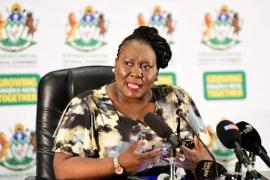
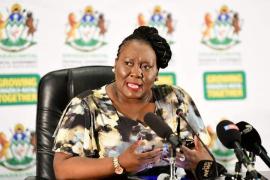
KwaZulu-Natal Health MEC, Nomagugu Simelane, has urged young men to consider pursuing a career in the nursing profession.
Simelane made the call during the graduation ceremony of 197 nurses, including 56 male nurses, from the KwaZulu-Natal College of Nursing.
“In our engagements with men during our community outreach programmes, such as Isibaya Samadoda and Ikhosomba Lamajita, we have established that some men are too ‘shy’ to speak openly to female health practitioners about certain ailments that they might have – especially those that may pertain to their sexual reproductive health – but also other diseases as well.
“As a result of this, men are simply dying from diseases that are otherwise preventable, treatable or manageable, purely because they do not come to our facilities. We are saying that the time has come for men to stop dying due to diseases such as prostate cancer, male breast cancer, HIV and AIDS, diabetes, hypertension and many others,” Simelane said.
The MEC said the department will continue to actively promote programmes that will ultimately make most its facilities “men-friendly.”
“When we delivered the Budget Speech for the 2023/24 financial year, one of the points that we re-iterated quite strongly was the elevation of Men’s Health in the province. This was actually the re-affirmation of a commitment that we made when we assumed office in 2019.
“We have made a commitment that every local municipality must have at least one facility – whether a CHC (community health centre) or a 24-hour clinic – that is dedicated to the health of men. These facilities will have a male nurse during the day, and after hours [because] we want to make it easy for men to visit healthcare facilities,” Simelane said.
The MEC also noted that the overall representation of men in the department currently stands at 12% across all nursing categories, and at 20% when it comes to nursing managers.
However, she said, when it comes to the student nurse cohort, men account for 42%, which is a “welcome improvement towards the goal that we are pursuing.”
“We also note with a great deal of encouragement that 56 men are graduating as male nurses today, which will add to the existing 4 088 cohort of male nurses. We encourage more men to consider pursuing a career in the nursing profession,” Simelane said.
The MEC also called on all nurses in KwaZulu-Natal not to neglect their own health, while caring for others.
“Finding the time to take care of our health is not a luxury, but an absolute necessity. It is not an option or an afterthought, but a fundamental priority.
“We therefore encourage regular screening and preventive care among yourselves as well, because it can help detect potential health problems early, making them easier to manage or even prevent,” the MEC said.
Turning her attention to patient care, Simelane emphasised the need for nurses to advocate and care for patients.
“Do not be that single bad element who gives everyone else a bad name. Do not let your actions tarnish the image of your facility, our department, the community that you come from, and the nursing profession at large.
“Always remember the commitments that you’ve made in the Nurses’ Pledge, and stick to them. Remember that you have the power to heal, to comfort, and to inspire,” Simelane said.
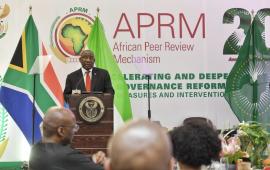
Support for democracy remains high in Africa – President Ramaphosa
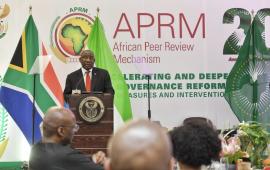
President Cyril Ramaphosa says democracy will continue to grow and thrive in Africa despite the challenges that the continent faces.
The President was speaking during the 20th anniversary celebration of the African Peer Review Mechanism (APRM) held in Johannesburg on Tuesday evening.
The APRM is an institution of the African Union and serves as a platform for self-assessment, peer-learning, and experience sharing in democracy and good governance for countries that have acceded to it.
“As we celebrate 20 years since the founding of the APRM, we should acknowledge that, despite the setbacks, democracy indices in Africa are strong and resilient. Public support for democracy remains high across the continent.
“Africa has an active citizenry. Electorates are showing time and again their rejection of authoritarianism and other threats to democracy. In no small part, the APRM has contributed to strengthening and consolidating democracy across our continent.
“This is a clear demonstration that democracy lives and thrives in Africa. It is a firm rejection of the hopeless continent narrative that has prevailed for so long. We are proud of how far we have come, and we look to the future with optimism and hope.”
President Ramaphosa laid out some of the challenges that are besetting the continent and added that these test “our collective resolve to ensure the APRM remains relevant”.
“Over the past three years there have been a number of coups d’etat, attempted coups and other non-democratic transitions of power in Africa. A number of countries in Africa are beset by terrible and protracted conflicts, wars and violence causing devastating loss of human life, livelihoods that are disrupted and economic productivity that is destroyed.
“Elsewhere also on our continent we are also witnessing democratic gains being rolled back, fundamental rights and freedoms being curtailed, and the positions of already vulnerable groups on our continent worsening.
“These developments should trouble all of us. They are setbacks in our quest to realise…the Africa we want, one that is characterised by good governance, one that is underpinned by democracy, by respect for human rights, justice, and the rule of law. Never has the need been greater for a structure like the APRM,” he said.
Second Generation Country Review Report
The event also marked the launch of the South Africa Second Generation Country Review Report which gives insights into the progress made by the country in various areas.
President Ramaphosa said the report will serve as an “important knowledge base and provides a foundation for improving governance”.
“The report reflects South Africa’s ongoing commitment to promoting good governance, especially as we will soon be observing and celebrating 30 years of our own democracy. South Africa was the first country to be offered the opportunity to undertake self-assessment and to be peer reviewed on the respective thematic areas.
“I want to express my appreciation to Bishop Dinis Sengulane who led the external mission that visited South Africa in December 2021. Thanks also go to all national and continental structures as well as stakeholders who ensured the successful conclusion of the self-assessment and peer review process,” President Ramaphosa said.

Commission recommends a CPI plus 3% adjustment in National Minimum Wage

The National Minimum Wage (NMW) Commission has issued another invitation to interested parties to submit written representations concerning possible adjustments to South Africa’s national minimum wage in 2024.
The Department of Employment and Labour said the commission had three proposals on its table after it issued an invitation to interested parties to submit written representations concerning next year’s wage increase.
“The NMW Commission has published a report in the government gazette with the intention to present the commission’s report and recommendations on the annual review of the national minimum wage and also invite written representations from the public,” the department said.
A minimum wage is the lowest remuneration employers can legally pay their employees for each ordinary hour worked. It is illegal for an employer to pay employees less than this minimum floor.
The three proposals tabled in the report are as follows:
• The recommendation by the majority is Consumer Price Index (CPI) plus 3%. Eight of the 12 commissioners propose that the national minimum wage increases by CPI plus 3%.
• The recommendation by the Business Constituency is CPI.
• The recommendation by an independent expert is CPI plus 0.75%.
“The CPI is a measure of the change in prices as paid by consumers for goods and services over time. In South Africa, the latest consumer price inflation as published by Statistics South Africa was 5.9% in October 2023, up from 5.4% in September 2023,” the department said.
The commission’s latest invitation for inputs follows similar calls in August and September in accordance with section 6(2) of the National Minimum Wage Act, No. 9 of 2018.
The commission comprises representatives from organised labour, business, community and experts in the field of labour market and conditions of employment.
In 2021, the commission recommended increasing the national minimum wage from R20.76 to R21.69 per hour. The 2022 national minimum wage was revised from R21.69 to R23.19 per hour. In 2023 the minimum wage was revised to R25.42 per hour.
Factors considered by the commission in the annual adjustment include inflation, the cost of living, and the need to retain the value of the minimum wage; wage levels and collective bargaining outcomes; gross domestic product; the ability of employers to carry on their businesses successfully; the operation of small, medium or micro-enterprises and new enterprises; and impact on employment or the creation of employment.
Employment and Labour Minister Thulas Nxesi will announce in February 2024 the new rate of adjustment, which will come into operation from 1 March 2024.
The public has until 8 January 2024 to make their written representations.
Requests for inputs should be sent to the directorate: Employment Standards, Department of Employment and Labour, Private Bag X117, Pretoria, 0001 or be sent to nmwreview@labour.gov.za.