Minister Meth hands over R514m contract to 15 LAP partners

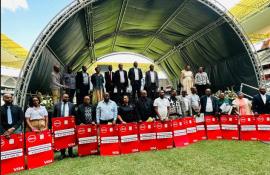
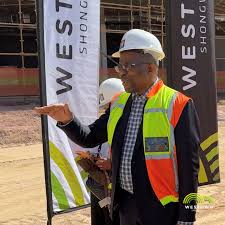
Employment and Labour Minister Nomakhosazana Meth, has officially handed over R514 million in contracts to 15 Labour Activation Programme (LAP) partner companies in Mpumalanga, aimed at stimulating job creation in the province.
The 15 LAP partner companies are expected to provide training to over 9 600 job seekers after signing a pledge committing to the absorption of these jobseekers in key sectors of the economy.
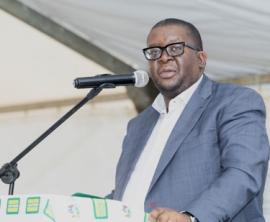
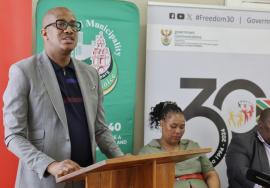
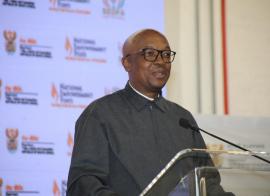
Speaking at the handover event held at Mbombela Stadium on Monday, Meth said the handover is not just about launching projects but also igniting opportunities that will reach thousands of individuals, uplift families, and strengthen communities.
“We are investing not just in businesses, but in people, skills, and making dreams that deserve to be realised a possibility. This is what real economic transformation looks like – not just numbers on a page, but real impact on the lives of those who call Mpumalanga home,” the Minister said.
The Minister said that the partners whom the contracts have been handed over to have been given a condition to guarantee jobs for beneficiaries.
“I have made it a requirement that all the LAP partners recruit at least 70% of the beneficiaries from the Employment Services of South Africa (ESA) platform, which is a government system placed to connect job seekers with available opportunities,” she said.
She moved to highlight that Mpumalanga is a province of movement, boasting infrastructure that connects the nation to greater possibilities. It is home to one of the most important economic corridors, the Maputo Corridor, a vital route that links us to the Port of Maputo and connects South Africa to the rest of the world.
“Through this corridor, we export our agricultural produce, our minerals, and our manufactured goods, which fuel the country’s economy. It is this very corridor that has the power to transform small businesses into major players, to take local industries and give them a global footprint,” she said.
The Minister also noted that approximately 1 million young South Africans become available to the labour market. However, only 400 000 find steady work, 300 000 find some work, while about 300 000 never find work.
She stressed that without decisive and intentional interventions from the government, in collaboration with relevant societal partners, the situation is unlikely to improve.
Young people continue to face challenges in entering the labour market due to a lack of work experience, and in some cases, possessing skills that do not align with market demands.
“It is for this reason I emphasise that our response must be decisive, and I dare say – aggressive.
“I am pleased and equally excited that today, at this municipality of Mbombela we gather to handover the Labour Activation Program contracts to 15 partners, who will create job opportunities for 9 616 beneficiaries to the value of over R514 million across 4 districts and spanning to over 11 local municipalities,” the Minister said.
The Minister said the Labour Activation Program is the department’s direct policy response to unemployment, affording job seekers opportunities to improve their employability and connect them to the world of work.
“Our focus should combine skills training, work experience, and job placement services to help participants transition into the labour market.
“With these projects, we are saying to the people of Mpumalanga: we see you, we believe in you, and we are committed to your success. We are saying to the youth that there is space for you in this economy, that your talents and skills are needed, as the future belongs to you. We are saying to businesses that you are not alone, the government is here to support you and to open doors to break down barriers that have held back growth for too long,” the Minister said.
The Minister added that government is strengthening private sector partnerships to collaborate in creating more job opportunities and ensure training programs are relevant to industry needs.
“We need every South African to believe in the power of collective action. This drive grew stronger after President Ramaphosa established an Inter-Ministerial Committee of government and business partnership on unemployment, skills development and SMME support, which is chaired by me as the Minister of the Department of Employment and Labour.
“Throughout this partnership, our targeted interventions for groups disproportionately affected by unemployment, such as youth, women and people with disabilities remain our priority.
“Let us continue working together to build a better country- collectively working together, we can change the trajectory of unemployment,” the Minister said.
North West traditional horse racing gives the economy a leg up

The inaugural Lobelo la Dipitsi Traditional Horse Racing event, held at Bloomtech Lodge in Vryburg at the weekend, celebrated the rich cultural heritage of the North West province while also stimulating local economic growth.
According to the North West Provincial Government (NWPG), Lobelo la Dipitsi represents a significant milestone in the province’s initiative to use traditional sports for economic development.
The race attracted an influx of visitors from across the province and neighbouring countries such as Botswana and Namibia, boosting tourism and fostering cross-border collaboration.
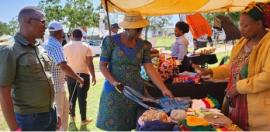
A key feature of the event was the small, medium, and micro enterprises (SMME) exhibition, which showcased 69 stalls supported by the Department of Economic Development, Conservation, Environment, and Tourism (DEDECT)and Dr Ruth Segomotsi Mompati District Municipality.
These enterprises, ranging from flea market vendors to informal traders, displayed a variety of artisanal products, including handcrafted African-themed clothing, footwear, organic herbs, spices, perfumes, and wooden vases.
The gathering was attended by Premier Lazarus Mokgosi and the DEDECT MEC, Bitsa Lenkopane with the MEC emphasising the race’s role in economic transformation, saying it is not just a celebration of cultural heritage but also a strategic initiative to drive local business growth.
This platform empowers Black entrepreneurs, facilitates job creation, and strengthens the local economy.
“Through the North West Gambling Board, we envisage empowering emerging race associations with compliance in terms of acquiring relevant licenses with gambling legislations.”
During a walkabout of the flea market, the MEC engaged directly with small business owners to assess their experiences and the impact of the event on their enterprises.
She alluded to the fact that the department will continue to offer support to small businesses and cooperatives to ensure that their products are well packaged, properly labelled, and adhere to the South African Bureau of Standards (SABS) requirements.
“The economic activity generated by the event reaffirmed the potential of public-private partnerships in promoting sustainable economic development.”
The event reached its highlight with an exciting prize-giving ceremony, officiated by the province’s leadership.
Lenkopane commended the participation of young riders and the involvement of regional partners from Botswana, Namibia, and Lesotho, highlighting the significance of this initiative in fostering strong economic and cultural ties.
“I am confident that Lobelo la Dipitsi has the potential to grow into a flagship event on North West’s tourism calendar,” she added.
She further extended her gratitude to the event sponsors, including GBets, Goldrush, Sunbets, CGM and other contributors, for their commitment to making the event a reality.
She also expressed gratitude to community members and horse riders for their enthusiastic participation and support.
Lobelo la Dipitsi will be rotated annually across the districts of the province, ensuring continued economic impact, cultural preservation, and regional integration.
This groundbreaking initiative has reinforced the NWPG’s commitment to empowering local communities through strategic events and sustainable economic initiatives.
SASSA welcomes decision for continued use of gold card

The South African Social Security Agency (SASSA) has welcomed the South African Reserve Bank (SARB) decision to allow for the continued use of the SASSA gold card until all the cards have been successfully replaced.
The decision by SARB comes after several engagements between SASSA and Postbank on several issues, including alternative payment methods for beneficiaries who have not migrated to the Postbank black card.
SASSA Acting Chief Executive Officer, Themba Matlou, said the decision has been made in the best interest of all the beneficiaries to safeguard their dignity, lessen panic, while ensuring their safety and easy access to their grants.
Matlou said he respects and abides by the decisions taken by the relevant banking authorities, including SARB. He also appealed to all gold card holders to still go out to change their card to Postbank black card sooner rather than later.
“We humbly plea to our beneficiaries to use this opportunity and not wait for the last hour, as this will further inconvenience them. From the onset, we listened to the cries of our beneficiaries and understood their frustration.
“This should not make you to relax, this should make you to wake up tomorrow, with less pressure, and change your card,” Matlou said in a statement on Friday.
Briefing the media on Thursday, following Cabinet’s meeting on Wednesday, Minister in the Presidency Khumbudzo Ntshavheni said the deadline for South African Social Security Agency (SASSA) grant beneficiaries to swop their SASSA gold cards for the new Postbank cards had been extended to 30 April 2025.
This is to allow SASSA and the Department of Social Development to complete the migration of the outstanding beneficiaries
Today is D-day for SASSA gold cards

Social grant beneficiaries who have not replaced their South African Social Security Agency (SASSA) gold cards with the new Postbank black cards, have been urged to do so.
On 20 March 2025, SASSA gold cards will be deactivated and beneficiaries who have not yet transitioned to the new Postbank black cards, may face disruptions in making transactions from the card.
The beneficiaries will also not be able to use the SASSA gold cards to make any transaction, even if they have funds in their account.
However, Postbank will continue to replace SASSA gold cards with new Postbank black cards in all its card replacement sites, even after this date.
Postbank and SASSA have assured that all social grant beneficiaries will continue to be paid, including all the social grant beneficiaries who have not been able to get their black cards.
Beneficiaries are urged to note that the Post Office branch payments will be restricted to social grant beneficiaries that are yet to replace their SASSA gold cards, asylum seekers and Postbank green Mzansi/blue cards’ grant beneficiaries.
Beneficiaries who already have Postbank black cards are urged to use their card through ATMs and retailers to access their funds.
The initial deadline for this transition was set for 28 February 2025 but was extended to 20 March 2025 to provide beneficiaries with additional time to make the switch.
The new Postbank Black Cards can be obtained at various retailers, including Checkers, Shoprite, Pick n Pay, Usave, and Boxer. To receive a new card, beneficiaries need to present a valid South African ID or a temporary ID.
Postbank has also made it easy for beneficiaries to locate the nearest place in every province where they can collect their Postbank Black Cards. Beneficiaries can use their cellphones to:
Dial: *120*355#
To continue, reply by pressing number: 1
Reply with the number representing the province you live in.
The new Postbank Black Cards offer several benefits, including improved security features, one free card replacement per year, three free withdrawals in stores per month, and one free monthly statement over the counter.
EThekwini Municipality commits to building houses for flood victims

EThekwini Municipality Mayor Cyril Xaba says the city remains committed to ensuring that permanent houses are built for the families affected by the recent floods.
Speaking at during an Executive Council (Exco) meeting held this week, Xaba reported that between 19 February and 15 March 2025, the recurring floods have claimed the lives of 15 people and caused extensive damage to infrastructure.
Xaba said the report received from the Joint Operations Centre indicated that 1 452 houses and 5 939 people were affected. The worst affected areas include Inanda, Ntuzuma, KwaMashu, Pinetown, KwaDabeka and Lamontville.
Xaba conveyed the council’s heartfelt condolences to the families of the deceased, saying that the city is working with the bereaved families to ensure that their loved ones receive a dignified burial.
“Together with the Premier [Thamsanqa Ntuli] and the Chairperson of Trading Services, Mduduzi Nkosi, we visited the affected families in Inanda and Lamontville, including those who have been relocated to family-friendly accommodation in the inner-city. As… [the three spheres of] government, we are committed to ensuring that permanent houses are built for these families,” Xaba said.
However, Xaba noted the challenges encountered in building permanent houses in identified sites.
He said the existing community members are not cooperating, either because they themselves are flood victims who have not been allocated houses, or they do not want low-cost houses in their neighbourhood.
“As the rains persist, we will continue to face the shortage of land to resettle flood victims, considering that the city has 603 informal settlements and some of them are located in flood-prone areas. Working together, we must intensify public awareness campaigns urging people not to settle in flood plains because the frequency and intensity of floods, due to climate change, poses a huge risk to human lives and infrastructure,” Xaba said.
Since 2017, the city has been experiencing recurring floods, and this has put a huge strain on the city’s water drainage system.
In eThekwini, stormwater systems are designed to handle a “1-in-10-year” storm event, Xaba said.
“Our large canals and river protection works are built to withstand 1-in-50 or 1-in-100-year storm events. In the last two months, we have been experiencing heavy downpours that we would ordinarily receive in every 20 – 40 years.
“It is in this context that we must continue to urge members of the community to dispose of waste in designated places so that during heavy rains, the same waste does not clog our drainage system and flood our homes,” Xaba said.
R10 billion to eThekwini Municipality infrastructure

The eThekwini Municipality has allocated about R10 billion to rebuild its water, electricity, and solid waste management infrastructure.
This comes as Minister of Finance Enoch Godongwana announced a R3.33 billion grant allocation to eThekwini for trading services reforms over the next three years.
The municipality said the performance grant will be used to upgrade water and sanitation, electricity, and solid waste management so as to ensure that trading services are self-sufficient.
The city said the reforms for trading services will initially affect water and electricity for the first year, starting in the 2025/26 financial year.
“With respect to eThekwini Water and Sanitation (EWS) Unit, the city has adopted a Water and Sanitation Turnaround Strategy (TAS) and further developed the Business and Investment plan, and an Institutional and Governance Reform Road map.
“The latter has the six strategic pillars that underpin the reform of EWS into a ring-fenced commercial business unit, as echoed by Minister Godongwana in the recent budget speech,” the city located in KwaZulu-Natal said.
The strategic pillars included institutionalisation of single point of accountability; acquisition of management, technical and change leadership capabilities; improvement of the governance model and the financial ring-fencing of the Water and Sanitation Business Unit, among others.
Pursuant to the implementation of this strategy, the city said it intends to increase investment into priority capital and operational programmes that will help realise the envisaged financial turnaround, as well as stabilise the water and sanitation services to meet customer needs.
“The turnaround strategy, as adopted by Council, is in progress with 22% of the goals achieved to date. As the city aligns its budget priorities, the additional funds will be directed to the EWS TAS programmes that seek to reduce water losses, improve customer call centre systems, water metering, as well as intermittent water supply while reducing inefficiencies in all operations,” the municipality said.
The city through the Mayor’s Office will continue to engage all stakeholders on the EWS TAS, to ensure that the performance and outcome required are achieved.
“The R3.33bn incentive grant will therefore help the city gear up its existing resources to accelerate the reforms required and reposition the trading services to attract the required investments to improve the business, as per the business and investment plans that have been developed for the next five years,” the municipality said.
Additionally, the municipality has commended the indicative allocations, as provided in the budget, and commited to align them to its budget for approval in May 2025.
CPI remains unchanged in February

Consumer price inflation has remained at 3.2% in February – unchanged from January.
According to Statistics South Africa, the main contributors to the annual inflation rate were:
- Housing and utilities (4.4% and contributing 1.0 percentage point);
- Food and non-alcoholic beverages (2.8% and contributing 0.5 of a percentage point), and
- Restaurants and accommodation service.
“Recreation, sport and culture, food and non-alcoholic beverages, alcoholic beverages and tobacco and communication recorded higher annual inflation rates in February.
“Inflation cooled for several product categories, most notably, personal care and miscellaneous services, health, restaurants and accommodation, furnishings, household equipment and routine maintenance and transport,” Stats SA Director: CPI Operations, Lekau Ranoto, said.
The annual rate for food and non-alcoholic beverages accelerated to some 2.8% in February from 2.3% in January.
“Fruit and nuts, vegetables, hot beverages, seafood, meat and cereals recorded higher rates. On the down side, cold beverages milk, dairy and eggs, oils and fats and sugar confectionary and desserts witnessed slower price increases,” she said.
Ranoto said inflation in maize meal – a staple in South African households – reached a 17-month high, with samp inflation also reaching a 19-month high in February.
“The rise in prices is driven by inflationary pressure from the farming and manufacturing of maize according to the latest producer price index data. On average, consumer prices for meat stayed the same in February, compared with January, resulting in a monthly change of 0%. The annual rate was also 0%.
“While meat remained subdued, inflation for hot beverages continues to accelerate. The annual change in the price index for hot beverages was 14.6% in February, up from 13.7% in January,” Ranoto said.
Meanwhile, Stats SA has also recorded a 10.5% increase in medical aid premiums this year and health services rose by 6.1%, compared with a 5% rise last year.
Zero-tolerance for misconduct on SA Antarctica base

The Department of Forestry, Fisheries and the Environment (DFFE) has reiterated that it maintains a zero-tolerance approach to any misconduct that would “affect the working and relationship conditions” at South Africa’s current research base at Antarctica, the SANAE IV.
This after allegations of assault and threats at the base emerged in the media over the weekend.
The reports alleged that one of the nine team members assaulted another and threatened to kill them.
The department, in a statement on Monday, said there were no incidents that required the team’s return from the base.
“The department confirms that there were no incidents that required any of the nine overwintering team members to be brought back to Cape Town.
“If such incidents occurred, the management team of the department would have replaced such an overwintering team member with immediate effect, as the DFFE’s position on the matter is clear: zero tolerance for any misconduct that would affect the working and relationship conditions at the SANAE IV. At the time the vessel departed for Antarctica on 1 February 2025, all was in order,” the DFFE said in a statement.
The alleged assault was reported to the department last month and a response plan to deal with the matter was activated to “engage the individuals involved through trained professionals in order to mediate and restore relationships at the base”.
“This process has been ongoing on an almost daily basis in order to ensure that those on the base know that the department is supportive and willing to do whatever is needed to restore the interpersonal relationships, but also firm in dealing with issues of discipline.
“The Minister of Forestry, Fisheries and the Environment, Dr Dion George, together with the Director-General of the Department, Nomfundo Tshabalala, have personally taken charge of the management processes.
“This is particularly important given the fact that a majority of usual operations at all other scientific bases in Antarctica have stopped due to the onset of winter and unpredictable weather conditions,” the statement read.
The alleged perpetrator has “willingly participated in further psychological evaluation”.
“[He] shown remorse and is willingly cooperative to follow any interventions that are recommended. He has written a formal apology to the victim and is willing to verbally apologise to all members at the base.
“The department has also implemented a longer term sustained intervention process through trained professional counselling services in order to restore the relationships and build a healthy working environment.
“The DFFE have also, in parallel, activated a Labour Relations process to deal with the matter as it relates to the alleged physical assault. An alleged sexual harassment is also being investigated. Reports of sexual assault are not correct,” the statement said.
Furthermore, Minister George will be “engaging the team to reassure them of his support and commitment to their wellbeing”.
“He emphasises that careful management is required to give comfort to those at the base, and also to their families. The willingness of the team to engage in Wellness Programme interventions, as well as the professional and independent counselling will assist in crafting a solution.
“The ultimate goal would be that all at the SANAE IV are safe and healthy, working together as a team to advance the very important work they are performing in Antarctica,” the statement said.
Proudly SA’S Buy Local Summit kicks off

Proudly South African’s annual Buy Local Summit and Expo is underway at the Sandton Convention Centre in Gauteng.
Monday and Tuesday’ summit will see over 200 exhibitors show off their wares while panel discussions will also be held.
The summit will promote locally made products and services with 2025 marking the 13th edition of the summit.
The summit will also see Proudly South African engaging various private sector organisations to adopt localisation commitments.
“Through these Localisation Commitments, Proudly SA aims to foster an industry culture that prioritises locally manufactured goods and services, thereby uplifting communities and creating essential jobs,” Proudly South Africa said ahead of the start of the summit.
Speakers at the summit include Gauteng Economic Development MEC Lebogang Maile while the Minister of Trade, Industry and Competition is also expected to address the gathering.
In recent years, there has been a notable increase in private sector businesses leading the charge to enhance their local procurement initiatives.
The efforts of companies committed to supporting local production not only enhance their own financial performance but also transforms lives through job creation.
Proudly South African is a membership-based organisation, and only companies that have been audited and approved are entitled to carry the logo, which is a sign that a product or service meets local content thresholds and above all, quality standards.
Proudly South African works with the public and private sectors to promote increased levels of local procurement through supply chain structures and with consumers to change habits of every day store and online purchases.
North West takes steps to tackle unemployment

Over 24 000 job opportunities are expected to help tackle the unemployment challenge in the North West province.
This was revealed during a roundtable discussion involving North West Premier Lazarus Kagiso Mokgosi, Deputy Minister of Employment and Labour Judith Nemadzinga-Tshabalala, as well as representatives from organised labour, business, and civil society.
The initiative, which involves collaborative work between the North West Provincial Government and the Department of Employment and Labour, will be implemented through a Labour Activation Plan (LAP).
The LAP initiative, funded by the Unemployment Insurance Fund (UIF), aims to enhance employability, enable entrepreneurship, and preserve jobs through skills training, enterprise development, and other intervention measures.
“This initiative has been in the pipeline for some time, and I am happy that it is coming to fruition. This is one of the policy announcements I made during the State of the Province Address [SOPA] to help find solutions to high levels of unemployment in the province,” Mokgosi said on Thursday.
In the SOPA delivered last month, the Premier reaffirmed the government’s commitment to creating job opportunities through public employment programs, such as expanded public works, community health workers, community works, and labour activation programmes.
These initiatives aim to create over 150 000 job opportunities in the next five years, targeting women, youth, and persons with disabilities.
READ | Over R20 million allocated to boost North West economy
At the roundtable, Deputy Minister Nemadzinga-Tshabalala said the roll-out of the programme is in full swing in various provinces and that the North West is the latest beneficiary.
“Young people will be trained in various fields such as engineering, agriculture and artisanal work in preparation for the job market and consequently placed in various industries,” Nemadzinga-Tshabalala added.