Nzimande forms part of ministerial delegation to World Economic Forum

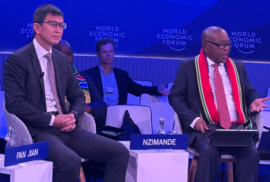
The Minister of Science, Technology and Innovation, Professor Blade Nzimande, is part of the South African delegation, led by President Cyril Ramaphosa, attending the 55th World Economic Forum (WEF) in Davos, Switzerland.
The annual meeting is taking place from 20 – 24 January 2025, under the theme: ‘Collaboration for the Intelligent Age’.
“The meeting will convene global leaders to address key global and regional challenges, which include responding to geopolitical shocks, stimulating growth to improve living standards, and stewarding a just and inclusive energy transition,” the Department of Science, Technology and Innovation (DSTI) said.
During its Group of 20 (G20) Presidency in 2025, South Africa will endeavour to create equitable opportunities for all by addressing systemic disparities and promoting unity and mutual support to address shared global challenges collaboratively.
As part of the contribution of the DSTI, Nzimande participated in WEF panel discussions on Tuesday.
The discussions focused on scaling solutions for Africa’s economic future and getting the electric vehicles supply chain right.
Today, the Minister will take part in another session focused on the theme: ‘Space: Leaving No Country Behind’.
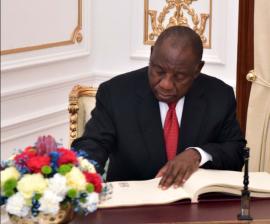
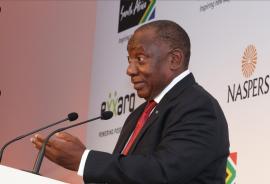
President Cyril Ramaphosa touched down in Davos on Tuesday and has already delivered a special address to the WEF, where he presented the economic priorities of South Africa’s Government of National Unity and the country’s G20 Presidency.
During the week, the President will undertake numerous bilateral meetings with Heads of State and Government and leaders of international organisations.
He will also participate in diverse activities in different sectors of the WEF annual meeting.
The President is accompanied by Minister of International Relations and Cooperation, Ronald Lamola; Minister of Finance, Enoch Godongwana; Minister of Trade, Industry and Competition, Parks Tau; Minister of Electricity and Energy, Dr Kgosientsho Ramokgopa; Minister of Communications and Digital Technologies, Solly Malatsi; Minister of Fisheries, Forestry and Environment, Dr Dion George; Minister of Health, Dr Aaron Motsoaledi and Minister of Agriculture, John Steenhuisen.
Government, private sector partner to empower learners in rural KZN

Learners in uMkhanyakude, in the uMtubatuba region of northern KwaZulu-Natal, received a boost at the start of the school year when the Deputy Minister of Science, Technology and Innovation, Nomalungelo Gina, led a back-to-school campaign.
In partnership with Coca-Cola Beverages South Africa and the Izimpande Foundation, the Deputy Minister on Tuesday delivered 132 new school shoes to Bathathe and Mfekayi primary schools.
Both schools are no-fee institutions that provide accessible, quality education to their communities.
These schools are pivotal in uplifting the Mtubatuba region by fostering educational growth and opportunities for young learners.
Gina reaffirmed her belief that every learner deserves the necessary resources to thrive academically.
The Deputy Minister also extended her efforts to KwaNxusa High School in the uMthonjaneni Municipality and Qantayi High School in the uMhlathuze Municipality, where she donated essential stationery earlier this month.
Inspired by her initiative, Coca-Cola Beverages South Africa and the Izimpande Foundation partnered with the Deputy Minister to expand the campaign and provide much-needed school shoes.
The KwaZulu-Natal Department of Education District Director, Thanduyise Motha, emphasised that providing children with adequate resources from the foundation phase sets a strong base for their academic success.
He said uMkhanyakude has risen to become KwaZulu-Natal’s top-performing district for the National Senior Certificate (NSC) Class of 2024, securing the third spot nationally.
Motha said when he was first appointed to the position, the district was ranked 75th countrywide, highlighting the incredible progress made in improving educational outcomes in the region.
Referring to the donation of school shoes, Motha said the gesture helps to contribute to the excellent pass rate in the district, which motivates learners to study further and harder.
He believes that this also motivates teachers to commit more to the success of the learners.
“This shows that government delivers on its promises at the basic education level, and I thank the Department of Science, Technology and Innovation for gracing us with this much-needed support,” Motha said.
Meanwhile, the Deputy Minister expressed her gratitude to the private sector for its role in the initiative.
“I thank the private sector for partnering with government in this initiative to positively impact our children, planting a seed from which the learners will reap benefits for their future,” she said.
During her interaction with the learners, Gina was inspired by their ambitions, as some learners expressed aspirations of becoming doctors, while another learner shared his dream of pursuing a career as a social worker.
The Deputy Minister encouraged all learners to stay committed to their studies and thanked parents for their essential role in supporting their children’s education.
Izimpande Foundation’s Sihle Ngobese highlighted the importance of supporting male learners in society, an initiative that led to the formation of the non-profit organisation in 2019, and the donation of school resources to various schools around the country.
“The idea of donating school resources is more than anything personal, where I was even assisted by someone I did not even know (sic). This planted a seed in me that I will also help others, just as I was helped.”
The principals of both schools expressed their heartfelt gratitude for the generous donation.
They both expressed hopes for continued support to further improve their school infrastructure and educational resources for the betterment of their learners.
The back-to-school campaign underscored the transformative power of partnerships in addressing challenges faced by underprivileged learners and ensuring they have the tools and support needed to excel in their education.
Eskom edges closer to meeting load shedding target

Eskom Group Executive for Generation, Bheki Nxumalo, says eyes at the power utility are now firmly fixed on reaching a year without implementing load shedding – a target that is just slightly more than two months away.
This as Eskom reached 300 days without implementing the scheduled rolling black outs today.
“Credit goes to all our 40 000 dedicated and skilled Eskom employees, who are committed to serving South Africa. Our sights are now firmly focused on delivering one year without load shedding at midnight on 26 March 2025.
“These 300 days without load shedding have been characterised by a significant reduction in unplanned outages, which have long been one of the biggest challenges, a notable improvement in the energy availability factor of approximately 7%, and savings in diesel expenditure of R16.42 billion,” Nxumalo said.
The State-owned entity’s Group Chief Executive, Dan Marokane, said the performance is putting the power utility on a “path to profitability”.
Eskom’s performance has been on a steady upward trajectory since the implementation of the Energy Action Plan introduced by President Cyril Ramaphosa in July 2022, as well as the implementation of the power utility’s own Generation Recovery Plan.
“Public sentiment is shifting. Business leaders, who once had to invest precious capex in self-generation, have enquired whether they should revert to investing in Eskom for their power needs.
“The savings we are making in diesel spend are invested in the business to drive efficiencies further and place Eskom on a path to profitability and long-term operational and financial sustainability,” Marokane said.
Eskom said it will continue to focus on implementing plans to further improve performance.
“Eskom expresses gratitude to all stakeholders, including the Minister of Electricity and Energy, the Eskom Board, government and the National Energy Crisis Committee, for the collaborative effort in addressing the country’s electricity challenges.
“Eskom will continue to focus on implementing generation recovery, strengthening governance, and tackling crime and corruption, while future-proofing the organisation to enable energy security, growth and long-term sustainability to the benefit of South Africa and sub-Saharan Africa,” the power utility said.
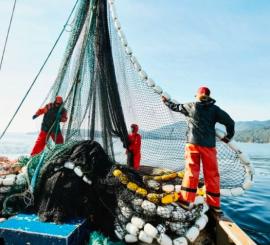
Government increases fish allocation by 36%

The Minister of Forestry, Fisheries and the Environment, Dr Dion George, has announced a 36% increase in the allocation of certain key fish species.
This allocation marks a significant step towards empowering small-scale fishers, strengthening local economies and driving sustainable growth in South Africa’s fishing communities.
“This 36% increase in fish allocations for own use is about improving livelihoods, empowering fishing communities, and stimulating economic activity in our coastal regions.
“By supporting small-scale fishers, we’re ensuring that they become central players in driving local development and sustainability,” the Minister said on Tuesday.
He said the increased allocations form part of a broader strategy to promote inclusive economic growth and job creation while preserving South Africa’s rich marine biodiversity.
The Department of Forestry, Fisheries and the Environment is working to reinvigorate coastal harbours as hubs of economic activity and it wants to help uplift small-scale fishers so that they can fully capitalise on these expanded opportunities.
“This initiative reaffirms the government’s dedication to addressing socio-economic obstacles in coastal areas while ensuring the sustainable use of marine resources for future generations,” the department said.
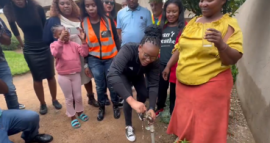
City of Tshwane declares Hammanskraal water safe for consumption

The City of Tshwane Metro Municipality has announced that water supplied from the Magalies Klipdrift Water Treatment Plant to Hammanskraal is safe for consumption.
This comes after the completion of Phase 1 of the water treatment project.
The areas which fall under the first phase and have access to the clean water include Wards 49, 73, 74 and 75, which encompass Mandela Village, Marokolong, Ramotse, Kekana Gardens (also referred to as Steve Bikoville), and Babelegi Industrial.
The completion of Phase 1 of the project follows extensive testing conducted by the Department of Water and Sanitation, City of Tshwane, and Magalies Water, which confirmed that the water is now meeting all the required health standards for consumption.
In a statement posted on social media, X, on Wednesday, Tshwane Municipality Mayor, Dr Nasiphi Moya, explained that “extensive testing” was done before laboratory tests confirmed that “the water now meets all the required health standards for consumption”.
This comes after a process of purging the reticulation system, which was previously supplied by Temba Water Works, using clean water sourced from the new Klipdrift Package Plant.
Moya noted that the purpose of the prolonged purging process and accompanying inspections was to ensure that the system is fully rehabilitated, disinfected and safe.
“The successful delivery of services to Hammanskraal forms part of long-term projects by the city and the national government to ensure that the quality of water provided to this community meets the constitutional obligations enjoyed by many citizens in the country,” Moya said.
Moya said the Magalies Water Klipdrift package project consists of “four phases estimated to be completed in mid-2025”.
“With the completion of each stage, more areas in Hammanskraal will benefit. This will be complemented by upgrades to Rooiwal Waste Water Treatment Plant (WWTP) being conducted by the city. The combination of these two projects will allow communities to benefit from a reliable and clean water supply,” the Mayor said.
Rooiwal WWTP tender first stage of investigation completed
Meanwhile, Moya reported that the Special Investigating Unit (SIU) has this week confirmed that the first stage of its investigation into the Rooiwal WWTP tender has been completed.
She said this has resulted in criminal referrals to the National Prosecuting Authority and disciplinary referrals to the City of Tshwane.
“The mayoral executive welcomes the news of the completion of the first part of the investigation and is awaiting formal communication from the Special Investigating Unit to the city. We look forward to receiving the report and acting on its recommendations.
“Addressing the injustice of the failure to provide potable water to the residents of Hammanskraal must include consequence management for the failures and corruption of the initial project. The completion of the first part of the investigation by the Special Investigating Unit brings us one step closer to ensuring accountability,” Moya said.
The Mayor also acknowledged the residents of Hammanskraal for their patience and committed to addressing other challenges plaguing the area.
“We thank residents for their patience during the process of ensuring the safety of the water and will continue to work with Magalies Water and the Department of Water and Sanitation, to successfully deliver the future phases of the project,” Moya said.
For more than a decade, the community of Hammanskraal has suffered from a lack of clean, and constant water supply.
This led to the death of 32 people due to an outbreak of cholera in the area in 2023.
This prompted a visit to the area by President Cyril Ramaphosa, where he apologised to the residents.
Contractor appointed to repair equipment and provide clean linen at Bara

The Gauteng Department of Health has appointed a service provider to repair the laundry equipment at the Chris Hani Baragwanath Academic Hospital in Soweto, Johannesburg.
This is after nurses raised their concern about infection control and cleanliness, as pictures of dirty linen surfaced on social media recently.
“The Gauteng Department of Health would like to reassure the public that several measures continue to be implemented to ensure the provision of clean linen to patients at Chris Hani Baragwanath Academic Hospital,” a statement issued by the department said.
The department said the facility’s laundry has ageing infrastructure, which requires an overhaul. Three tunnel washers are currently out of service, with only five driers operational in tunnel washer number two.
One out of the four ironers have been successfully repaired, while the original equipment manufacturer is in the process of repairing two other ironers.
“In the interim, hospital linens are being laundered at Dunswart Provincial Laundry on a daily basis to ensure a consistent supply of clean linen to patients,” the department said.
Meanwhile, 106 staff members have been deployed in the laundry section to boost capacity during the day and night shifts.
“Additionally, external two laundry service providers have also been appointed to further support these efforts. Already, two five-ton trucks have delivered clean linen over the weekend,” the department said.
The in-house laundry at the hospital is not only responsible for providing the linen for its 2 888 beds, but also services facilities including Carletonville and Bheki Mlangeni Hospitals, 33 community health centres in Soweto, emergency medical services, and the forensic pathology service.
“However, the department has put a solid plan in place to ensure that soiled linen can be replaced quickly at a much faster turnaround time by the 13th of December 2024.
“The department assures the public all is being done to restore laundry to better functionality as speedily as possible, and the health and comfort of our patients remain our key priority,” the department said.
N2 Garden Route to open to traffic this festive season

The South African National Roads Agency (SANRAL) has announced that work on several periodic maintenance and construction projects, which are currently underway on the N2 Garden Route, will cease at the end of the week to ensure that roads are open and traffic is free flowing during the festive season.
“Every effort will be made to ensure increased road safety and improved mobility during the holidays. The N2 Garden Route is a particularly busy route for holiday travellers and freight operators, and SANRAL will be working with all road traffic authorities to support and assist road users on their travels this holiday,” SANRAL’s Western Region Manager, Randall Cable, said.
Maintenance and construction projects will be put on hold on Friday, 13 December 2024.
In Plettenberg Bay, the traffic circle at the Beacon Way Intersection on the N2 is fully open to traffic in both directions. The remaining ancillary works, not impeding traffic flow, will be completed in the new year.
The work on the N2 between Kraaibosch and Touw River is well on track, and traffic will be free flowing both in Kaaimans Pass and on the N2. Road users travelling from George to Victoria Bay must take note of the change in lane configuration. The posted speed between Kraaibosch and Touw River will be 60 kilometres per hour (km/h).
“Periodic maintenance on the N2 between Mossel Bay and Dekriet is at an advanced stage and is earmarked for completion early in 2025. No stop/go closures will be in place during the holidays.
“Between Swellendam and Riversdale, traffic will be accommodated via stop/go operations. Waiting time will be kept to a minimum, taking into account the increased traffic volumes,” SANRAL said.
Three stop/go traffic accommodation points are currently in place on the N2 between Botrivier and Caledon, where periodic maintenance is being done. These will be removed on Friday, 13 December.
In Houwhoek Pass, the full road width will be open to two-way traffic during the year-end construction shutdown period. A 3km section of the R43 from the Kleinmond interchange on the N2 (Exit 90 to Kleinmond & Hermanus), will, however, remain closed during the festive break. Traffic will be accommodated via the Botrivier interchange on the N2 (Exit 92), which is a mere 2km away from the closure.
“The road is a shared space, and road safety is a shared responsibility. Working together, we can make the road safer for everyone, including pedestrians,” Cable said.
Deadline looms for spaza shop registration

Spaza shop owners and food-handling facilities have until the end of the week to register their businesses for a traders’ permit, in a bid to address the recurring foodborne illnesses that have claimed the lives of people, including children, across the country.
Spaza shop owners and vendors have been given until Friday, 13 December 2024, to register with their respective municipalities. The registration period opened on 15 November 2024.
READ | Guide to register spaza shops
Last month, President Cyril Ramaphosa directed all spaza shops and food-handling facilities to register with their respective municipalities as part of decisive measures by government to address the recurring foodborne illnesses that have claimed the lives of people, including children, across the country.
The interventions, the President explained, are aimed at getting hazardous pesticides off the street, protecting children from exposure to these substances, and preventing future outbreaks.
More than 1 000 spaza shops, supermarkets and warehouses have been closed since the President announced a range of measures to prevent further incidents of foodborne illnesses.
“Since we announced a range of measures two weeks ago, multi-disciplinary teams have been conducting inspections of spaza shops across the country.
“Nearly 200 000 spaza shops have been visited. More than 1 000 spaza shops, supermarkets and warehouses have been closed down. Large quantities of goods have been confiscated and numerous fines have been issued for violations of by-laws,” the President said during his annual address to the National Council of Provinces (NCOP) in Parliament, on 28 November 2024.
Small business owners can follow these guidelines to ensure that they are compliant with government regulations:
- Registration for trading permits for spaza shop owners and vendors is done in municipality offices or designated sites, as per communication by respective municipalities to residents.
- All spaza shop owners and vendors must register with their respective municipalities from 15 November to 13 December 2024.
- Application forms for registration or permits to conduct business can be accessed physically at the municipal offices or on the municipality website.
- The completed application form is to be received only by the municipal manager or a delegated official within a municipality.
- The completed permit application should contain the business owner’s full name, surname, gender, and disability status.
- Other details that must be included in the application for a trading permit are:
- the identity number of the business owner;
- the physical and postal address of the business concerned;
- location where the business will be operated;
- the description of the goods or services that the business will be selling or providing to the community;
- the citizenship status of the applicants, and
- the passport number, section 22 asylum seeker permit, section 24 refugee permit, and a valid visa allowing foreign nationals to be in the Republic to work or conduct business.
- The applicant must provide an affidavit stating that he/she is not engaged in the trade of illegal goods, as defined in this by-law and that his/her business will operate according to the applicable norms and standards.
- The municipality may conduct background checks on applicants, in collaboration with law enforcement agencies, to verify the legality of their business activities.
- After the application has satisfied all the conditions stated by the municipality, the business owner will be issued a registration card or permit that must be always displayed and be available for inspection.
Cabinet welcomes release of 2nd quarter crime stats

Cabinet has welcomed the release of the 2nd quarter crime statistics, which show that law enforcement agencies’ efforts to turn the tide in the fight against crime are starting to yield results, with a decrease in both murder and violent crimes.
Addressing the post-Cabinet media briefing held in Cape Town on Thursday, Minister in the Presidency Khumbudzo Ntshavheni said the murder rate in South Africa has decreased by 5.8%, while sexual offences decreased by 2.5%, and robbery with aggravating circumstances decreased by 8.8%.
“Additionally, rape decreased by 3.1%, while robbery at residential premises and non-residential premises decreased by 1.3% and 21.1% respectively,” Ntshavheni said.
Cabinet also welcomed the arrest of a 39-year-old Mexican national for dealing in and manufacturing drugs, as well as contravening the Immigration Act after a multi-disciplinary operation guided by police led to the discovery of a drug laboratory in Rietfontein, Johannesburg, valued at approximately R100 million.
“In addition, the South African Police Service (SAPS), through an intelligence-driven operation, confiscated a container carrying cocaine with an estimated street value of around R86.5 million, which came in from Brazil through the Durban Harbour.
“[Additionally], five suspected ATM bombers were killed in a shootout with police in eMalahleni, Mpumalanga. The suspects opened fire on the police after they were cornered at a safe house in Schoongezicht in Emalahleni,” Ntshavheni said.
Cabinet has called on all sectors of society to partner with the police to strengthen the fight against crime.
“By working together, we can create safer communities and public spaces, while ensuring criminals have no place to hide,” she said.
Policewoman makes a difference in her community

As the country continues to observe the 16 Days of Activism for No Violence Against Women and Children campaign, the South African Police Service (SAPS) has praised Captain Gail Cottee for her sterling work in putting perpetrators behind bars.
Captain Cottee, a forensic social worker, is attached to the Bishop Lavis Family Violence, Child Protection and Sexual Offences Investigations Unit in the Western Cape.
She joined the police service 17 years ago and holds a bachelor’s degree in social work.
She later went on to obtain a master’s degree in child and family studies.
Forensic social work is a specialised field of social work practice within the Family Violence, Child Protection and Sexual Offences (FCS) environment, which is characterised by the social worker’s primary function of providing expert testimony in courts of law.
As a forensic social worker, Cottee’s core function is to conduct forensic interviews in the investigation of child abuse cases using age-appropriate techniques to obtain accurate information from child victims to assist a court to make just and fair decisions.
Often travelling vast distances, Cottee traces and assesses child victims within six policing areas that include Bishop Lavis, Bonteheuwel, Elsies Rivier, Langa, Ruyterwacht and Valhalla Park.
Among her many career highlights include the sentencing of a sexual predator to 30 years’ imprisonment by the Parow Regional Court in 2021.
The perpetrator (63) was a respected member of the Bishop Lavis community who befriended the victim’s grandmother while he also gained trust from the rest of the family. He sexually groomed and impregnated the 16-year-old victim twice over a period of four years.
Cottee was also assigned to compile a forensic assessment report and testified in court as an expert witness whereby two girl victims under the age of ten were repeatedly raped over a period by their stepfather.
In December 2023 the Parow Regional Court sentenced the 48-year-old stepfather to 25 years in prison.
“These sentences are the result of good teamwork and cooperation, each team member executing his or her duties to the best of their abilities,” said Cottee.
The community of Bishop Lavis is known for gangsterism and high volumes of serious and violent crimes.
Cottee understands the dynamics of the communities she serves which enables her to relate to child victims and compile quality assessment reports.
Cottee said parents, caregivers, teachers or any other adult should never doubt or dismiss a child when they are disclosing the possibility of sexual abuse.
She also urged adults to contact their nearest police station, open a case and act in the best interest of the child.
“In my profession I learnt that every small action counts. It gives me great joy knowing that my services as a forensic social worker give voiceless child victims a voice in court,” said Cottee.
Captain Cottee is one of countless members who remain relentless in their pursuit to fulfil the mandate of the SAPS in protecting women, children and vulnerable persons with pride.
The 16 Days campaign forms part of government’s comprehensive 365 Days of Activism for No Violence against Women and Children.
This year’s campaign is being held under the theme: “30 Years of Advancing Collective Action to End Violence against Women and Children”.
The campaign is held from 25 November to 10 December every year.