

New Catchment Management Agencies to ensure good water governance

In an effort to ensure the involvement of stakeholders in the management of water resources, the Department of Water and Sanitation is expected to launch four Catchment Management Agencies (CMAs).
They will be launched during the Water Institute of Southern Africa (WISA) conference set to take place in Durban this week.
The establishment of the Catchment Management Agencies is in line with the provisions of the National Water Act (NWA) and the National Water Policy for South Africa.
The purpose of Catchment Management Agencies is to enhance decentralised decision-making in managing water resources, in an integrated manner, at a local level.
The department said the CMAs will ensure participative management, good water governance and integrated planning and improving co-operative governance of the country’s water resources, in order to achieve the objectives of the National Water Act, equity, accessibility and government’s commitments to improving service delivery.
“A CMA manages all the water resources in a water management area at the catchment level. This means that a CMA is responsible for the protection, use, development, conservation, management and control of all the water resources in that particular water management area (WMA).
“This responsibility requires that all spheres of government, water users and communities in the water management area participate with CMAs as partners,” the department said in a statement.
Water and Sanitation Minister, Senzo Mchunu, finalised the appointment of Board Members of the Pongolo–Umzimkhulu and the Vaal-Orange Catchment Management Agencies, a decision concurred by Cabinet.
The Boards of Pongola-Umzimkhulu and Vaal-Orange CMAs appointments became effective from 1 December 2023.
The department has reconfigured the number of CMAs to six, including Limpopo-Olifants, Vaal-Orange, Pongola-Umzimkulu, Mzimvubu-Tsitsikamma, Breede-Olifants and Inkomati-Usuthu.
The boards, as the accounting authority, will operationalise the CMAs including developing the catchment management strategy, effective participation of stakeholders and management of water resources in the water management area.
“In addition, the CMA will be more responsive to water user needs and speedy decision-making around water resources management and create a customer-focused culture for water resources management,” the department explained.
The appointed board members for Pongolo–uMzimkhulu include Dr Thava Kelly (Chairperson), Sibusiso Makhanya (Deputy Chairperson), Hlengiwe Ndlovu, Bhekumuzi Gumbi, Dr Lembi William Mngoma, Snenhlanhla Mngadi, Professor Purshottama Reddy, Mdandla Myeni, and Nokuthula Khanyile.
This CMA is an amalgamation of the previous WMA areas within the KwaZulu-Natal province, such as half of the Pongola-Usuthu WMA, the Thukela WMA, and the Mvoti-Mzimkulu WMA. Interim Chief Executive, Swaswa Ntlhoro, was appointed for the transitional phase.
The appointed board members for the Vaal-Orange CMA, which operates in the Central North-eastern part of South Africa and extends from Ermelo in Mpumalanga to Kuruman in the Northern Cape, include Desmond Solomon Fransman (Chairperson), Tsakane Zwane (Deputy Chairperson), Hubert Thompson, Nontuthuzelo Njeza, Nakana Masoka, Ponatshego Mothibi, Doris Dondur, Dichikane Mashego, and Louis Van Oudtshoom. Interim Chief Executive, Solomon Mathebula, was appointed for the transitional phase.
“The Minister has finalised the appointment of Board members of Mzimvubu-Tsitsikamma and awaiting concurrence by Cabinet. Interim Chief Executive, Sibusiso Mjwara, was appointed for the transitional phase. This agency’s footprint covers the majority of the Eastern Cape, and includes portions of KwaZulu-Natal, Western Cape, and the Northern Cape.
“For the Limpopo-Olifants CMA, the Advisory Committee has concluded their recommendation for the appointment of the Board and is awaiting the vetting of candidates and concurrence by Cabinet,” the department said.
Water Institute of Southern Africa conference
Meanwhile, the three-day Water Institute of Southern Africa conference will take place at Inkosi Albert Luthuli International Convention Centre in Durban, KwaZulu Natal, from 12-14 June 2024.
WISA conferences provide a platform to discuss problems and solutions facing the water and related sectors. The conference is used to create mechanisms and collaborations, to ensure an enabling environment to set us on a path of implementation and impact.

City Power implements load reduction

Johannesburg’s power utility, City Power, is expected to begin implementing load reduction in areas it says have “exceedingly high” electricity usage levels.
The load reduction is expected to be implemented from this morning.
More than 80 areas will be affected and grouped into six blocks for load reduction, which will not exceed 2.5 hours per block.
“The decision to initiate load reduction follows extensive efforts to encourage customers to use electricity wisely and efficiently in recent weeks.
“Despite warnings about the constrained electricity network in the city, residents have not reduced their electricity consumption, and energy demand has continued to rise,” the utility’s spokesperson, Isaac Mangena, said.
Mangena explained that consumption in the metro has reached “critical levels, forcing… City Power to embark on stringent measures to protect the grid from total collapse”.
“City Power has recorded an enormous increase in the average evening peak load in some areas, which went up by 65%, from 25MW during the summer months to 33MW between April and May 2024. In some instances, the load reaches 42MW, constituting a 110% increase in consumption levels in comparison with the warmer season.
“During January and March this year, the average off-peak consumption at some of our substations has been sitting at 20MW. Between April and May, consumption shot up by 50%, increasing the off-peak load to 30MW. With temperatures expected to drop even more between June and July, the consumption levels could have dire consequences on our network infrastructure if load reduction is not urgently implemented,” he said.
The power utility is also embarking on other measures to work in tandem with load reduction.
“Part of our measures to lighten the load on the grid through load reduction includes the installation of ripple relays. A ripple receiver is part of a load management system used to control the electricity supply to the geyser during peak hours.
“Geysers are among the biggest electricity guzzlers, accounting for up to 50% of monthly household energy costs. These ripple relay receivers at different households are connected to at least 69 of our substations, and we can monitor customers’ consumption load remotely. City Power will remotely switch off the customer geyser once they reach high consumption levels,” Mangena said.
Illegal connections
The spokesperson said illegal connections are also contributing to an already “severely strained” electricity network.
“City Power continues to intensify the removal of illegal connections and revenue collection operations across the City of Johannesburg this winter season. This seeks not only to alleviate pressure on the system but to recover the billions owed to it and send a strong message to non-paying customers to pay for the services they use daily or have their power supply cut off.
“From our observations, those who are illegally connected or tampered with meters, are amongst the highest consumers of electricity, because they do not experience the financial consequences of keeping high and irresponsible usage,” he said.
The schedule for load reduction is available on the City Power website.
Progress in payment of private student accommodation
The National Student Financial Aid Scheme (NSFAS) Administrator, Freeman Nomvalo, says a bulk payment of accommodation allowances was processed by the end of May 2024 and beginning of June 2024, with the next scheduled payment expected by mid-June 2024.
Nomvalo said NSFAS has been consulting with various stakeholders since his appointment as the Administrator, and one of the critical stakeholders consulted are the landlords for private student accommodation who raised concerns regarding the outstanding payment of student accommodation allowances.
Nomvalo has assured the stakeholders that a bulk payment of accommodation allowances has been processed by the end of May 2024.
“The next scheduled payment will be not later than 18 June 2024 to clear all legitimate claims. These interventions are intended to provide the much-needed relief to private student accommodation landlords,” Nomvalo said.
The Administrator has urged the landlords, who still have outstanding payments, not to evict students, as NSFAS is committed to ensuring that all legitimate claims are resolved not later than 18 June 2024.
He encouraged landlords who did not submit their claims for outstanding payments to refer their queries to NSFASAccomProv@nsfas.org.za.
Nomvalo reiterated his call to all Technical Vocational Education and Training (TVET) college students, who still do not have bank accounts, to open them with banks of their own choice and submit their bank accounts on the NSFAS established portal in order to avoid delays in their payment allowances.
“The banking details provided must belong to the student to enable NSFAS to verify these against the student’s details on our record and minimise potential risks,” Nomvalo said.
The Administrator also encouraged members of the public to only rely on official communication from NSFAS, as opposed to deliberate misinformation about the work of the scheme, which often appears in various social media platforms.
The Administrator further reiterated his commitment to constructively engage with all stakeholders to find workable solutions for the stability of the Post-School Education and Training in South Africa system and success of the students.

SA records two more monkeypox disease cases
The Department of Health is appealing to citizens who have been in close contact with known or suspected patients of monkeypox disease, also known as Mpox, to go to their nearest health facility.
This is after the National Institute for Communicable Diseases (NICD) detected two more cases of Mpox this week at Addington and St Augustine Hospitals in Durban, KwaZulu-Natal.
“The preliminary case finding report has revealed that the two recent cases had contact with the other previously confirmed case in the province, and this suggests that there is a local transmission of the disease, which could potentially lead to a larger outbreak in the province,” the department said in a statement.
This brings the total number of laboratory-confirmed infections in the country to four, with three in KwaZulu-Natal and one in Gauteng.
READ | SA records second case of Mpox
According to the data, all the patients are South African males in their mid to late 30s.
The department said close contact with lesions, sexual contact, body fluids, respiratory droplets and contaminated materials such as bedding transmit the Mpox virus from one person to another.
The incubation period of Mpox is usually from six to 13 days but can range from five to 21 days.
“The health officials rely on transparency and cooperation from cases or patients for contact tracing and case finding to determine the rate of transmission of this infectious virus at community level.”
The department said they were pleased by the patients’ honesty and courage during the investigation process and thanked them for assisting officials in tracing suspected cases who also tested positive.
“It is through transparency of both confirmed and suspected cases that government can prevent further transmission and avoidable deaths.”
Meanwhile, the department in collaboration with various stakeholders in the sector is intensifying epidemiology and surveillance, and risk communication and community engagement (RCCE) activities.
“These will also help to address social stigma, which contributes to people’s decision not to openly speak out because they suspect communities will not accept them due to their health conditions.”
In most cases, the department said stigma contributes to the spread of the virus thereby making the outbreak and transmission worse.
Symptoms
Some of the common symptoms of Mpox include a rash, which may last for two to four weeks, fever, headache, muscle aches, back pain, low energy and swollen glands.
“The painful rash looks like blisters or sores, and can affect the face, palms of the hands, soles of the feet, groin, genital and/or anal regions,” the department explained.
However, the department has urged the public not to panic because the situation remains under control and that they will keep the public informed of the situation.
Humanitarian aid, service restoration underway in KZN
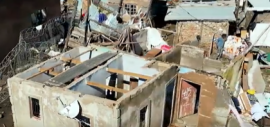
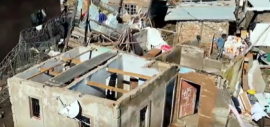
The KwaZulu-Natal government remains on the ground to provide humanitarian assistance to the families that have been displaced by devastating floods following heavy rains that have battered parts of the province on Monday night.
The heavy rains, accompanied by strong winds, wreaked havoc in various parts of the province, affecting five districts, including eThekwini Metro, Ilembe, King Cetshwayo, Umzinyathi, Amajuba and Umkhanyakude District Municipalities.
The preliminary reports indicate that at least 11 people have died, and these include seven people from uThongathi in the north of Durban, and four in Nquthu, Eshowe and KwaHlabisa, respectively.
Over 55 people were reported to have suffered minor to moderate injuries and are receiving medical treatment in hospital.
Dozens of people have also been left homeless after their homes were ripped apart by heavy winds. Three temporary shelters have been established, where the affected families are receiving humanitarian aid.
KwaZulu-Natal Premier Nomusa Dube-Ncube has expressed heartfelt condolences to the families of people that have tragically lost their lives, and wished a speedy recovery to the people who were admitted and are recovering in hospital.
Dube-Ncube led a government delegation to various areas in eThekwini Metro on Tuesday to receive a first-hand report on the extent of the damage and ensure a coordinated rapid response from government.
The Premier said the provincial government’s priority is to ensure that the displaced families receive immediate humanitarian relief and to fast-track the restoration of services.
“We have rallied all government departments to ensure an all-hands on deck approach as we consolidate our rebuilding and recovery plan of action. Our aim is to support affected families to rebuild their lives.
“Assessments are continuing so that work to repair damaged infrastructure can begin. The assessment reports will give us a clear indication of the extent of the damage and funding that will be required,” Dube-Ncube said.
She has also urged the municipalities to ensure that all affected people are profiled and receive the necessary support from government.
Immediate humanitarian aid
Disaster management teams are conducting assessments and coordinating humanitarian efforts for the affected families.
Non-governmental organisations, including the Red Cross, Al-Imdaad Foundation, Gift of the Givers and IPSS Medical Rescue, are working closely with government to ensure the provision of hot meals, mattresses, blankets, food parcels and humanitarian assistance.
uThongathi is currently being classified as the most affected area, with hundreds of houses severely destroyed. Other areas, including Umgababa, south of the eThekwini Metro, Eshowe, Utrecht, Osizweni and KwaHlabisa have also been severely affected.
Public infrastructure, including schools, roads, community halls and health care facilities, were also affected.
Repairing of infrastructure
The Premier said repairs to damaged transformers and powerlines, which left many areas in the eThekwini Metro without power, have started, and power has been restored in some areas, while work continues to ensure that all areas are fully restored by the end of the week.
Overhead electricity infrastructure has been severely impacted. This includes infrastructure above-ground, such as electricity poles, transformers and overhead lines.
The heavy rain also resulted in higher levels of turbidity in raw water abstracted from the uThongathi water works and the water works was shut down for few hours.
The uThongathi water works is presently operating optimally and water supply is being gradually restored.
“Residents are urged to continue to heed weather warnings whenever they are issued to minimise the impact and loss of lives,” Dube-Ncube said.

All grades of fuel decrease for June

Consumers are expected to feel some relief this month as the price of all grades of fuel are expected to fall.
This was announced by the Department of Mineral Resources and Energy (DMRE) in a statement on Tuesday.
The decreases are as follows:
- Petrol 93 and 95 (ULP and LRP): R1,24 decrease.
- Diesel (0.05% sulphur): R1,18 cents decrease.
- Diesel (0.005% sulphur): R1,08 cents decrease.
- Illuminating Paraffin (wholesale): 80 cents decrease.
- Single Maximum National Retail Price for illuminating paraffin: R1,07 decrease.
- Maximum LP Gas Retail Price: R1,35 decrease.
The department explained the factors influencing the adjustments in prices.
“The average Brent Crude oil price decreased from 88.10 US Dollars (USD) to 82.98 USD per barrel, during the period under review.
“The average international product prices decreased following the lower Brent Crude oil prices during the period under review. Furthermore, petrol prices were also affected by the release of inventories by the US ahead of the Memorial holiday. The movement in product prices has led to a lower contribution to the Basic Fuel Price (BFP) of petrol by 76.16 c/l, diesel by 60.00 – 71.00 c/l and illuminating paraffin by 50.20 cents per litre.
“The Rand appreciated, on average, against the US Dollar (from 18.90 to 18.45 Rand per USD) during the period under review when compared to the previous one. This led to lower contributions to the Basic Fuel Prices of all products by about 30.00 cents per litre on all products,” the department said.
The price adjustments are expected to take effect on Wednesday (tomorrow).

SACCI welcomes outcome of the 2024 elections

The South African Chamber of Commerce and Industry (SACCI) has welcomed the outcome of the 2024 National and Provincial Elections held last week.
SACCI said the outcome of the vote reflects the will of the people.
“We congratulate South Africans who filed in the long queues to make their voices heard and did so in an orderly and peaceful manner. Our democracy is indeed a vibrant one with free political contestation and multi-party contestation,” SACCI said in a statement.
It also commended the Electoral Commission of South Africa (IEC), which, despite challenges, continues to execute its mandate with credibility.
SACCI said it is looking forward to working with the new administration.
“Given the lack of an outright majority party to lead South Africa, we call on all the political parties to prioritise the interests of the people of South Africa first in putting together a coalition that will take the country forward. Foremost should be the alleviation of high levels of unemployment, building a meritocracy and sustainable and inclusive economic growth, and ridding the state and the private sector of corruption.
“Political stability and policy certainty are the fundamental hallmarks that will drive business and investor sentiment. Political parties have an opportunity to unite South Africa for the better development of the republic and the continent,” SACCI said.
It added that there are a number of successful developed countries that are run by coalition governments from whom “we can learn in managing the instability problems, inherent in coalitions”
Over 55% of election results captured
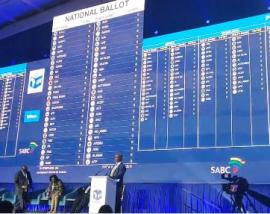
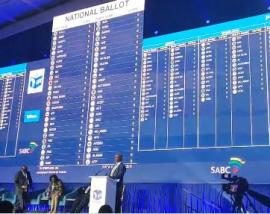
The Electoral Commission of South Africa (IEC) had captured close to 55% of the ballots as of 9am on Friday.
According to the IEC results dashboard, the African National Congress (ANC) is taking the lead nationally, with 3 236 550 votes representing 42.07%.
The ANC is followed by the Democratic Alliance with 1 821 912 at 23.68%, while the new kids on the block the uMkhonto weSizwe (MK) Party has already secured 832 178 at 10.82%.
The Economic Freedom Fighters (EFF), which is currently the third biggest party in Parliament, is sitting at 9.58% with 737 238 votes.
Newcomer, the Patriotic Alliance (PA) is also making headway at position five with 211 738 at 2.75%.
These are currently the leading parties by voting station, as the IEC officials continue to capture the results in the 2024 National and Provincial Elections.
The counting procedures have been concluded with only a few voting stations reported to still be counting at 3pm on Thursday.
“The process of results compilation entails ensuring accuracy and validation of the results. This process involves scanning each result slip to create an image of the result, double-blind capture of each result slip, auditing of each result slip by independent auditors,” the IEC said.
According to the commission, the resulting system was audited externally and the parties also had to verify them.
The results have been trickling in throughout the night, as capturing continues.
The IEC said last night they were sitting on a 58.69% voter turnout, hovering just below 60% of voters, with bigger stations’ results still to come in.
As per the IEC data, 27 782 777 people registered to vote, with 7 943 840 total votes cast.
Of these, 7 840 658 were valid, with 103 182 spoilt votes.
The results continue to be captured and displayed on the leaderboards at the Results Operations Centre in Midrand.
Appeal for ballot box to be returned

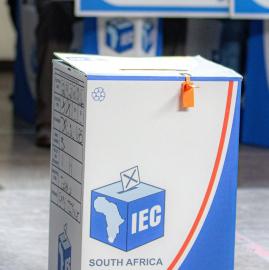
The Electoral Commission (IEC) has appealed to the citizens in and around uMhlathuze Ward 14, in KwaZulu-Natal, to be on the lookout for an IEC branded ballot box, which went missing in transit from the voting station at Matamzana Dube School to the municipal electoral office for storage.
“The ballots in the box have been counted, reconciled, and validated. The Electoral Commission is required, by law, to store ballots cast in general elections for a period of six months.
“Furthermore, the IEC appeals to anyone who finds the ballot box to return it to us,” said the commission said in a statement.
The IEC reminded South Africans that anyone found to be in possession of ballots was liable to criminal prosecution.
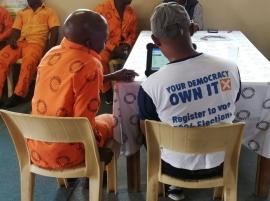
Correctional Services ready for inmates to vote on Election Day
Friday, May 24, 2024
The Department of Correctional Services (DCS) says it is ready for the 2024 National and Provincial Elections to be conducted by the Independent Electoral Commission (IEC) next Wednesday.
The Department of Correctional Services (DCS) says it is ready for the 2024 National and Provincial Elections to be conducted by the Independent Electoral Commission (IEC) next Wednesday.
According to the department, some 14 753 inmates at correctional facilities have registered to vote in the elections.
“DCS has been working with the IEC in ensuring that all logistical aspects of the voting process are meticulously planned and executed. The environment is thus conducive for the IEC to fulfil its mandate through the provision of ballot papers, secure voting booths and other necessary logistics at correctional facilities.
“Comprehensive voter education was also provided to inmates in order to ensure they are informed about their rights and the voting process,” the department said.
Justice and Correctional Services Minister Ronald Lamola said: “The measures we have put in place are designed to ensure that eligible inmates can exercise their right to vote in a secure and transparent manner. Hence, this initiative marks a significant step forward in ensuring that our democratic processes are inclusive and just.”
Section 24 B of the Electoral Act makes provision for prisoners to vote in an election for the National Assembly or a provincial legislature, a person who on Election Day is in prison and whose name appears on the voter’s roll for another district, is deemed for that Election Day to have been registered by his or her name having been entered on the voter’s roll for the voting district in which he or she is in prison.
Therefore, the department said, inmates registered before “admission to a correctional centre shall not be denied an opportunity to cast their votes”.
“The transfer and release or placement of inmates on the voting date will be managed in such a way that it does not impede their right to vote. Independent observers will be allowed to monitor the election process within correctional facilities as per the prescripts of the Independent Electoral Commission.
“Observation of the voting process by political parties will be limited to two representatives per political party. This is due to limited space, whilst taking into cognisance the security imperatives of correctional centres,” the department said.