Emergency housing unit deployed to assist KZN flood victims

Human Settlements Minister Thembi Simelane has deployed a team from the Emergency Housing Unit — in collaboration with the department’s roving team — to support families impacted by the ongoing floods in KwaZulu-Natal.
During her two-day visit to the province on Tuesday and Wednesday, the Minister held discussions with provincial and local authorities to explore urgent human settlements interventions.
As part of these efforts, she announced several initiatives aimed at alleviating the immediate housing crisis for flood victims.
The interventions announced include the temporary accommodation of 225 residents from Ward 74 in Lamontville, who have been relocated to the Impala Hotel.
Simelane also announced plans to provide permanent housing for 229 families from Lamontville, who will be resettled on land owned by the eThekwini Municipality in Georgedale, near Hammarsdale.
“We will build Temporary Residential Units (TRUs) for these families, while permanent homes are being constructed. Additionally, 93 households will be supplied with building materials to help them begin rebuilding,” Simelane announced on Tuesday.
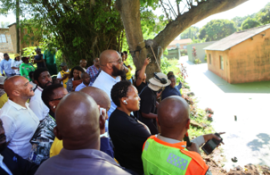
On Wednesday, Simelane, accompanied by KwaZulu-Natal Transport and Human Settlements MEC Siboniso Duma, visited the flood-affected Ncube and Nkwanyana families in KwaMakhutha, south of Durban.
The Ncube family, with six members, was forced to flee their home as three of their houses were completely submerged. The family is currently living together in a two-bedroom house.
Duma confirmed that an excavator has been deployed to clear rubble and waste from the area so as to unblock the drainage system. He said after discussions with Inkosi Makhanya, a suitable piece of land has been identified to relocate the Ncube family.
Simelane also visited the Ugu District Municipality to assess the extent of the flood damage in the region, with plans for further intervention in the coming days.
Unlocking emergency housing fund
The Portfolio Committee on Human Settlements has called on the national Department of Human Settlements, KwaZulu-Natal’s Human Settlements Department, and the eThekwini Municipality to work together to address the devastation caused by the ongoing floods in KwaZulu-Natal.
Committee chairperson Nocks Seabi emphasised the immediate need to unlock the Emergency Housing Response Fund to provide critical support to the affected communities.
Seabi said during its oversight visit in October last year, the committee highlighted various concerns with delays to ensuring access to the fund for victims of floods.
He said it is in this context that impediments must be removed, so the fund can serves its purpose by being timeous and agile in assisting victims.
“In an environment of devastation and distress, government programmes must not be tied up in bureaucracy and territorial disputes that delay interventions. We are hopeful that the concessions made by the national department on the implementation of the fund will come in handy in the response to the current disaster.
“The delays witnessed previously, such as the verification of beneficiaries and assessment of damaged houses, which had taken 10 to 12 months or longer, should be a thing of the past going forward,” Seabi said in a statement this week.
Seabi called for enhanced monitoring of building standards, as regulated by many laws, including the Housing Consumer Protection Act, and the National Building Regulations and Building Standards Act to ensure that houses are able to withstand the elements.
“In an environment of increasing environmental disasters, building standards and building materials should be such that they can withstand such disasters. Stronger monitoring and inspections should be the order of the day,” the chairperson said.
Seabi extended his heartfelt condolences to the people that have passed on during the floods, which continue to wreak havoc in the province.
Call for financial actors to lower borrowing costs for Africa

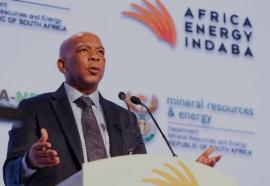
Minister of Electricity and Energy, Dr Kgosientsho Ramokgopa, has called for financial actors to actively take steps to lower the cost of borrowing for investment in the continent’s development, climate resilience and clean energy transition initiatives.
“Africa is the most mineral rich of all continents yet is the most energy deprived, underdeveloped and the poorest of all the regions,” Ramokgopa said on Tuesday.
Addressing the Africa Energy Indaba in Cape Town, the Minister said the biggest challenge confronting the continent is the ability to finance the investments that are required to realise the potential of the continent.
“The issues of the financing gap should be issues that are front and centre of the conversation. We are calling for a number of steps to be taken, including but not limited to the need to reconfigure the cost of capital.
“Our view is that developing nations face exorbitant borrowing costs due to the perceived risks that do not reflect economic fundamentals but rather outdated and what I refer to as buyers credit rating,” he said.
The Minister emphasised that it is important that issues of risk allocation should be assigned to countries that have the best capabilities of resolving the risk, among others.
“We do accept that the debt burdens that are placed on the African countries are crippling and undermine the ability to invest in development, climate resilience and clean energy transition.
“This is what sovereign nations need to do to so that we can use the countries balance sheet to enable the investments that are required in this space,” Ramokgopa said.
He advocated for greater coordination between the financial actors as he noted some degree of asymmetry and fragmentation.
“The multilateral development banks are on the one side and the developing financing institutions on the other and issues around vertical climate funds.
“What this does because there is some degree of misalignment, it undermines the possibility of us achieving greater efficiencies and this is going to hinder impact of the pocket of fund that these players are bringing to the fore to help to anchor this kinds of transition and the issues of sustainable development, the ability of the continent to extract and beneficiate closer to the source and thereby broadening the industrial flow of their respective jurisdictions,” he said.
He called for the strengthening of the role of the national development bank.
“I think there is a need for recapitalisation, especially here in South Africa. The Development Bank of Southern Africa (DBSA) can play a much bigger role if it is recapitalised, it competes with some of the commercial banks and therefore they are unable to provide the kind of concessionality that is associated with development banks.
“It stunts or undermine the prospects of them anchoring the kind of industries that we want to see because they must compete with the commercial banks on the same rates,” the Minister said.
Ramokgopa said there is a need to work very hard to attract private sector investors.
“This requires that the political actors, the elected representatives on the continent should work very hard to ensure that there is a degree of stability at a political level but create the necessary conditions, introduce reforms that are necessary to spare on private sector investments. Those are some of the interventions that we are proposing for us to be able to realise the potential of the continent,” the Minister said.
TVET sector issues placed under the spotlight

Critical issues affecting Technical Vocational Education and Training (TVET) students were at the core of a meeting between Higher Education and Training Minister Dr Nobuhle Nkabane and the South African Technical Vocational Education and Training Student Association (SATVETSA).
Held at Mpumalanga University, the meeting focused on adjustments in TVET student living allowances, payment of 2024 outstanding student allowances, and payment of 2025 student allowances among others.
On the issue of adjustments in TVET student living allowances, it was resolved that parity between TVET and university living allowances should be established while on the matter of the payment of 2024 outstanding student allowances, it was agreed that all outstanding 2024 student allowances will be processed by 25 February.
On the payment of 2025 student allowances, the Minister said allowances for the 2025 academic year will be processed next week, subject to receiving registration data from colleges.
At Monday’s meeting, the payment for student accommodation matter was under the microscope with the resolution being that all outstanding student accommodation fees will be processed by 25 February 2025.
On the National Student Financial Aid Scheme (NSFAS) Appeals Process, it was resolved that the Appeals Committee will convene before Friday, 28 February 2025, to finalise all outstanding appeals.
On pending examinations results, the resolution was that the the mop-up process for all pending results will be completed by Wednesday, 26 February and that the process will be followed by Umalusi’s approval of the results by Friday, 28 February.
Other issues discussed include the representation on the NSFAS board with the resolution being that SATVETSA will nominate a candidate to represent the TVET sector on the NSFAS board.
“The resolutions … represent a significant step towards addressing the systemic issues within the TVET sector,” said the Minister in a statement on Thursday adding that the Ministry, in collaboration with SATVETSA and other stakeholders, is committed to implementing these resolutions without delay.
“The Ministry acknowledges students’ frustrations and remains dedicated to fostering a functional, fair, and transparent TVET system. Regular progress updates will be provided to ensure that commitments made in this agreement translate into real, tangible improvements in the lives of TVET students,” it said.
Eskom suspends load shedding

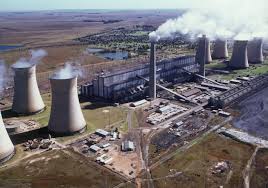
Following the recovery of generation capacity and the replenishment of emergency reserves, Eskom has suspended load shedding.
In a statement, the power utility said load shedding had been suspended as of 5am on Wednesday.
“We maintain our guidance that load shedding is largely behind us due to structural improvements in the generation fleet. Our focus remains on eliminating load shedding as a structural constraint on the economy.
“There will be valuable lessons to be learned from the set of multiple unit trips that were unconnected and purely technical in nature related to electrical and control system issues within auxiliary parts of our power stations,” said Eskom Group Chief Executive, Dan Marokane.
The suspension comes after the power utility implemented Stages 3 and 6 of load shedding at the weekend.
On Monday, Eskom implemented Stage 4 load shedding and Stage 2 load shedding on Tuesday.
“We remain committed to high levels of maintenance, and the results are clear. Our efforts have delivered a 99% electricity availability rate over Eskom’s current financial year, from 1 April 2024 to 21 February 2025, saving R17 billion in diesel costs,” said Eskom Group Executive for Generation, Bheki Nxumalo.
Nxumalo said ongoing planned maintenance stands at 6 660MW in alignment with the company’s summer period maintenance strategy, “which is at increased levels in order to prepare for winter and meet licence and regulatory requirements”.
“We reaffirm our commitment to ensuring that South Africa will not return to the severe levels of load shedding experienced in 2023,” said Nxumalo.
On Tuesday, Electricity and Energy Minister Dr Kgosientsho Ramokgopa reassured South South Africans that the implementation of load shedding at the weekend was not due to sabotage, but technical issues.
The Minister explained that despite 300 consecutive days of uninterrupted power supply, recent setbacks occurred, including the loss of five generation units at Majuba and four units at Camden power stations.
“The setbacks we experienced are regrettable, but we are now able to bounce back, we are coming back much faster than we thought. It is important that we have the lights on for the South African economy,” Ramokgopa said.
Load shedding suspension remains on the horizon

Repairs at Eskom’s Majuba power station in Mpumalanga has placed the country closer to the suspension of load shedding, Electricity and Energy Minister Dr Kgosientsho Ramokgopa said.
Speaking to journalists on Tuesday, the Minister reassured South Africans that the implementation of load shedding at the weekend was not due to sabotage, but technical issues.
“We are going to have a review later this evening and then we can make an announcement, a promise we make, is a promise we will keep,” Ramokgopa said at an engagement held in Johannesburg.
The Minister explained that despite 300 consecutive days of uninterrupted power supply, recent setbacks occurred, including the loss of five generation units at Majuba and four units at Camden power stations.
He added that the setback experienced at the weekend where the power utility implemented Stages 3 and 6 of load shedding were regrettable.
“The setbacks we experienced are regrettable, but we are now able to bounce back, we are coming back much faster than we thought. It is important that we have the lights on for the South African economy,” the Minister said.
Ramokgopa’s comments come as Eskom is currently implementing Stage 2 load shedding from Monday’s Stage 4.
At a briefing on Sunday, the Minister assured the nation that the country will overcome the current bout of load shedding by the end of the week.
READ | Load shedding expected to be suspended by the end of the week
“I’m confident that by the end of the week, we should be out of this difficult situation. We are confident we’re going to go to conditions of normality. By the end of the week there will not be [any] load shedding,” he said at the time.
Government reiterates call to register spaza shops

Government has encouraged all spaza shop owners and vendors to register their businesses with their local municipality by the end of the week.
“Spaza shops must be registered to ensure that food safety laws are followed, and dangerous goods are taken off the market, keeping children safe and preventing future outbreaks,” the Government Communication and Information System (GCIS) said.
They have until Friday, 28 February 2025, to register their businesses.
Application forms for registration or permits to conduct business can be accessed physically at the municipal offices or on the municipality website.
The registration of a business takes one day, people must not wait until the last day to register.
“Citizens are reminded that registering a spaza shop on behalf of another person is a criminal offense. The Immigration Act of 2002 clearly states that it is a criminal offense to assist an illegal foreigner to conduct any business in the country and to assist an illegal foreigner to obtain a licence to conduct any business,” GCIS said.
For guidelines on spaza shop registrations visit: https://www.sanews.gov.za/features-south-africa/guide-register-spaza-shops.
Last year, President Cyril Ramaphosa extended the registration deadline for all spaza shops and food handling outlets after initially announcing the registration directive in November 2024.
This extension follows a serious incident involving foodborne illnesses, which resulted in over 890 cases and nearly 30 deaths since September 2024.
In October last year, six primary school children from Naledi, Soweto, died after allegedly eating snacks from a foreign-owned local spaza shop.
🚨 URGENT: SASSA Gold Cards will stop working soon – get your new Postbank Black Card now! 🚨

🚨 URGENT: SASSA Gold Cards Will Stop Working Soon – Get Your New Postbank Black Card NOW! 🚨
📅 Deadline: 28 February 2025
Time is running out! If you rely on a SASSA Gold Card to receive your grant, you must switch to the new Postbank Black Card before 28 February 2025 – or you will have trouble with your transactions after the deadline.
All SASSA Gold Cards will be deactivated on 28 February 2025, regardless of the expiry date printed on them. The SASSA grants payments that started in the week of 4 – 6 February 2025 will be the last payments that will be made with SASSA Gold Cards. After that, you’ll need a Postbank Black Card to access your funds.
✅ How to Get Your Free Postbank Black Card:
Visit your nearest Checkers, Shoprite, Pick ‘n Pay, Usave, or Boxer and collect your card hassle-free.
You only need:
✔️ Your valid South African ID (or temporary ID).
✔️No extra paperwork.
💳 No waiting period!
✔️ Instant activation – You can use the Black Card immediately!
✔️ It works at ATMs, stores, and anywhere that accepts bank cards.
✔️ Enjoy FREE benefits:
- 1 Free card replacement per year.
- 3 Free withdrawals in stores per month.
- 1 Free monthly statement over the counter.
📍 Find the Nearest Collection Point:
Dial 📲 120218*3#, then:
1. Reply 1 to continue
2. Reply with the number for your province
Don’t wait until it’s too late! Switch today and avoid payment issues.
For help, call Postbank: 0800 53 54 55 or SASSA: 0800 60 10 11.
📢 Spread the word – tell family and friends to switch NOW!
Call for calm amid accommodation situation at higher learning institutions

The Portfolio Committee on Higher Education has raised concern over the ongoing accommodation crisis at the Cape Peninsula University of Technology (CPUT) and the Nelson Mandela University (NMU).
This comes as hundreds of students have been left stranded and forced to sleep wherever they find shelter.
In a statement on Tuesday, Higher Education Committee Chairperson, Tebogo Letsie, said the scenes at CPUT and NMU were deeply troubling, particularly following the committee’s recent oversight visits to institutions in the North West and Gauteng provinces to assess the state of readiness for the 2025 academic year.
“While institutions assured the committee of their preparedness, the current crisis underscores the urgent need for greater scrutiny of these assurances. The systemic failure to address recurring student accommodation shortages reflects a broader institutional and governmental neglect of student welfare,” Letsie said.
The chairperson has also condemned the involvement of private security forces at CPUT, which resulted in violent clashes and injuries to students.
“The use of excessive force is unacceptable. Security personnel must prioritise de-escalation and protection, not repression. Students advocating for their right to education deserve empathy, not violence,” Letsie said.
National Student Financial Aid Scheme (NSFAS) Administrator, Freeman Nomvalo, said the scheme has reached out to accommodation providers who have not received payment and has established payment arrangements with them.
Last week, the NSFAS called on accommodation providers, or landlords, not to demand a deposit or top-up payment from NSFAS-funded students.
This after some landlords asked NSFAS-funded students to pay a deposit or top-up payment in order to get access to the approved private accommodation.
According to the Standardised Fixed-Term Lease Agreement, the rent will be paid monthly to the accommodation provider (lessor) by NSFAS, on behalf of the lessee (NSFAS funded student), in accordance with the NSFAS terms and conditions for private accommodation providers’ participation on the student accommodation portal.
The agreement states that the lessor may not require or permit the lessee to pay a deposit, top-up payments, or any other forms of payment to the lessor, or any other person in connection with this agreement, including payment of rent, while awaiting payment from NSFAS.
The lessor shall have no recourse against the lessee for any default in the payment of rent by NSFAS.
The NSFAS terms and conditions for private accommodation providers’ participation on the student accommodation portal also states that: “Where the NSFAS-funded student is defunded due to an incorrect decision by NSFAS, the student will not be liable for payment of any arrear rent to the accommodation provider, up until the date of being defunded.”
Fallen SANDF soldiers’ remains expected to return home on Thursday

Defence and Military Veterans Minister Angie Motshekga has confirmed that the remains of fallen South African National Defence Force (SANDF) troops are currently delayed due to medical processing in Uganda.
The Minister stated that the soldiers are now expected to return to South Africa by Thursday, following the necessary procedures.
Motshekga addressed Parliament during an urgent debate to discuss the deployment of South African troops to the Democratic Republic of Congo (DRC), held in Cape Town on Monday.
The discussion follows the tragic deaths of 14 SANDF soldiers in the DRC, as their families await the return of their loved ones’ remains.
“I must say, from the latest reports, yes, indeed, the delay is disheartening. From the reports we are receiving, they are still in Uganda, undergoing all the medical processes, and we also are pressing very hard to get our deceased.
“We were hoping that we’ll get them by today, but by the latest, we are told that Thursday they will be here,” she said yesterday.
Motshekga informed the Members of Parliament (MPs) that the soldiers were under heavy attack from the M23 as fighting in the Goma region intensified, with the rebel group engaging fiercely against the Congolese armed forces.
The SANDF soldiers are part of the Southern African Development Community Mission in the Democratic Republic of Congo (SAMIDRC), which aims to help restore peace, security, and stability in Africa’s second-largest country.
The Minister announced that the soldiers would be laid to rest with full military honours.
Meanwhile, International Relations and Cooperation Minister, Ronald Lamola, has dismissed the opposition MPs’ proposal to withdraw South African soldiers from the DRC, stating that this action would be worse than surrender.
“Abrupt withdrawal as called upon by some in the House, is not even a tactical retreat, it is even worse than a surrender as with the number of armed groups in the area, there lies ambush,” he said.
Lamola stated that the South African government welcomes the leaders of the Southern Africa Development Community (SADC) and the East Africa Community (EAC), who called for a ceasefire and dialogue in the DRC over the weekend.
This follows a SADC – EAC Heads of State and Government Summit on the security situation in the eastern DRC, in which President Cyril Ramaphosa also took part.
He believes that the recent summit of SADC and the EAC, has clarified the way forward regarding the conflict in eastern DRC.
Annual toll tariffs to increase by 4.84%

The South African National Roads Agency SOC Limited (SANRAL) has announced the adjustment to the toll tariffs effective from 1 March 2025.
The tariffs are adjusted annually in line with the Consumer Price Index (CPI) as obtained from Statistics South Africa (Stats SA).
The annual toll tariffs will increase by 4.84%, as published in the Government Gazette of 7 February 2025. This rate is less than last year’s 6.25% adjustment.
SANRAL’s General Manager for Communications and Marketing, Vusi Mona, explained that toll revenue is necessary to maintain, operate and improve toll roads, as well as to service debt incurred to implement a toll road project.
“The funds go a long way towards ensuring that SANRAL fulfils its mandate of delivering quality road infrastructure that adds value to the lives of South African citizens,” Mona said on Monday.
He further said that key economic infrastructure, such as the national road network, is a precondition for providing basic services such as electricity, water, sanitation, telecommunications and public transport.
“This road network therefore needs to meet industrial, commercial and household needs. SANRAL is empathetic to the South African public, considering the current state of the economy. However, it is equally important to introduce the adjustments to ensure that the agency continues to deliver safe and quality roads to the benefit of all road users,” Mona said.
SANRAL is an entity of the Department of Transport