President to officiate launch of SA’s first shipment under AfCFTA
Monday, January 29, 2024
President Cyril Ramaphosa will on Wednesday officiate the launch of South Africa’s first shipment and preferential trading under the African Continental Free Trade Area (AfCFTA).
The launch ceremony will take place at the Port of Durban and occurs on the margins of the 13th AfCFTA Council of Ministers meeting to be held at the Inkosi Albert Luthuli International Convention Centre from 30 – 31 January 2024.
South Africa is the first among the four Southern African Customs Union (SACU) countries to practically realise the AfCFTA agreement.
The 37th African Union Ordinary Session of the Assembly of Heads of State and Government will, at its annual convention next month, take stock of the progress made thus far in the implementation of the AfCFTA.
The successful implementation of the AfCFTA is expected to lead to diversification of exports, increased productive capacity, acceleration of growth, increased investment, increased employment opportunities and incomes and most importantly, broaden economic inclusion both in South Africa and the rest of the continent.
It provides South African exporters with new market access opportunities to key markets in the African continent and can unlock growth.
President Ramaphosa will be joined by the Minister of Trade, Industry and Competition, Ebrahim Patel; KwaZulu-Natal Premier Nomusa Dube-Ncube and AfCFTA Secretary General Wamkele Mene. Other dignitaries will include the AfCFTA Council of Ministers, who will witness the first shipment of Proudly South African products exported to the continent.
The Department of Trade, Industry and Competition said the launch ceremony will be a historic step and an instrumental tool in generating meaningful trade on the African continent through the shipment of made-in-South Africa products.
“The main message being sent to Africa and the rest of the world through this event is to illustrate that companies can trade under the AfCFTA procedures to expand their markets within a legally binding framework,” the department said.
Government leads partnerships in addressing pressing challenges
Monday, January 29, 2024
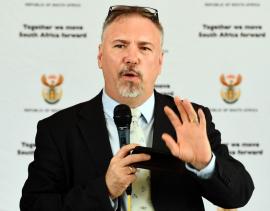
By Michael Currin
Our history has shown that when South Africans pull together in partnership, there is nothing that we cannot overcome. We adeptly demonstrated this when we worked together to drive back the spread of COVID-19 through a societal-wide approach.
The strong partnerships forged between government, business, organised labour and civil society were instrumental in saving precious lives. This partnership has today become a blueprint to address our country’s most pressing challenges in energy, transport and logistics, and crime and corruption.
The roll-out of partnerships in these focal areas between government, led by President Cyril Ramaphosa, and business leadership, represented by Business Unity South Africa, has galvanised our collective energies to improve our country’s prospects.
Through jointly implementing key interventions to end load-shedding, improve our logistics system’s performance, and address crime and corruption, we are creating a fertile environment for inclusive growth, job creation and increased public confidence, while enhancing the implementation capacity of the State.
In many of these areas, government itself has taken the bold lead through policy initiatives and dedicated programmes to bring about change to many lives, as we aspire to, as a proudly South African nation. Under the stewardship of President Ramaphosa, we have developed targeted interventions such as the Energy Action Plan (EAP), Freight Logistics Roadmap, Economic Reconstruction and Recovery Plan (ERRP), and National Anti-Corruption Strategy.
Government has also been working around the clock to restore our credibility, stabilise finances and improve the operational performance and governance within state-owned companies. We have accelerated key reforms under Operation Vulindlela, a joint initiative of The Presidency and National Treasury, to secure confidence in sectors affected by regulatory uncertainty and unlock greater investment in growth sectors.
Since the establishment of Operation Vulindlela three years ago, targeting 19 priority reforms, government, in collaboration with social partners, has seen progress in the reforms that will help rebuild the economy and create jobs.
What we need to consider, however, are the constant headwinds that South Africa is confronted with, including global conflicts which impact our supply chains; the legacy of our distorted past, including the recent state capture, and our own strained financial resources. As such, government cannot achieve the desired results on its own, but has certainly demonstrated over recent years that it has been working hard to rebuild trust with South Africans and stabilise public finances.
The years of state capture and corruption subjected the Public Service and state-owned entities to the worst kind of abuse at the hands of people who tried to institutionalise their corrupt actions and took a great toll on the capacity of the State.
We believe that, through the joint action and pooling of resources, we can address our critical challenges to set our country on a path to recovery. This must be seen as a national, patriotic effort requiring all of us to contribute our very best. Business, with its considerable skills, capacity and resources, is ideally positioned to help in rebuilding our economy.
Importantly, our partnerships should not be construed as government reneging on its commitments to the people of South Africa, or even shirking its responsibilities to the private sector and society at large in creating an enabling environment to build a better life for all.
We have consistently shown that we are advancing our nation’s key priorities and willingly taking the necessary and calculated decisions to move our country forward. Through our ERRP, we have drawn all of society in a common front that has helped our economy claw back to pre-COVID-19 levels.
In March last year, President Ramaphosa directed Transnet to swiftly implement reforms to turn around the crisis in our logistics system. In consultation with industry stakeholders, a comprehensive Freight Logistics Roadmap was developed, which will translate our policy commitments into reality.
This partnership is already being felt on the ground with business, for example, supporting recovery efforts following the collision of two trains on the coal line outside Richards Bay in KwaZulu-Natal on 14 January 2024. Our partners, among others, provided heavy earth moving and breakdown equipment to clear the accident site. This hands-on support is a reflection of true patriotism in action that goes a long way in uplifting our nation and building national pride. It allowed Transnet’s Freight Rail to speedily restore this critical coal export line, by 20 January 2024, ahead of schedule.
The steadfast implementation of the country’s EAP, introduced by President Ramaphosa in 2022 to address our energy challenges, ensured an improved performance in our energy generation system, which has subsequently led to a measurable decline in the frequency and severity of load shedding.
These energy interventions are driven at the highest level through the National Energy Crisis Committee, which is led by government and supported by business, and the millions of South Africans who make every effort in using only the electricity they need, thus reducing demand on the grid.
Government’s efforts in rooting out corruption are bearing fruit because those who were identified in the State Capture Commission as having abused state resources through corruption are being made to account. One of our top priorities was the adoption of the National Anti-Corruption Strategy 2020 – 2030 and the steady but certain move to implement the recommendations of the State Capture Commission.
This has translated to the National Prosecuting Authority (NPA) freezing R10.7 billion over the past four years and its Asset Forfeiture Unit recovering R2.83 billion from corrupt activities. In state capture cases, the NPA has recovered R2.55 billion. More recently, German Software company, SAP, agreed to pay R2.2 billion in restitution to state entities and government departments after investigations by South African authorities found that the company had bribed officials to win contracts.
The strong public-private partnerships we have forged with business, social partners and communities to fight crime and corruption will, together with our own initiatives, go a long way in reversing this societal scourge.
Our work in these key areas is a clear statement of intent to lead and create an environment for greater development and faster economic growth. It affirms our commitment to do everything within our ambit to take the country forward.
We are confident that through our shared determination, we can overcome the severe challenges that we currently face. Government will continue to mobilise our country’s substantial capabilities across all sectors to rebuild our economy and set us on a path of sustained inclusive growth. However, this will be achieved through the patriotic efforts of each of us, which will make it possible for us to advance towards the realisation of the concept of a better life for all.
Michael Currin is Deputy Director General at GCIS
*This article was first published on SABC News
Minister congratulates boxer Jackson Chauke

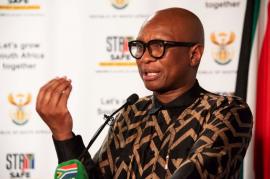
Minister of Sport, Arts and Culture Zizi Kodwa has congratulated South African boxer Jackson Chauke for winning the vacant International Boxing Organization (IBO) flyweight title.
Chauke defeated British boxer Quaise Khademi to become the latest world titleholder.
“I congratulate Chauke for his excellent and inspirational achievement. He has raised the country’s flag sky high. Chauke is an inspiration not only to South African boxers but to all athletes for his dedication and commitment to the sport. These qualities have driven Chauke to the IBO flyweight title at 38 years of age,” Kodwa said.
The Minister said he was an experienced fighter who won a silver medal in the men’s flyweight boxing event at the 2006 Commonwealth Games in Melbourne, Australia.
Chauke has had a stellar career which has culminated in his IBO flyweight title victory.
“I once again express my desire to see South African boxing being revived and to return to the heights it has scaled before. May Chauke’s success and recent presence of South African boxers competing on the sport’s global stages further invigorate South African boxing,” he said.
Department awards bursaries to hardworking matriculants

Public Works and Infrastructure Minister Sihle Zikalala has hailed teachers and guardians as true heroes and heroines and thanked them for encouraging, motivating and guiding learners during the 2023 matric examination.
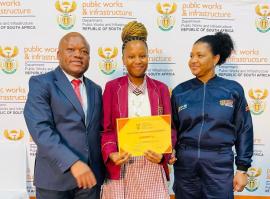
“To the bursary awardees, you are the crown in the jewel; and today we sing your praises for demonstrating that paying attention and putting in effort pays,” Zikalala said on Thursday, during a ceremony to award bursaries to 100 learners from the Class of 2023 who have enrolled to study various built environment courses at universities across the country.
Zikalala congratulated the learners for being worthy recipients of the prestigious bursaries from the Department of Public Works and Infrastructure.
He said the young people who are receiving the bursaries have honoured the sacrifices of the youth of 1976 who protested against an inferior Bantu Education that sought to turn education for the black majority into an instrument of racial subjugation and guarantor for the supply of cheap black labour.
“The Department of Public Works and Infrastructure (DPWI) plays a critical role in delivering essential services. To do so effectively, it must have a highly skilled and competent workforce.
“This year is the 10th year that the Department of Public Works and Infrastructure has been offering these bursaries to address the challenges of the skills pipeline and transformation in the Built Environment.
“Our university bursary scheme is one of the ways through which as a department, we respond to the country’s occupation skills that are in high demand as gazetted by the Department of Higher Education and Training,” the Minister said.
The Department of Public Works and Infrastructure Bursary Scheme supports undergraduate study areas like: Construction Project Management, Occupational Health and Safety, Quantity Surveying, Landscape Architecture, Architecture, Property Studies, Real Estate, Urban Design and Regional Planning, Engineering (Mechanical, Electrical, Civil, Structural, Chemical), Interior Design, Actuarial Science, Horticulture, Geographic Information Science (GISc) and Maritime Studies.
The Council for the Built Environment (CBE) has lamented the slow pace of transformation in the built environment which is compounded by the challenge of aging professionals who are leaving the sector.
“One of our programmes to address these challenges and in contributing to the skills of the future in our sector is the department’s schools programme and the university bursary scheme programme.
“We are pleased to report that our valued bursary beneficiaries are supported financially throughout their tertiary studies until graduation.
“Upon completion of studies, bursary holders join the department’s internship programme wherein they gain relevant technical experience for a duration of 24 months in line with their contractual obligation to the department and in accordance to the DPSA regulated internship period,” Zikalala said.
The estimated budget per student is R177 500. This amount varies based on the institution and study programme. The department has allocated budget of R17 800 000 for the 2024 academic year new intake.
The bursary covers all university costs including tuition fees, accommodation, meals, textbooks, projects, excursions and a monthly allowance.
SA citizens in foreign countries urged to register to vote

Over 18 469 South African citizens living in 101 countries around the world have started registering to vote using the Electoral Commission’s newly launched online registration portal system.
“The Electoral Commission has enabled an online registration facility for the first time to allow South Africans outside the country to easily register for the 2024 National Elections,” Chief Electoral Officer (CEO) of the Electoral Commission Sy Mamabolo said.
Addressing the media in Pretoria on Thursday, Mamabolo said the commission hoped that the introduction of an online registration system will attract citizens from abroad.
Citizens living abroad must register as voters either online or in person at their nearest South African mission. South African high commissions, embassies and consulates will be open during working hours.
“Eligible voters are encouraged to check with their nearest mission on the registration dates and times. Registration requires a South African identity document as well as a South African passport.
“A special two-day voter registration event for South African citizens abroad will take place between 26 and 28 January 2024, depending on the configuration of weekend days.
“In countries where Friday and Saturday are weekends, the two special days designated will be Friday 26 January, and Saturday 27 January 2024,” Mamabolo said.
The countries with the most people registering online include the United Kingdom (5938), the Netherlands (1844), Germany (746), the United States (821), Ireland (675), United Arab Emirates (1068), China (515), Australia (588), New Zealand (314), Cuba (293), Portugal (284) and Belgium (280).
In the African continent, South Africans have begun to register in 28 countries, including Mauritius (316), Lesotho (224) Namibia (148), Botswana (170), Zambia (96), Zimbabwe (77), Kenya (73), Ghana (45) and Tanzania (40).
A full list of South Africa’s missions is available on the website of DIRCO at https://www.dirco.gov.za/webmissions/index.html.
The commission advised South Africans who are already registered to vote – either on the national or international segment of the voters’ roll – to check their registration status and to update their voters’ roll address if they intend to vote abroad in the 2024 National Elections.
Mamabolo said the commission has put in place all necessary measures to ensure that no one is left behind and that all citizens vote in the 2024 National Election.
“The upcoming 2024 National Elections offer an important opportunity for all South Africans to have their voices heard, regardless of geographic location,” he said.
The commission pleaded with businesses and organisations around the world to encourage their South African employees to register during this registration weekend.
Upgrades on R57 set to commence

The Gauteng MEC for Transport and Logistics, Kedibone Diale-Tlabela, has officially turned the sod, marking the beginning of upgrades on the P122/1 (R57) Road in Irene in the City of Tshwane.
The includes the upgrade of the P122 single carriageway, spanning approximately 9.4km from Olifantsfontein to Solomon Mahlangu Drive.
During the rehabilitation launch on Thursday, Diale-Tlabela said the upgrades that the department is undertaking will not only benefit the people of Gauteng in terms of construction.
“The project will also assist in transforming the lives of the people who reside in Wards 47, 83, 71, 91, and 65, which are the communities that will be affected by the rehabilitation works,” she said.
The scope of work in this project involves the reconstruction of the existing road, construction of paved shoulders, upgrading of intersections along the route, and widening the existing cross-section with broader traffic lanes.
“To ensure fairness and inclusivity, we will prioritise the affected municipal wards when procuring services, giving local small, medium and micro enterprises (SMMEs) the chance to actively participate in this transformative initiative.
“If capable service providers cannot be found within these communities, SMMEs from outside the wards, but within the provincial boundary, will also be considered,” the MEC said.
The project also saw three Community Liaison Officers (CLOs) from the affected wards being appointed to ensure that the project is delivered within the allocated time and that the voice of the community is heard throughout the delivery stages of the project.
The MEC called on communities to ensure that the works continue uninterrupted and avoid any actions that may impede the speedy delivery of the project.
“This project will undoubtedly bring about significant changes but it is crucial for all of us to ensure its proper care. In case of grievances against any party involved in the works, we must avoid halting or interrupting the project rollout programme,” said Diale-Tlabela.
Pandor leads SA delegation as ICJ is set to deliver ruling on genocide case against Israel

The Department of International Relations and Cooperation (DIRCO) Minister, Dr Naledi Pandor, will lead South Africa’s delegation at The Hague on Friday to hear the judgment on the genocide case against Israel.
This is after the International Court of Justice (ICJ) announced that it will deliver its judgment tomorrow on whether it will grant emergency measures to stop the war in the Gaza Strip.
This comes after South Africa approached the ICJ in December last year, under the Genocide Convention, for alleged attacks committed by Israel on the Gaza Strip.
“On Friday, 26 January 2024, the International Court of Justice will deliver its order on the request for the indication of provisional measures submitted by South Africa in the case concerning the application of the Convention on the Prevention and Punishment of the Crime of Genocide in the Gaza Strip,” the ICJ statement read.
In its application, South Africa also pleaded with the court to indicate provisional measures to “protect against further severe and irreparable harm to the rights of the Palestinian people under the Genocide Convention” and “to ensure Israel’s compliance with its obligations under the Genocide Convention not to engage in genocide, and to prevent and to punish genocide”.
Public hearings on South Africa’s request were held on 11 and 12 January 2024.
“South Africa is requesting that the ICJ grant interim injunctions, including that Israel immediately cease its military operations in Gaza, take reasonable measures to prevent the genocide of Palestinians, ensure that the displaced return to their homes and have access to humanitarian assistance,” DIRCO said.
According to the department, the humanitarian assistance includes adequate food, water, fuel, medical and hygiene supplies, shelter and clothing.
The country also wants the top United Nations (UN) court to take the necessary steps to punish those involved in the genocide and preserve the evidence of genocide.
Comments sought on Water Acts amendments

The Department of Water and Sanitation will next week kick-start a series of public consultations on the amendment of the National Water Act and Water Services Act across the country.
The two legislations were published in the Government Gazette on 17 November 2023 and members of the public were invited to submit written comments on the draft amendment bills within 60 days from the date of publication.
The department said the objective of the consultations is to garner comments from the public and stakeholders, which are necessary to bring about legislation that will benefit the current and future generation of the country by ensuring equitable water allocation for all, and optimise access and use of water and sanitation.
“The amendments of the two legislations will strengthen the role of the department as a regulator of the water and sanitation sector, thus, decisively address socio economic challenges facing the country.
“Furthermore, this will ensure that the country’s water resources are managed, protected, used, and conserved, while promoting equity and redressing past imbalances. The redress of past imbalances will ensure that all citizens of the country have access to water,” the department said.
The amendments of the National Water Act are mainly aimed at strengthening the protection and conservation of water resources, including strategic water source areas; ability of the department to consider and decide on water use applications timeously; and the ability of the department to improve equity in water use allocation.
They are also aimed at strengthening the ability of the department to phase out previous water entitlements in order to achieve the targets for water allocation reform and ensure the efficient use of water, and representivity and governance of water user associations.
In amending the Water Services Act, the department aims to enhance the following regulatory objectives:
• Expand on the objects of the Act the regulation for safely managed sanitation;
• Include enforcement and rectification as further object of the Act;
• Provide for the accountability of water services providers in respect of the management, reporting and financial transparency through requirement of operating licence;
• Provide for the issuance of operating licence, content of the licence and Regulations for licence procedure;
• Develop regulations relating to registration of persons who install and operate water service works;
• Provide for the quality of potable or drinking water;
• Provide for the establishment and governance structures of water boards, the appointment of the chief executive officer and employees of water boards;
• Provide for monitoring, enforcement and intervention on poor performance and non-performance of WSPs (Water Safety Plans); and
• Expand on penalties for non-compliance with the Act
The public consultations will start in Upington, Northern Cape on 30 January 2024, followed by the engagements in all other provinces.
For confirmation to attend the Northern Cape consultation can be sent to cloetes@dws.gov.za
The closing date for written submission is on 01 March 2024 and submissions should be sent to Mapula Khuduga at KhudugaM@dws.gov.za or telephone number 012 336 7835.
The Gazette is available on www.gpwonline.co.za.
Saudi Arabia market presents enormous growth opportunities for SA

The South African – Saudi Arabia Business Council has committed to boosting trade as part of efforts to grow the economies of both countries.
In 2023, South Africa’s exports to Saudi Arabia increased to R7.3 billion from R6.6 billion in 2022, while imports from Saudi Arabia decreased to R54.6 billion in 2023 from R73.6 billion in 2022.
The exported goods include agricultural products, motor vehicles, and basic chemicals, whereas the import items mainly consisted of refined petroleum and related products and crude oil.
Speaking at a press briefing in honour of the visiting Saudi business delegation, Co-Chair of the South African–Saudi Arabia Business Council, Stavros Nicolaou, underscored the need to increase trade and investment.
“From my vantage point, the Saudi Arabia market presents enormous growth opportunities for South African companies looking to expand their businesses in the gulf region as shown by local companies that are slowly establishing a presence in that region,” Nicolaou said.
President Cyril Ramaphosa and Minister of Trade, Industry, and Competition Ebrahim Patel have been leading ongoing engagements between South Africa and Saudi Arabia – which have since resulted in local businesses finding a foothold in the vast Saudi Arabia market.
Also speaking at the same media briefing, Dr Hisham Al Amoudi, Vice-Chairman of the Saudi–South Africa Business Council, reaffirmed Saudi Arabia’s commitment to investing in South Africa.
Al Amoudi said the South Africa and Saudi Arabia Joint Economic Commission and the Business Council was a good platform to further progress and boost inward investments between the two respective countries.
He said Saudi Arabia is committed to increasing investment across various sectors in South Africa.
“We are committed to increasing investments for mutual benefits and supporting South Africa’s economic growth. Our current investments contribute to South Africa’s Gross Domestic Product,” Al Amoudi said.
The visit by the Saudi business delegation aims to not only strengthen current trade relations but also to explore opportunities for South African companies to increase market access with products that have high export potential to Saudi Arabia.
These products include motor vehicles for the transport of persons, fruits, mineral resources, chemicals, machinery and electrical equipment.
Additionally, the Saudi delegation seeks to boost investment from Saudi Arabia in sectors beyond South Africa’s renewable energy industry. Currently, Saudi is the largest investor in South Africa’s local renewable energy sector and ACWA Power has a leading role in this area.
Overall, it is estimated that Saudi investment into South Africa amounts to $1.62 billion.
The Business Council focuses on five main workstreams – energy and renewable energy, tourism, hospitality and entertainment, healthcare and pharmaceuticals, mining and commodities, and food and agro-processing. These areas aim to utilise investment capital from Saudi Arabia while tapping into the opportunities that South Africa offers in these sectors.
Electricity system performance ‘exceeding expectations – Minister Ramokgopa
The health of South Africa’s electricity system is continuing to show improvement despite the continued implementation of load shedding.
This according to Minister in the Presidency for Electricity, Dr Kgosientsho Ramokgopa, who was the media on the implementation of the Energy Action Plan on Tuesday.
“We have really turned the corner and I’m not suggesting that we have ended load shedding. I’m simply saying that we can see that there’s light at the end of the tunnel and this is not an oncoming train but it’s a system who’s health continues to improve and improve at levels that even exceeded our projections and expectations.
“With the average unplanned capacity loss factor [generating unit breakdowns], we were sitting at about 14 100MW and then it went to 13 000MW the past week but what is important is that it’s only on the 16th of January where were above 15 000MW…now today, we are at 12 700MW. That shows an area…that the team has invested in and we are beginning to see those returns,” he said.
The minister revealed that over the past two weeks, available capacity has “consistently” exceeded peak demand.
However, there are reasons that load shedding continues to be implemented.
The first of those is that at least 3000MW of available capacity is drawn from open cycle gas turbines “which are burning on diesel so we have reduced our consumption of diesel…so essentially it’s the true health of the system”.
“The second one is that…planned maintenance still is significantly high. We are hitting about 8000 to 9000MW of planned maintenance.
“Even with that scale of planned maintenance we still have a situation where we are able to keep load shedding at the levels of the worst, Stage 3 [or] oscillating between no load shedding to Stage 3 at the worst moment,” he said.
The Minister emphasised that work continues to be done in the area of partial load losses – that is, when generating units do not produce the full capacity they were intended to.
“The area that is receiving attention is the partial load losses of 6700MW. It is our collective view…that we can do much better here. Of course some of it is a function of us exceeding our license parameters, those are areas that require attention.
“So…the net message that I am conveying is that the system continues to improve. It has exceeded our expectation if the unit measure of the expectation is the unplanned capacity loss factor of 14 500MW…we are way below that by about 1000MW despite the fact that planned maintenance is sitting at 8337MW,” Ramokgopa said.