
Current administration gradually improving audit outcomes, says AG

In the third year of the current administration, Auditor-General, Tsakani Maluleke, says her office continues to see a gradual upward trend in the audit outcomes of national and provincial government.
However, she said, key service delivery portfolios and state-owned enterprises continue to receive poor audit outcomes.
Maluleke’s observation is contained in her executive summary in the Consolidated General Report on National and Provincial Audit Outcomes of the 2021/22 financial year. She released the report on Wednesday.
In the report, Maluleke said: “Through our expanded mandate, we have enriched our insights and strengthened our ability to influence and enforce accountability and consequence management. There has been a shift at departments and public entities from a slow response to our findings and recommendations over the years to attention now being paid to material irregularities.
“Auditees are taking action to resolve these by recovering losses, preventing further losses and harm through strengthening internal controls, and effecting consequences for transgressions.”
However, greater impact will be achieved if accounting officers and authorities resolve the material irregularities quicker,” she said.
“We continue to advocate for investment in good preventative controls, as preventing material irregularities is more effective than having to deal with the consequences thereof.
“Poor overall performance leads to poor service delivery – to the detriment of the people of South Africa. Much of this can be attributed to poor planning, insufficient intergovernmental coordination, execution without oversight, and lack of accountability for effective reporting and the achievement of planned service delivery.”
Over the past few years, the AGSA had highlighted the internal control deficiencies that led to government not deriving value from its spending because of inefficient and ineffective infrastructure delivery.
She said infrastructure continues to deteriorate because it is not properly maintained and protected against vandalism.
“This slows down service delivery and results in funds being wasted, which places further pressure on the fiscus. Auditees have not heeded our call to address these deficiencies, and infrastructure projects continue to face the same delivery challenges.
“We have also seen little improvement in the area of financial management, despite consistently reporting the same deficiencies. Non-compliance with legislation remains high, resulting in unfair and uncompetitive procurement processes and payments for goods and services not received. These are also the areas where the risk of fraud is highest, hence it is necessary for a culture of compliance and respect for the law to be re-enforced.”
In the report, the AGSA identified 179 material irregularities in the national and provincial spheres of government.
Over the three-year term of the current administration, auditees have disclosed fruitless and wasteful expenditure totalling R5.83 billion.
She said since 2019, the AGSA had also identified non-compliance and fraud resulting in an estimated R12 billion in financial loss through our material irregularity process.
The main reasons that money is being lost include:
• Poor payment practices to suppliers of goods and services;
• Unfair or uncompetitive procurement practices when procuring goods and services;
• No or limited benefits received for money spent and properties owned;
• Infrastructure not maintained and secured;
• Uneconomical practices for leasing properties; and
• Inadequate needs analysis and project management.
President Ramaphosa embarks on UK Royal State Visit

President Cyril Ramaphosa will this week conduct a State Visit to the United Kingdom of Great Britain and Northern Ireland (UK) from 22 to 23 November 2022.
The President will honour the invitation of His Majesty King Charles III with the visit that commences on Tuesday and will end on Wednesday, 23 November.
The Presidency in a statement said Royal State Visits are in the furtherance of bilateral relations and as a symbol of respect and of the importance the UK ascribes to its relations with a particular country.
President Ramaphosa is the first Head of State to be hosted for a State Visit by His Majesty Charles III.
President Ramaphosa will convey to His Majesty King Charles III and the Queen Consort, First Lady Dr Tshepo Motsepe’s deep regret at not being able to participate in the State Visit.
Presidency spokesperson Vincent Magwenya said: “On the advice of her doctors, the First Lady could not travel on a long-haul flight due her recovery from recent surgery on her eyes.
“During the visit, President Ramaphosa will also hold official talks with Prime Minister Rishi Sunak to review a range of issues of a bilateral, continental and global nature.”
He said key sectors under consideration for mutual benefit and to support economic growth and development in South Africa include infrastructure development, mining, energy, manufacturing, agro-processing, business process outsourcing and tourism.
On Tuesday, 22 November, President Ramaphosa will be officially welcomed by His Majesty King Charles III at a ceremony at Buckingham Palace.
“Later in the day, the President will address a Joint Sitting of the Houses of Parliament, before being hosted to a State Banquet at Buckingham Palace,” Magwenya said.
On Wednesday, the President accompanied by the Earl of Wessex, will participate in a roundtable on climate change and biodiversity.
Thereafter, the President will visit the Francis Crick Institute, the largest biomedical research institute in Europe, where the President will be briefed on the partnership between South Africa and the United Kingdom in this area of science. Here the President will also interact with young South African scientists who are attached to the Crick Institute.
“This engagement will be followed by the President’s engagement with Prime Minister Sunak at 10 Downing Street.
“Following the Downing St visit, the President will participate in a bilateral business roundtable at Lancaster House where economic cooperation will be deliberated by South African and United Kingdom Ministers and Secretaries of State respectively, officials as well as business leaders,” said the Presidency.
The second day of the State Visit concludes with a banquet hosted by the Lord Mayor of London in honour of the President.
The President will be accompanied on the visit by Minister of International Relations, Dr Naledi Pandor; Minister of Higher Education, Science and Innovation, Dr Blade Nzimande; Minister of Trade, Industry and Competition Ebrahim Patel and Minister of Health, Dr Joe Phaahla.
Mabuza to respond to oral questions in Parliament

Deputy President David Mabuza will on Thursday appear before a sitting of the National Assembly to respond to questions on wide-ranging issues related to a capable and developmental state, responding to HIV/AIDS and service delivery.
“In response, the Deputy President will update the house on government’s plans to build a capable and developmental state through the implementation of the National Framework for the Professionalisation of the Public Sector,” the statement read.
As the world prepares to commemorate World AIDS Day on 1 December, the Deputy President as Chairperson of the South African National AIDS Council, will appraise members on how the implementation of the National Strategic Plan for HIV, TB and Sexually Transmitted Infections has positively affected the fight against the disease in the past five years.
“The Deputy President will also update Parliament on progress made by government regarding the delivery of socio-economic benefits for Military Veterans as well as the on the support by national and provincial government to municipalities, to assist them to fulfil their constitutional mandate.”
Mabuza is also expected to outline the support provided by South Africa in the negotiations to resolve conflicts on the continent in efforts towards building a better Africa and a better world.
Government urged to engage communities on infrastructure projects

The National Council of Provinces (NCOP) Deputy Chairperson, Sylvia Lucas, has implored the three spheres of government — national, provincial and local government — to constantly engage community members on all ongoing programmes, including incomplete projects.
Lucas made the call during public hearings on housing, roads, transport and public infrastructure.
The hearings are part of the week-long ‘Taking Parliament to the People (TPTTP)’ oversight programme, which is underway at Ugu District Municipality in KwaZulu-Natal.
At the hearing, community members across the district raised concerns about poor road maintenance, including total lack of access roads in high-lying rural and farm areas, inadequate housing, poor water infrastructure and lack of electricity.
Lucas said although the issues raised were adequately responded to by the relevant MECs and Ministers, who attended the hearings and shared their service acceleration plans for the affected areas, further public engagements are required.
“Community members seem to appreciate the services that are provided to them, but they are frustrated when government officials are nowhere to explain delays when they occur,” Lucas said.
Lucas emphasised the importance of programmes, such as the ‘Taking Parliament to the People’, as instruments that create an interface amongst the three spheres of government and provincial legislatures to ensure that elected representatives of the people take time to hear what the people have to say and respond accordingly.
“We would like to actually ask government to come back to the people, even if they are not able to immediately respond to the issues that they have committed to, but they must at least come back to the people, because this kind of exercise is showing us that people are grateful for what is done for them. People also want us to constantly respond to issues,” she said.
Held under the theme, ‘Working together to ensure faster improvement in the delivery of services to communities’, the TPTTP programme is a platform for the public to hold their leaders accountable on issues affecting them.
The programme enables the NCOP to exercise its constitutional obligation of overseeing government programmes and policies. The programme also gives ordinary citizens an opportunity to engage their elected public representatives face-to-face on issues affecting them.
The programme continues with more public hearings and further site visits to the identified key service delivery points, including water reticulation plants, farming projects, police stations, amongst others.
The programme will conclude on Friday with President Cyril Ramaphosa’s annual address to the NCOP sitting at the Ugu Sports and Leisure Centre in Ray Nkonyeni Local Municipality.
BBBEE here to stay – President Ramaphosa
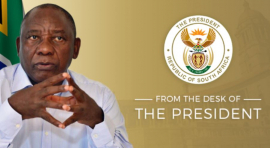
President Cyril Ramaphosa says government remains committed to transformation of the economy and empowerment.
He was addressing the nation through his weekly newsletter.
The President’s assertion follows a week where the National Treasury published a new set of Preferential Procurement Regulations.
“The new regulations are not ‘a victory for sound business practices’ as one interest group has claimed. What is unsound, unsustainable and, above all, immoral, is an economy that benefits the few at the expense of the many.
“Put plainly, we remain as committed as ever to broad-based black economic empowerment, meeting our localisation objectives and transforming an economy that, despite our best efforts, is still largely controlled by a minority. There should be no mistake or misunderstanding: broad-based black economic empowerment (BBBEE) is not under threat and is not being reconsidered,” he said on Monday.
Earlier this year, the Constitutional Court ruled that the then Finance Minister overreached when he prescribed the old regulations in 2017.
“[The Constitution] says that when public bodies contract for goods and services, they must do so in a manner that is fair, equitable, transparent, competitive and cost-effective. It also says the state must implement a preferential procurement policy that advances people who have been disadvantaged by unfair discrimination. In South Africa, this refers to black people, women and persons with disabilities.
“It is in this context that the new Preferential Procurement Regulations published by the National Treasury last week need to be understood. Government remains wholly committed to transformation and empowerment as envisioned in the Constitution,” he said.
President Ramaphosa said the new regulations comply with section 217 of the Constitution “in that they empower organs of state to develop and implement preferential procurement policies when contracting for goods and services” and will not hinder Broad Based Black Economic Empowerment (BBBEE).
“These regulations are an interim measure pending the enactment of the Public Procurement Bill, which the National Treasury will soon submit to Cabinet and Parliament. The Public Procurement Bill will maximise both value-for-money and preferential procurement objectives to enable the delivery of services and transformation.
“The new regulations have no effect on the Broad Based Black Economic Empowerment Act, as all organs of state must fully comply with this Act when developing their procurement policies. This Act remains in force as one of the most transformative pieces of legislation to come out of democratic South Africa,” he said.
Mischaracterisation
President Ramaphosa said the purpose and effect of the new regulations have been “mischaracterised” with “commentary…[claiming] that this government is back-tracking on its commitment to broad-based black economic empowerment”.
“This claim is far from the truth. Government’s policy framework has not changed with the introduction of these regulations, nor has our commitment to service delivery and black economic empowerment.
“Empowerment criteria will still be applied in government contracting and organs of state must comply with the BBBEE Act when developing their procurement policies. What has changed is that organs of state will be able to set and apply specific ‘goals’ when evaluating a tender under a preferential procurement policy,” he said.
The President reflected that “we are certainly not as far as we had hoped to be with economic transformation” despite Constitutional provision and regulatory efforts.
“As I told the inaugural meeting of the newly formed Presidential Broad-Based Black Economic Empowerment Advisory Council in July, we need to develop a new vision for black economic empowerment that builds on successes, learns from shortcomings, and that responds to local and global economic realities.
“As we reflect on 20 years since the passage of the BBBEE Act, as we remedy the shortcomings that exist and chart a new course, we call on business, labour and civil society to join us on this journey.
“We have come a long way since the days when only whites were allowed to own businesses and provide goods and services to the state. Where black businesses did exist, they were confined to townships, rural areas and the so-called homelands. We can and must do more to advance economic transformation,” President Ramaphosa said.
KZN unveils festive season safety campaign

KwaZulu-Natal Premier, Nomusa Dube-Ncube, has sent a stern warning to criminals that law enforcement agencies in the province are tightening the grip on all forms of crime, mainly contact and violent crimes during this festive season.
The Premier made the remarks during the official launch of the KwaZulu-Natal Integrated Safety Month and Festive Season Campaign held at Peoples Park in Durban on Friday.
Joined by Police Minister Bheki Cele, Transport, Community Safety and Liaison MEC, Sipho Hlomuka, eThekwini Municipality Mayor, Mxolisi Kaunda, and Provincial Police Commissioner, Lieutenant-General Nhlanhla Mkhwanazi, the Premier unveiled a campaign aimed at heightening the war against crime during the festive season and beyond.
She said police in the province are ready to take the war to the criminals, emphasising that the vision of government is to ensure that the people of KwaZulu-Natal live in a safe and secure environment.
“Women, children and vulnerable groups should feel protected and have confidence in the criminal justice system to effectively apprehend and prosecute criminals. We are launching this festive season campaign at a time when our country is focused on the 16 Days of Activism for No Violence Against Women and Children.
“There is a lot of work that the provincial government is doing to mobilise society to root out this scourge. There will be heightened visibility in all corners of our province including integrated crime prevention and crime combatting operations on provincial and national roads, rail environment, ports of entry and the border-line.”
The Premier assured the people of the province, including visitors and business that all law enforcement agencies working with stakeholders are on board to ensure a safe, peaceful, and incident-free festive season.
In addition, special intelligence-driven operations will be implemented in cooperation with all law enforcement agencies.
“We are encouraged to see the state of preparedness and unity of our law enforcement agencies and stakeholders. Police made numerous arrests this morning, on the streets of the Durban central business district conducting law enforcement operations and raids in various buildings that have deteriorated into drug dens and crime havens.
“We are here to unveil our plan which involves all sectors including civil society, business, the taxi industry, community policing forums, and many more joining hands to arrest crime during the festive season. We are ready to thwart all the criminal networks, we will be at their rear and flanks,” Dube-Ncube said.
Technology to enhance policing
During this period, the police will also be applying technology, including drones to monitor high crime zones and capturing footage of criminal activities.
“Technology will be employed to chase criminals using facial recognition and follow me flight mode. We can even enter into small unreachable areas to track criminals in hideouts.
“We will also be applying technology to track number plates and spot stolen vehicles. Our Smart Province concept also include smart policing. Technology overall can reduce the crime rate, improve investigation and assist in locking up offenders. It can also be used as early warning signal to prevent the deaths in disasters and properly loss.”
Truck accidents
Meanwhile, Dube-Ncube has expressed concern over the increase of road accidents that continue to claim lives.
She called on the road freight industry to attend to the issue of errant truck drivers whose negligent driving has taken many lives in the province recently.
“We remember vividly the Pongola horrific accident [and] the multiple truck accidents a few weeks ago [that] claimed more lives. Our roads cannot be turned into mass graves and places of untimely deaths.
“The Road Traffic Inspectorate has a huge responsibility to make every road user feel that when in KwaZulu-Natal you drive responsibly or face the music. We are exploring ideas around the spate of track accidents.
“This may include enforcing a curfew on freight trucks and redirecting vehicles to less busy roads. We are continuing engagements with the freight and logistics industry,” Dube-Ncube said.
The province’s safety month and festive season plan involves government and law enforcement agencies working with various stakeholders, including business, community policing forums, traditional leaders, interfaith leaders and the taxi industry.
The plan is anchored on the following actions and objectives of building safer communities:
• Strengthening the criminal justice system;
• Making the police service professional; and
• Building community participation.
Umalusi commends department for making arrangements for learners

Umalusi, the Council for Quality Assurance in General and Further Education and Training, has commended the Department of Basic Education for making arrangements for the affected candidates to be afforded the opportunity to write the examinations which were missed due to no fault of their own.
Umalusi, has expressed its concerns about the recent protest action in some parts of the country which have resulted in some candidates either missing the National Senior Certificate examination or writing it later than originally scheduled.
In the North-West Province arrangements had to be made for approximately 460 candidates to be compensated for the time lost, while just over 50 candidates in Gauteng could not write the examination due to community protests.
In Mpumalanga, approximately 1 130 candidates were prevented from accessing their examination centres where they were scheduled to write either Mathematics or Mathematical Literacy Paper 2 examination.
“Umalusi wishes to reiterate its position that it discourages communities from using national examinations as leverage for their protest actions,” Umalusi said in a statement.
While Umalusi respects the Constitutional right of every citizen to protest, candidates should also be allowed to exercise their right to education by writing the examinations without any form of hindrance.
Umalusi is equally concerned about the alleged problematic questions in the Mathematics Paper 2 question paper administered by the Department of Basic Education.
In this regard, the standard procedure for dealing with such issues is the marking guidelines or memoranda standardisation meetings during which problematic questions are moderated in consideration of candidates’ answers.
“Depending on the magnitude of the problem, the marks allocated to the question/s may be excluded from the question paper’s total marks or that alternative responses may be accepted.
“The External Moderators of Umalusi attend these meetings and take responsibility for signing off the final marking guidelines after considering the responses of candidates and the deliberations.
“The fine-grained details of how the concerns were dealt with would be submitted for the consideration of Umalusi at the end of the marking process,” Umalusi said.
Another matter about which Umalusi is concerned involves the South African Comprehensive Assessment Institute’s (SACAI) premature release of two question papers on 11 November to Umalusi.
These are the Physical Sciences Paper 2 and the Life Sciences Paper 1 which are scheduled to be written on 14 November and 18 November respectively.
“It is a requirement for assessment bodies to submit question papers to Umalusi after the writing of each paper so that Umalusi can perform its post-examination quality assurance processes prior to the standardisation of results.
“Instead of releasing Paper 1 of Physical Sciences, which was written on 11 November, the SACAI erroneously released Paper 2 which is scheduled to be written today.
Since the erroneous release of question papers has the potential to put the credibility of the examination at risk, SACAI has withdrawn the papers released in error and will substitute them with backup question papers.
Umalusi urges all the assessment bodies and stakeholders to do everything possible to ensure that the integrity of the 2022 national examinations is not compromised.
Mabuza: Government committed to resolving military vets challenges

Deputy President David Mabuza has assured military veterans that government remains committed to providing them with care and other benefits, including housing and a pension, to ensure they lead a life of integrity and respect.
“It is for this reason that President Cyril Ramaphosa established the Presidential Task Team on the affairs of Military Veterans in the latter part of 2020, under the leadership of the Deputy President, to tackle the concerns raised on the livelihoods of military veterans,” Mabuza said on Thursday.
The Deputy President, in his capacity as the Chairperson of the Presidential Task Team on Military Veterans, visited the Western Cape to hold engagements with military veteran associations.
So far, the team has already visited six provinces — Gauteng, Eastern Cape, Limpopo, Free State, Mpumalanga and North West.
“In our initial meetings, all Premiers were called to assist in the amicable resolution of the challenges faced by military veterans. We believe that provinces have a critical role to play in supporting military veterans, as they are closer to where our veterans live,” the Deputy President said.
Since then, Mabuza said, they have made an effort to interact directly with military veterans in their respective home provinces to address key issues that need to be resolved.
While government has been working around the clock to cater for the veterans’ needs, Mabuza acknowledged some obstacles that caused delays in the delivery of benefits.
The Deputy President said the COVID-19 pandemic and constrained fiscal environment have had an impact on the Department of Military Veterans’ operations and performance. In addition, he said implementation of big impact projects was also awaiting approval, while the management of the department’s database posed a challenge as well.
“Despite the difficulties we have encountered, we have made significant progress in addressing some of your challenges, including those faced by military veterans in the Western Cape,” he told veterans.
Housing
Mabuza said government is currently amending the Military Veterans Act to extend the provision of housing support to widows and dependants of the deceased of those who served in the military struggle.
“We are confident that the process will be completed soon.”
In addition, he said improvements of housing floor plans and the remedial work on defective houses are underway in a number of housing projects, including in Belhar, Cape Town.
Pension
The Deputy President said a milestone was reached when the Presidential Task Team approved the Military Veterans Pension Policy.
The department has made budget provisions over the medium-term to ensure that military veterans receive their pensions.
Currently, the department is working on regulations to operationalise the implementation of the pension benefit provisions.
“We are aware of the deficit that needs to be urgently filled by this policy, and we appeal to our veterans to be patient with the ministry, which is currently preoccupied with the task,” Mabuza said.
Meanwhile, he said his team is ready to assist the department in accessing additional resources to better serve this constituency.
Private sector rallied to invest in green economy

For South Africa to meet its close-to-zero greenhouse gas emissions target, there will need to be significant private investment to facilitate this transition, says National Treasury.
This investment, Treasury said, will require both domestic and external resources, including from jurisdictions such as the European Union (EU).
“Mechanisms to encourage, simplify and facilitate the necessary cross-border capital flows for South Africa to facilitate its just transition will be critical if the country is to meet its objectives.
“Such mechanisms will need to be sufficiently comparable and interoperable to reduce the cost of cross border flows necessary for the just green transition,” the department said.
Treasury said a comparison study between the EU Green Taxonomy and SA Green Finance Taxonomy has found that SA and EU taxonomies both pursue the climate ambition of a “net-zero economy to 2050” as a core environmental objective, and have a very high degree of similarity between the criteria specified at the level of individual economic activities.
The study was undertaken by independent international experts, who were part of the EU Platform on Sustainable Finance.
Treasury said the study was intended to assist policymakers, companies, and financial market participants to understand the commonalities and divergences between the EU and the SA taxonomies, so as to ultimately foster seamless green financial flows between the EU and SA.
“This is crucial in the context of both the EU and SA achieving the net-zero goals by 2050. Overall, for the criteria of significant contribution to climate change mitigation and adaptation, the SA taxonomy has very similar and more ambitious and/or more detailed criteria compared to the EU Taxonomy for 85% of all matched economic activities (71% for significant contribution to climate change mitigation and 99% for climate change adaptation).
“The areas of divergence are primarily where adaptations were made for the SA context, which allows five or 10 years for the activity to meet the thresholds within an investment plan. This approach contrasts with the EU approach, which does not incorporate investment plans and only focuses on economic activities which are currently green.”
For green buildings, the SA Green Finance Taxonomy sets out three levels of eligibility (top-level equivalent to net-zero level, middle-level, and entry-level), while the EU Taxonomy only has one tier.
The EU taxonomy requires mandatory disclosures through the EU Taxonomy Regulation, whereas the SA taxonomy is currently voluntary, although work on incorporating the Green Finance Taxonomy into formal regulatory instruments is being undertaken.
The EU has recently taken steps to include, under specific criteria and time frames, nuclear and gas in their taxonomy, whilst these transitional elements are currently excluded from the SA taxonomy, but may be incorporated in future interactions.
Next Steps
Since the release of the SA taxonomy, the focus has been on embedding its use through raising market awareness and case studies, which are being finalised and will be released together with open access knowledge products.
The South African regulatory authorities — the Prudential Authority and Financial Sector Conduct Authority — will provide guidance and undertake assessments to inform the development of future regulatory instruments. Presentations, webinars, and additional briefing reports are available via the following link: https://sustainablefinanceinitiative.org.za/taxonomy/.
South Africa’s Green Finance Taxonomy was released in April 2022 as a catalogue or classification system that defines a minimum set of assets, projects, and sectors that are eligible to be defined as “green” or environmentally friendly.
It supports emerging national policy and voluntary private sector initiatives toward sustainable finance by reducing costs and uncertainty in classifying a core set of green activities. It takes account of the model adopted by the EU, given its comprehensive technical foundation and to ensure interoperability in global reporting.
In particular, the taxonomy focuses on the performance level of activities that make a substantial contribution to a set of six environmental objectives while doing no significant harm to any of those objectives and meeting minimum social safeguards.
Mchunu steps in to address Polokwane water crisis
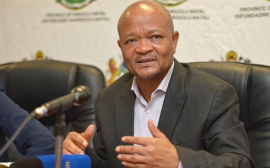
The Department of Water and Sanitation will keep a close eye on the ongoing water and sanitation projects aimed at delivering water to the people of Polokwane and surrounding areas, says Minister Senzo Mchunu.
“Rest assured, we are not going to allow anyone to make commitments and not fulfil them. Our people are in dire need of water. We want constant updates on the ongoing projects,” Mchunu said.
Mchunu met with Polokwane Municipality Executive Mayor, John Mpe and the Lepelle Northern Water Board in Mookgophong, outside Polokwane, on Thursday. This followed a recent protest where Seshego residents demanded consistent water supply. Residents also pleaded with the municipality to write off their water bills since their taps are regularly dry.
During the engagement, Mpe expressed his gratitude to Mchunu for his prompt intervention in attempting to resolve water supply challenges in Limpopo, particularly in Polokwane.
The department’s Deputy Director-General of Water Services Management, Risimati Mathye, gave a brief background on ministerial interventions for water and sanitation services in Polokwane.
“Some of the projects that need urgent intervention [include the] optimising of Polokwane and Seshego water reticulation distribution zones, 20 mega litres per day regional wastewater treatment plant, which is currently underway through Regional Bulk Infrastructure Grant (RBIG) funding, refurbishing of Dap Naude Water and Sanitation Infrastructure, and refurbishing and upgrading of existing Polokwane, Seshego and Mankweng Wastewater Treatment Works,” Mathye said.
After long discussions, the parties submitted the recommendations aimed at ending water woes in Polokwane.
The parties recommended that R120 million be made available to address short-term interventions for five groundwater projects that are under construction.
They also recommended that a further allocation of RBIG funding of R200 million in January 2023 could be made available upon appointment of service providers for Polokwane Wastewater Treatment Works.
The Minister also made an undertaking that he will write a follow-up letter to Agriculture, Rural Development and Land Reform Minister, with a view of accelerating the resolution of the letter of concern for use of the servitude for Seshego Wastewater Treatment Works and associated infrastructure.