
Treasury clarifies Eskom debt matter

Finance Minister Enoch Godongwana has denied reports that the National Treasury’s plan to takeover a portion of Eskom’s debt will be linked to conditions that the power utility builds new coal, gas and nuclear plants.
In a statement, Finance Ministry spokesperson Mfuneko Toyana said this was “untrue” and a misunderstanding of the argument the Minister was making.
“Minister Godongwana’s point was that South Africa’s energy transition will not be an immediate and wholesale abandonment of the country’s existing electricity sources, but a phasing-out of fossil fuels that may also involve transitional measures to maintain current coal and nuclear plants, and also the use of transitional sources like gas,” he said.
Toyana said government’s key planning instrument, the Integrated Resources Plan (IRP), envisions a combination of energy sources, including solar, wind, coal, gas and nuclear, to maintain the security of electricity supply at the most affordable cost to South Africans.
“Further, his point was that the fundamental purpose of the National Treasury’s plan to takeover a portion of Eskom’s debt is to allow the utility to focus on and invest in increasing its generation capacity,” he said.
He said Godongwana was fully committed to the government’s Just Energy Transition framework, and the balance it envisions of accelerating investment in new generation capacity while protecting the communities that will be worst-affected by the move away from coal and other fossil fuels.
Minister Godongwana was clear about these principles in his Medium-Term Budget Policy Statement (MTBPS) last Wednesday, he said.
The MTBPS said the debt takeover, once finalised, together with other reforms, would ensure that Eskom was financially sustainable.
“The programme will allow Eskom to focus on plant performance and capital investment and ensure that it no longer relies on government bailouts,” said the Minister.
Toyana said the debt-relief relief programme was one of a suite of government interventions with the simple, but critical goal of securing South Africa’s short and long term energy supply needs.
President calls for the mobilization of resources
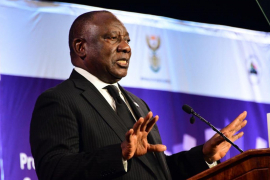
President Cyril Ramaphosa has called for the mobilisation of resources required for effective behavioural change programmes that link up with efforts of social partners in communities to address the attitudes and actions of men.
“We need to reach out to boys and young men to develop masculinities that value respect, understanding and accountability,” President Ramaphosa said.
The President said the country is confronted with an immensely difficult task to turn the mindsets of the men of our country around.
He said that the country needs to be united in the fight against gender-based violence and femicide, as government, civil society, and organisation cannot do it alone.
“These are men who are intoxicated often with their sense of masculinity, intoxicated with the sense that they are superior to the women of our country, and intoxicated with patriarchy believing that they are much more important than the women of our country.
“This is the task that we have on our hands and this is a task that we need to win together. The road ahead will be long [and] will also be challenging, but it is a road that we must walk together…..it is a road that we must walk together with determination so that women and children of this country may live in safety, peace and happiness,” the President said on Tuesday.
He also emphasised the need for organising the men’s dialogues in every part of society, including the workplace, schools colleges and universities, government departments, municipalities, and in every community.
Delivering his key note address during the Second Presidential Summit on Gender-Based Violence and Femicide (GBVF), currently underway at Midrand, the President commended the project by Prime Stars, which, in collaboration with government focuses on redefining masculinity among young men, as a good example.
“This programme needs to be rolled out to all the schools in the country. We need to see the President, Ministers, Premiers, religious leaders, sports people, artists, educators, business leaders and many others participating in various dialogues, outreach and awareness-raising activities.”
Private sector called to join hands in availing more resources
The President also called on the private sector, in particular, to join hands with government, as they did with the Solidarity Fund – to make more resources available where they are needed the most.
During the Joint Sitting of Parliament in 2019, the President called for government departments to allocate the necessary resources to combat gender-based violence.
As a result, in February 2021, government announced the allocation of approximately R21 billion over three years to implement the various components of the National Strategic Plan (NSP).
A significant portion of these funds has been committed to advancing the empowerment of women through procurement, business support and access to economic opportunities.
“Funds have also been directed to expanding support to survivors, strengthening the response of the criminal justice system and undertaking prevention programmes. The Department of Planning, Monitoring and Evaluation has been tracking expenditure of the R21 billion allocated over the medium-term.
“We need to ensure that our resources are being directed to where there is the greatest need and where they have the greatest impact. Last year we established a private sector-led Gender-Based Violence and Femicide Response Fund 1, which received a commitment of R162 million and has to date funded 112 grant partners,” the President said.
Health Department concludes placement of medical interns

The Department of Health announced on Tuesday that it has completed the process of allocating all eligible medical interns and community service applicants to Internship and Community Service Programme (ICSP).
The programme will run in the next annual intake scheduled to commence in January 2023.
According to the department’s statement, it placed all 9 647 eligible South African citizens and permanent residents who applied. Of these, 2 402 will occupy medical internship opportunities, while 7 245 were successfully allocated for community service to enhance the public health sector as part of the last phase of their academic programme.
“Almost 96.75% of the total applicants were allocated in their first five priority choices and only 3.25% were allocated outside their preferred five priority options,” the department said.
Meanwhile, the department has allocated 73.96% of applicants to health facilities based in rural and semi-rural areas, while the remaining 26.04% will work in urban areas. This is part of government efforts to prioritise rural and underserved areas in the country.
The ICSP system, according to the department, has a functionality that allows applicants to swap or exchange their allocated posts.
In addition, the department said the online applications were processed between 14 and 28 October 2022, as per the Internship and Community Service Placement guidelines, Public Service Regulations of 2016, the Public Service Act, and the Immigration Act of 2002.
“The first priority was given to South African citizens who studied in local and foreign institutions of higher learning, who met the minimum requirements, followed by permanent residents and lastly foreign nationals, depending on the availability of resources and funded posts.”
The department said the final results of allocation will be signed-off and sent to the Provincial Departments of Health, South African Military Health Services and Department of Correctional Services for further processing and finalisation, which entails issuing appointment letters to successful applicants.
Second Presidential Summit on GBVF kicks off

The second Presidential Summit on Gender-Based Violence and Femicide (GBVF) has kicked off at the Gallagher Convention Centre in Midrand, where President Cyril Ramaphosa will deliver the keynote address this afternoon.
The two-day summit is being held under the theme: “Accountability. Acceleration and Amplification, NOW!”.
The summit will reflect on the work undertaken since the first Presidential Summit on GBVF in November 2018, report on key successes and challenges, and outline clear strategies to overcome them.
The objectives of the summit are:
- To demonstrate continued high-level commitment and state accountability for the national response to GBVF;
- To accelerate actions and accountability by key government departments and all stakeholders, including civil society, the private sector and labour;
- To be a platform through which to share areas of progress by government, civil society, the private sector, labour and other sectors to inspire similar actions across all stakeholders; and
- To provide a space for wider collaborative engagement between all stakeholders to strategise on strengthening the overall response to and prevention of GBVF in the country, bringing the -whole-of society approach strongly into focus.
Cabinet Ministers attending the summit include Minister in the Presidency responsible for Women, Youth and Persons with Disability Minister Maite Nkoana-Mashabane; Cooperative Governance and Traditional Affairs (CoGTA) Minister Dr Nkosazana Dlamini Zuma; Minister in the Presidency Mondli Gungubele; Police Minister Bheki Cele; Social Development Minister Lindiwe Zulu; and Basic Education Minister Angie Motshekga, among others.
The summit will also be attended by Speaker of the National Assembly, Nosiviwe Mapisa-Nqakula, and members of civil societies.
Stats SA launches Income and Expenditure Survey

Hundreds of statistics collectors will be going into South African households over the next year for data collection for the Income and Expenditure Survey (IES).
The survey will begin this month and will run until the end of 2023 and is critical to measuring poverty and inequality in the country.
At the launch of the survey, Statistician General Risenga Maluleke, said although the survey comes nearly seven years after the first, it comes at a ideal time for the country.
“The funding and preparation of the IES comes at a time when there is an ever-increasing demand for data in South Africa to determine the impact of the COVID-19 pandemic on household finances and the economy at large.
“This will be the first expenditure survey to be conducted by Stats SA since 2014/15, following allocation of specific funding by National Treasury,” Maluleke said.
As well as providing essential insights needed to measure poverty and inequality, the survey will provide information to help government reach the National Development Plan 2030 goals of reducing the bounds of the poverty line to zero and reducing the Gini coefficient to 0.6.
“We will update and reweight our Consumer Price Index basket of goods and services. On the economic side, we will profile the household economy. [The survey will help] make inputs for the development and maintenance of the national public accounts and of course life circumstances like service delivery and poverty.
“We will [also] make sure that we deal with updating the multidimensional and subjective poverty profile and of course updating the profile on issues of inequality in the context of poverty,” he said.
Collectors will gather information from some 31 000 households on all purchases, consumption, spending and income earned.
Statistics South Africa (Stats SA) explained that households will participate in the survey over a period of four weeks.
“During this time, a household questionnaire containing four modules will be administered (i.e. one module per week) and respondents will also be asked to keep a weekly expenditure diary supplied by Stats SA to record their daily acquisitions and purchases for a period of two weeks.
“The IES survey will also help South Africa better understand the impact of social grants in reducing poverty,” the institution said.
SARS records R19.70bn trade balance surplus

The South African Revenue Service’s (SARS) trade statistics for September 2022 recorded a preliminary trade balance surplus of R19.70 billion.
These statistics include trade data with Botswana, Eswatini, Lesotho and Namibia (BELN), SARS said in a statement.
“The year-to-date (01 January to 30 September 2022) preliminary trade balance surplus of R175.42 billion is a deterioration from the R346.88 billion trade balance surplus for the comparable period in 2021. Exports increased by 22.0% year-on-year whilst imports increased by 27.1% over the same period,” said the revenue collector.
SARS said the R19.70 billion preliminary trade balance surplus for September 2022 was attributable to exports of R191.56 billion and imports of R171.86 billion.
“Exports increased by R17.37 billion (10.0%) between August and September 2022 and imports increased by R3.88 billion (2.3%) over the same period. Exports for the year-to-date (01 January to 30 September 2022) increased by 12.8% to R1 519.02 billion from R1 346.54 billion over the same period during 2021.
“Imports for the year-to-date of R1 343.60 billion were 34.4% more than the R999.66 billion imports recorded during the same period in 2021. The cumulative trade balance surplus for 2022 is R175.42 billion. On a year-on-year basis, the R19.70 billion preliminary trade balance surplus for September 2022 was a deterioration from the R21.82 billion trade balance surplus recorded in September 2021.”
Exports of R191.56 billion, said SARS, were 22.0% more than the R157.03 billion exports recorded in September 2021. Imports of R171.86 billion were 27.1% more than the R135.21 billion imports recorded in September 2021.
August 2022 preliminary trade balance surplus was revised downwards by R0.98 billion due to the ongoing Vouchers of Correction (VOC). The revision was from the preliminary trade balance surplus of R7.18 billion to the revised trade balance surplus of R6.20 billion.
The trade data excluding BELN for September 2022 recorded a preliminary trade balance surplus of R8.62 billion.
SARS said the R8.62 billion preliminary trade balance surplus for September 2022 was as a result of exports of R174.54 billion and imports of R165.92 billion.
“Exports increased by R16.76 billion (10.6%) between August and September 2022 and imports increased by R3.02 billion (1.9%) over the same period. The preliminary cumulative trade balance surplus for 2022 was R90.86 billion compared to R271.72 billion trade balance surplus during 2021,” reads the statement.
HSRC appoints Prof Sarah Mosoetsa as new CEO
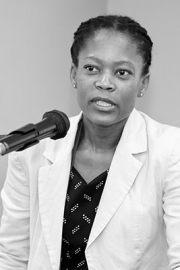
The Human Sciences Research Council (HSRC) Board announced on Monday the appointment of Professor Sarah Mosoetsa as Chief Executive Officer (CEO) of the Council, effective 1 February 2023.
Mosoetsa vacates her role as CEO at the National Institute for the Humanities and Social Sciences (NIHSS) to take up this new position at the HSRC.
“She was instrumental in establishing and setting up the NIHSS in 2013 and held the position of CEO at the institute since 2014,” the HSRC said.
The Professor holds a Doctorate in Sociology from the University of the Witwatersrand.
She is an Associate Professor of Sociology at the same university and the author of several publications. These include ‘Eating from one pot: Dynamics of Survival in poor South African households’ (Wits Press) and co-editor of ‘Labour in the Global South: Challenges and Alternatives for Workers (ILO)’, and co-editor of ‘Precarious Labor in Global Perspective’ (Cambridge University Press).
Mosoetsa has worked for various organisations, including the Society, Work and Politics Institute, the HSRC, and the Development Bank of Southern Africa.
Prof Mosoetsa sits on various boards and committees inter alia, the National Minimum Wage Commission, the National Research Foundation Board, the University of South Africa Council, the University of Venda Council and the Advisory Board for the Southern Centre for Inequality Studies.
She is passionate about the humanities and social sciences in South Africa, the continent, and the globe, and their contribution to societies grappling with challenges of poverty and inequality, economic transformation, and redress.
HSRC Board Chairperson, Dr Cassius Lubisi, congratulated Mosoetsa on her appointment as CEO.
“The HSRC is proud to welcome her and to share in and benefit from her thought leadership, her pursuit of excellence and her people-centric approach to organisational culture, and we look forward to working alongside her over the next five years,” he said.
Meanwhile, the board thanked Prof Leickness Simbayi for his capable and enduring leadership as interim CEO since the departure of the former CEO, Prof Crain Soudien.
President Ramaphosa appoints new Intelligence Inspector General

Imtiaz Fazel is expected to start his five year term as the new Inspector General of Intelligence on Tuesday, following his appointment by President Cyril Ramaphosa.
Fazel’s nomination for the position was approved by the National Assembly and he was appointed by the President in accordance with Section 210(b) of the Constitution, read in conjunction with Section 7(1) of the Intelligence Services Oversight Act of 1994.
According to a statement by the Presidency, the approval came after a 12 people were interviewed for the position by the Joint Standing Committee on Intelligence (JSCI).
“The Intelligence Services Oversight Act mandates the JSCI to recommend a candidate for approval by at least two thirds of National Assembly Members.
“Following National Assembly approval, the name of the candidate is submitted to the President to consider the nominee for appointment as Inspector General.
“The Inspector General monitors and reviews the operations of intelligence services, including the State Security Agency, the Defence Intelligence Division of the South African National Defence Force and the Crime Intelligence Division of the South African Police Service,” the statement read.
Some 25 people had applied for the job during a public process.
The Presidency said Fazel’s appointment is a “continuation of the attention President Ramaphosa is giving to strengthening the capability of the State, including the security sector”.
“Mr Fazel is a former Chief Operating Officer – at the level of Deputy Director General – in the Office of the Inspector General of Intelligence and a former Deputy Director General in the Office of the Director General of the State Security Agency.
“From 2015 to 2020, he served as Deputy Director General: Governance, Risk and Compliance in the Department of Public Works, following which he served as Acting Director General in the Department of Public Works and Infrastructure.
“Mr Fazel has obtained a Master’s Degree in Security Studies from the University of Pretoria and holds a Bachelor of Accounting Science Degree from the University of South Africa. He holds a Post-Graduate Diploma in Accounting from the University of the Western Cape and is a member of the South African Institute of Chartered Accountants, among other achievements.”
President Ramaphosa sent his well wishes to the new Inspector General.
“The President offers Mr Fazel his best wishes and support in his role as Inspector General of Intelligence, which is a critical function that contributes to making the country and the world a safer place, and advancing the country’s national interest,” the high office said.
Mchunu reiterates commitment to deliver water to communities

Water and Sanitation Minister, Senzo Mchunu, has reiterated the Ministry and department’s commitment towards the provision of water to the communities.
Mchunu made the commitment during the launch of Olifants Management Model Programme (OMM) on Thursday at the Ga-Malekana Tribal Authority, outside Burgersfort in Limpopo.
The OMM Programme aims to fast-track potable and bulk raw water infrastructure with a view of ensuring that the nearby communities and the surrounding mining, including agriculture and other companies in Sekhukhune District, Polokwane and Mogalakwena Local Municipalities are supplied with adequate water by 2030.
Delivering his keynote address, Mchunu said the OMM project is a huge milestone in the country’s democracy.
“This is a very good example of collective efforts; it is a three-dimensional partnership between government, the private sector and more importantly the people of this area. This is a huge investment to the current and future generations, and it needs to be maintained,” Mchunu said.
The Minister added that the programme, which is the result of a collaboration between Water and Sanitation and the Lebalelo Water Users Association (LWUA), epitomises the effectiveness of public – private partnerships and “will certainly go a long way in as far as addressing challenges in the water and sanitation sector is concerned.”
“Both the department and LWUA consider reliable access to good, safe water as essential to life, nature, and economic growth, hence it is important to embark on water access projects that help bring safe, clean drinking water to communities in need.
Over 130 villages to benefit from the programme
The project scope includes enabling water supply to Mogalakwena by moving a portion of the Lebalelo scheme’s current supply from Flag Boshielo Dam to De Hoop Dam, and developing reticulation and related infrastructure to benefit a total of 134 villages, amongst others.
The programme will also address pressing water needs to approximately 380 000 people in the defined areas in the Limpopo province, and will be able to create 42 000 jobs.
Programme funding estimated to reach R24 billion
Mchunu said the estimated cost of the programme is R24 billion and will be funded on a 50:50 contribution principle between government and the commercial users through the Lebalelo Water Users Association.
These include African Rainbow Minerals, Anglo American Platinum, Assore, Corridor Resources, Cheetah Chrome, Glencore-Merafe, Implats, Ivanplats, Northam, Tameng and other industrial users.
Both the department and Lebalelo agree that the partnership will among others, unlock the strategic mineral and industrial potential in the region, and more importantly it will provide a range of benefits, including much-needed water security, job creation and socio-economic development.
President Ramaphosa to attend Lesotho PM inauguration

President Cyril Ramaphosa is expected to attend the inauguration of newly elected Prime Minister of the Kingdom of Lesotho, Samuel Ntsokoane Matekane, in Maseru this morning.
Matekane was elected following elections that took place in the land locked country in early October where he won 56 of 79 constituencies.
“President Ramaphosa is attending at the invitation of His Majesty King Letsie III.
“President Ramaphosa’s attendance is an expression of South Africa’s continued support for the Basotho and of the firm bonds and friendship between the two countries,” the Presidency said in a statement.
The Presidency lauded the formal diplomatic relations between the two countries which span back some 30 years.
“Relations between the two countries are based on shared language, history, and culture. Full diplomatic relations between the two countries were established in 1992.
“The Kingdom of Lesotho provided shelter and support to South African liberation cadres in their fight against apartheid,” the statement said.